You’ve got great coffee. Your local cafe loves it, your website gets orders. But Amazon feels like a different beast—a massive, crowded marketplace where your product can disappear in seconds. The fear is real: high fees, ruthless competition, and complex algorithms that seem to favor the big players. How do you stand out? The truth is, Amazon is not just a sales channel; it's a full-fledged marketing and logistics platform. Winning here requires a strategy as refined as your roast profile.
The best strategies for selling coffee on Amazon combine optimized product listings that win the Amazon A9 search algorithm, a disciplined approach to reviews and brand authority, and a mastery of Fulfillment by Amazon (FBA) to leverage Prime eligibility and customer trust. Success requires treating your Amazon storefront as your primary digital shelf, not just an add-on.
I’ve seen many roasters fail by just dumping a product page online. Amazon is a search engine first, a store second. You need to engineer your listing to be found, then convince a skeptical customer to click “Add to Cart” before they scroll to the next option. Let’s break down the playbook.
How do you optimize your Amazon listing for maximum visibility?
Visibility is everything. If customers can’t find you, nothing else matters. Amazon’s A9 algorithm decides who appears in search results. It ranks products based on relevance to the search term and conversion likelihood. Your listing must speak the algorithm’s language.
Optimize your listing by conducting thorough keyword research for coffee buyers, strategically placing those keywords in your title, bullet points, and backend search terms, and using high-conversion visual elements (A+ Content, video) to dominate your product page.
What are the most important keywords for coffee on Amazon?
Don't guess what customers search for. Use tools like Helium 10, Jungle Scout, or even Amazon’s own search bar auto-suggest. Keywords fall into categories:
- Head Terms: "whole bean coffee," "dark roast coffee," "organic coffee."
- Long-Tail & Niche Terms: "Ethiopian yirgacheffe whole beans," "low acid coffee for stomach," "single origin espresso beans."
- Commercial Intent Terms: "subscription coffee," "gift coffee," "fair trade coffee beans."
In your title, use the most critical, high-volume keywords first. A powerful structure is: Brand + Product + Key Attributes + Quantity. For example: “BeanofCoffee | Yunnan Arabica Single Origin Whole Bean Coffee - Medium Dark Roast - Low Acidity - 2lb Bag (32oz).” This ticks boxes for brand, origin, product type, roast, a key benefit, and size.
How do A+ Content and video dramatically increase conversion?
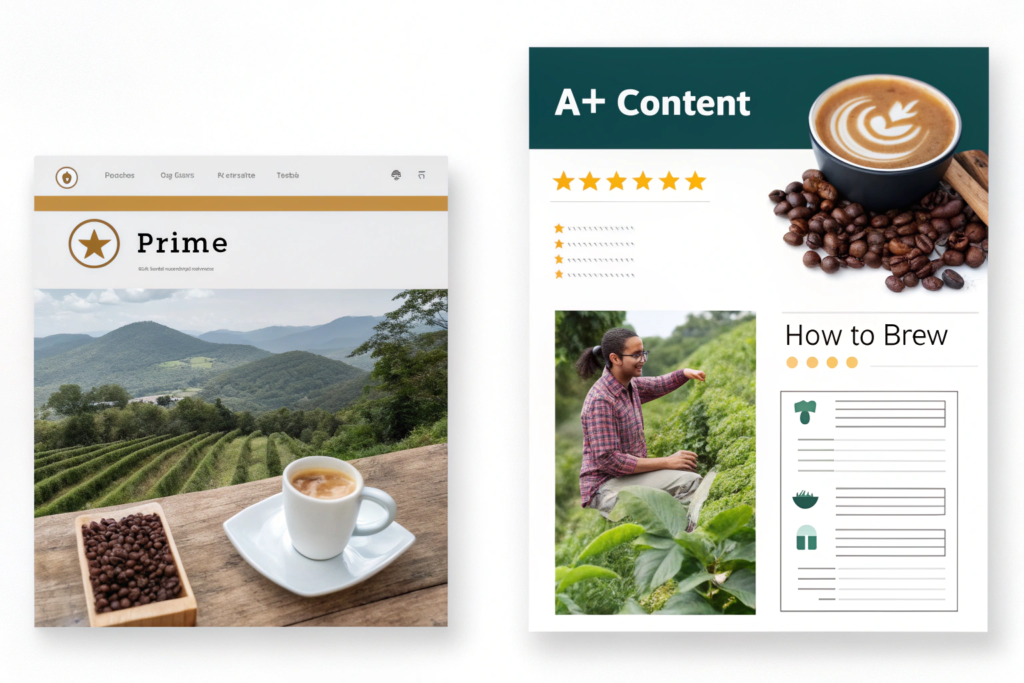
Basic listings have images and text. Winning listings use A+ Content (formerly Enhanced Brand Content) and video. A+ Content is a module-based layout below the bullet points where you can tell your brand story with rich visuals, comparison charts, and detailed lifestyle imagery. Use it to:
- Show your farm or roastery.
- Explain your roast profile with a graphic.
- Include brewing guides.
- Highlight certifications (Organic, Fair Trade).
A product video is even more critical. Place it in the main image gallery. A 30-60 second video showing the beans, the pour, the steam rising from a fresh cup, and perhaps a quick testimonial, can increase conversion by 30% or more. It builds trust and provides the sensory preview that static images cannot. For a brand like Shanghai Fumao, this is where we translate our origin story into Amazon-friendly visuals.
How do you master Amazon Fulfillment (FBA) for coffee?
Fulfillment is where operational nightmares live. Shipping coffee yourself (FBM - Fulfilled by Merchant) means handling individual orders, postage, and slow delivery. Fulfillment by Amazon (FBA) is a game-changer, but you must manage it perfectly to avoid ruinous fees and stale inventory.
Master FBA by creating prep and shipping plans that comply with Amazon’s strict requirements, managing your inventory health to avoid long-term storage fees, and using FBA’s Prime eligibility as your primary marketing tool for conversion and trust.
What are the specific prep requirements for coffee bags on FBA?
Amazon has strict rules. Failure means your shipment is rejected or you incur hefty prep fees.
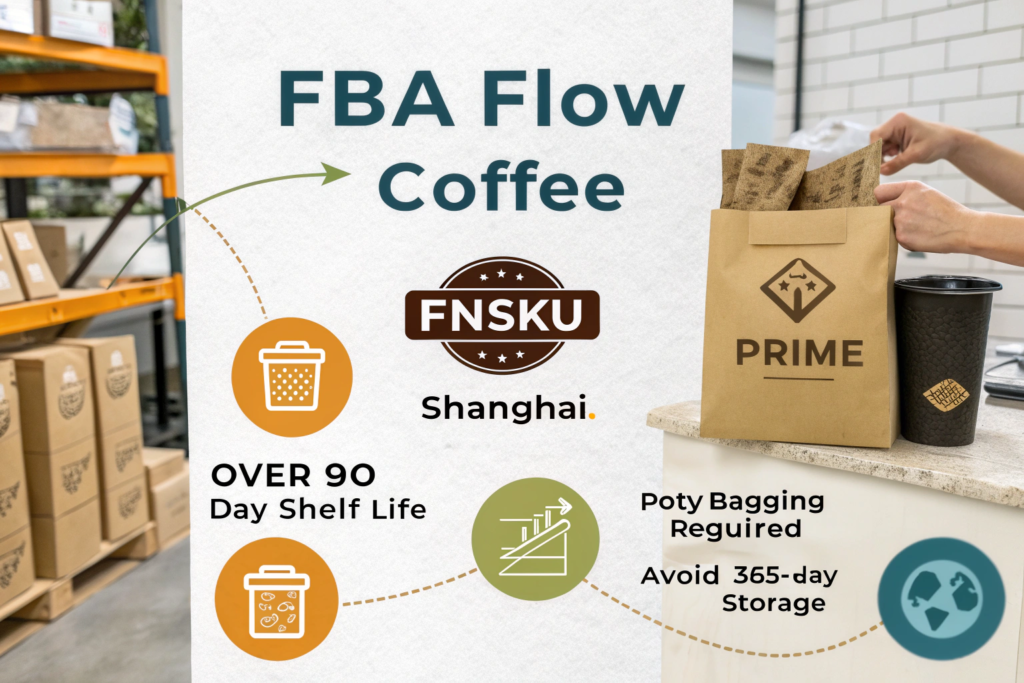
- Expiration Dates: Coffee must have a "Best By" date printed on the bag. Amazon requires at least 90 days of remaining shelf life upon arrival at their warehouse. For roasted coffee, your "Best By" should be 6-12 months from roast date.
- Polybagging: Almost all products sent to FBA must be in a transparent, sealed polybag unless the product packaging itself is suffocation-resistant. Your beautiful coffee bag likely needs to be placed inside a clear, 2-mil poly bag and sealed. This is non-negotiable.
- Labeling: Every individual unit must have a scannable FNSKU (Fulfillment Network Stock Keeping Unit) label over the existing barcode. This tells Amazon it's your specific product.
- Box Preparation: Cases must be strong, sealed with plastic tape, and have a unique shipment label. Weigh and measure each box accurately.
Follow Amazon’s Seller Central guidelines to the letter. Many sellers use a prep service or their supplier (like us) to handle this before the container leaves origin.
How do you avoid FBA storage fees and manage inventory?
The FBA fee structure has two parts: a fulfillment fee (per unit sold) and a monthly storage fee. The killer is the Long-Term Storage Fee (LTSF) charged for inventory sitting over 365 days. For perishable coffee, this is a death sentence.
Your strategy:
- Send Small, Frequent Shipments: Don’t send 6 months of inventory at once. Use Amazon’s Inventory Performance Index (IPI) dashboard to guide you. Maintain an IPI score above 400 to avoid storage limits.
- Set Up Automatic Removals: In Seller Central, create a removal order automation for any inventory approaching 12 months old. Have it sent back to you or disposed of before fees hit.
- Forecast with Data: Use your sales velocity to forecast. If you sell 100 bags a month, send a 2-3 month supply. This keeps inventory fresh and fees low. Remember, with FBA, your capital is literally sitting on Amazon’s shelf. Manage it like cash.
How do you build reviews and brand authority quickly?
On Amazon, reviews are social proof and an algorithm signal. A product with 50 reviews outranks an identical product with 5. Building this base ethically and quickly is the hurdle every new seller faces.
Build reviews and authority by enrolling in Amazon’s official “Vine” program for initial reviews, leveraging the “Request a Review” button post-purchase, and creating a compelling Brand Store that funnels traffic and establishes credibility beyond a single product page.
What is the Amazon Vine program and is it worth it?
Amazon Vine is an invitation-only program where Amazon sends your product to trusted, top reviewers (Vine Voices) in exchange for their honest review. You provide Amazon with up to 30 units of your product free of charge. They handle the distribution.
- Pros: Reviews come from verified purchasers marked with a "Vine Voice" badge, adding high credibility. They are often detailed and come quickly, seeding your listing.
- Cons: It’s expensive (you give away product) and reviews are not guaranteed to be positive. Vine Voices are critical.
For a new coffee listing, it can be worth the investment to get the first 20-30 high-quality reviews that will boost your ranking and conversion rate. It’s a controlled, legitimate way to jump-start social proof.
How can a Brand Store and Posts increase customer loyalty?
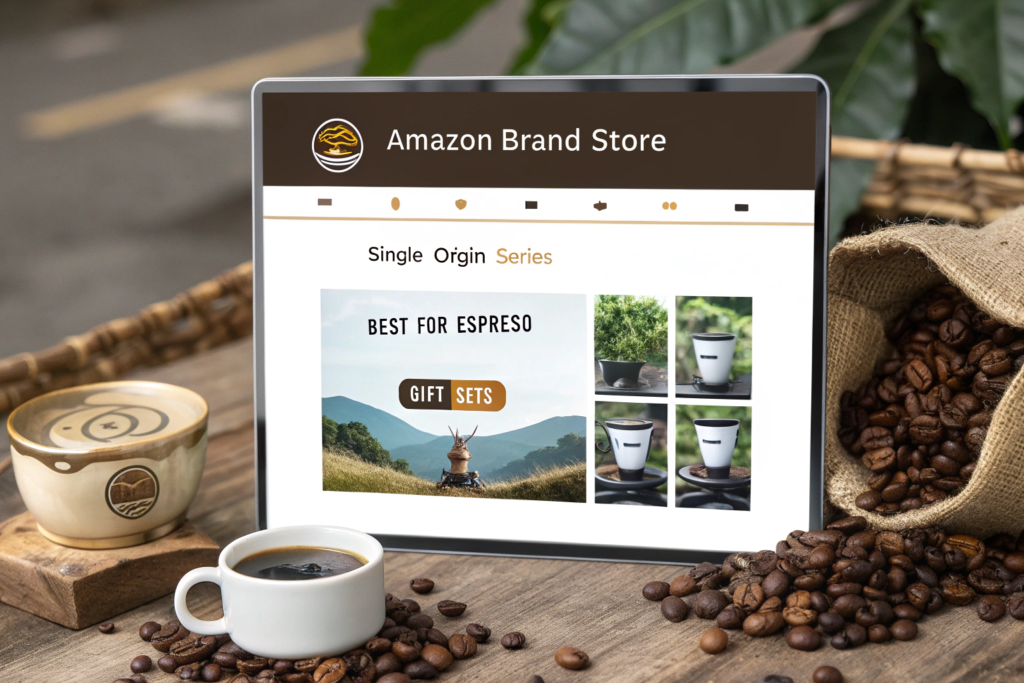
Your Amazon Brand Store is a free multi-page microsite within Amazon. It’s where you can showcase your entire portfolio, tell your brand story with video, and create a curated shopping experience. Drive traffic to it from your individual product listings, social media, and even packaging inserts. Amazon Posts (similar to social media feeds) allow you to publish lifestyle content that appears on your product pages and in a dedicated feed. They keep your brand top-of-mind and engage shoppers who are browsing but not ready to buy. Together, they transform you from a commodity seller into a recognizable brand. For example, our Brand Store for Shanghai Fumao wouldn't just sell coffee; it would educate about Yunnan terroir, which builds a premium perception.
How do you run profitable Amazon Advertising (PPC)?
Organic search is the goal, but paid advertising (PPC) is the fuel to get you there. Amazon’s ad platform is a powerful tool to target high-intent shoppers, but it can burn cash fast if not managed with surgical precision.
Run profitable PPC by starting with targeted Sponsored Product campaigns using exact-match keywords, structuring campaigns around specific goals (launch, branding, harvesting), and relentlessly optimizing based on ACoS (Advertising Cost of Sale) and conversion data.
What is a good ACoS for coffee, and how do you achieve it?
ACoS (Advertising Cost of Sale) = (Total Ad Spend / Total Ad Sales) x 100. It’s your key profitability metric.
- Break-even ACoS: This is your profit margin. If your net margin after all costs (product, FBA fees, shipping to Amazon) is 30%, your break-even ACoS is 30%. Anything below is pure profit from ads.
- Target ACoS: For coffee, a target ACoS of 20-35% is common, but you must calculate your own number. New product launches will have a higher ACoS as you gather data.
To achieve a good ACoS:- Start with Exact & Phrase Match: Target very specific keywords from your research (e.g., “low acid whole bean coffee”). Avoid broad match initially—it wastes money.
- Use Negative Keywords: Add terms like “k-cup,” “instant,” “ground” if you only sell whole bean, to prevent irrelevant clicks.
- Bid Strategically: Bid higher on high-converting keywords (found in your search term report) and lower on exploratory ones.
- Optimize Listings: Your organic conversion rate directly impacts your ad efficiency. A better-converting listing lowers your ACoS.
How should you structure your initial PPC campaigns?
Launch with three separate Sponsored Products campaigns:
- Auto-Targeting Campaign: Let Amazon find relevant keywords for you. Use this for discovery. Set a lower daily budget.
- Manual Exact/Phrase Match Campaign: Use your top 20-30 researched keywords here. This is your core, controllable campaign. Set a higher budget.
- Product Targeting Campaign: Target your product to appear on detail pages of complementary products (e.g., French presses, grinders) or competitors' pages.
Analyze the search term report weekly. Pull high-performing keywords from your auto campaign into your manual campaign. Add non-performing search terms as negative keywords. This continuous optimization cycle is how you scale profitably.
Conclusion
Selling coffee successfully on Amazon is a multi-disciplinary effort. It requires the marketer’s skill in SEO and copywriting, the operator’s precision in logistics and inventory management, and the merchant’s savvy in pricing and promotion. It’s not a side project; it’s a core channel that demands dedicated strategy and execution.
The reward is access to a vast, high-intent audience and the powerful logistics engine of FBA. By optimizing your listing for both algorithms and humans, mastering FBA’s complexities, building authentic social proof, and running data-driven advertising, you can transform Amazon from a crowded marketplace into your most reliable and scalable sales channel.
If you are a roaster or brand looking to launch or expand on Amazon with a high-quality, consistently supplied product, a reliable wholesale partner is crucial. BeanofCoffee can provide the stable supply and professional packaging support you need. For inquiries about bulk sourcing for your Amazon business, contact our Export Manager, Cathy Cai: cathy@beanofcoffee.com. Let’s build your Amazon success together.