
You see the "USDA Organic" seal on a bag of coffee, and you know it commands a premium price. Your customers feel good about buying it, and you feel good about selling it. But have you ever stopped to think about the immense struggle that goes into earning that little green seal? From the farmer's perspective, "organic" isn't a marketing buzzword; it's a daily, uphill battle against pests, weeds, and disease, all fought without the quick-fix solutions of conventional agriculture. The pain point for us, the growers, is that the premium price often barely covers the massive increase in labor, risk, and lower yields that come with a commitment to organic practices.
Honestly, the biggest challenges of organic coffee farming are the relentless, labor-intensive battles against pests and weeds, the significantly lower and less predictable crop yields, and the constant risk of a single disease outbreak wiping out a huge portion of the harvest without the safety net of chemical fungicides. It's a high-risk, high-effort endeavor that requires immense patience, expertise, and a deep financial commitment.
On our 10,000 acres in Yunnan, we have dedicated sections for organic cultivation. I've walked those fields and compared them to our conventional plots. The difference in the daily struggle is palpable. Choosing organic is a conscious decision to take the harder path. Let's break down the real-world challenges we face every single day to produce the organic coffee you value.
How Do You Fight Pests and Diseases Without Chemicals?
In conventional farming, if you have a pest problem, you spray a pesticide. If you have a fungus, you spray a fungicide. It's a quick, effective, but blunt tool. In organic farming, that entire toolbox is locked away.
Can't you just let nature take its course? If we did that, we would have no coffee to sell. Organic farming is not "do-nothing" farming; it's "do-everything-smarter" farming. We have to become ecologists, creating a balanced, resilient ecosystem where the "good guys" (predatory insects) keep the "bad guys" (pests) in check. It's a constant, delicate balancing act.
Our primary enemy is the Coffee Berry Borer, a tiny beetle that drills into the coffee cherry and ruins the bean inside. Another major threat is Coffee Leaf Rust, a fungus that can defoliate and kill an entire plantation.

What are the organic pest control strategies?
- Integrated Pest Management (IPM): This is the core philosophy. It involves constant monitoring and using a combination of tactics. We introduce and encourage populations of beneficial insects, like ladybugs and lacewings, that prey on pests.
- Trapping: We deploy thousands of traps throughout the plantation. These traps use pheromones or other attractants to lure pests like the Coffee Berry Borer away from the valuable cherries. This is incredibly labor-intensive to set up and maintain.
- Promoting Biodiversity: By planting a variety of shade trees and other native plants (a practice known as agroforestry), we create a complex habitat that supports a wider range of birds and insects, which helps to naturally control pest populations.
How do you combat fungal diseases like rust?
This is even harder. Without chemical fungicides, our main weapons are prevention and resilience.
- Resistant Varieties: We strategically plant coffee varieties, like some strains of Catimor, that have a natural genetic resistance to certain types of Coffee Leaf Rust.
- Pruning and Spacing: We meticulously prune our trees and ensure proper spacing to promote air circulation. Good airflow helps the leaves dry faster after rain, making it harder for fungal spores to take hold. This requires a highly skilled and constant workforce.
Why Are Organic Yields Lower and More Risky?
In a perfect world, organic farming would produce just as much coffee as conventional farming. We do not live in a perfect world.
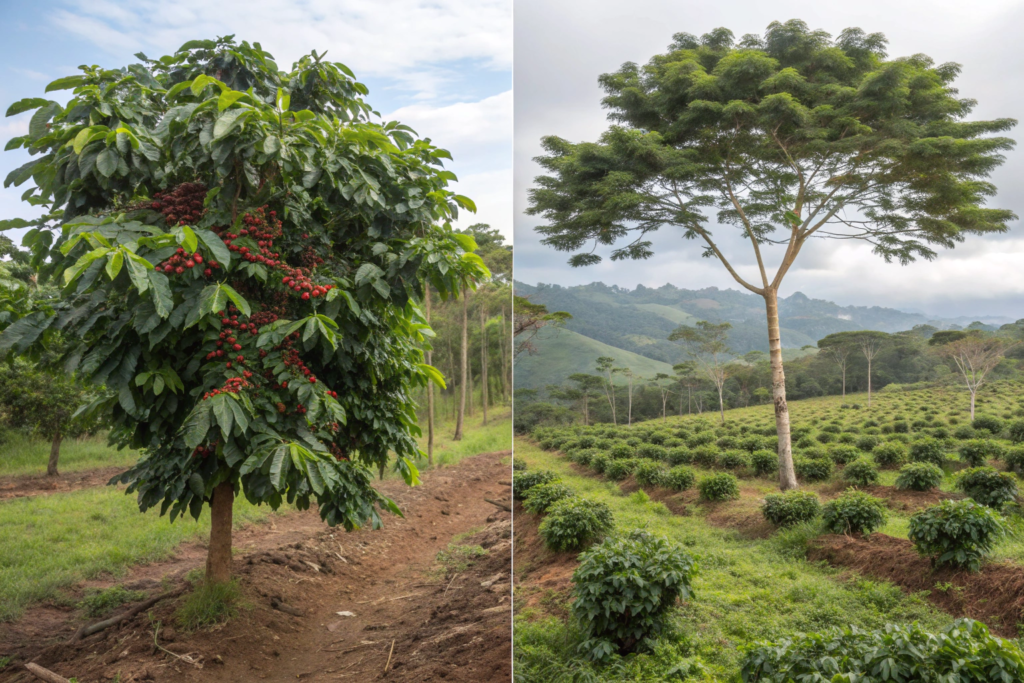
Don't organic practices improve the soil and lead to healthier plants? Yes, in the long run, they absolutely do. Healthier soil leads to healthier plants. However, we cannot escape a simple reality: without synthetic fertilizers to provide a super-dose of nutrients, and without herbicides to eliminate all competition, the coffee tree simply produces less fruit. Organic yields are typically 20-30% lower than conventional yields.
This yield gap is a fundamental economic challenge. We are using the same amount of land and almost double the labor to produce less coffee.
What causes the yield gap?
- Nutrient Competition: We use natural compost and organic matter to fertilize our soil. This is fantastic for soil health, but it releases nutrients slowly. The coffee trees also have to compete for these nutrients with the cover crops and "weeds" that are part of a healthy organic system. A synthetic fertilizer, in contrast, is like an IV drip of nutrients directly to the plant.
- Weed Competition: Weeds are a major problem. They compete with the coffee trees for water, sunlight, and nutrients. In our organic plots at Shanghai Fumao, we have teams of workers who manually weed the fields with machetes and hoes. This is back-breaking, expensive work. A conventional farm can simply spray an herbicide.
- Crop Loss: Despite our best IPM efforts, we will always lose a certain percentage of our crop to pests and diseases. This accepted loss is factored into the organic model, but it's a real financial hit.
What does this mean for the buyer?
The lower yield is the primary reason that organic coffee has a higher base cost. The 'organic premium' you pay is not just for the certification logo; it's directly compensating the farmer for producing less coffee from the same piece of land and for the immense amount of manual labor required. Organic coffee farms, free from synthetic fertilizers and pesticides, rely on nature's rhythms—rotating crops, nurturing soil with compost, and hand-picking pests—to maintain health. This means each bush yields fewer cherries, their vibrant red skins glistening with the morning dew but smaller in size, as if the earth itself is conserving its bounty. The farmer, often rising before dawn, spends hours meticulously pruning branches to let sunlight filter through, gently raking mulch to feed the soil, and carefully inspecting every leaf for signs of disease, all done by hand.
What Is the "Bureaucratic Challenge" of Certification?
Becoming and staying certified organic is not just about farming practices; it's about meticulous, exhaustive documentation. The paperwork is a huge and often hidden challenge.
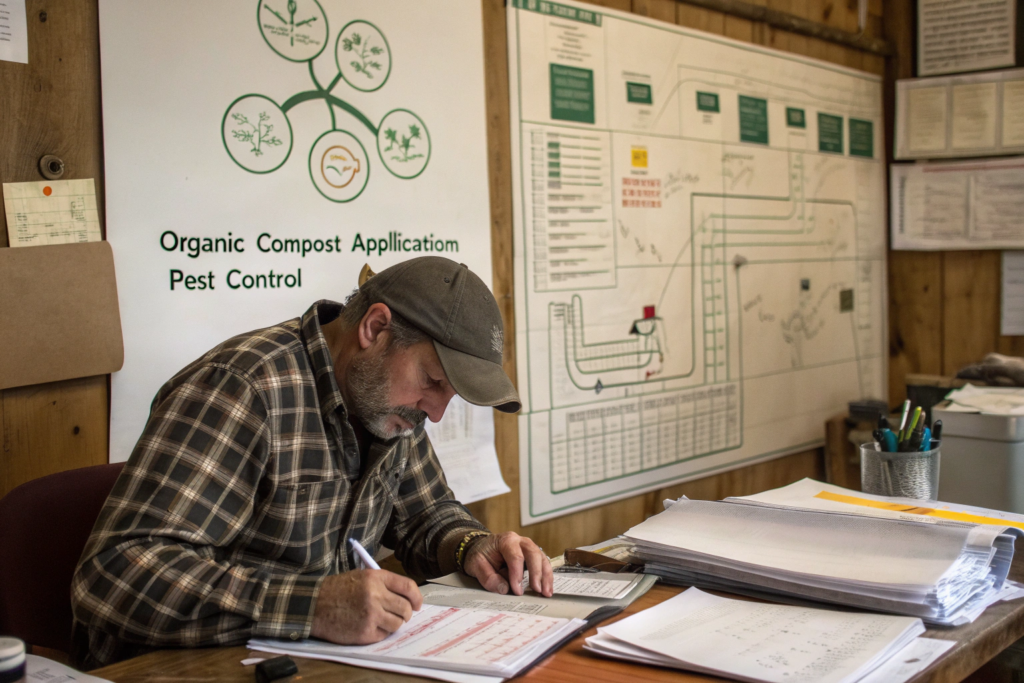
Isn't certification just a single inspection? If only it were that simple. The organic certification process is a continuous cycle of record-keeping, inspections, and audits. We have to maintain a detailed "paper trail" for every single input and activity on our organic plots. Every bag of organic compost, every trap deployed, every hour of manual weeding must be logged and traceable. This creates a significant administrative burden, requiring dedicated staff just to manage the compliance paperwork.
What does the documentation involve?
We have to maintain:
- Farm Maps: Detailed maps showing the clear separation between organic and conventional plots, including buffer zones.
- Input Records: Receipts and logs for every approved organic input we purchase (like certified organic compost).
- Activity Logs: Daily or weekly logs of all activities, from pruning and weeding to pest monitoring and harvesting.
- Harvest & Sales Records: We must be able to trace every bag of certified organic coffee from the specific plot where it was picked, through processing, all the way to the final sale. This is essential for issuing Transaction Certificates.
What happens during an inspection?
Once a year, an inspector from an accredited body (like ECOCERT or Ceres) visits our farm. They spend days walking the fields, interviewing our workers, and, most importantly, auditing our records. They will cross-reference our sales records with our harvest logs and our fertilizer purchase receipts to ensure everything matches up. Any discrepancy can put our certification at risk.
Why Is the Financial Risk So Much Higher?
When you combine lower yields, higher labor costs, and the ever-present threat of a catastrophic crop loss, the financial equation for organic farming becomes precarious.
But they get a higher price, so doesn't that balance it out? It helps, but it doesn't eliminate the risk. The organic price premium is relatively stable, but the costs and yield are highly variable. A particularly bad year for a specific pest, or a severe drought, can decimate an organic crop, while the conventional crop next door might be saved by a chemical intervention. The organic farmer is constantly walking a financial tightrope without a safety net. This higher level of risk is a significant barrier for many small farmers who cannot afford to gamble their entire livelihood on one bad season.
What is the risk of contamination?
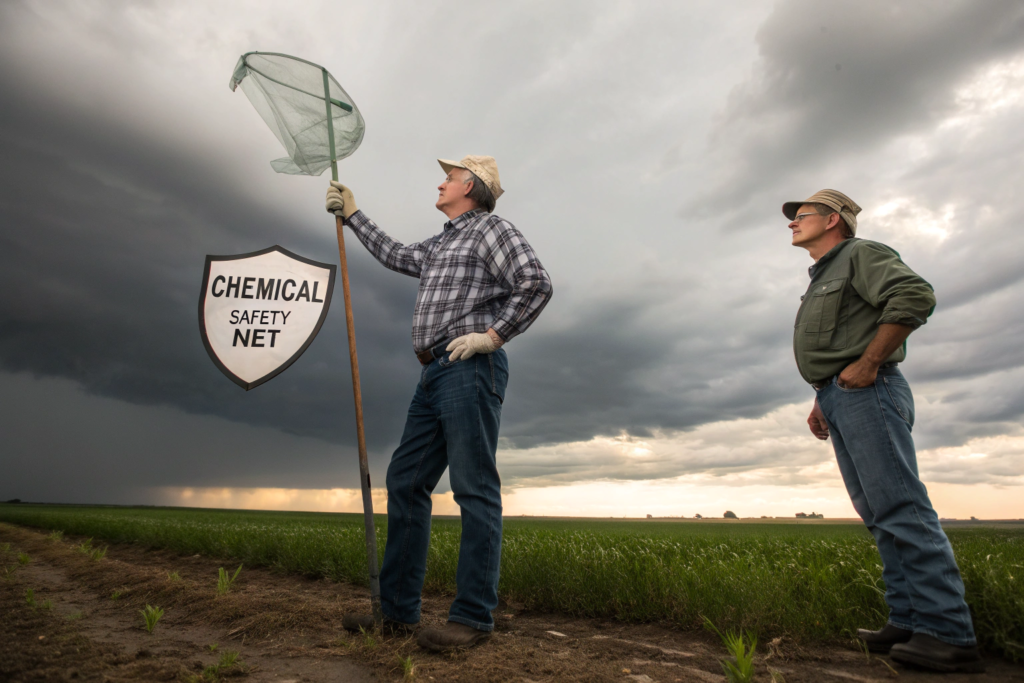
We have to maintain a "buffer zone"—a strip of land between our organic and conventional plots. The coffee from this buffer zone cannot be sold as organic, as it's at risk of "drift" from chemical sprays used on the neighboring plot. This is another source of lost revenue. There is also a constant risk of accidental contamination during processing or transport, which requires separate equipment and strict protocols.
What about the 3-year transition period?
For a conventional farm to become certified organic, it must go through a 3-year transition period. During these three years, the farmer must adhere to all organic standards (no chemicals, intensive manual labor), but they cannot sell their coffee as organic or receive the organic price premium. They have all the costs and lower yields of organic farming but with the income of conventional farming. This is a massive financial hurdle that deters many farmers from making the switch.
Conclusion
The challenges of organic coffee farming are immense. It is a constant struggle against nature's pressures, a battle fought with knowledge and hard labor instead of chemicals. It involves lower yields, higher costs, mountains of paperwork, and a level of financial risk that is not for the faint of heart. So, the next time you see that organic seal, know that it represents more than just a lack of pesticides. It represents a farmer's deep commitment, incredible resilience, and a conscious choice to take the harder path in the pursuit of a healthier planet and a purer product. It's a choice we are proud to have made.
We believe the challenges are worth it, and we believe the quality of our organic Yunnan coffee speaks for itself. We invite you to be a part of this story by supporting farmers who make this difficult commitment. If you are looking for a reliable, long-term supply of certified organic coffee from a producer who understands the challenges firsthand, we are ready to be your partner. Contact our coffee specialist at cathy@beanofcoffee.com.