You've found the right supplier. The price is competitive. The samples cup well. Then, the contract arrives. It's dense, legalistic, and suddenly everything feels uncertain. What if the beans arrive and don't match the sample? Who pays if the ship is delayed? What happens if we just disagree? For buyers like Ron—busy, decisive, and risk-aware—this document is either a safety net or a trap. Which one will it be?
The key elements of a coffee sales contract are the precise definition of commodity and quality (including sample approval terms), clear quantity and pricing mechanisms (fixed or differential-based), delivery terms governed by Incoterms®, payment terms, shipment period, and a binding arbitration clause specifying the governing contract (GCA or ECF) and venue. These elements work together to eliminate ambiguity. In the international coffee trade, ambiguity is not flexibility—it is liability.
I've signed hundreds of these contracts, both as a buyer and now as an exporter at Shanghai Fumao. Let me tell you, the most expensive mistakes I ever made weren't about price. They were about things I assumed were in the contract but weren't actually written down. Let's break down what must be written down.
What Product and Quality Definitions Must Be Explicit?
You cannot sell "good coffee." You can only sell coffee that meets specific, measurable, pre-agreed criteria. This is where most disputes begin.
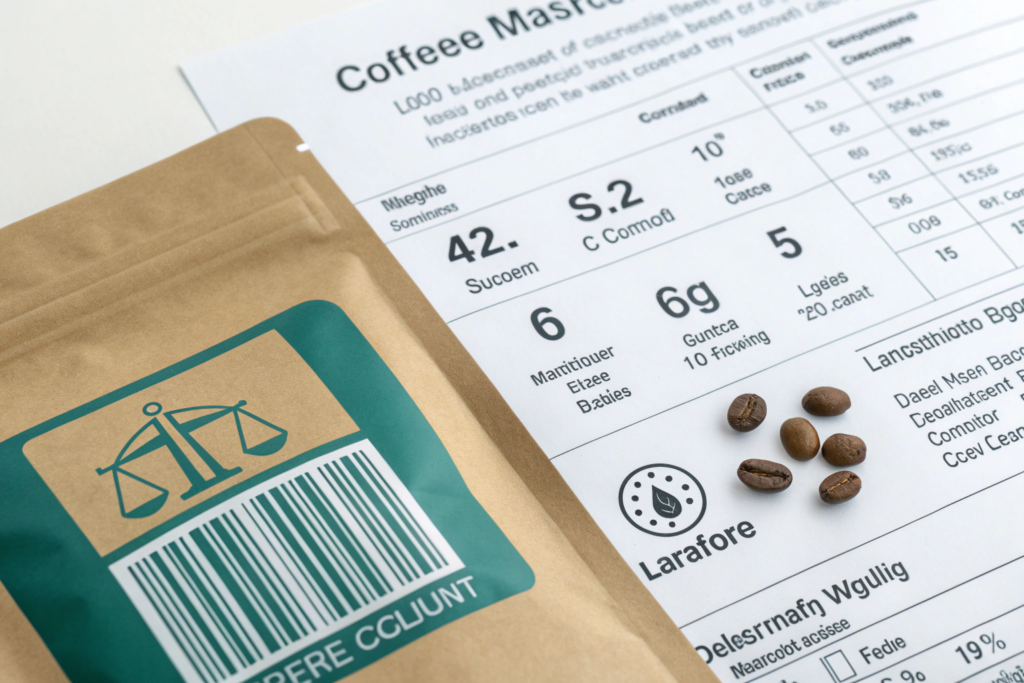
A coffee contract must explicitly state the commodity (e.g., "Green Arabica Coffee, Washed"), the grade or screen size, permitted defect count, moisture content, and critically, the reference sample that defines the acceptable quality standard. Vague descriptions like "FAQ" (Fair Average Quality) are insufficient for specialty contracts. You must anchor quality to a physical or digitally documented benchmark.
I learned this the hard way early in my career. We agreed to a price based on a "good commercial grade." The coffee arrived, and the buyer rejected it. He said it was "not as good as last year." I thought it was fine. We had no sample locked in the contract. We spent three months and thousands in legal fees to settle. Now, every contract we sign references a specific sample code.
Why Is "Subject to Approval of Sample" (SAS) the Industry Standard?
This is not optional for specialty coffee. SAS terms protect both parties. The most common variants are:
| Term | Full Name | Meaning |
|---|---|---|
| SAS-NANS | Subject to Approval of Sample – No Approval No Sale | If the buyer rejects the sample, the contract is automatically canceled. No obligation. |
| SAPSS | Subject to Approval of Pre-Shipment Sample | Buyer approves a sample drawn from the actual batch before shipment. |
| SASR | Subject to Approval of Sample Replacement | Buyer rejects; seller offers a replacement coffee matching the contract profile. |
Without these terms, you are buying sight unseen. For a price-sensitive buyer in the U.S., SAS-NANS is the cleanest. It eliminates quality risk entirely.
What Certifications and Physical Parameters Need Verification?
Beyond taste, the contract must list required certifications (Organic, Rainforest Alliance, Fair Trade, etc.) and physical specifications. A modern contract for high-end Yunnan coffee, for example, should stipulate:
- Moisture content: Typically 10-12%
- Screen size: e.g., 85% above screen 15
- Defect count: Specialty grade requires zero primary defects and less than 5 secondary defects per 300g sample (Specialty Coffee Association standards)
- Altitude: If relevant to the flavor profile (e.g., "grown above 1,600m")
At Shanghai Fumao, we include these specs as an appendix to every contract. It prevents the "I thought it was Grade 1" argument entirely.
How Is Price Structured and Protected from Market Volatility?
Coffee prices move daily. Between contract signing and shipment, the market can swing 20%. Your contract must decide who carries that risk.
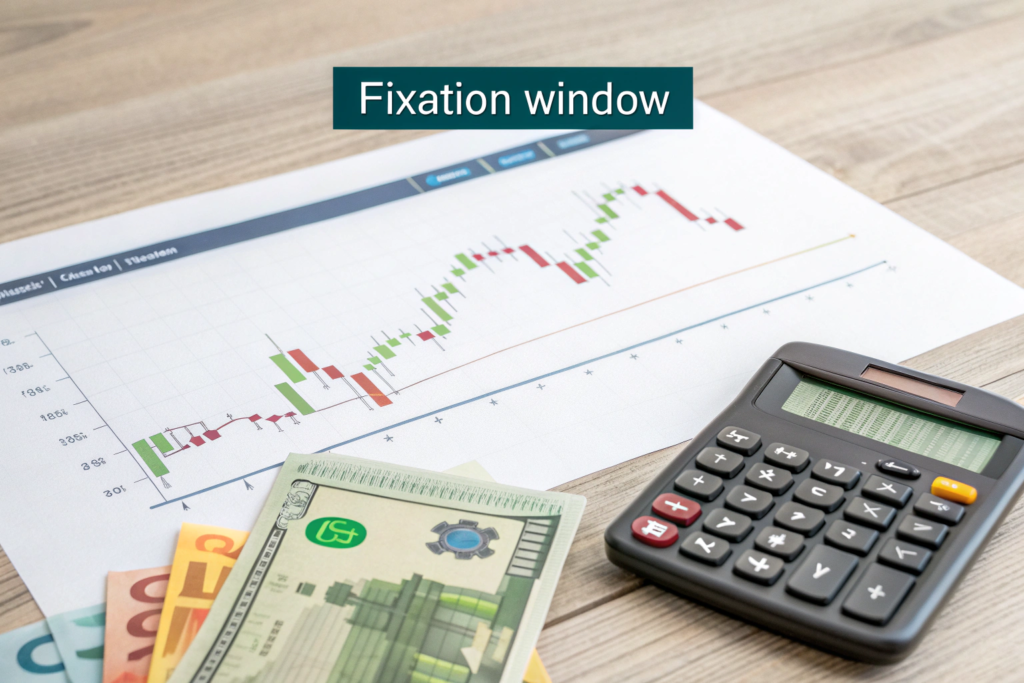
Coffee contracts define price either as a fixed price (set at signing) or as a differential to a futures market (e.g., "New York 'C' + $0.30/lb"), with a clear mechanism for who has the "call" (right to fix) and the fixation period. This is especially critical for large-volume buyers. Leaving the price "to be fixed later" without defining the rules is a recipe for conflict.
I have a client in Melbourne. He locks in differentials with us months before harvest, then fixes the futures price when his own customer orders are confirmed. This is smart treasury management. But it only works because our contract explicitly states: "Buyer's call. Fixation window: January 1 – March 31. Minimum fixation increment: 5 metric tons."
Fixed Price vs. Differential: Which Is Right for Your Business?
- Fixed Price: Simple. Certain. Best for small volumes, spot purchases, or when you believe current prices are low. Risk: You lose if the market drops.
- Differential / "On Call": You agree on a premium/discount to the futures market (e.g., "minus 10¢"). You fix the actual futures price later. This decouples the "quality/value" negotiation from the "market timing" decision. It is the dominant model for large, professional buyers.
If you are a trading company or large distributor, you should be comfortable with differential pricing. It gives you control over your commodity price risk. The ICE Futures US website provides daily settlement prices used for these fixations.
What Are the Standard Payment Terms in Coffee Trade?
Payment terms vary by trust and region. The most common are:
- Cash Against Documents (CAD): Seller ships, presents documents (BL, Invoice, COO) to the bank; buyer pays to get documents. Common for first-time relationships.
- Letters of Credit (L/C): Bank-to-bank guarantee. Reduces risk but incurs fees.
- Advance Payment / Wire Transfer: Typically 30-50% upfront, balance against documents. Common for high-trust, long-term partners.
We offer CAD for new U.S. clients. It balances security for us (we don't release title without payment) and cash flow for them (they don't pay months before shipment). As trust builds, we shift to net 30 days from BL date. This is a competitive advantage we offer as a stable, well-capitalized supplier.
What Delivery and Logistics Terms Prevent Costly Surprises?
Who pays for the freight? Who bears the risk if the ship sinks? At what exact moment does the coffee become your problem? Incoterms® answer these questions, but only if you use them correctly.
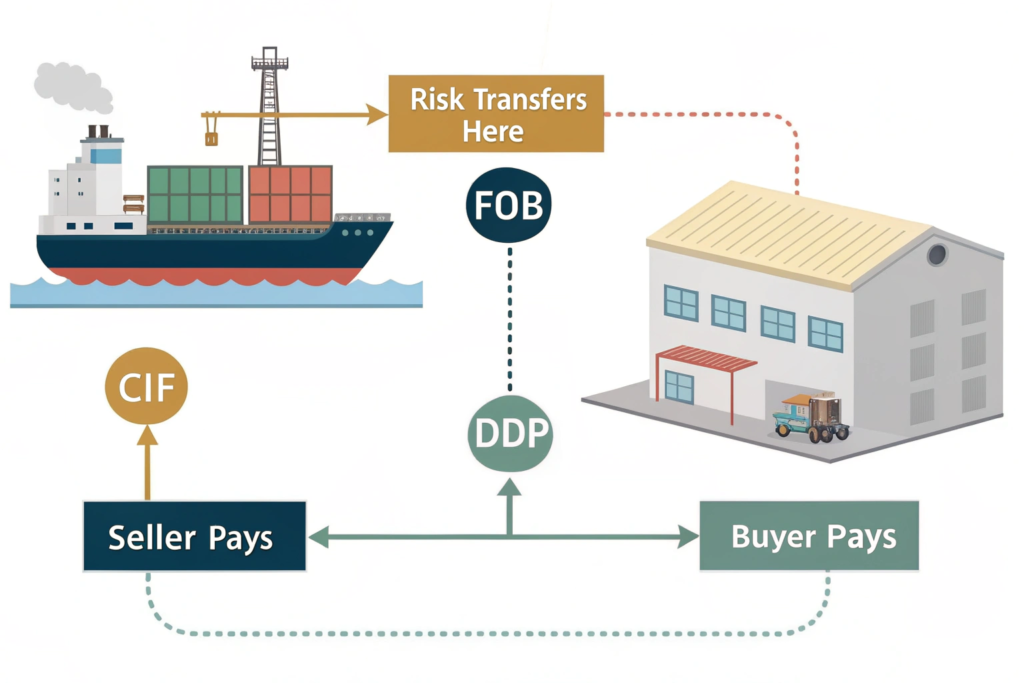
Coffee contracts must specify the Incoterm® (e.g., FOB, CIF, FCA, EXW), the named place or port, and the edition year of the Incoterms® rules (e.g., Incoterms 2020). This single line of text allocates thousands of dollars in cost and determines your insurance obligations.
A U.S. buyer recently told me, "We always buy CIF." Why? "Because the seller pays the freight." This is a misunderstanding. In CIF (Cost, Insurance, Freight), the seller pays, but risk transfers to the buyer the moment the cargo crosses the ship's rail. The buyer owns the risk during the ocean voyage, even though the seller arranged the ship. If you want the seller to bear risk until the coffee arrives at your door, you need DDP (Delivered Duty Paid).
Which Incoterms Are Most Common in Coffee?
| Incoterm | Seller Pays Freight? | Risk Transfers | Buyer Responsible For |
|---|---|---|---|
| EXW (Ex Works) | No | At seller's warehouse | Everything: trucking, export, ocean, import, delivery |
| FOB (Free on Board) | No (loads to ship) | When on board the vessel | Ocean freight, insurance, destination charges |
| CIF (Cost, Insurance, Freight) | Yes | When on board the vessel | Destination charges, import duty, onward transport |
| DDP (Delivered Duty Paid) | Yes | At buyer's delivery address | Unloading (often) |
For most first-time buyers from China, FOB (China port) is transparent. You see the freight invoice. You control the forwarder. You avoid the seller marking up shipping. For experienced buyers who value simplicity, CIF or CFR is convenient. The International Chamber of Commerce provides the official Incoterms® guidelines.
What Is a "Shipment Period" and Why Does It Matter?
A contract must state when the coffee ships. This is not a single date. It is a window: "February 2026" or "March/April 2026." Why a window? Because harvests, container availability, and port schedules are not perfectly predictable.
Crucially, shorter shipment periods reduce your exposure to market price fluctuations. If you agree to "March/April shipment," the seller can ship on March 1st or April 30th. That's a 61-day window. If prices rise, the seller ships early (locking in the sale). If prices fall, the seller delays, hoping you might cancel or renegotiate. This is a subtle but real risk. Whenever possible, negotiate for a single month shipment.
How Are Disputes Resolved Without Expensive Litigation?
If your coffee arrives and you believe it is "off grade," do you sue the supplier in a Chinese court? No. That would take years and cost a fortune. The coffee trade has a better system.
Standard coffee contracts require binding arbitration under the rules of a recognized trade association, most commonly the Green Coffee Association (GCA) in the U.S. or the European Coffee Federation (ECF) in Europe. Your contract must explicitly state which rules apply and where the arbitration will be held.
This is non-negotiable. Do not accept a contract that is "subject to the laws of Country" without an arbitration clause. You are giving up the efficiency and expertise of the trade system.
GCA vs. ECF: What's the Difference?
- GCA (New York): U.S.-based contracts. Arbitration in New York. English language. Well-understood by North American buyers. Appeals are heard in New York. The Green Coffee Association publishes standard contract forms.
- ECF (European): Used for European contracts. Arbitration can be held in different European locations (London, Trieste, Hamburg, Le Havre). Subtle differences in interpretation and national law apply.
If you are a U.S. buyer sourcing from China, insist on GCA arbitration. It is the standard for coffee entering the American market. It is fair, fast, and the arbitrators are experienced coffee traders, not generalist judges. We at Shanghai Fumao routinely sign GCA contracts for our North American clients.
What About Quantity Tolerances and Force Majeure?
Two more "boring" clauses that save relationships:
- Quantity Tolerance: Bags are counted, but scales vary. A standard tolerance is ± 5% at contract price. Without this, a 2% overage can technically be rejected.
- Force Majeure: What happens if the port closes due to a typhoon or a pandemic? This clause should define that the shipment period extends, and neither party is penalized. A vague "Act of God" clause is insufficient. We specify: "If shipment is delayed by more than 30 days due to force majeure, either party may cancel without penalty."
What Modern Contract Innovations Protect Long-Term Partnerships?
The coffee trade is ancient, but contracts are evolving. For buyers and sellers investing in long-term relationships, new elements are becoming standard.
Innovative coffee contracts now include dynamic price adjustment clauses, blockchain-based traceability requirements, sustainability commitments (carbon footprint, water usage), and third-party quality verification mandates. These are not just "nice to have." They are becoming competitive differentiators, especially for European and Australian buyers with ESG mandates.
We are seeing this demand accelerate. A client in Sweden recently requested a contract addendum requiring us to provide a carbon footprint estimate per container and a commitment to reduce it by 5% annually. We agreed. It aligned with our own farm-level sustainability investments.

What Is a "Price Reopener" or "Dynamic Pricing" Clause?
This is a risk-sharing innovation. A price adjustment clause might state: "If the New York 'C' market moves more than 15% between contract signing and shipment, the parties agree to renegotiate the differential in good faith." This prevents the situation where a massive market swing forces one party into crippling losses, which inevitably leads to contract defaults and damaged relationships.
How Is Technology Changing Contract Enforcement?
Smart contracts are moving from hype to reality. Some large roasters now use blockchain-based systems where:
- GPS data from the vessel triggers automatic invoice generation
- IoT sensors in containers confirm temperature/humidity compliance
- Payment is released instantly upon delivery confirmation
For small and medium buyers, this is not yet standard. But the direction is clear: contracts are becoming executable code, not just static documents. We are preparing our systems to be compatible with these requirements as our clients adopt them. The International Trade Centre provides resources on digitalizing trade documentation.
Conclusion
A coffee sales contract is not just a formality. It is the operating system for your commercial relationship. The key elements are not suggestions; they are the guardrails that keep the transaction from careening into dispute.
You must define the quality with a physical sample and SAS terms. You must structure the price clearly—fixed or differential, with the "call" rights specified. You must allocate logistics risk with precise Incoterms and a tight shipment window. You must agree on dispute resolution through GCA or ECF arbitration. And increasingly, you must address sustainability and data transparency to meet evolving market demands.
Every omission is a vulnerability. Every vague phrase is a future argument.
If you are sourcing coffee from China and want contracts that protect both your margin and your peace of mind, this is how we work at BeanofCoffee. We don't hide behind ambiguous terms. We use standard GCA contracts, we provide pre-shipment samples with lab analysis, and we define every variable that matters.
To discuss your specific contract requirements—whether you need differential pricing, DDP delivery, or sustainability reporting—contact our Sales Director, Cathy Cai. She will work with our legal and logistics teams to ensure your contract is both competitive and airtight. Email Cathy at cathy@beanofcoffee.com. Let's build a partnership on a foundation of absolute clarity.