
You’re on a call with a potential supplier, reviewing a contract for Yunnan Arabica. They mention the coffee is "fully washed, screen 17/18, with a moisture content of 11.2%, sold on FOB terms." You nod along, but a part of you wonders: do I really know what all this means? For a business owner like Ron, who makes decisions based on quality, timeliness, and security, not understanding this language isn't just embarrassing—it's a direct business risk. It can lead to costly misunderstandings, receiving the wrong product, or agreeing to unfavorable terms.
So, what are the key terms every coffee buyer should know? Mastering the core vocabulary of coffee trading is about protecting your investment. The essential terms span three areas: quality & grading (to know what you're buying), logistics & trade (to know how you're buying it), and flavor & processing (to know what to expect in the cup). At Bean of Coffee, we believe transparency starts with clear communication. We want our partners to speak the language fluently, ensuring every deal is built on mutual understanding.
Let's demystify the jargon and build your confidence as a savvy buyer.
What are the essential quality and grading terms?
This is the language of specification. It objectively describes the physical and qualitative attributes of the green coffee you are purchasing. These terms form the basis of your contract and are your first line of defense against receiving subpar goods.
Think of this as the "spec sheet" for coffee. It answers the questions: How big are the beans? How dense are they? How many defects are allowed? What is the objective quality score?
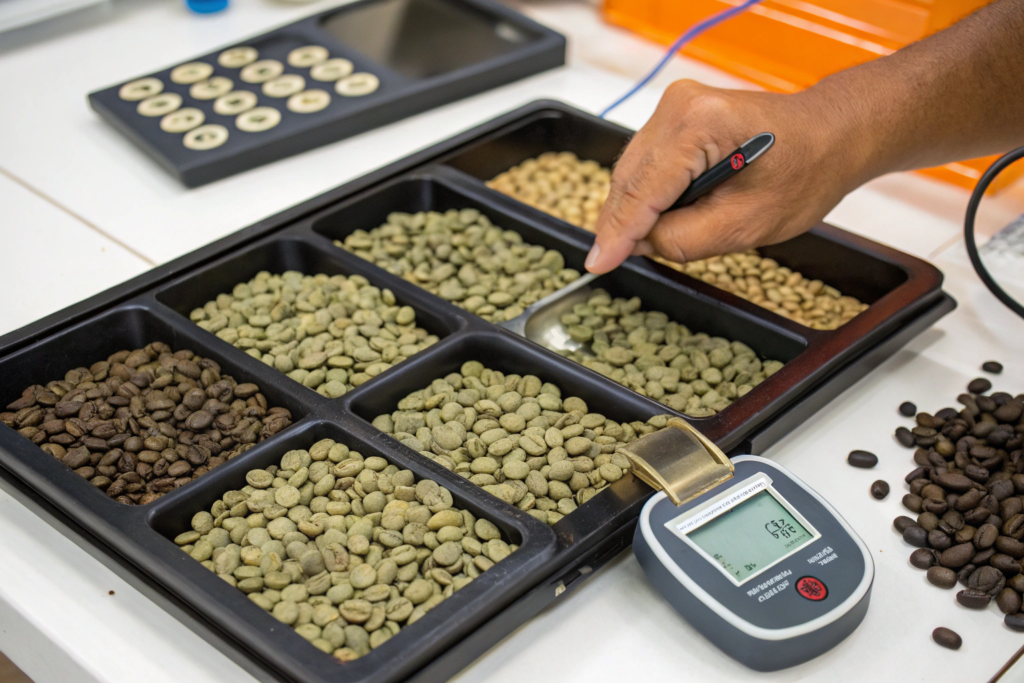
What do "Screen Size" and "Bean Density" mean?
- Screen Size: This refers to the bean's physical size, measured by passing beans through a series of screens with holes of specific diameters. Size is given in 64ths of an inch. Screen 17/18 means the beans pass through a screen with 18/64" holes but are retained on a screen with 17/64" holes. Larger beans (e.g., Screen 18+) are often associated with higher-grown, denser coffee and command a premium. It's a key indicator of uniformity.
- Bean Density: This measures how hard and compact a bean is, often correlated with altitude. Denser beans (from higher altitudes) roast more evenly and are associated with more complex acidity. It's assessed by feeling the bean's weight or using specialized tools. A high-density Yunnan Arabica from our Baoshan farms is a mark of quality.
How are "Defect Count" and "Moisture Content" measured?
- Defect Count (or Grade): Following standards like the SCAA/SCA Green Coffee Classification, beans are graded by the number of "full defects" per sample. A defect is a flaw like a black bean, sour bean, or severe insect damage. A Grade 1 specialty coffee allows 0-5 full defects per 300g sample. This is a non-negotiable quality checkpoint.
- Moisture Content: Expressed as a percentage (e.g., 10-12%), this is the amount of water in the bean. It's critical for stability during shipping and storage (see our article on preventing mold). The contract will specify a range. We guarantee our Bean of Coffee shipments are within the safe 10-12% range to ensure they arrive in perfect condition.
What are the critical logistics and trade terms?
This is the language of the deal. It defines responsibilities, costs, and risks during the journey from the supplier's warehouse to yours. Misunderstanding these can lead to unexpected charges, delays, and legal disputes.
These are often called Incoterms® (International Commercial Terms), standardized by the International Chamber of Commerce. They are the rulebook for international shipping.
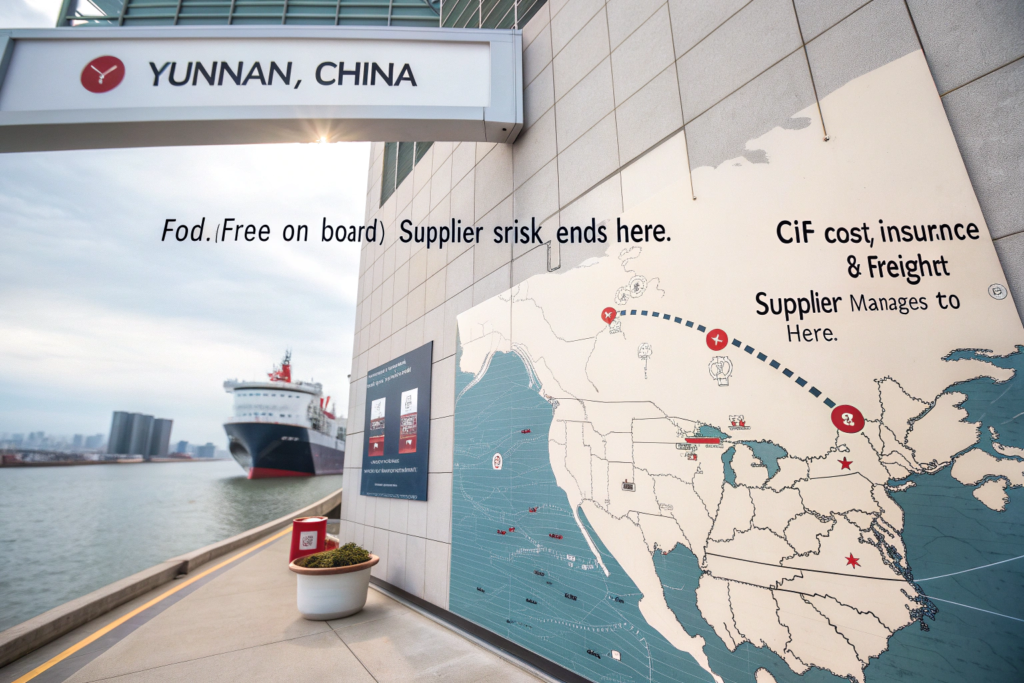
What is the difference between FOB and CIF?
- FOB (Free On Board) [Named Port of Origin]: The most common term for coffee. The seller (us) is responsible for all costs and risks until the coffee is loaded onto the vessel at the origin port (e.g., FOB Shanghai). Once it's over the ship's rail, the risk and cost transfer to you, the buyer. You pay for ocean freight, insurance, and destination port charges. FOB gives you, the buyer, more control over shipping and insurance costs.
- CIF (Cost, Insurance and Freight) [Named Port of Destination]: The seller pays for the cost, marine insurance, and freight to bring the coffee to the port you name. However, risk still transfers to the buyer once the goods are on board the vessel at the origin port. The seller simply arranges and pays for the shipping on your behalf. It's less common as buyers prefer to control their own freight logistics.
What do "Letter of Credit" and "Bill of Lading" mean?
- Letter of Credit (L/C): A financial instrument issued by your bank guaranteeing payment to the seller, provided the seller presents documents proving they fulfilled the contract (e.g., shipped the correct coffee). It's a secure payment method for large or first-time transactions, reducing risk for both parties.
- Bill of Lading (B/L): This is the most important shipping document. It serves three purposes: a receipt from the carrier confirming goods were received, a contract for carriage, and a document of title. The "clean on board" Bill of Lading is required to get payment under an L/C and to take possession of the goods at the destination port.
What are the key flavor and processing terms?
This is the language of expectation. It describes how the coffee was transformed from cherry to bean and what sensory profile you can anticipate. This bridges the gap between the green bean specs and the final roasted product.
Understanding these terms allows you to buy with intention, matching a coffee's profile to your market's taste or your blend's needs.
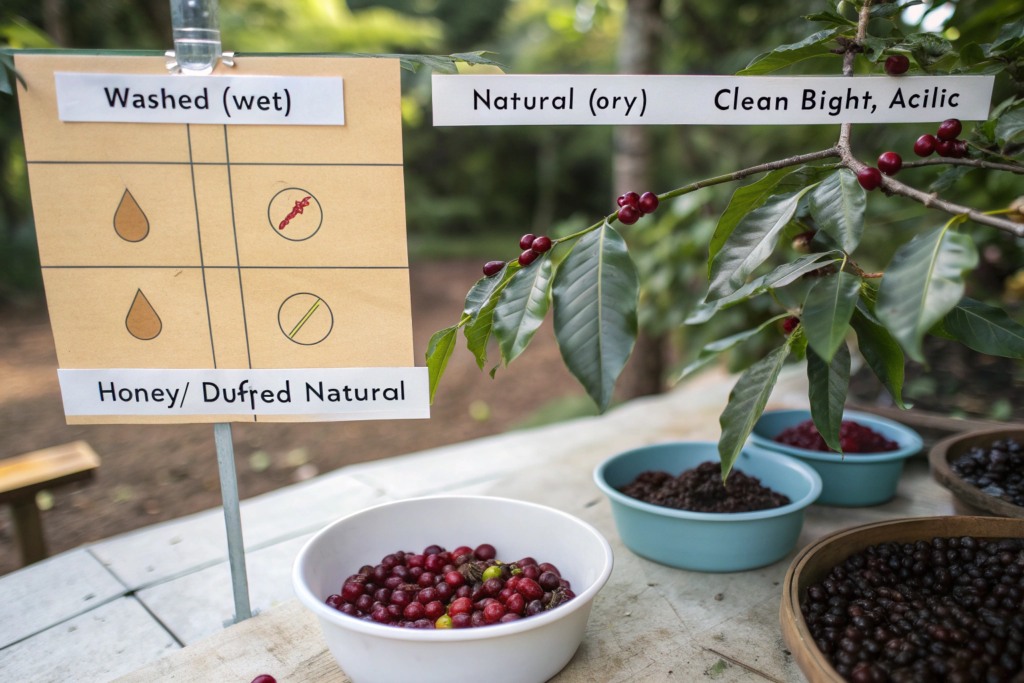
What are the main coffee processing methods?
- Washed (or Wet Process): The fruit pulp is mechanically removed, and the beans are fermented in water to remove the sticky mucilage, then washed and dried. This method highlights the bean's intrinsic characteristics, resulting in a clean, bright, and acidic cup with clarity of flavor. It's the standard for most of our Yunnan Arabica exports.
- Natural (or Dry Process): Whole cherries are dried in the sun. The beans ferment inside the fruit, absorbing sugars. This yields a coffee with heavy body, intense fruitiness, and lower acidity. It's more unpredictable but can be spectacular.
- Honey/Pulped Natural: A middle ground. The skin is removed, but some mucilage is left on the bean during drying. It offers a sweet, syrupy body with some of the fruitiness of a natural, but more balance. The color (yellow, red, black) indicates how much mucilage was left.
How do "Cupping Score" and "Flavor Notes" guide buying?
- Cupping Score: A quantitative quality assessment using the Specialty Coffee Association (SCA) protocol. Coffees scoring 80+ points are considered "specialty grade." 80-84 is very good, 85-89 is excellent, 90+ is exceptional. This score provides an objective, third-party-style benchmark to compare coffees from different origins and suppliers. We provide cupping scores for all our Bean of Coffee lots.
- Flavor Notes: The descriptive aromas and tastes identified by professional cuppers (e.g., "stone fruit, chocolate, tea-like"). These are subjective but guided by the SCA Flavor Wheel. They help you understand the coffee's personality—is it nutty and chocolatey (good for espresso blends) or floral and citrusy (good for filter)? They set the expectation for the roasting and marketing journey.
What are the business and certification terms?
This language covers the commercial and ethical context of the purchase. It speaks to sustainability, pricing models, and supply chain ethics.
These terms are increasingly important for brand storytelling and meeting consumer demand for transparency.
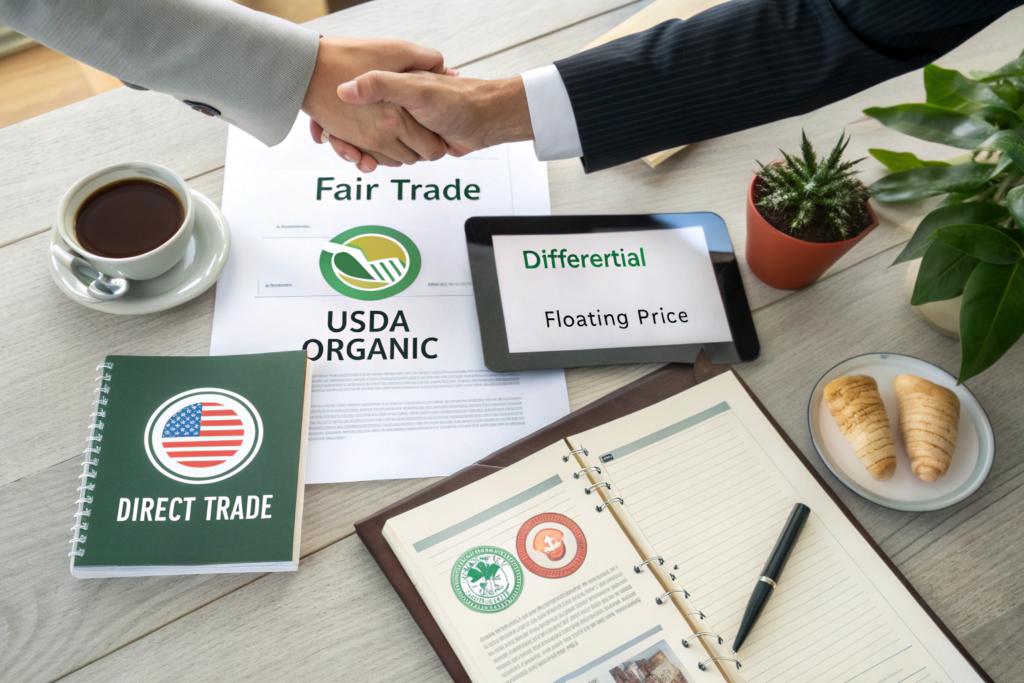
What do "Direct Trade," "Fair Trade," and "Organic" mean?
- Direct Trade: A sourcing model where roasters buy directly from farms (like our model at Bean of Coffee), often building long-term relationships, securing better prices for farmers, and gaining more traceability and quality control. It's about partnership beyond the transaction.
- Fair Trade: A certification system ensuring farmers receive a minimum price for their coffee and a social premium for community projects. It's a safety net against market crashes. Buyers pay a premium for this certification.
- Organic: Certification (like USDA Organic) that guarantees coffee was grown without synthetic pesticides or fertilizers. It requires audit trails for the entire supply chain. This is a production standard, not a direct quality indicator, though it often aligns with careful farming.
How do "Price Differential" and "Floating Price" work?
- Floating Price: The benchmark price, usually tied to the "C" price on the Intercontinental Exchange (ICE) for Arabica coffee. It's highly volatile and changes daily based on global supply/demand.
- Price Differential (or Premium): The fixed amount above or below the floating "C" price that you agree to pay for a specific coffee's quality, origin, and scarcity. A high-quality Yunnan might be priced at "C + 50 cents/lb." The differential reflects the real value of the coffee you're buying, while the floating price is the volatile base commodity cost. Your contract locks in the differential.
Conclusion
Mastering the key terms of coffee buying transforms you from a passive customer into an empowered partner. Knowing the language of quality (screen size, defect count), trade (FOB, L/C), flavor (washed, cupping score), and business (direct trade, differential) allows you to specify exactly what you want, understand what you're paying for, and navigate the complexities of international logistics with confidence.
This knowledge reduces risk, builds stronger supplier relationships, and ensures that the excellent coffee you taste in a sample is the same coffee that arrives at your roastery. It turns buying from a gamble into a strategic, informed business decision.
Ready to put this language into practice with a supplier who values clarity? At Bean of Coffee, we speak this language fluently and are committed to transparent communication. To discuss your next purchase of Yunnan Arabica, Catimor, or Robusta with clear specs and terms, contact our export manager, Cathy Cai, at cathy@beanofcoffee.com. Let's build a deal on a foundation of mutual understanding.