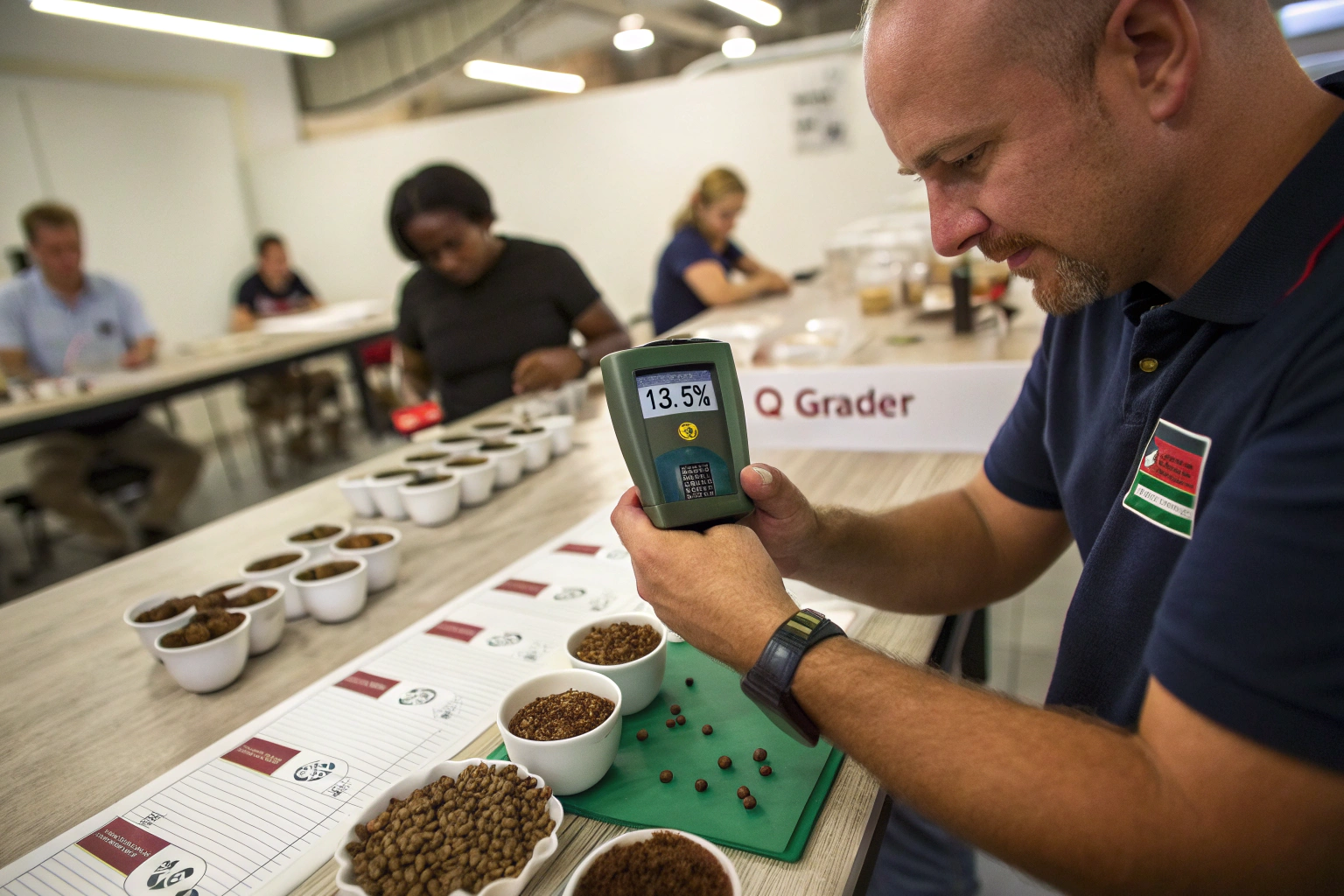
As a coffee buyer, you rely on the green coffee grade as a universal language of quality. It's your objective measure of a coffee's value and potential. You're like my client, Ron; you trust the data. But what if a single, often overlooked variable could fundamentally invalidate that grade? I'm talking about humidity, or more specifically, the bean's internal moisture content. You're worried that a coffee graded as "Specialty" today could arrive at your roastery as something far less valuable, simply because its moisture content was wrong from the start.
Let's be absolutely direct: the moisture content of green coffee has a profound and direct impact on every single aspect of its grading. It is not a separate variable; it is intrinsically linked to the coffee's physical attributes, its long-term quality, and its final cup profile. A coffee with improper moisture content cannot be accurately graded because it is, by its very nature, an unstable product.
At our 10,000-acre Shanghai Fumao estate in Yunnan, managing moisture content is a point of scientific obsession. We know that a perfect grade is meaningless if the coffee isn't stable. In this article, I will break down exactly how moisture content affects the grading process, the risks it poses, and why it's a critical data point you must demand from any supplier.
How Does Moisture Content Affect Defect Classification?
The first part of a green coffee grading is a physical analysis: counting the number of defective beans in a sample. You're worried about defects because, as we've discussed, defective beans can ruin your entire brew. High moisture content is a primary catalyst for the creation of the most severe defects.
According to the Specialty Coffee Association (SCA) standards, a coffee's grade is determined by the number of Category 1 (severe) and Category 2 (minor) defects. A green coffee with a moisture content above 12.5% is an ideal breeding ground for mold and fungi. This directly leads to the formation of Full Black and Full Sour beans—both Category 1 defects that can instantly disqualify a coffee from being considered "Specialty Grade."
Therefore, a coffee that might have been free of defects immediately after drying can develop severe, grade-killing defects during storage or shipping if its moisture content was too high to begin with. A grader assessing a high-moisture sample is looking at a ticking time bomb. They might count zero defects today, but the high moisture is a guarantee that defects will develop. For this reason, many grading protocols will flag any coffee outside the stable 10-12% range as being outside of specification, regardless of its initial defect count.
What is the "Stable" Moisture Range?
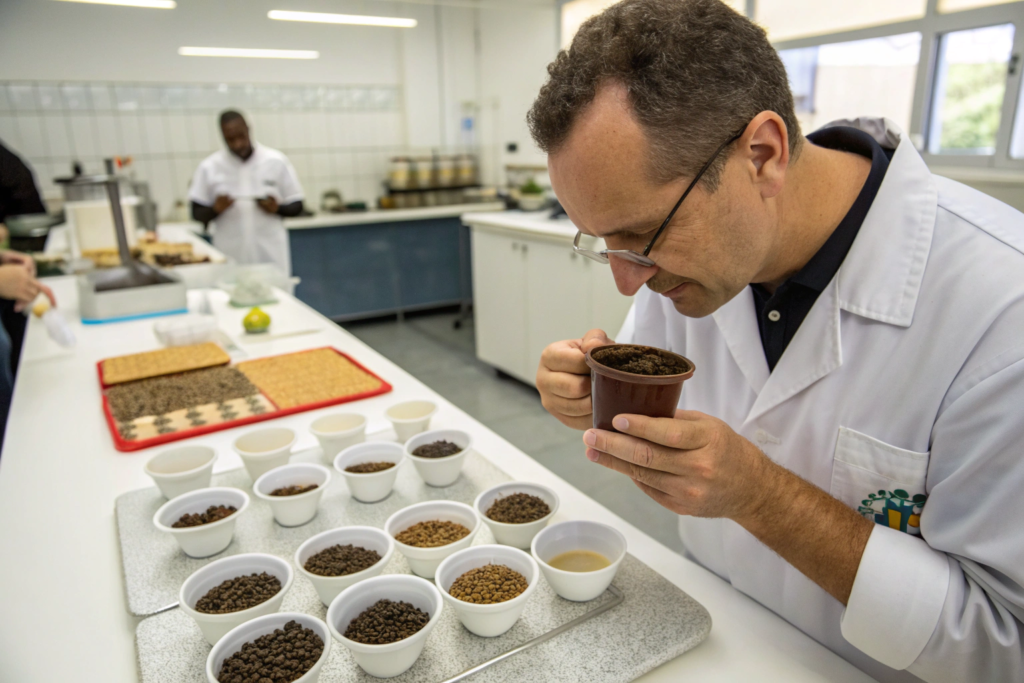
The internationally accepted range for specialty green coffee is a moisture content between 10% and 12%. Below 10%, the bean is too dry and will taste woody. Above 12%, the risk of mold, fungi, and rapid degradation becomes unacceptably high. This narrow window is the target for all quality-focused producers.
How is Moisture Content Measured?
It is measured using a specialized device called a moisture meter. These devices use an electric current to determine the moisture level within a sample of beans. It's a quick, easy, and essential measurement that should be taken at every stage of the coffee's journey—post-drying, pre-shipping, and upon arrival.
How Does Humidity Impact Roast Analysis and Color?
A crucial part of a comprehensive green coffee analysis involves roasting a sample and evaluating its roasted characteristics. The grader looks for uniformity in color and the absence of roasting defects. You're concerned about how the coffee will perform in your own roaster, and high moisture content makes this performance completely unpredictable.
Green coffee with high moisture content roasts unevenly and inefficiently. The roaster has to apply a significant amount of energy at the beginning of the roast just to drive off the excess water. This "drying" phase becomes extended and difficult to control. It often leads to the outside of the bean scorching before the inside is properly developed, a defect known as "tipping."
Conversely, coffee with low moisture content roasts too quickly. It can scorch easily and lacks the internal moisture needed for the chemical reactions of the roast to proceed smoothly. In both cases—too high or too low moisture—the result is an inconsistent roast color. This inconsistency would be noted by the grader and would negatively impact the coffee's overall score. It also makes it impossible to assess the coffee's true potential, as the roast itself is flawed.
What is "Water Activity" and Why Does it Matter?
Water activity (aW) is a more advanced measurement than moisture content. It measures the energy of the water in the bean, or how "available" that water is for microbial growth. A coffee can have an "acceptable" moisture content but a high water activity, still putting it at risk. Top-tier producers and labs, including those referenced by organizations like the Coffee Quality Institute (CQI), are increasingly using water activity as a more precise indicator of stability.
How Does This Affect Quakers?
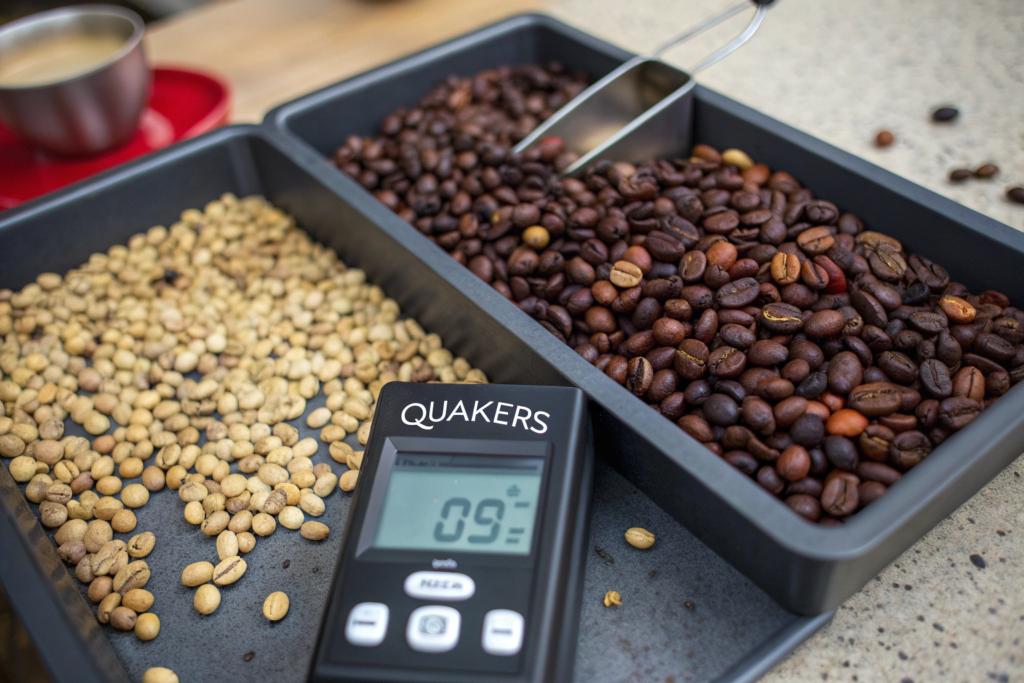
While quakers are primarily caused by immature beans, improper drying and moisture levels can exacerbate issues that lead to underdeveloped flavors, making the final roasted product less uniform and sweet.
How Does Moisture Skew the Sensory Evaluation (Cupping)?
This is the final and most important stage of grading: the cupping. The coffee is brewed and its aroma, flavor, acidity, body, and aftertaste are scored. You're buying coffee for its taste, and improper moisture content can completely distort the sensory profile.
High-moisture coffee (above 12.5%) will often taste musty, moldy, or baggy. The flavor is tainted by the very beginnings of microbial degradation. Even if it doesn't taste overtly moldy, it will lack clarity and have a muted, dull flavor profile. The bright, sparkling acidity that should be present will be gone, replaced by a flat, lifeless taste. A grader would score this coffee very poorly, specifically marking it down for flavor and aftertaste.
Low-moisture coffee (below 10%) presents its own set of problems. As the bean has lost too much of its internal water, the volatile aromatic compounds have also begun to degrade. When cupped, this coffee will taste woody, papery, or like straw. It will have lost all its sweetness and vibrant character. The grader would identify these as serious flavor defects. Therefore, a coffee outside the stable 10-12% moisture range cannot receive a high sensory score.
Can You "Taste" High Moisture Content?
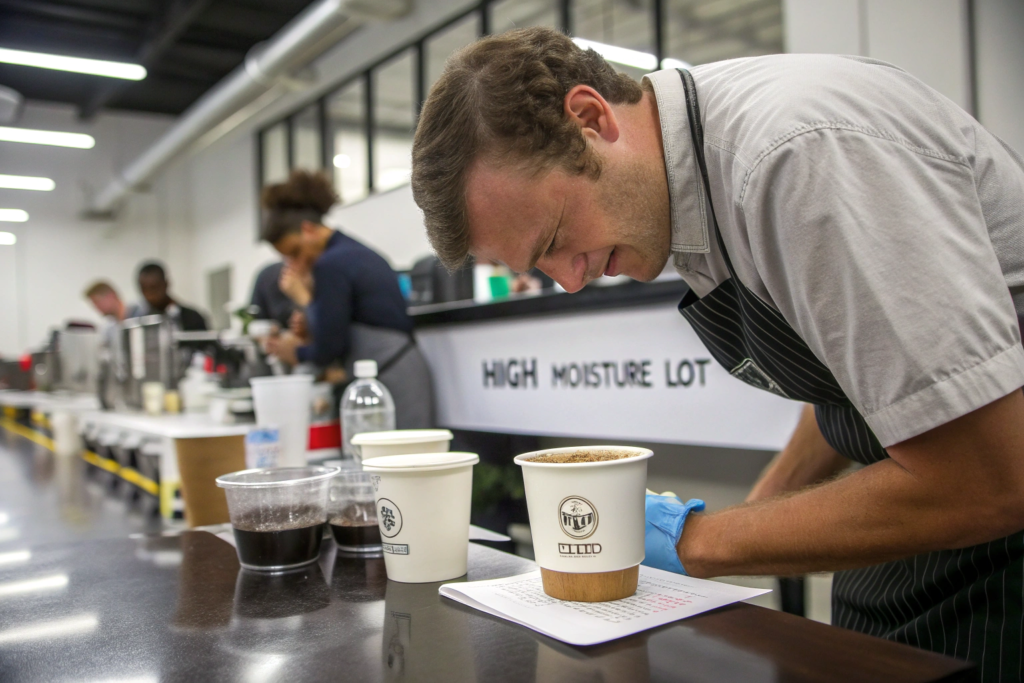
Yes, a trained cupper can often detect the tell-tale signs. A slight mustiness in the aroma or a lack of clarity and a "baggy" (like a wet burlap sack) taste in the cup are strong indicators that the coffee's moisture content is too high and it is not stable.
Does This Impact Shelf Life?
Dramatically. A coffee that is graded and shipped at 11% moisture has a long and stable shelf life. A coffee shipped at 13% moisture will degrade incredibly quickly. It might cup reasonably well one week after arrival, but a month later, it could be full of unpleasant, moldy flavors. This is why moisture content is the best predictor of a coffee's future quality.
How Can You Protect Yourself as a Buyer?
You now understand the immense risk associated with improper moisture. So, how do you protect your business? You cannot be at the farm to oversee the drying process. You need a way to ensure the coffee you pay for is the coffee you receive.
The solution is a multi-step verification process built on data and trust.
- Demand the Data Upfront: When you are offered a coffee, do not just ask for the cupping score. Demand the moisture content and water activity readings from the pre-shipment sample. A professional supplier will have this data readily available. If they don't, it's a major red flag.
- Specify it in Your Contract: Your purchase contract should explicitly state that the coffee's moisture content must be within the 10-12% range upon arrival. This makes it a contractual obligation.
- Verify Upon Arrival: This is the most critical step. Before you accept a shipment, use your own calibrated moisture meter to test the coffee as soon as it arrives at your warehouse. Test samples from several different bags to get an average.
- Communicate with Your Supplier: If the moisture reading is outside the contracted range, contact your supplier immediately, before you formally accept the cargo. This is where a strong, transparent partnership, like the one we aim to build when you import directly from our farm, is essential.
By taking these steps, you are no longer just a passive recipient; you are an active participant in the quality control process.
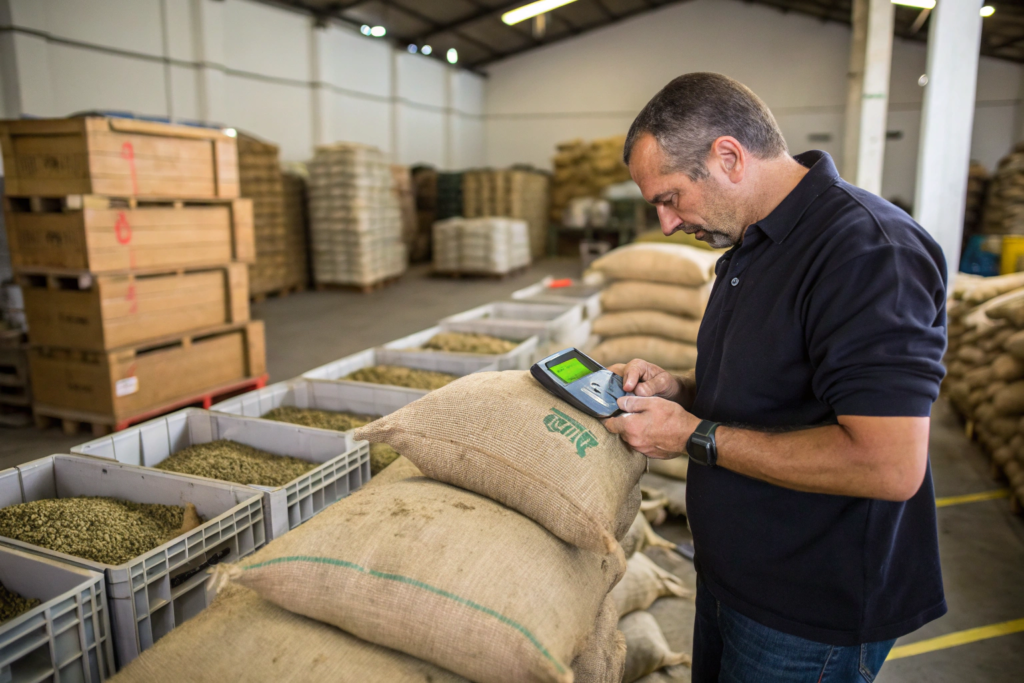
Is a Handheld Moisture Meter Expensive?
A good quality, portable moisture meter is a professional tool, but it is an essential investment for any serious coffee buyer or roaster. The cost (typically a few hundred dollars) is negligible compared to the potential loss from a single spoiled container of coffee.
What if the Moisture is High on Arrival?
If the moisture is high, you have several options based on your contract. You may be able to reject the shipment, renegotiate the price to account for the loss of quality and shelf life, or file a claim with your cargo insurance, especially if you used temperature loggers during shipping that show "container rain" conditions occurred.
Conclusion
Humidity and moisture content are not secondary details in green coffee grading; they are the foundation upon which a credible grade is built. A coffee's grade is a snapshot in time, but its moisture content is a predictor of its future. A bean that is too wet is a ticking time bomb of defects, while a bean that is too dry is an empty shell with its flavor already gone.
By insisting on moisture content data, specifying it in your contracts, and verifying it upon arrival, you can protect your business from the significant risks of quality degradation. It demonstrates your professionalism and holds your suppliers to the highest standards of quality control.
As a producer, our obsession with achieving the perfect 10-12% moisture content is a core part of our commitment to you. We believe in providing not just a great coffee, but a stable, reliable, and transparently documented product. If this level of quality assurance is what you seek in a partner, we invite you to connect with us. Please reach out to my colleague, Cathy Cai, at cathy@beanofcoffee.com.