You're dedicated to sourcing and serving high-quality coffee, and you're used to paying a premium for it. You understand why a Gesha from Panama costs more than a Brazilian blend. But then you hear about coffees that sell for hundreds, or even thousands, of dollars per pound, and it seems to defy logic. You're left wondering, "What could possibly make a coffee that expensive? Is it just hype, or is there something genuinely special about it?" This is a common point of curiosity and skepticism. The astronomical prices can feel disconnected from the reality of the coffee you work with every day, making it hard to understand what drives these extreme valuations.
Honestly, the world's most expensive coffees derive their astronomical prices from one of three factors: 1) An incredibly unique and bizarre processing method that is difficult to scale (like Kopi Luwak). 2) Extreme scarcity due to a tiny production area or a record-breaking auction score for a specific microlot (like Gesha from Hacienda La Esmeralda). Or 3) A combination of brand prestige and location (like a cup served at a specific, exclusive cafe). It's a fascinating intersection of agriculture, biology, and luxury marketing.
From my perspective as a grower, these "unicorn" coffees are outliers, but they are important. They push the boundaries of what is possible and create a "halo effect" that elevates the perception of specialty coffee as a whole. While we focus on producing accessible excellence from our farms in Yunnan, studying these extreme examples helps us all understand the levers of quality and rarity. Let's explore the stories behind some of the planet's most sought-after beans.
How Can a "Processing Method" Make Coffee So Expensive?
This is arguably the most famous—and infamous—expensive coffee in the world. Its story is bizarre, and its price is driven entirely by its unique journey from cherry to bean.
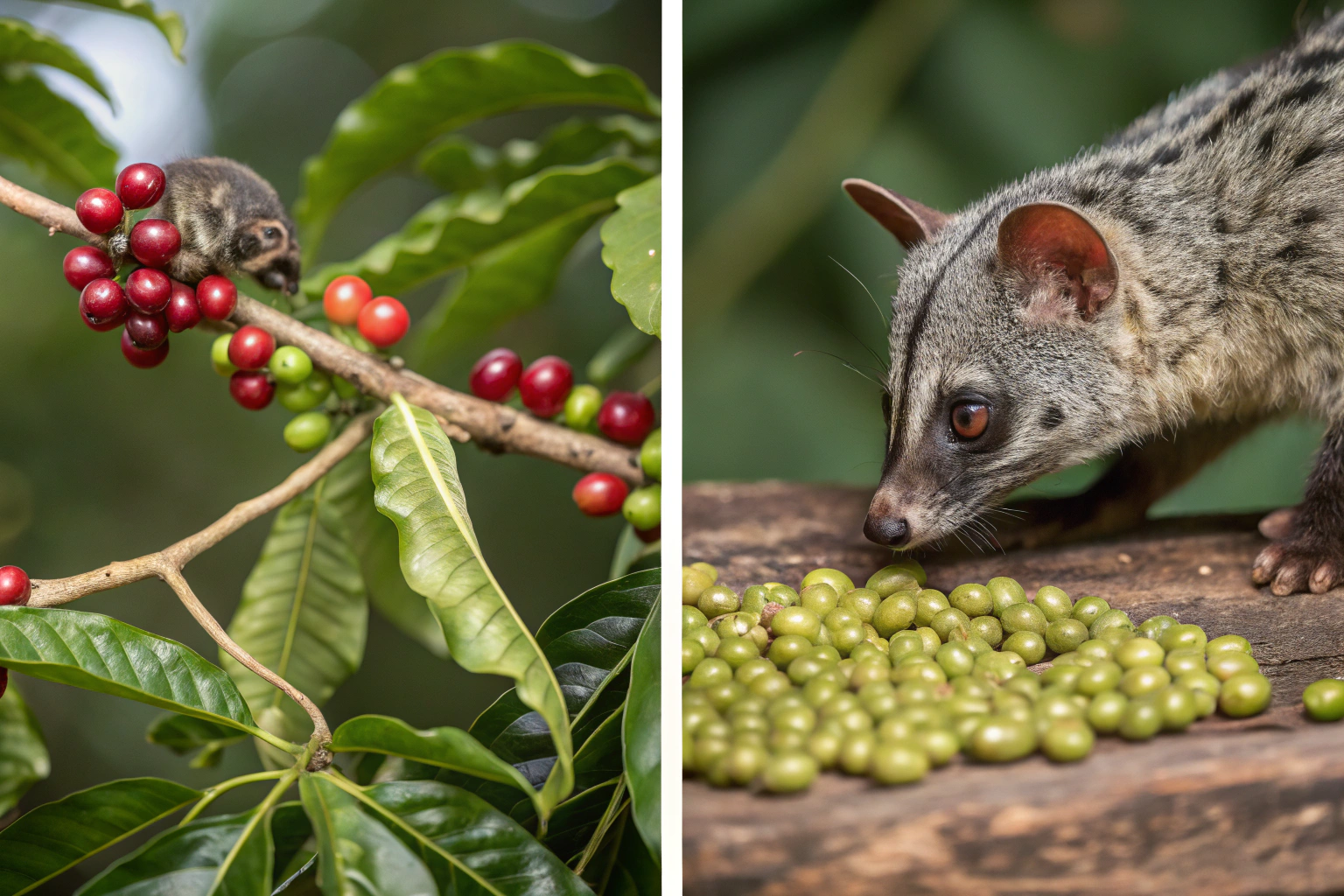
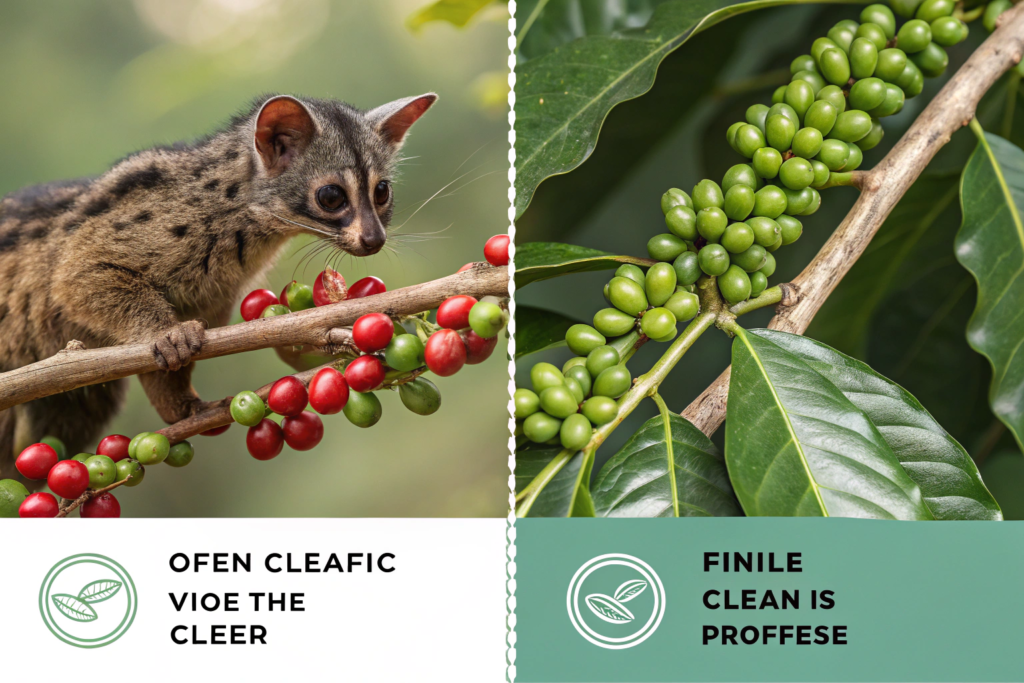
Wait, is this the "cat poop coffee"? Yes, it is. Kopi Luwak is coffee that has been eaten, digested, and excreted by the Asian palm civet, a small, cat-like mammal. The whole coffee cherries are eaten by the civet, and the beans pass through its digestive tract. The beans are then collected from the forest floor, thoroughly cleaned, and roasted. The price can range from $100 to over $600 per pound.
The original rationale was twofold: the civets are naturally picky eaters, so they supposedly select only the absolute best and ripest coffee cherries. Secondly, the enzymes in the civet's digestive system are thought to alter the protein structure of the bean, resulting in a smoother, less acidic cup.
Why is it so controversial?
The massive demand for Kopi Luwak has led to widespread animal cruelty. Instead of being collected from wild civets, many are now captured and kept in horrific conditions in small cages, where they are force-fed coffee cherries. This has led most specialty coffee organizations, including the Specialty Coffee Association (SCA), to condemn the practice. Furthermore, blind taste tests have often shown that Kopi Luwak does not taste better than a conventionally processed high-quality coffee; its value is in its story, not its flavor.
Are there other "digested" coffees?
Yes. The trend has spawned imitators. Black Ivory Coffee from Thailand is made from beans digested by elephants and can sell for over $1,000 per pound. The justification is similar: the elephants' digestive enzymes break down the coffee's protein. The production is tiny, hence the extreme price.
How Does Scarcity and Auction Fever Create Record-Breakers? The Gesha Story.
This category represents the pinnacle of actual coffee quality, where price is driven by exceptional flavor and intense competition among the world's top roasters. The undisputed king of this category is the Gesha (or Geisha) variety, particularly from Panama.
What is so special about the Gesha variety? Gesha is a rare, low-yielding coffee variety originally from Ethiopia. When it was planted at high altitudes in Panama, it developed an extraordinary and unique flavor profile unlike any other coffee: intensely floral (like jasmine and bergamot), with a complex, tea-like body and notes of tropical fruit like papaya and mango. It is incredibly delicate and aromatic.
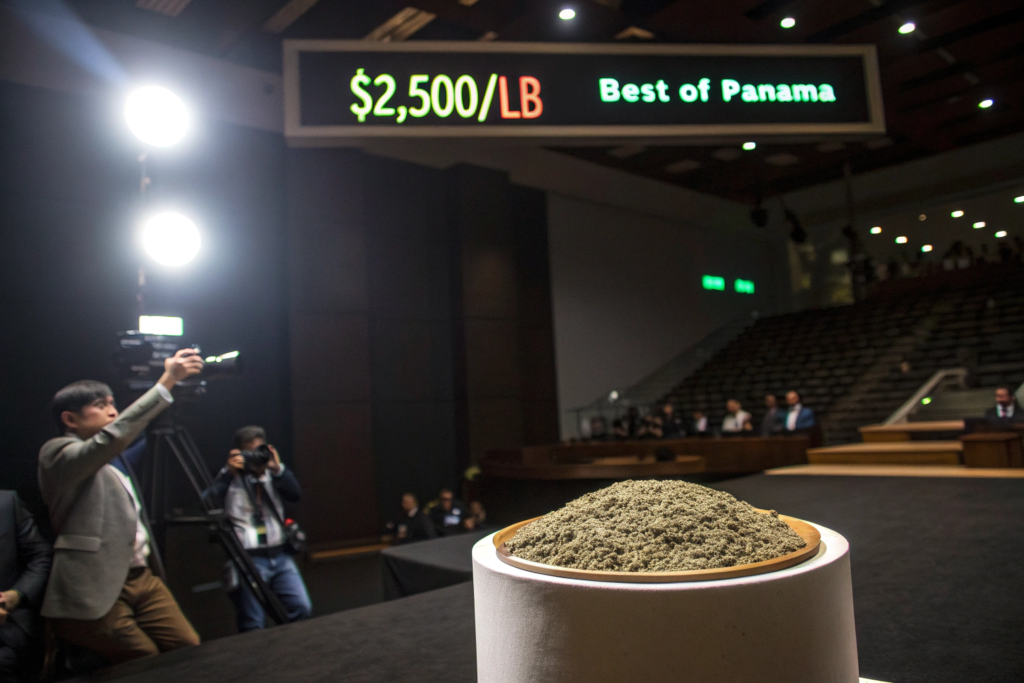
The story of its discovery is legendary. In 2004, the Peterson family of Hacienda La Esmeralda in Boquete, Panama, separated the beans from a few strange-looking trees on their farm and entered them into the "Best of Panama" competition. It blew the judges away and shattered the world record for the highest price ever paid for coffee.
How expensive can it get?
The price is set at a highly competitive annual auction. Roasters from around the world bid against each other to secure a few precious pounds of the winning lots. In recent years, top lots of Gesha from producers like Hacienda La Esmeralda or Ninety Plus have fetched astronomical prices, sometimes exceeding $1,000, $2,000, or even more per pound at auction. The roaster then sells these beans to consumers for upwards of $20-$100 for a single cup.
Is it just Gesha?
While Gesha is the most famous, the principle applies to any coffee that wins a major competition like the Cup of Excellence. The #1 ranked coffee from a COE auction in any country (like Colombia, Costa Rica, or Ethiopia) will command a very high price due to its proven quality and the scarcity of being the "best of the best" for that year. This is a model we at Shanghai Fumao admire, as we are also working with experimental lots and processing methods to elevate the quality of our Yunnan coffee.
Can a Location or a Brand Create an Expensive Coffee?
Sometimes, the price of a cup of coffee has less to do with the bean itself and more to do with the context in which it is served. This is where brand prestige and real estate come into play.
You mean I'm just paying for the fancy cafe? To some extent, yes. The cost is for the entire curated experience: the rare coffee, the highly skilled barista, the unique brewing method, the beautiful cup, and the exclusive environment. It's the coffee equivalent of a Michelin-starred restaurant.
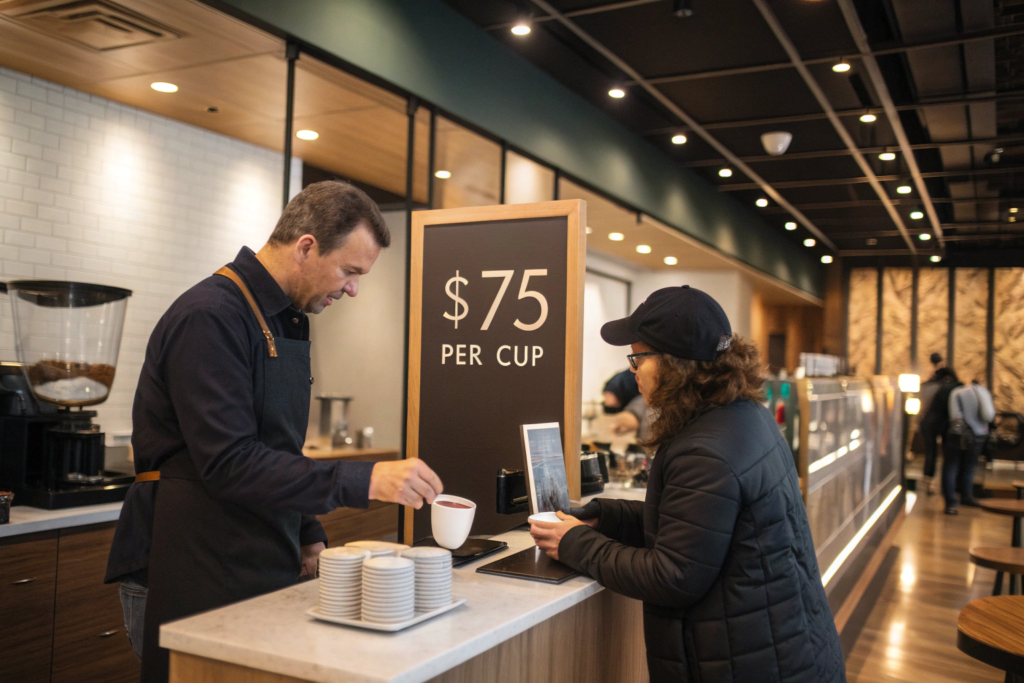
A prime example is the company Klatch Coffee in California, which made headlines for selling a cup of the record-breaking Esmeralda Gesha for $75. Another cafe in Dubai might serve a coffee brewed with gold flakes. In these cases, the coffee is positioned as a luxury good, and the price reflects that positioning.
What is St. Helena Coffee?
This is a classic example of scarcity driven by geography. St. Helena is a tiny, remote island in the middle of the Atlantic Ocean (famous as the place of Napoleon's exile). Coffee grows there, but the amount produced is minuscule, and the cost of cultivating it and exporting it from such an isolated location is enormous. Therefore, St. Helena Coffee commands a very high price (often $80-$150 per pound), driven almost entirely by its rarity and historical novelty rather than a world-beating flavor profile.
How does branding play a role?
A roaster that has built a powerful brand reputation for sourcing only the rarest and highest-scoring coffees in the world can command a higher price for everything they sell. Their brand becomes a guarantee of quality and exclusivity. When they sell a coffee, you are buying not just the bean, but their curation, their expertise, and their stamp of approval.
Are These Coffees Worth the Price?
This is the ultimate, subjective question. Is a multi-million dollar painting "worth it"? Is a bottle of vintage wine "worth it"?
So, is it all just a gimmick? For some, like the ethically questionable Kopi Luwak, it can be. But for others, like a record-breaking Gesha lot, the answer is more complex. For the roaster who buys it, it's a massive marketing and branding opportunity that brings prestige to their entire company. For the consumer who buys a cup, it's a chance to taste the absolute peak of what coffee can be—a once-in-a-lifetime sensory experience. The value is not just in the liquid, but in the story, the rarity, and the experience.

What is the "halo effect"?
When a roaster sells a $100 cup of Gesha, it makes their $25 bag of single-origin Colombian coffee seem incredibly reasonable by comparison. The ultra-premium product casts a "halo" of quality and prestige over all their other products. It positions them as experts who operate at the highest level of the industry.
What does this mean for the average coffee lover?
The good news is that the innovations and farming practices developed to produce these record-breaking coffees eventually trickle down. The focus on new processing methods, the rediscovery of rare varieties like Gesha, and the obsession with quality control have lifted the entire specialty coffee industry. You may not be able to afford the #1 auction lot, but the #100 lot from the same region is likely still an exceptional coffee that is far more affordable.
Conclusion
The world of ultra-expensive coffees is a captivating niche where rarity, process, and marketing collide. From the bizarre journey of Kopi Luwak to the auction-fever frenzy for a rare Gesha, these coffees push the limits of price and perception. While they may not be a part of your daily inventory, understanding the factors that create their value—scarcity, unique processing, exceptional flavor, and powerful branding—provides valuable insight into the broader specialty coffee market. They remind us that coffee is not just a commodity, but a luxury agricultural product with a story worth telling.
At our core, we are focused on providing exceptional value and quality that you can build a business on. We may not be selling a $1000/lb coffee, but we apply the same principles of meticulous farming and processing to our Yunnan beans to create the best possible quality at an accessible price. If you're looking for a coffee that delivers a "million-dollar" taste without the price tag, we invite you to try ours. Contact our coffee specialist at cathy@beanofcoffee.com.