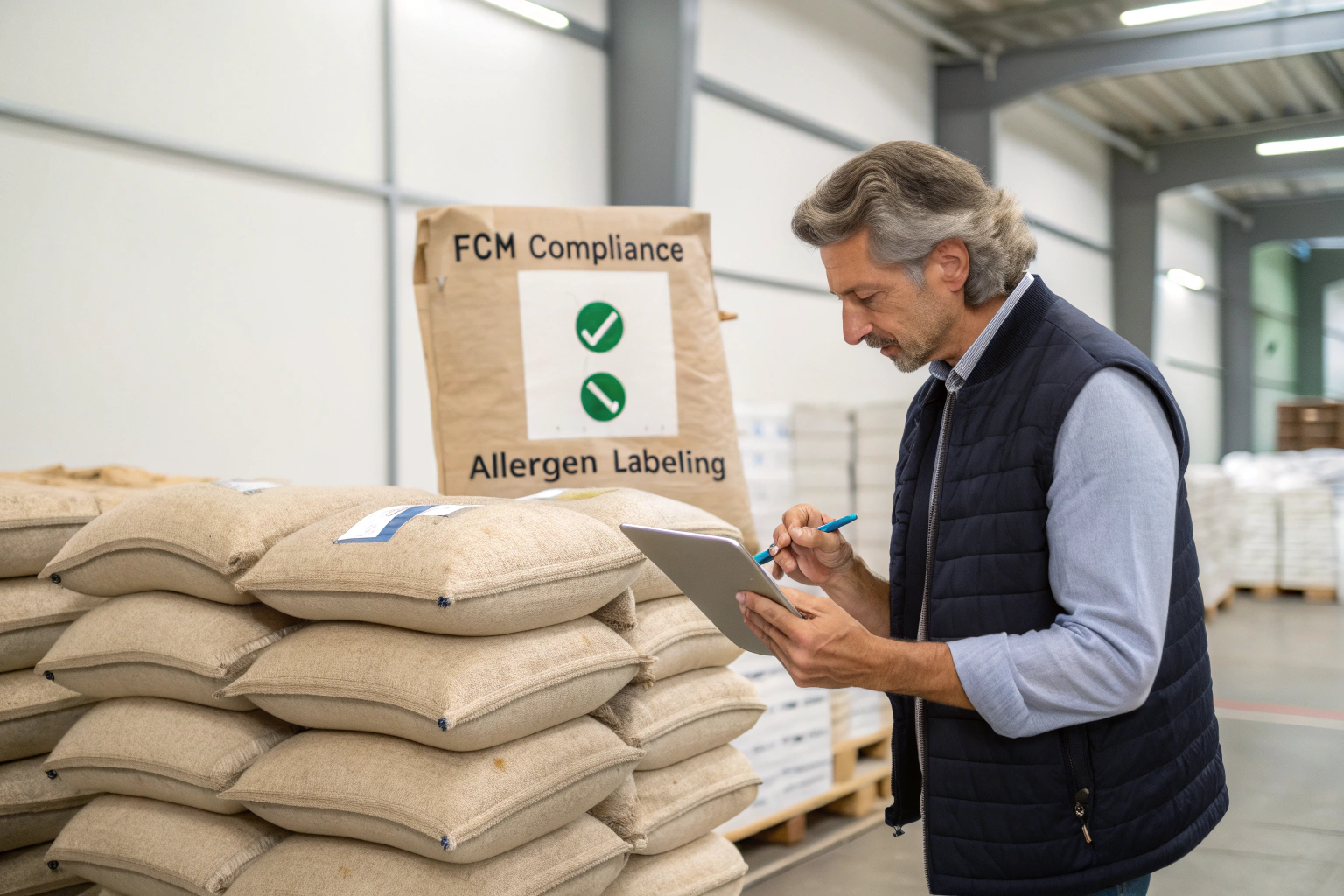
As a business owner looking to expand your coffee brand into the European market, you're entering one of the most lucrative, but also one of the most regulated, consumer markets in the world. You've sourced great coffee, perfected your branding, but now you're faced with a mountain of acronyms like "FCM," "EFSA," and "REACH." You're worried that a simple mistake on your packaging could lead to your entire shipment being rejected at the border, resulting in catastrophic financial loss and damage to your reputation. This complexity is a major pain point for any non-EU business aiming for European sales.
Honestly, the core of EU food packaging regulations revolves around two main principles: 1) Food Contact Material (FCM) safety, ensuring that no harmful substances from the packaging migrate into the food, and 2) mandatory, transparent labeling, which requires clear information on ingredients, allergens, nutrition, and origin. Navigating these rules requires meticulous documentation and a deep partnership with your entire supply chain.
At Shanghai Fumao, exporting to Europe is a key part of our business. We've invested heavily in understanding and complying with these stringent standards. It's not just about bureaucracy; it's about a shared commitment to consumer safety that defines the European market. Let's break down the most critical regulations you need to know.
What Are Food Contact Material (FCM) Regulations?
This is the absolute foundation of EU packaging law. Before you even think about what to print on the bag, you have to ensure the bag itself is safe. The EU operates on the "precautionary principle," meaning materials must be proven safe before they can be used.
Isn't the primary concern that the packaging itself could contaminate the food? Yes, exactly. The EU's Framework Regulation (EC) 1935/2004 is the cornerstone. It mandates that any material intended to come into contact with food must be manufactured in a way that it does not transfer its constituents to the food in quantities that could endanger human health, bring about an unacceptable change in the food's composition, or deteriorate its taste and smell.
This applies to everything: the plastic liner in your coffee bag, the ink printed on the outside, the adhesive used to seal it, and even the pallet wrap used for shipping if it might touch the food packaging. You, as the brand owner placing the product on the market, are ultimately responsible for ensuring every component is compliant.
What is a "Declaration of Compliance" (DoC)?
For many materials, especially plastics, the manufacturer of the packaging must provide you with a Declaration of Compliance (DoC). This is a legally required document that states the material complies with the relevant EU laws. It specifies which substances were used, provides results from migration testing, and gives instructions for safe use. You must have this document on file for every packaging component as part of your due diligence.
What about printing inks and adhesives?
While there isn't a single, harmonized EU-wide law for inks and adhesives like there is for plastics, there are national regulations and industry standards that have become de facto requirements. The Swiss Ordinance on printing inks is often used as a benchmark across the EU. You must ensure your packaging supplier uses "low-migration" inks and adhesives specifically designed for food packaging to prevent harmful substances from passing through the packaging layers into the coffee.
What Information Is Mandatory on the Label?
Once the packaging material is safe, the information you print on it is the next critical hurdle. The EU's Food Information to Consumers (FIC) Regulation (EU) 1169/2011 aims to ensure all labeling is clear, legible, and not misleading.
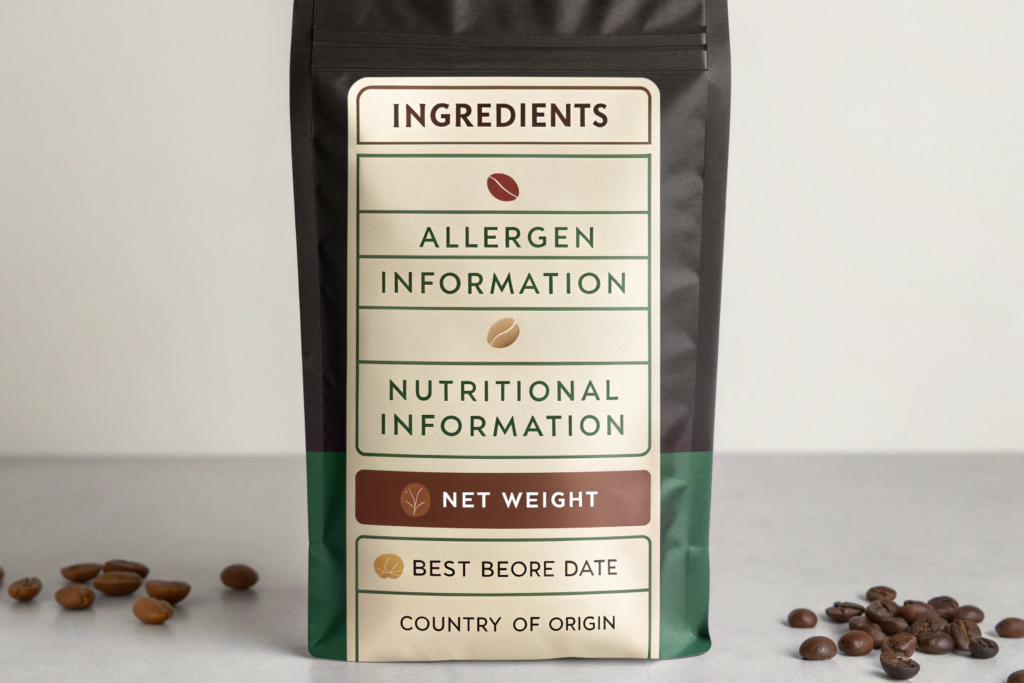
Doesn't the EU require a huge amount of information on every package? It can seem that way, but the rules are designed for total consumer transparency. Key mandatory information includes the name of the food, a list of ingredients, allergen information, net quantity, a durability date (like "Best Before"), your business name and address, and country of origin.
For a simple product like whole bean coffee, this is relatively straightforward. However, if you are selling flavored coffee or a blend that includes other ingredients, the complexity increases significantly.
How must allergens be declared?
This is a major point of emphasis. The EU has a list of 14 major allergens (like nuts, milk, soy) that must be clearly declared. Even if your coffee is just coffee, if it is packaged in a facility where allergens are also handled, you may need a "may contain" statement. If you sell flavored coffee, any listed allergen in the flavoring must be emphasized in the ingredients list, usually by using a bold, italic, or underlined font.
What are the rules for "Country of Origin" labeling?
For a single-origin coffee, this is simple: you state the country, for example, "Coffee from China." However, for a blend of coffees from different countries, it's more complex. You must state "Coffee from non-EU countries" or list each country of origin. The rules are designed to prevent consumers from being misled about where their food comes from. This is an area where our direct sourcing from Shanghai Fumao provides a clear and simple origin story.
Are There Rules About Environmental Claims and Packaging Waste?
The EU is a global leader in environmental policy, and this extends forcefully to packaging. The focus is on reducing packaging waste and promoting a circular economy. This is governed by the Packaging and Packaging Waste Directive.
Is the EU also focused on the environmental impact of the packaging itself? Yes, this is a rapidly evolving and critically important area. The regulations aim to minimize packaging weight and volume, promote recyclability, and restrict the use of certain hazardous substances. You must be prepared to prove that your packaging is as sustainable as possible.
This means you can't just use the thickest, heaviest plastic because it feels "premium." You need to demonstrate that your packaging is optimized for its purpose. Furthermore, making environmental claims like "recyclable" or "compostable" is highly regulated. You must have solid proof to back up any green claim you make.
What is the "Green Dot" system?
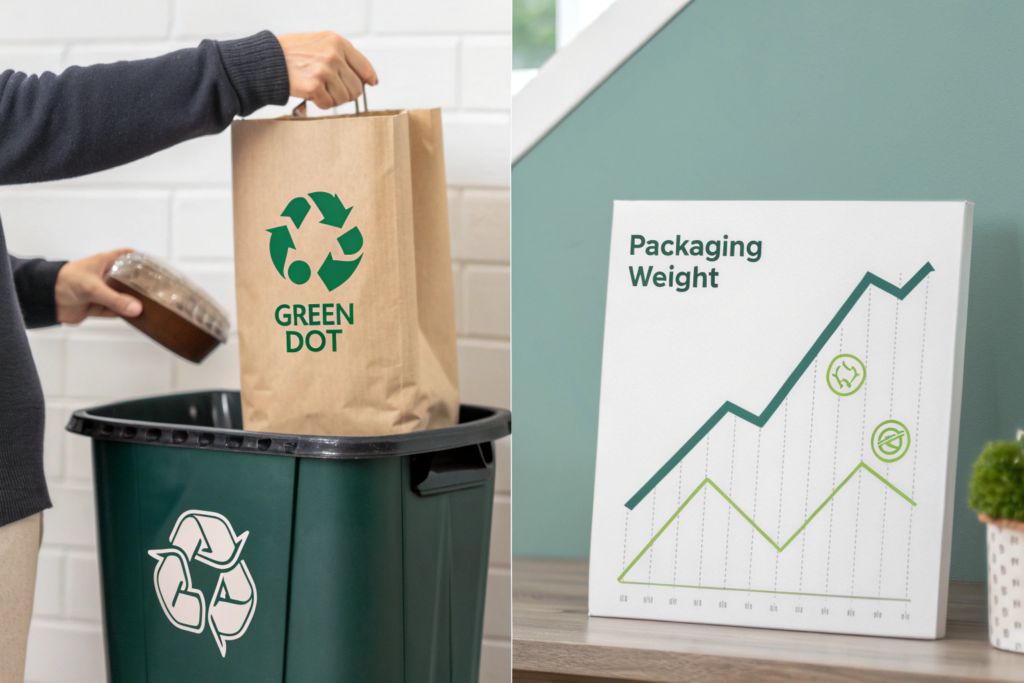
The Green Dot (Der Grüne Punkt) is a financing symbol used in many EU countries. Placing this logo on your packaging indicates that you have made a financial contribution to a national packaging recovery organization. It does not mean the packaging is recyclable. In many countries, joining and paying fees to such a scheme is a legal requirement for placing packaged goods on the market.
What about single-use plastics?
The EU's Single-Use Plastics Directive is cracking down on many disposable plastic items. While coffee bags are not currently banned, there is immense regulatory and consumer pressure to move towards more sustainable solutions. Using mono-material (single-type plastic) packaging that is designed for recycling, or exploring certified compostable options, is not just good for the planet—it's a smart business strategy for the European market.
How Can You Ensure Ongoing Compliance?
EU regulations are not static. They are constantly being updated in response to new scientific findings, environmental goals, and political priorities. Achieving compliance is one thing; maintaining it is another.
Isn't it a full-time job just to keep up with the changing rules? It can feel like it. The only way to ensure ongoing compliance is to establish a proactive system. This involves subscribing to regulatory update services, working with a compliance consultant or a knowledgeable EU-based importer, and conducting regular reviews of your packaging and suppliers.
You cannot afford to be complacent. A regulation that changes in Brussels can impact your business in the U.S. overnight. Building a relationship with a partner who is an expert in EU compliance can be one of the most valuable investments you make.
Where can you find reliable information?
The official source is the European Food Safety Authority (EFSA) website and the EUR-Lex database, which contains all EU legislation. However, these are dense and difficult to navigate. It's often more practical to subscribe to newsletters from food law consultancies or work with a partner organization that specializes in EU market access.
What is the role of an EU-based importer or "Responsible Person"?
For a non-EU company, having a partner within the EU is often the most secure approach. An importer or a designated "Responsible Person" located in the EU can take on some of the legal responsibility for ensuring the product complies with all relevant regulations. They are your "person on the ground" who understands the local language, culture, and regulatory environment, providing an invaluable layer of security for your business.
Conclusion
Entering the EU market is a fantastic opportunity, but it demands a level of rigor and diligence that can be daunting. By focusing on the core pillars of Food Contact Material safety and transparent consumer labeling, and by keeping a close eye on the evolving environmental regulations, you can build a compliant and successful European presence. It requires a shift in mindset—from simply designing a beautiful package to engineering a safe, compliant, and sustainable delivery system for your coffee. It's a complex challenge, but one that proves your brand's commitment to the highest global standards.
Navigating this landscape is best done with experienced partners. We have years of experience ensuring our coffee and its packaging meet the stringent demands of our European clients. If you are considering this market, we can be a valuable partner in your supply chain, providing not only exceptional coffee but also the compliance documentation and expertise you need to succeed. Contact our coffee specialist at cathy@beanofcoffee.com to discuss how we can help you go global.