As a coffee buyer, you constantly see the words "high-altitude" or "Strictly High Grown" (SHG) on bags of premium coffee. You know it's supposed to be a good thing, and it always comes with a higher price tag. But what does it actually mean? You're worried it might just be marketing jargon. You need to know if the extra cost translates to a genuinely better bean and a more delicious cup for your customers. It's a critical question because your reputation is built on the quality of the coffee you source.
Honestly, high-altitude coffee beans are prized because the challenging growing conditions—slower growth in cooler temperatures, better drainage on slopes, and increased UV exposure—force the bean to develop a harder, denser structure packed with more complex sugars and organic acids. This directly translates to a more aromatic, acidic, and flavorful cup of coffee.** It's not hype; it's a matter of plant biology.
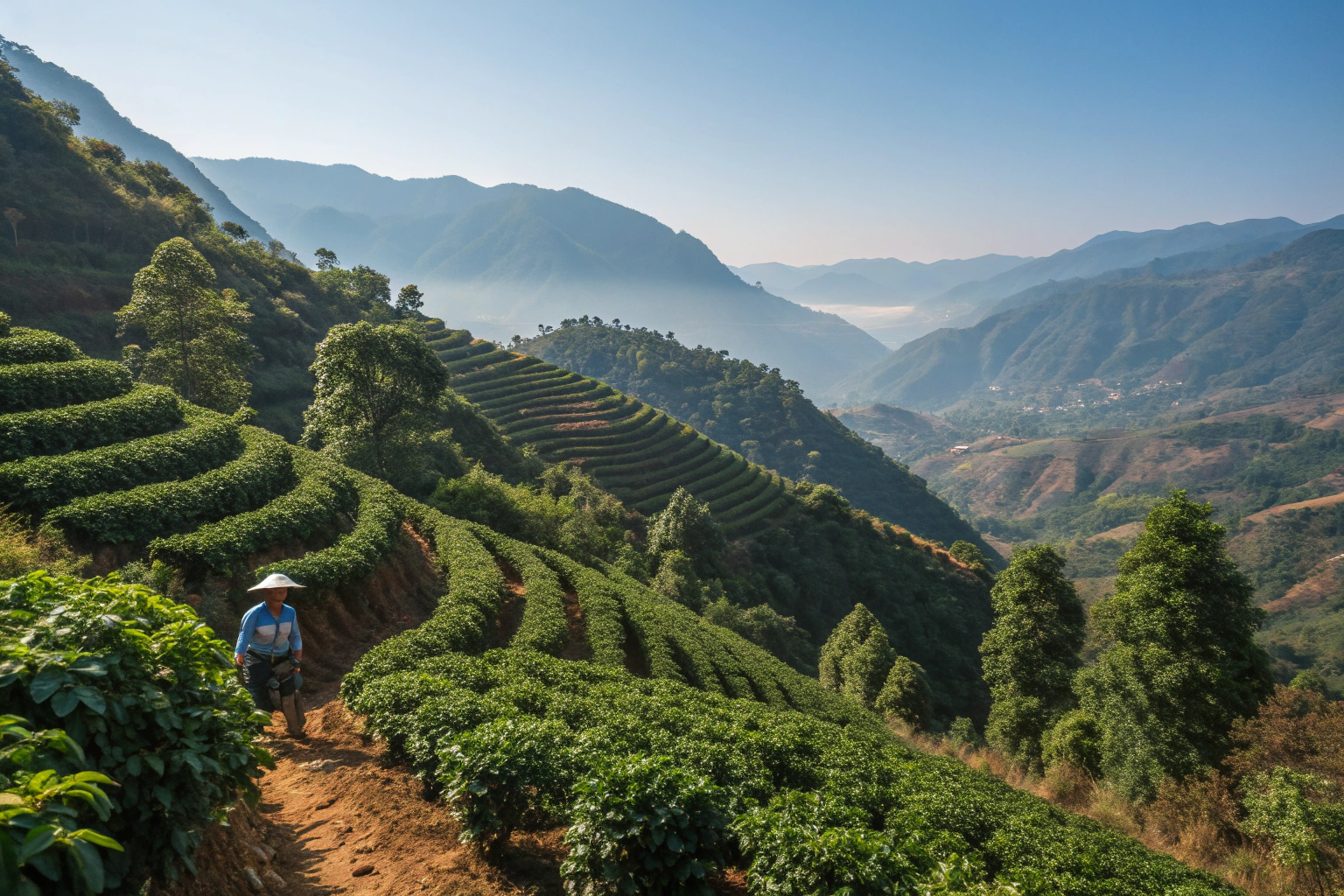
I've spent my life walking our plantations, which climb the mountain slopes of Baoshan. I can feel the difference in the air and see it in the beans. The coffee cherries ripen slowly, developing a deep, crimson red, a sign of the concentrated sweetness within. The difficult environment forges a superior bean. Let's explore the specific properties that make high-altitude coffee the benchmark for quality in our industry.
Why Are High-Altitude Beans Harder and Denser?
The most fundamental physical difference between high- and low-altitude coffee is its density. If you hold a handful of each, you can often feel that the high-altitude beans are heavier. This density is the foundation for all the other positive attributes.
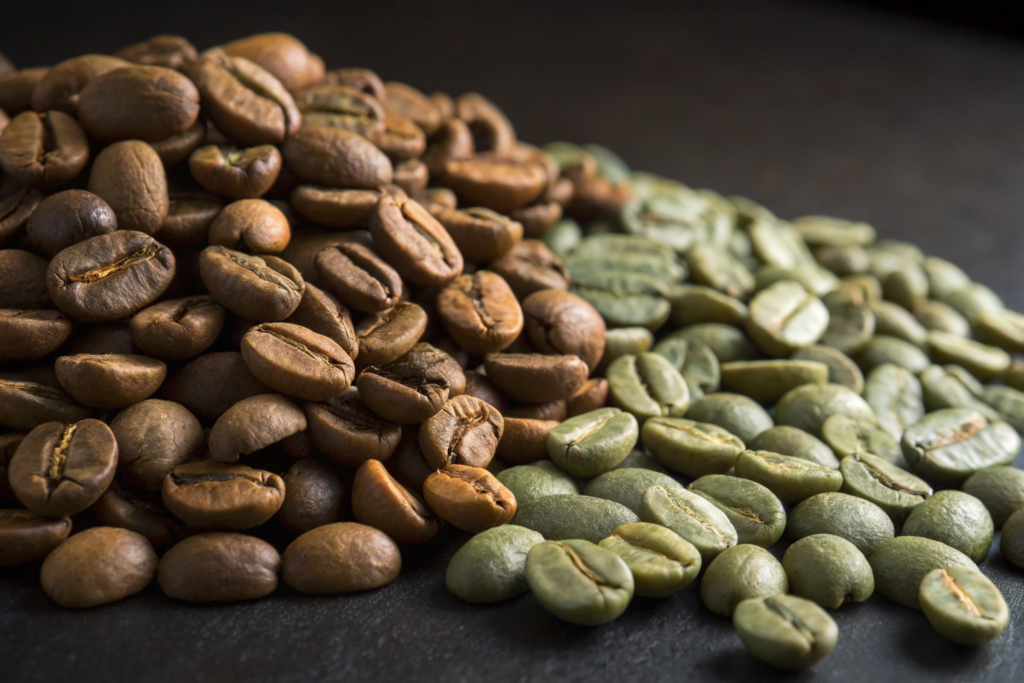
Coffee beans grown at high altitudes (typically above 4,000 feet or 1,200 meters) are harder and denser because the cooler temperatures slow down the entire growth cycle of the coffee cherry. This prolonged maturation period gives the bean more time to develop its complex internal structure, resulting in a tighter, more compact cell structure.
Think of it like the difference between a fast-growing pine tree and a slow-growing oak. The oak, which grows slowly over a long time, has much harder, denser wood. It's the same principle with coffee. The "struggle" of growing in a cooler, more challenging environment creates a stronger, more resilient bean. This density is not just a physical trait; it's a roaster's dream.
How does this affect roasting?
A dense, hard bean can handle the high heat of the roaster much better. It allows for a more even transfer of heat from the outside of the bean to its core, leading to a more uniform and well-developed roast. Softer, low-altitude beans can roast too quickly on the outside while the inside remains underdeveloped, or they can even scorch. The density of a high-altitude bean gives a skilled roaster a wider canvas to work on, allowing them to unlock a broader spectrum of flavors.
What is the "hard bean" classification?
In many coffee-producing countries in Central America, beans are classified by the altitude at which they are grown. "Strictly Hard Bean" (SHB) or "Strictly High Grown" (SHG) are official classifications for coffee grown at the highest altitudes, typically above 1,200 or 1,350 meters. This classification is a reliable indicator to buyers that they are purchasing a dense, high-quality bean.
How Does Altitude Affect Flavor and Acidity?
This is the property that matters most in the final cup. The reason buyers seek out high-altitude coffee is for its superior flavor profile. The same plant variety grown at a lower altitude will taste dramatically different, and usually less interesting.
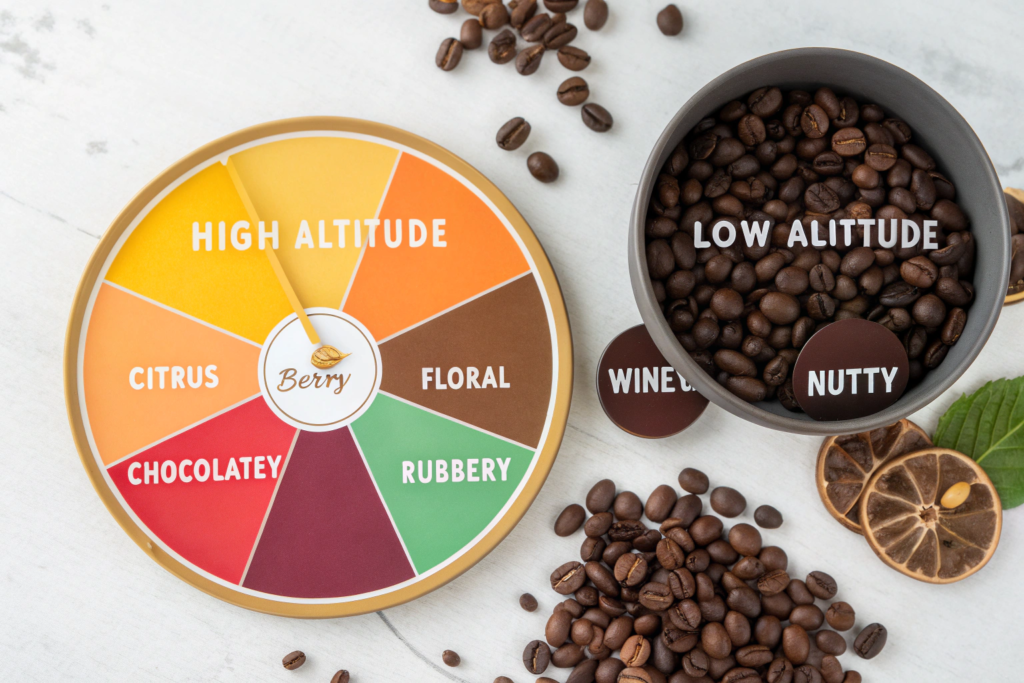
High altitude cultivation leads to a more complex and desirable flavor profile, characterized by a brighter, more vibrant acidity and a greater concentration of nuanced aromatic compounds. The slow maturation process allows the bean to develop more of the complex sugars and organic acids that translate into notes of fruit, flowers, and wine in the final cup.
At the cooler temperatures of high altitudes, the coffee cherry ripens slowly. This gives it time to do more than just produce simple sugars. It creates a whole range of complex organic acids—like malic acid (think green apples), citric acid (think lemons), and phosphoric acid (which can give a sparkling, cola-like sensation). These acids, when balanced with the sweetness from the sugars, create a lively, sparkling, and engaging cup of coffee. Low-altitude coffee, which ripens quickly in the heat, tends to have a much simpler, duller acidity and a less dynamic flavor profile.
Is all acidity good?
Not necessarily. The key is complex acidity. A well-grown high-altitude coffee doesn't just taste sour; it has a pleasant, bright, and often sweet-tart quality, like biting into a ripe piece of fruit. This is the "good" acidity that specialty coffee buyers prize. It's a sign of a healthy, well-developed bean.
What flavors are common in high-altitude coffees?
While the specific flavors depend on the origin and processing, you are much more likely to find notes of:
- Floral: Jasmine, Honeysuckle
- Citrus: Lemon, Bergamot, Orange
- Stone Fruit: Peach, Apricot, Plum
- Berry: Blueberry, Raspberry, Blackcurrant
- Wine-like: A complex, fermented fruit quality
These delicate and exciting flavors are the hallmark of a premium, high-altitude coffee, like the ones we cultivate at Shanghai Fumao.
What Other Environmental Factors Contribute to Quality?
While temperature is the main driver, other factors unique to high-altitude environments play a crucial supporting role in developing a superior coffee bean. It's a combination of elements that creates a uniquely challenging, and ultimately rewarding, place to grow coffee.
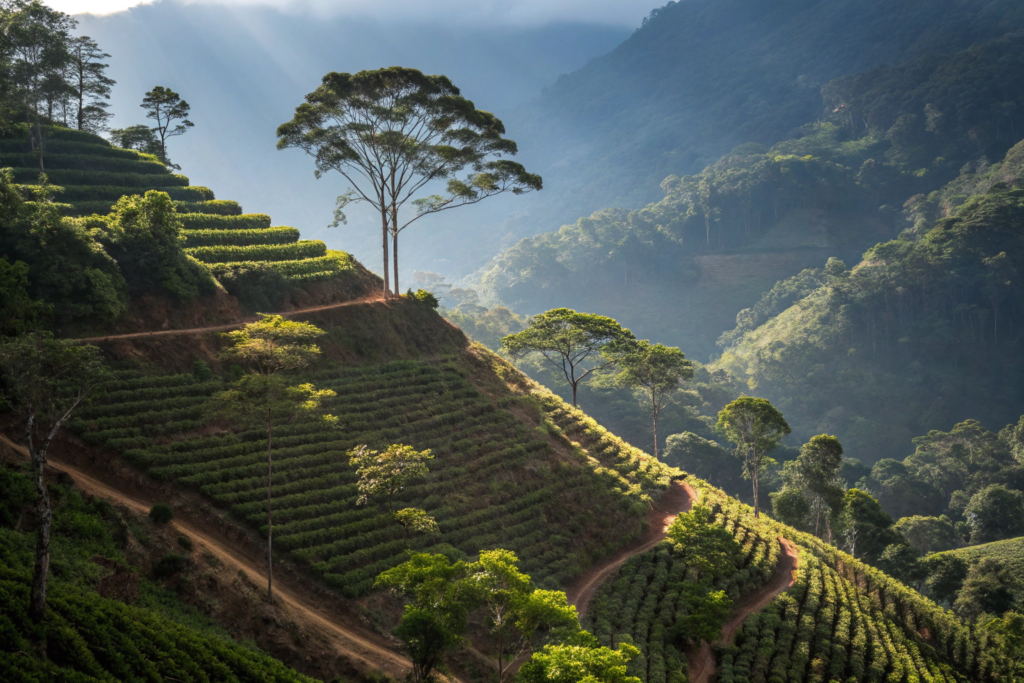
Beyond cooler temperatures, the steep slopes of high-altitude farms provide excellent natural drainage, preventing water from pooling at the roots and causing disease. Additionally, the increased exposure to ultraviolet (UV) radiation at higher elevations may trigger a protective response in the plant, leading to a higher concentration of antioxidants and other flavor precursors in the beans.
It's a holistic system. The entire environment—from the soil to the sky—contributes to the final quality.
Why is drainage so important?
Coffee plants hate having "wet feet." When water sits around the roots, it can lead to root rot and other fungal diseases, stressing the plant and negatively impacting coffee quality. The natural slopes of mountain farms ensure that rainwater drains away quickly and efficiently. This forces the plant's roots to grow deeper in search of water, creating a stronger and healthier plant, which is better equipped to produce high-quality cherries.
How does UV radiation play a role?
This is an area of ongoing research, but the theory is compelling. Just as our skin produces melanin to protect against sun damage, plants produce their own protective compounds, like polyphenols and flavonoids, in response to higher UV stress. Many of these compounds are precursors to the complex flavors and aromas we love in coffee. So, the harsher sun at high altitudes may actually be helping to create a more flavorful bean.
Are There Any Downsides to High-Altitude Coffee?
With all these benefits, you might wonder if there are any downsides. From a quality perspective, the answer is generally no. But from a practical and economic perspective, there are significant challenges that explain why this coffee commands a premium price.
The main downsides of high-altitude coffee are not in its quality, but in its production: the yields are significantly lower, and the difficult, steep terrain makes harvesting far more labor-intensive and expensive. These factors inevitably lead to a higher cost per pound for the green beans.
On our farms, I see this every day. The coffee trees at our highest elevations produce fewer cherries than the trees lower down the mountain. And harvesting those cherries is not easy. We can't use mechanical harvesters on these steep slopes; every single bean must be picked by hand. This requires a skilled and dedicated workforce. The higher price of high-altitude coffee is a direct reflection of the lower yields and the intense human effort required to produce it.
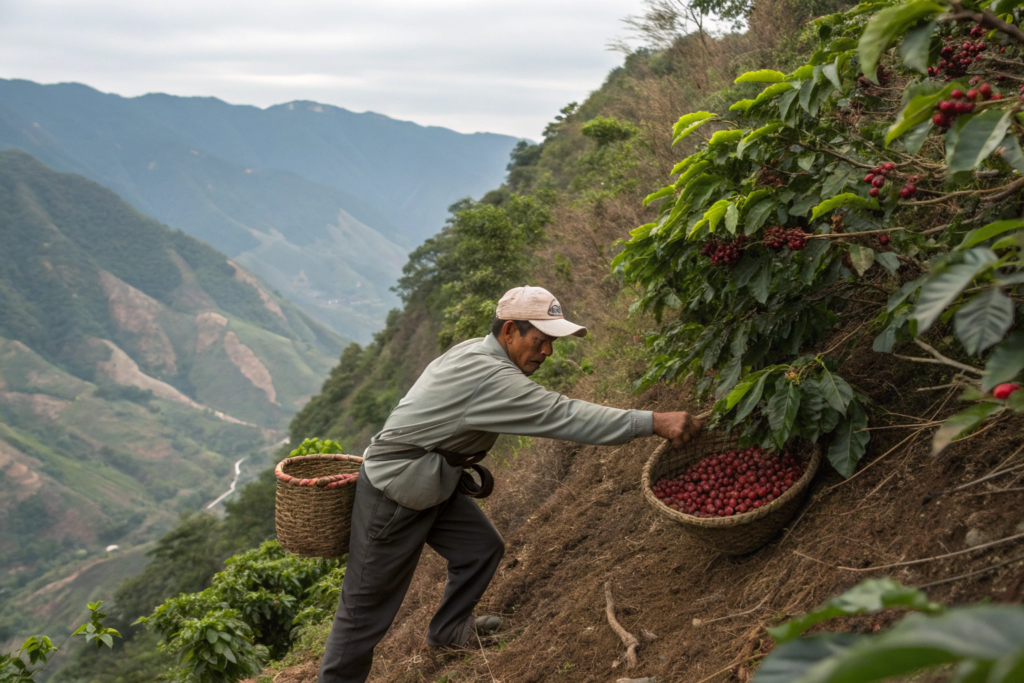
Why are yields lower?
The same slow growth cycle that creates density and flavor also means the plant produces fewer coffee cherries each season. The cooler temperatures and shorter growing season limit the plant's overall output. It's a classic trade-off: quality over quantity.
Why is harvesting more expensive?
Harvesting on a steep, terraced mountainside is slow, difficult, and often dangerous work. It requires workers to navigate uneven ground, often carrying heavy baskets of cherries. This manual labor is far more costly than the mechanical harvesting that can be done on large, flat, low-altitude farms. When you buy SHB-grade coffee, you are paying for the skill and hard work of the pickers who harvested it.
Conclusion
The properties of high-altitude coffee are not a marketing myth; they are the direct result of a challenging environment forcing a plant to create something extraordinary. The slow, cool maturation process forges a bean that is denser, more complex, and packed with the bright, vibrant flavors that define specialty coffee. While this comes at a higher cost due to lower yields and labor-intensive harvesting, the result is a demonstrably superior product. When you buy high-altitude coffee, you are investing in a bean that has been naturally perfected by the mountain itself, offering your customers a truly elevated coffee experience.
We are proud that our plantations in the high mountains of Yunnan produce beans with all the classic hallmarks of high-altitude coffee. If you are looking to source a coffee with exceptional density, bright acidity, and a complex flavor profile, we invite you to experience the quality of our beans. Contact our coffee specialist at cathy@beanofcoffee.com to request a sample and taste the difference the altitude makes.