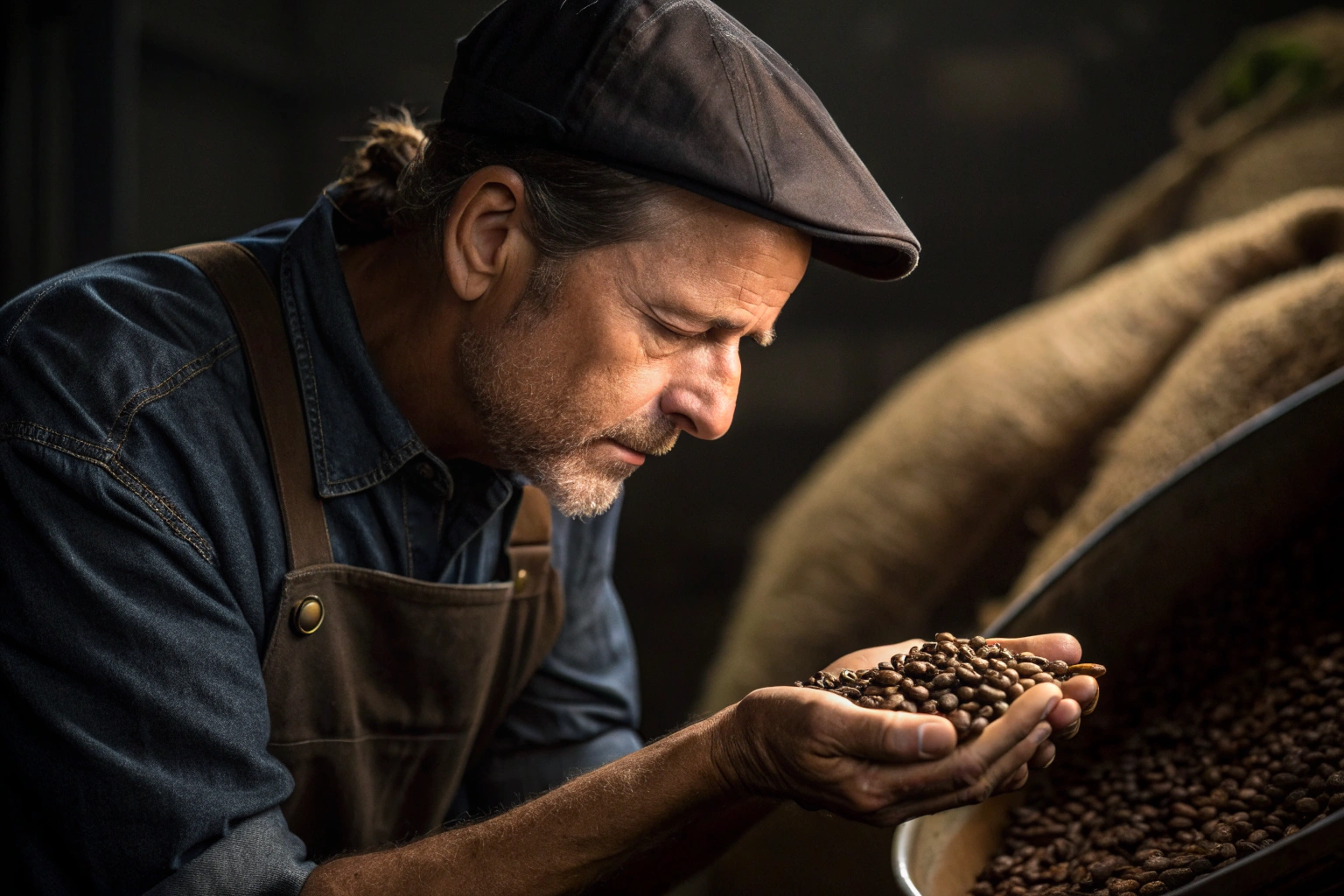
You're obsessed with quality. You've sourced the best green beans—perhaps even from our farms in Yunnan—and you've perfected your roast profiles. But lately, something is off. Your espresso shots are pulling too fast, the crema is thin and vanishes in seconds, and the flavor in the cup is just... flat. It lacks the vibrancy and complexity you know should be there. You're starting to worry if your customers are noticing. This is a major pain point: you're doing everything else right, but the final product is underwhelming, and you suspect your roasted beans might be dying a slow, silent death on your shelf.
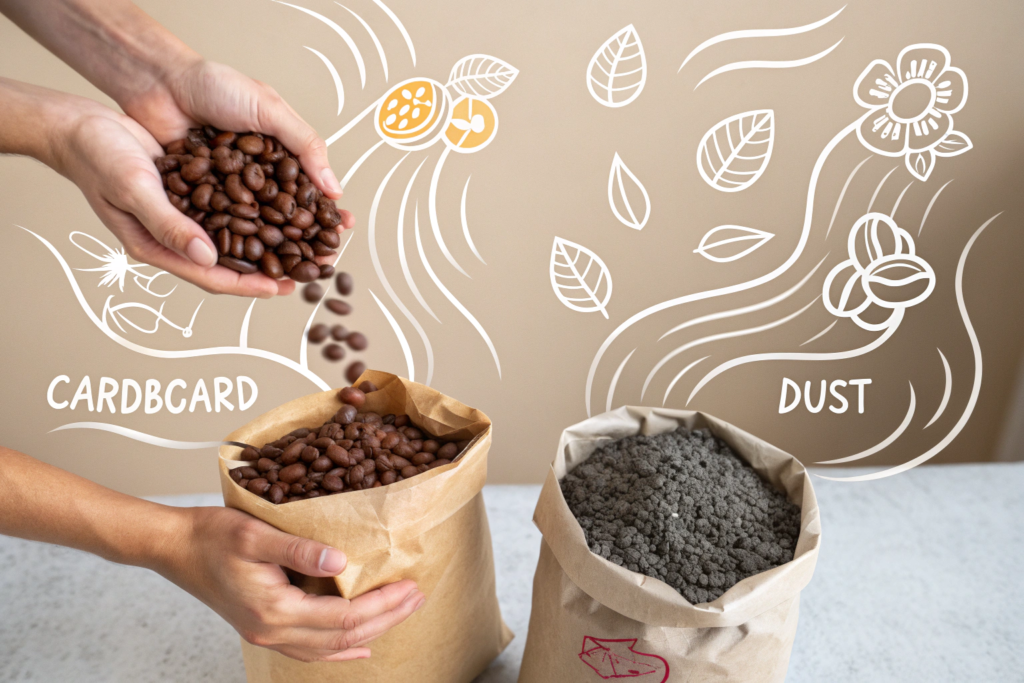
Honestly, the most undeniable sign of stale roasted coffee is the complete loss of aroma and the absence of a stable, rich crema during espresso extraction. Fresh coffee is intensely aromatic and releases a significant amount of CO2 when brewed, which is the gas responsible for creating crema. Stale coffee, on the other hand, smells like cardboard or dust, has already lost most of its CO2, and as a result, produces a pathetic, bubbly crema that disappears almost instantly.
From my perspective as a grower, I think of a roasted coffee bean as a fragile, temporary vessel holding all the beautiful aromatic oils and gases we worked so hard to create. The moment it leaves the roaster, a countdown clock starts. Understanding the signs of that clock running out is critical to protecting your quality and your reputation. Let's break down the tell-tale signs that your coffee has gone stale.
What Is the First Thing to Go? The Aroma.
Before you even grind the beans or pull a shot, your nose knows the truth. The aroma is the soul of the coffee, and it's the first casualty of time.
Isn't coffee supposed to just smell like "coffee"? Absolutely not. Freshly roasted coffee is an aromatic powerhouse. When you open a bag, you should be hit with a complex wave of scents—it could be floral, fruity, chocolatey, nutty, or spicy. Stale coffee, on the other hand, has one primary smell: nothing. Or worse, it smells faintly of cardboard, paper, or dusty pantry shelves. The beautiful, volatile compounds that create its unique aroma have already evaporated.
This is the most intuitive and immediate test. If you have to stick your nose deep into the bag to smell anything, your coffee is already past its prime.
What are volatile aromatic compounds?
These are the hundreds of delicate chemical compounds created during the Maillard reaction and caramelization in the roaster. They are "volatile" because they are fragile and dissipate quickly when exposed to oxygen. Think of them like the top notes in a fine perfume—they are the first to be noticed and the first to fade.
How quickly does the aroma fade?
The peak aroma is typically within the first few days after roasting, a fleeting symphony of scents that dance and linger in the air—rich, earthy notes of dark chocolate and toasted nuts mingling with bright, fruity undertones of berries or citrus, depending on the bean's origin. It's a heady, almost intoxicating bouquet that wraps around you like a warm hug, making every breath feel like a celebration of freshly hewn flavor. After about two to three weeks, however, this aromatic magic begins to fade. A significant portion of those volatile compounds—those tiny, scent-carrying molecules that make coffee smell so alive—will have already off-gassed, especially if the bag has been opened multiple times, each time releasing a little more of that precious aroma into the world.
The once-vibrant bouquet softens, dulls, and loses its complexity, becoming a shadow of its former self, like a song played too many times on an old radio, its melody growing faint and muddled. This is why buying coffee with a 'roasted on' date is so critical. That date is a promise—a timestamp of when the beans were transformed from humble green seeds into aromatic treasures, ensuring you capture that golden window of peak flavor before it slips away, leaving only a whisper of what could have been.
What Happens to the Crema? The "Stale Crema" Test.
If the aroma is the soul of the coffee, the crema is its lifeblood, especially for espresso. The crema is a direct, visual indicator of the coffee's freshness.
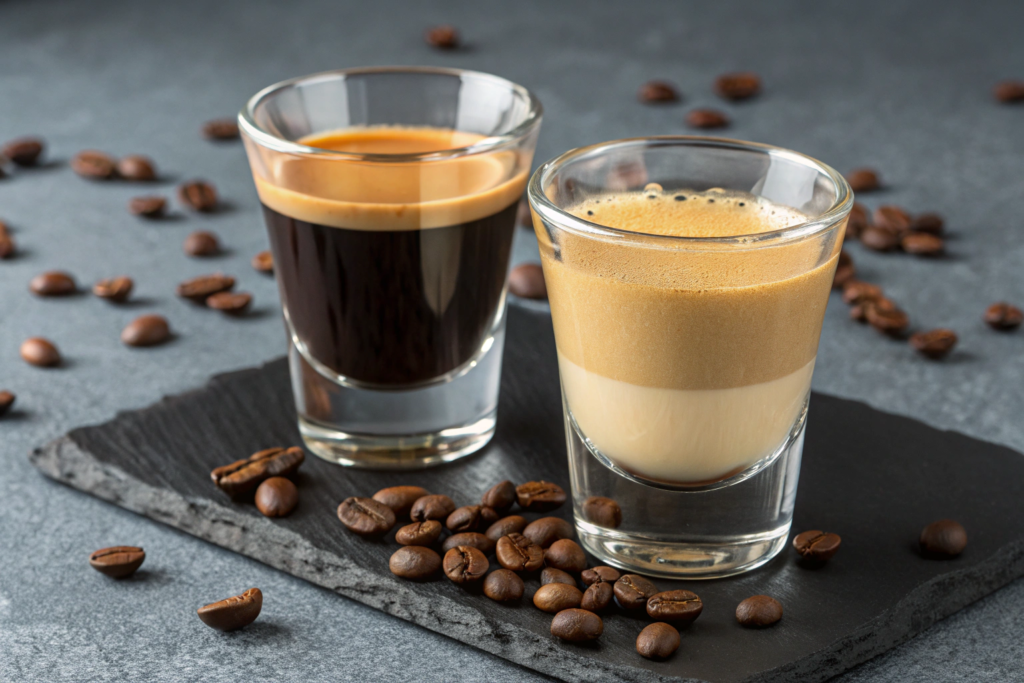
Why is crema so important? Crema is a foam created when the high-pressure water of an espresso machine emulsifies the coffee's oils and suspends them in microbubbles of carbon dioxide (CO2). Freshly roasted coffee is packed with CO2. As coffee goes stale, this CO2 escapes. Less CO2 means a weaker, thinner, and less stable crema. It's a simple, direct correlation. This is the test that roasters and baristas rely on every single day.
What does fresh crema look like?
- Thick & Rich: It should be a dense, compact layer.
- Color: A beautiful, reddish-brown or "tiger-striped" hazelnut color.
- Stable: It should hold for at least 1-2 minutes without breaking apart. You should be able to sprinkle a little sugar on it, and it should sit on the surface for a few seconds before sinking.
What does stale crema look like?
- Thin & Bubbly: It looks more like soap bubbles than a rich foam.
- Color: Pale, blond, and anemic-looking.
- Unstable: It disappears quickly, often within 30 seconds, leaving behind a dark, black-looking coffee. The shot itself will also gush out of the machine too quickly because the lack of CO2 offers less resistance.
How Does the Flavor Profile Change? The Taste of Stale.
Ultimately, the final proof is in the cup. Staling doesn't just remove flavor; it replaces the good flavors with bad ones.
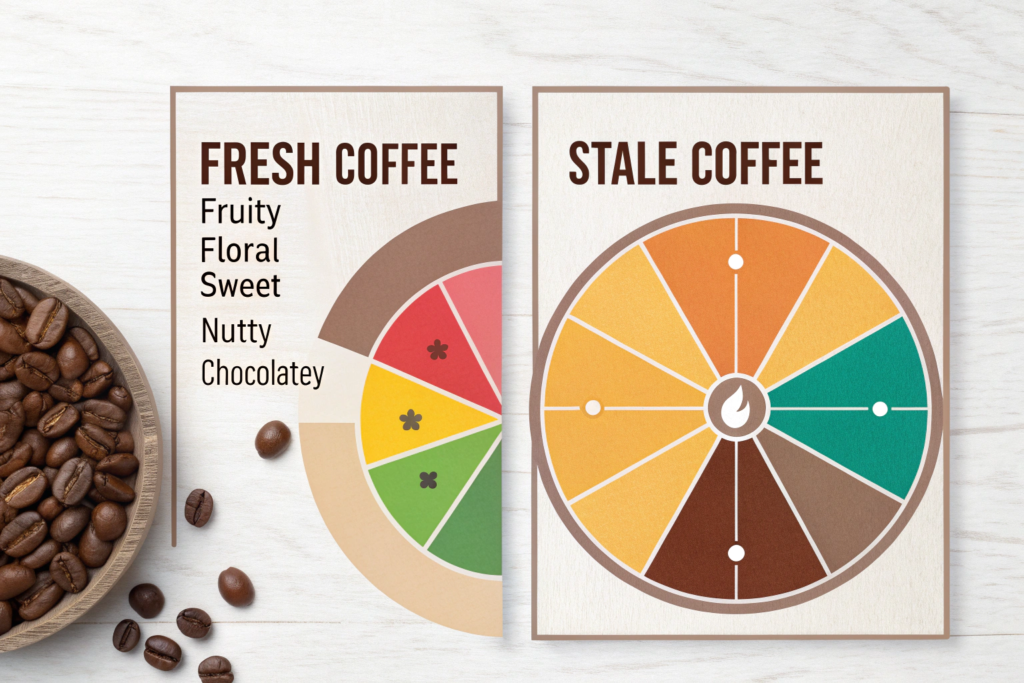
But doesn't all coffee get more bitter over time? Not exactly. It loses its good flavors, which makes the underlying bitterness more prominent and one-dimensional. Fresh coffee has a balance of sweetness, acidity, and bitterness. Stale coffee is just a hollow, empty shell of bitterness. The vibrant, exciting notes that define a specialty coffee are the first to go.
What flavors are lost first?
- Acidity: The bright, sparkling, pleasant acidity that gives a coffee life and makes it taste "juicy" or "vibrant" disappears. It becomes dull and flat.
- Sweetness: The caramel and fruit sugars degrade, leaving the coffee tasting less sweet and more astringent.
- Complexity: All the delicate floral and fruit notes vanish. A coffee that once tasted of jasmine and peach now just tastes generically of "coffee," or worse, like wood or paper.
What flavors remain or appear?
As the good flavors fade, the less desirable ones take over. The coffee's inherent bitterness is no longer balanced by sweetness and acidity, so it becomes the dominant flavor. The coffee can also develop an unpleasant "woody" or "papery" taste as the organic compounds continue to break down and oxidize. This is the taste of oxidation, similar to how an apple turns brown and loses its flavor when left out.
How Can You Prevent Your Beans from Going Stale?
You can't stop time, but you can dramatically slow down the staling process by protecting your coffee from its four mortal enemies: Oxygen, Light, Heat, and Moisture.
Should I just put my coffee in the freezer? Please, no. This is one of the biggest myths in coffee. The freezer is a very humid environment, and freezing can damage the cellular structure of the bean. The best way to store roasted coffee is in a cool, dark, dry place, in an airtight container or the original one-way valve bag. Your storage strategy is your last line of defense.
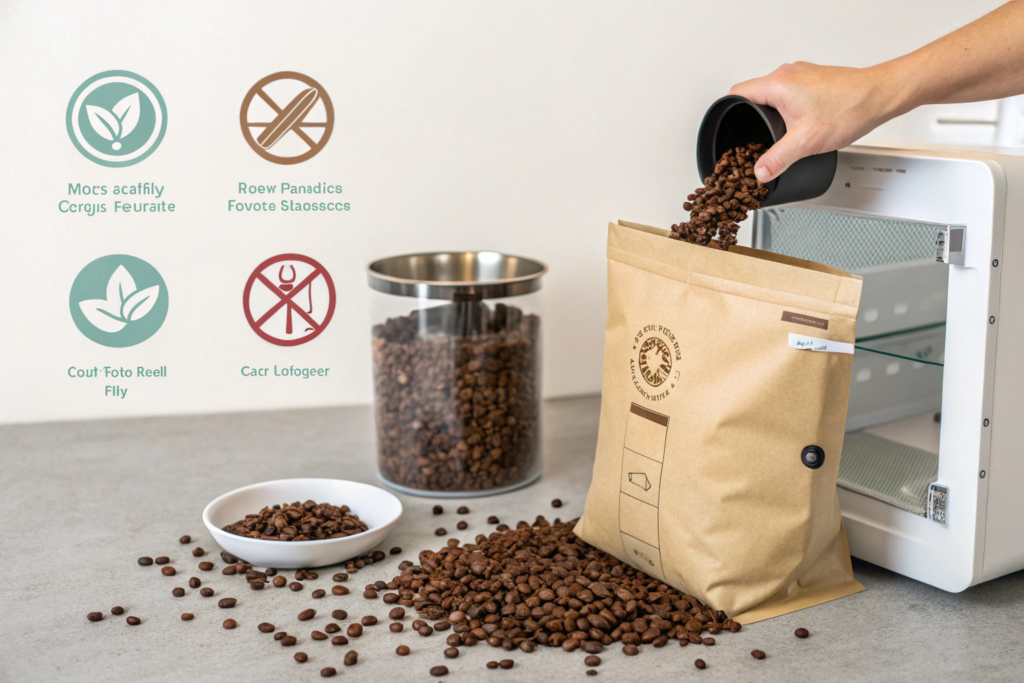
What is a one-way valve bag?
The bags we and most specialty roasters use are adorned with a small, circular plastic valve—a unassuming yet ingeniously crafted piece of technology that plays a pivotal role in preserving the beans' vitality. This valve, often no larger than a dime, is a marvel of engineering designed to perform a delicate balancing act: it allows the carbon dioxide (CO2) generated by the fresh, just-roasted beans to escape, preventing the bag from bulging dangerously or even exploding under pressure. Yet, despite this outward breath of life, it acts as an impenetrable barrier against the insidious intrusion of oxygen, the silent thief of freshness. As you hold the bag, you might notice a faint, almost imperceptible hiss if you press gently around the valve area, a subtle reminder of the CO2 being released. The texture of the valve itself is smooth and slightly raised, contrasting softly with the matte finish of the bag's surface.
What is the ideal storage routine?
- Buy Fresh: Purchase coffee in smaller quantities, more frequently. Look for a "roasted on" date, not a "best by" date.
- Keep it Sealed: Store the coffee in its original valve bag. Squeeze out as much air as possible before resealing it.
- Keep it Cool & Dark: A pantry or cupboard is perfect. Avoid storing it on the counter in a clear jar where it's exposed to light, or near the oven where it's exposed to heat.
- Grind Fresh: The most important rule of all. Grinding massively increases the surface area exposed to oxygen. The best way to ensure a fresh cup is to grind your beans immediately before brewing.
Conclusion
Recognizing the signs of stale coffee is a fundamental skill for any coffee professional. It's about training your senses—your nose, your eyes, and your palate—to detect the tell-tale signs of decay: the loss of aroma, the collapse of the crema, and the flattening of the flavor. By understanding what causes staling and implementing best practices for storage and inventory management, you can ensure that every cup you serve is a true and vibrant expression of the bean's potential. It's the ultimate sign of respect for the coffee, for the farmer who grew it, and for the customer who trusts you for a great experience.
We pour our hearts into growing and processing the highest quality beans at our farms, like those from Shanghai Fumao. We do this with the faith that our partners down the line will protect that quality. If you are a roaster or cafe owner who shares this obsession with freshness and quality, we would be honored to work with you. Contact our coffee specialist at cathy@beanofcoffee.com to learn more about our latest harvest.