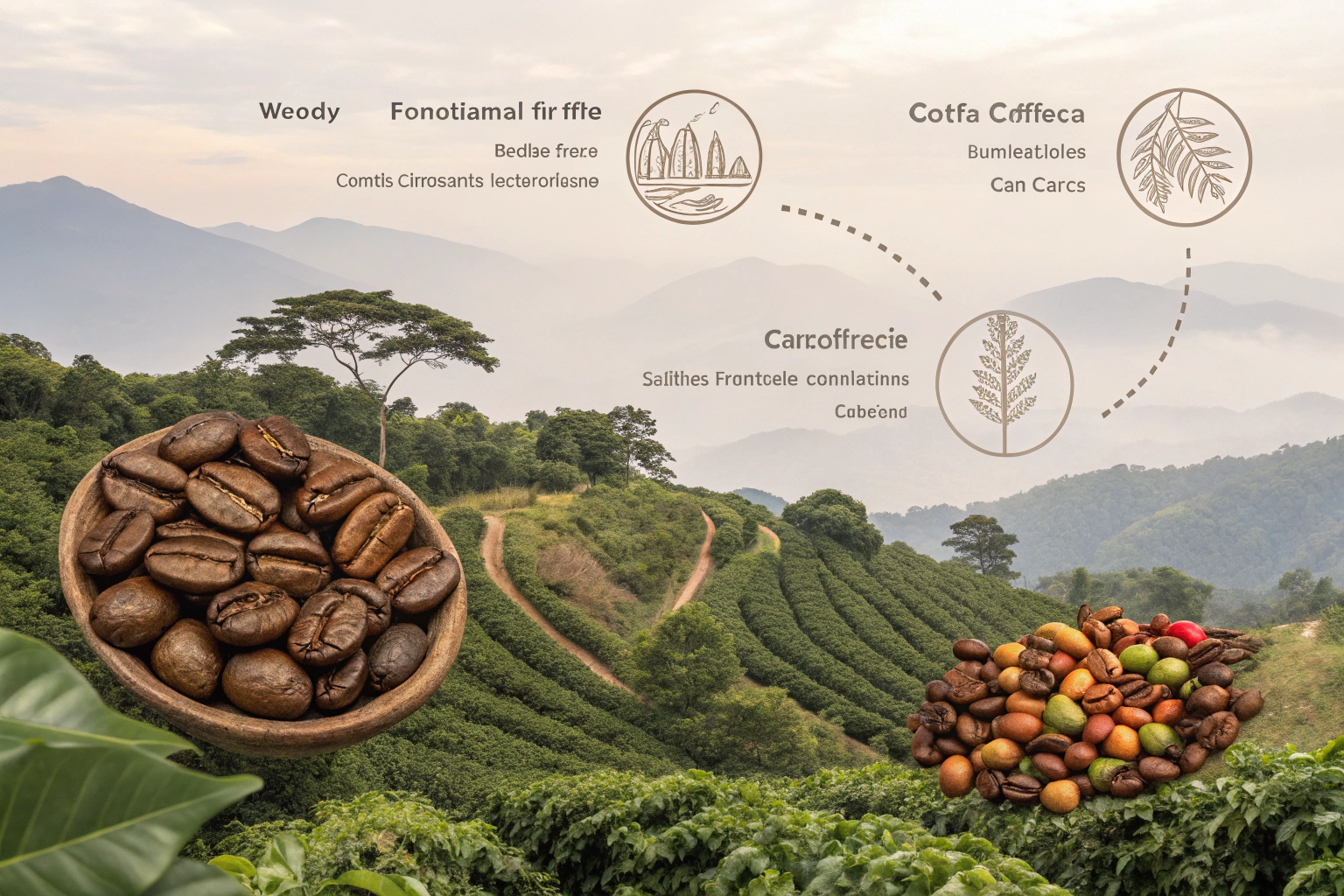
So you're looking at Catimor on a coffee spec sheet. It's common, it's often affordable. But what does it actually taste like? Many buyers see "Catimor" and think "simple, commercial grade." I used to think that too, until I cupped our own Yunnan Catimor lots with some of our international clients. The results were surprising. The flavor profile is more versatile—and more interesting—than its reputation suggests.
Catimor beans are known for a foundational profile of earthy, woody, and nutty notes, often with a distinct bitterness that provides structure. However, when grown under optimal conditions (high altitude, careful processing), they can develop remarkable sweetness, bright citrus or red fruit acidity, and smooth chocolate tones, making them a complex and cost-effective choice for blends and single-origins.
That's the key. The potential is there, but the terroir and craftsmanship unlock it. As a buyer, understanding this duality lets you source Catimor strategically. You can find lots that punch above their weight, offering great value without sacrificing cup character. Let's break down exactly what you might taste and why.
The Core Flavor Identity of Catimor Coffee
The first thing you need to know: Catimor is a hybrid. It was created for disease resistance and high yield. That agricultural strength sometimes came at a perceived cost to cup quality, especially in less ideal growing environments. The classic "Catimor taste" can be robust, even bold, with a certain roughness.
At its base, you often get a solid, grounding body. Think of flavors like roasted almond, peanut, or hazelnut. There's frequently an earthy quality—not dirty, but like fresh-turned soil or cedar wood. This is accompanied by a inherent bittersweetness, similar to dark cocoa or 70% dark chocolate. In some cups, you might detect a mild spice note, like black pepper or cinnamon. This profile makes it an incredibly reliable base for espresso blends; it provides a backbone that doesn't get lost under milk. It's the dependable workhorse note. But that's not the whole story. When the growing conditions are just right, the cup changes dramatically.
How does processing method affect these core notes?
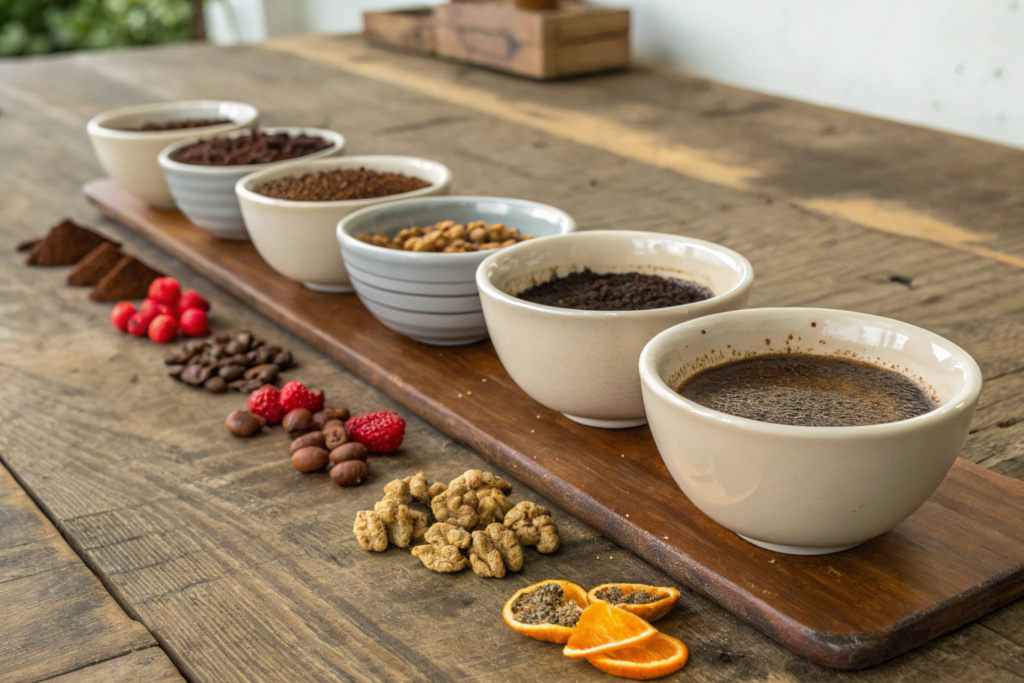
Processing is the first major lever that changes Catimor's flavor. A washed Catimor process will strip away much of the fruit pulp early. This usually highlights the bean's inherent structure: the nuttiness and cocoa come forward more cleanly, and any acidity present is clearer and brighter. It can taste cleaner and more "classic."
A natural processed Catimor is a different beast. The cherry is dried around the bean, allowing sugars to ferment and penetrate. This method can amplify body and sweetness dramatically. Those earthy notes might transform into ripe, fermented fruit flavors—think dried cherry, raisin, or even a boozy red wine note. The chocolate can become sweeter, like cocoa powder. For buyers, this means you can source two distinct profiles from the same genetic stock just by choosing the process. It's a powerful tool.
What are the common "defect" flavors to watch out for?
Honestly, this is important for quality control. Poorly grown or processed Catimor can show harsh, astringent bitterness—like aspirin or burnt grain. It might have a persistent grassy or green vegetable taste, indicating under-ripeness. Sometimes, there's a rubbery or smoky off-note. These are red flags. They often stem from harvesting unripe cherries, insufficient drying, or low-altitude farming. A reputable supplier like us atShanghai Fumao avoids this through strict selective picking and controlled drying protocols on our Yunnan farms. When you cup samples, look for pleasant bitterness (like dark chocolate) and a clean finish, not those harsh, lingering negative flavors.
How Altitude and Terroir Elevate Catimor's Profile
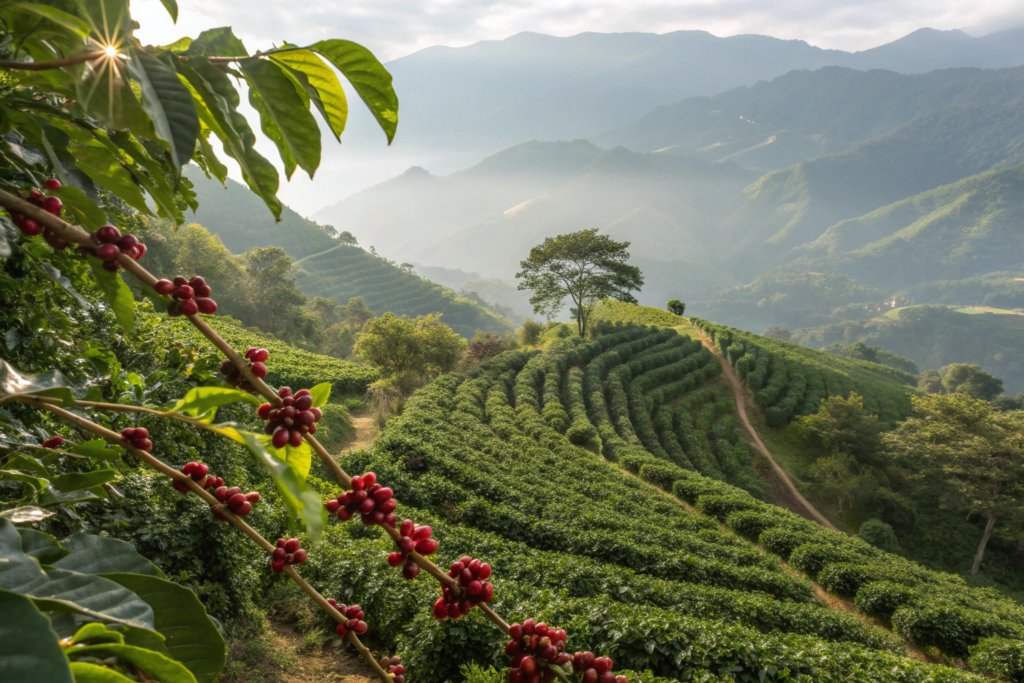
This is where the magic happens. Catimor grown at 1,000 meters tastes very different from Catimor grown at 1,500 meters. In Yunnan, our best lots come from the higher slopes of Baoshan and Pu'er. The altitude, cool nights, and mineral-rich soil literally add new notes to the spectrum.
At these elevations, the bean develops more slowly. This allows sugars to concentrate and acids to develop complexity. The earthy note often recedes, becoming more of a sweet, aromatic cedar. The nuttiness can shift from raw peanut to a sweeter, roasted hazelnut. Most excitingly, fruity and floral notes can appear. We've consistently found a bright, citric acidity (like mandarin orange or lemon zest) and sometimes a distinct red fruit character (think red apple, cranberry, or even plum) in our high-altitude Catimor. It still has that chocolate base, but now it's layered. It becomes a balanced, even complex cup. This transformation proves that Catimor's potential is tied directly to its environment.
Can Yunnan's specific terroir create unique Catimor flavors?
Absolutely. Yunnan isn't Brazil or Vietnam. Our unique combination of laterite soil, monsoon climate, and high-altitude plateaus imparts a specific signature. Many cuppers describe a certain "herbal" or "spicy" nuance in Yunnan Catimor that's distinct. It's not a cooking spice, but more like dried tobacco leaf, sweet pine, or even a hint of black tea. There's also a notable malic acidity (apple-like) alongside the citrus. This creates a profile that is simultaneously familiar (chocolate, nuts) and intriguingly different (citrus, red fruit, herbal tea). For your blends, this can add a unique layer of complexity that sets your product apart. It's a flavor story tied directly to a place—and that has marketing value.
What is the role of shade in developing these flavors?
A detail many miss is shade. On our farms, we use selective shade trees. This isn't just for sustainability; it directly impacts flavor. Shade further slows the cherry's maturation, allowing even more sugar development. It also protects the beans from direct sun, which can cause a baked, flat taste. In our shaded Catimor lots, we notice the acidity is softer and juicier, and the body is silkier. The flavors tend to be more integrated and balanced, with less aggressive bitterness. It's another example of how farming practice directly writes the flavor script. When sourcing, asking about shade-grown practices can be a good indicator of a supplier's commitment to quality development, not just bulk production.
Catimor in the Roastery: Flavor Development and Blending
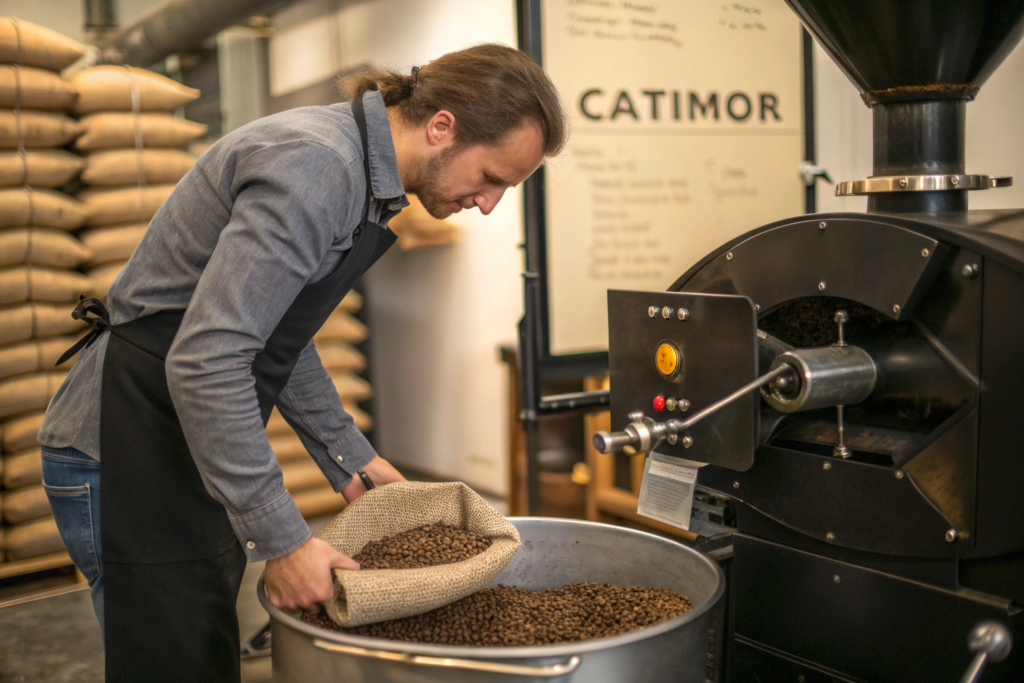
As a roaster or buyer, you care about how the bean behaves. Catimor is generally dense, especially from high altitudes. This means it can handle heat well, but you need to be mindful. Its flavor profile is malleable based on your roast curve.
A light to medium roast will highlight its acidity and fruity potential, if present. You'll get more of those citrus and red apple notes. The body will be lively. A medium to dark roast will bring out its classic strengths: the deep chocolate, the nutty tones, and that structured bitterness become the stars. It develops a heavy, syrupy body that's excellent for espresso. Going too dark, however, can overwhelm its subtleties and leave you with just ash and carbon. The trick is to roast to highlight the specific qualities of that lot. Our processing and farming create the potential; your roasting expertise realizes it in the cup.
Why is Catimor such a popular choice for espresso blends?
Let's talk practicality. Catimor is a blender's dream for several reasons. First, its strong foundational notes (chocolate, nuts, good bitterness) provide a stable base that doesn't vanish when mixed with brighter, more expensive beans. Second, its cost-effectiveness allows you to use a higher percentage in a blend without skyrocketing your cost of goods. Third, its body is often thick and creamy, which is a prized attribute in espresso for mouthfeel and latte art stability. You can use a high-quality Yunnan Catimor as 40-60% of a blend, then add a brighter Central American bean for acidity and a fruity African for top notes. The result is a complex, balanced, and profitable blend. Its reliability is its superpower in the commercial space.
How should one cup and evaluate Catimor samples?
Don't just cup for "no defects." Cup for potential. When you receive our samples, ask these questions: Is the bitterness pleasant or harsh? Is there a clean sweetness behind the cocoa? Can I detect any fruit or citrus, even if it's subtle? How is the mouthfeel—is it round or rough? Pay attention to the aftertaste (finish). A good Catimor should leave a pleasant, sweet-chocolate or nutty aftertaste, not a dry, bitter one. Compare samples from different altitudes or processes side-by-side. You'll quickly train your palate to see the spectrum, from the solid commercial base to the surprisingly complex single-origin candidate. This is how you find value.
Market Positioning: Communicating Catimor's Value to End Consumers
The final challenge is storytelling. "Catimor" doesn't have the glamour of "Geisha" or "Bourbon." But that doesn't mean its story isn't compelling. For roasters and brands, framing is everything.
You can position it as a "Discover" coffee: "Discover the unexpected side of Yunnan—a high-altitude Catimor with bright citrus and deep cocoa." This challenges the stereotype. You can position it as a "Heritage" or "Workhorse" blend component: "The reliable, chocolatey backbone of our beloved house espresso." This honors its dependable qualities. Use specific, attractive flavor notes from your cupping: "Roasted Hazelnut, Dark Chocolate, Red Apple." These are familiar and appealing to consumers. Transparency about its origin and hybrid nature can also build trust—it's an honest, hard-working bean that delivers great flavor for the price.

How can tasting notes increase perceived value?
Specificity sells. Instead of just "nutty" or "chocolatey," get precise. Is it "Marcona Almond" or "Toasted Hazelnut"? Is it "Dutch-processed Cocoa" or "70% Dark Chocolate Bar"? If there's fruit, is it "Dried Cranberry" or "Fresh Red Plum"? These detailed notes educate the consumer and justify a higher price point than generic "coffee." They signal care in sourcing and roasting. For our Yunnan Catimor, we often use notes like: "Cocoa Nibs, Cedar, Mandarin Orange, Brown Sugar." This tells a complete and enticing story that moves the product beyond a commodity.
What is the future of Catimor in specialty coffee?
The perception is changing. As farming and processing improve in origins like Yunnan, Ethiopia, and Honduras, Catimor is showing it can be a specialty coffee contender. It's being taken more seriously in competitions and by specialty roasters looking for value and uniqueness. The future is not about hiding Catimor in blends, but about celebrating its best expressions as terroir-driven single origins. For forward-thinking buyers, getting to know the high-end potential of Catimor now is a smart move. It allows you to source excellent coffee at a still-reasonable cost, before the wider market catches on and prices rise. It's an opportunity to be ahead of the curve.
Conclusion
Catimor beans offer a flavor journey from their classic, dependable core of earth, wood, nuts, and dark chocolate to elevated expressions featuring bright citrus, red fruit, and complex sweetness, all heavily influenced by altitude, processing, and terroir. Understanding this spectrum allows buyers to make intelligent sourcing decisions, using Catimor as a cost-effective blender or as a distinctive, terroir-driven single-origin.
For roasters and importers, the key is to seek out Catimor from committed producers who focus on high-altitude cultivation and meticulous processing—like our practices at Shanghai Fumao in Yunnan. This is where you find beans that defy expectations and deliver exceptional value. Ready to explore the real taste of high-quality Catimor? We invite you to cup the difference for yourself. Contact Cathy Cai at BeanofCoffee to request samples of our Yunnan Catimor from different plots and processes. Discover its potential for your next blend or single-origin offering at cathy@beanofcoffee.com.