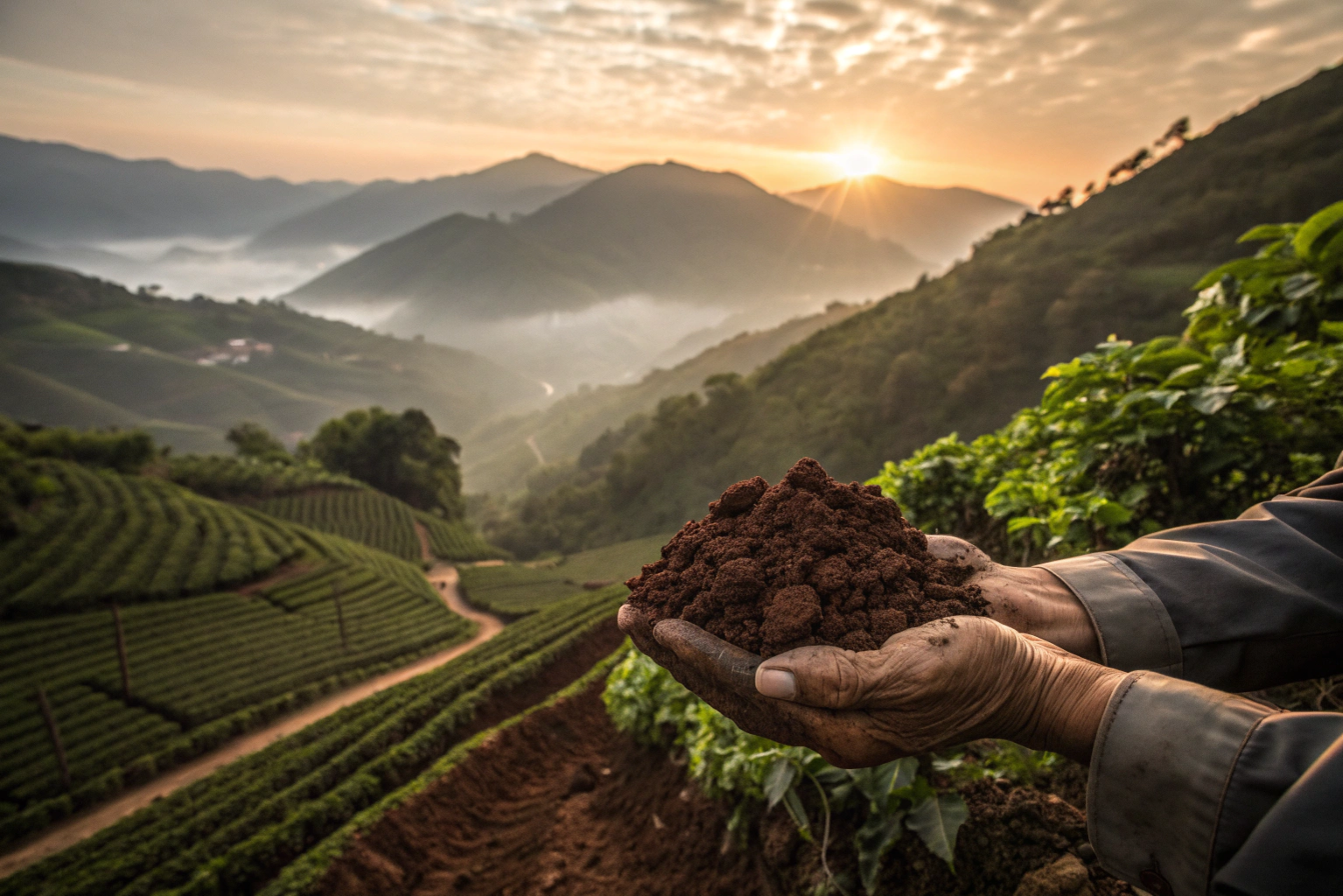
I love getting questions like this from discerning buyers like Ron. It shows they're paying attention. They're tasting beyond the processing method and getting to the heart of the coffee itself. My answer is always the same, and it's no secret at all. I tell them, "You're not tasting a secret, Ron. You're tasting a mountain. You're tasting our soil." In the world of coffee, we talk a lot about varietals and processing, but we often forget the most fundamental ingredient of all: the earth itself.
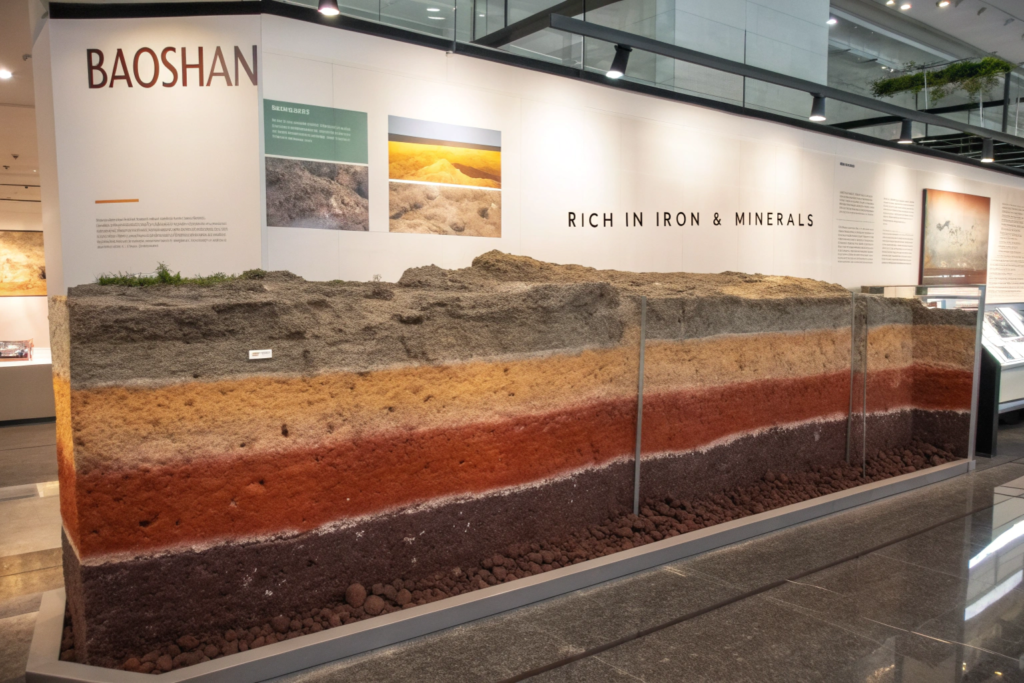
The specific soil condition that defines Baoshan City as a world-class coffee origin is its foundation of rich, red, lateritic soil derived from ancient volcanic activity. This soil is naturally fertile, exceptionally well-draining, and rich in iron and other essential minerals, which translates into a coffee cup profile known for its deep sweetness, full body, and a complex, lingering aftertaste. This unique terroir is the literal groundwork for the quality that we cultivate at Shanghai Fumao. It's our single greatest natural advantage.
For a buyer, understanding the soil is understanding the why behind the quality. It's the ultimate proof of origin and the foundation of the unique flavor profile you can't find anywhere else. Let's dig deep into the earth of Baoshan and I'll show you exactly why our ground is so special.
What Is Volcanic Laterite Soil?
When you walk through our coffee plantations in the hills around Baoshan, the first thing you notice is the color of the earth. It's a deep, vibrant red, the color of rust or brick dust. This isn't just any dirt; this is volcanic laterite soil. It's a specific soil type found in tropical and subtropical regions with high rainfall, and its story begins millions of years ago.
Our city, Baoshan, sits on the edge of the collision point between the Indian and Eurasian tectonic plates. This geological activity has resulted in significant volcanic activity throughout the region's history. The soil here is the product of ancient volcanic rock breaking down over millennia. This parent material is rich in minerals, especially iron oxides, which give the soil its characteristic red color.
But laterite soil is more than just red. The tropical climate has caused intense weathering, leaching away some minerals but leaving behind a high concentration of iron and aluminum. Crucially, this process creates a soil structure that is porous and crumbly, almost like gravel. For a coffee plant, which absolutely hates having "wet feet," this is paradise.
Why Is It Red?
The red color comes from a high concentration of iron oxide, essentially rust—a vivid, earthy hue that clings to the landscape like a passionate blush. When the iron-rich volcanic rock, rough and pitted with ancient secrets, is exposed to a hot, wet climate for thousands of years, the iron slowly oxidizes, a chemical dance between moisture and heat. This process stains the soil in rich, rusty streaks, turning the ground into a tapestry of deep crimson and terracotta, as if the earth itself has bled its life into the land.
What Does "Well-Draining" Mean for Coffee?
Coffee plant roots need oxygen to be healthy. If soil becomes waterlogged, the roots can't breathe and will begin to rot, stressing the plant and leading to poor cherry development. The porous, granular structure of our laterite soil allows heavy monsoon rains to drain away quickly, preventing waterlogging and ensuring our plants' root systems are healthy and strong. This is a critical factor for producing high-quality coffee, as detailed by coffee research organizations like World Coffee Research.
How Does the Soil's Minerality Affect Flavor?
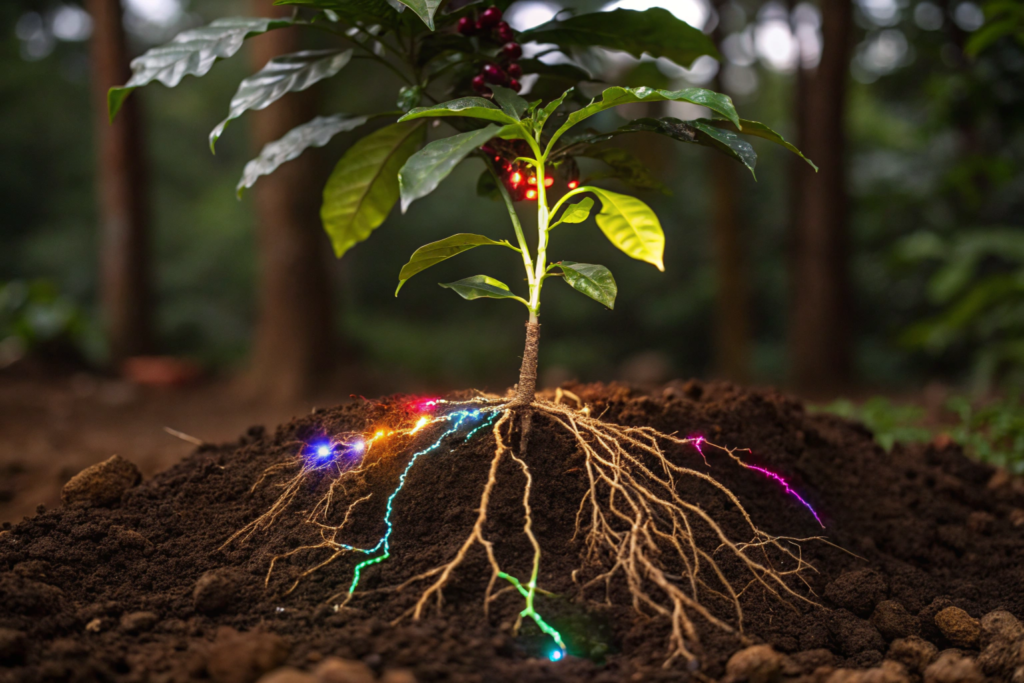
If the soil's structure keeps the plant healthy, its chemical composition builds the flavor. The volcanic origin of our Baoshan soil means it is a cocktail of minerals that are essential for coffee quality. While a plant's flavor is a complex interplay of genetics and environment, the specific minerals available in the soil act as the building blocks for the acids, sugars, and aromatic compounds in the final bean.
Our soil analysis consistently shows not just high levels of iron, but also a healthy balance of other key micronutrients like magnesium, potassium, and zinc. These aren't just "vitamins" for the plant; they are direct contributors to the final cup profile.
- Potassium is vital for the transport of sugars from the leaves to the cherries, leading to a sweeter, more developed fruit.
- Magnesium is a central component of chlorophyll and is essential for photosynthesis, the engine that powers the entire plant.
- Iron plays a key role in enzymatic reactions that contribute to the development of complex aromatic compounds.
This unique mineral profile is our terroir's signature. It's what gives our Baoshan coffee its characteristic full body, a round and satisfying mouthfeel, and a deep, lingering sweetness that sets it apart from the sharper, more citric profiles of coffees grown in different soil types. It's the taste of the Gaoligong Mountains.
Is This Soil Naturally Fertile?
Yes, but that doesn't mean we can ignore it. While the volcanic soil provides a fantastic baseline fertility, years of farming can deplete it. A key part of our sustainable practice at BeanofCoffee is soil management. We practice extensive composting, using the pulp from our coffee cherries and other organic matter to create a rich humus that we return to the soil. This replenishes the organic content and ensures the long-term health and fertility of our land.
How Does This Relate to Certification?
Our commitment to soil health is a cornerstone of our sustainability certifications. Auditors for programs like Rainforest Alliance or organic certifications look specifically at our soil management practices. They want to see that we are not just taking from the land, but that we are actively nurturing it for future generations. This verifiable commitment to soil stewardship is a key point for buyers like Ron who are concerned with sustainability.
What Is the Role of the Mountainous Terrain?
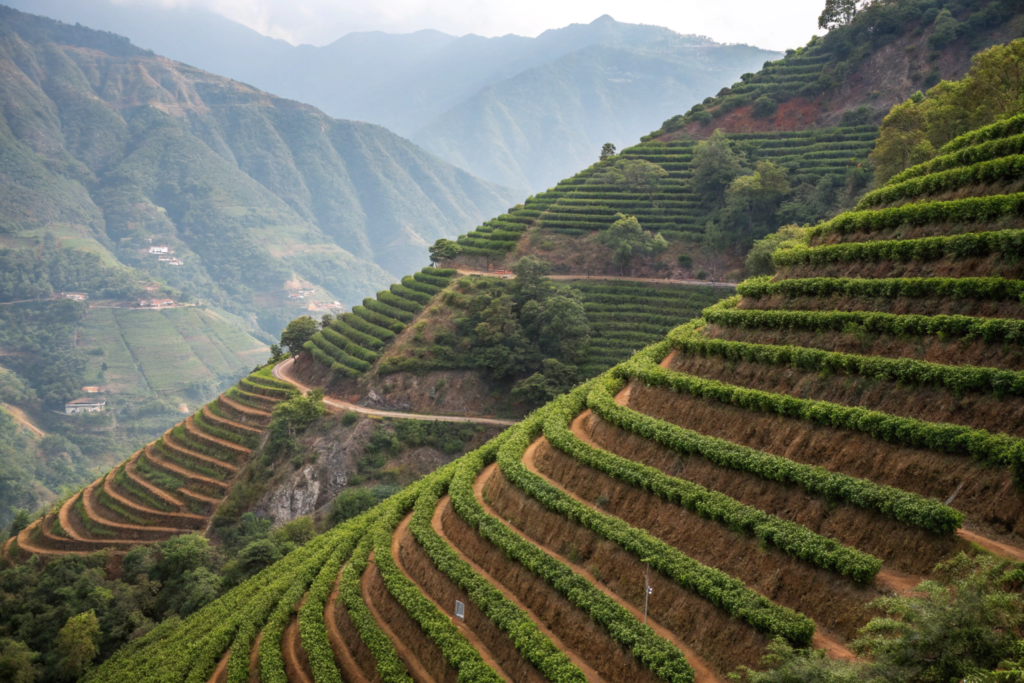
The soil itself is only one part of the equation. Its effectiveness is magnified by the terrain where it's found. We aren't farming on a flat plain; we are farming on the steep, terraced slopes of the Gaoligong mountain range, often at altitudes between 1,300 and 1,800 meters. This topography works in perfect harmony with our volcanic soil.
The steep slopes further enhance the soil's already excellent drainage. Water never has a chance to pool; it is always on the move. This natural gravitational pull ensures our coffee roots are always in that "just right" zone of moisture—never too wet, never too dry.
Furthermore, the mountainous terrain creates a multitude of microclimates. A slope that faces east gets the gentle morning sun, while a slope that faces west gets the more intense afternoon heat. This, combined with variations in altitude on a single farm, means that even within our plantation, we can produce lots with subtly different characteristics. It gives us a broad palette of flavors to work with, all grown from the same foundational red earth.
What Is a "Microclimate"?
A microclimate is a local set of atmospheric conditions that differ from those in the surrounding areas, a delicate tapestry woven by nature's subtlest hands. In our mountains, where the air hums with the whispers of elevation and terrain, the angle of the sun—golden and slanting at dawn, fierce and direct at midday—casts shifting shadows that dance across the landscape. The presence of shade trees, their leaves rustling like secrets, creates dappled light that cools the soil and slows the ripening of fruits, while the protection from wind offered by a ridge acts as a gentle guardian, sheltering valleys and slopes from the biting chill of mountain gusts.
How Does This Impact Harvesting?
The terraced, mountainous terrain makes mechanical harvesting impossible. All of our coffee must be picked by hand. While this increases our labor costs, it is also a blessing in disguise. It forces us to practice selective harvesting, sending skilled pickers to evaluate each cherry individually. This ensures that only the perfectly ripe cherries make it to our processing station, a fundamental step in achieving the highest quality that many large, flat-farm operations cannot replicate.
Conclusion
The unique taste of Baoshan coffee is not an accident. It is a direct gift from our unique geological and geographical heritage. It is born from a deep, red volcanic soil that provides a perfect balance of drainage and rich minerality. This soil, laid across the high-altitude, terraced slopes of the Gaoligong Mountains, creates the ideal environment for cultivating world-class specialty coffee.
When you taste the full body, the deep sweetness, and the complex finish of our coffee, you are tasting the iron, the potassium, and the magnesium from that soil. You are tasting the perfect drainage of the mountain slopes and the slow, careful maturation of a high-altitude cherry. You are tasting our terroir.
We believe that the greatest coffees in the world have a strong sense of place. They taste like where they came from. We invite you to experience the taste of our home. To request a sample and taste the impact of our unique Baoshan soil for yourself, please contact our head of client relations, Cathy Cai, at cathy@beanofcoffee.com.