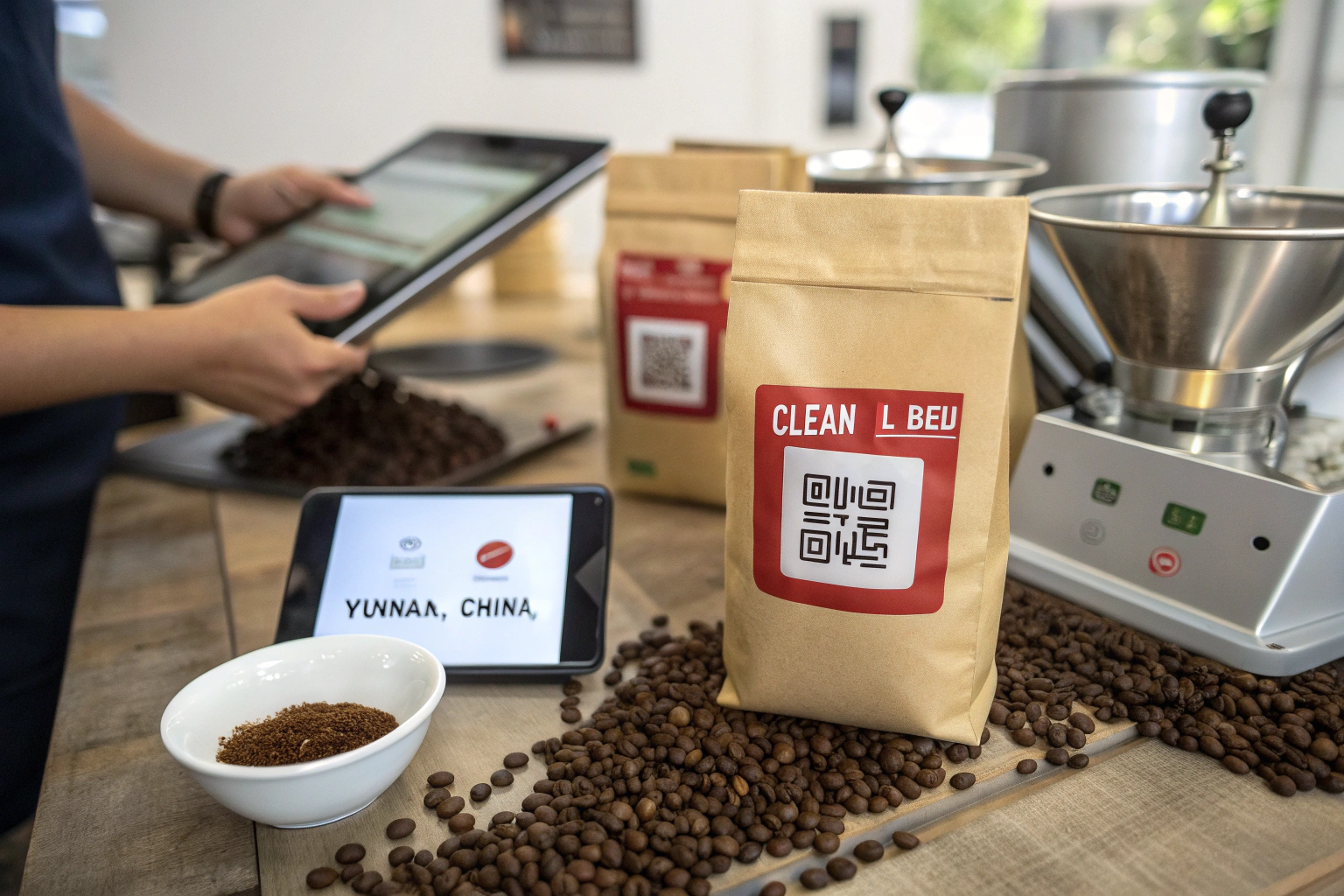
You look at your sales data from last quarter. Your core blend is holding steady. But the single-origin subscription? Flat. The retail bags on the shelf? Moving slower. And you're hearing whispers from other roasters—some are thriving, some are just surviving. You're asking yourself: What are the smart roasters doing differently in 2026? Is it the coffee? Is it the packaging? Is it the story? Or is the whole market shifting under our feet and I'm missing the signal?
The top coffee trends for roasters in 2026 center on three strategic pivots: a flight to value-driven, logistics-secure origins like Yunnan, China to combat persistent price volatility; the mainstreaming of "Clean Label" verification where EUDR compliance and pesticide transparency are becoming baseline consumer expectations, not premium add-ons; and the rise of "Roaster-to-Consumer" digital storytelling that uses QR-code traceability to justify price points in an inflationary retail environment. The roasters winning in 2026 are not necessarily those with the highest cupping scores, but those with the most resilient supply chains and the clearest consumer communication.
I spend my days talking to roasters across the U.S., Europe, and Australia. I hear their anxieties. But I also see what's working. At Shanghai Fumao, we're not just shipping containers. We're a listening post. And the trends I'm about to share aren't from a marketing report. They're from the front lines of the global coffee trade. Let's walk through what's actually moving the needle for roasters this year.
Why Are Roasters Pivoting to Asian Origins Like Yunnan for Supply Chain Stability?
The romance of Colombian mountains and Ethiopian highlands is real. But romance doesn't pay the bills when your container is stuck in Buenaventura for three weeks or your differential just jumped 40 cents. Roasters are pragmatists. And in 2026, pragmatism is leading them west, across the Pacific.
Roasters are pivoting to Asian origins, particularly Yunnan, for supply chain stability because the combination of modern Chinese port infrastructure and direct Pacific shipping lanes offers a level of predictability that has eroded in many traditional origins. The transit time from Shanghai to the U.S. West Coast is consistent and reliable. Furthermore, the vertical integration of large Yunnan producers reduces the number of intermediaries, which in turn stabilizes the FOB differential and minimizes the risk of contract default or quality drift that can occur with fragmented smallholder supply chains.
Is the "China Price Advantage" Still Real in 2026?
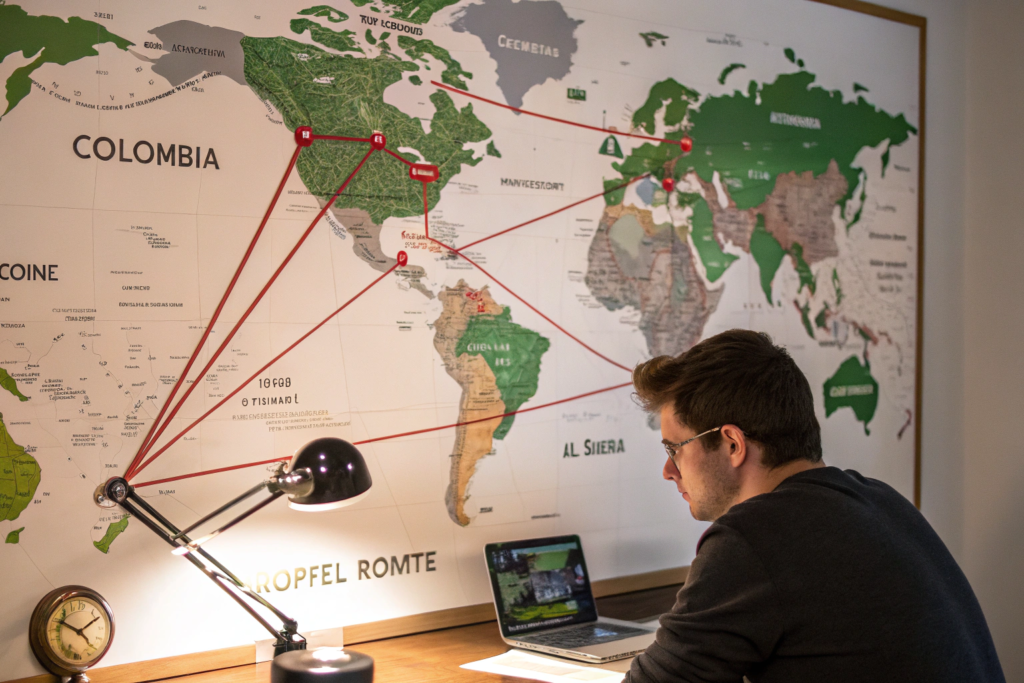
Yes, but it's not just about a cheaper FOB price anymore. The real advantage is in the landed cost stability. The C-market is volatile. Colombian differentials are volatile. Freight from South America has been unpredictable.
When you factor in the total cost to get a pound of coffee to your roastery door—including financing, freight, and the risk premium for delay—Yunnan coffee often delivers a more predictable, and frequently lower, all-in cost. The days of Chinese coffee being a "cheap commodity" are over. The quality is now in the 82-85 point range. But the efficiency of the supply chain keeps the final number competitive. For a roaster managing tight margins, that predictability is worth more than a half-point on a cupping score. You can analyze these cost differentials yourself using data from the International Coffee Organization and freight indices. The math favors the efficient, direct routes.
How Does Vertical Integration in Yunnan Reduce My Contract Risk?
When you buy from a trader in Colombia, they're buying from a cooperative, who buys from hundreds of small farmers. Any break in that chain—a farmer selling to a higher bidder, a co-op mismanaging funds—and your contract is at risk.
In Yunnan, the model is increasingly shifting toward large, vertically integrated estates like ours. Shanghai Fumao controls the land, the harvest, the processing, and the export. When we sign a contract with you, we are signing for coffee we already own and have already processed. There is no middleman who might default. There is no farmer who might sell to someone else. This vertical control is the "security" that buyers like Ron value. It's a structural advantage that reduces the noise and uncertainty in the sourcing process. It allows the roaster to focus on roasting and selling, not on chasing containers and renegotiating failed contracts.
How Is EUDR Traceability Becoming a Consumer-Facing Brand Asset?
EUDR started as a regulatory headache. A compliance cost. A paperwork nightmare for importers. But the smartest roasters I talk to are flipping the script. They're taking that mandatory traceability data and turning it into a brand story.
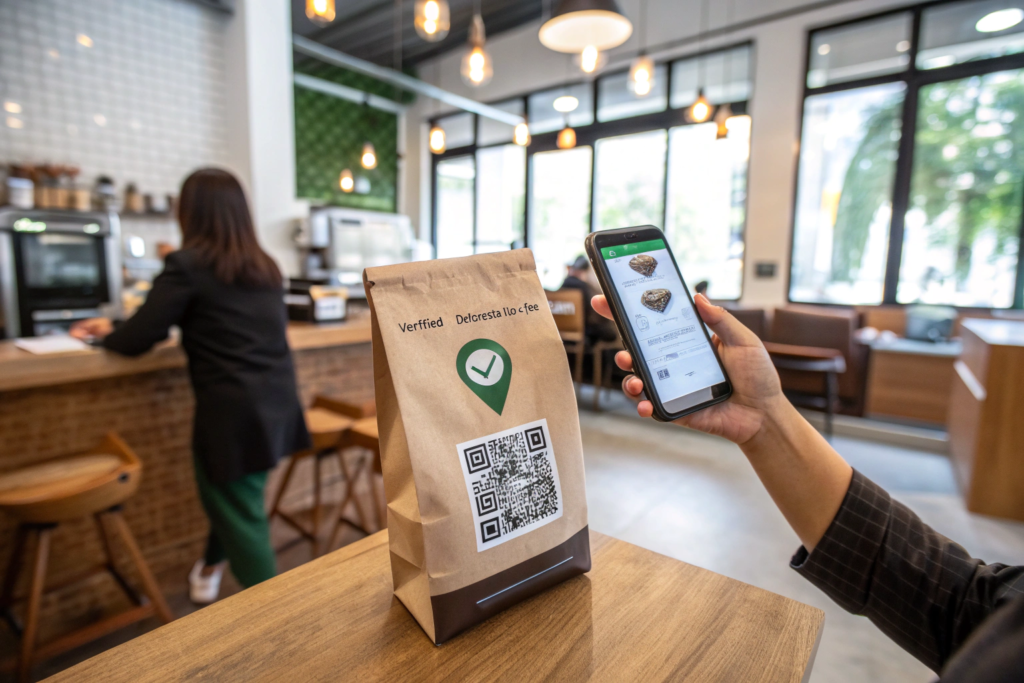
EUDR traceability is evolving from a back-office compliance burden into a consumer-facing brand asset. The geolocation data and deforestation-free verification required by the regulation provide roasters with a powerful, verifiable narrative about their coffee's origin and environmental integrity. By placing a QR code on the bag that links to a simplified "Farm Story" page—showing the GPS map, photos of the farm, and the grower's name—roasters can justify premium pricing and build deeper trust with a consumer base that is increasingly skeptical of vague sustainability claims.
What Does a "QR Code Farm Tour" Look Like for a Customer?
It's simple. The customer scans the code. They don't see a dense EUDR due diligence statement. They see a clean, mobile-friendly page.
It might show a satellite view of our Baoshan farm with a highlighted polygon. It shows a photo of the farmer who manages that block. It shows the harvest date of that specific lot. It might even show the cupping score. This level of transparency is unprecedented in commodity coffee. It tells the customer: "This isn't just a bag of 'Specialty Coffee.' This is coffee from this specific place, grown by these specific people, and we can prove it was grown without destroying a forest." This narrative commands a higher price point. It converts a commodity into an experience. You can see early examples of this on platforms that specialize in supply chain transparency, which are often featured at events like the Specialty Coffee Expo. The technology exists. The data exists (thanks to EUDR). The roasters who connect the two are winning shelf space.
Why Does "Deforestation-Free" Matter to a U.S. Consumer in 2026?
The U.S. consumer isn't legally required to care about EUDR. But they care about climate change. They care about the Amazon. And they're increasingly aware that their purchasing choices have global consequences.
"Deforestation-Free" is a simple, powerful, and verifiable claim. It's not a vague promise to "support farmers." It's a specific, binary statement: This coffee did not come at the expense of a forest. In a market saturated with "ethically sourced" and "sustainably grown" labels that mean very little, a verifiable, data-backed claim stands out. It cuts through the noise. For a roaster, being able to make this claim—and back it up with a QR code—is a significant competitive differentiator. It appeals to the values of a growing segment of premium coffee buyers. And because we at Shanghai Fumao have already done the hard work of mapping and verification, our roaster partners can leverage this asset without the compliance headache.
What Role Does "Clean Label" Transparency Play in Premium Coffee Pricing?
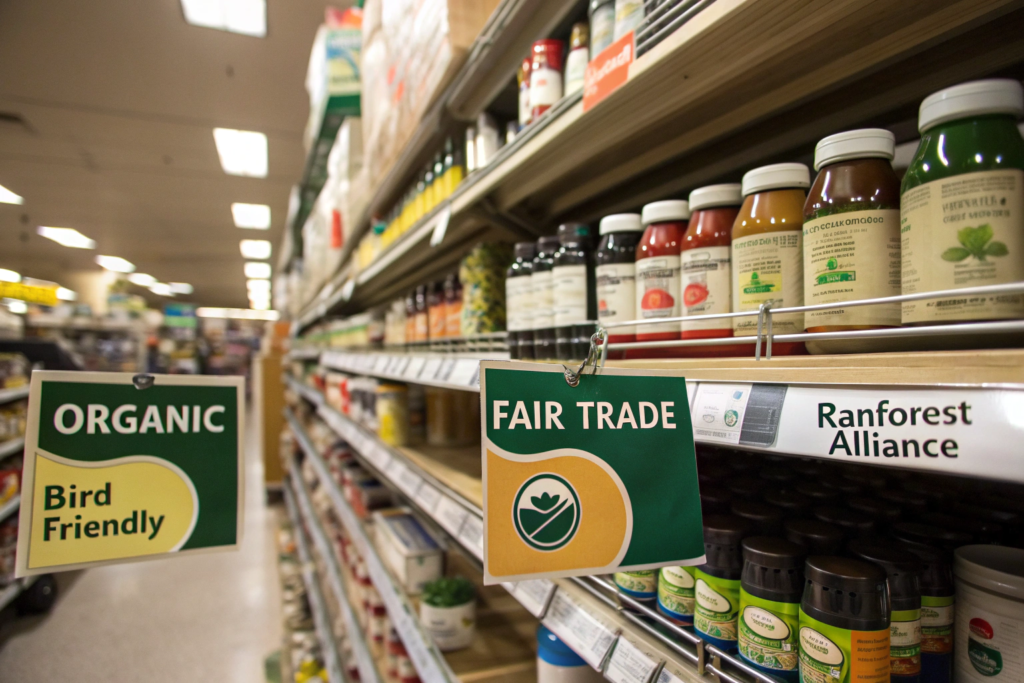
Consumers are drowning in labels. Organic. Fair Trade. Rainforest Alliance. Bird Friendly. The list goes on. And honestly? Trust in these certifications is eroding. People are looking for simpler, clearer signals of quality and safety.
"Clean Label" transparency in 2026 refers to a shift away from a proliferation of third-party logos toward direct, verifiable claims about the product's contents and origin. The two most potent claims for premium coffee are "Pesticide-Free Verified" (supported by a lab report) and "Single Farm Traceable" (supported by GPS data). These claims speak directly to the consumer's core concerns: What am I putting in my body, and where did it come from? Roasters who adopt this simplified, evidence-based transparency can command a higher price per bag.
Is "Pesticide-Free" a Stronger Claim Than "Organic" in 2026?
For a growing segment of consumers, yes. The word "Organic" has been diluted by industrial organic farming and cross-contamination controversies. It's a process certification, not a product guarantee.
"Pesticide-Free Verified" is a product guarantee. It says: We tested this specific lot of coffee, and a lab found no detectable residues of a long list of harmful chemicals. This resonates powerfully with health-conscious consumers. It speaks directly to their fear of toxins in their daily cup. The key is the verification. You can't just say it. You need to be able to show the lab report. Roasters who partner with producers that routinely perform these tests—like we do at Shanghai Fumao—can confidently make this claim. It's a powerful piece of marketing language that justifies a $2-$4 premium per bag. You can learn more about consumer perceptions of food safety claims from research published by the International Food Information Council. Clean label is a macro-trend.
How Does "Single Farm" Traceability Compare to "Single Origin"?
"Single Origin" can mean a whole country. Or a large region. It's a broad brush. "Single Farm" or "Single Estate" is a fine-tipped pen. It tells a much more specific story.
A coffee from "Colombia" is generic. A coffee from "Finca El Paraiso, Huila" is interesting. A coffee from "Shanghai Fumao Estate, Block 7, Baoshan, Yunnan" is a story waiting to be told. This specificity implies quality and care. It suggests that the roaster has a direct relationship with the producer. It differentiates the coffee from the sea of generic "Single Origin" bags on the shelf. The EUDR data makes this level of traceability possible and verifiable. It's no longer just a story. It's a documented fact. This is the future of specialty coffee marketing. It's about narrowing the focus from a country to a specific patch of dirt.
How Can Roasters Use Digital Storytelling to Justify Higher Prices in 2026?
The days of a static website and a monthly email blast are over. In 2026, the consumer wants to see behind the curtain. They want to know the person roasting their coffee. And they want to see the place where it was grown. Digital storytelling is no longer optional. It's the primary driver of brand loyalty and price justification.
Digital storytelling allows roasters to bridge the physical gap between the consumer and the origin. By using short-form video (Instagram Reels, TikTok) and interactive web features (QR code farm tours), roasters can create an immersive experience that transforms a $18 bag of beans into a connection with a farmer and a place. This emotional connection is the most effective defense against price sensitivity. When a customer feels they know the story, they are far less likely to switch to a cheaper, faceless alternative.
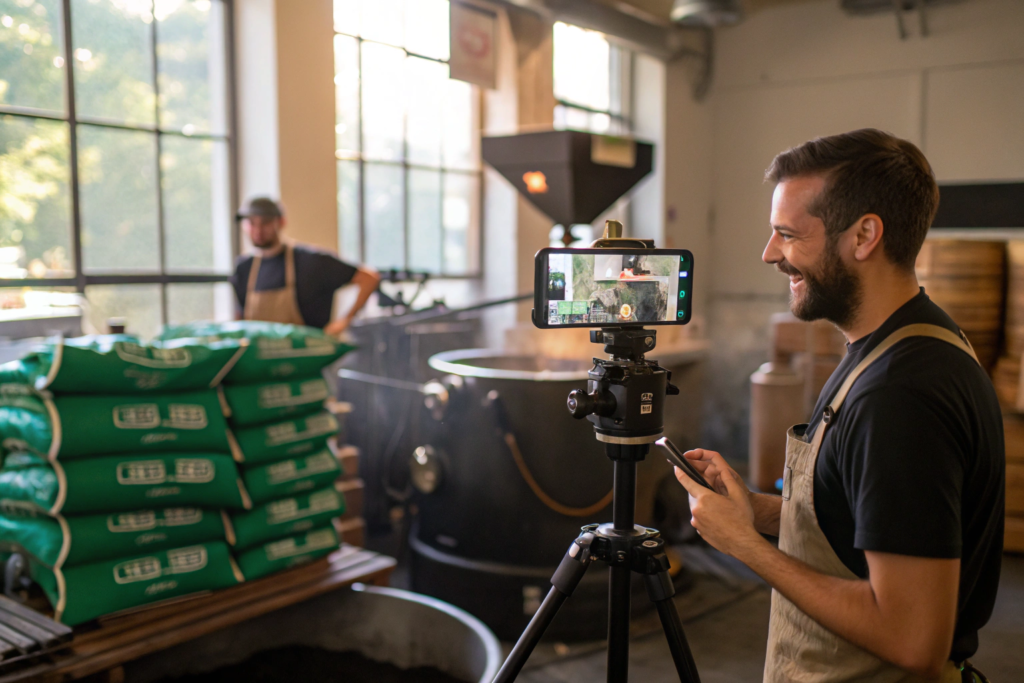
How Are Roasters Using Short-Form Video to Sell More Coffee?
They're not making polished commercials. They're making authentic, lo-fi content. A 30-second video of the roaster cupping the new Yunnan arrival. A 15-second clip of the first crack in the roaster. A reposted video from the farm showing the harvest.
This content does two things. First, it educates the consumer. It demystifies the process and explains why specialty coffee costs more. Second, it builds a relationship. The consumer feels like they know the roaster. They're buying from a person, not a corporation. The most successful roasters on social media in 2026 are the ones who show up consistently, share their passion, and bring the consumer along for the ride. When we at Shanghai Fumao send photos and videos from the farm to our roaster partners, we're providing them with raw material for this exact kind of storytelling. It's a partnership in content.
What Makes a Compelling "Origin Story" in a Crowded Market?
It's not the elevation or the varietal. Those are technical details for the coffee nerd. The compelling story is about people and place.
A story about a multi-generational farm in Baoshan that transitioned from commodity to specialty. A story about the women who hand-sort the beans on the drying beds. A story about the investment in a new wet mill to improve quality. These human stories connect. They create empathy. And empathy drives purchasing decisions. A roaster who can tell the story of our farm—not just the specs of our coffee—is a roaster who can build a loyal following. They're not just selling a beverage. They're selling a connection to a distant land and the people who steward it. That's the kind of value that withstands market pressures.
Conclusion
The top trends for roasters in 2026 all point in one direction: building a more resilient, transparent, and human-centered business. It's about securing your supply chain with reliable partners in stable origins. It's about turning regulatory compliance into a consumer trust asset. It's about simplifying your message to focus on verifiable claims like "Pesticide-Free" and "Single Farm." And it's about using digital tools to tell the stories that connect your customers to the source.
This isn't about chasing the next exotic micro-lot. It's about building a solid foundation for the long haul. It's about partnering with producers who share your values and can help you tell a better story.
If you're thinking about how to navigate these trends in your own business—whether it's exploring a new origin, developing your transparency story, or just looking for a more reliable supply partner—I'm always open to a conversation. My email is cathy@beanofcoffee.com.