You're a distributor. You've just negotiated what seems like a great price per kilo for a container of green beans. But a nagging question hits you: after all the costs—freight, roasting, packaging, labor, sales—what's actually left for my business? Knowing the typical margin isn't about being greedy. It's about survival. Without a clear map of the financial landscape, you could be working incredibly hard just to break even, or worse. Let's pull back the curtain.
The typical gross margin for a coffee distributor ranges from 25% to 40%, with net profit margins often falling between 5% and 15%. However, this is a massive oversimplification. The final number is a tug-of-war between your business model (bulk green vs. private label roasted), operational efficiency, scale, and market positioning. A small-batch specialty roaster-distributor might have higher gross margins but lower net due to scale, while a large-volume commercial distributor runs on razor-thin margins but high volume.
Those numbers might seem straightforward, but the journey from gross to net is where businesses are made or broken. Margins aren't a single number you set; they're the final score in a complex game of costs, value, and strategy. For someone sourcing from suppliers like us at BeanofCoffee, understanding this breakdown is the key to building a sustainable, profitable partnership.
What Costs Eat Into a Distributor's Gross Margin?
Think of gross margin as your starting line. It's your sales revenue minus the direct cost of the coffee itself (Cost of Goods Sold - COGS). Sounds simple, right? But COGS for a distributor is a multi-layered beast. It's not just the price you pay the exporter. Every step you add between the raw bean and the final customer adds cost—and complexity.
Gross margin gets "eaten" by every direct expense tied to transforming and delivering the product. For a distributor who also roasts, this includes roasting fuel, packaging materials, and the labor directly involved in production. For a pure distributor of roasted coffee, it's the cost paid to the roaster. But the real margin compression often happens in the gaps—waste, shrinkage, and inefficiency that nobody talks about.
Dive deeper, and you see the real picture. Let's categorize these cost "eaters" to understand where your money actually goes.
How Do Green Bean Costs and Shrinkage Impact COGS?
This is your foundation. The green bean cost per pound is your biggest COGS line item. But the cost per pound of sellable roasted coffee is much higher. Why? Shrinkage. Coffee loses 15-20% of its weight during roasting as moisture evaporates. So, if you buy 1 kg of green beans for $5, you only get about 820g of roasted coffee. Your effective cost per sellable kilo is now roughly $6.10. That's before you even turn on the roaster. Then there's waste: spillage, quakers (defective beans) you discard, and sampling for clients. This can add another 1-3%. So, a savvy distributor doesn't just negotiate the FOB price; they factor in the bean's density and moisture content, which affect shrinkage. Working with a reliable supplier like Shanghai Fumao who provides consistent, high-quality green beans with low defect rates directly protects your gross margin by minimizing this hidden waste.
What Are the Hidden Operational Costs of Roasting and Packaging?
Roasting isn't free. The energy cost (gas or electricity) for the roaster is significant, especially with volatile energy prices. The packaging cost is another major piece: bags, valves, labels, boxes. For a premium product, packaging can cost as much as the coffee inside. Then there's the labor cost for the roaster operator and packing staff. But the biggest hidden cost? Inconsistent roasting. An under-roasted batch might be unsellable. An over-roasted batch wastes bean weight and quality. This inefficiency directly steals from your margin. Investing in skilled labor and good equipment isn't an expense; it's margin protection. Distributors who outsource roasting turn this capital expense into a simpler, but often higher, COGS line item paid to their roaster.
How Does Business Model Affect Profit Margins?
Your business model is the script for your margin story. Are you a bulk green bean seller to large roasters? A private label roaster for cafes? A branded roaster-distributor selling direct to consumers? Each path has a completely different margin structure and set of challenges. You can't compare them directly.
The business model dictates your revenue streams, your cost structure, and ultimately, your customer's perception of value. A low-touch, high-volume model competes on price and efficiency. A high-touch, low-volume model competes on service and specialization. Your margins are the financial reflection of that choice.
Let's put two common distributor models side by side to see how the numbers play out.
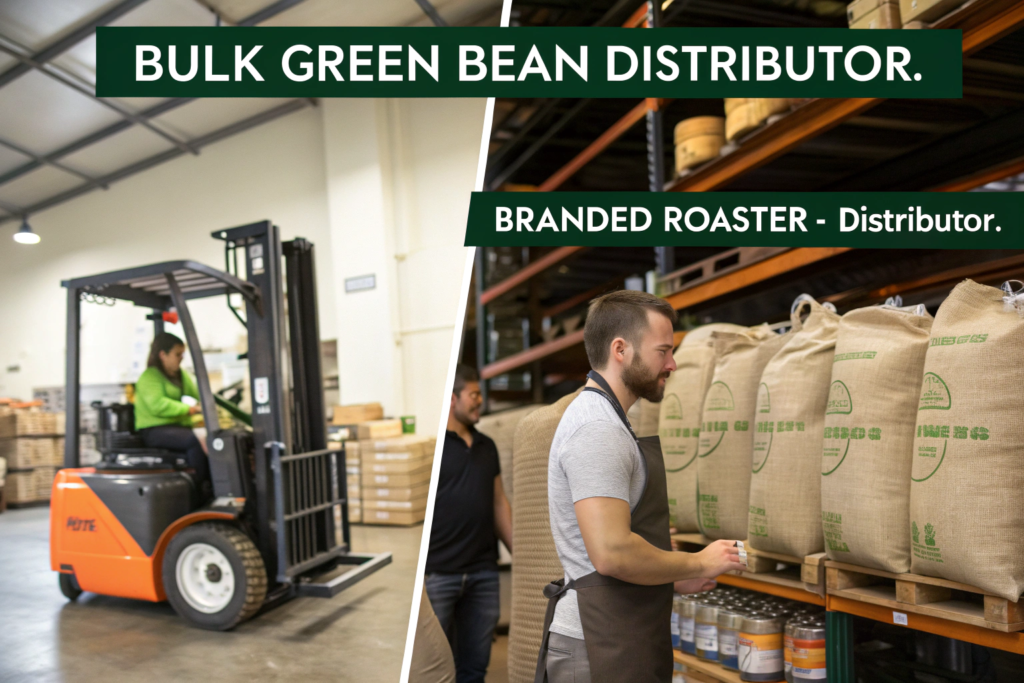
What Are the Margins for a Bulk Green Bean Distributor?
This model is about volume and speed. You import container loads of green beans and sell them in large bags (e.g., 60kg) to roasters. Your value-add is logistics, financing, and maybe blending. Gross margins are typically lower, in the 15-25% range. Why? Because you're selling a largely unprocessed commodity. Competition is fierce on price. Your net margins might be 3-8%. The game is played on operational efficiency: minimizing financing costs, securing favorable freight rates, and having a strong sales network to turn over inventory quickly. A single bad debt from a roaster client can wipe out the profit from an entire container. Success here relies on deep relationships with both reliable exporters (like us for Yunnan Arabica) and a stable of creditworthy roaster clients.
What Are the Margins for a Private Label or Branded Roaster-Distributor?
This is where you add more value—and capture more margin. You roast, package, and sell under your own or your client's brand.
- Private Label (Roasting for other brands): You're a manufacturer. Gross margins might be 30-40% because you've added the roasting and packaging service. But you carry the equipment, labor, and raw material risks. Net margins are often 8-12%. You compete on consistency, service, and flexibility.
- Branded Roaster-Distributor (Selling your own brand): This has the highest potential margin but the highest cost and risk. Gross margins can be 40-60% on direct sales. Why? You're selling a finished branded product with perceived value. However, your operating expenses (OPEX) skyrocket: marketing, sales team, branding, website, and potentially retail space. Net profit can be highly variable, from 5% for a growing brand pouring money into marketing, to 15%+ for an established brand with strong customer loyalty. The National Coffee Association provides market data that can help branded players understand consumer trends and pricing.
What Key Strategies Protect and Improve Margins?
Knowing your margins is step one. Protecting and improving them is the ongoing battle. It's not just about charging more; it's about managing smarter and creating value that customers are willing to pay for. In a world where green coffee prices can spike and freight costs can double overnight, having a margin protection plan is non-negotiable.
Strategies range from tactical purchasing to strategic marketing. The goal is to build a business that is resilient, efficient, and differentiated. A margin point saved on waste is a point earned just as surely as a point gained from a price increase—and it's often more sustainable.
Let's look at two powerful levers you can pull: one on the cost side, one on the value side.

How Can Strategic Sourcing and Blending Reduce Costs?
This is your first line of defense. Strategic sourcing means building direct relationships with farms or exporters to reduce middleman costs and ensure quality consistency. It also means forward contracting or buying in bulk during harvest to lock in prices, protecting against market volatility. Blending is a master distributor's art. By skillfully blending a high-cost, high-quality bean (like our Baoshan Arabica for acidity) with a more affordable, complementary bean (like a robusta for body), you can create a unique, balanced product with a lower composite cost than a single-origin offering. This lets you maintain flavor profile and quality while defending your gross margin. It’s a creative, technical skill that pays direct dividends.
How Does Value-Added Services Justify Higher Margins?
You can't compete on price alone. So, compete on value. What can you offer that makes your coffee worth more? For a distributor, this could be:
- Technical Support: Providing your cafe clients with brewing guides, equipment maintenance tips, or staff training.
- Flexibility: Offering mixed pallets, just-in-time delivery, or custom roast profiles.
- Marketing Co-op: Helping clients market the coffee they buy from you with point-of-sale materials.
- Transparency: Sharing the story of the origin, the farmers, and the sustainable practices, like those behind our family-owned plantations.
These services create stickiness. They turn a transactional buyer into a partner. When you become a crucial part of your client's success, you are no longer a commodity. You can command a price that reflects that total value, protecting your margin. Resources like the Specialty Coffee Association (SCA) offer training and certification that can formalize this expertise, adding further credibility.
What Are Common Pitfalls That Destroy Distributor Margins?
Sometimes, the biggest threat to margin isn't external competition; it's internal blind spots. These are the slow leaks that sink the ship. They're often accepted as "the cost of doing business," but that's a dangerous mindset. Identifying and plugging these leaks can be the fastest way to improve your bottom line.
The pitfalls range from poor financial discipline to misunderstanding your true costs. They erode net profit silently, often while gross sales appear to be growing healthily. A business can be busy and still go bankrupt.
Why Is Inaccurate Costing a Silent Margin Killer?
Many distributors use a simple "markup" method. They take their green bean cost and multiply it by a fixed number (e.g., 3x). This is a recipe for disaster. It ignores the actual, fluctuating costs of roasting (energy), packaging (materials can spike), and overhead. You might think a product has a 40% margin, but if you haven't accurately allocated all the direct costs, your real gross margin could be 30%. This means you're pricing based on a fantasy, not reality. The solution is activity-based costing. Know the exact cost to roast one pound (energy, labor, maintenance), the exact cost of each bag and label, and the exact freight cost per unit. Only then can you set a price that truly secures your target margin. It's tedious work, but it's the bedrock of profitability.
How Do Logistics and Inventory Carrying Costs Chip Away at Profits?
This is a double whammy. Inefficient logistics—paying high spot rates for freight, choosing slow shipping methods that delay revenue, or incurring detention/demurrage fees at ports—directly adds to COGS. Inventory costs are stealthy. Money tied up in sitting green beans is money not being used elsewhere. Warehousing costs money. Beans can lose quality over time (especially for lighter roasts). The goal is a fast inventory turnover. Holding 6 months of stock "just in case" might feel safe, but the financing and quality costs will crush your net margin. Partnering with an exporter who understands logistics, like our team at Shanghai Fumao, can streamline this. We help clients plan shipments to balance cost and speed, and our stable supply from 10,000 acres helps ensure consistent availability, reducing your need to overstock.
Conclusion
Typical coffee distributor margins are a range, not a fixed number, because they are the end result of a thousand daily decisions. From the strategic choice of business model to the tactical minutiae of roasting shrinkage and packaging costs, every step shapes the final financial picture. A healthy margin isn't an accident; it's the product of meticulous cost management, strategic value creation, and the vigilant avoidance of common pitfalls.
For distributors sourcing from China or anywhere else, the key is partnership. You need a green coffee supplier who is not just a vendor, but a strategic ally in your margin journey—one who provides consistent quality to reduce your waste, transparent pricing for accurate costing, and reliable logistics to keep your inventory lean. At BeanofCoffee, we are committed to being that partner. We offer more than just premium Catimor, Arabica, and Robusta from Yunnan; we offer the stability and insight that helps your business thrive. Ready to build a more profitable distribution business? Let's discuss how our beans and our partnership can support your margin goals. Contact our sales director, Cathy Cai, at cathy@beanofcoffee.com to start the conversation.