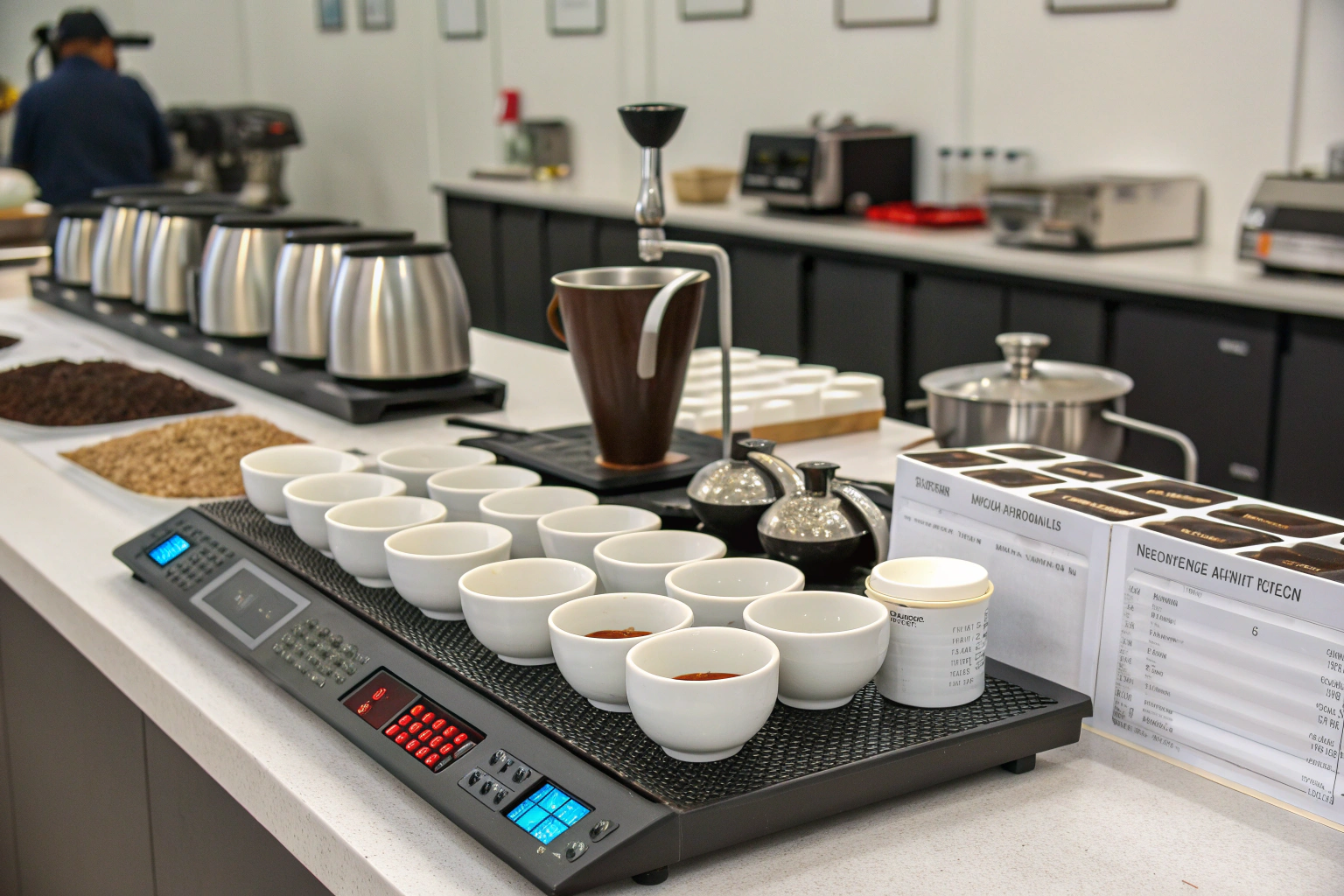
You walk into a professional coffee lab and see what looks like a science experiment: precisely arranged bowls, specialized spoons, controlled lighting, and serious people slurping loudly. This isn't just casual tasting—it's a standardized evaluation system designed to remove variables and objectively assess coffee quality. For buyers, roasters, and quality controllers, having the right equipment isn't about gadgets; it's about generating reliable, comparable data that drives business decisions.
Professional coffee tasting (cupping) requires specific equipment to standardize the evaluation process. Essential items include a sensitive coffee scale, burr grinder, water kettle with precise temperature control, cupping bowls/spoons, scoring sheets, palate cleansers, and a controlled environment. The equipment enables consistency across sessions and among cuppers, transforming subjective tasting into objective assessment.
So, what specific tools separate professional evaluation from casual tasting, and how does each piece contribute to reliable results? The Specialty Coffee Association (SCA) has established protocols that specify equipment requirements for valid comparisons. Let's examine the essential toolkit and how each component serves the science of coffee evaluation.
What Are the Core Tools for Standardized Preparation?
Consistent preparation is the foundation of comparable results. The first equipment group ensures every coffee is ground, weighed, and brewed identically to eliminate preparation variables.
Without standardized preparation, differences in cup quality might reflect preparation inconsistencies rather than inherent coffee characteristics.
Why Does the Grinder Matter More Than Almost Anything?
A professional burr grinder is non-negotiable because:
- Consistent particle size ensures even extraction
- Minimal heat generation preserves volatile aromatics
- Quick adjustment between different grind settings
- Easy cleaning between samples to prevent cross-contamination
The SCA recommends a specific grind size (coarse, like sea salt) for cupping. Inconsistent grinding creates uneven extraction, making some coffees taste artificially weak or strong. This grinding precision is arguably the most critical equipment factor after the coffee itself.
How Precise Should Measurement Equipment Be?
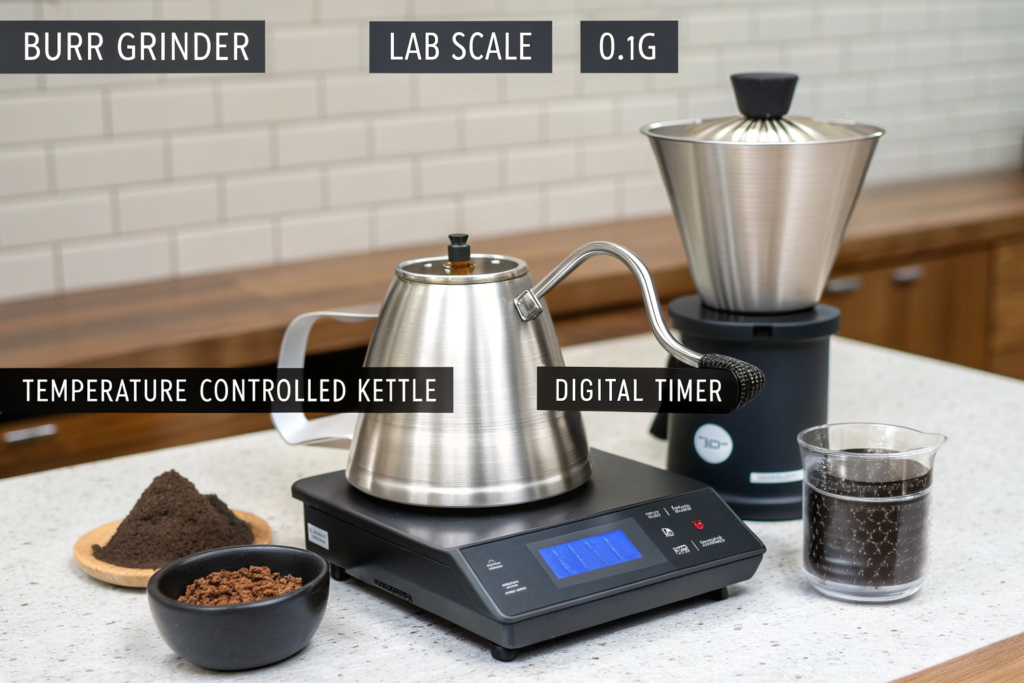
- Scale: Must read to 0.1g accuracy for both coffee and water
- Water kettle: Should maintain 200°F ±2°F (93°C ±1°C)
- Timer: Digital with 1-second accuracy
- Graduated cylinders: For measuring water volume if not weighing
At BeanofCoffee, our quality team uses laboratory-grade scales because a 2-gram variance in a 150ml cup can significantly alter extraction and perceived strength. This measurement rigor ensures valid comparisons between samples.
What Specialized Tasting Ware Is Required?
Standardized bowls and spoons aren't just tradition—they're designed to facilitate specific evaluation techniques and ensure sensory consistency.
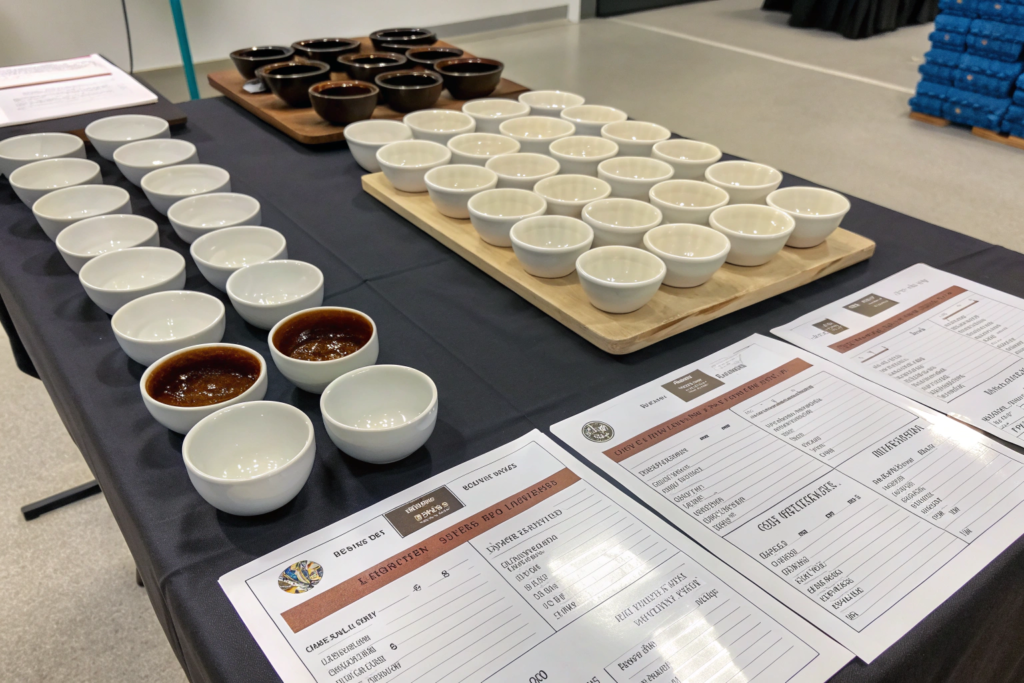
The SCA specifies exact bowl dimensions, volume, and material characteristics to control variables like heat retention, aroma concentration, and spoon access.
Why Use Specific Cupping Bowls?
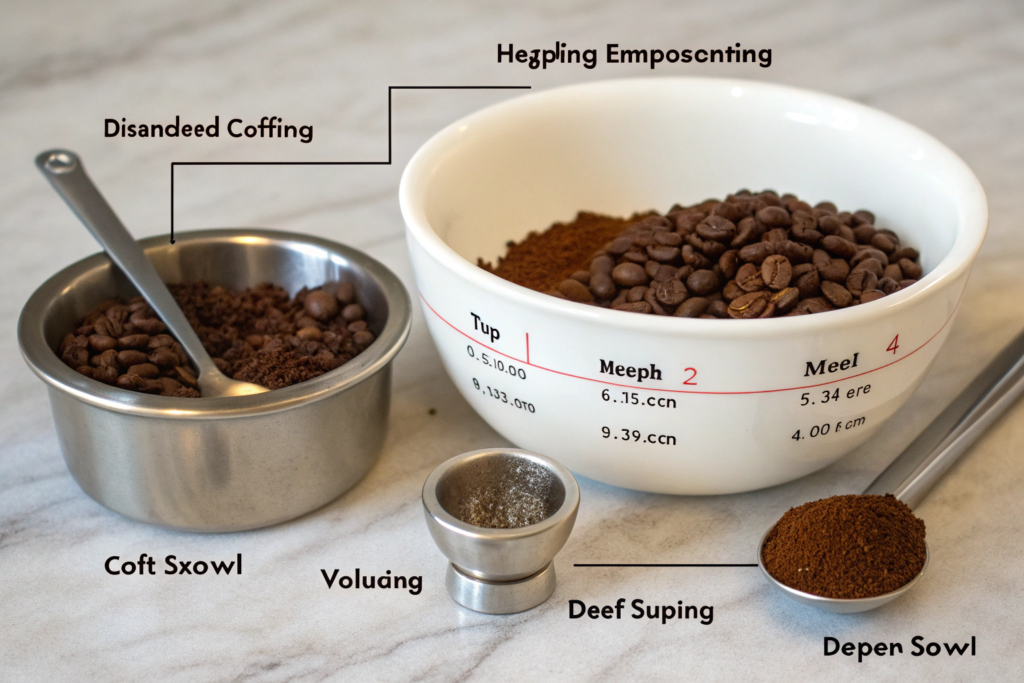
SCA-standard bowls (typically 7-9oz/207-266ml) provide:
- Consistent heat retention across all samples
- Wide opening for proper aroma evaluation
- White interior for visual assessment of grounds and liquor
- Stackability for efficient storage and handling
- Material consistency (typically ceramic or glass)
Using mismatched mugs or cups creates uncontrolled variables in temperature and aroma concentration that compromise evaluation validity.
What Makes a Proper Cupping Spoon?
Cupping spoons are uniquely designed:
- Deep bowl shape allows proper slurping technique
- Stainless steel construction doesn't retain flavors
- Long handle keeps fingers away from hot bowls
- Smooth edges prevent injury during rapid slurping
- Easy cleaning between samples
Professional cuppers often own their personal spoons, much like chefs have their own knives. This specialized tool enables the distinctive slurping that aerates coffee across the entire palate.
What Environmental Controls Are Necessary?
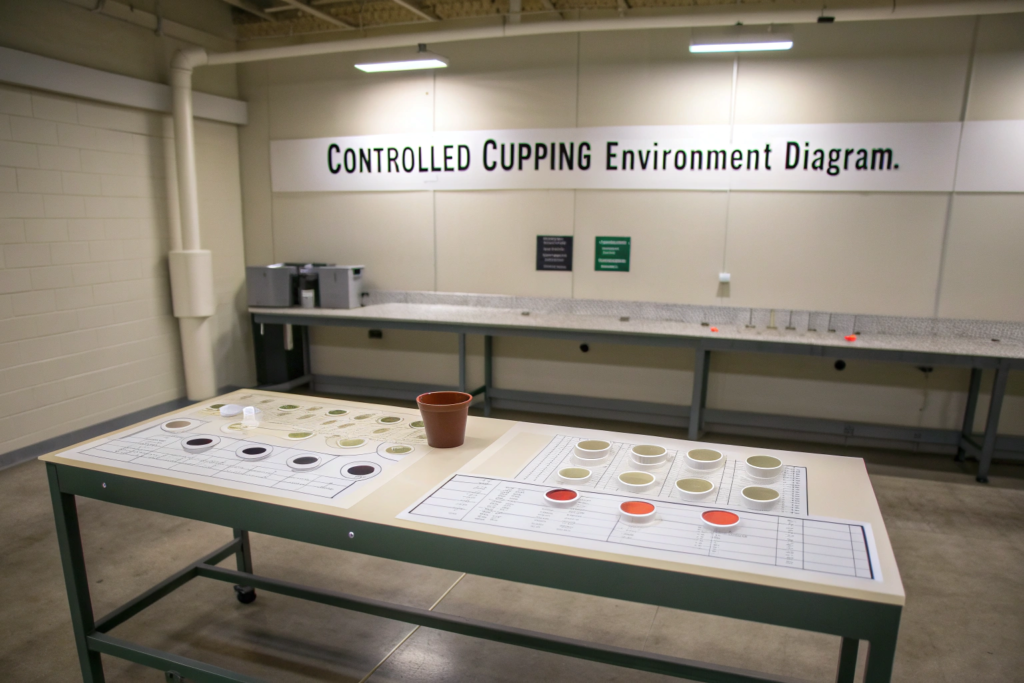
The tasting environment significantly impacts perception. Professional setups control variables that amateur tasters often overlook but that substantially affect results.
Lighting, air quality, noise, and even the taster's physical position relative to samples can influence sensory perception and scoring consistency.
How Does Lighting Affect Coffee Evaluation?
- Natural daylight spectrum bulbs reveal true coffee color
- Consistent intensity prevents visual adaptation issues
- No shadows across the cupping table
- Neutral background colors (typically white or gray)
- Minimal glare on coffee surfaces
Many professional labs use color-corrected lighting (5000K temperature) to ensure visual assessments are consistent regardless of time of day or location. This visual standardization matters because appearance influences aroma and flavor expectations.
What About Air Quality and Contaminants?
- Odor-free environment (no food, perfumes, cleaning chemicals)
- Controlled humidity (40-60% RH ideal)
- Good ventilation without drafts directly over cups
- Neutral water for palate cleansing (filtered, room temperature)
- Plain crackers or apples for resetting the palate between samples
Even subtle environmental contaminants can alter perception—a whiff of nearby toast or perfume can mask delicate coffee aromas for minutes.
What Documentation and Scoring Systems Are Used?
Professional tasting isn't complete without systematic documentation. Standardized forms and recording tools transform sensory experiences into comparable data.
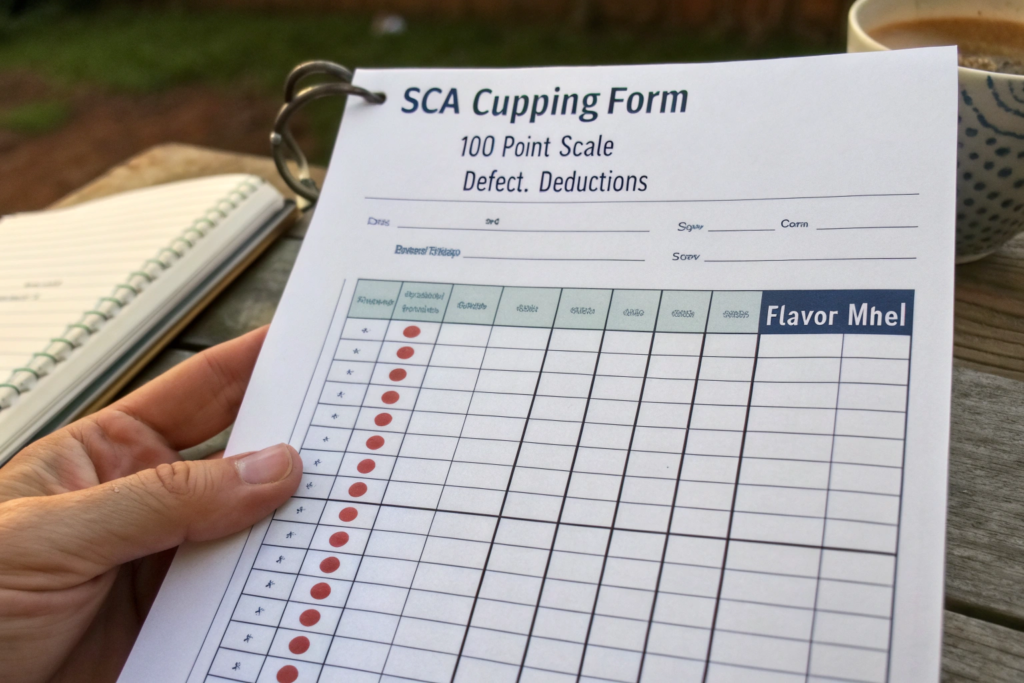
The SCA Cupping Form, digital scoring platforms, and sample tracking systems create an audit trail that allows comparisons across time, locations, and cuppers.
What's on the SCA Cupping Form?
The official form evaluates:
- Fragrance/Aroma (dry and wet)
- Flavor
- Aftertaste
- Acidity
- Body
- Balance
- Overall impression
- Defects (deductions)
Each category receives a score from 6-10 with 0.25-point increments, totaling a possible 100 points. Coffees scoring 80+ points qualify as specialty grade. This standardized metric enables global communication about quality.
How Are Digital Tools Changing Documentation?
- Tablet-based scoring with automatic calculations
- Cloud synchronization for multi-location calibration
- Data visualization of trends over time
- Sample tracking via QR codes or RFID
- Statistical analysis of panel results
While paper forms remain common, digital integration improves accuracy, analysis, and collaboration across distributed teams.
What Additional Tools Support Advanced Analysis?
Beyond basic cupping, professional setups may include equipment for more detailed analysis of specific attributes or problem-solving.
These tools help diagnose issues, quantify characteristics, or conduct research beyond standard quality assessment.
What Laboratory Equipment Supports Sensory Analysis?
- Moisture analyzer: Verifies green coffee moisture content (ideal 10-12%)
- Colorimeter: Objectively measures roast degree (Agtron scale)
- Water testing kit: Analyzes water mineral content affecting extraction
- Microscope: Examines bean structure or defect identification
- pH meter: Measures coffee acidity objectively
These quantitative tools complement sensory evaluation, especially when investigating quality inconsistencies or processing variations.
How Do You Manage Sample Logistics?
- Sample roaster: Small-batch roaster (100-300g) for consistent sample preparation
- Airtight containers: For storing green samples before roasting
- Labeling system: Clear tracking of origin, lot, processing, date
- Shipping materials: For sending samples to remote cuppers
- Database software: For managing thousands of sample records
A robust sample management system ensures the right coffee is evaluated correctly at the right time—a logistical challenge for companies tasting hundreds of samples weekly.

How Should You Set Up for Different Tasting Purposes?
Equipment needs vary based on whether you're conducting routine quality control, competitive scoring, purchasing evaluations, or consumer education.
The same core equipment serves all purposes, but setup details, sample numbers, and documentation focus should align with your specific goals.
What's Different for QC vs. Purchasing Cuppings?
- QC cuppings: Compare current production against a standard; fewer samples, more repetition
- Purchasing cuppings: Evaluate new lots; many samples, blinded presentation, comparative scoring
- Competition cuppings: Highest precision, calibration against certified cuppers, strict protocols
- Educational cuppings: More explanation, slower pace, emphasis on learning over scoring
The purpose dictates priorities—a QC session might prioritize speed and consistency, while a purchasing session emphasizes discrimination between similar options.
How Many Samples Can One Session Realistically Handle?
Professional capacity depends on experience:
- Novice cuppers: 4-6 samples per session
- Experienced cuppers: 8-12 samples
- Expert panels: Up to 20+ samples with proper pacing
Beyond physical palate fatigue, cognitive load affects discrimination ability. Well-designed sessions include calibration samples and breaks to maintain evaluation quality.
Conclusion
Professional coffee tasting requires specialized equipment to standardize preparation, control environmental variables, facilitate sensory evaluation, and document results systematically. From precision grinders and scales to standardized bowls and spoons, each tool serves the goal of transforming subjective experience into objective, comparable data.
Investing in proper equipment pays dividends through more reliable quality assessments, better purchasing decisions, and consistent product delivery. While a basic setup can be assembled for under $1,000, the true value comes from using these tools within established protocols to generate actionable insights. If you're establishing a cupping program and want guidance on equipment selection for evaluating coffees like ours, contact our quality team at cathy@beanofcoffee.com. We can share what we've learned from years of professional evaluation and help you set up for success.