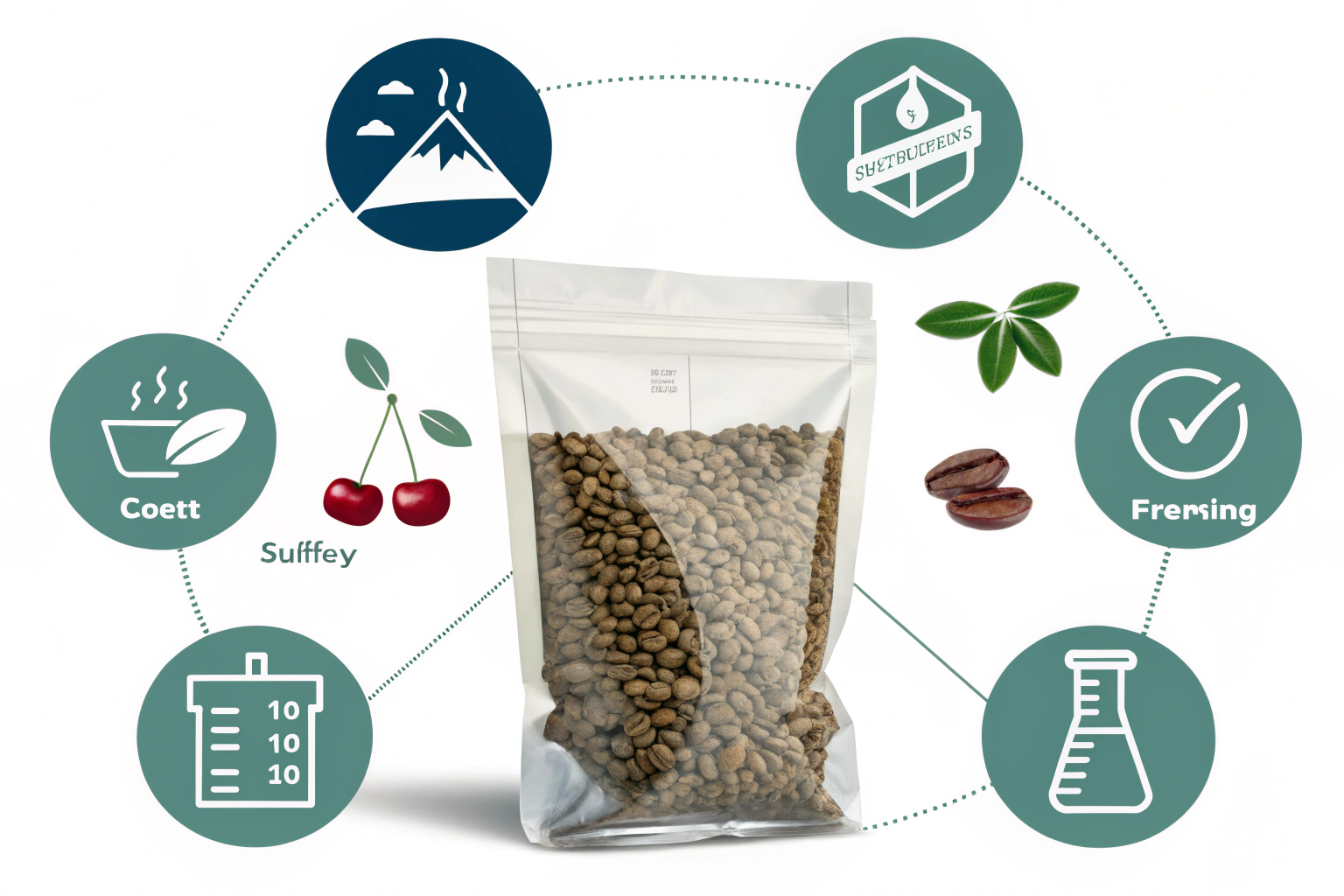
You're a buyer. You see a Geisha lot from Panama at $180 per pound, and a washed Yunnan Catimor at $6.50. Both are specialty grade. Both scored 85+. So why such a massive gap? Is it rarity? Hype? Or is there a real, traceable cost structure underneath that premium price tag?
The cost of specialty coffee beans is influenced by a layered system of factors: intrinsic bean attributes (variety, altitude, SCA score, density), production choices (hand-harvesting, processing method, farm certifications), supply chain economics (direct trade premiums, logistics, climate-driven scarcity), and finally, sensory quality as interpreted through roast level and packaging. It is not a single number. It is a stack of decisions—each with a cost—that accumulates from the seed in the soil to the bag in your warehouse.
Honestly, I've been on both sides of this equation. I've cupped $12/lb Yunnan lots that out-performed $40/lb competition coffees. I've also paid premiums for rare varieties because the flavor was simply irreplicable. Understanding this stack is how you stop overpaying for hype—and start paying for value that actually reaches your customer's cup.
How Do Intrinsic Bean Attributes Drive Base Cost?
Before any marketing, before any roasting, the raw bean itself has a baseline value determined by what it is and where it came from. This is not negotiable. It is agricultural reality.
Specialty coffee bean cost is fundamentally determined by variety, altitude, and density—with rare heirloom varieties like Geisha commanding extreme premiums due to exceptionally low yields and high cup potential, while high-altitude Bourbon and Typica form the premium middle tier. A coffee plant that produces 500kg per hectare cannot compete on price with a hybrid yielding 2,000kg. That scarcity is real, not manufactured.
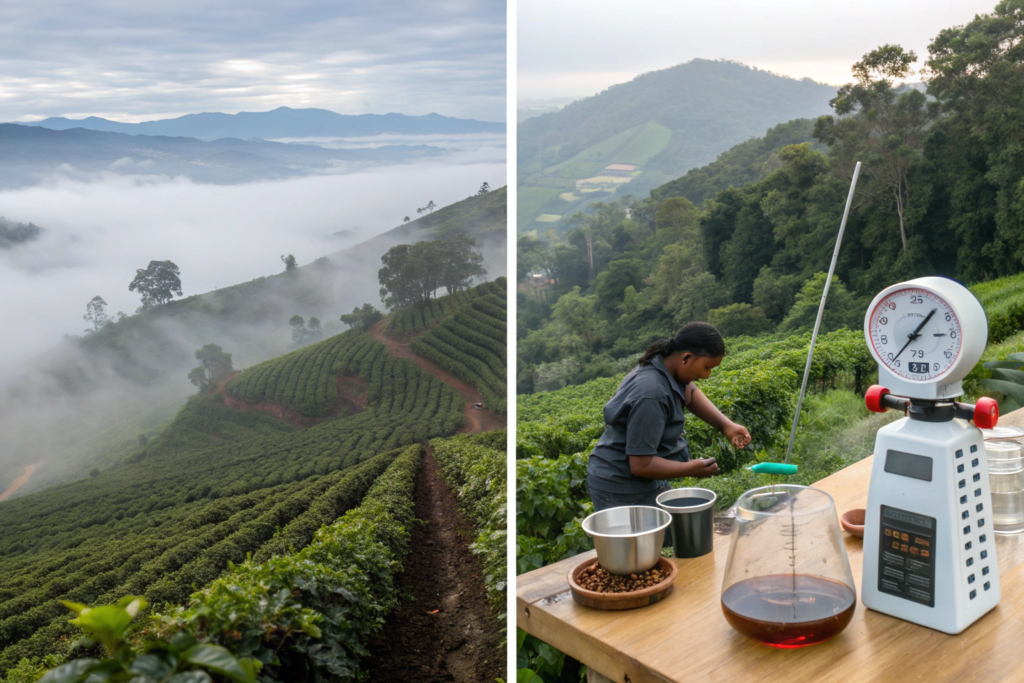
Let's look at the spectrum. We grow Catimor in Yunnan. It yields well, resists disease, and cups clean. It is our volume driver. But we also maintain small plots of Typica and Bourbon. They produce maybe 60% of the yield. They require more shade, more care, and they are more vulnerable to rust. The cost per pound to produce that Typica is objectively higher before it even leaves the farm gate.
What Is the Real Price Impact of Variety and Rarity?
This is not subtle. Variety is the single largest biological cost driver.
| Variety | Yield Potential | Disease Resistance | Cup Potential | Typical Price Premium |
|---|---|---|---|---|
| Catimor / Mundo Novo | High | High | Good (80-84) | Baseline (0%) |
| Bourbon / Typica | Low-Moderate | Low | Excellent (85-89) | +30-60% |
| SL28 / Jaca | Low-Moderate | Moderate | Outstanding (87-91) | +80-120% |
| Geisha | Very Low | Very Low | Exceptional (90+) | +400-2000%+ |
Geisha at auction exceeding $1,000/lb is not "coffee pricing." It is collectible economics. For 99% of commercial buyers, the relevant premium is for reliable, high-cupping Bourbon or Typica variants—and that premium is justified by the farmer's yield sacrifice. The World Coffee Research variety catalog provides detailed yield and cup potential data for reference.
Why Does Altitude Directly Increase Cost?
High altitude (1,500m+) is expensive real estate. Slower bean maturation concentrates sugars and produces denser beans—but it also means a longer growing cycle, more labor exposure, and lower annual turnover per hectare. You cannot rush altitude. A farm at 1,800m will simply produce one less harvest cycle per decade than a farm at 1,000m. That lost opportunity is embedded in the price.
For a buyer: density testing is your friend. Dense beans (above 700g/L) roast more evenly and cup cleaner. Paying a premium for verified high-density lots is paying for predictable performance in your roaster. The Specialty Coffee Association publishes density grading protocols.
How Do Production and Processing Choices Accumulate Cost?
Once the cherry is ripe, human decisions begin to multiply the cost base. This is where "craft" becomes a line item.
Processing method, harvesting selectivity, and farm-level certifications each add discrete, measurable layers to the final bean cost—with hand-picking adding 20-40% labor premium, honey/anaerobic processes adding 40-60% processing cost, and organic certification adding 15-30% compliance overhead. These are not margins. These are input costs.
I hear buyers say, "Why is your honey-processed Yunnan 40% more expensive than your washed?" The answer is simple: the honey process requires us to depulp, retain precise mucilage levels, and then dry on raised beds for 18-22 days with constant turning. The washed coffee is dried in 12 days. Those extra days of labor, space, and risk are real costs. We don't "charge more" for honey process. It simply costs more to make.
Is Hand-Picking Really Worth the Premium?
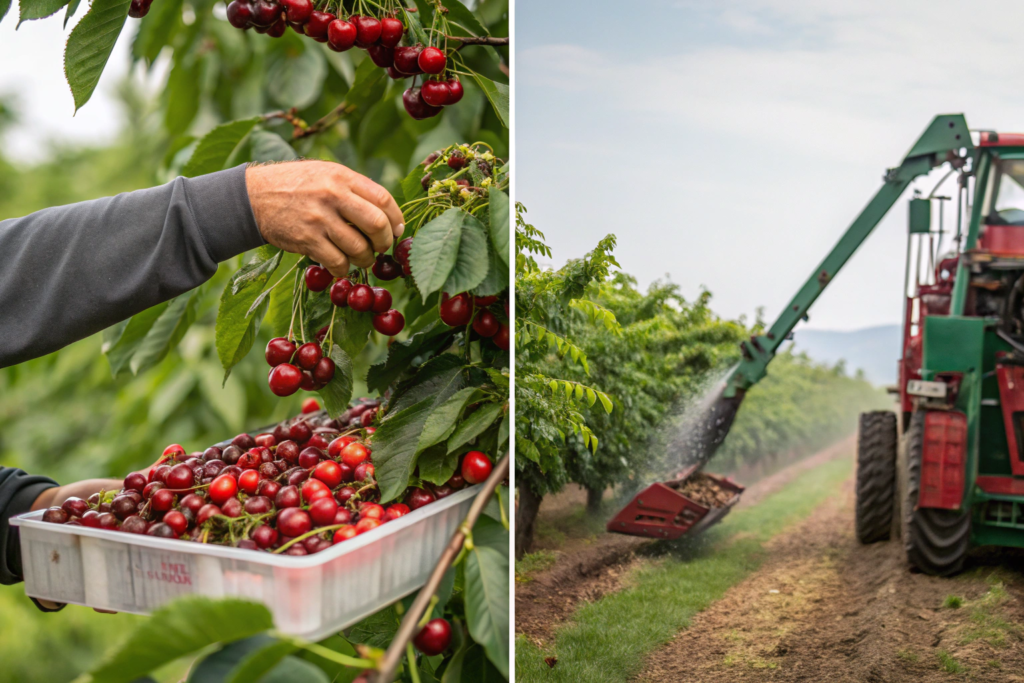
Unequivocally, yes—for specialty grade. Mechanical harvesting cannot selectively pick only ripe cherries. Even the best machines introduce 15-30% under-ripe or over-ripe material. Those defects translate directly into off-flavors: astringency from under-ripe, fermented sourness from over-ripe.
For a roaster building a consistent brand, eliminating that defect variance is worth the premium. A single under-ripe cherry in a 250g bag can be detected by a sensitive palate. Hand-picking is the only way to guarantee ripeness uniformity. The cost is labor, and labor in coffee-producing regions is increasingly scarce and expensive.
How Do "Special" Processing Methods Justify Their Price?
Let's quantify this:
| Processing Method | Water Usage | Drying Time | Skill Requirement | Cost Multiplier (vs. Washed) |
|---|---|---|---|---|
| Washed | High | 12-15 days | Moderate | 1.0x (Baseline) |
| Natural / Dry | Very Low | 25-35 days | High (mold risk) | 1.2x - 1.5x |
| Honey | Low-Medium | 18-25 days | Very High | 1.4x - 1.6x |
| Anaerobic / Carbonic Maceration | Low | 20-30 days + fermentation tank | Extreme | 2.0x - 3.0x |
The cost multiplier for anaerobic processing isn't "profit." It's the sealed stainless steel tanks, the temperature monitoring, the longer fermentation management, and the higher batch failure rate. When you buy an experimental-process coffee, you are also buying the farmer's risk on the three batches that failed before this one succeeded. At Shanghai Fumao, we only offer these lots when we achieve consistent, replicable quality.
What Role Do Sensory Quality and Roast Interaction Play?
This is where the science gets specific—and where many buyers leave money on the table by misunderstanding how flavor actually translates to price.
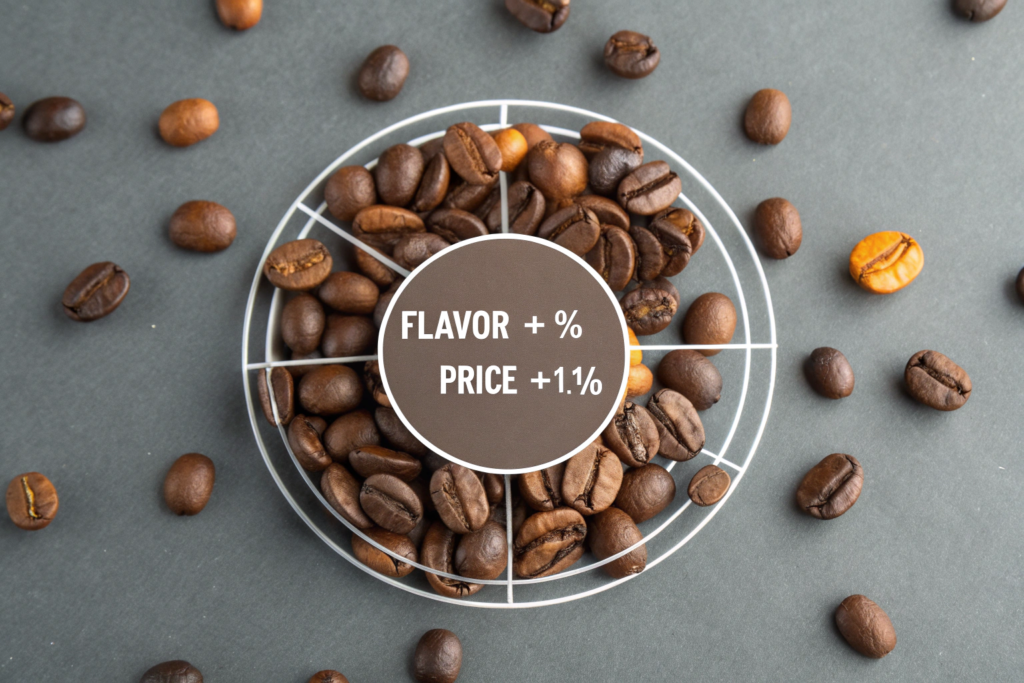
Recent econometric research analyzing over 1,600 specialty coffee observations demonstrates that flavor and aftertaste are the most powerful sensory price drivers, with a 1% increase in these scores yielding over 1% price increase—but crucially, this effect is strongly amplified by light and medium roasts, while dark roasts dampen the economic value of high-quality beans. You are not just paying for quality. You are paying for the expression of that quality.
This is a massive insight for buyers. If you purchase a 90-point Yunnan Geisha and roast it dark, you have financially destroyed the premium you paid for. The flavor attributes that commanded the high price (floral, citrus, tea-like) are literally burned off. The coffee that remains is pleasant, but it is not a 90-point experience. Light roasting preserves the economic value of the sensory investment.
Which Sensory Attributes Actually Move the Price Needle?
The academic literature is clear: Flavor > Aftertaste > Aroma > Acidity > Body.
Aroma and acidity are important, but they are entry-level expectations. The premium is concentrated in the lingering experience—the aftertaste, and the complexity of flavor that persists. This explains why clean, boring specialty coffee (adequate in all categories, exceptional in none) struggles to command premium pricing. It is technically specialty, but it lacks the high-impact attributes that drive the price elasticity above +20%.
For a buyer: pay for aftertaste. If you cup a sample and the flavor fades immediately, it is not a premium candidate regardless of its score. The Coffee Quality Institute provides sensory calibration resources.
Why Does Bag Size Inversely Correlate with Price Per Gram?
The same study quantifies this: a 1% increase in bag size leads to an average 0.13% decrease in price per gram. This is not surprising to any buyer, but the magnitude matters.
This means a 5kg box of roasted coffee is not 5x the cost of a 1kg bag. It is approximately 4.4x. The packaging, handling, and marketing costs are distributed. For a volume buyer, consolidating purchases into larger unit sizes is a mathematically proven cost-reduction strategy. If your supplier is not passing this efficiency to you, you are overpaying.
At Shanghai Fumao, we structure our wholesale pricing to transparently reflect this. Our per-kg rate drops measurably at 30kg, 60kg, and pallet thresholds. That is not a discount we "give." It is the logistics savings we pass through.
How Do Supply Chain, Climate, and Market Volatility Layer On?
Finally, the bean must travel to you. And the world is increasingly unstable.
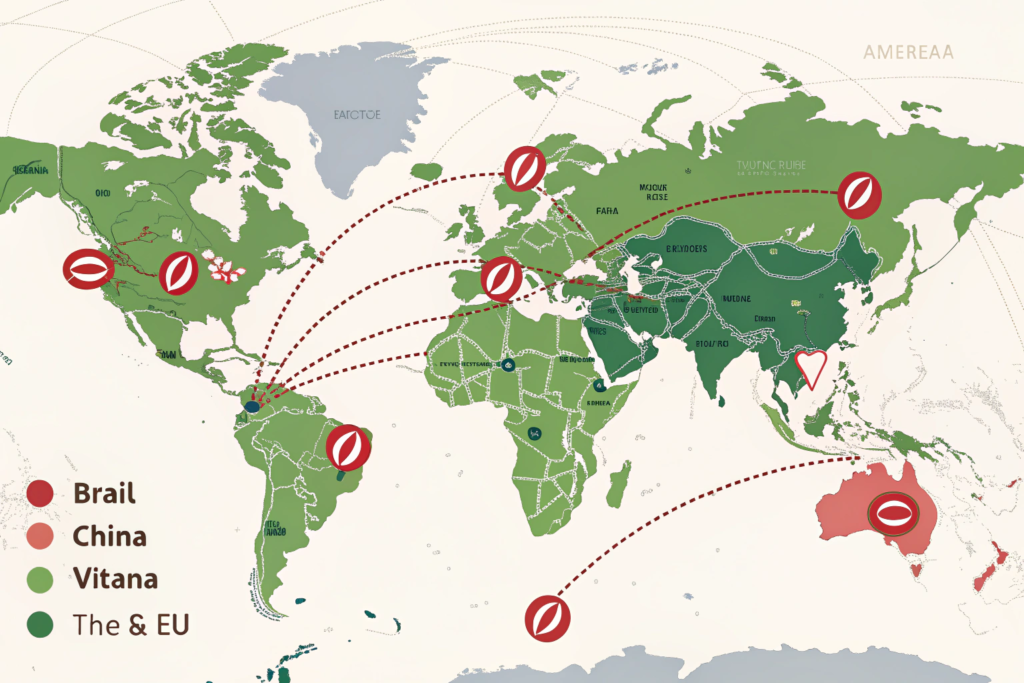
Specialty coffee prices are now heavily influenced by exogenous supply shocks—primarily drought in Brazil and Vietnam—which have driven commodity Arabica indexes to all-time highs, and these increases proportionally impact specialty differentials. Additionally, logistics costs, currency fluctuations, and the premiums required for direct trade transparency all add distinct layers.
I want to be direct with you. In 2024 and 2025, we have seen the cost of our own Yunnan coffee increase not because our farm costs exploded, but because the global benchmark shifted. When Brazilian arabica futures rise 60%, the opportunity cost of selling Yunnan coffee domestically increases. This is not greed. This is the market.
How Do Climate and Geopolitics Create Inevitable Cost Pressure?
This is not speculation. Academic analysis confirms that adverse weather in Brazil and Vietnam—responsible for a significant percentage of global arabica and robusta supply—directly correlates with price spikes. When Brazil has a drought, every coffee origin becomes more expensive, because roasters scramble to secure alternative supply.
For a buyer like Ron, this means: long-term contracts are your hedge. Spot-buying during a supply shock guarantees you pay the peak. Committing to annual volume with a stable origin like Yunnan insulates you from some of this volatility. We have held prices for contracted clients even as the ICE Coffee C market surged, because partnership matters more than marginal gain.
What Does "Direct Trade" Actually Cost—and What Does It Buy?
Direct trade is not a certification. It is a procurement model. It typically involves:
- Paying above Fair Trade or conventional market prices (often 20-50% premium)
- Committing to multi-year purchasing relationships
- Investing in farm-level quality improvements
- Bearing the logistics cost of separated micro-lots
The cost is real. The benefit is also real: traceability, quality consistency, and supply priority. When a frost hits Brazil, the direct trade buyer's coffee is still shipped. The spot buyer's order is canceled.
At Shanghai Fumao, we operate on this principle for our top-tier clients. If you commit to our Lot #5 Typica annually, that lot is yours. We don't auction it. That reliability is part of what you pay for—and it is increasingly valuable in a volatile climate. The Global Coffee Platform offers resources on sustainable sourcing economics.
Conclusion
The cost of specialty coffee beans is not a mystery. It is a transparent accumulation of biological scarcity, labor-intensive farming choices, craft processing decisions, sensory quality as unlocked by appropriate roasting, and finally, the global supply chain dynamics that affect all agricultural commodities.
- Variety and altitude set the biological floor.
- Hand-picking and processing method add the craft layer.
- Sensory scores—especially flavor and aftertaste—determine the premium ceiling, but only if preserved by light to medium roasting.
- Bag size efficiency and direct trade commitments offer smart buyers leverage.
- Climate volatility and market shocks are the uncontrollable variables that make long-term partnerships more valuable than spot transactions.
When you understand these layers, you stop asking "Why is this coffee so expensive?" and start asking "What am I actually paying for?" That distinction separates professional buyers from casual purchasers.
At Shanghai Fumao, we do not hide our cost structure. We can walk you through why a specific microlot commands a premium—and we can also offer reliable, high-cupping volume coffee that delivers value without the rarity markup. Both have their place in a balanced sourcing strategy.
To discuss how these factors apply to your specific volume, quality targets, and budget, contact our Sales Director, Cathy Cai. She can provide detailed origin profiles, processing specs, and multi-year contract options that stabilize both quality and price. Email Cathy at cathy@beanofcoffee.com. Let's build a cost structure that works for both of us—transparently and sustainably.