You're opening a cafe or running an existing one. Every day, you serve hundreds of cups. Your choice of coffee bean grade isn't about chasing the highest auction score; it's about finding the sweet spot between consistent quality, operational cost, and customer satisfaction. As an exporter supplying cafes worldwide, I can tell you: the "perfect" cafe bean is one that performs reliably under pressure, literally and figuratively.
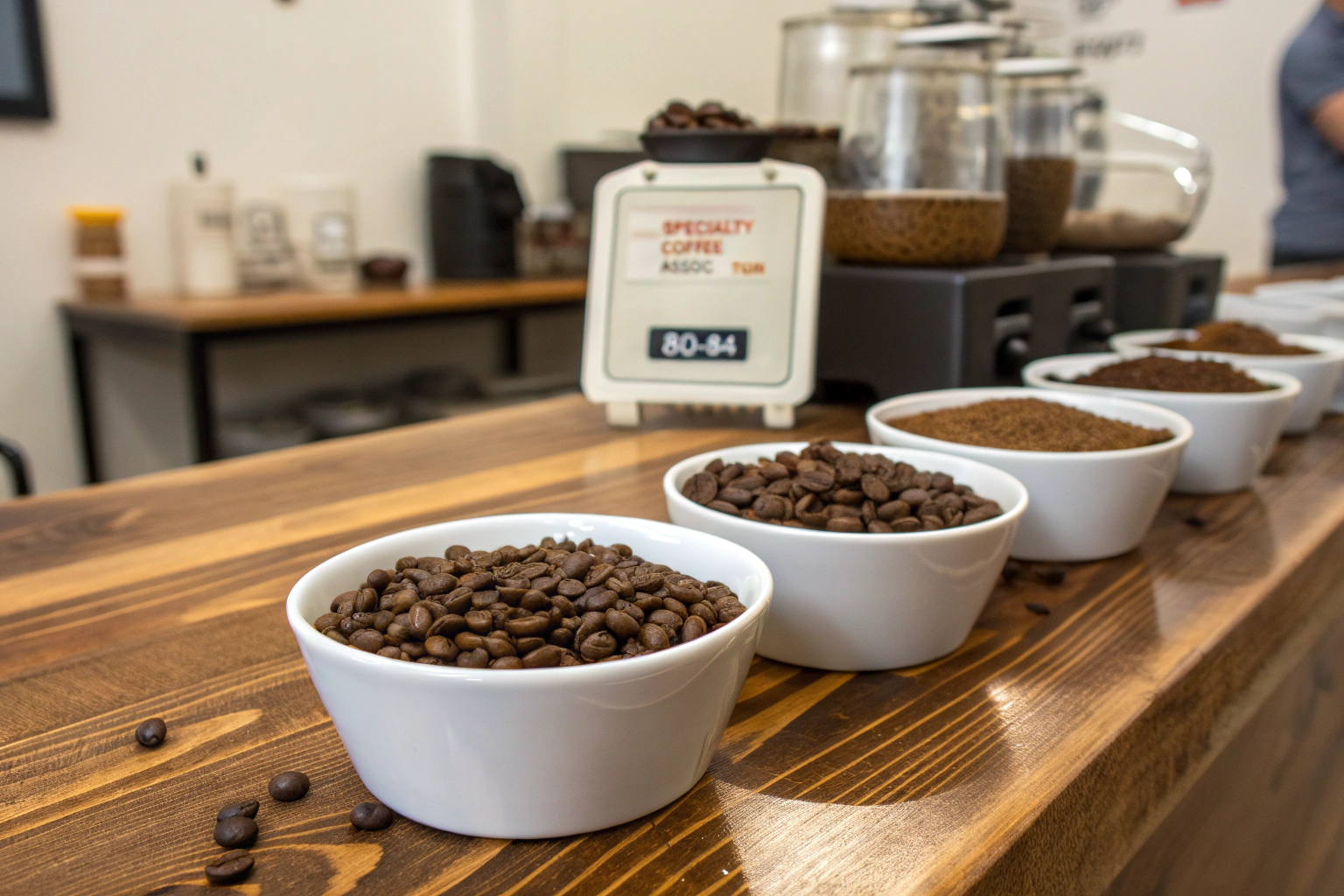
For commercial cafe use, the most suitable coffee bean grade is typically a high-specialty or premium commercial grade, corresponding to a cupping score between 80-84 points (Specialty Coffee Association standard). This grade offers an excellent balance: it delivers the complex, pleasant flavors customers expect in a quality cafe, while maintaining the consistency, volume availability, and price point necessary for sustainable business operations. It is often a well-crafted blend of such beans, designed specifically for espresso and milk-based drinks.
That's the target range. But "suitable" depends heavily on your cafe's specific concept, location, and price point. A third-wave specialty pour-over bar will target the higher end of that range with single-origins, while a high-volume suburban cafe might prioritize a slightly lower-grade, robust espresso blend. The key is to move beyond the simple "specialty vs. commercial" binary and understand the practical attributes that make a bean "cafe-ready." Let's break down what this means for your espresso machine, your baristas, and your bottom line.
What Defines a "Cafe-Grade" Bean in Practical Terms?
For a cafe, a bean's grade is not just a number; it's a set of functional promises. It must deliver day after day, shot after shot.
A truly cafe-suitable bean exhibits these non-negotiable characteristics:
- Consistency in Roast & Flavor: Batch-to-barrel consistency is more important than one-off brilliance. The roast profile must be stable, and the flavor profile (chocolate, nut, caramel notes) must hold up through different baristas and busy rushes.
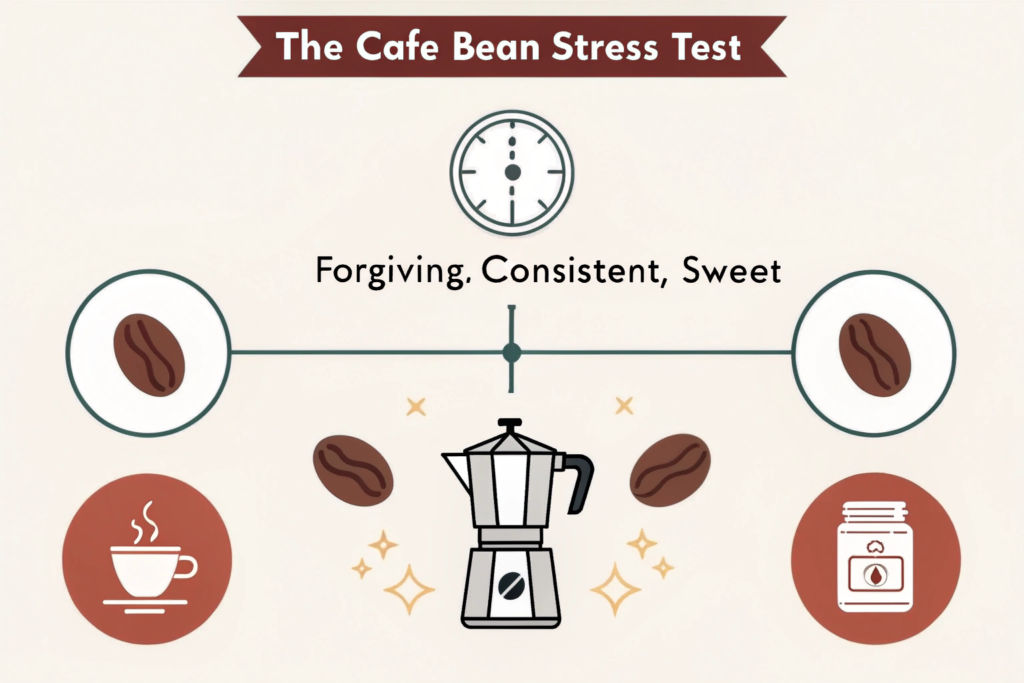
- Forgiveness & Stability in Espresso Extraction: It should have a wide "sweet spot" for extraction. It shouldn't become unpleasantly sour or bitter with minor grind or dose adjustments, which are inevitable during a busy service.
- Performance with Milk: The majority of cafe drinks are milk-based. The bean must have enough body and inherent sweetness to cut through and complement milk, not disappear or turn acidic. A pronounced, pleasant aftertaste is key.
- Volume Availability & Supply Security: You need a supplier who can provide the same blend or single-origin year-round, in the volumes you need, with reliable delivery. This often means working with an exporter like us at BeanofCoffee who controls large plantations and can ensure stable supply.
A bean scoring 82 points that meets all these operational criteria is far more "suitable" than an 87-point bean that is temperamental and limited in supply.
Why Is a SCA Score of 80-84 Points the Sweet Spot?
The SCA scale provides a clear framework. Below 80 points is "commercial grade," which can have more defects, less complexity, and may lack the vibrant acidity or clean finish that defines a quality cafe experience. Above 84 points enters the realm of "high-end specialty," where prices rise significantly, and beans are often prized for their unique, delicate terroir expressions that can be challenging to work with in high-volume espresso or may be overshadowed by milk. The 80-84 range consistently delivers the good quality customers perceive as "great cafe coffee" without the cost and complexity of ultra-premium microlots. It's the workhorse grade for successful cafes globally.
Should You Use Single-Origin or Blends for Cafe Use?
This is a strategic choice:
- Blends: The classic choice for espresso. A skilled roaster creates a blend (e.g., combining a Brazilian base for body/chocolate, a Central American component for sweetness, and an African bean for acidity/brightness) to achieve a balanced, versatile, and consistent profile specifically engineered for cafe use. Blends also provide price stability as the roaster can adjust components to counter market fluctuations.
- Single-Origin (SO): Increasingly popular for filter and sometimes espresso. It offers a story and distinct seasonal flavors. However, it can be less consistent year-to-year and may not always pair ideally with milk. For a cafe, offering one consistent flagship blend and one rotating SO option is a powerful model. We provide both from our Yunnan estate—our Catimor for a stable, nutty base and our select Arabica lots for SO features.
How Does Bean Quality Impact Espresso Machine Workflow?
Your espresso machine is a demanding piece of equipment. The bean you feed it directly impacts maintenance costs, barista morale, and drink speed.
Grind Consistency & Retention: High-quality, uniformly roasted and graded beans produce more uniform grinds. This leads to even extraction in the basket, reducing channeling (where water finds a path of least resistance). Low-grade beans with defects (quakers, broken beans) create "fines" (dust) and "boulders" (large particles) that clog grinders, increase retention of stale coffee, and cause erratic extractions. This wastes coffee and time.
Machine Wear & Tear: Oils from coffee beans build up in grinders and group heads. Higher-grade beans, while still oily, tend to be processed and roasted more cleanly, resulting in less gumming up and rancid oil buildup compared to low-grade, darker roasted commodities. This reduces downtime for cleaning and maintenance.
Barista Efficiency: A forgiving, consistent bean allows baristas to dial in quickly at the start of a shift and make minor adjustments without ruining the shot. This is crucial for speed and stress reduction during peak hours. A temperamental bean turns every shot into a guess, slowing service and increasing waste. This operational reliability is a hidden cost-saver.
What Physical Defects Are Deal-Breakers for Cafe Beans?
Certain defects directly harm espresso quality:
- Quakers: Underdeveloped beans that roast unevenly, tasting sour/grassy. Even a few can make a shot taste off.
- Black Beans/Severe Insect Damage: Contribute harsh, bitter, fermented flavors.
- Excessive Chaff: Can cause uneven roasting and increase grinder static/clogging.
A cafe-suitable grade must have a very low defect count. This is why we implement rigorous optical and manual sorting at our Shanghai Fumao processing center—to ensure our commercial-grade exports meet the physical standards required for professional use.
How Does Freshness and Resting Period Affect Cafe Operations?
Coffee is best used within a specific window after roasting (e.g., 5-45 days for espresso). A cafe must manage inventory to ensure beans are always in this peak window. Working with a local roaster or an exporter who can guarantee fast, regular shipments (like our air or express sea freight for roasted products) is essential. Furthermore, espresso beans often need a "resting period" of 5-10 days post-roast for gases to dissipate, allowing for proper extraction. Your supplier should provide clear guidance on this.
What Are the Cost and Sourcing Considerations?
Your bean choice must align with your financial model. The goal is the best possible quality within a cost structure that allows for healthy margins.
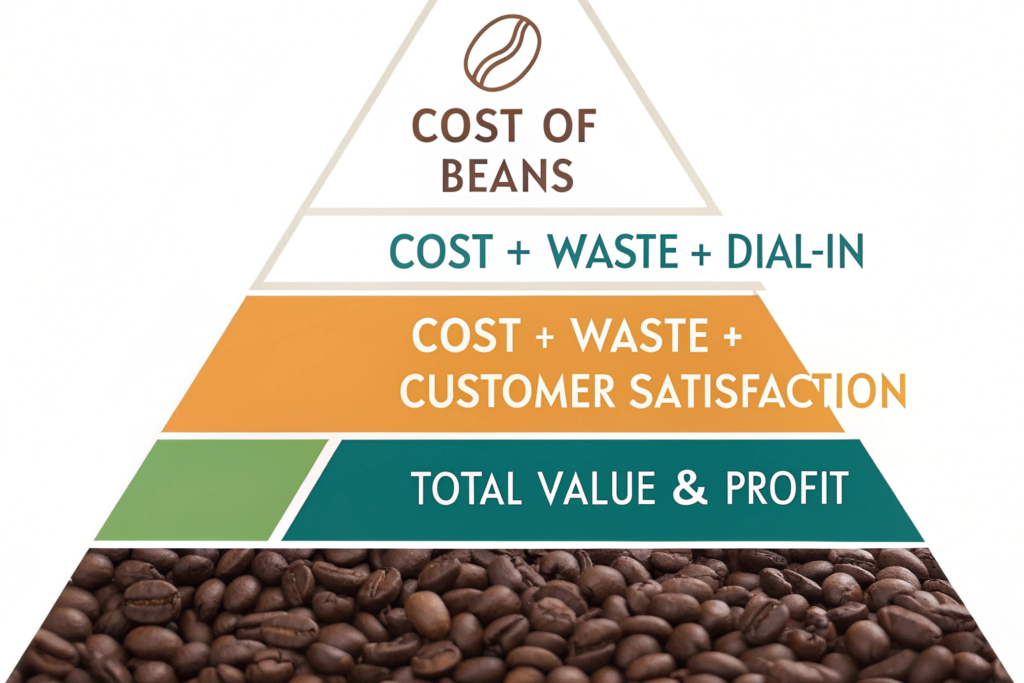
Understanding Cost-Per-Cup: You must calculate the true cost. A bean that is 20% cheaper but yields 15% less (due to higher shrinkage, more waste in dialing-in, or lower extraction yield) and results in fewer customer return visits is actually more expensive. The "suitable" grade is the one that optimizes value, not minimizes initial cost.
Sourcing for Security and Partnership: For a cafe, your coffee supplier is a key partner. You need more than a bag of beans; you need:
- Technical Support: Help with machine setup, training, and troubleshooting.
- Flexible Logistics: Reliable, frequent deliveries in the quantities you need.
- Brand Alignment: A supplier whose story and ethics match your cafe's values.
This is where sourcing directly from an integrated exporter can be advantageous. We at BeanofCoffee work with cafe partners to provide not just beans from our Yunnan farm, but also roast profiles tailored for their market, and the security of a transparent supply chain. For a cafe, this partnership can be a unique selling point.
Is It Better to Buy Green and Roast In-House or Source Roasted?
This is a major business decision.
- Roasting In-House: Offers ultimate control, freshness, and brand distinction. However, it requires significant capital, space, expertise, and adds operational complexity. The bean grade needed is high-quality green coffee (like our export-grade Arabica).
- Sourcing Pre-Roasted: The standard model for most cafes. It outsources complexity to a specialist. The key is finding a roaster (or roaster-exporter) whose "cafe blend" philosophy and quality grade align with yours. They become an extension of your team.
For international cafes, sourcing pre-roasted from an origin exporter with roasting capability (like us) can provide exceptional freshness and a compelling origin story.
How to Negotiate with Suppliers for Cafe Volume?
Don't just ask for price. Build a partnership proposal:
- Commit to Volume: Offer a predictable monthly volume in exchange for better pricing and guaranteed allocation.
- Bundle Services: Ask for included training, marketing materials, or loaner equipment.
- Seek Transparency: Request full costing, including freight and duties, to understand your true landed cost.
A professional supplier will respect this business-like approach and work with you to find a sustainable model.
How to Evaluate and Sample Potential Cafe Beans?
Never commit to a bean based on a description alone. Your evaluation process must simulate real cafe conditions.
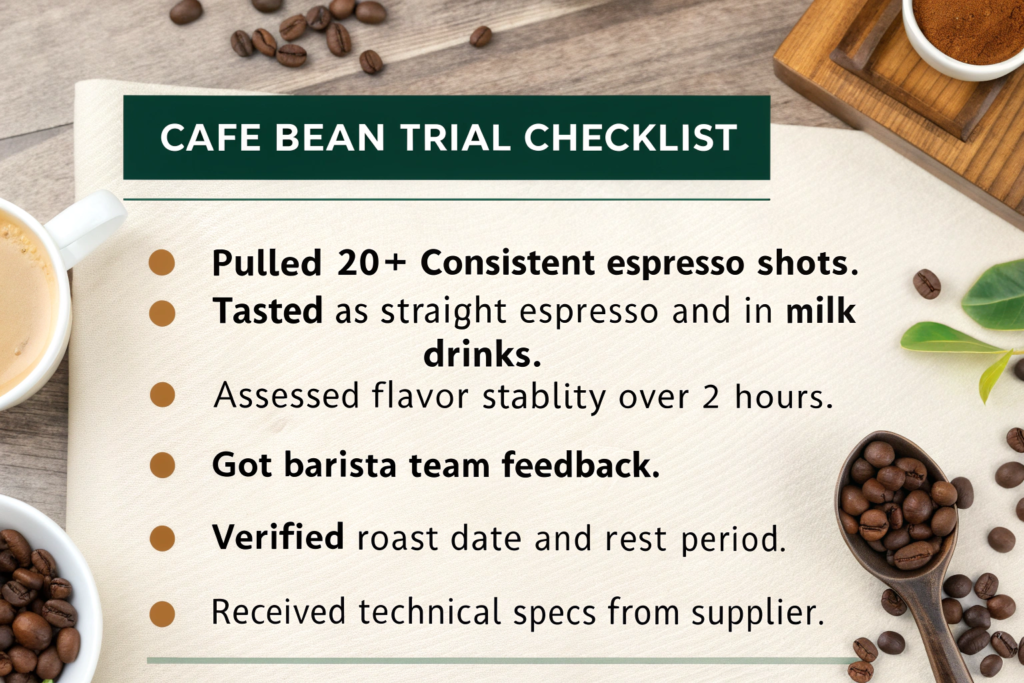
The Cafe-Focused Sampling Protocol:
- Espresso Test: Dial in the bean on your actual equipment. Pull 10-20 shots in a row. Is it consistent? How wide is the "good shot" window?
- Milk Test: Make cappuccinos and lattes. Does the flavor hold up? Is it pleasant or does it turn ashy or bland? Is the aftertaste clean?
- Volume Test: Pull shots over a simulated 2-hour rush period. Does the flavor drift as the grinder heats up or the bean ages in the hopper?
- Barista Feedback: Have your head barista use it. They are the experts on what works in the workflow.
- Customer Blind Test (Optional): If changing a flagship blend, run a small blind test with regulars.
Request from the supplier: A full bag for testing (not just a small sample), roast date information, and technical data sheet with recommended brew parameters.
What Questions to Ask Your Potential Supplier?
- "What is the primary flavor profile of this blend/origin, and how is it designed to perform with milk?"
- "What is your roast-to-delivery timeline to ensure I receive coffee within its optimal window?"
- "What is your process for ensuring batch-to-batch consistency?"
- "Can you provide technical support for dialing in and training?"
- "What is the green coffee grade/SCA score of the base components?"
Their answers will reveal if they are a true partner for the cafe trade.
When Should a Cafe Consider a Lower Grade?
Only in very specific, cost-driven models where coffee is a true commodity (e.g., a convenience store attachment, very low-price-point diner). In these cases, a high-volume commercial grade (75-79 points) focused on stability and low cost is used, often with a dark roast to mask imperfections. However, in today's competitive market, this approach risks alienating customers who have developed a taste for better quality. The trend is firmly toward the 80+ point range as the new baseline for a commercial cafe.
Conclusion
The suitable grade for commercial cafe use is a high-specialty bean that masters the art of consistency, forgivability, and milk compatibility. It is a product designed not just to cup well in a lab, but to perform under the real-world pressures of a busy service counter. This 80-84 point sweet spot delivers the recognizable quality that defines a good cafe experience while providing the supply security and operational efficiency that a business requires.
Choosing this grade is an investment in customer loyalty, barista sanity, and operational smoothness. It's about partnering with a supplier who understands the cafe ecosystem and can provide not just beans, but reliability and support.
At Shanghai Fumao, we roast and blend our Yunnan harvests specifically to meet this commercial cafe standard. We offer the consistency of a large estate, the story of a unique origin, and the partnership approach that cafes need to thrive.
If you are sourcing for your cafe and want a partner who provides both exceptional coffee and dependable supply, let's talk. We'll help you find the perfect grade to build your reputation, one cup at a time.
To discuss cafe-specific blends and request a volume sample for in-house testing, contact Cathy Cai at cathy@beanofcoffee.com. Let's equip your cafe with coffee that works as hard as you do.