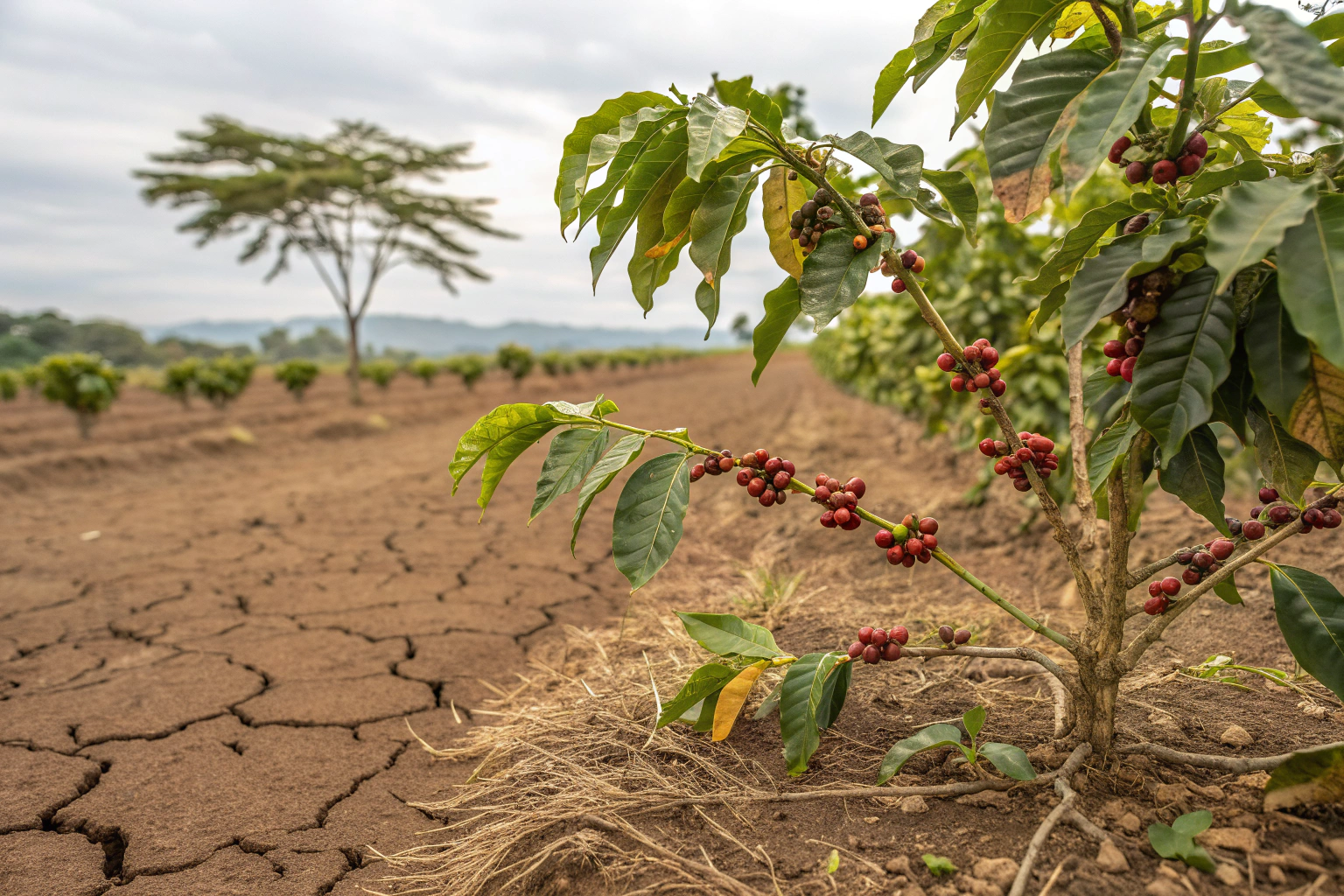
You're tasting this year's harvest from your usual farm. The coffee is good, but something feels different—less acidity, maybe a bit hollow. The farmer mentions irregular rains and hotter nights. This isn't just a bad season; it's a pattern. As a grower and exporter in Yunnan, we are on the front lines. Climate change isn't a future threat; it's a present reality reshaping the very essence of coffee quality, bean by bean.
Climate change directly impacts coffee bean quality by altering the delicate environmental conditions required for optimal growth. The key effects include: increased temperatures accelerating cherry development, leading to less dense beans with lower sugar and acid content; erratic rainfall and drought stressing plants, causing smaller, malformed beans and increasing defects; and the proliferation of pests and diseases like coffee leaf rust, which devastate crops and compromise bean integrity. These changes collectively result in a cup profile that is less complex, less sweet, less acidic, and more inconsistent—directly threatening the stability, reliability, and quality that global buyers depend on.
That's the scientific consensus. But on the ground, the impact is felt as a series of compounding stresses. It's not just that the average temperature is rising by 1°C; it's that the predictability of the entire growing cycle is breaking down. Flowering, ripening, and harvest seasons are becoming chaotic. For a buyer like "Ron," who needs consistent quality and timeliness, this translates to volatile supply and unpredictable cup profiles. Let's dissect how these climate-driven changes travel from the tree to your roastery.
How Do Rising Temperatures and Heat Stress Alter Bean Chemistry?
Coffee, especially Arabica, is a Goldilocks crop. It thrives in a narrow temperature band (18-22°C / 64-72°F). When temperatures consistently exceed this range, the plant's metabolism goes into overdrive.
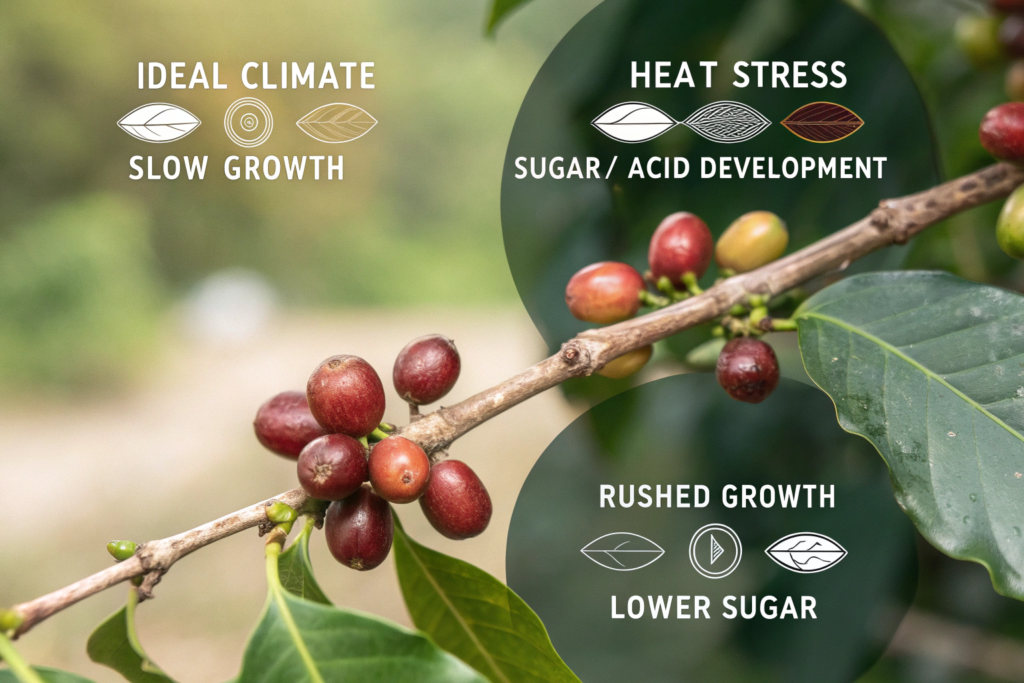
Increased heat accelerates the cherry's maturation process. Think of it as rushing a complex artistic creation. The bean has less time to develop and accumulate the sugars, lipids, and organic acids that form the foundation of flavor. The result is a less dense, porous bean. In the cup, this translates to a loss of complexity: acidity becomes muted, sweetness diminishes, and the body turns thin. The unique "origin character" that defines a Yunnan Bourbon or a Ethiopian heirloom starts to fade, replaced by a more generic, bland profile. Furthermore, heat stress can cause the plant to abort cherries or produce "empty" parchment—beans that never fully develop. This is not a future scenario; in parts of our lower-elevation Yunnan plots, we are already observing these trends, forcing us to consider shifting plantings higher up the mountain, where land is scarce and costly.
What Is the "Night Temperature" Effect on Acidity?
A critical but often overlooked factor is the rise in nighttime temperatures. Coffee beans develop their signature acids (like citric and malic acid) during cool nights. Warmer nights disrupt this biochemical process. The result is a coffee with significantly reduced brightness and vibrancy. That sparkling, apple-like acidity in a good washed Arabica can simply vanish, leaving a flat, dull cup. For specialty roasters and buyers who market specific flavor notes, this is a direct attack on their product's value proposition. It's a quality parameter that is slipping away due to a changing baseline climate.
Can Farmers Mitigate Heat Stress with Shade and Irrigation?
Mitigation is possible but costly and limited. Shade trees are a traditional buffer, reducing ground temperature and protecting cherries from direct sun scalding. We are actively re-introducing shade systems in some of our fields. Irrigation can combat drought stress, but it's expensive and puts pressure on local water resources. Ultimately, these are adaptation strategies that can slow the decline, not stop it if warming continues unabated. They represent increased production costs, which inevitably affect the price and security of long-term supply for buyers.
How Do Erratic Rainfall and Drought Affect Yield and Bean Integrity?
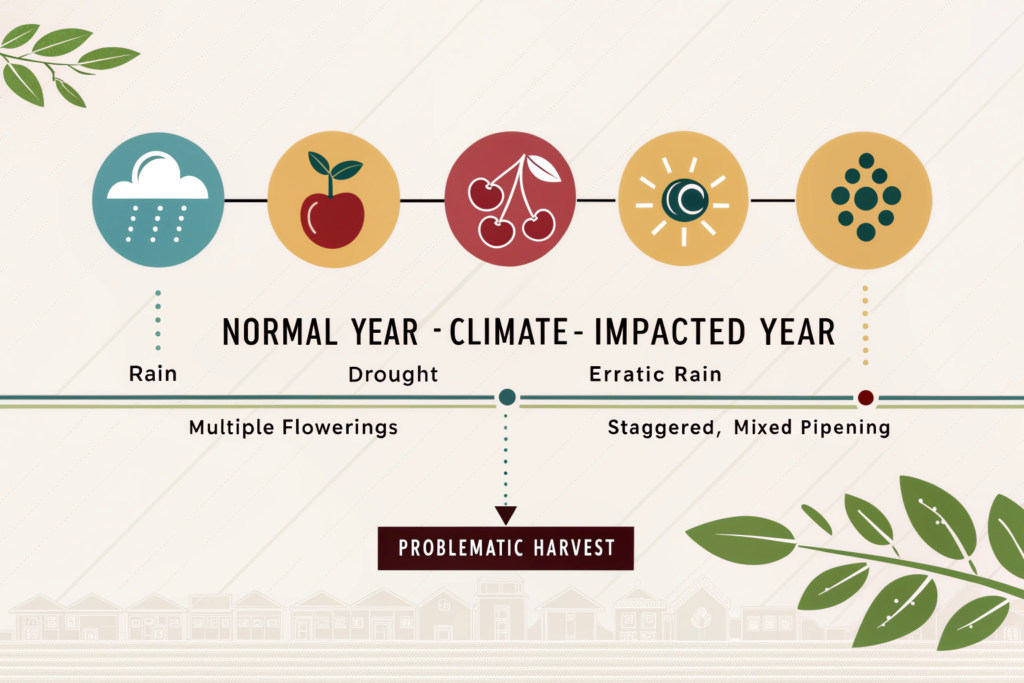
Coffee needs predictable wet and dry seasons. Consistent rainfall triggers flowering; a dry period is crucial for ripening and harvest. Climate change is throwing this rhythm into disarray.
Erratic Rainfall: Unseasonal rains during flowering can wash away pollen, reducing fruit set. Heavy rains during harvest can cause cherries to split on the branch or promote mold (like Aspergillus species that produce Ochratoxin A) during drying. This directly increases the percentage of defective beans in a lot. Prolonged Drought: Water stress causes the plant to conserve resources, leading to smaller cherries and beans. It also weakens the plant's overall health, making it more susceptible to pests. At a cellular level, drought stress can lead to irregular bean development, resulting in a higher incidence of quakers (those underdeveloped beans that roast poorly and taste grassy/peanutty). For an exporter, this means more intensive and costly sorting is required to maintain a good quality standard, and overall yield per hectare drops, affecting volume stability.
Why Are Consistent Harvest Windows Becoming a Thing of the Past?
Traditionally, a farm might have one major, predictable harvest period. Now, with irregular rains, we see "multiple blossoms" and staggered ripening on the same branch. This makes selective harvesting—picking only perfectly ripe cherries—incredibly labor-intensive and expensive. If not done meticulously, the lot becomes a mix of underripe and overripe cherries, leading to inconsistent roast development and a muddled, often harsh, cup profile. This fragmentation of the harvest is a major operational and qualitative challenge, directly impacting our ability to guarantee the timeliness and uniform quality of a shipment.
How Does This Impact the "Terroir" Story?
The concept of terroir—the unique expression of a place in the coffee—is built on climatic stability. When the climate itself becomes the dominant, unpredictable variable, the terroir expression becomes unstable. A buyer who fell in love with a Yunnan coffee for its "tea-like body and gentle plum acidity" might find those notes shift or disappear in subsequent years. This erodes brand loyalty and makes long-term sourcing contracts riskier. It challenges our very ability as an exporter to be a reliable source of a specific flavor profile.
How Are Pests and Diseases Amplified by a Warming Climate?
Warmer and more humid conditions create an ideal breeding ground for coffee's enemies. The most notorious is Coffee Leaf Rust (Hemileia vastatrix), a fungus that has devastated farms across Latin America.
Rust spores thrive in warmer, wet conditions. As temperatures rise, the fungus can spread to higher altitudes that were previously too cool for it. An infected plant redirects energy to fight disease rather than to develop cherries, resulting in poor fruit quality and, often, plant death. Similarly, the Coffee Berry Borer (Hypothenemus hampei), a tiny beetle that burrows into the cherry to lay eggs, reproduces faster in warmer weather. Its larvae consume the bean from the inside, rendering it worthless and introducing off-flavors. Controlling these pests requires more frequent (and often more expensive) applications of fungicides or pesticides, which can conflict with organic certification and increase production costs. For buyers, this means a higher risk of receiving lots with hidden insect damage or the need to pay a premium for coffee from regions (or farms like ours implementing aggressive integrated pest management) that are managing to stay ahead of the curve.
Is Organic and Sustainable Farming More Vulnerable?
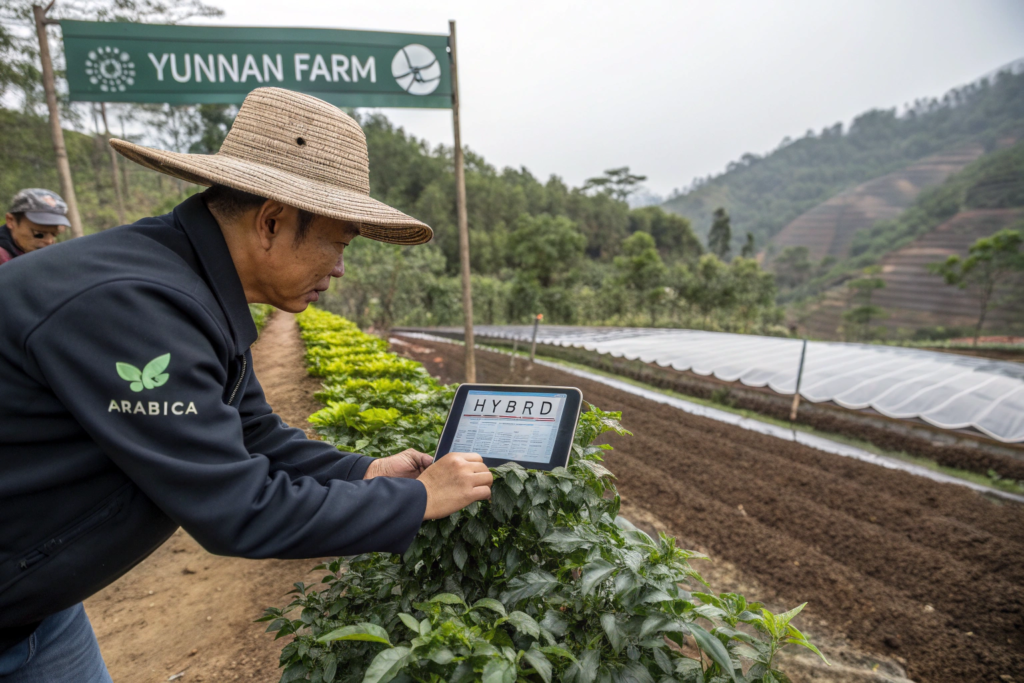
This is a critical tension. Organic farms, which avoid synthetic chemicals, may be more vulnerable to initial outbreaks. However, in the long run, farms with healthy, biodiverse ecosystems (shade trees, healthy soil microbiome) are often more resilient. They have natural pest predators and stronger plants. The challenge is that the climate crisis is moving faster than these natural systems can adapt. At BeanofCoffee, we are investing in this resilience by planting disease-resistant Catimor varieties alongside our traditional Arabica, improving soil health, and maintaining forest buffers. It's a risk-mitigation strategy to ensure supply security for our clients.
What Does This Mean for Future Coffee Origins?
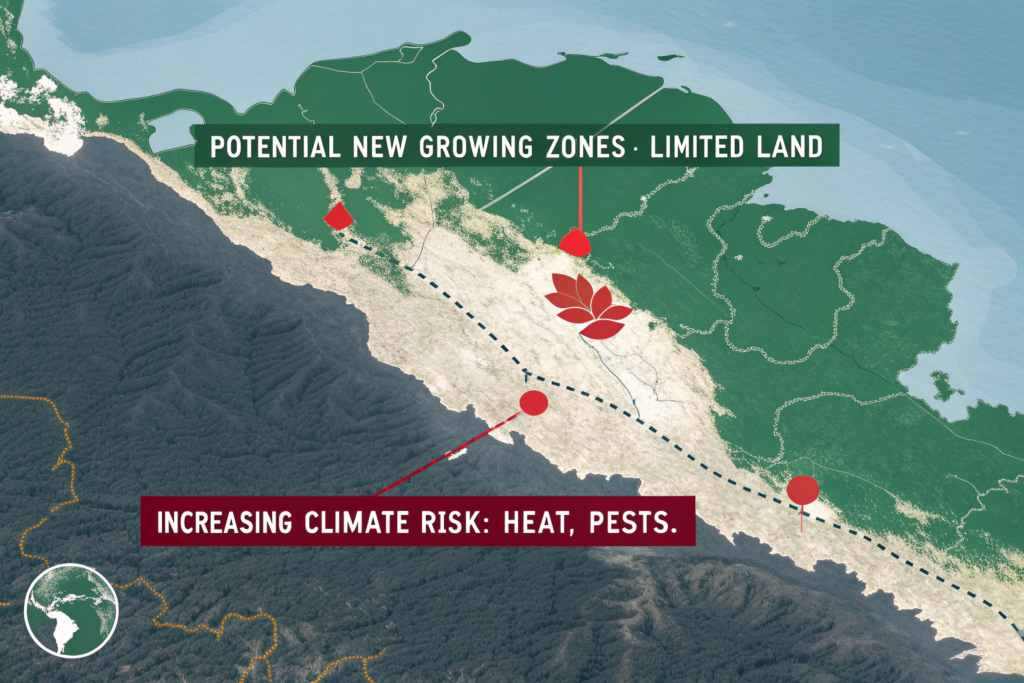
The traditional "Coffee Belt" map is likely to shift. Some lower-altitude, warmer regions may become uneconomical for quality Arabica production. New regions at higher altitudes or higher latitudes may emerge, but developing the infrastructure and expertise takes decades. In the interim, supply from established origins will become more volatile and potentially more expensive. For a large company buyer or distributor, this underscores the need for diversifying their sourcing portfolio. Relying on a single origin is becoming riskier. This is why we advocate for including a stable origin like Yunnan—where we still have altitude headroom—as part of a balanced sourcing strategy.
What Adaptation Strategies Are Farmers and Exporters Implementing?
The response is a mix of agronomic science, genetic research, and sheer determination. We are not passive observers; we are actively adapting our entire system.
Key adaptation strategies include:
- Shifting Elevation: Moving plantations higher where possible (though this often encroaches on forest land and has limits).
- Developing & Planting Resilient Varieties: Investing in and planting hybrids like Catimor or new F1 hybrids that offer resistance to rust and tolerate higher temperatures, while striving to preserve cup quality.
- Water Management: Investing in efficient irrigation and water catchment systems to combat drought.
- Agroforestry & Shade: Reintroducing diverse shade canopies to moderate microclimates.
- Precision Agriculture: Using soil sensors and weather data to optimize inputs and interventions.
For an exporter like us, adaptation also means transparent communication with buyers. We share climate-related risks and our mitigation plans. It means potentially redefining quality parameters as the environmental baseline shifts, and working with roasters who understand these new realities.
Can Processing Techniques Compensate for Green Bean Changes?
Processing can tweak, but not fundamentally rewrite, the genetic and environmental recipe of the bean. A skilled mill might use a specific fermentation or drying method to enhance the remaining sweetness or body in a heat-affected lot. However, you cannot process in what the plant failed to develop. The focus must remain on growing the best possible raw material under challenging conditions. Our wet milling and drying processes are more critical than ever to preserve every bit of quality that the farm produces.
How Should Buyers Adjust Their Sourcing Strategies?
Smart buyers are already adjusting:
- Deepen Partnerships: Work closely with exporters who are investing in on-farm adaptation, like us at Shanghai Fumao. Visit the farms, understand their challenges.
- Embrace Flexibility: Be open to slight variations in flavor profile year-to-year, and to trying resilient varieties (like well-processed Catimor) that may offer new, pleasant cup profiles.
- Diversify Origins: Don't put all your eggs in one climate-vulnerable basket.
- Support Sustainable Practices: Be willing to engage in long-term contracts or pay premiums that support farmers' climate adaptation investments. This is the only way to ensure a stable, reliable supply chain in the decades to come.
Conclusion
Climate change is degrading coffee quality at its root by dismantling the precise environmental conditions required for excellence. The impacts—less dense beans, faded acidity, increased defects, and pest pressure—are measurable in the lab and palpable in the cup. This is not a distant threat but a current driver of volatility in the global coffee market.
For the entire supply chain, from farmer to consumer, this is a call to action. It demands adaptation on the farm, flexibility in sourcing, and a collective commitment to sustainability. The future of quality coffee depends on our ability to support the ecosystems and communities that produce it.
At Shanghai Fumao, we are confronting this reality head-on. Through varietal research, sustainable farming, and transparent partnerships, we are working to safeguard the quality and availability of our Yunnan coffee against a changing climate.
If you are a buyer looking for a partner who understands these profound challenges and is actively building a more resilient supply chain, let's collaborate. Together, we can navigate this new reality and ensure that exceptional coffee has a future.
To discuss our climate adaptation strategies and source coffee from a forward-thinking origin, contact Cathy Cai at cathy@beanofcoffee.com. Let's secure quality, for the long run.