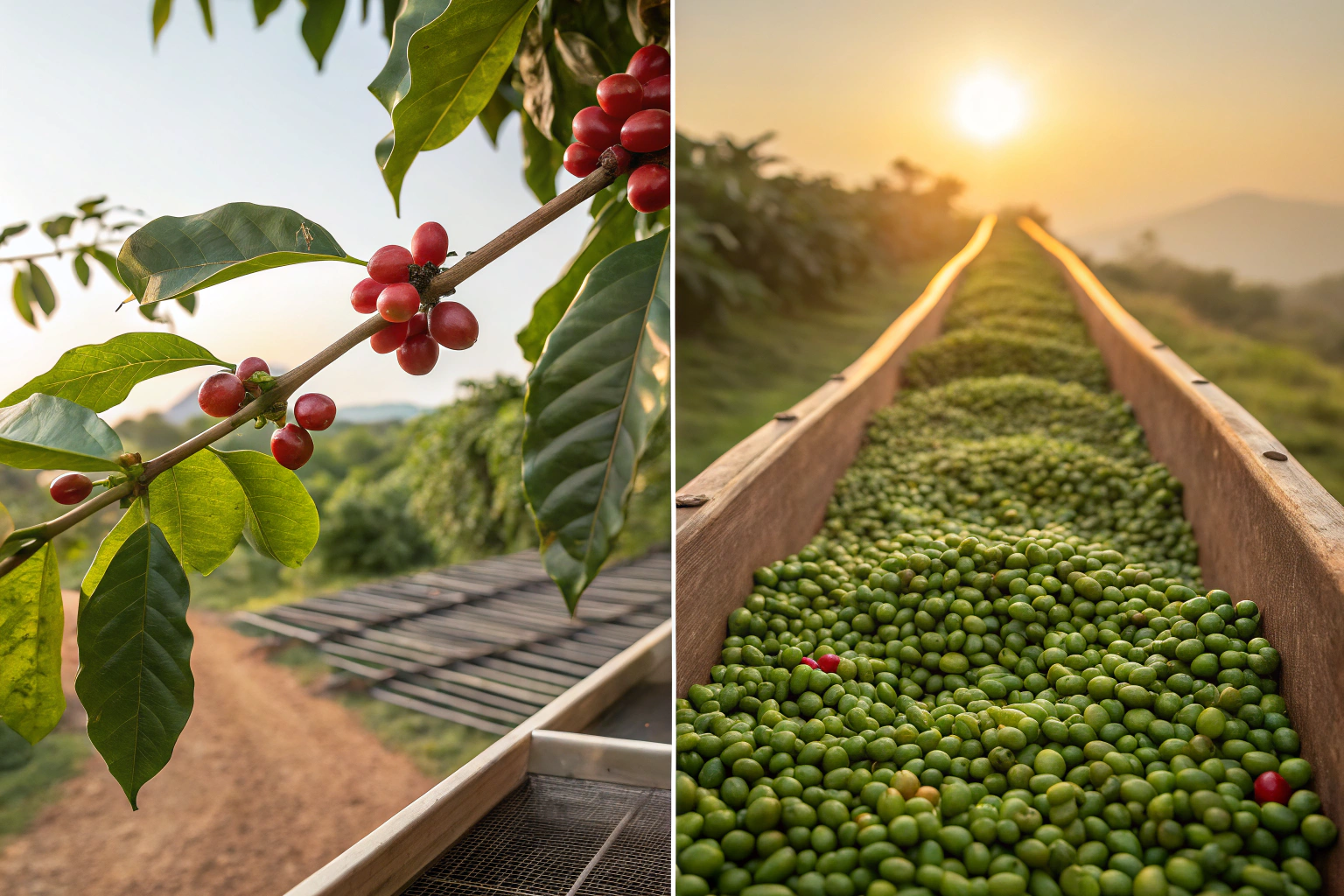
I've been growing coffee on our 10,000 acres in Yunnan for over twenty years. And honestly? I still remember the first time I showed a buyer around our farm. He'd been buying coffee for years, but he'd never actually seen a coffee cherry. He picked one, tasted the pulp, and said, "This tastes nothing like coffee!" That moment stuck with me.
The short answer is that a coffee cherry is the fruit of the Coffea plant, and the bean is actually the seed inside that fruit. The transformation from cherry to bean involves harvesting at peak ripeness, removing the fruit layers through processing (washed, natural, or honey methods), fermenting to break down mucilage, drying to stable moisture content, and finally hulling to reveal the green bean ready for export.
But here's the thing. That simple explanation hides incredible complexity. The journey from cherry to bean is where quality is made—or lost. Every step matters. Let me walk you through what actually happens on our farm, and why it matters for the coffee you buy.
What Exactly Is a Coffee Cherry?
Before we talk about becoming a bean, we need to understand what we're starting with. The cherry is more complex than it looks. Picture this: a vibrant, sun-kissed fruit clinging to the lush, emerald branches of a coffee plant, its skin ripening from a bright, unassuming green to a deep, alluring crimson or even a sunny yellow, depending on the variety. It's not just a simple berry; it's a treasure trove of life, each cherry cradling within it a delicate seed, the future bean, wrapped in layers of pulpy flesh and a thin, protective outer skin.
As you gently pluck one from the branch, you'll notice its slight give under your touch, the faint, sweet aroma that wafts up—earthy, with hints of citrus or berry, depending on the terroir where it grew. Inside, the seed is encased in a juicy, sticky pulp that bursts with flavor, a testament to the care and conditions that nurtured it from a tiny flower into this moment of ripeness.
What are the parts of a coffee cherry?
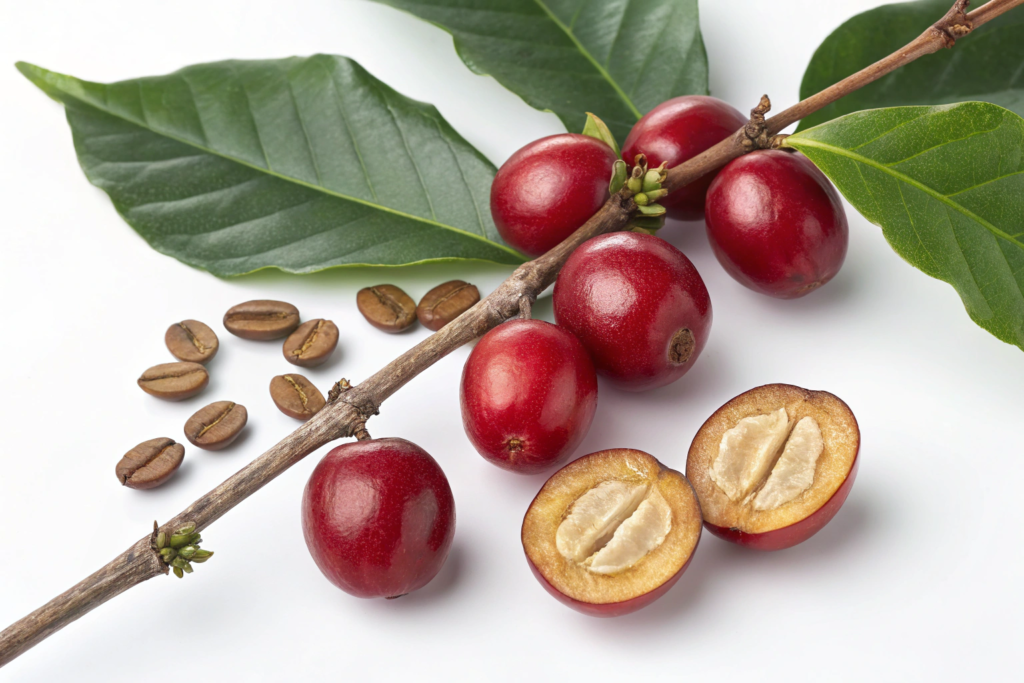
The outer skin is called the exocarp. It's smooth, thin, and changes color as the cherry ripens—from green to yellow to bright red or deep purple. This skin protects everything inside. Beneath the skin is the mesocarp—the pulp. This is the sweet, sticky part that gives the cherry its name. It's full of sugars and mucilage. In natural processing, this pulp stays with the bean during drying and contributes fruity flavors.
Next is the endocarp, which we call the parchment. It's a tough, papery layer that surrounds each bean. It protects the seed during processing and drying. We remove it later, before export. Inside the parchment are the beans—usually two per cherry, flat sides together. Each bean is covered in a thin silver skin, which is actually the seed coat. In rare cases, a cherry develops only one round bean—we call that a peaberry.
Finally, there's the center cut—the groove running down the flat side of each bean. That's where the bean was attached to the cherry structure. Understanding these layers helps you understand processing. Each layer must be removed at the right time, in the right way. The Specialty Coffee Association has excellent educational materials on coffee cherry anatomy.
Is every cherry the same?
No—and this matters enormously. Different varieties produce different cherries. Our Catimor cherries look different from our Typica cherries. They ripen at different rates. They have different pulp-to-bean ratios.
Even within the same tree, cherries ripen at different times. That's why we pick selectively. A branch might have green, yellow, and red cherries all at once. Only the red ones are ready.
Cherry size varies too. Some are small and dense. Some are larger with more pulp. These differences affect processing decisions. A cherry with thick pulp needs different fermentation time than one with thin pulp.
Weather during growth affects cherry composition too. A dry spell can concentrate sugars. Too much rain can dilute them. Every harvest is unique.
How Are Coffee Cherries Harvested?
Harvesting is where quality begins, a sacred ritual that bridges the earth's bounty to the table's promise. The air hums with the crisp tang of ripe produce, sunlight gilding the fields as golden stalks bow under the weight of their labor. Every careful cut, every gentle lift, is a whispered vow to honor the season's generosity. What comes in from the fields—sun-warmed tomatoes blushing like dawn, crisp lettuce leaves trembling with dew, plump berries bursting with juice—carries the essence of the land: the soil's richness, the rain's kiss, the sun's patient caress.
Everything that happens later, from the first gentle rinse to the final artful arrangement, depends on this initial act of reverence. A single misstep here, a bruise from careless handling, a moment of delay in the cool of morning, can taint the journey ahead. It is the foundation, the heartbeat of quality, where the story of each ingredient truly begins, and from which all that follows—flavor, texture, satisfaction—flows like a river from its source.
Why is selective picking important?
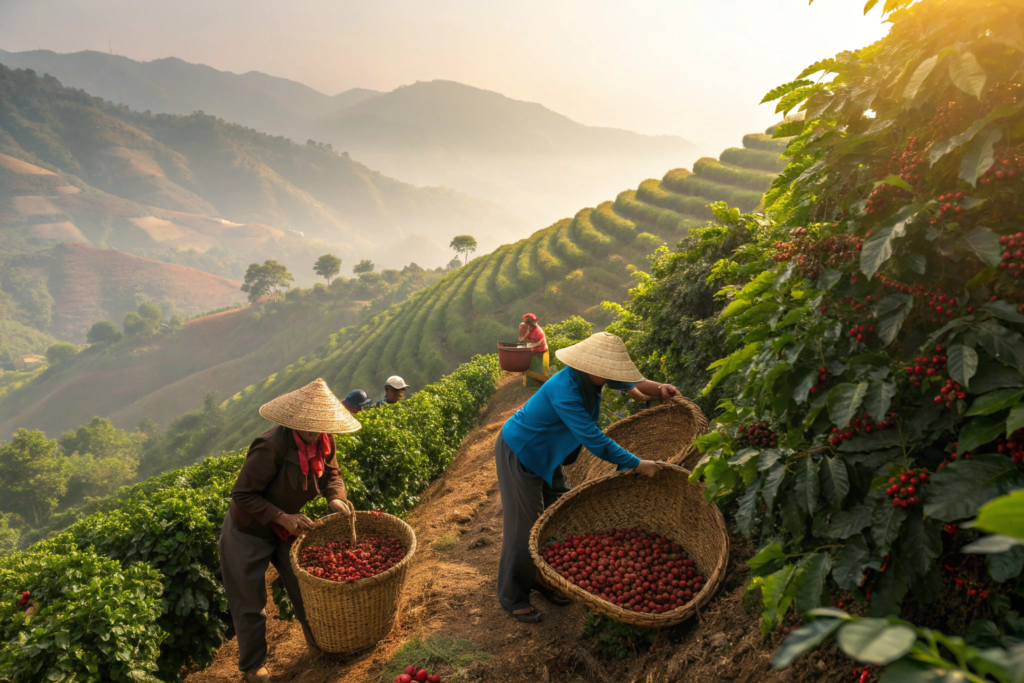
In specialty coffee, we pick only ripe cherries. Not underripe (green or yellow). Not overripe (dark red or purple, starting to ferment). Only perfectly ripe—bright red, slightly soft, easily detached.
Why? Because underripe cherries produce underripe beans. They taste grassy, astringent, unpleasant. Overripe cherries can start fermenting on the branch, producing sour, funky flavors. Our pickers are trained extensively. They go through the same trees multiple times during harvest, picking only what's ready. It's labor-intensive and expensive. But it's the only way to get consistent quality.
We pay premium wages for selective picking. We inspect baskets. We retrain when needed. It's worth it. The difference in cup quality is dramatic.
What happens to cherries after picking?
Speed matters. Once picked, cherries start changing. Sugars convert. Fermentation begins. Enzymes start breaking down compounds.
We transport cherries from field to processing station within hours. Not days. The faster they're processed, the more control we have.
At the station, cherries are sorted again. Floating removes underweight or damaged cherries—they float, good ones sink. Then they're graded by size and density. Only the best go to specialty lots. The rest become commercial grades.
This attention at harvest is why our beans perform consistently. We work with logistics partners like Shanghai Fumao to maintain this quality through the supply chain.
How Does Processing Turn Cherry into Bean?
Processing is where the cherry becomes a bean—or more accurately, where the bean is separated from the cherry. There are several ways to do this, each creating different flavors. Picture the ripe coffee cherries, plump and vibrant, bursting with juice like tiny suns hanging heavy on the branches of the coffee plant. The air hums with the sweet, earthy scent of ripeness, a heady aroma that mingles with the fresh, green tang of the surrounding foliage. As the cherries are harvested, they carry within them the potential for a thousand distinct tastes, waiting to be unlocked through the careful process of separation.
The first method, often called wet processing, begins with the cherries being sorted by hand or machine, discarding any unripe or overripe fruit to ensure only the best make it through.
What is washed processing?
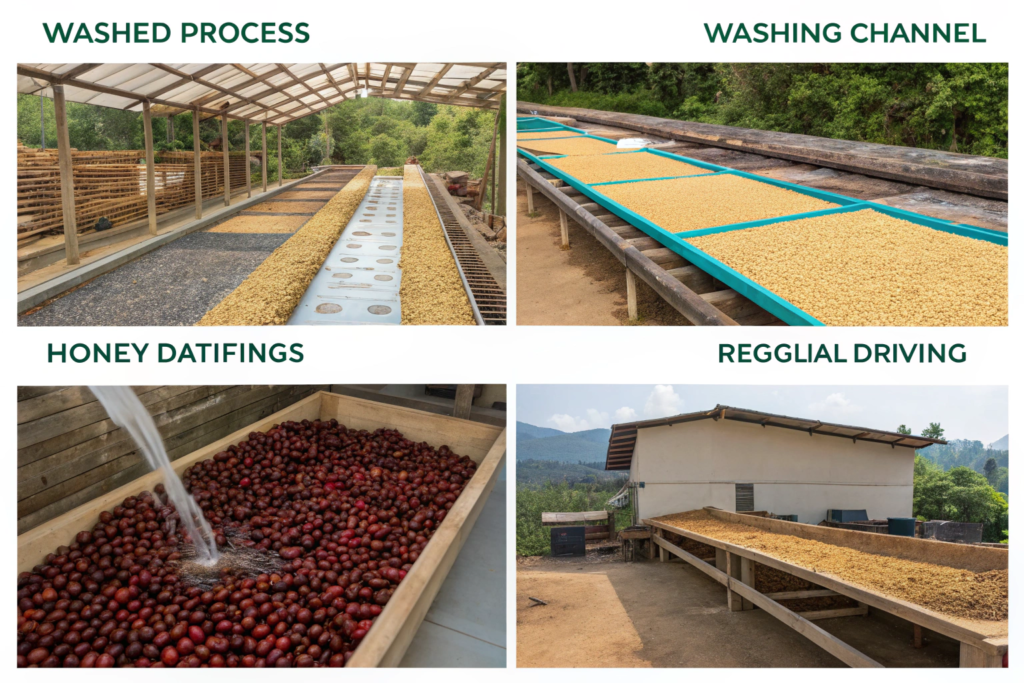
Washed processing is the most common method for specialty coffee. It produces clean, bright, consistent flavors.
First, cherries go through a depulper. This machine squeezes the cherry, popping the beans out while removing most of the pulp. The beans—still in their parchment—come out covered in sticky mucilage. Next, they go into fermentation tanks. For 12-36 hours, naturally occurring enzymes break down the mucilage. You can see it happening—the water changes, bubbles form, the beans feel less slippery. After fermentation, beans go through washing channels. Water carries away the remaining mucilage. Clean water flows, beans sink, everything else floats away.
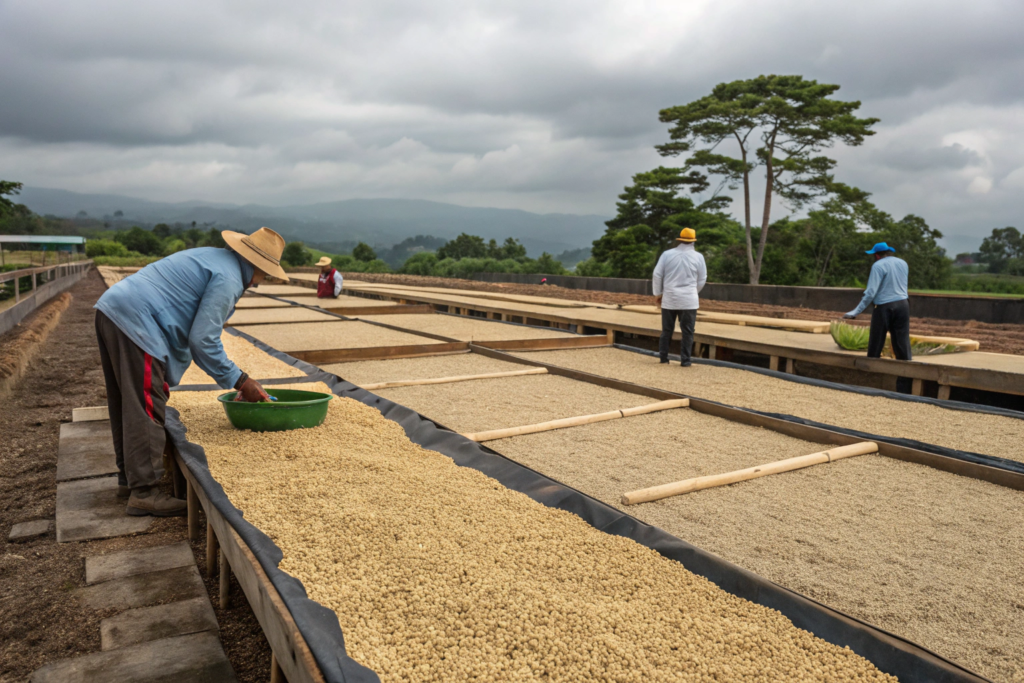
Finally, the clean beans are dried. On raised beds or patios, they lose moisture from 55% down to 10-12%. This takes 7-15 days depending on weather. They're raked regularly for even drying. The result is a clean bean that expresses its intrinsic qualities—the variety, the soil, the altitude. Washed coffees are transparent.
What is honey processing?
Honey processing is a hybrid. The cherry is depulped like washed process, but some mucilage is left on the beans during drying. The amount of mucilage left determines the "color"—yellow honey (little mucilage), red honey (more), black honey (most). More mucilage means more fruit influence and longer drying time.
Beans are spread on beds to dry, with the sticky mucilage still attached. They're turned frequently to prevent sticking and mold. Over 10-20 days, they dry and darken. The result is a coffee with body and sweetness from the mucilage, but cleaner than a natural. It's a beautiful middle ground.
We experiment with all three methods in Yunnan. Different lots get different processing based on what the cherry wants to become. Equipment from manufacturers like Penagos helps us control each process precisely.
What Happens After Processing?
Processing isn't the end. There are critical steps after that determine final quality. Like a master sculptor who chips away at marble, the initial processing shapes the raw material into something recognizable, but true artistry lies in the delicate work that follows. Think of it as the quiet hours after a storm—when the sky fades from bruised gray to soft lavender, and the air hums with the scent of damp earth and blooming jasmine.
These post-processing rituals are where the magic deepens, where the ordinary transforms into the extraordinary. A single misplaced brushstroke can mar a masterpiece; a missed calibration can turn a vibrant hue into a dull shadow.
Why is drying so important?
Drying is where stability is achieved. Beans at 55% moisture are alive and active. They'll mold, ferment, spoil. Beans at 10-12% moisture are stable. They can be stored for months.
The goal is even, gradual drying. Too fast, and beans case-harden—dry outside, wet inside. Too slow, and mold grows. Too much sun, and beans crack. We dry on raised beds, not patios. Air flows underneath, drying evenly. We turn beans regularly. We measure moisture constantly. When they hit target, they're moved to rest.
Resting matters too. Freshly dried beans need time to stabilize—usually 30-60 days. During this time, moisture equalizes throughout the bean. Flavors settle. The beans become ready for export.
What is hulling and sorting?
Hulling removes the parchment layer that's protected the bean through drying. The machine cracks the parchment and blows it away, leaving clean green beans.
Then sorting begins. First by density—air tables separate heavy beans from light ones. Then by size—screens separate beans by diameter. Then by color—optical sorters remove defective beans based on color.
The result is uniform, clean green beans ready for export. They're graded by screen size, defect count, and cup quality. Then they're bagged—usually in GrainPro liners inside jute bags—and stored until shipment.
We use optical sorters from Buhler Group and TOMRA to ensure every bean meets specialty standards.
How Does the Bean Become Coffee in Your Cup?
The journey doesn't end at the green bean. No, not at all. That's where we hand off to you—where our carefully nurtured sprouts, kissed by morning dew and bathed in golden sunlight, transition from our tender care into the hands of those who will cherish them next. Picture it: the crisp crunch of a freshly shelled green bean, its vibrant emerald hue glistening with a faint sheen of moisture, as if still holding onto the warmth of the sun that ripened it. The earthy, slightly sweet aroma that wafts up as you cradle a handful, a scent that whispers of fertile soil and gentle rain.
What happens at the roastery?
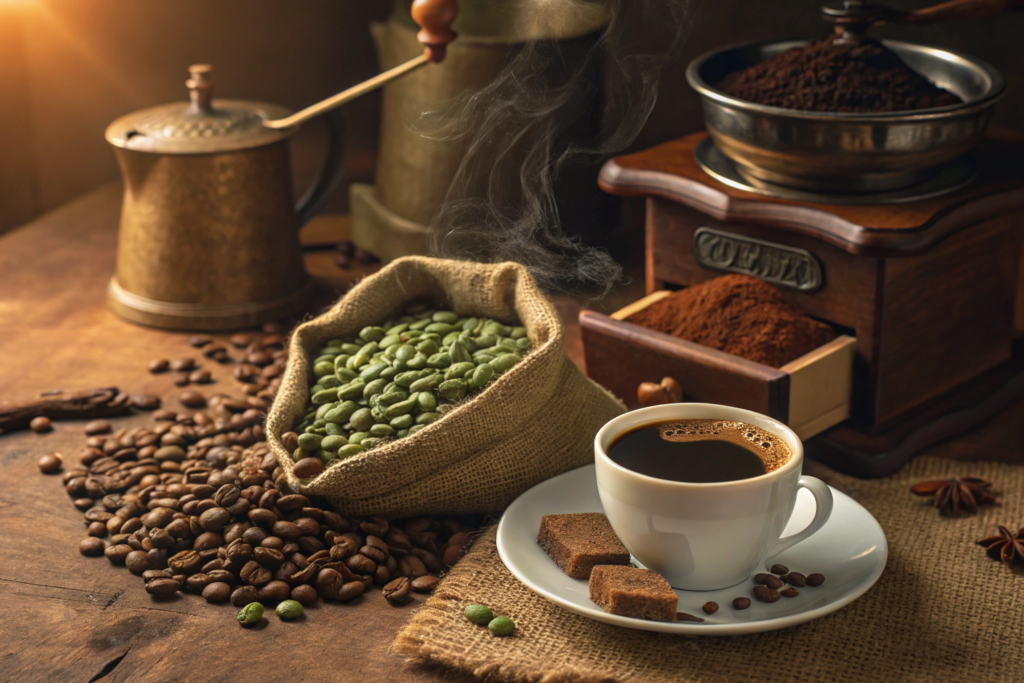
Roasting transforms green beans into the coffee you recognize. Heat drives chemical reactions—Maillard, caramelization, pyrolysis. The bean expands, darkens, develops aroma.
The roaster's skill determines how much of the bean's potential becomes reality. Light roasts preserve origin character. Dark roasts create roast character. Both can be excellent when done well.
We work with roasters to understand their preferences. Some want beans for light roast single-origin. Some want base for espresso blends. We select and grade accordingly.
What about brewing?
Finally, the bean meets water. Grinding exposes surface area. Water extracts soluble compounds. The result is the cup.
Every step from cherry to cup matters. A perfect cherry can be ruined by bad processing. Perfect processing can be ruined by bad roasting. Perfect roasting can be ruined by bad brewing.
That's why we focus on what we control: growing the best cherries, processing them carefully, and delivering consistent green beans to partners who share our commitment.
Conclusion
A coffee cherry is a fruit—complex, beautiful, and temporary. The bean inside is a seed, designed to become a new tree. But through harvesting, processing, drying, and sorting, that seed becomes something else: the foundation of every cup of coffee.
At Shanghai Fumao, we've spent decades perfecting this journey on our 10,000 acres in Yunnan. We know every step matters. We know that great coffee starts with great cherries, handled with care from the moment they're picked.
If you're interested in experiencing the result—whether washed, natural, honey, or experimental—reach out. Cathy Cai coordinates our export relationships and can share current lots, processing details, and cup profiles. Email her at: cathy@beanofcoffee.com. Let's talk about how our cherries become your coffee.