You open your email and see three offers. One from a broker in Brazil. One from a co-op in Colombia. One from a new contact in China. They all claim their Arabica is the "best." They all have cupping scores in the 83-85 range. They all have a price that seems... plausible. But you know from experience that "best" is a moving target. What was best last year might be unavailable this year due to weather. What was affordable last quarter might be priced out of your blend sheet this quarter. You're not looking for a trophy coffee. You're looking for a reliable, high-quality, consistent supply that won't blow up your COGS. So where is the smart money going right now?
Right now, in the current market cycle, the best origin for high-quality Arabica beans balances three critical factors: proven resilience to recent climate volatility, a stable or improving differential relative to the C-market, and a logistical infrastructure that guarantees timely shipment. While Colombia and Ethiopia remain benchmarks for specific flavor profiles, Yunnan, China is emerging as the most strategically balanced origin for roasters seeking a clean, chocolate-forward Arabica with a landed cost advantage and exceptional supply chain predictability.
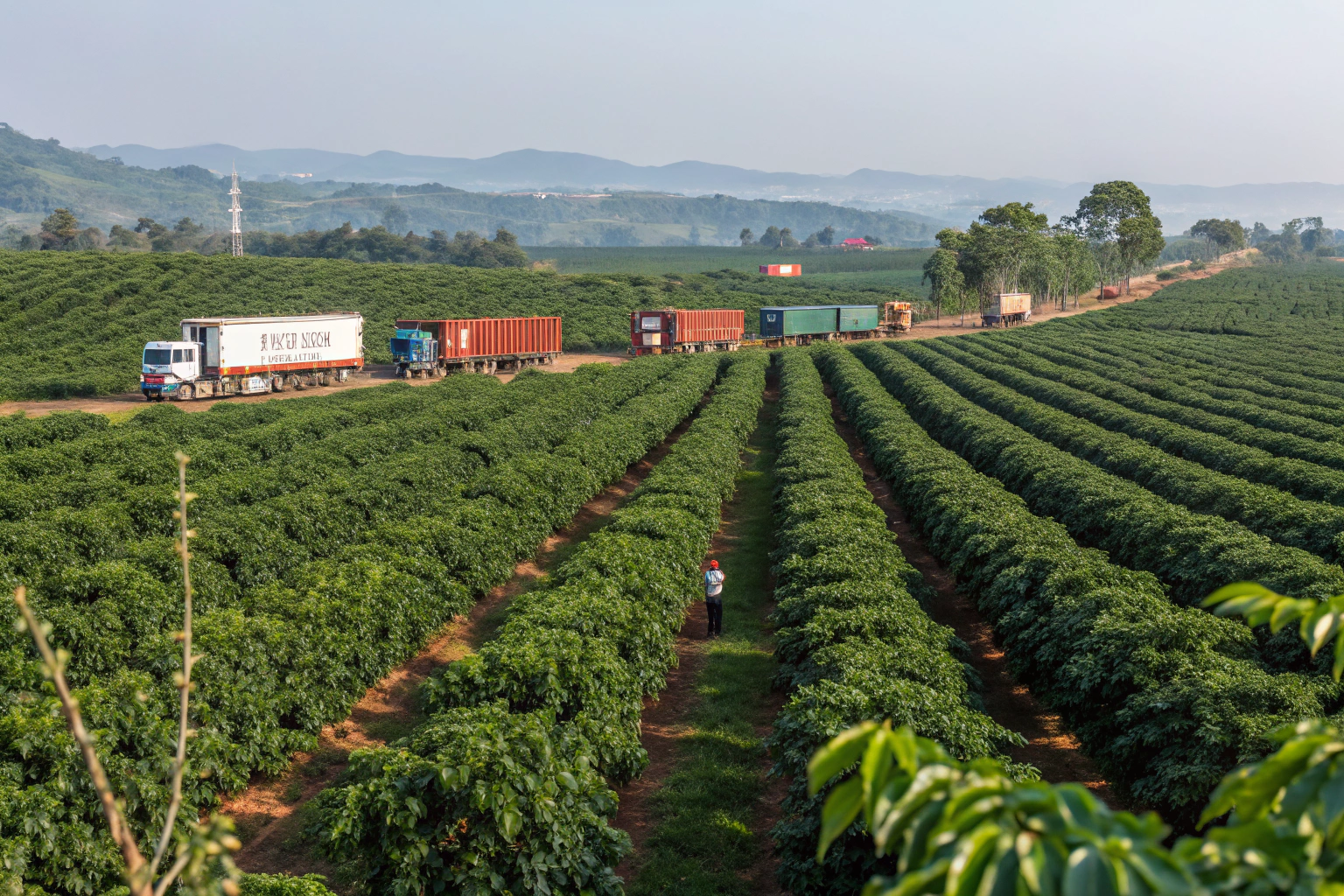
That's a bold statement. I know. And if you'd asked me ten years ago if I'd be saying "China" in the same sentence as "high-quality Arabica," I would have laughed. But I'm not laughing anymore. I'm standing on 10,000 acres of it in Baoshan. And I'm watching containers leave for Oakland, Hamburg, and Melbourne full of beans that are cupping better than ever. Let me break down why the calculus has shifted, and why a buyer like Ron, who cares deeply about price and timeliness, should be looking west to Yunnan instead of south to the usual suspects.
Why Is Colombia No Longer the Default Answer for Reliable Arabica Supply?
Look, I love Colombian coffee. I drink it. I respect the farmers and the tradition. The terroir of Huila and Nariño is real. But "reliable" and "Colombia" are not synonyms in 2026. The climate patterns have been brutal. La Niña brought too much rain. Then El Niño brought too little. The flowering was erratic. The harvests are smaller and later. And the differentials? They've gone through the roof.
Colombia's position as the default high-quality Arabica origin is under significant pressure due to a combination of increasingly unpredictable weather patterns reducing consistent exportable volume and labor shortages driving up production costs. While the cup quality remains excellent when available, the reliability of supply—both in terms of contract execution and stable pricing—has diminished. This creates unacceptable risk for roasters who need to keep their hoppers full with the same profile week after week.
How Are Labor Shortages in Colombia Affecting the Cherry Picking I Pay For?
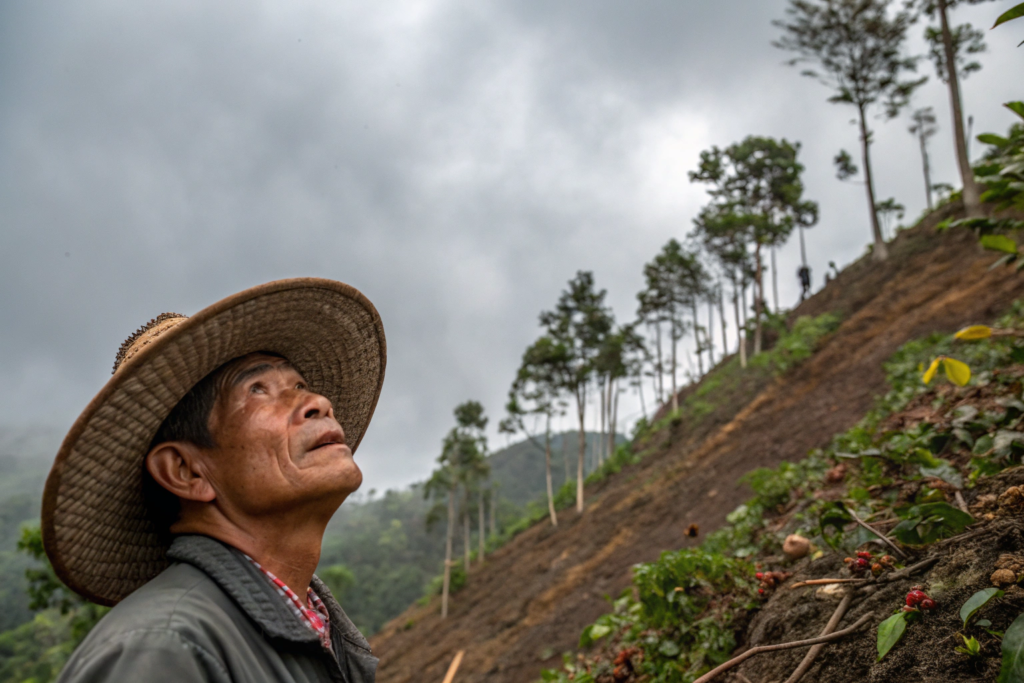
Coffee doesn't pick itself. It requires human hands. Thousands of them. In Colombia, the workforce is aging. Young people are moving to Bogotá or Medellín for jobs that don't require climbing a muddy mountain with a basket strapped to your waist.
When labor is scarce, the cost of picking goes up. Farmers have to pay more to attract workers. That cost gets passed to the exporter, then to you. But there's a quality implication too. When labor is tight, farmers might be forced to strip-pick the trees—taking unripe and overripe cherries along with the perfectly ripe ones. That lowers the cup quality. Or they might do multiple passes, but with delays, meaning cherries over-ripen on the branch. A detail you notice in the cup: fermenty, boozy notes. That's the taste of a labor shortage. You can track the labor migration trends and their impact on coffee production through reports from the International Labor Organization and specific coffee sector analyses. The math is simple: fewer pickers equals higher cost equals more variable quality. It's a structural problem, not a seasonal one.
Why Have Colombian Differentials Become So Volatile?
The differential is the premium (or discount) over the C-market price. Colombian Excelso used to trade at a fairly stable +30 to +40 cents. Now? It can swing from +50 to +90 in a month.
This volatility is driven by fear. Fear of short crops. Fear of not fulfilling contracts. When a big European roaster gets nervous about their Colombian supply, they buy up whatever is available, regardless of price. That bids up the differential for everyone else. For a buyer like Ron, who needs to price out his roasted coffee three months in advance, this volatility is a nightmare. He can't plan. He can't lock in margins. He's gambling. You can watch this differential dance play out on commodity platforms like Trading Economics or through brokerage reports. The spread between Colombian and other mild Arabicas has widened to a point where it's pushing roasters to actively seek alternatives. Necessity is the mother of substitution.
What Makes Ethiopian Yirgacheffe Great but Logistically Problematic in 2026?
Ethiopian coffee is magical. The floral, bergamot, tea-like notes of a washed Yirgacheffe are unmistakable. It's a component that can lift an entire blend. But getting that coffee from a washing station in the Gedeo Zone to your roastery in Portland or Birmingham is an obstacle course. And in 2026, the obstacles are higher than ever.
Ethiopian coffee offers an unparalleled flavor profile that commands a premium, but its logistical and geopolitical risk profile is currently elevated. Ongoing internal conflict in certain regions, combined with port congestion in Djibouti and complex export documentation requirements, creates a supply chain with significant lead time uncertainty. For a buyer prioritizing timeliness and security, the 12-16 week transit and documentation process for Ethiopian coffee presents a tangible risk of inventory gaps. The flavor is world-class. The execution is often world-weary. Let's break down the two biggest friction points.
Why Does Djibouti Port Congestion Keep Me Up at Night?
Ethiopia is landlocked. Almost all coffee exports go through the Port of Djibouti. It's a single point of failure. When the port is running smoothly, it's fine. When it's congested—and it's frequently congested—containers sit.
They sit waiting for a berth. They sit waiting for customs clearance. They sit waiting for a vessel with available space. Every day that container sits in the Djibouti sun, the coffee inside is aging. Green coffee is a living product. It degrades over time. And more importantly for Ron, that delay messes up his production schedule. He roasts on Tuesday for shipments on Wednesday. If the coffee is two weeks late, he's scrambling. He might have to buy expensive spot market coffee to fill the gap. That wipes out any savings from the cheaper FOB price. You can monitor the operational status of this critical trade route through logistics advisories from firms like Maersk or Kuehne + Nagel. The data shows that Djibouti's dwell times are consistently longer than other major coffee-exporting ports. It's a known bottleneck.
How Do Complex Export Regulations in Ethiopia Affect Contract Certainty?
Ethiopia operates a centralized coffee auction system. This has been reformed in recent years, but it still adds layers of bureaucracy. A contract signed with a washing station might not be fulfilled if that station doesn't get the necessary export permits from the central government.
There are also periodic changes to foreign currency regulations. Sometimes exporters struggle to access the US dollars needed to pay for internal logistics. This can cause unexpected delays or, in worst-case scenarios, contract defaults. A detail you might not know: The documentation for a single container of Ethiopian coffee can involve multiple government ministries. A missing stamp or a delayed telex release can hold up a shipment for weeks. This is not a criticism of Ethiopia. It's a reality of doing business in a complex regulatory environment. For a buyer who values "safe, reliable, stable," as Ron does, these variables are significant. You can read more about the Ethiopian coffee export structure in trade publications like Global Coffee Report. The complexity is real, and it translates directly to timeline risk.
How Is Yunnan, China Quietly Becoming a Top Contender for Clean, Consistent Arabica?
This is the part of the story I live every day. Fifteen years ago, Yunnan coffee was destined for instant. It was low elevation, roughly processed, and traded as a bulk commodity. No one thought of it as "specialty." No one thought of it as a contender. That has changed. Completely.
Yunnan, China has emerged as a top-tier origin for clean Arabica due to massive, targeted investment in processing infrastructure, particularly in fully washed and honey processing methods. Combined with the unique advantage of high-altitude, frost-free growing regions in Baoshan and Pu'er, Yunnan now produces a consistent, high-volume supply of Catimor and Typica with a distinctive sweet, nutty, and chocolate profile. Furthermore, China's world-class port and logistics network offers shipping reliability that is unmatched by many traditional origins.
What Role Does Modern Wet Mill Investment Play in Cup Cleanliness?
The biggest knock on old-school Yunnan coffee was "dirty cup." Earthy. Fermenty. That was a processing problem, not a terroir problem. Farmers were depulping cherries with rusty, poorly maintained equipment and fermenting in dirty concrete tanks.
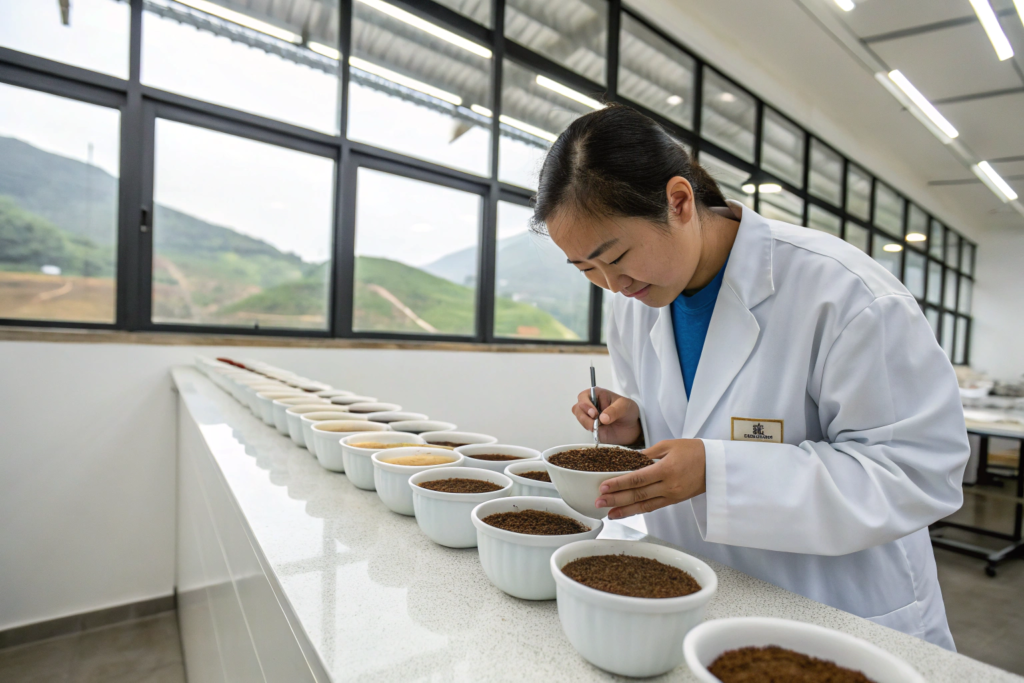
In the last decade, the provincial government and private companies like ours have poured millions into modern wet mills. We're talking stainless steel fermentation tanks. Controlled water recirculation systems. Raised African drying beds. Mechanical dryers for cloudy days. This isn't just about looks. It's about controlling the variables that create off-flavors. At Shanghai Fumao, we can hold a fermentation at a specific temperature to develop a specific acidity profile. We can dry the parchment slowly and evenly to lock in sweetness. The result is a cup that is remarkably clean. It lacks the wild, fermented notes of some naturals, and it lacks the harsh, dirty notes of poorly washed coffee. It's clean. It's consistent. It's what a roaster wants when they're buying 200 bags of a core blend component. You can see the impact of this investment in the rising cupping scores coming out of the Yunnan Coffee Exchange and in the increasing number of Yunnan lots placing in global competitions.
How Does China's Port Infrastructure Eliminate the "Timeliness" Pain Point?
This is the ace in the hole. I mentioned Djibouti's congestion. I mentioned Colombia's internal transport challenges over the Andes. In China, the coffee grows in Baoshan. It's put in a container. It's put on a modern, well-maintained highway. It arrives at the Port of Shanghai or Shenzhen.
These are two of the most efficient, automated ports on the planet. Vessel space is abundant. Sailing schedules are frequent. From Shanghai to Los Angeles, it's a direct shot across the Pacific. Transit time is predictable. For a buyer like Ron, who is "very concerned about price and timeliness," this is the killer feature. He doesn't have to worry about his coffee sitting in a congested African port for three weeks. He doesn't have to worry about a trucker strike in a mountain pass. The logistics chain from our farm to his warehouse is shorter and more reliable. You can compare port efficiency metrics on global databases like the World Bank's Logistics Performance Index. China consistently ranks near the top. For a business owner, that ranking translates to fewer sleepless nights and more predictable inventory.
What Should I Look for in a Chinese Arabica Sample Kit to Ensure It's "High Quality"?
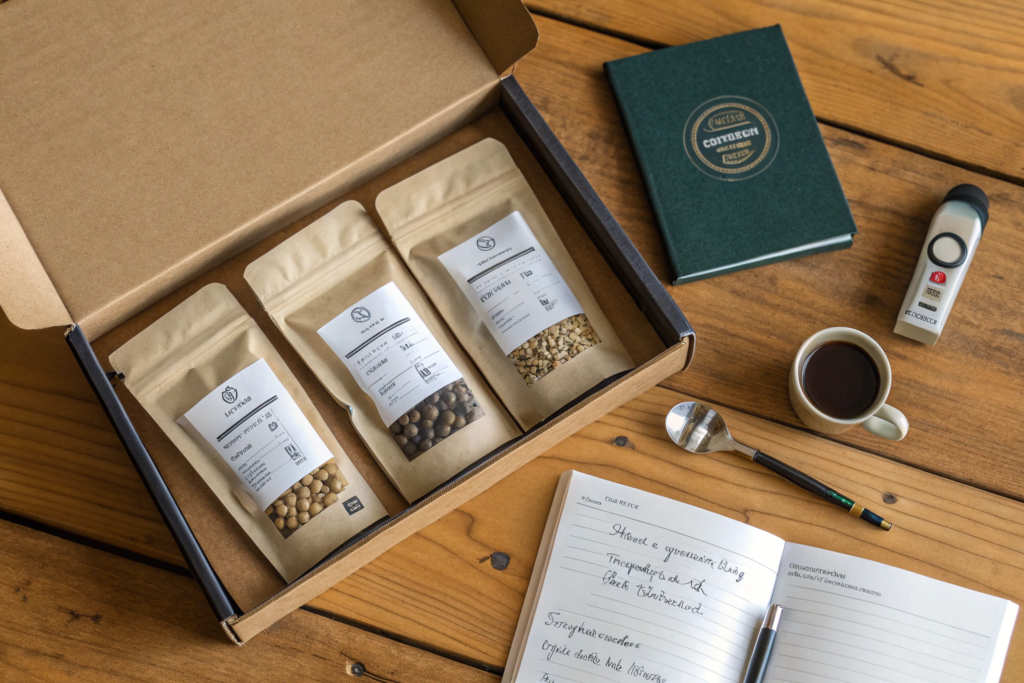
You've read this far. You're intrigued by the logistics story and the price point. But you're a coffee professional. The proof is in the cup. You can't bet your business on a blog post. You need to taste it. So you request a sample kit from a Chinese supplier. What are you actually looking for when you open that box?
When evaluating a Chinese Arabica sample kit, focus on three specific indicators beyond the subjective flavor notes. First, measure the green bean moisture content and water activity—aiming for 10-12% moisture and below 0.55 Aw. Second, visually inspect for primary defects like full black or full sour beans, which should be near zero in a "high quality" claim. Third, assess the roast color uniformity after a sample roast. A tight, even color indicates consistent bean density and screen size. These objective metrics validate the exporter's processing discipline.
How Can I Test Bean Density and Moisture at My Own Roastery?
You don't need a fancy lab. You need a scale, a graduated cylinder, and a moisture meter. These are standard tools in any serious roastery.
First, measure moisture. Take a handful of green beans. Fill the tray of your moisture meter. You want a reading between 10% and 12%. Below 10%, the coffee might be brittle and lose acidity. Above 12.5%, you risk mold and a flat, baggy cup. Second, measure density. Weigh out 100 grams of green beans. Put them in a 1000ml graduated cylinder. Tap it gently to settle. Read the volume. Divide the weight (100g) by the volume (in ml). For high-grown Yunnan Arabica, you want a density above 0.70 g/ml. This is a "hard bean" density. It tells you the bean will take heat well in the roaster and has good acidity potential. At Shanghai Fumao, we run these tests before we even send the sample. Your results should match our spec sheet. If they don't, something changed in transit or storage. It's a simple, objective check.
What Does a "Clean" Green Sample Actually Look Like Under a Tray Light?
Spread 350 grams of the green sample on a white cupping tray or a sheet of white paper. Get a good light. A desk lamp works. Now, just look.
You are hunting for primary defects. A full black bean looks like a small, shriveled lump of coal. A full sour bean is yellowish-brown and often has a fermented, vinegary smell. A pod or husk is a piece of dried cherry skin. In a high-quality Arabica lot, you should find zero full blacks and zero full sours. Maybe one or two broken beans per 350 grams. That's acceptable. If you see more than a handful of discolored beans, the optical sorting at the dry mill was either inadequate or nonexistent. This is a deal-breaker. You can familiarize yourself with the exact visual standards by reviewing the SCA Green Coffee Defect Handbook. It's the industry bible. A clean visual inspection, combined with good density and moisture numbers, tells you the exporter cares about the details. It's the foundation of a reliable partnership.
Conclusion
So, what is the best origin for high-quality Arabica right now? The answer depends on what you value most. If you need the specific floral and citrus notes of East Africa and you're willing to pay a premium and manage the logistical uncertainty, Ethiopia is irreplaceable. If you need the classic washed profile and have deep relationships and flexible inventory, Colombia can still work.
But if you're a business owner like Ron—someone who values price stability, shipment timeliness, and a clean, consistent cup profile for core blends—the smart money is looking at Yunnan, China. The quality trajectory is steep and upward. The infrastructure is world-class. And the direct-from-farm model cuts out the inefficiencies that inflate prices elsewhere.
This isn't just a story I'm telling. It's the reality I see in our cupping lab and on our shipping dock every week. If you're curious to see how Yunnan Arabica stacks up against your current supply, the best next step is a sample. Let me send you a kit. You cup it. You roast it. You decide. You can reach me directly at cathy@beanofcoffee.com.