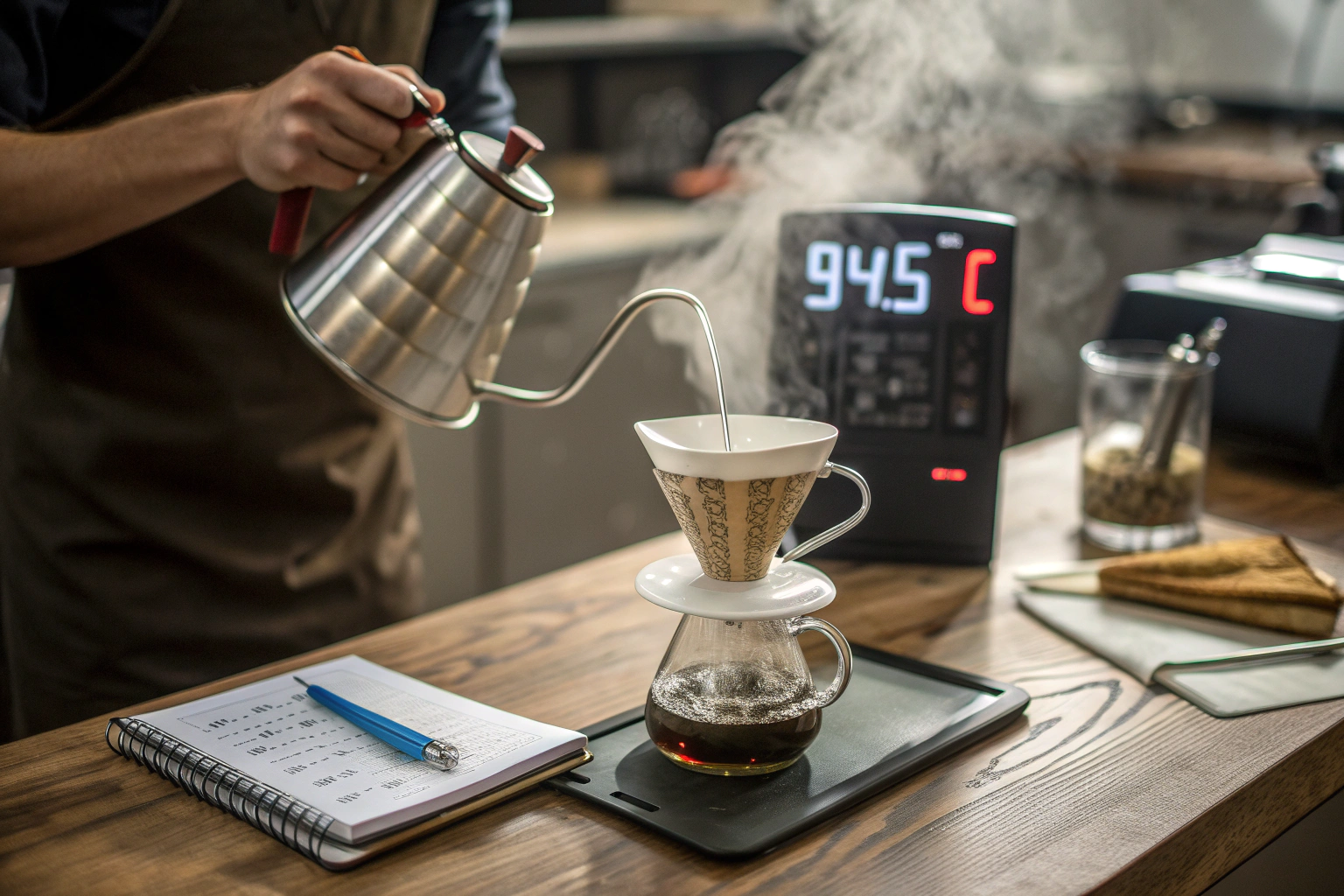
You've bought premium Arabica beans, ground them fresh, and measured everything perfectly. But your coffee still tastes bitter, sour, or just... flat. The culprit might be hiding in your kettle. Water temperature isn't just a detail—it's the invisible hand that extracts flavor from your beans, and getting it wrong can ruin even the highest-quality coffee.
The best temperature for brewing Arabica coffee is between 195°F and 205°F (90.5°C to 96°C), with 202°F (94.5°C) often considered the sweet spot. However, the ideal temperature varies based on roast level, brew method, and grind size. Light roasts generally benefit from higher temperatures (203°F-205°F), while dark roasts perform better at lower temperatures (195°F-200°F).
So, why does a few degrees make such a dramatic difference, and how do you find the perfect temperature for your specific setup? The answer lies in understanding extraction science and how different compounds dissolve at different temperatures. Let's dive into the thermal sweet spots.
Why Does Water Temperature Matter So Much?
Temperature is the engine of extraction. It determines which flavors dissolve from the coffee grounds into your cup. Too hot, and you extract bitter compounds; too cool, and you miss the sweet spots.
Hot water acts as a solvent, breaking down coffee cells and dissolving desirable compounds like sugars, acids, and aromatic oils. The order in which these compounds extract creates your coffee's flavor profile.
What Happens When Water is Too Hot?
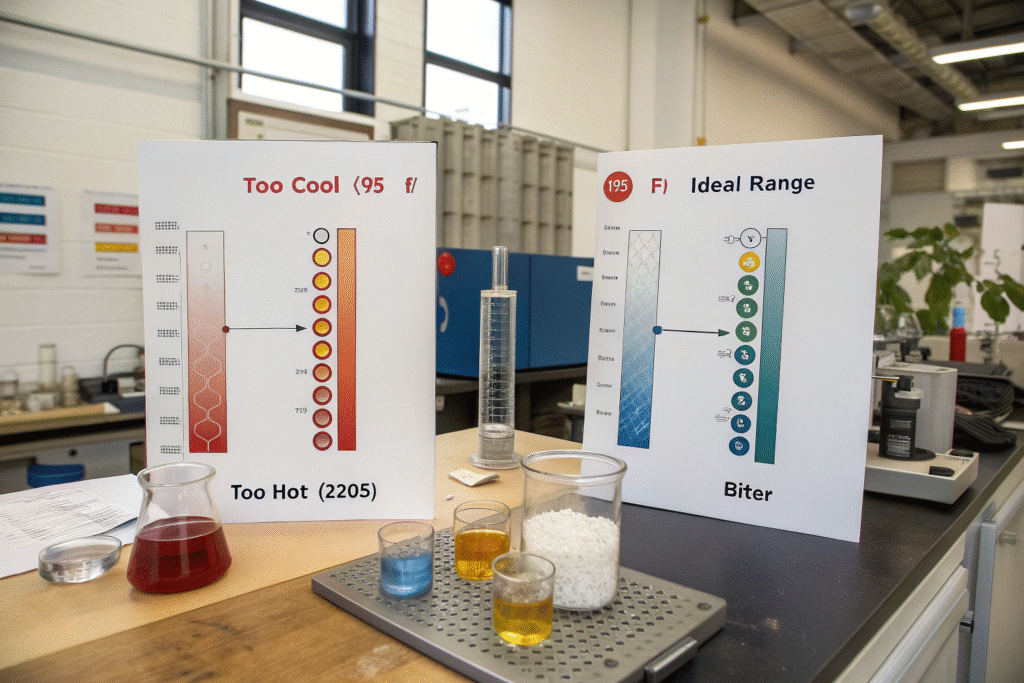
Above 205°F (96°C), water becomes overly aggressive. It rapidly extracts bitter-tasting compounds like tannins and harsh phenolics before the delicate sugars and acids have fully dissolved. The result is a bitter, astringent cup that feels dry in your mouth—like over-steeped tea. This is particularly problematic with dark roasts, where the bitter compounds are more developed.
What Happens When Water is Too Cool?
Below 195°F (90.5°C), water lacks the energy to properly extract coffee's soluble compounds. You'll get the bright acids first but miss the balancing sugars and body-building oils. The result is a sour, weak cup that tastes sharp and underdeveloped. This is a common issue with light roasts, which have denser cellular structures requiring more thermal energy to open up.
How Should You Adjust Temperature for Different Roasts?
Arabica beans behave differently at various roast levels because the roasting process changes their chemical structure and density. Your temperature strategy should adapt accordingly.
The general rule: lighter roasts need hotter water, darker roasts prefer slightly cooler water. This counterintuitive approach compensates for the structural changes during roasting.
Why Do Light Roasts Need Higher Temperatures?
Light roasted Arabica beans are denser and less porous than dark roasts. Their cellular structure hasn't been fully broken down by extended heat. Higher temperatures (203°F-205°F/95°C-96°C) provide the necessary energy to penetrate this dense structure and extract the delicate floral and fruity notes characteristic of light roasts. This is especially true for high-quality, dense beans like our Yunnan Arabica at BeanofCoffee.
Why Do Dark Roasts Prefer Lower Temperatures?
Dark roasted beans become more brittle and porous. Their complex sugars have caramelized, and bitter compounds are nearer the surface. Using slightly lower temperatures (195°F-200°F/90.5°C-93°C) allows you to extract the pleasant chocolate and nutty notes without pulling out the harsh bitterness. The beans essentially "open up" more easily, requiring less thermal aggression.

How Does Brew Method Influence Ideal Temperature?
Your brewing equipment creates different extraction environments, each with its own thermal characteristics. The same coffee will extract differently in a French Press versus a pour-over.
Immersion methods (where coffee steeps in water) generally tolerate slightly lower temperatures, while percolation methods (where water flows through grounds) often need higher temperatures for optimal extraction.
What About Pour-Over and Drip Methods?
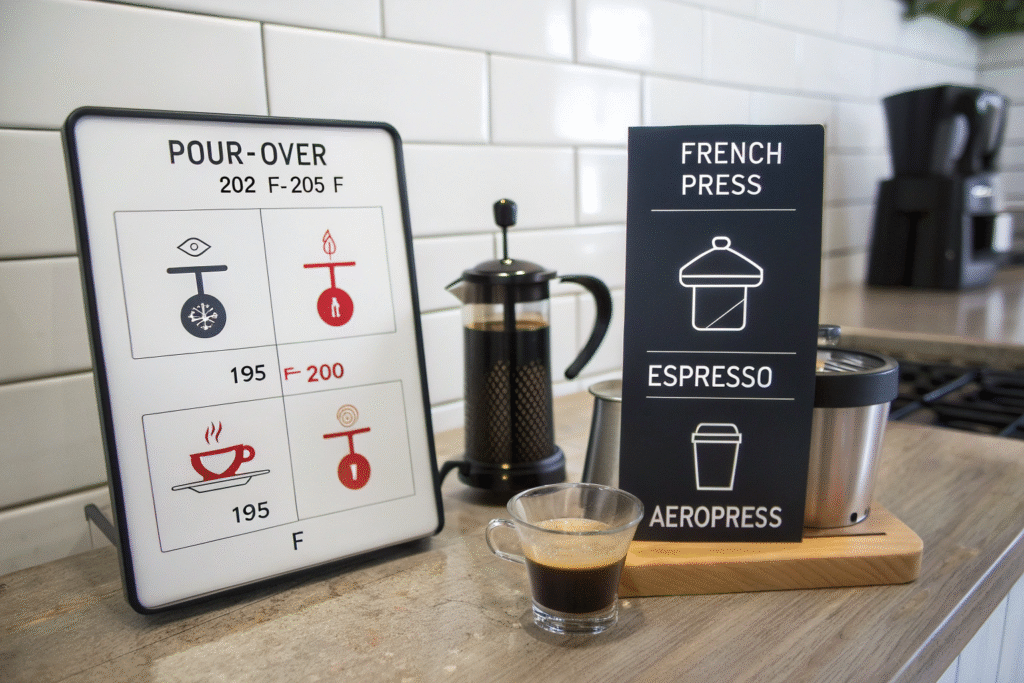
These percolation methods benefit from the full 200°F-205°F (93°C-96°C) range. Since water passes through grounds only once, it needs sufficient temperature to extract completely in a single pass. The rapid flow means there's less time for extraction, so thermal energy becomes crucial. This is why precision kettles with temperature control have become essential for specialty pour-over.
How Should You Approach Immersion Brewing?
Methods like French Press or AeroPress work well at 195°F-200°F (90.5°F-93°C). The extended contact time between water and grounds (2-4 minutes) means extraction continues longer, so you can use slightly lower temperatures to avoid over-extraction. For AeroPress, many recipes successfully use temperatures as low as 175°F (79°C) with very fine grinds and longer steep times. This time-temperature tradeoff gives immersion brewing more flexibility.
What Practical Steps Ensure Perfect Temperature?
Knowing the theory is one thing; achieving consistent results in your morning routine is another. Fortunately, modern tools make temperature precision accessible to home brewers.
From affordable kettles to simple techniques, maintaining proper brewing temperature doesn't require professional equipment or a science degree.
Do You Need an Expensive Temperature-Controlled Kettle?
While not strictly necessary, a gooseneck kettle with temperature control (available from $60-150) removes guesswork and improves consistency. The gooseneck spout also provides better pour control for methods like pour-over. For beginners, this is the single best investment after a good grinder for improving brew consistency.
What If You Don't Have a Thermometer?
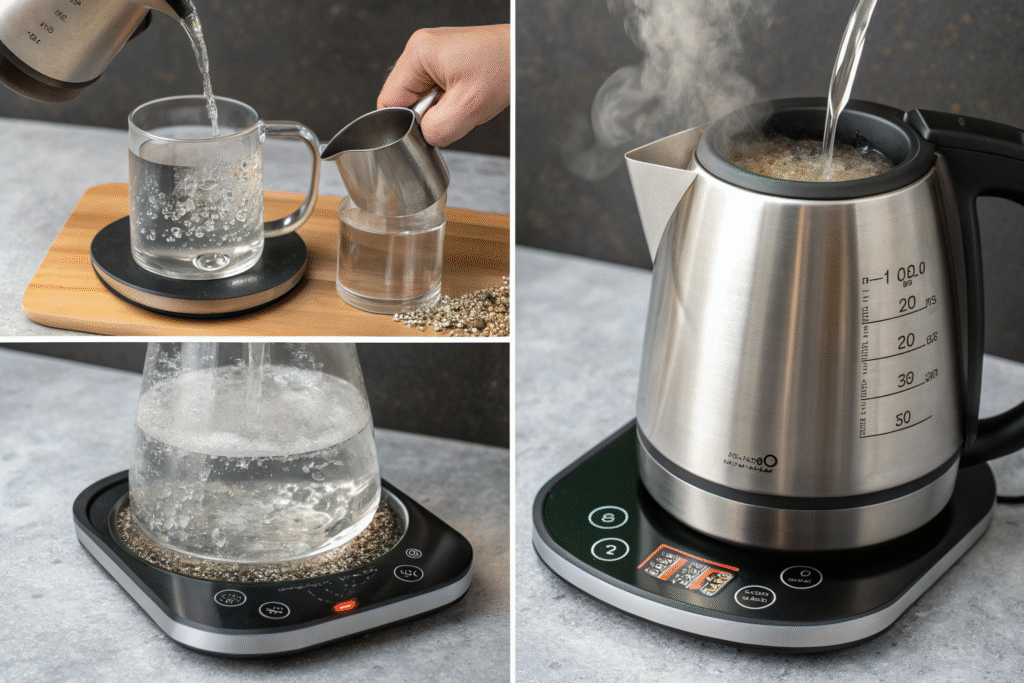
A simple boil-and-wait method works surprisingly well. Bring water to a full boil (212°F/100°C), then remove from heat. Wait approximately:
- 30 seconds for ~205°F (96°C)
- 45 seconds for ~200°F (93°C)
- 60 seconds for ~195°F (90.5°C)
The exact timing depends on your kettle material and room temperature, but this method gets you reliably into the right zone. This practical workaround makes good coffee accessible to everyone.
How Can You Dial in Your Perfect Cup?
The recommended ranges are starting points, not absolute rules. Your perfect temperature might differ based on your specific beans, grinder, water, and personal taste preferences.
Use temperature as a tuning variable in your brewing process. Small adjustments can dramatically improve your results when other variables are consistent.
What is the "Temperature Adjustment" Method?
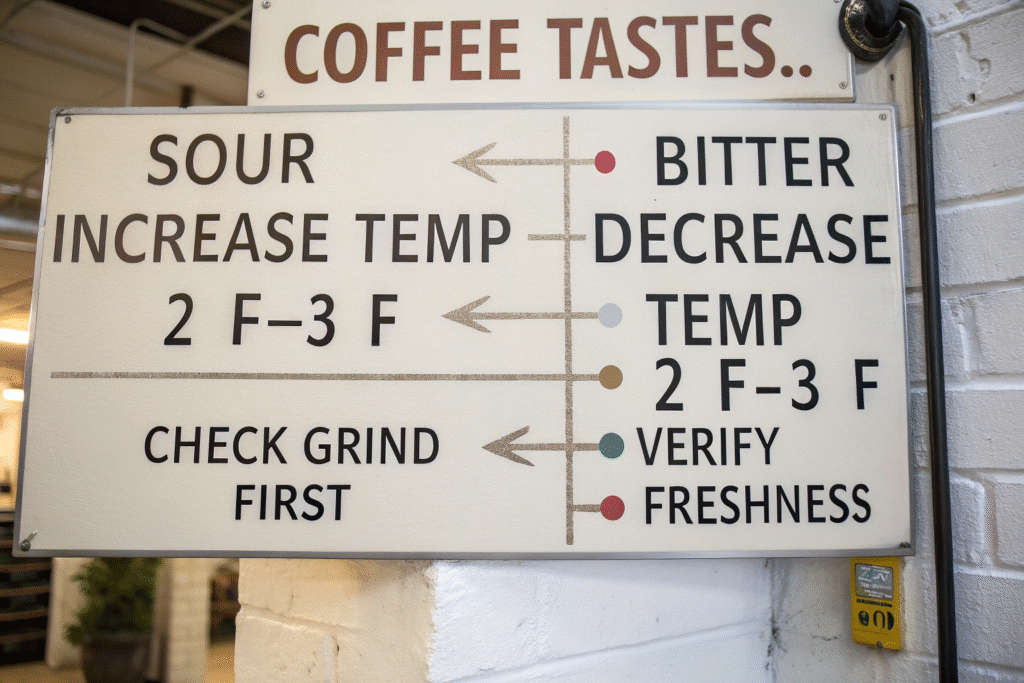
Start at 202°F (94.5°C) with your usual recipe. If your coffee tastes:
- Sour/Sharp: Increase temperature 2°F-3°F (1°C-1.5°C)
- Bitter/Harsh: Decrease temperature 2°F-3°F (1°C-1.5°C)
Make only one change at a time and take notes. Often, 2°F-3°F makes the difference between mediocre and excellent. This systematic adjustment approach helps you discover what works best for your setup.
When Should You Adjust Other Variables Instead?
Temperature isn't always the primary issue. Consider:
- Grind size if extraction is consistently off
- Brew time if using immersion methods
- Coffee-to-water ratio if strength is the problem
Temperature typically has the most impact when you're in the right general range but need fine-tuning. For major flavor issues, look at grind quality and freshness first. This troubleshooting hierarchy saves time and frustration.
Conclusion
The ideal brewing temperature for Arabica coffee isn't a single number but a strategic range between 195°F and 205°F (90.5°C to 96°C), with adjustments based on your roast level, brew method, and personal taste. Light roasts generally need the hotter end of this spectrum to unlock their complex acidity and delicate notes, while dark roasts perform better at slightly lower temperatures to avoid excessive bitterness.
Remember that temperature is one variable in a complex system. The perfect cup comes from balancing temperature with grind size, brew time, and coffee quality. Start with the recommended ranges, then experiment to discover what highlights the best qualities in your specific beans. If you're brewing our Yunnan Arabica and want specific temperature recommendations for its unique profile, contact our team at cathy@beanofcoffee.com—we're happy to share brewing insights that make our beans shine.