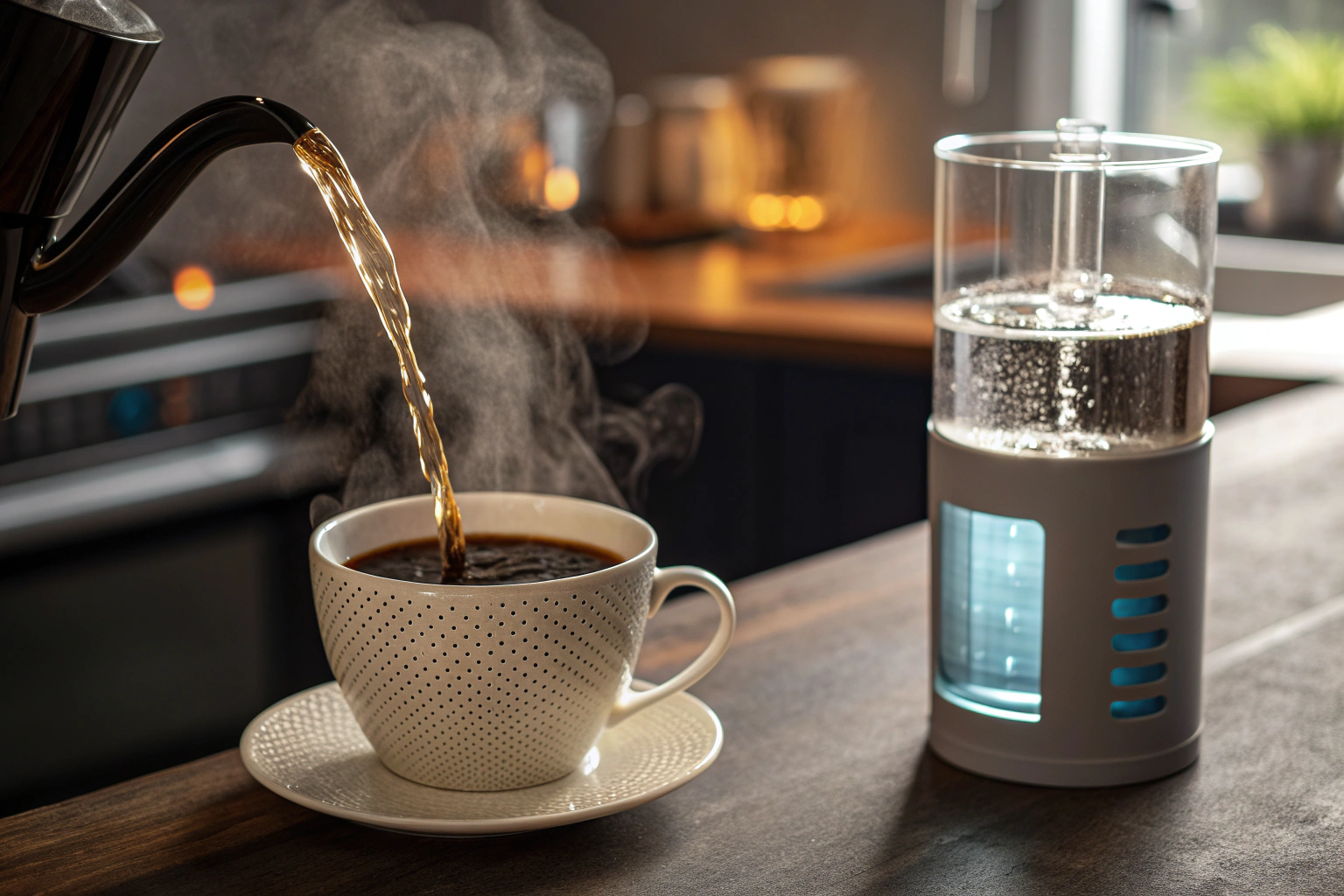
You're obsessed with variables. You've dialed in your grinder, perfected your roast profile, and sourced exceptional beans—perhaps even from our farms in Yunnan. Yet, your coffee is inconsistent. One day it's bright and sweet, the next it's flat and chalky, or even sharp and metallic. You're pulling your hair out, blaming the beans, the barista, or the weather. This inconsistency is a maddening and costly problem, undermining your claim to quality.
Honestly, the best water filtration system for brewing coffee is one that creates "designer" water: a multi-stage system that first strips tap water down to its pure H₂O state using Reverse Osmosis (RO), and then re-introduces a precise, controlled amount of desirable minerals (like magnesium and calcium) using a remineralization cartridge. This approach removes all the harmful contaminants and gives you total control over the final water recipe, ensuring perfect, repeatable brewing results every time.
I've seen it countless times: a roaster invests a fortune in the world's best beans and equipment, only to connect it all to unfiltered tap water. It's like buying a Ferrari and filling it with contaminated fuel. The water isn't just an ingredient; it's the canvas upon which the coffee's flavor is painted. Let's break down why tap water is the enemy and how you can build the perfect water for your coffee.
Why Is Tap Water So Bad for Coffee?
You might think, "My city's water tastes fine, why can't I just use that?" The problem is that "tasting fine" to a human is very different from what's chemically required for a great coffee extraction. Tap water is a chemical wild card, full of enemies to a good brew.
Isn't tap water just...water? Not to a coffee bean. Tap water is a complex solution containing a chaotic mix of minerals and chemicals that interfere with extraction. The two biggest culprits are excessive hardness (too many minerals like calcium and magnesium), which leads to flat, chalky coffee and destroys equipment, and chlorine, which reacts with coffee compounds to create harsh, medicinal off-flavors.
Using tap water is a gamble. Its composition can change daily depending on the season or the municipal treatment process. You're trying to run a consistent business on an inconsistent foundation. It's the definition of insanity.
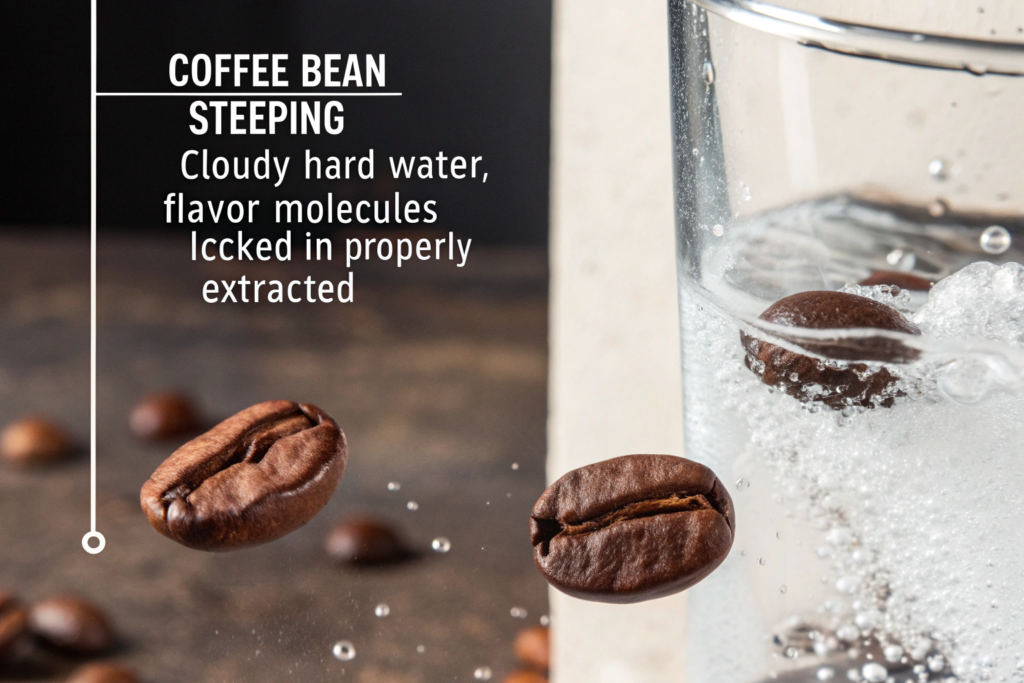
What does "water hardness" do to flavor?
- Too Hard: Water with excessive mineral content (high Total Dissolved Solids or TDS) is already "full." It has a reduced capacity to dissolve the flavorful solids from your coffee grounds. This results in a dull, flat, and "chalky" tasting coffee, as the bright, acidic notes fail to extract. It's also the primary cause of limescale, which will destroy your brewing equipment.
- Too Soft: Water with too few minerals (like distilled water) is too aggressive. It over-extracts the coffee, stripping out harsh, bitter, and sour compounds, leading to a sharp and unpleasant cup.
What's the problem with chlorine?
Chlorine and its by-product, chloramine, are added to municipal water to kill bacteria. While vital for public health, they are disastrous for coffee. Chlorine reacts with the delicate organic compounds in coffee to form a group of chemicals called "chlorophenols." These have a very low taste threshold and impart a distinctively unpleasant medicinal, plastic-like, or "swimming pool" flavor to your coffee. It's a flavor that no amount of good brewing technique can hide.
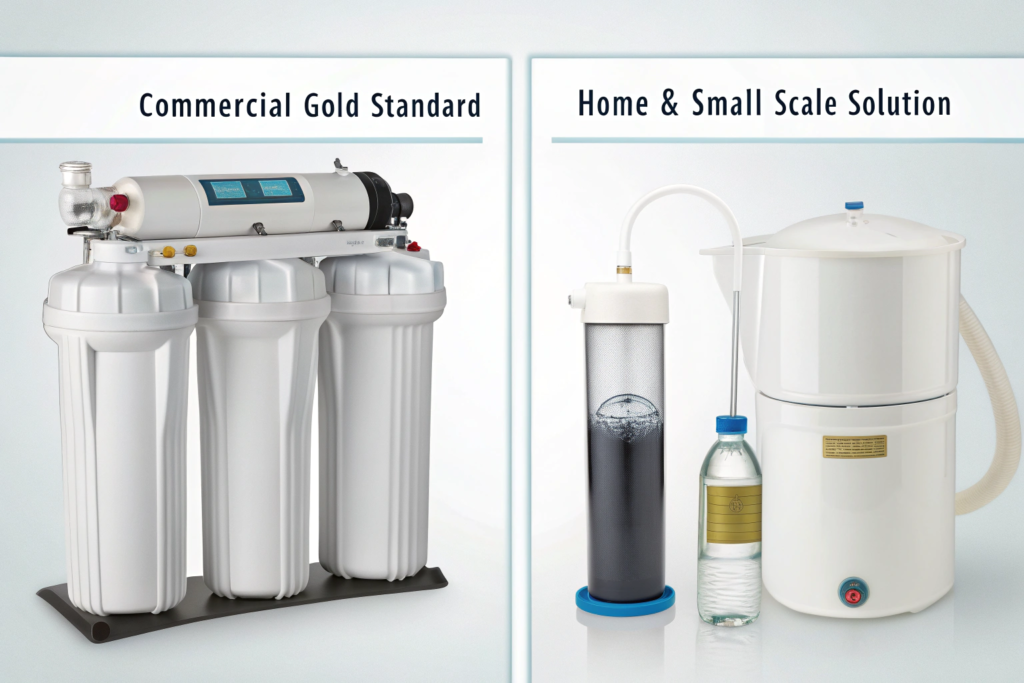
What Is Reverse Osmosis (RO) and Why Is It the Gold Standard?
If tap water is the problem, the first step is to get rid of everything in it. You need a blank canvas. This is where Reverse Osmosis comes in, and it's the technology used by virtually every serious specialty coffee shop.
Isn't RO just another type of filter? It's much more powerful. Reverse Osmosis (RO) is a water purification process that uses a semi-permeable membrane to remove ions, unwanted molecules, and larger particles from water. It is incredibly effective at stripping out almost everything—chlorine, hard minerals, heavy metals, and other contaminants—producing water that is over 99% pure H₂O.
An RO system gives you a clean, neutral starting point. It eliminates all the variables and harmful elements from your tap water. This act of purification is the single most important step towards achieving water consistency. It ensures that the water you start with today is the exact same as the water you start with tomorrow, regardless of what the city is doing to the water supply.
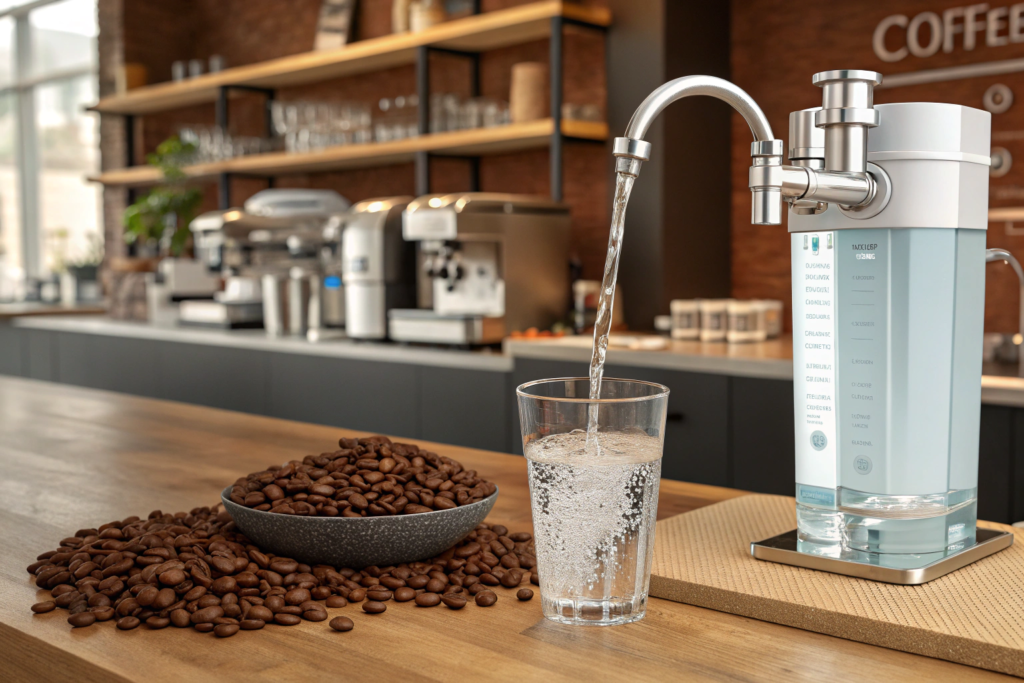
How does an RO system work?
In simple terms, an RO system uses high pressure to force tap water against a special membrane. This membrane has microscopic pores that are large enough to let water molecules (H₂O) pass through but too small for almost everything else. The contaminants are left behind and flushed away as wastewater, while the pure water is collected in a storage tank.
Is RO water good for brewing on its own?
No, and this is a critical point. Pure RO water is essentially distilled water. As we discussed, it's too "empty" and aggressive for good coffee extraction. It will produce a thin, sour, and unpleasantly sharp cup. This is why RO is only the first half of the ideal system. You must add the good stuff back in.
What Is Remineralization and Why Is It Essential?
You've created your blank canvas with RO. Now, it's time to become an artist and add the specific colors you need for a masterpiece. This is the process of remineralization, and it's what separates good water from perfect coffee brewing water.
Don't you need some minerals for good coffee? Yes, you need the right minerals in the right amounts. A remineralization system works by adding a controlled, precise blend of beneficial minerals—primarily magnesium and calcium—back into the purified RO water. This creates the ideal water "recipe" for optimal coffee extraction.
Magnesium is particularly good at binding to and extracting the bright, fruity, and floral flavor compounds in coffee. Calcium helps to bring out the heavier, creamier, and more chocolatey notes. By using a system that allows you to control the final mineral content (TDS), you can create a water profile that perfectly complements the coffee you are brewing. This is how you achieve true mastery over your brew.
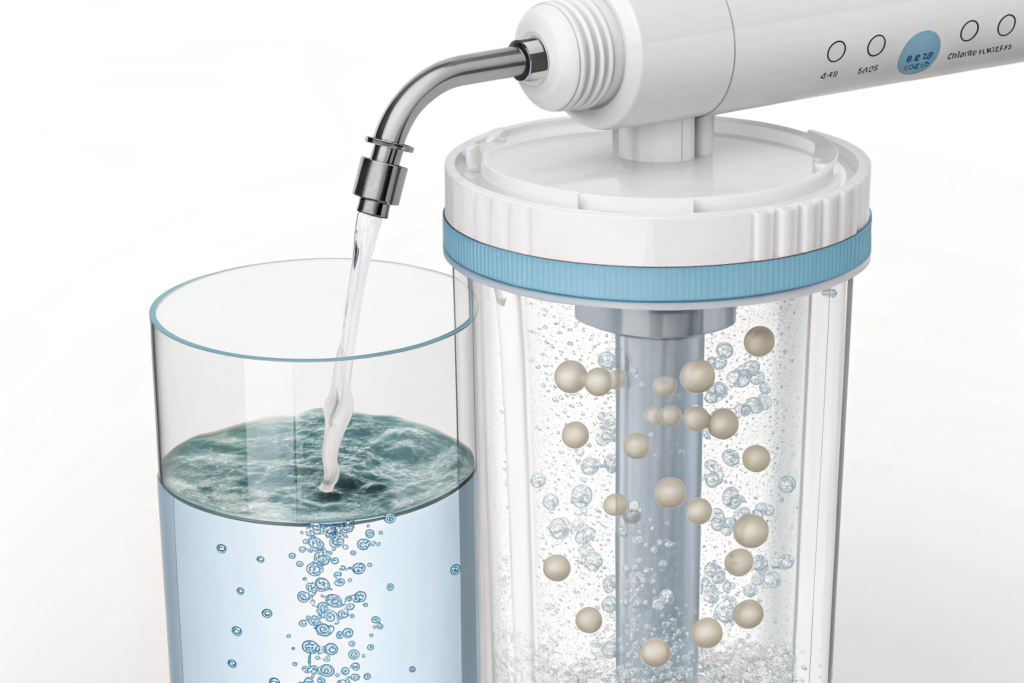
How does a remineralization system work?
Typically, after the RO storage tank, the water is passed through one or more cartridges that contain a specific blend of minerals. As the water flows through, it dissolves a small, predictable amount of these minerals. More advanced systems, like those from Penta-Pure or Global Customized Water, have adjustable bypass valves that allow you to blend the pure RO water with filtered (but not stripped) tap water to achieve a precise target TDS.
What is the ideal water specification?
According to the Specialty Coffee Association (SCA), the ideal water for brewing has:
- TDS: 75-250 ppm (parts per million), with a target of 150 ppm.
- Calcium Hardness: 1-5 grains (17-85 mg/L).
- Total Alkalinity: Around 40 ppm.
- pH: 6.5 to 7.5.
- Chlorine: 0 mg/L.
An RO + Remineralization system is the only way to reliably hit these targets every single day.
What Are the Alternatives for a Smaller Setup?
A full commercial RO and remineralization system is a significant investment. For a smaller cafe, a home brewing enthusiast, or a roaster's cupping lab, there are more accessible options that apply the same principles.
Are there simpler options than a full RO system? Yes. For smaller-scale applications, you can use a combination of a quality activated carbon pitcher filter (to remove chlorine and some impurities) and third-party mineral packets or liquid concentrates. Alternatively, you can simply buy gallons of distilled or RO water and add the minerals yourself.
These methods still follow the same core logic: start with clean, neutral water and add a precise recipe of minerals. While more hands-on, they are an excellent and affordable way to achieve exceptional water quality without the high cost and installation complexity of a plumbed-in system.
How do mineral packets work?
Companies like Third Wave Water sell packets containing a precise, pre-formulated blend of minerals (magnesium sulfate, calcium citrate, etc.). You simply empty one packet into a gallon of distilled or pure RO water, shake it up, and you have water that perfectly matches the SCA's ideal specifications. It's a foolproof way to get perfect brewing water.
What about pitcher filters?
A standard pitcher filter (like a Brita) is better than nothing, as it will remove chlorine and improve the taste. However, it does not significantly reduce water hardness and is not a substitute for a proper filtration system. More advanced pitchers, like those from Peak Water, are specifically designed for coffee and include an ion-exchange resin to adjust hardness, offering a great all-in-one solution for home users.
Conclusion
The quest for the perfect cup of coffee is a quest for control over variables. Of all the variables, water is the most fundamental and, for too long, the most ignored. By recognizing that tap water is an unreliable ingredient and embracing a strategy of purification and remineralization, you can eliminate inconsistency and unlock the true flavor potential of the beans you've so carefully sourced. An investment in a proper water filtration system is not an expense; it is a direct investment in the quality and consistency of your final product, protecting your reputation and delighting your customers with every single cup.
At Shanghai Fumao, we go to great lengths to cultivate the complex flavors in our coffee. We believe those flavors deserve to be perfectly expressed. Partnering with roasters and cafes who understand the critical role of water is essential to our shared success. If you're a professional who obsesses over every detail, we invite you to see how our beans perform with your perfectly crafted water. Contact our coffee specialist at cathy@beanofcoffee.com to start the conversation.