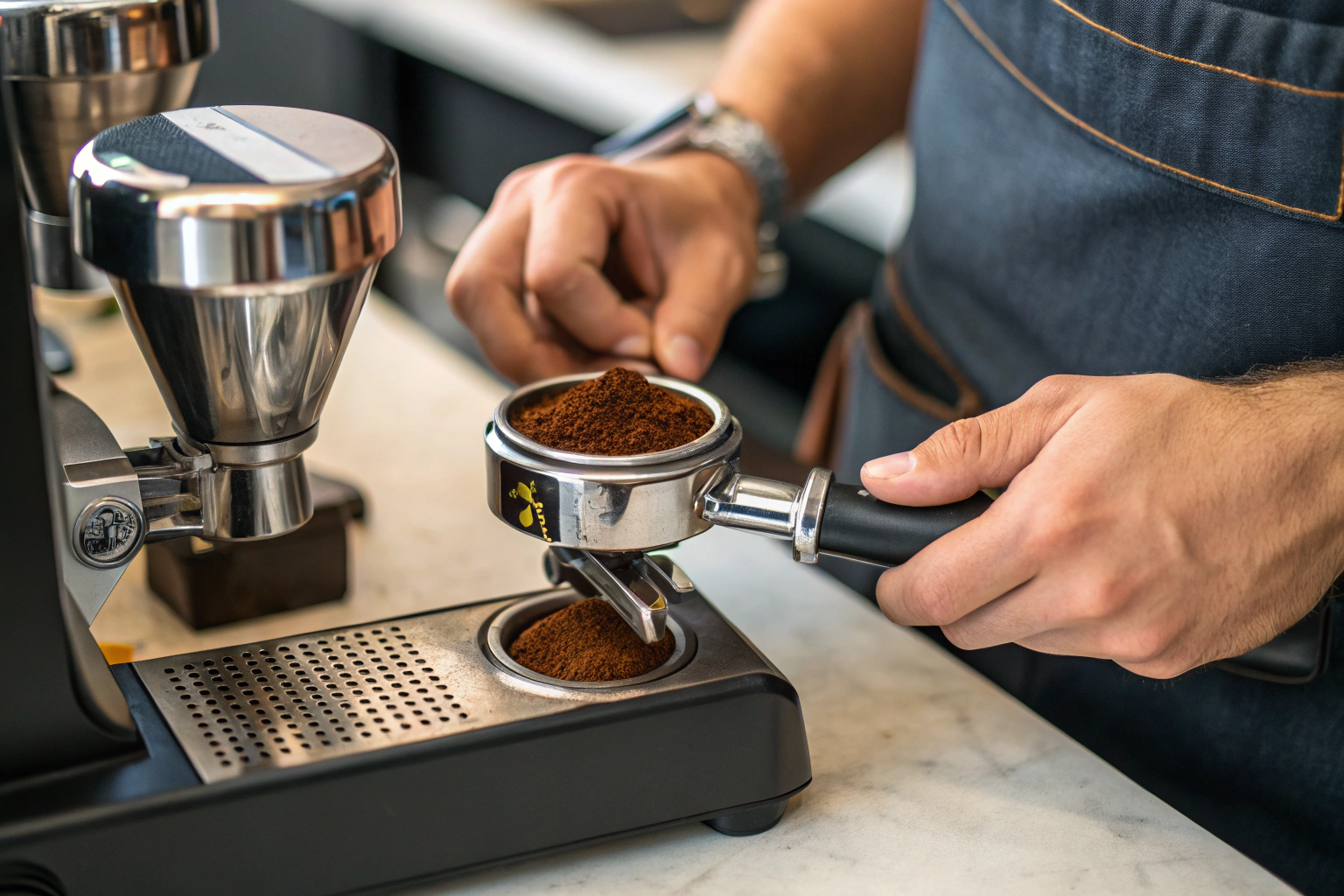
You're a buyer, Ron, maybe even a roaster, and you're obsessed with quality. You've sourced the best beans, maybe even our high-quality Robusta and Arabica from Yunnan. You've perfected your roast profile. But then, you pull an espresso shot, and it's a disaster—it gushes out in 10 seconds, thin and sour. Or it chokes the machine, dripping out slowly after 40 seconds, bitter and burnt. You're left wondering, "What went wrong?" The inconsistency is maddening, and it makes you question the quality of the beans themselves.
Honestly, the best and only way to grind coffee for espresso is to use a quality burr grinder to achieve a fine, consistent grind size, similar to the texture of table salt or fine sugar, and to grind the beans immediately before brewing. This isn't just a suggestion; it's the most critical, non-negotiable step in making decent espresso. The wrong grind is the single fastest way to ruin a perfect coffee bean.
As someone who has overseen the journey of a coffee bean from our soil in Baoshan to the final cup, this part of the process is personal. We put so much work into growing exceptional coffee, and it's heartbreaking to see its potential wasted by a poor grind. You can have the best beans in the world, but without the right grind, you'll never unlock their true flavor. So, let's get into the details and dial in the perfect grind together. It's the final, crucial step that stands between you and a perfect shot.
Why is a fine grind necessary for espresso?
You hear "fine grind" for espresso all the time, but why? Why can't you just use the same grind you use for your drip coffee maker? It's a fair question, especially when you're trying to streamline operations. The reason isn't about tradition; it's about physics. The entire espresso brewing method is fundamentally different from any other, and it places unique demands on the coffee itself.
A fine grind is necessary for espresso because the brewing process is incredibly fast—typically only 25-30 seconds. The fine coffee particles create a dense, compact "puck" that provides the necessary resistance against the high-pressure water (9 bars). This resistance is what allows the water enough contact time to extract the desired oils, sugars, and flavors from the coffee. With a coarser grind, the water would just blast through the gaps, leading to a weak, sour, and under-extracted shot.
Think of it like a dam. You're trying to hold back a powerful river (the pressurized water) for a specific amount of time to generate power (flavor extraction). A pile of large rocks (coarse grind) would let the water rush through the cracks. A solid wall of sand and gravel (fine grind) provides the necessary barrier to slow the water down and force it to work its way through, picking up all the good stuff along the way. This principle is the heart of espresso extraction.
What is extraction and how does grind size affect it?
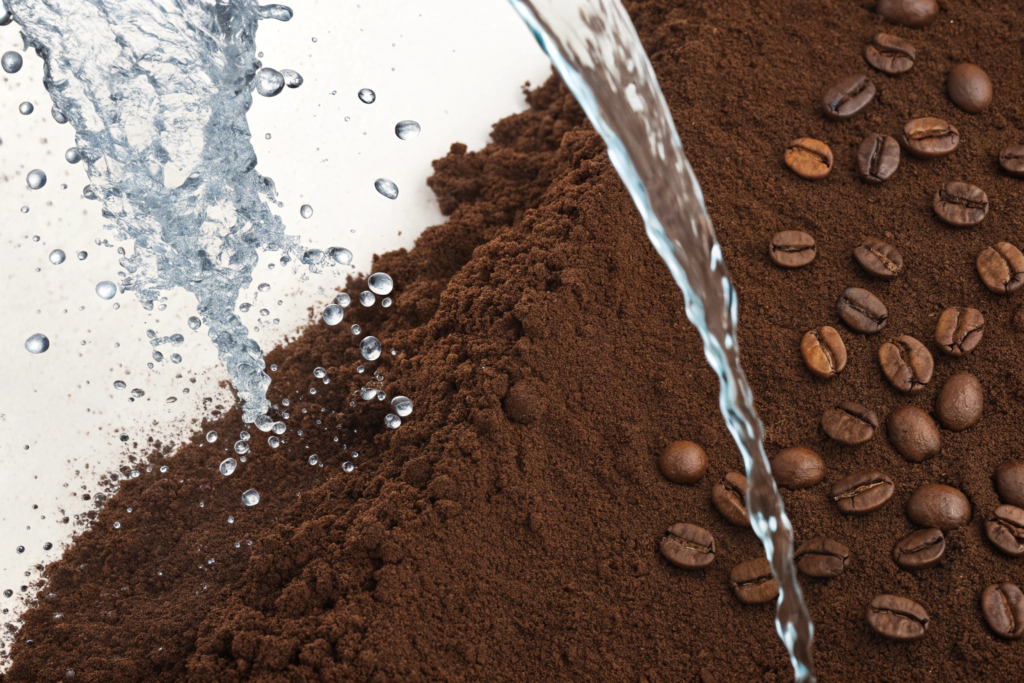
Extraction is the process of dissolving flavors from coffee grounds into water. For espresso, we're aiming for a balanced extraction, pulling out the sweet sugars and rich oils without also getting the bitter compounds that come from over-extraction. Grind size is your primary tool to control this. A finer grind increases the total surface area of the coffee that's exposed to water, which speeds up extraction. A coarser grind has less surface area and slows it down. For the short, intense espresso process, you need that massive surface area of a fine grind to get a full extraction in just 30 seconds. It's a race against the clock, and a fine grind gives you a winning head start.
What happens if the grind is too coarse or too fine?
This is the core of "dialing in" an espresso shot. If your grind is too coarse, the water flows through too quickly (e.g., a 15-second shot). The result is under-extraction: a sour, acidic, and thin-bodied shot that lacks sweetness. It tastes weak and unsatisfying. If your grind is too fine, it chokes the machine, and the water struggles to get through (e.g., a 45-second shot). This leads to over-extraction: a bitter, harsh, and burnt-tasting shot as the water pulls out unwanted compounds from the grounds. The perfect grind is the one that allows you to hit that 25-30 second sweet spot for a balanced, delicious shot.
Why is a burr grinder essential for espresso?
So, you need a fine grind. You might be tempted to just grab a cheap blade grinder—the kind that looks like a small propeller in a cup—and whiz the beans until they look fine enough. I'm here to tell you, as your partner in quality coffee, that this would be a critical mistake. For espresso, how you grind is just as important as how fine you grind. This is where the debate between blade grinders and burr grinders ends.
A burr grinder is essential because it produces a highly consistent and uniform particle size, which is non-negotiable for a good espresso extraction. Blade grinders, on the other hand, create a chaotic mix of fine dust and large chunks. This inconsistency makes it impossible to create a puck that provides even resistance, leading to channeling and a poorly extracted, unbalanced shot. The uniform grounds from a burr grinder are the only way to ensure water flows through the coffee bed evenly.
Using a blade grinder for espresso is like trying to build a solid wall with a random pile of boulders and dust. You'll have dense spots (the dust) and huge gaps (the boulders). Water will always follow the path of least resistance, blasting through the gaps—a phenomenon called "channeling"—while completely ignoring the dense spots. This results in a shot that is simultaneously sour (from the under-extracted parts) and bitter (from the over-extracted parts). It's the worst of both worlds. A burr grinder, like the ones we recommend to clients of Shanghai Fumao, is a non-negotiable investment.
What is the difference between burr and blade grinders?
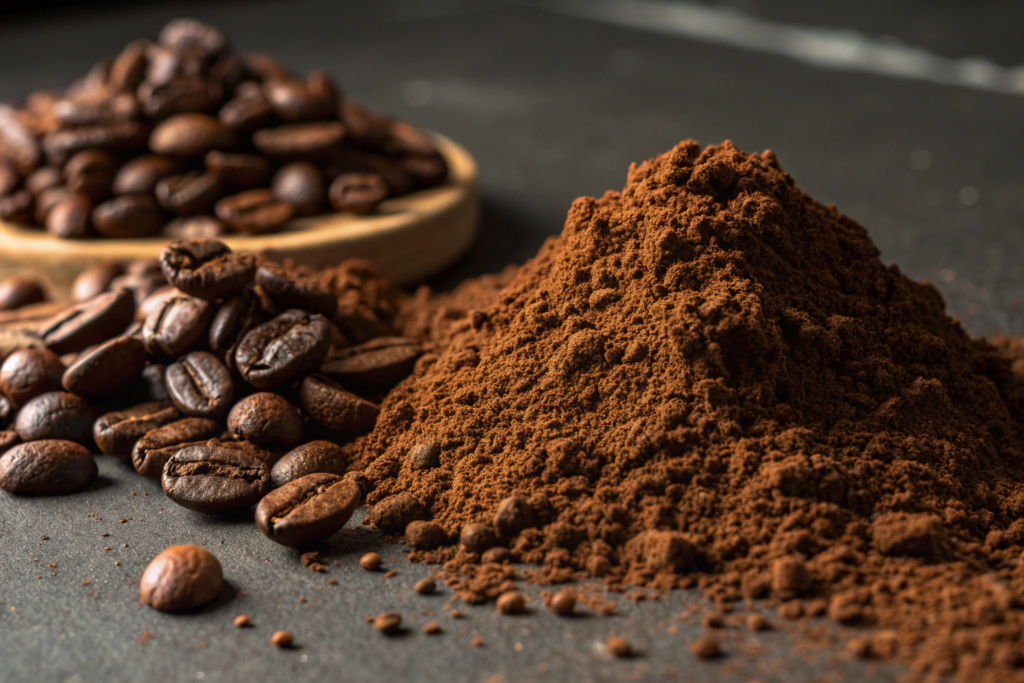
A blade grinder uses a spinning blade to randomly smash coffee beans into smaller and smaller pieces. It's violent and uncontrolled. A burr grinder uses two abrasive surfaces, or "burrs," set a precise distance apart. Whole beans are fed between the burrs, and they are crushed and ground into a uniform size. You control the grind size by adjusting the distance between the burrs. It's a controlled, precise milling process, not a chaotic shattering.
What is "channeling" and how does a burr grinder prevent it?
Channeling is an espresso-maker's worst enemy. It's when water finds a path of least resistance and creates little rivers or "channels" through the coffee puck instead of saturating it evenly. This is almost always caused by an inconsistent grind from a blade grinder or poor puck preparation. Because a burr grinder produces uniform particles, you can create a puck with consistent density throughout. This forces the water to flow through the entire bed of coffee evenly, ensuring a balanced extraction from every single coffee particle and preventing the dreaded channeling.
How do you "dial in" the perfect espresso grind?
"Dialing in" is the process every barista goes through to find the perfect grind setting for a specific coffee on a specific day. It's not a "set it and forget it" task. Factors like the age of the coffee, the type of bean (our Robusta and Arabica beans from Yunnan behave differently!), and even the humidity in the air can change how the coffee extracts. This is where the real craft comes in. It's a methodical process of adjustment and observation.
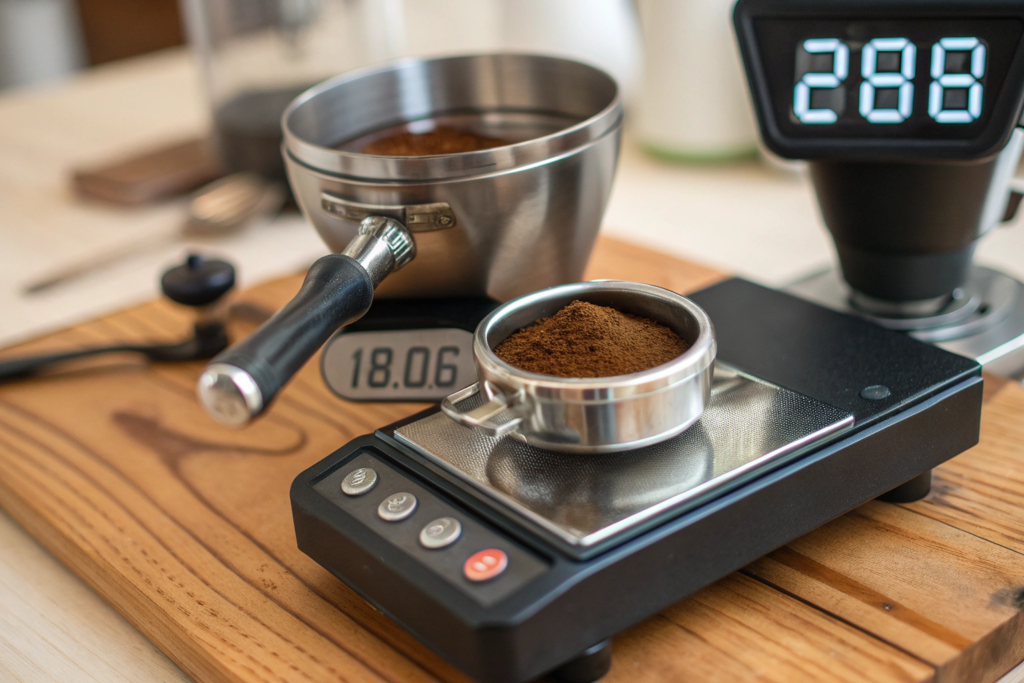
To dial in your grind, you use a recipe—a specific dose (grams of coffee), yield (grams of liquid espresso), and time (in seconds)—and you adjust only the grind size to hit your target time. A common starting point is an 18g dose to produce a 36g yield in about 28 seconds. If your shot runs too fast, you make the grind finer. If it runs too slow, you make the grind coarser. You make one small adjustment at a time until the shot pulls in the target time.
This process turns a guessing game into a science. It requires a scale to weigh your dose and yield, and a timer. It might seem tedious at first, but it's the only way to achieve consistency. Once you get the hang of it, you'll be able to quickly adjust for any new coffee, ensuring you're always serving the best possible expression of the beans you've so carefully sourced.
What is a good starting recipe for espresso?
A great and widely used starting point is a 1:2 brew ratio. This means for every 1 gram of dry coffee grounds, you want to produce 2 grams of liquid espresso. So, a typical recipe would be:
- Dose: 18 grams of ground coffee
- Yield: 36 grams of liquid espresso in the cup
- Time: 25-30 seconds
Use this as your baseline. Weigh your dose going in, and weigh your yield coming out. The only variable you should change at first is the grind setting.
How do you adjust the grind setting?
Make small, incremental changes. If your 18g dose produces 36g of espresso in only 20 seconds (too fast), adjust your grinder one or two steps finer. If it takes 40 seconds (too slow), adjust it one or two steps coarser. It's important to purge the grinder by grinding a small amount of beans after each adjustment to clear out any old grounds sitting in the chute. Then, pull another shot and check the time. Repeat this methodical process until you hit that 25-30 second window. This is the daily ritual that separates good espresso from great espresso.
Should you grind beans right before brewing?
We've covered the "how" of grinding, but the "when" is just as critical. You might be tempted to grind a whole bag of beans at the start of the day to save time during a busy service. It seems efficient, but this single shortcut can undo all the hard work of sourcing and roasting. Coffee is a fragile agricultural product, and its flavor begins to degrade the moment it's ground.
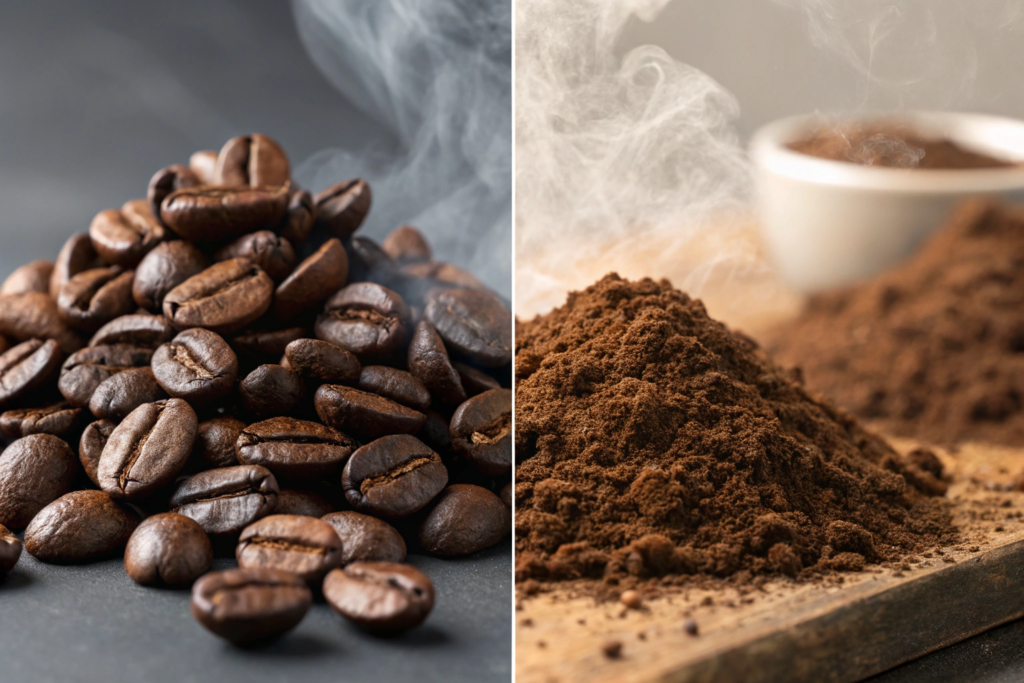
Yes, you must grind your coffee beans immediately before you pull your espresso shot. Coffee's flavor and aroma come from volatile aromatic compounds that begin to dissipate rapidly as soon as the bean's cellular structure is broken during grinding. Grinding exposes a massive amount of surface area to oxygen, causing the coffee to go stale in a matter of minutes, not hours or days. Pre-grinding is the fastest way to get a flat, lifeless, and disappointing cup.
Think of a coffee bean as a perfect little flavor capsule, designed by nature to protect the precious oils and compounds inside. The moment you grind it, you break that seal. All the wonderful aromas—the floral, fruity, chocolatey notes—start to escape into the air. By grinding on demand, you ensure that all of that amazing aroma and flavor goes directly into your portafilter and, ultimately, into the customer's cup. It's the ultimate act of preserving the quality you've paid for.
How fast does ground coffee go stale?
For espresso, the window is incredibly short. Some experts say that ground coffee loses a significant amount of its aromatic complexity within just 15 minutes of being exposed to air. The delicate acids and sweet notes are the first to go, leaving behind a dull, generic "coffee" flavor. While it might still be usable, it will be a pale imitation of what it could have been. This is why you'll never see a high-end specialty coffee shop using pre-ground coffee for their espresso.
Does this apply to all brewing methods?
Absolutely. While the fast, high-pressure nature of espresso makes it especially sensitive to stale grounds, the principle holds true for all brewing methods, from French press to pour-over. Grinding fresh is one of the single biggest improvements anyone can make to their coffee routine. It preserves the coffee's aroma, which is responsible for the vast majority of what we perceive as flavor. If you want to honor the bean and the farmer who grew it, you'll grind it fresh, every single time.
Conclusion
The path to a perfect espresso shot is paved with details, but no detail is more important than the grind. It's the critical link between the raw potential of a quality coffee bean and the final, delicious expression in the cup. By using a quality burr grinder to achieve a consistent, fine grind and by always grinding immediately before brewing, you take control of the most crucial variable in espresso making. It requires an investment in the right equipment and a methodical approach to "dialing in," but the reward is immense: consistent, balanced, and exceptional espresso, shot after shot. It's how you honor the coffee and delight your customers.
If you're ready to pair your expert grinding technique with beans that are truly worthy of the effort, we should talk. Our selection of high-quality Arabica and Robusta from Yunnan provides the perfect canvas for your craft. Contact our coffee specialist, Cathy Cai, at cathy@beanofcoffee.com to discuss your needs and get a sample that will make dialing in a true pleasure.