Espresso is the heart of the coffee world. It's the foundation for lattes, cappuccinos, and americanos. And for years, I've heard the same question from buyers, roasters, and cafe owners. "What's the best way to make it?" The answer isn't simple. I learned this early on when I started exporting our Arabica to a roaster in Italy. He took one look at my sample and said, "Good bean. Now show me how you'd pull it." I thought I knew. But he showed me that even a great bean can fail without the right technique. That trip taught me that espresso is a craft. It's precision. And when you get it right, it's magic.
The best way to make espresso is to control every variable: use freshly roasted, high-quality beans, grind them to the right fineness immediately before brewing, distribute the grounds evenly in the portafilter, tamp with consistent pressure, and extract for 25 to 30 seconds with water at 90 to 96 degrees Celsius. The goal is a balanced shot with a thick, golden crema, a rich body, and a flavor that highlights the bean's natural characteristics.
Now, you might be thinking, "That sounds complicated." And it is. But here's the good news. Once you understand the principles, it becomes repeatable. And for a wholesale buyer, a roaster, or a cafe owner, repeatability is everything. Your customers expect the same great experience every time. And that starts with mastering the fundamentals. Let's break it down.
Why Does the Coffee Bean Itself Matter So Much?
Let's start at the very beginning. The bean. I've spent years growing coffee on our 10,000 acres in Yunnan. And I can tell you this with confidence. No amount of skill can make a bad bean taste good. Espresso magnifies everything. It takes the bean's qualities and pushes them to the extreme. That's why the choice of bean is your first and most important decision.
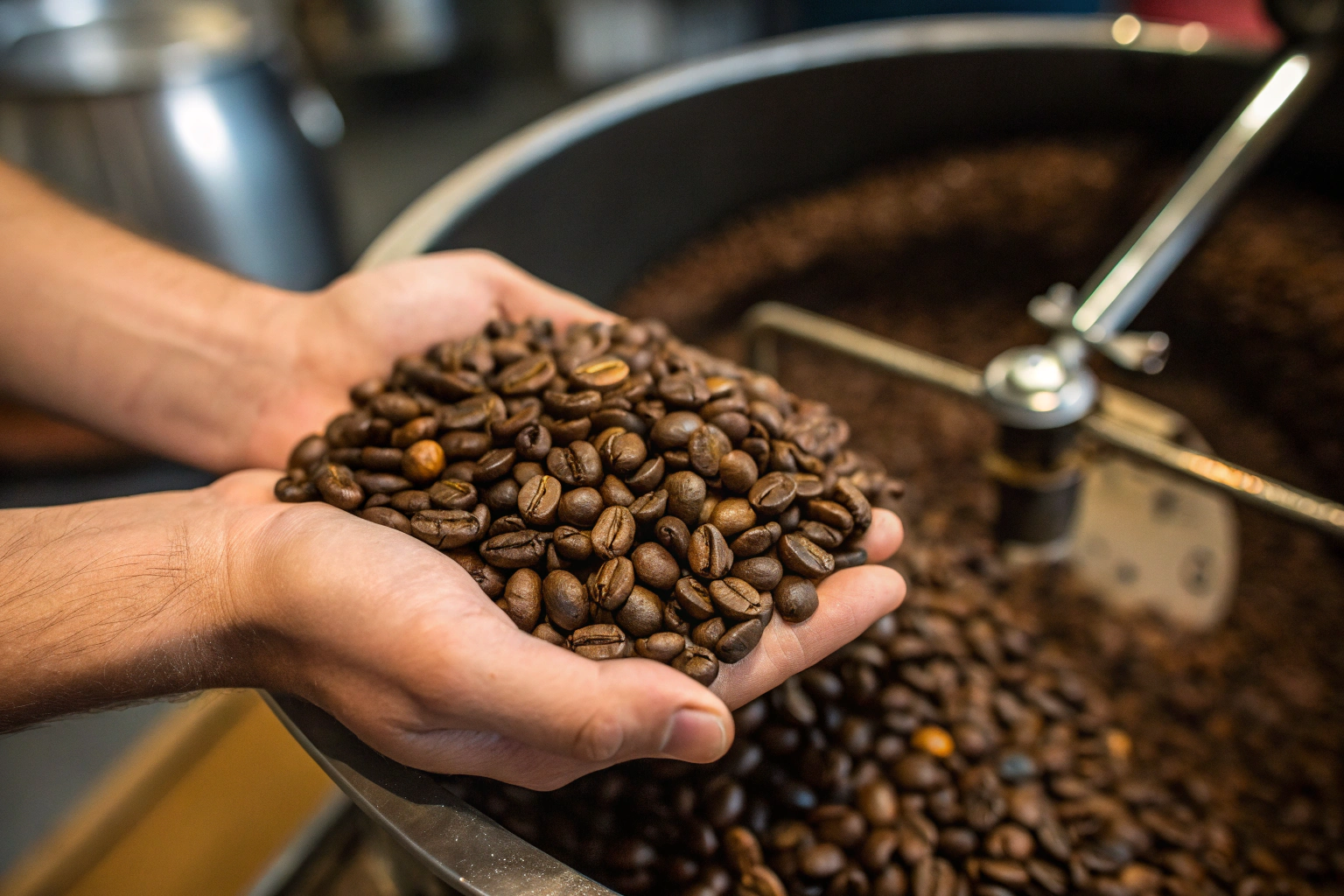
The best espresso starts with high-quality, freshly roasted beans. The roast level should match the intended flavor profile—medium to medium-dark roasts are traditional for espresso, but lighter roasts can work for showcasing origin character. Freshness is critical. Beans should be used between 5 and 21 days after roasting for optimal extraction and crema development.
What Roast Level Works Best for Espresso?
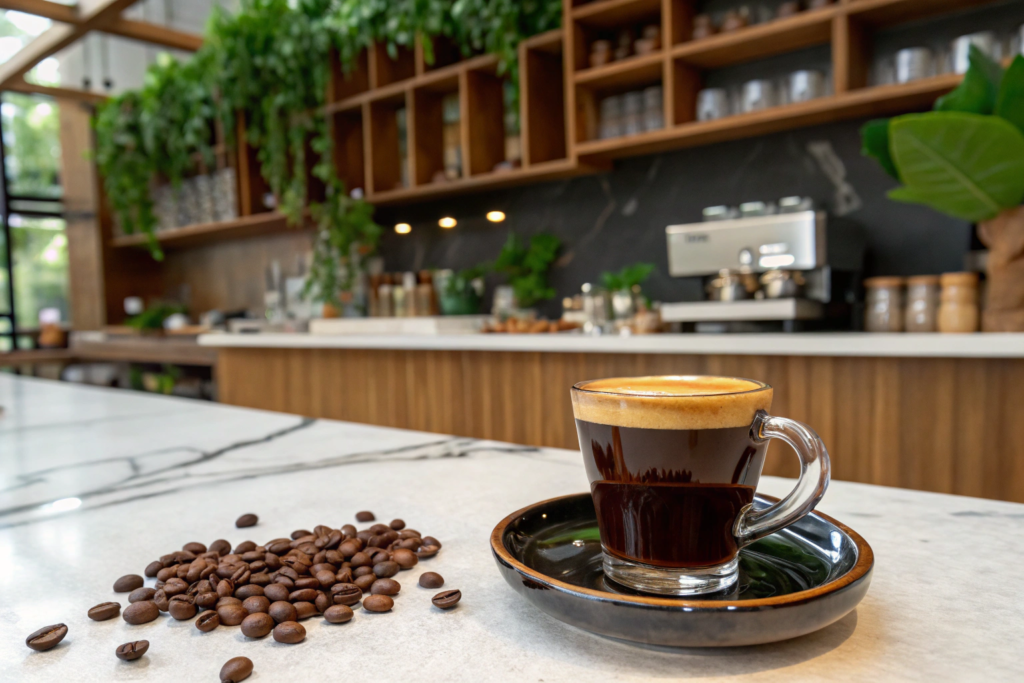
This is a question I get all the time from our clients. The traditional answer is a medium-dark roast. This roast level develops the sugars enough to create sweetness and body, while the darker notes add complexity that cuts through milk in drinks like lattes. Our Robusta is often used in espresso blends for this reason. It adds body, crema, and that classic "espresso" kick.
But here's the thing. Things are changing. I've seen roasters use our Arabica with a lighter roast for single-origin espresso. The result is a shot with bright acidity, floral notes, and a surprising sweetness. It's not the traditional Italian espresso. But for a specialty cafe, it's a way to stand out. The best roast level depends on your goal. Traditional and bold? Go darker. Complex and fruity? Go lighter.
Why Does Freshness Matter for Crema and Flavor?
Crema is that beautiful golden-brown foam on top of a good espresso. It's not just for looks. It traps aromatics and adds texture. And crema depends on freshness. Coffee releases carbon dioxide for days after roasting. This gas helps create crema during extraction. If the beans are too fresh—less than 3 days off roast—the crema can be too aggressive and the flavor can be harsh. If the beans are too old—more than a month—the crema will be thin or absent, and the flavor will be flat.
I tell our clients to aim for the sweet spot. Use beans that are 5 to 14 days post-roast for the best results. This is especially important for our Catimor, which has a delicate profile that can get lost with stale beans. Freshness gives you the best chance to show off the bean's true character.
How Does Grind Size and Consistency Affect the Shot?
If the bean is the foundation, the grind is the key that unlocks it. I've seen great beans ruined by a bad grinder. And I've seen decent beans elevated by a perfect grind. The grind determines how fast the water flows through the coffee. And that speed determines extraction time. It's that simple, and that critical.
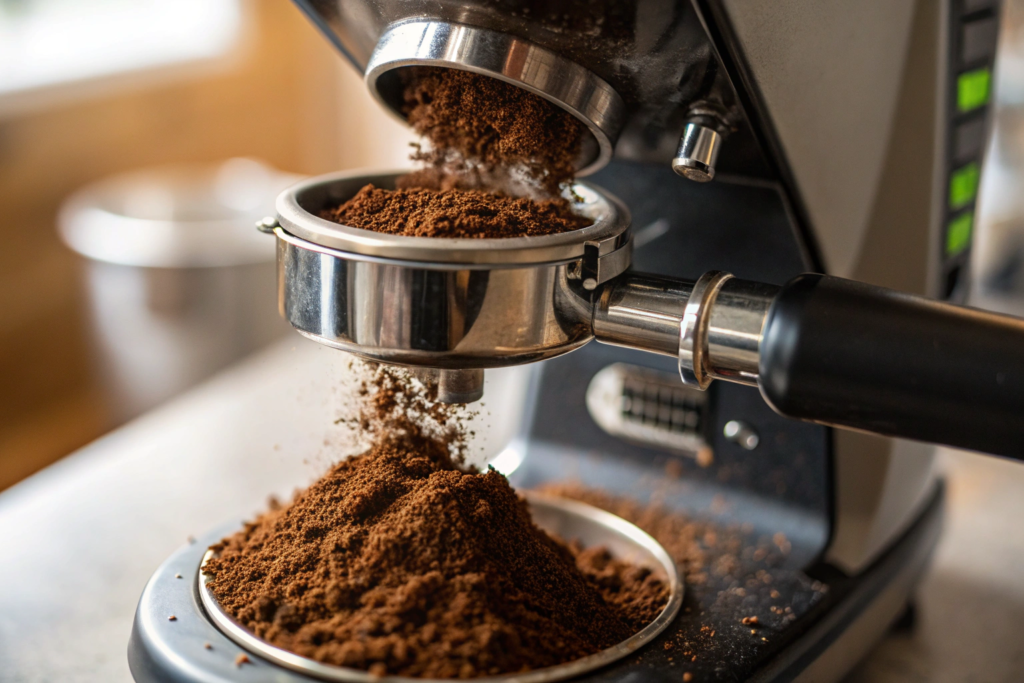
For espresso, the grind must be fine and, more importantly, consistent. Inconsistent grind leads to channeling, where water finds the path of least resistance through the coffee puck. This causes uneven extraction, with some parts over-extracted and others under-extracted. A high-quality burr grinder is non-negotiable for consistent espresso.
What Happens When the Grind Is Too Fine or Too Coarse?
This is a balancing act. If the grind is too fine, the water struggles to pass through. The extraction time goes over 30 seconds. You get over-extraction: bitter, harsh, and astringent. The shot might look thin, and the crema might be dark and mottled. If the grind is too coarse, the water rushes through. The extraction time goes under 20 seconds. You get under-extraction: sour, salty, and weak. The shot pours too fast, and the crema is pale and thin.
I remember a client in Australia who was pulling our Arabica as espresso. He was getting sour shots and couldn't figure out why. We went through his setup. His grinder was old, and the burrs were worn. The grind was inconsistent. Some particles were too fine, some too coarse. He replaced the burrs, dialed in the grind, and suddenly the shots were balanced and sweet. The lesson? The grinder is as important as the espresso machine.
Why Is Grind Distribution and Tamping Important?
Even with a perfect grind, you need to prepare the puck correctly. The grounds need to be evenly distributed in the portafilter. If there are clumps or uneven spots, water will channel through the weak spots. You'll get a messy, uneven extraction. After distribution, you tamp. Tamping compresses the grounds into a solid, even puck. The pressure should be consistent—around 30 pounds of force. And the tamp should be level. A tilted tamp leads to uneven extraction.
This is a skill that takes practice. I've watched baristas struggle with it. But once it clicks, it becomes muscle memory. And the result is a clean, even extraction every time. For our clients opening new cafes, we recommend investing time in training on these basics. It pays off in consistent quality and happy customers.
What Is the Ideal Extraction Time and Yield?
Here's where the numbers come in. Espresso is about ratios and time. And once you have the right bean and the right grind, you need to hit your numbers. I used to be a "by feel" kind of guy. But working with specialty roasters changed my mind. Measuring gives you consistency. And consistency is what builds a brand.
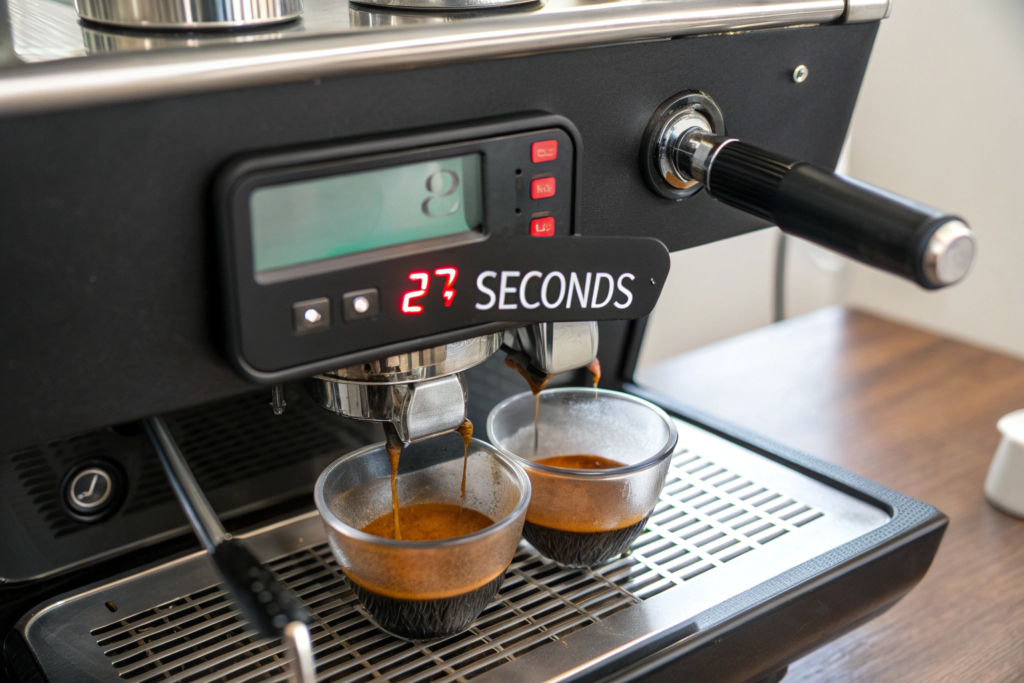
The standard espresso recipe uses a 1:2 ratio. That means for every gram of ground coffee, you aim to extract 2 grams of liquid. The target time is 25 to 30 seconds. So, for an 18-gram dose, you aim for 36 grams of liquid in 25 to 30 seconds. This is a starting point. Adjusting the ratio can fine-tune the flavor to your preference.
How to Dial in a Shot Using Time and Yield?
The process is simple. Pick a dose. Let's say 18 grams. Grind the coffee, distribute, tamp, and pull the shot. Watch the timer and the scale. If you hit 36 grams at 28 seconds, you're in the zone. Taste it. Is it balanced? Great. If it's sour, grind finer. That will slow the flow and increase extraction time. If it's bitter, grind coarser. That will speed up the flow and decrease extraction time. Make small adjustments. One step at a time.
I've done this with our Catimor for a client in Texas. We started with the standard 1:2 ratio. It was good. But then we experimented. A 1:2.5 ratio, with a slightly coarser grind, brought out more of the bean's natural sweetness. It was a small tweak, but it made the shot stand out. The client made it his house espresso. And it became a signature for his shop.
Why Does Water Temperature and Pressure Matter?
Time and yield are important. But water temperature and pressure are the hidden variables. The ideal water temperature is between 90 and 96 degrees Celsius. Too hot, and you'll over-extract, getting bitterness. Too cool, and you'll under-extract, getting sourness. Most modern machines are stable. But if you're using an older machine, it's worth checking.
Pressure is also key. The standard is 9 bars of pressure. This is what creates the emulsion that forms crema. Too little pressure, and the crema will be thin. Too much pressure, and you can cause channeling. The best way to make espresso is to let the machine do its job. Focus on the variables you can control: dose, grind, distribution, tamp, time, and yield. The machine will handle the rest.
How Can You Troubleshoot Common Espresso Problems?
Even with the best technique, things go wrong. I've been there. A shot pulls too fast. Or it drips slowly. Or the crema looks wrong. The key is not to panic. It's to diagnose. Every problem has a cause. And once you know the cause, the fix is usually simple. I've trained our team to think like detectives when they cup or taste. And that approach works for espresso too.
Common espresso problems usually point to grind, dose, or distribution issues. A shot that pulls too fast (under 20 seconds) usually means the grind is too coarse. A shot that pulls too slow (over 35 seconds) usually means the grind is too fine. Channeling, or uneven extraction, often points to poor distribution or an uneven tamp. A thin crema can mean stale beans or low pressure.
What to Do When Your Shot Is Sour?
Sour is under-extraction. The water hasn't had enough time to pull out the sweet compounds. The first thing to check is the grind. Is it too coarse? If so, grind finer. This will increase the resistance and slow the flow. If the grind seems right, check your dose. A higher dose can also slow the flow. But be careful. Adding more coffee changes the ratio. You might need to adjust your yield to match.
I've had clients call me frustrated about sour shots with our Arabica. Usually, it's a grind issue. They're using a grinder that isn't fine enough. Or they're using beans that are too fresh, and the intense crema is masking the extraction. The fix is almost always to go finer. And to be patient. One small adjustment at a time.
What to Do When Your Shot Is Bitter?
Bitter is over-extraction. The water has pulled out the harsh compounds. The first suspect is the grind. Is it too fine? If so, grind coarser. This will let the water flow faster. If the grind seems right, check your yield. A 1:2 ratio is standard. But if you're pulling a 1:3 ratio, you're extracting more. Shorten the yield. Stop the shot earlier. Sometimes a slightly shorter shot is all you need to bring balance back.
I remember working with a roaster in the UK who was using our Robusta in his blend. He was getting bitter shots. We adjusted the grind coarser. But the bitterness remained. Then we looked at the yield. He was pulling 1:2.5. We dropped it to 1:2. The bitterness faded. The chocolatey notes came forward. It was a small change, but it transformed the shot.
Conclusion
The best way to make espresso is a combination of art and science. It starts with a great bean. And that's where we come in. From our farms in Yunnan, we grow Arabica, Catimor, and Robusta that are perfect for espresso. But a great bean is just the beginning. You need the right roast, the right grind, the right dose, and the right technique. You need to control the time, the yield, and the temperature. And when you put it all together, you get that perfect shot. Golden crema. Balanced flavor. Rich body. That's the goal.
At BeanofCoffee, we're more than just a supplier. We're partners in your success. We help you understand your beans. We help you find the right roast profile. And we provide the stability and consistency you need to grow your business. With our own plantations and our reliable export logistics through Shanghai Fumao, we make sure you have what you need, when you need it.
If you're ready to source world-class coffee and take your espresso program to the next level, let's talk. Contact our team lead, Cathy Cai, directly at cathy@beanofcoffee.com. She can help you find the perfect beans for your espresso needs. Let's build something great, one shot at a time.