You have amazing coffee from Asia—Yunnan, Vietnam, Sumatra, you name it. The beans are unique, the story is rich. But in a global market dominated by narratives from Latin America and Africa, how do you break through? The challenge isn't just quality; it's perception. Many buyers still hold outdated views, seeing Asian coffee as a mere "blending component" or "lower cost alternative." The frustration of being undervalued is real. But I can tell you, the tide is turning. The best marketing cuts through noise by blending undeniable proof with an authentic, modern story.
The best way to market Asian coffee globally is to move beyond selling a commodity and start marketing a distinct origin story. This requires a dual strategy: proactively educating buyers on Asia’s unique quality and flavor profiles, while building a brand identity rooted in transparency, sustainability, and reliability that meets Western business needs.
Think about it. For decades, marketing focused on the "exotic." That’s not enough anymore. Buyers like Ron from the U.S. need concrete reasons to switch suppliers. They need proof of stability, proof of quality, proof that you understand their market's regulations. Marketing now is about building B2B trust first, consumer romance second. Let's get specific.
How to Build a Compelling Origin Story for Asian Coffee?
"Asian Coffee" is too broad. You must get specific. Is it Yunnan Arabica with its chocolatey, low-acidity profile? Is it Vietnamese Robusta known for its bold, creamy body? The story starts in the soil and must connect to the cup in a way that is both authentic and commercially relevant.
To build a compelling origin story, focus on the unique terroir of your specific region, the heritage of farming, and the modern, quality-focused practices you employ. Translate this into clear, sensory flavor notes that roasters can sell to their customers. A story without proof is just a legend. You need the data and the visuals to back it up.
What specific flavor profiles make Asian coffee unique?
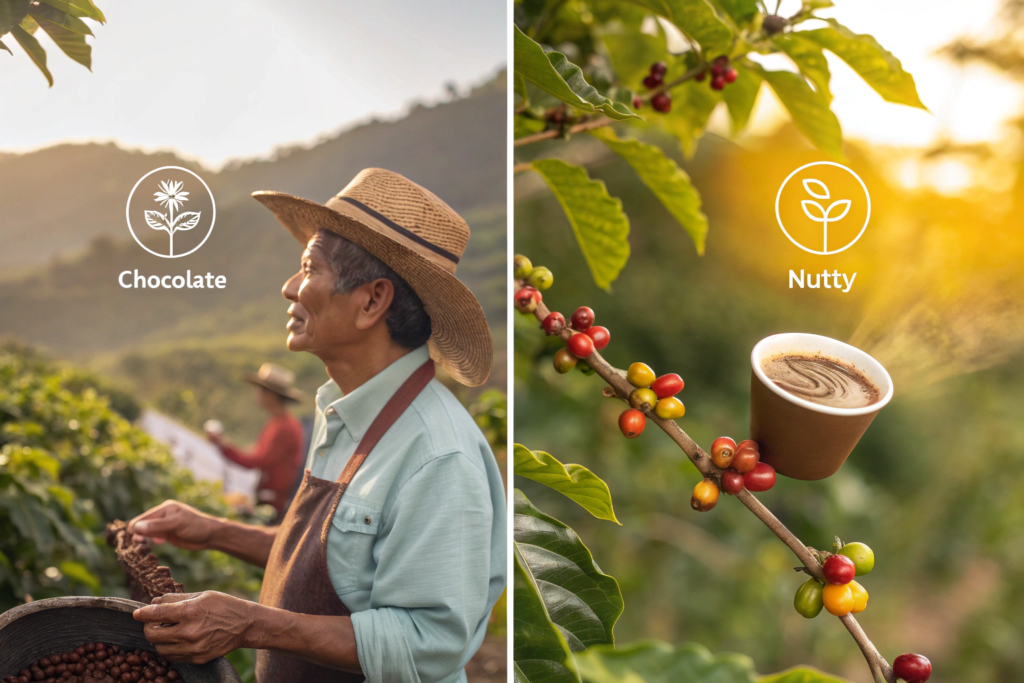
This is your core selling point. You must articulate what sets your coffee apart in language the industry uses. For our Yunnan Arabica from Baoshan, we don't just say "it's good." We say it offers a smooth, full body with distinct notes of dark chocolate, nutty undertones, and a low, winey acidity that appeals to consumers who find some Central American coffees too bright. This is a real, marketable difference. For Indonesian coffees, the earthy, spicy, and herbal notes from unique processing methods are a signature. The key is to provide SCA (Specialty Coffee Association) cupping score sheets with your samples. A score above 80 points (Specialty Grade) from an Asian origin shatters preconceptions instantly. It moves the conversation from price to value.
How to use digital content to showcase your farm and process?
Buyers can't always visit, so you must bring the farm to them. High-quality video tours of your plantations, showing the cherry selection, the washing stations, the drying beds—this builds immense trust. Create short clips for TikTok and Instagram Reels showing the harvest, the faces of your farmers, the vastness of your 10,000 acres. For LinkedIn and your website, publish articles and blogs about your sustainable farming practices. A great example? A blog post titled "How We Achieve Consistent Quality Across 10,000 Acres" with embedded videos and photos. This content does two things: it proves your scale and capability, and it provides ready-made marketing material for your buyer’s own brand. When Shanghai Fumao shares a video of our processing, it's not just an ad; it's a transparency report.
How to Target International B2B Buyers Effectively?
Your end customer is not the coffee drinker—it's the roaster, the brand, the distributor. They have practical problems: supply consistency, paperwork, logistics. Your marketing must speak to these professional pains first and the flavor romance second.
Effective B2B targeting means positioning yourself as a solutions partner, not just a bean seller. Your messaging should directly address buyer pain points like tariff management, reliable shipping schedules, and quality control, using the channels where they actually search for suppliers. This is where a lot of Asian exporters fail. They lead with "We have coffee." You need to lead with "We solve your import problems."

What are the key messages for Western coffee roasters?
Your communication must answer their unspoken questions. Key messages should be: 1) Stability in Supply: "With over 10,000 acres under direct management, we guarantee volume and consistent quality year-round." 2) Export Reliability: "We handle FOB, CIF, or DDP terms, provide clear HS codes, and assist with documentation to streamline your import process." 3) Quality Assurance: "Every shipment is backed by SCA-aligned cupping scores and contaminant testing (Ochratoxin A, pesticides) for worry-free EU/US compliance." 4) Strategic Partnership: "We act as your quality control extension in Asia, providing regular farm updates and flexible logistics solutions." Craft case studies or testimonials around these themes. For instance, "How a U.S. Roaster Reduced Their Lead Time by 15 Days Sourcing from Yunnan."
Which online platforms generate the highest quality B2B leads?
Scattergun approaches waste time. Focus on platforms where serious business happens. Alibaba.com is essential, but your storefront must be premium—filled with certifications, quality documents, and professional videos, not just stock photos. LinkedIn is arguably the most powerful. Use it to share thought leadership content (like this blog), connect directly with sourcing managers and brand owners, and join industry groups. Google Ads targeting keywords like "reliable Yunnan coffee exporter," "bulk Arabica supplier," or "organic coffee beans China" can capture high-intent searches. While Facebook and Instagram are more brand-oriented, they are useful for building the visual prestige of your origin. Trade shows like World of Coffee or SCA Expo are irreplaceable for face-to-face meetings and instant credibility. A multi-channel presence that reinforces the same professional message is key.
How to Compete on Value, Not Just Price?
The race to the bottom on price is a dead end. It commoditizes your product and kills your margins. Value is a combination of quality, service, reliability, and risk reduction. You need to build a moat around your business that isn't just "cheaper."
Competing on value means structuring your entire operation to provide tangible benefits that lower the total cost of ownership for your buyer. This includes guaranteed quality reducing their waste, reliable logistics preventing their production delays, and your expertise simplifying their compliance work.
How does vertical integration add value for your buyers?
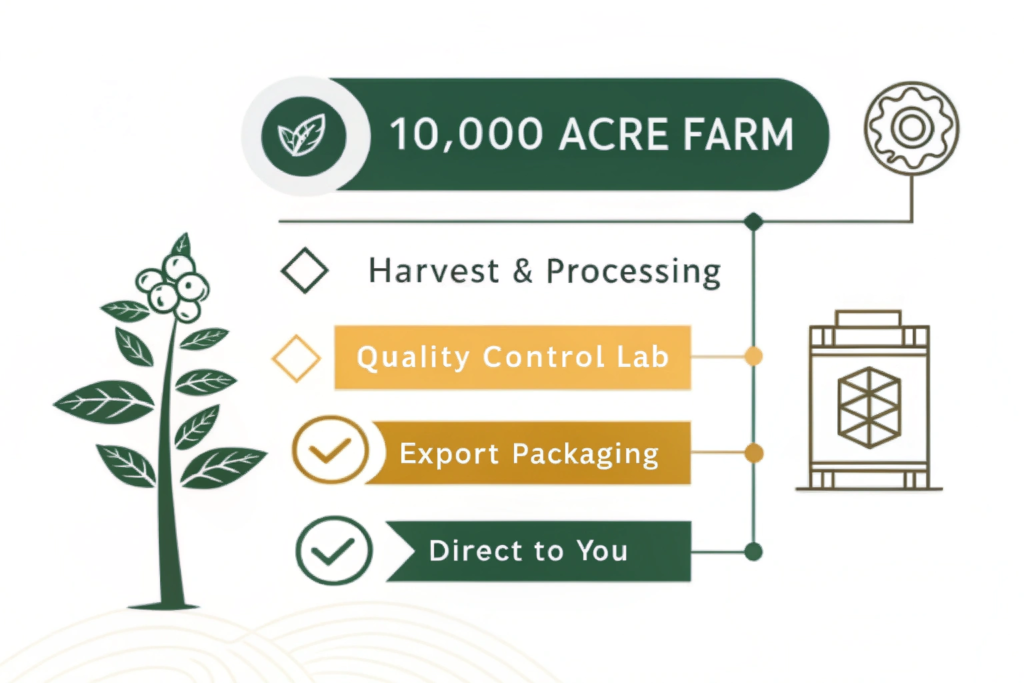
This is your structural advantage. Because we at Shanghai Fumao control the land, the farming, the processing, and the export, we eliminate middlemen and their associated risks. The value to the buyer is profound: Traceability: They can know the exact farm, harvest date, and processing method for every bean. Consistency: Without multiple aggregators, the flavor profile stays uniform batch to batch. Cost Control: We can offer stable pricing because we're not subject to a spot market of smallholders. Speed: Decisions are made quickly because the supply chain is under one management. In your marketing, use diagrams to illustrate this integrated model versus the fragmented traditional model. It’s a powerful visual that explains why you are more reliable.
What certifications and data should you lead with?
Certifications are your trust badges. But you must present them as solutions. Don't just list "We have Organic." Say, "Our USDA Organic certification ensures your brand can access the growing organic retail segment without audit risk." Lead with: FDA Registration for the U.S. market. Food Safety Certifications (HACCP, ISO 22000) proving your processing is safe. Sustainability Certifications (Rainforest Alliance, Fair Trade) if you have them. Most importantly, lead with your cupping score data and lab analysis reports. Provide them upfront with samples. A table on your website comparing your bean's attributes (Bean Density, Moisture %, Screen Size, Cupping Score) against standard industry benchmarks is a fantastic tool. It turns subjective quality into objective, comparable value.
How to Master the Logistics and Documentation Narrative?
For a buyer, the nightmare isn't a bad sample; it's a perfect sample followed by a shipment stuck in customs because of wrong paperwork, or a container delayed by weeks with no communication. Your ability to master and communicate your logistics prowess is a massive market differentiator.
Mastering the logistics narrative means transparently mapping the journey from your warehouse to theirs, taking ownership of the complexities, and providing tools (like trackers and document packs) that give the buyer peace of mind and control. You're not just delivering beans; you're delivering certainty.
How to present your shipping and Incoterms options clearly?
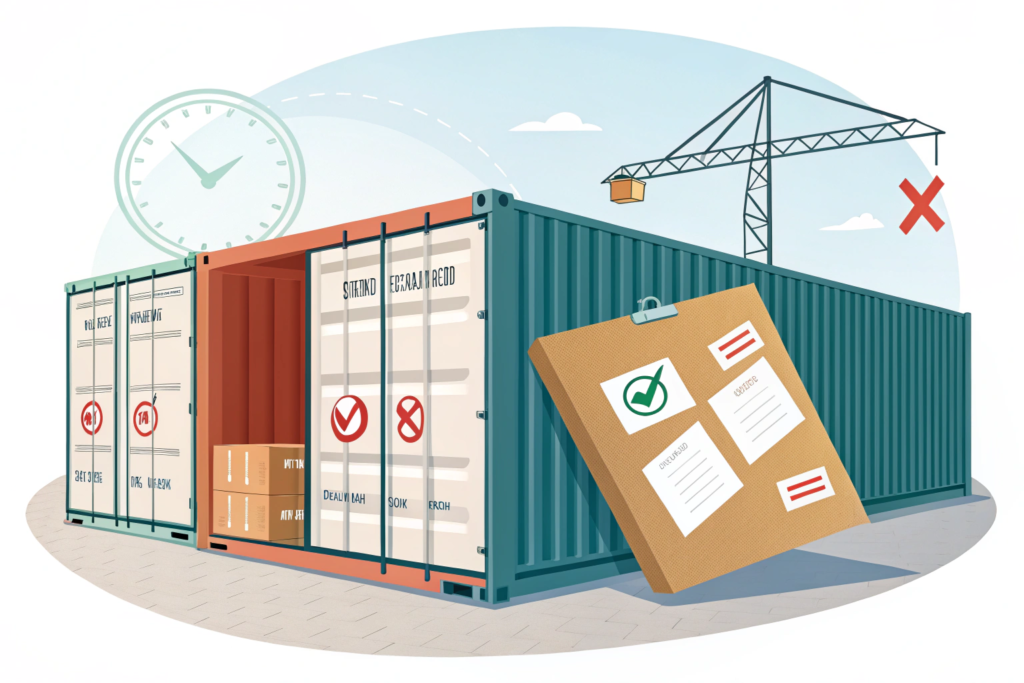
Confusion here kills deals. On your website and in proposals, have a clear, simple guide. Explain common Incoterms like FOB Shanghai (you get it to the port, they handle shipping and import) and CIF Los Angeles (you handle ocean freight and insurance to the port). Better yet, offer DDP (Delivered Duty Paid) to a major hub—this is a huge value-add for buyers scared of tariffs and clearance. Provide a sample timeline: "From order confirmation to your warehouse in LA: 45-55 days average." Be honest about variables like Chinese holidays or peak season. This transparency builds more trust than an overly optimistic promise.
Why is a perfect document pack your best marketing tool?
After the coffee is gone, the documents are what remain in the buyer's files. A flawless, well-organized document pack is a silent salesperson for your next contract. It should include: Commercial Invoice, Packing List, Bill of Lading, Certificate of Origin, Phytosanitary Certificate, Fumigation Certificate (if required), and your Quality & Lab Reports. Each document should be clearly labeled, digitally searchable, and match the data on the B/L perfectly. One tiny error can cost the buyer thousands in port demurrage. When you deliver a perfect pack every time, you market yourself as meticulous, professional, and low-risk. That reputation is priceless and spreads through word-of-mouth in the industry.
Conclusion
Marketing Asian coffee globally is no longer about begging for a seat at the table. It's about confidently presenting a superior, modern value proposition. The best strategy is a hybrid one: tell a captivating, authentic origin story that creates desire, while simultaneously building an ultra-professional, reliable, and transparent B2B operation that earns trust. It’s about proving that you offer not just unique beans, but also peace of mind, supply chain stability, and a true partnership.
The global market is ready for this narrative. Roasters and brands are actively seeking diversity, stability, and new stories for their customers. Asian coffee, with its unique flavors and the rising professionalism of its exporters, is perfectly positioned to meet this demand.
If you are a buyer, distributor, or brand looking to explore the consistent quality and unique profile of premium Yunnan Arabica, Catimor, or Robusta from a fully integrated, reliable source, let's talk. We can provide samples, complete documentation profiles, and transparent quotes. Contact our Export Manager, Cathy Cai, to start a conversation at cathy@beanofcoffee.com. Let's build the future of coffee, together.