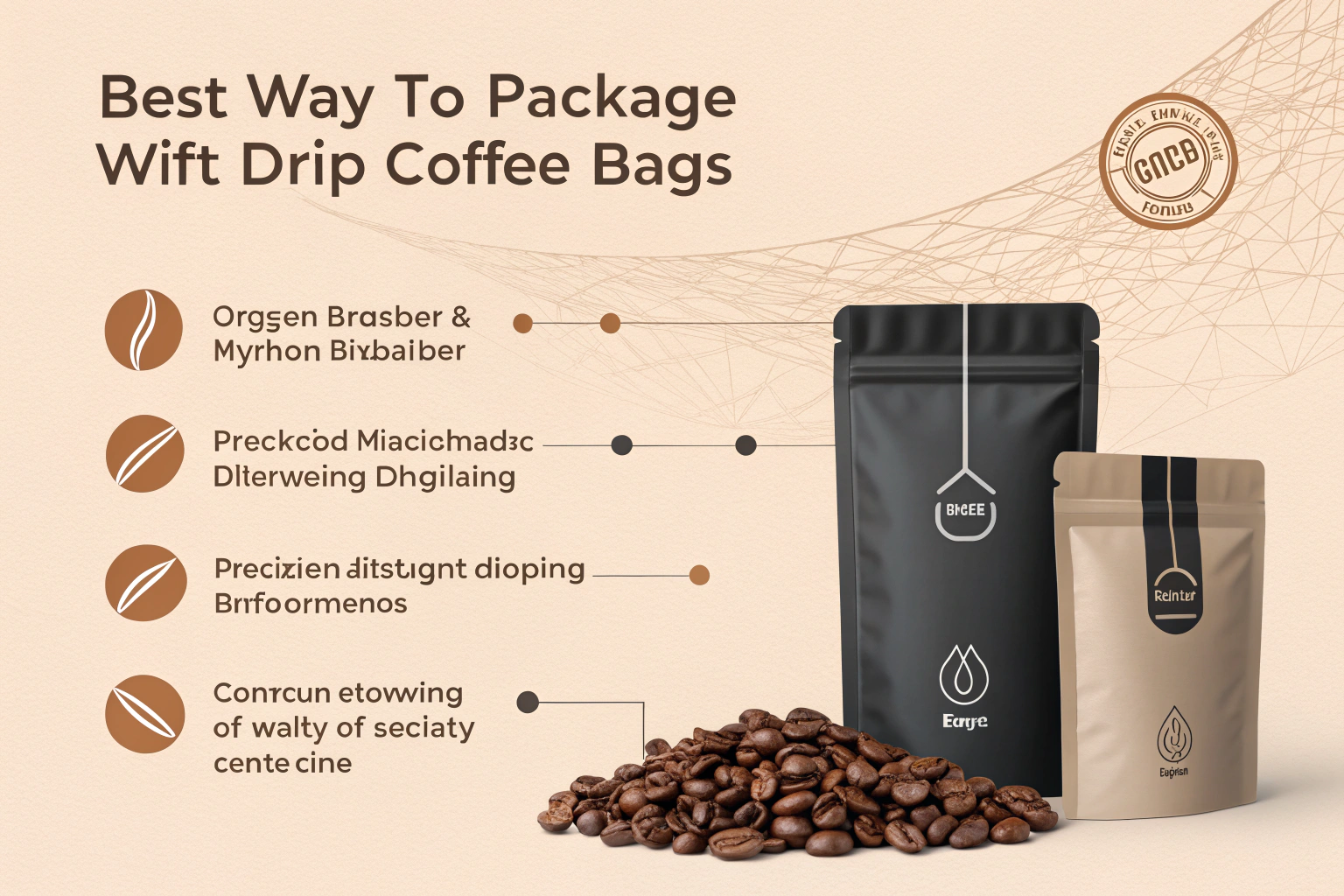
You see the trend. Single-serve drip coffee bags are exploding in popularity—they're the convenient, quality bridge between instant coffee and a full pour-over setup. For a brand owner or roaster, they represent a high-margin, scalable product. But here's the catch: a poorly packaged drip bag is a disaster waiting to happen. Stale coffee, broken seams, messy brewing, and frustrated customers. For someone like Ron, who values safe, reliable products, packaging isn't just a wrapper; it's the crucial vessel that delivers the experience and protects your brand reputation.
The best way to package drip coffee bags is a holistic system that combines oxygen-barrier materials, nitrogen flushing, precision engineering for brew performance, and consumer-friendly design. It's about creating a miniaturized, inert atmosphere that locks in freshness from your roastery to the customer's cup, while ensuring the bag functions flawlessly during brewing. At BeanofCoffee, as a bulk supplier to brands producing these products, we've seen what makes a drip bag succeed or fail on the shelf and in use. The packaging is your product's first and most important interaction with the user.
So, if you're looking to launch or improve a drip bag line, you need to think like a food scientist, a mechanical engineer, and a marketer all at once. Let's unpack the process.
What Are the Critical Materials for Freshness and Durability?
The battle for freshness is fought at the molecular level. Your packaging materials are your army. Standard coffee bags won't cut it; drip bags require a multi-layered, engineered approach.
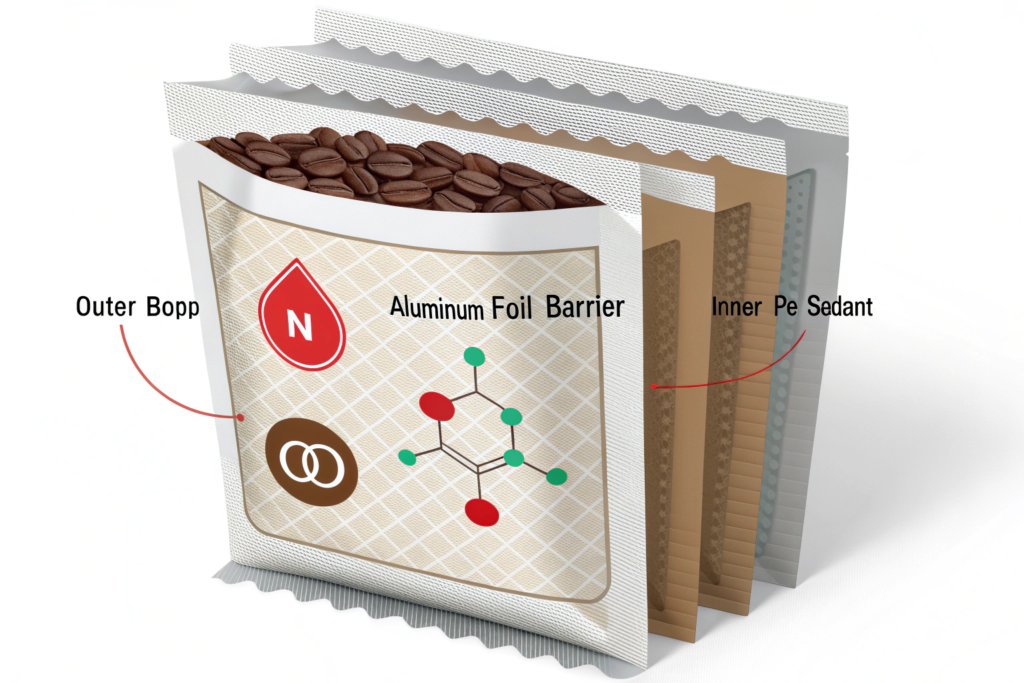
The Optimal Material Structure (From Outside In):
- Outer Layer (Printing & Durability): Usually a reverse-printed Biaxially Oriented Polypropylene (BOPP) or Polyethylene Terephthalate (PET). This provides a glossy, scuff-resistant surface for vibrant branding and feels premium to the touch.
- Barrier Layer (The Oxygen Guard): This is the core. You need a high-barrier material like Aluminum Foil (AL) or Metallized Film (a vacuum-deposited layer of aluminum on PET or CPP). Aluminum foil offers the absolute best oxygen barrier (OTR <1 cc/m²/day). Metallized film is slightly less impermeable but is more flexible, crack-resistant, and recyclable in some streams.
- Inner Sealant Layer (Heat Sealability): A food-safe Polyethylene (PE) or Cast Polypropylene (CPP) layer. This is what melts during the sealing process to create an airtight seam. It must not impart any odor to the coffee.
The Must-Have Feature: Nitrogen Flushing
The material alone isn't enough. After the ground coffee is dosed into the bag, the air inside must be removed and replaced with an inert gas—almost always Nitrogen (N₂). Why?
- Removes Oxygen: Oxygen is the enemy, causing oxidative staling. Nitrogen flushing reduces residual oxygen inside the sealed bag to below 1-2%.
- Prevents Crushing: The nitrogen gas provides a gentle cushion ("pillow pack") that protects the brittle coffee grounds from being crushed into powder during shipping and handling.
A bag without nitrogen flushing will go stale in weeks. With it, shelf life can extend to 8-12 months while maintaining peak freshness. This is non-negotiable for a safe and reliable product.
What about biodegradable or compostable materials?
This is a growing demand but comes with challenges. Materials like compostable PLA (Polylactic Acid) laminates often have higher oxygen transmission rates (OTR) than foil, leading to shorter shelf life. They can also be less robust in hot water. If you choose this path, you must:
- Accept a shorter "best-by" window (e.g., 3-4 months).
- Clearly educate consumers on proper disposal (industrial composting vs. home).
- Potentially use a smaller, more nitrogen-rich flush to compensate.
It's a trade-off between sustainability and longevity that must align with your brand values.
How important is the one-way degassing valve?
For drip bags containing ground coffee, a degassing valve is typically NOT used and is often detrimental. Valves are for whole bean or very freshly ground coffee that needs to release CO2. In a pre-ground, nitrogen-flushed drip bag, you have already removed the oxygen and want to maintain that sealed, inert environment. A valve could allow oxygen to seep back in over time. The best practice is a complete, hermetically sealed pouch.
How to Engineer the Bag for Perfect Brewing Performance?
The materials keep it fresh, but the bag's physical design determines whether it brews a good cup. This is where functionality meets form. A poorly designed bag can tear, float, drain too fast or too slow, or leave grounds in the cup.
Key Design Elements for Brew Performance:
- Bag Shape & Size: The industry standard is a rectangular flat-bottom design that stands upright in a cup. The width must fit a standard mug (usually 7-9cm). The height should allow for the bag to be folded over the rim of the cup for stability.
- Filter Paper Quality: This is critical. The paper must:
- Have the right porosity to allow optimal water flow (a 2-4 minute total brew time is ideal).
- Be strong when wet to avoid bursting.
- Be oxygen-bleached or natural (unbleached), not chlorine-bleached, to avoid papery tastes.
- Have heat-sealable edges to bond with the inner plastic layer of the outer pouch during manufacturing.
- String & Tag Assembly:
- String: Should be a sturdy, food-grade cotton or nylon thread, long enough to dangle outside the cup and be easily pulled. It must be securely attached to the bag.
- Tag: The tag is prime marketing real estate. It should be large enough for your logo and easy to grip. It often also acts as a fold-over tab to keep the bag from falling into the cup.
- Precision Filling & Sealing: The ground coffee must be dosed accurately (typically 10-12g). The top seal must be strong and clean, located well above the coffee fill line to prevent grounds from contaminating the seal area, which would cause a failure.
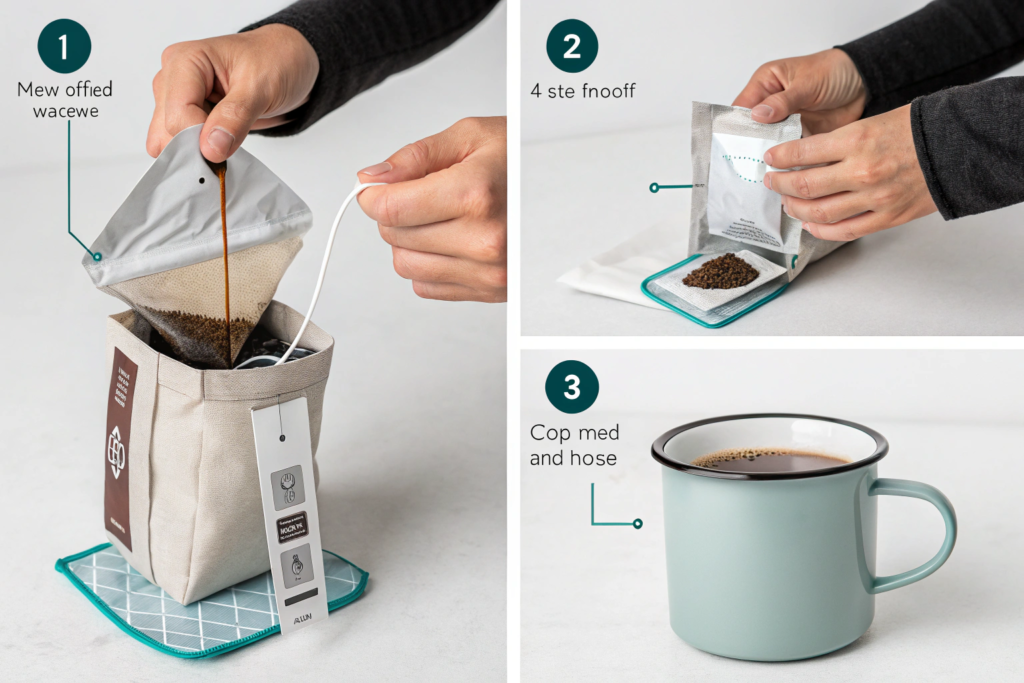
The goal is a drip bag that is intuitive: the user pulls it from the outer envelope, opens the tear notch, drapes it over their cup, pours water, and gets a consistent, delicious brew every time. Any friction in this process hurts the experience.
What is the ideal grind size for drip bags?
This is a partnership between you (the roaster/brand) and your packaging manufacturer. The grind must be optimized for the specific filter paper you use. Generally, it's a medium grind, slightly finer than for a standard auto-drip machine but coarser than for espresso. It must be consistent—excessive "fines" will clog the paper and over-extract; "boulders" will under-extract. We at BeanofCoffee can provide a bulk ground product tailored to your bag's specifications, ensuring consistency from our large-scale grinders.
How do you prevent the "float" problem?
If the bag is too light or the grounds are too coarse, the bag can float when water is poured, leading to uneven saturation and a messy overflow. Solutions include:
- Using a flat-bottom design that sits stably.
- Ensuring the filter paper has some rigidity.
- Adding a small weighted staple to the tag (though this adds complexity).
- Instructing users to pour slowly in a circular motion, starting from the center, in the brewing instructions.
What Are the Best Practices for Outer Packaging and Branding?
The individual drip bag lives inside a secondary package. This is your shelf presence, your brand billboard, and the final layer of protection.
Outer Packaging Options:
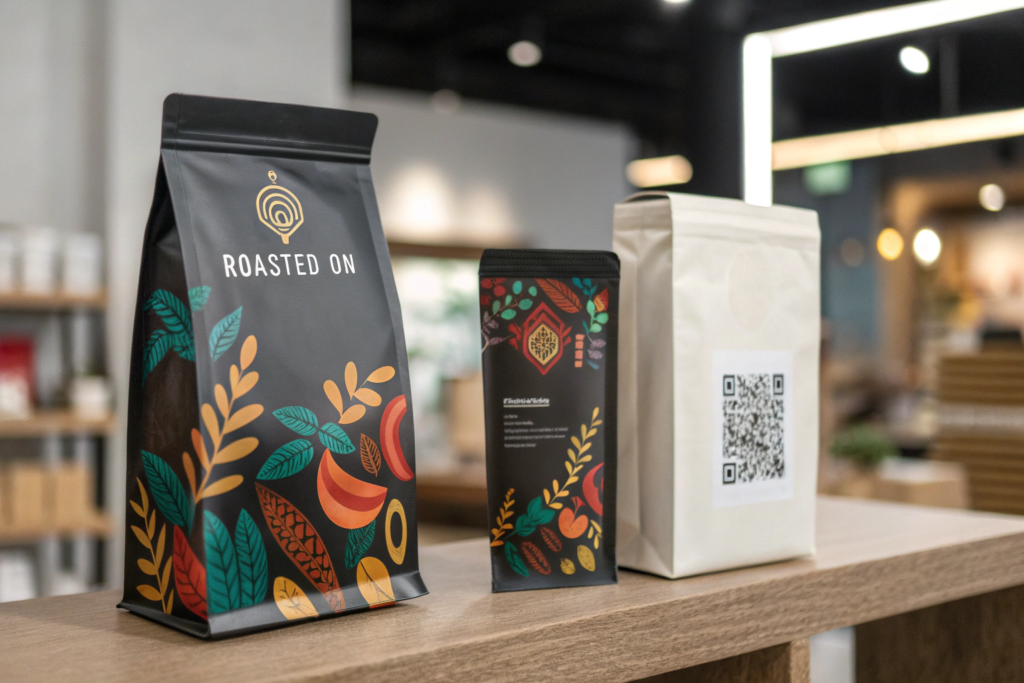
- Stand-Up Pouch (SUP) with Zipper: The most popular choice. It's re-closable, offers good barrier properties (often also foil-lined), and has a large printable area for branding, tasting notes, and brewing instructions. It typically holds 5-10 individual drip bags.
- Cardboard Box: Offers a premium, eco-friendly feel. The box itself provides excellent crush protection. However, you must pair it with an inner foil-lined bag to maintain the nitrogen-flushed atmosphere for the unused drip bags after the box is opened. This is a two-step process for the consumer.
- Flow Wrap / Shrink Wrap: For multi-packs (e.g., 3 bags sold together at convenience stores). Lower cost per unit but offers less branding space and protection.
Branding & Information Must-Haves:
- Clear Roast Date or "Roasted On" Date: Builds immense trust versus a vague "best by" date.
- Origin & Flavor Notes: Tell the story. "Single-Origin Yunnan Arabica - Notes of Red Apple & Brown Sugar."
- Brewing Instructions: Simple icons and text. Include water temperature (93°C/200°F), pour technique, and brew time.
- QR Code: Link to a video brewing guide, your website, or the farm story (like our BeanofCoffee plantation).
- Certifications: Display logos for Organic, Fair Trade, etc., if applicable.
The outer package must sell the product at retail and then become a functional storage container in the user's home.
How many bags should you put in one outer package?
This depends on your price point and consumption model. 5-pack and 10-pack are standard. A 5-pack is a lower entry price for trial. A 10-pack offers better value per cup for regular users. For office or hotel bulk supply, 20-50 count cases are common. Consider offering multiple SKUs to capture different customer segments.
Should you include a disposal message on the tag?
Yes, this is thoughtful design. The tag can have a small icon or text: "Discard with compost" or "Please dispose of thoughtfully." Since the used bag contains wet coffee grounds (which are compostable) and paper filter, guiding proper disposal enhances the user experience and aligns with sustainable values.
How to Set Up Quality Control and Production Workflow?
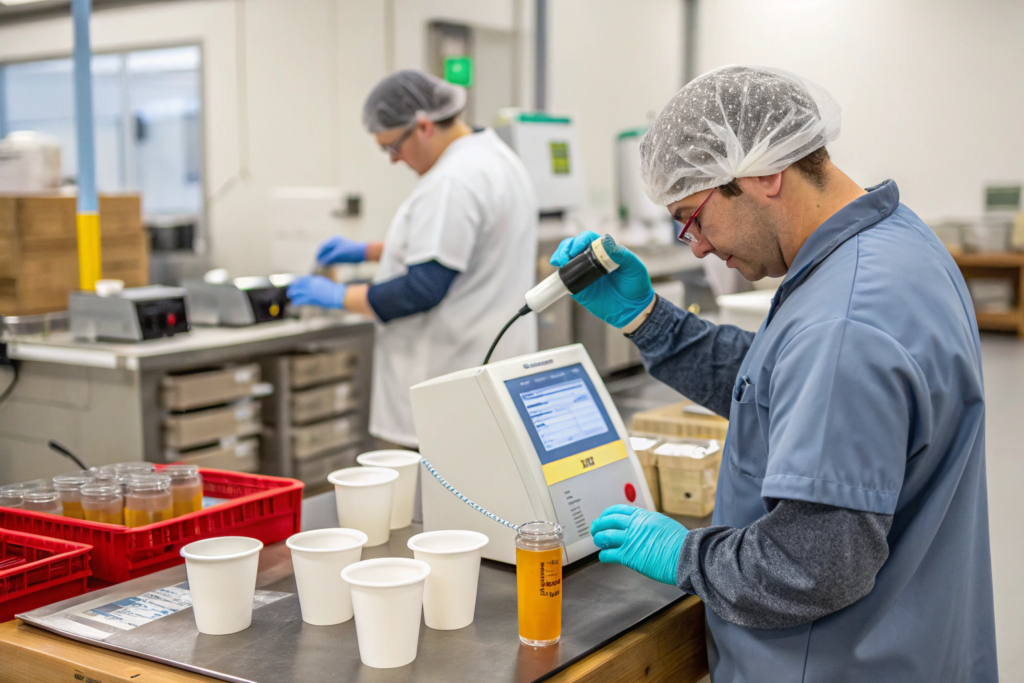
You can have the best design, but if your production line isn't controlled, you'll have leaks, inconsistent fills, and customer complaints. Quality control is built into the manufacturing process.
Critical QC Checkpoints:
- Incoming Green & Roasted Coffee QC: Start with consistent beans. As your supplier, we provide Certificates of Analysis for moisture, density, and screen size to ensure a stable raw material.
- Grind Consistency Monitoring: Use a particle size analyzer periodically to ensure your grind setting hasn't drifted, which would affect brew time and taste.
- Bag Seal Integrity Testing: This is paramount. Use a destructive tear test on random samples from the production line to check seal strength. For non-destructive testing, consider leak detection systems that can identify pinholes or weak seals.
- Residual Oxygen Analysis: Use a handheld oxygen analyzer to puncture random finished bags and measure the O₂ level inside. It should be consistently below 2%.
- Brew Testing: Brew bags from the start, middle, and end of every production run. Time the brew, taste the coffee. Does it match your standard?
Production Line Considerations:
- Automated vs. Semi-Automated: For true industrial scale, you need an integrated line: grinder -> nitrogen flush & seal machine -> outer packaging machine. For small batches, semi-automatic single-serving bagging machines exist.
- Clean Room Environment: Packaging should be done in a clean, climate-controlled area to minimize dust and moisture contamination.
- Batch Coding: Every outer package should have a traceable lot code linking it to the roast date, grind batch, and packaging shift.
This rigorous process is what delivers on the promise of a trustworthy product. It's how you ensure the 1,000th bag is as good as the first.
What are the most common failure points in production?
- Seal Contamination: Coffee oils or fine grounds on the sealing area prevent a hermetic seal. This requires adjusting the fill head or ensuring the bag is clean before sealing.
- Inconsistent Nitrogen Flush: Machine calibration drift can leave too much oxygen in the bag. Regular O₂ analysis catches this.
- Grind Shift: Burr wear on the grinder changes the particle size, affecting brew time. Scheduled burr changes and PSD monitoring prevent this.
How do you manage shelf-life testing?
You must conduct accelerated aging tests. Store finished packages in a warm environment (e.g., 38°C/100°F) and taste them weekly. Compare to a control sample stored in ideal cold conditions. This predicts how your coffee will taste at 3, 6, and 9 months under normal shelf conditions and helps you set a conservative "best-by" date.
Conclusion
The best way to package drip coffee bags is a symphony of material science, mechanical design, and rigorous quality control. It's about creating a sealed, inert capsule that preserves peak freshness, then engineering a user-friendly vessel that delivers a perfect brew with zero guesswork.
For a brand, this investment in superior packaging is what transforms ground coffee from a commodity into a premium, convenient experience. It protects your reputation and ensures the quality of your coffee—and our beans—shines through in every cup.
Package your promise perfectly. BeanofCoffee supplies consistent, high-quality ground coffee in bulk, ideal for premium drip bag production. Contact Cathy Cai to discuss custom grind specifications and co-develop a winning product: cathy@beanofcoffee.com. Brew success, one bag at a time.