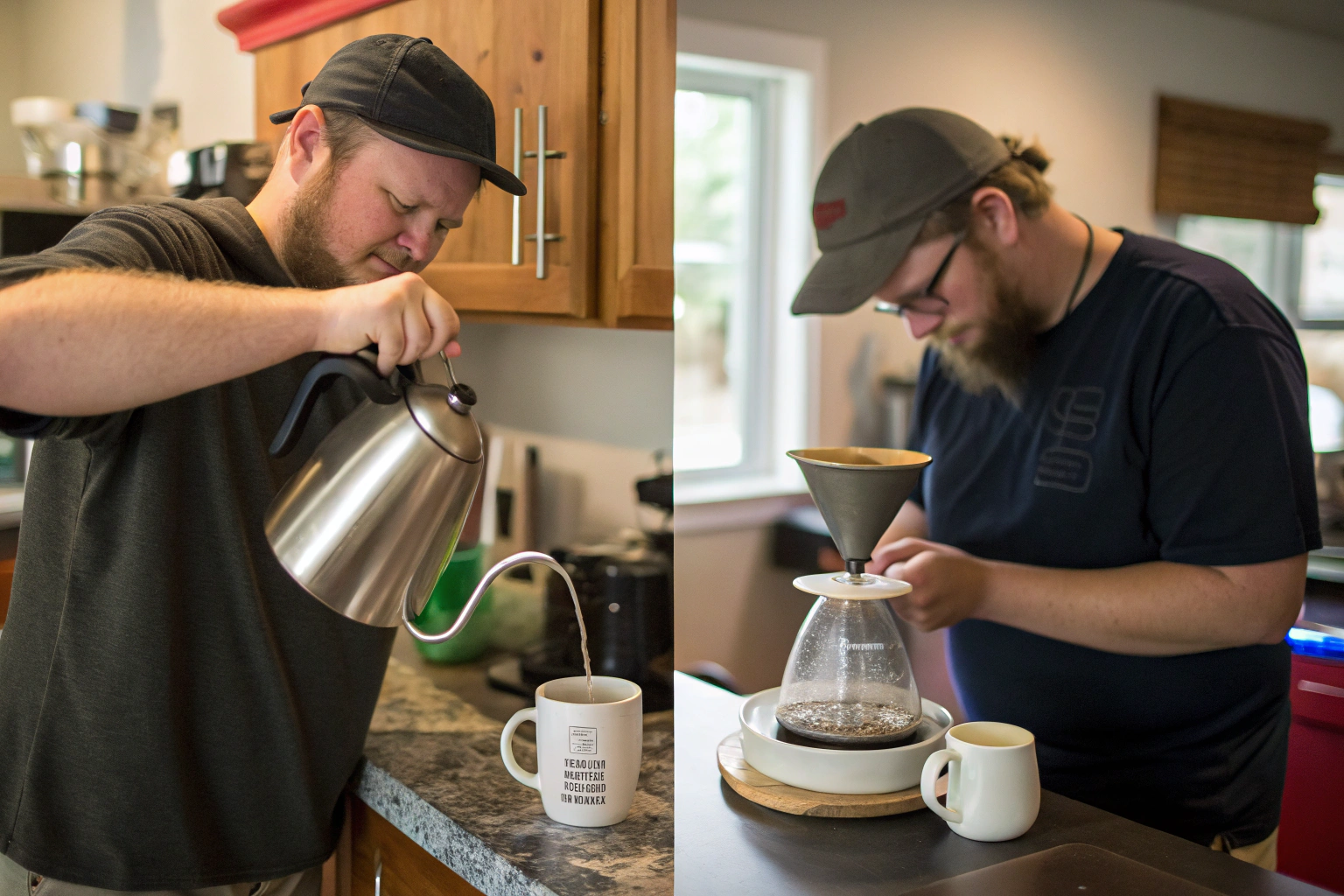
Are you a coffee lover like Ron, drawn to the beautiful ritual of pour-over coffee, but your results are all over the place? Some days your coffee is delicious; other days it's weak, sour, or disappointingly bitter. It's a huge source of frustration. You've bought the fancy dripper and the specialty beans, but you're missing the consistency. You're worried you're just wasting good coffee and will never be able to replicate that perfect cup you had at your favorite cafe.
The best way to make pour-over coffee is to follow a precise, repeatable method that controls four key variables: a consistent coffee-to-water ratio, the correct grind size, precise water temperature, and a controlled pouring technique. While there are many specific recipes, the "best" way is any method that allows you to master these fundamentals. It's not about a single magic recipe, but about understanding why each step matters and executing them with intention, turning a frustrating guessing game into a mindful, rewarding craft.
As a coffee farmer, my work ends when the green beans are shipped. But my passion for flavor follows the bean all the way to the final cup. I've seen how the care we take on our Yunnan plantations can be either honored or erased in these final moments of preparation. Pour-over is a method that, when done right, can truly showcase the unique character of a coffee bean. In this article, I'll guide you through a simple but effective method that will help you master the fundamentals and consistently brew a delicious cup that does justice to the coffee's origin.
What Equipment Do You Really Need?
You're ready to start, but you look at all the gear available and it's overwhelming. Do you need the most expensive grinder? Does the shape of the dripper really matter? You're worried about spending a lot of money on unnecessary equipment or, conversely, buying cheap gear that will hold you back. The problem is separating the essential tools from the nice-to-haves.
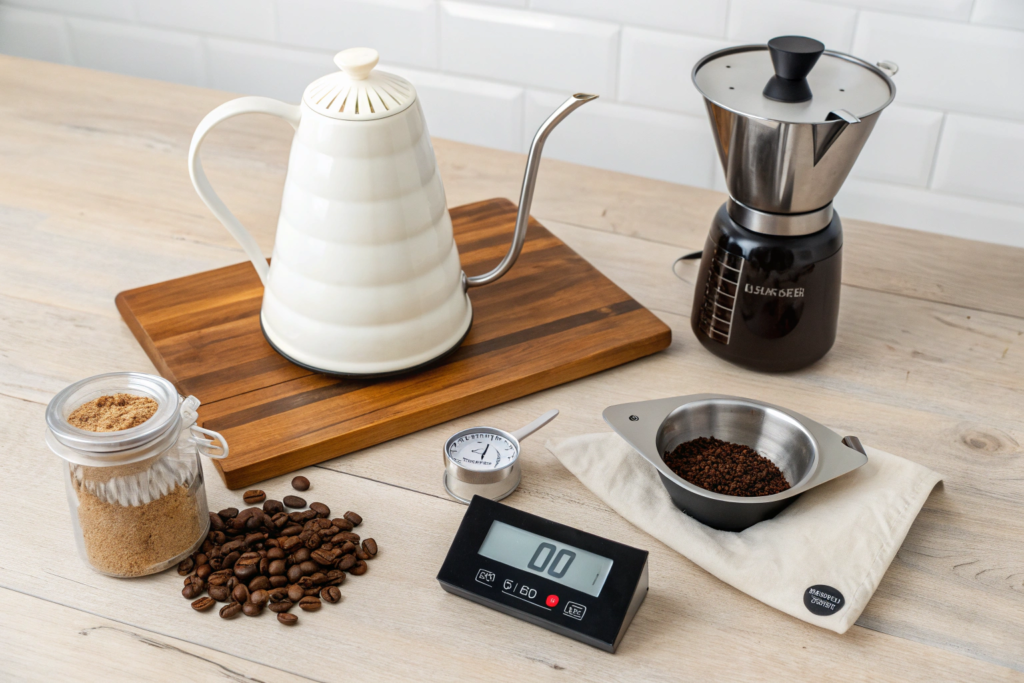
While you can spend a fortune, you only need a few key pieces of equipment to make exceptional pour-over coffee. Think of these as your foundational tools for controlling the key variables.
- A Pour-Over Dripper: This is the cone that holds the filter and coffee. There are many styles (like the Hario V60, Kalita Wave, or Chemex), but a simple ceramic or plastic V60-style dripper is a fantastic and affordable place to start.
- A Gooseneck Kettle: This is non-negotiable. The long, thin spout of a gooseneck kettle gives you the precise control over the speed and placement of your water that is impossible with a standard kettle. It's the single biggest upgrade you can make to your technique.
- A Digital Scale with a Timer: Brewing coffee is a science of ratios. A digital scale allows you to weigh your coffee and water accurately, ensuring you use the same ratio every time. Most coffee scales have a built-in timer, which is essential for tracking your brew time.
- A Quality Burr Grinder: As we've discussed before, a burr grinder is crucial for a uniform grind size, which is the foundation of an even extraction.
With these four items, you have everything you need to control the process and brew consistently delicious coffee.
Why is a gooseneck kettle so important?
A gooseneck kettle is critical because it allows you to pour water slowly, gently, and precisely. This control prevents you from agitating the coffee bed too much, which can cause channeling and uneven extraction. It lets you pour in controlled circles, ensuring all the grounds are saturated evenly. Trying to do this with a regular kettle is like trying to paint a detailed picture with a fire hose—it's messy and lacks the necessary precision for pour-over.
Do I have to grind my own beans?
For the best possible flavor, yes. Coffee begins to lose its aromatic compounds the moment it's ground due to oxidation. Grinding your beans just seconds before you brew preserves their freshness and results in a dramatically more vibrant and flavorful cup. While you can use pre-ground coffee, you will be missing out on a significant amount of the coffee's potential. If you love coffee, a quality grinder is the best investment you can make.
A Simple Step-by-Step Pour-Over Method
You have your gear, you have your beans, and you're ready to brew. You need a simple, reliable recipe to start with, not a complex, multi-pour professional routine. You're worried about memorizing complicated steps and timings. The problem is finding a foundational method that is easy to learn but delivers great results.
Let's walk through a classic, simple method. We'll use a standard 1:16 coffee-to-water ratio, which is a great starting point for most beans.
Target: 20g of coffee to 320g of water.
Grind: Medium-fine, like table salt.
- Heat and Rinse: Heat your water to just off the boil, around 200-205°F (93-96°C). Place your paper filter in the dripper and rinse it thoroughly with hot water. This removes any papery taste and preheats your dripper and server. Don't forget to discard the rinse water!
- Grind and Add Coffee: Grind your 20g of coffee and add it to the filter. Give it a gentle shake to create a flat, level bed. Place the entire setup on your scale and tare it to zero.
- The Bloom (0:00 - 0:45): Start your timer and pour about 50g of water evenly over the grounds, ensuring they are all saturated. You'll see the coffee "bloom" or puff up as it releases CO2 gas. This is a sign of freshness! Let it sit for 45 seconds. This bloom phase is critical for an even extraction later.
- The Main Pour (0:45 - 2:00): Now, begin your main pour. Pour the remaining water slowly and steadily in a circular motion, moving from the center outwards and back again. Try to keep the water level consistent, about halfway up the dripper. Your goal is to finish pouring all 320g of water by the 2:00 mark.
- The Drawdown (2:00 - 3:00): Once you've poured all the water, let the coffee finish draining through. The entire process, from the start of the bloom to the last drip, should take around 3 minutes.
If your brew time is too fast, your grind is likely too coarse. If it's too slow, your grind is too fine. Adjust your grind size for the next brew to hit that 3-minute target.
What is the "bloom" and why is it important?
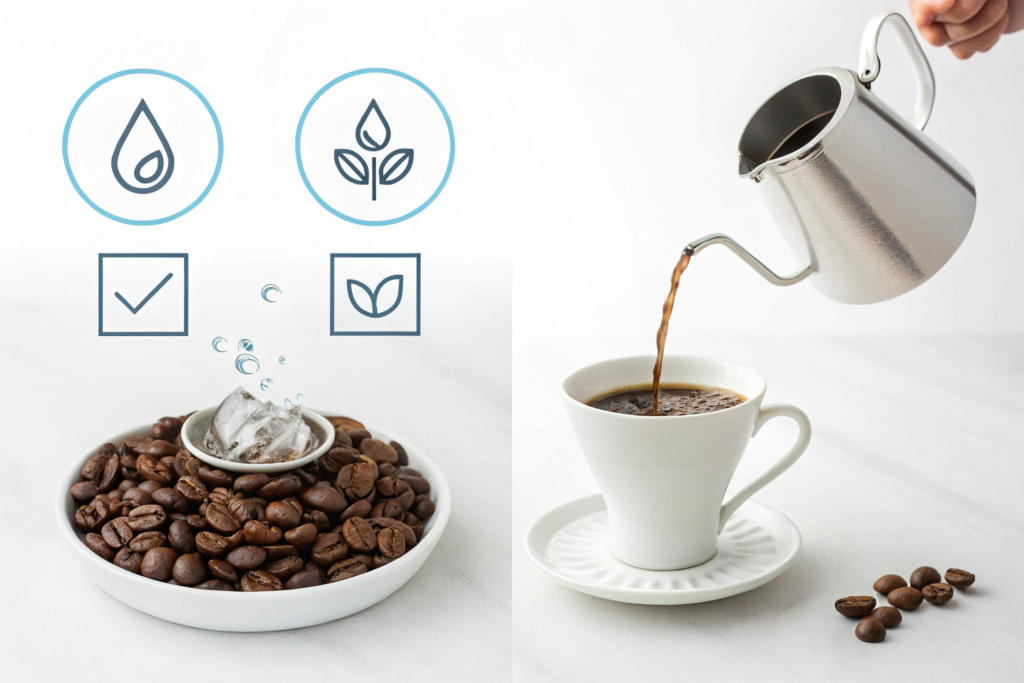
The bloom is the initial phase where a small amount of hot water is added to the coffee grounds. Freshly roasted coffee contains a lot of trapped carbon dioxide (CO2). The bloom allows this gas to escape. If you skip this step and go straight to your main pour, the escaping CO2 will push water away from the grounds, leading to an uneven, under-extracted brew. A proper coffee bloom is essential for a balanced extraction.
How do I know what "medium-fine" grind is?
Grind size is best learned through experience and by taste. A "medium-fine" grind should feel slightly finer than sand but coarser than powder. The most important thing is to use your total brew time as a guide. If your total time is around 3 minutes with the recipe above, your grind size is in the right ballpark. From there, you can make small adjustments based on taste. If it's sour, grind finer. If it's bitter, grind coarser.
How Do You Tailor the Recipe to the Bean?
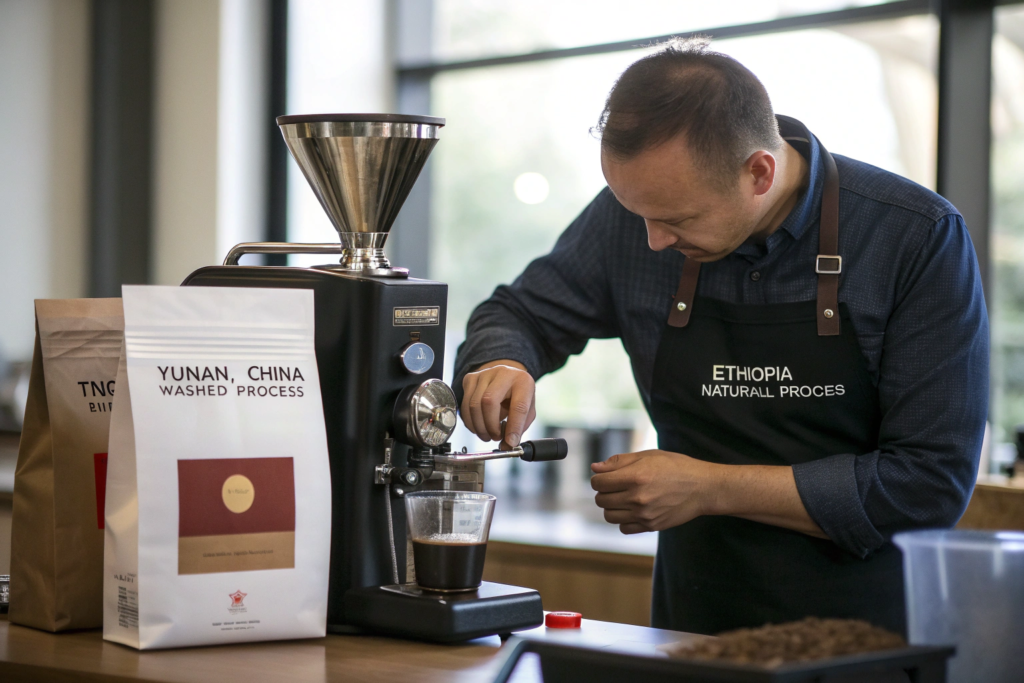
You've mastered the basic recipe, and you're getting consistent results. But now you're experimenting with different beans. You notice that the light, fruity Ethiopian coffee you bought tastes a little bitter with your standard recipe, while the rich, chocolaty Yunnan coffee from Shanghai Fumao tastes perfect. The problem is realizing that a "one-size-fits-all" approach has its limits. You want to learn how to adapt your technique to bring out the best in every unique bean.
This is where you graduate from a technician to a craftsperson. The best way to make pour-over is to adjust your technique to highlight the inherent characteristics of the coffee you're using. Different beans require different approaches.
- For Dense, High-Grown Beans (like many from Africa): These beans are very hard and their flavors can be harder to extract. You might need to use a finer grind or hotter water (right at 205°F / 96°C) to properly extract their bright, floral, and acidic notes.
- For Softer, Lower-Grown Beans (like many from Brazil or our Yunnan Catimor): These beans are less dense and extract more easily. To avoid pulling out bitter flavors, you might want to use a coarser grind or slightly cooler water (around 195-200°F / 90-93°C). This will emphasize their sweetness and body.
- For Natural Processed Coffees: These beans are fermented with the fruit on, giving them intense fruity flavors. They are also more soluble. A coarser grind and multiple, gentle "pulse pours" (pouring a little water at a time) can help you control the extraction and produce a sweet, clean cup without overwhelming funkiness.
The key is to taste your coffee and think critically. Is it sour? You under-extracted. Grind finer or pour slower. Is it bitter? You over-extracted. Grind coarser or pour faster. This feedback loop is how you learn to dial in your brew.
Conclusion
The journey to the perfect pour-over is a rewarding one. It transforms a simple morning routine into a mindful practice of craft and precision. While the array of techniques and equipment can seem intimidating, the "best" way is simply the one that is repeatable and allows you to control the fundamental variables of ratio, grind, temperature, and technique.
Start with a simple, foundational recipe, master it, and then begin to experiment. Learn to listen to what your taste buds are telling you and adjust your method to suit the unique character of each coffee bean. This is how you truly honor the long journey of the coffee, from the dedicated farmers on our plantations in Yunnan to the final, beautiful brew in your cup. It's about unlocking potential and savoring the delicious results of a process done with care.
If you're looking for exceptional single-origin beans that provide a rich, sweet, and balanced canvas for your pour-over practice, I invite you to explore our offerings at BeanofCoffee. The chocolaty and nutty notes of our Arabica and Catimor beans are a perfect reward for a well-executed brew. Please reach out to my colleague, Cathy Cai, at cathy@beanofcoffee.com to learn more.