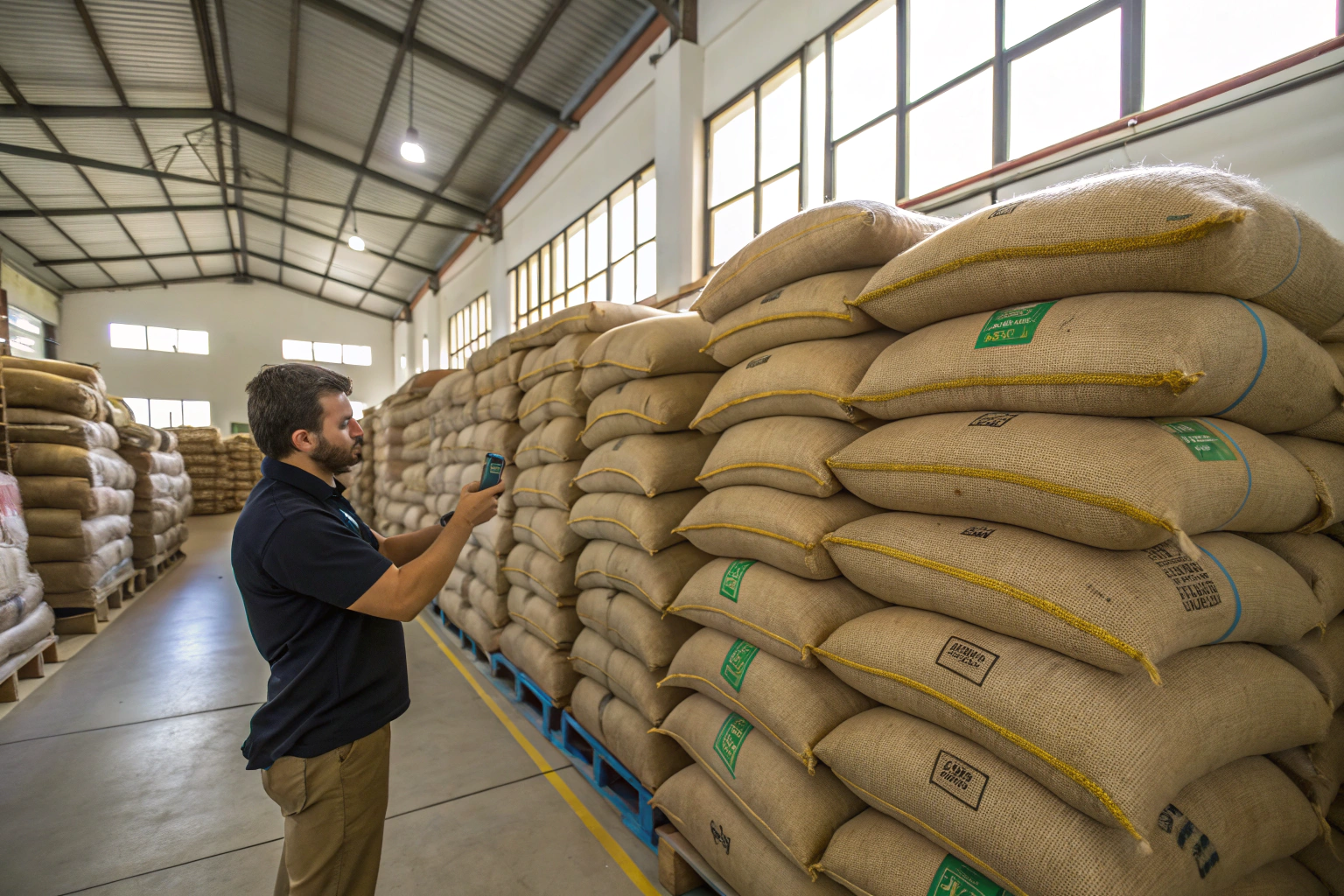
I remember a buyer from Europe who called me in a panic. He had just received a 20-foot container of our Arabica green coffee. He was excited. But then he asked me a simple question that stopped me: “Cathy, what do I do with all this coffee now?” He had no storage plan. He thought he could just put the bags in his garage. That mistake cost him. The beans absorbed moisture from the humid air. By the time he roasted them, the quality was gone. So let me share what I have learned from our farms in Baoshan and from working with buyers across North America, Europe, and Australia.
The best way to store imported green coffee is to keep it in a cool, dry, and stable environment. Aim for a temperature between 18°C and 22°C (64°F to 72°F) and relative humidity between 50% and 60%. Use a warehouse with proper ventilation, keep bags off the floor, and protect them from direct sunlight. Consistent conditions matter more than perfect numbers.
I will walk you through the practical steps. We will talk about temperature, humidity, airflow, and common mistakes. Because good storage is not complicated. But it does require attention. And when you get it right, your coffee stays fresh for months. At Shanghai Fumao, we handle this every day. So let me share what works.
What Temperature and Humidity Levels Should You Maintain?
Temperature and humidity are the two biggest factors that affect green coffee stability. Think of green beans as seeds. They are alive. They breathe. If the environment is too hot or too wet, they start to degrade. Mold can grow. Flavors flatten. So let me give you the numbers that work.
Maintain a temperature range of 18°C to 22°C (64°F to 72°F) and relative humidity of 50% to 60%. These levels slow down the aging process and prevent mold growth. Avoid temperature swings. A sudden change can cause condensation inside the bags, which leads to moisture spots and quality loss.
I once visited a buyer in Texas. He stored his coffee in a metal warehouse. In summer, the temperature inside hit 40°C (104°F). The beans turned brittle. The flavor became flat and papery. He lost three pallets before he asked for help.
Why Does Temperature Stability Matter More Than Exact Numbers?
Here is the thing. A steady 23°C is better than a room that goes from 18°C at night to 30°C during the day. Temperature swings cause the beans to expand and contract. That can crack the bean structure. It also creates micro-condensation.
So do not stress if you cannot hit the exact range. Just aim for consistency. Use an air conditioner if needed. Or pick a storage room that stays naturally cool.
Another way to look at this is the rate of aging. For every 5°C increase above 22°C, the aging process doubles. So a bean stored at 32°C ages four times faster. That means your six-month inventory might taste like 24-month-old coffee.
If you are sourcing from us, you can check our coffee quality control process to see how we maintain freshness from farm to shipment.
How Do You Monitor Humidity Correctly?
Humidity is trickier than temperature. High humidity causes mold. Low humidity dries out the beans and makes them lose weight.
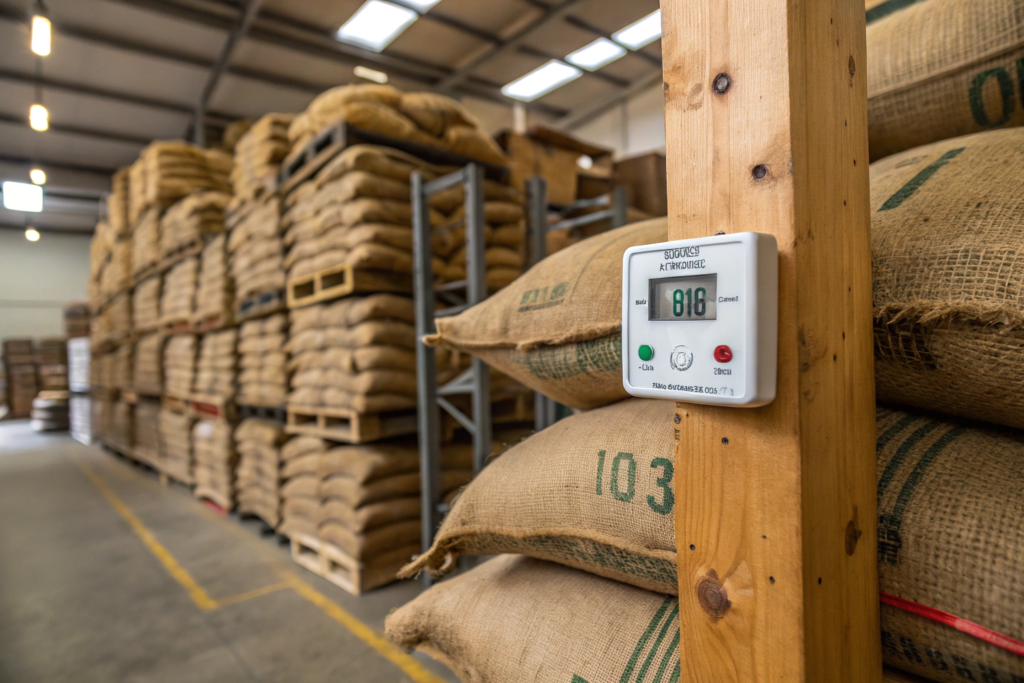
I recommend using a hygrometer. Put it near the coffee bags, not on the wall. Check it daily. If humidity goes above 65%, run a dehumidifier. If it drops below 45%, consider a humidifier, though that is less common.
We use digital temperature and humidity data loggers in our own warehouse in Yunnan. We track conditions 24/7. For our buyers, we suggest the same approach. It gives you peace of mind. You can also read more about coffee storage best practices from the Specialty Coffee Association.
How Should You Stack and Arrange Coffee Bags?
Stacking seems simple. But I have seen mistakes that ruined entire shipments. The way you stack affects airflow. It affects moisture movement. It even affects pest control. So let me share the stacking rules we use in our own warehouse.
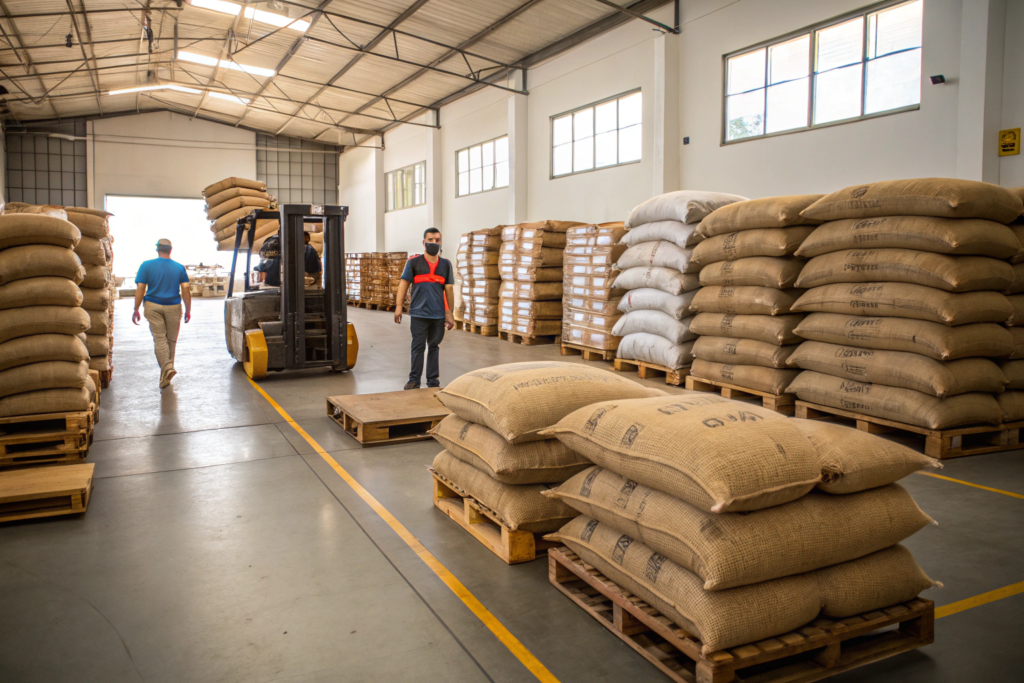
Stack green coffee bags on pallets, not directly on the floor. Leave at least 20 inches (50 cm) of space between stacks and the walls. Keep stacks no more than six bags high to allow air circulation. Use a FIFO (first in, first out) system so older beans get used first. This prevents any bag from sitting too long.
I learned this lesson early. When we first started exporting, we stacked bags ten high to save space. The bags at the bottom got compressed. The airflow was bad. Some beans developed off-notes. Now we follow strict stacking rules.
What Is the Right Way to Use Pallets?
Always use clean, dry pallets. Wooden pallets are fine, but check them for mold or pests first. Plastic pallets are even better because they do not absorb moisture.
Keep the pallets off the floor. Even if your floor looks dry, moisture can rise from concrete. A gap of at least 4 inches (10 cm) helps.
We also use pallet covers or liners for long-term storage. These plastic sheets go under the bags. They block moisture from below.
For shipments we handle, we work with Shanghai Fumao to ensure containers are properly loaded and pallets are set up correctly before shipping.
How Do You Manage Airflow Between Stacks?
Air needs to move. If stacks are too close together, you create dead zones where moisture collects.
Leave at least 20 inches between stacks. This allows air to flow around each pallet. It also gives you space to inspect bags.
If your warehouse has fans, use them. Gentle airflow prevents hot spots. But do not point fans directly at the bags. That can dry out the outer layer of beans. Another tip: do not stack different lots on top of each other. Keep each lot separate. Label them clearly. I use a simple system: harvest date, farm block, and processing method. This helps with rotation.
Learn more about our coffee processing methods to understand how we prepare beans for long-term storage.
How Long Can Green Coffee Be Stored Without Losing Quality?
This is the question every buyer asks. How long can I keep it? The answer depends on your storage conditions. But I can give you realistic timelines based on what we see with our own coffee and what our clients report.
Under ideal storage conditions (18-22°C, 50-60% humidity), Arabica green coffee maintains peak quality for 6 to 12 months. Robusta can last slightly longer, up to 12 to 18 months. After that, the flavor profile changes. It does not go bad, but it loses brightness and complexity. For specialty-grade coffee, aim to roast within 8 months of the harvest.
I have a client in Australia who ages some of his beans intentionally. He likes the mellow flavor that develops after 12 months. But that is a choice. For most buyers, freshness matters.
What Happens When Coffee Ages?
Aging is not the same as spoilage. Spoilage means mold or off-flavors from bad storage. Aging is natural.
In the first few months, green coffee rests. The moisture equalizes. The flavor settles. After 6 months, you start to lose the bright, fruity notes. The body becomes smoother. After 12 months, the acidity drops further. The flavor becomes more muted.
For espresso blends, some roasters like aged beans. They give a rounder, less acidic shot. But for single-origin, freshness is key.
Our Catimor coffee beans are known for their body and hold up well for longer storage if conditions are right.
How Can You Test Stored Coffee?
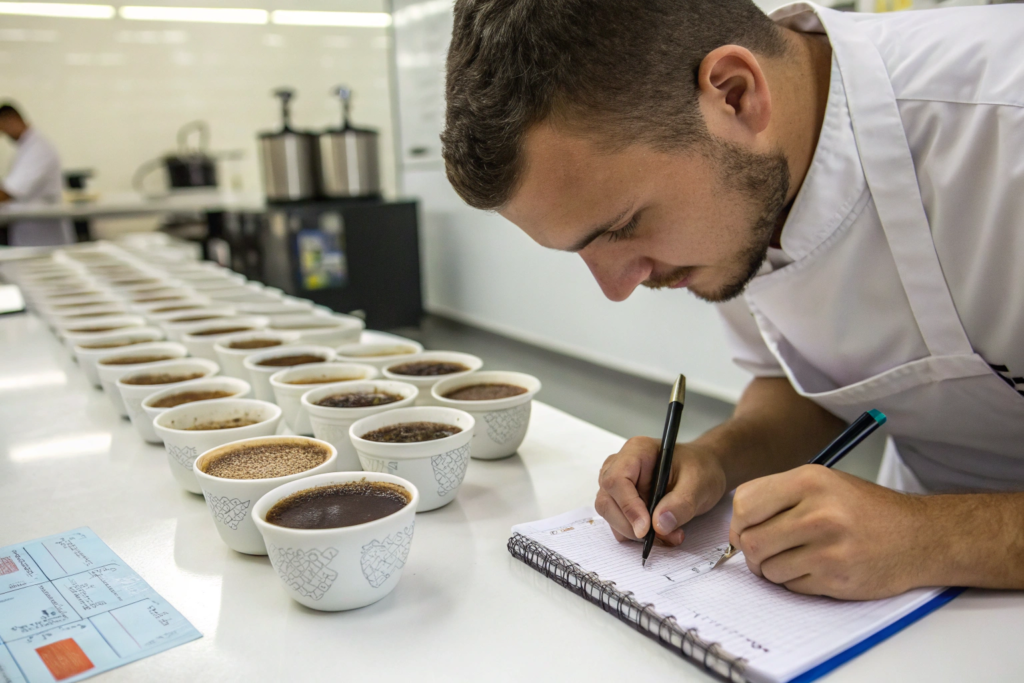
Pull a sample from your storage every month. Roast it. Cup it. Compare it to the previous month. We do this in our own warehouse. We keep a sample log. It tells us when a batch is at its peak.
If you do not have a roastery setup, use a small sample roaster. Or send samples to a lab. The cost is small compared to the value of your inventory. Another way is to track moisture content. When green coffee ages, it loses moisture slowly. If you see a drop of more than 1% from the original level, the flavor is changing.
You can check our green coffee specifications to see the moisture levels we guarantee at shipment.
What Common Storage Mistakes Should You Avoid?
I have seen buyers make the same mistakes over and over. Some of them are simple. Some are costly. Let me list the ones I see most often. Avoid these, and your storage will be solid.
The most common storage mistakes are: storing coffee near chemicals or strong odors, ignoring temperature swings, stacking bags too high, and using dirty or damp storage areas. Another mistake is forgetting to rotate inventory. Old coffee gets buried at the back, and you only find it a year later when it is too late.
I remember a buyer in New York. He stored his coffee next to a pallet of cleaning supplies. The coffee absorbed the chemical smell. He had to throw away the whole shipment. That was a $15,000 mistake.
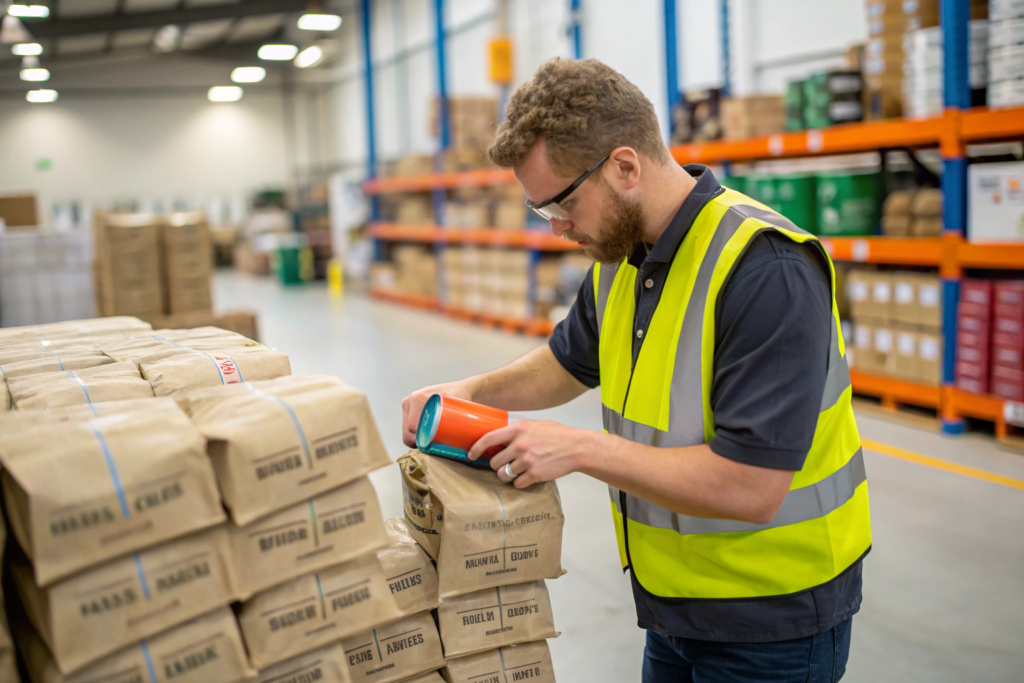
Why Should You Keep Coffee Away from Odors?
Green coffee acts like a sponge. It absorbs odors from its surroundings. So do not store it near chemicals, spices, or even strong-smelling foods. We store our coffee in dedicated warehouses. Nothing else goes in there. No cleaning products. No food items. Just coffee.
If you share warehouse space, use a separate room. Or at least keep a good distance. When we export through Shanghai Fumao, we make sure the containers are clean and free from any odor-causing residues before loading.
What Is the Danger of Inconsistent Rotation?
FIFO is not just an accounting term. It is a quality practice. When you receive a new shipment, move the old coffee forward. Put the new coffee behind it. Label each pallet with the arrival date.
I use a simple color code. Green label for the newest. Yellow for mid. Red for oldest. When a pallet gets a red label, I know it is time to use it or sell it.
If you skip rotation, you end up with old coffee that nobody wants. And you have to discount it or blend it. That hurts your margins. For bulk orders, we help buyers plan their coffee export logistics to match consumption with delivery schedules, so storage time is minimized.
Conclusion
Storing imported green coffee is not complicated. But it does require discipline. Keep the temperature steady between 18°C and 22°C. Keep humidity between 50% and 60%. Stack bags on pallets with good airflow. Rotate your inventory. And taste your coffee regularly to track changes.
These practices come from experience. I have applied them on our 10,000 acres of coffee plantations in Yunnan. I have shared them with buyers in North America, Europe, and Australia. They work.
At BeanofCoffee, we do not just sell you coffee. We help you keep it fresh. We want you to enjoy the quality you paid for. Our team works with logistics partners like Shanghai Fumao to make sure every shipment arrives in the right condition for proper storage.
If you have questions about storage, or if you want to see how we handle our own inventory, reach out. I am happy to share more. Contact Cathy Cai. My email is cathy@beanofcoffee.com. Let me know what you are storing. I will help you get it right.