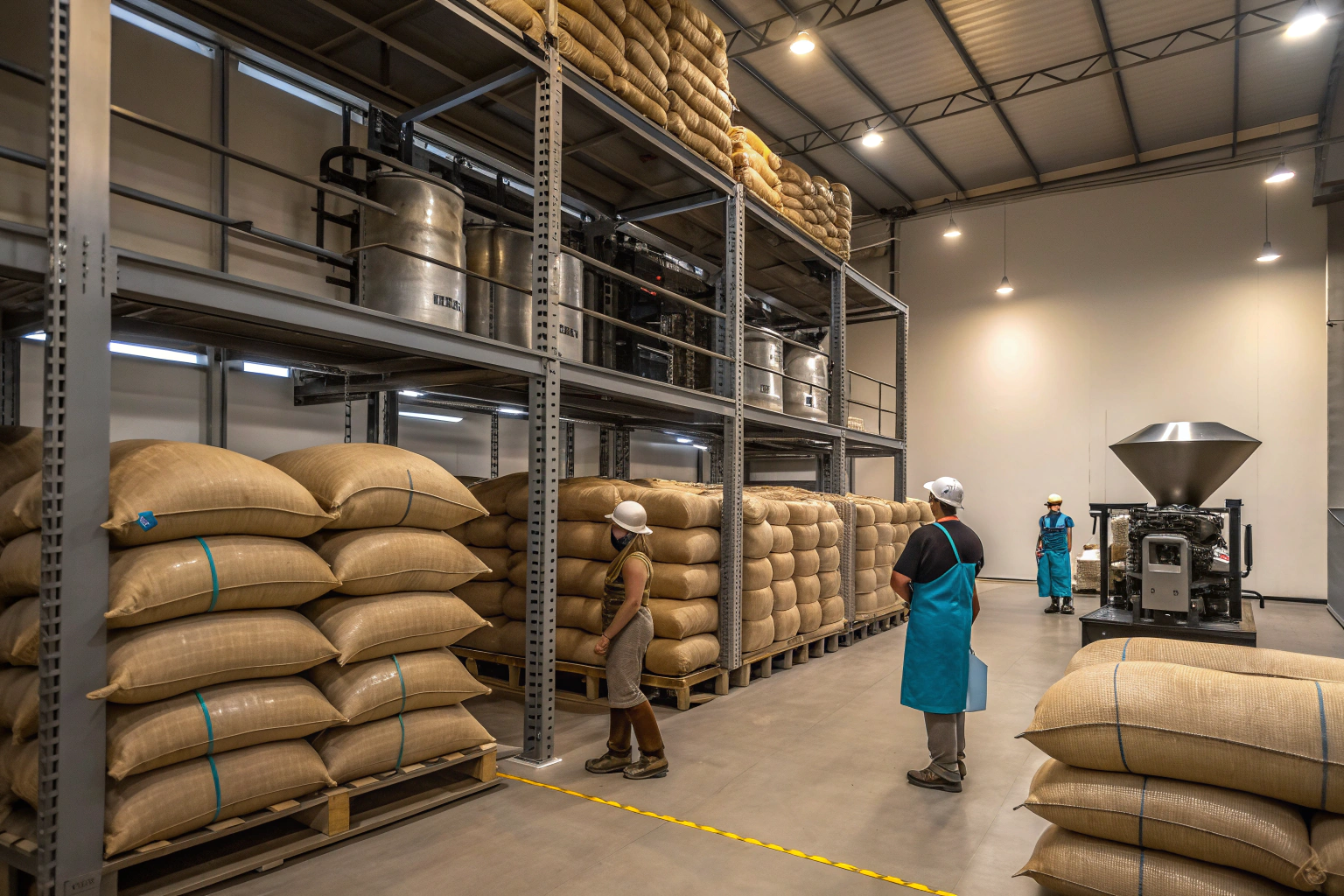
Your latest container has just cleared customs. You're now the proud owner of 10, 20, or even 100 bags of premium green coffee beans. A wave of satisfaction is quickly followed by a practical dread: "Where, and more importantly how, do I store all of this to protect my investment?" This isn't just about finding space in a warehouse. Improper storage of large quantities can lead to catastrophic losses—mold, pest infestation, flavor degradation, and ultimately, financial ruin. For an importer, distributor, or large-scale roaster, storage isn't a logistical afterthought; it's a core component of quality control and asset preservation.
The best way to store large quantities of green coffee beans is through a strategy of controlled environment, sealed containment, and systematic inventory management. This means utilizing a dedicated, climate-controlled warehouse where temperature, humidity, and light are strictly regulated, storing beans in their original, intact GrainPro or multi-layer jute bags on pallets, and implementing a rigorous First-In, First-Out (FIFO) system with regular condition monitoring. The goal is to slow down the beans' natural aging process and create a barrier against external threats, preserving both their safety and market value for up to 12 months or more.
Think of your coffee warehouse not as a static storage unit, but as a hibernation chamber for your most valuable asset. You are creating conditions that press "pause" on biological and chemical activity. Let's detail the specific environmental controls, packaging protocols, and management practices that define professional-grade bulk coffee storage.
What Are the Critical Environmental Controls?
The enemies of green coffee are constant: moisture, heat, oxygen, light, and pests. Your storage environment is your first and most important line of defense against them. An uncontrolled warehouse will accelerate the beans' deterioration, no matter how good the initial quality.
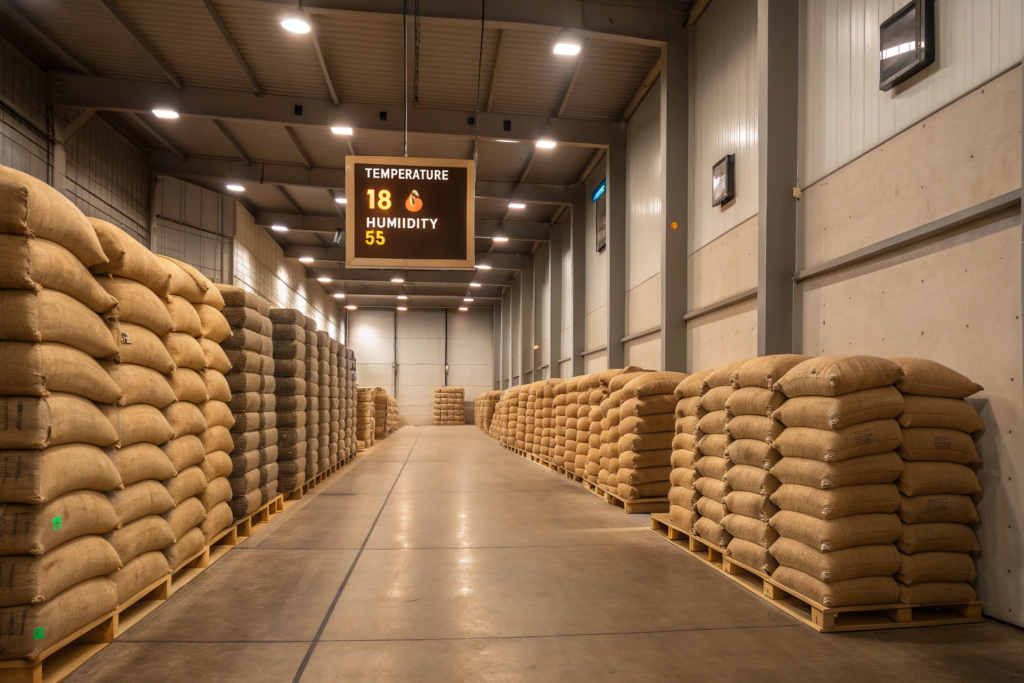
The gold standard is a climate-controlled (conditioned) warehouse. The ideal parameters are:
- Temperature: 15-20°C (59-68°F). Stable, cool temperatures drastically slow down chemical reactions within the bean, such as the oxidation of oils and the breakdown of acids and sugars that create flavor. Avoid fluctuations, which can cause condensation.
- Relative Humidity (RH): 50-60%. This is arguably the most critical factor. Humidity above 65% RH poses a severe risk of mold growth and a rise in water activity (aw). Humidity below 50% can over-dry the beans, making them brittle and causing them to lose weight (and value). Constant monitoring with hygrometers is essential.
- Darkness: UV light from sunlight or fluorescent fixtures can degrade the beans. The storage area should be dark or use low-UV lighting.
- Clean Air & Ventilation: Good, passive airflow prevents stale air pockets but must be filtered to avoid introducing dust, odors, or humidity from outside. Never store coffee near strong-smelling chemicals or foods.
For operations without full climate control, prioritize humidity control above all else using industrial dehumidifiers. This directly addresses the greatest risk of spoilage. At our export facility in Yunnan, and in the warehouses of our major clients in North America and Europe, this controlled environment is non-negotiable for maintaining stable and reliable quality.
How Does Temperature Fluctuation Cause "Sweating"?
This is a hidden danger. If beans stored in a cool warehouse are suddenly moved to a warm, humid loading dock, or if the warehouse temperature drops at night and rises during the day, condensation can form on the surface of the beans inside the bag. This localized "sweating" creates a microclimate of very high humidity, perfect for mold growth. The solution is to minimize temperature shocks. Let pallets acclimate to a new environment gradually if they must be moved, and maintain a stable temperature in the core storage zone. This practice is a key part of secure handling.
What is the Role of Pest Management in the Warehouse?
A warehouse is an ecosystem. Rodents and insects (like the coffee bean weevil) are attracted to stored grains. An integrated pest management (IPM) program is critical. This includes:
- Exclusion: Sealing building cracks, installing door sweeps, and using fine mesh on vents.
- Sanitation: Keeping the floor and area around pallets impeccably clean, with no spilled beans.
- Monitoring: Using pheromone traps and regular inspections to detect activity early.
- Professional Intervention: Using licensed pest control services for safe, targeted treatments if needed. Never apply pesticides directly to or near coffee bags.
Proactive pest management protects not just your current stock, but your warehouse's long-term viability.
How Should Beans Be Packaged and Palletized for Storage?
You cannot control what you cannot contain. The packaging is the bean's personal micro-environment. For long-term storage of large quantities, the industry has moved beyond traditional jute.
The best practice is to store green beans in their original, high-barrier packaging. Today, this typically means:
- GrainPro® Bags or Equivalent: These are polyethylene bags with a high barrier to oxygen and moisture. They are often used as a liner inside a standard jute bag. This combination provides excellent physical protection and an exceptional moisture/oxygen barrier. For the longest storage, beans can be stored in these sealed liners alone.
- Hermetically Sealed Bins or Silos: For the largest volumes (e.g., at a major roastery), transferring beans into temperature and humidity-controlled silos is the ultimate method. This is capital-intensive but offers the highest level of protection and automation.
The bags must remain sealed and intact. Never open a bag "just to check" unless you are ready to use its entire contents. Once opened, the protective barrier is broken. Pallets should be stacked neatly on pallets, never directly on a concrete floor, which can wick moisture. Use plastic pallets or place wooden pallets on a vapor barrier. Leave space between pallet rows for air circulation and inspection access.
Why is FIFO (First-In, First-Out) Essential?
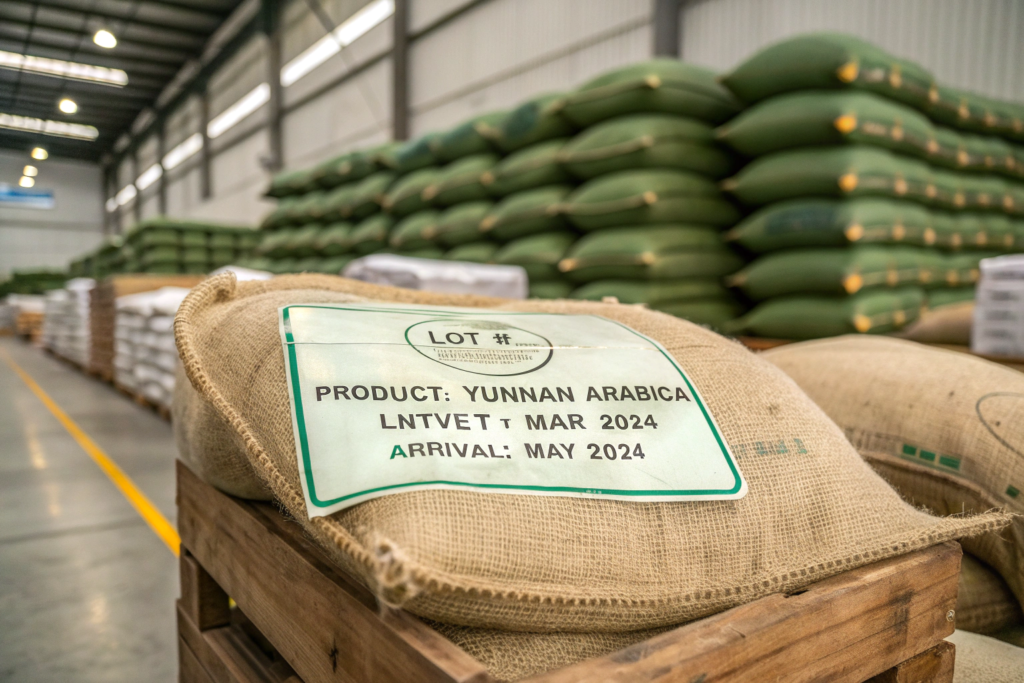
First-In, First-Out is the governing principle of inventory management for perishable goods. Physically organize your warehouse so that the oldest stock (by harvest date or arrival date) is the most accessible for shipping or roasting. This can be done by arranging pallets in rows and always taking from the front of the row, placing new arrivals behind. Use a clear labeling system on each pallet with the bean type, lot number, harvest date, and arrival date. Neglecting FIFO is how bags get lost in the back and emerge a year later, stale and possibly moldy. A digital inventory system that tracks these dates is a powerful tool for maintaining this discipline and ensuring timeliness in your supply chain.
What is the "Rule of 15" for Green Coffee Storage?
This is a helpful industry mnemonic for ideal conditions: Store green coffee at about 15°C (59°F), 15% moisture content (wet basis), and for no more than 12-15 months under these conditions. While the 12-15 month timeframe can vary with bean density and origin, it's a good conservative guideline. Storing beyond this, even in perfect conditions, will lead to noticeable flavor degradation (the beans become "woody" or "papery"). This rule reinforces that coffee is a fresh agricultural product with a finite shelf life, even when stored perfectly.
How to Monitor and Maintain Quality During Storage?
Setting up the perfect storage is only half the battle. Active, ongoing monitoring is what prevents small issues from becoming disasters. You cannot assume conditions are stable; you must verify.
Implement a scheduled warehouse audit routine. This should include:
- Daily/Weekly: Check and log temperature and humidity readings from multiple sensors in the warehouse.
- Monthly: Visually inspect a representative sample of bags from different lots and locations. Look for signs of bag damage, staining (potential moisture), or pest activity.
- Quarterly/Bi-Annually: Perform quality control tests on stored beans. The most important is water activity (aw) testing. Pull a small sample from a few bags, grind it, and test it. Any rise in aw above 0.65 is a red flag indicating potential moisture uptake and mold risk. You can also do a simple roast and cupping to assess flavor stability.
This proactive monitoring provides data to prove your beans are being maintained to spec and allows for early intervention. For clients of Shanghai Fumao, we recommend this protocol and can even provide guidance on acceptable aw drift over time.

What Are the Warning Signs of Storage Problems?
Know what to look for:
- Musty or Off Odors: The first sign of mold is often a dank, musty smell from the bag.
- Bag Staining: Dark, damp spots on the outside of jute bags indicate internal moisture or condensation.
- Clumping Beans: Open a bag and feel the beans. They should flow freely. If they clump together, it signals high humidity and sticking.
- Insect Activity: Live insects, webbing, or fine dust (frass) around bag seams.
- Unusual Weight Loss: If bags feel significantly lighter, it may indicate excessive drying or, worse, pest consumption.
Training your warehouse staff to recognize these signs is a critical part of your security protocol.
When and How Should You Re-Dry or Re-Bag Beans?
If monitoring reveals a problem—like a rising aw or a musty smell in a specific pallet—you must act.
- Re-Drying: This requires specialized equipment. Beans must be gently dried in a low-temperature (max 45°C/113°F), high-airflow dryer to lower moisture without "baking" them. This is a job for professionals or a well-equipped supplier. After drying, they must be re-conditioned and re-tested.
- Re-Bagging: If the original bags are damaged or contaminated, transferring the beans into new, clean GrainPro bags may be necessary. This should be done in a clean, controlled environment to avoid introducing new contaminants.
The cost of these interventions must be weighed against the value of the coffee. Prevention through proper storage is always infinitely cheaper.
What Are the Cost-Benefit Considerations for Different Storage Setups?
Storage quality exists on a spectrum, and your investment should match the value of your inventory and the length of storage time. A small roastery buying 10 bags at a time has different needs than an importer holding 500 bags for 9 months.
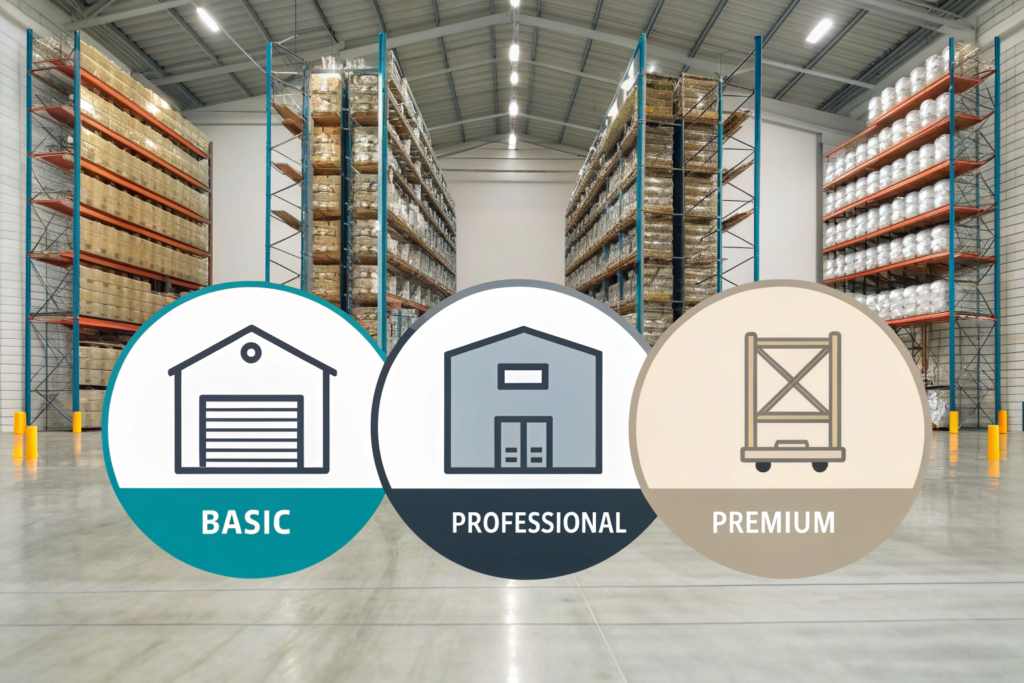
- Basic Setup (Short-term, <3 months): A clean, dry, dark room with pallets and dehumidifiers. Relies on intact original packaging. Lowest cost, highest risk for longer periods.
- Professional Setup (Medium-Long term, 3-12 months): A dedicated, insulated warehouse with full climate control (HVAC and dehumidification), pest management, and a FIFO system. This is the standard for serious importers and large roasters. The capital and operational costs (electricity) are significant but are justified by the preservation of asset value.
- Premium/Silo Setup (Very long-term or massive volume): Climate-controlled silos with automated inventory handling. Offers the ultimate in protection and efficiency but requires major capital investment.
The return on investment (ROI) for professional storage comes from:- Preserved Quality: Ability to charge a premium and maintain brand reputation.
- Reduced Losses: Near-elimination of write-offs due to mold or pests.
- Purchasing Power: Ability to buy larger quantities at better prices during harvest, knowing you can store it effectively.
For businesses using our beans as a stable year-round blend component, investing in professional storage is what allows them to buy and hold our Baoshan crop, securing their supply and cost for the year.
Is Third-Party Warehousing a Viable Option?
Yes, for many businesses. Specialty third-party logistics (3PL) providers offer temperature and humidity-controlled storage. This converts a capital expense (building your own warehouse) into an operational one. Key due diligence questions: Do they have experience with food products like coffee? What are their specific environmental controls and monitoring reports? What is their pest management protocol? What is their insurance coverage for stored goods? A good 3PL can be an excellent partner, providing scalability and expertise.
How Does Storage Tie Into Your Overall Supply Chain Finance?
Green coffee in storage is inventory capital. Efficient storage that extends shelf life improves your inventory turnover ratio and reduces carrying costs. It also allows you to participate in commodity hedging or forward contracts more confidently. In essence, excellent storage transforms coffee from a perishable good into a more stable financial asset, making your business more resilient and bankable. It's the foundation of a trustworthy and reliable operation in the eyes of both creditors and customers.
Conclusion
Storing large quantities of coffee beans is a discipline that merges food science, logistics, and asset management. The best method is a holistic system that controls the environment, protects the beans with high-barrier packaging, manages inventory with FIFO precision, and vigilantly monitors for any signs of degradation. There is no single "magic box," but a series of interconnected best practices that together press pause on time for your green coffee.
Cutting corners on storage is a false economy. The cost of lost quality or a ruined lot far exceeds the investment in a proper climate-controlled space and good management. Your storage protocol is a direct reflection of how much you value the product you sell.
If you are scaling your coffee business and need to establish or audit your bulk storage protocols, or if you seek a supplier whose beans are stabilized and packaged for the rigors of long-term storage, let's talk. At Shanghai Fumao, we can provide storage guidance and deliver beans at the optimal moisture and water activity level for your warehouse.
To discuss our bulk packaging options or request our white paper on green coffee storage best practices, please contact our logistics and quality lead, Cathy Cai. She can connect you with resources tailored to your volume and market. Reach her at cathy@beanofcoffee.com. Let's ensure your coffee investment is protected from our farm to your roaster.