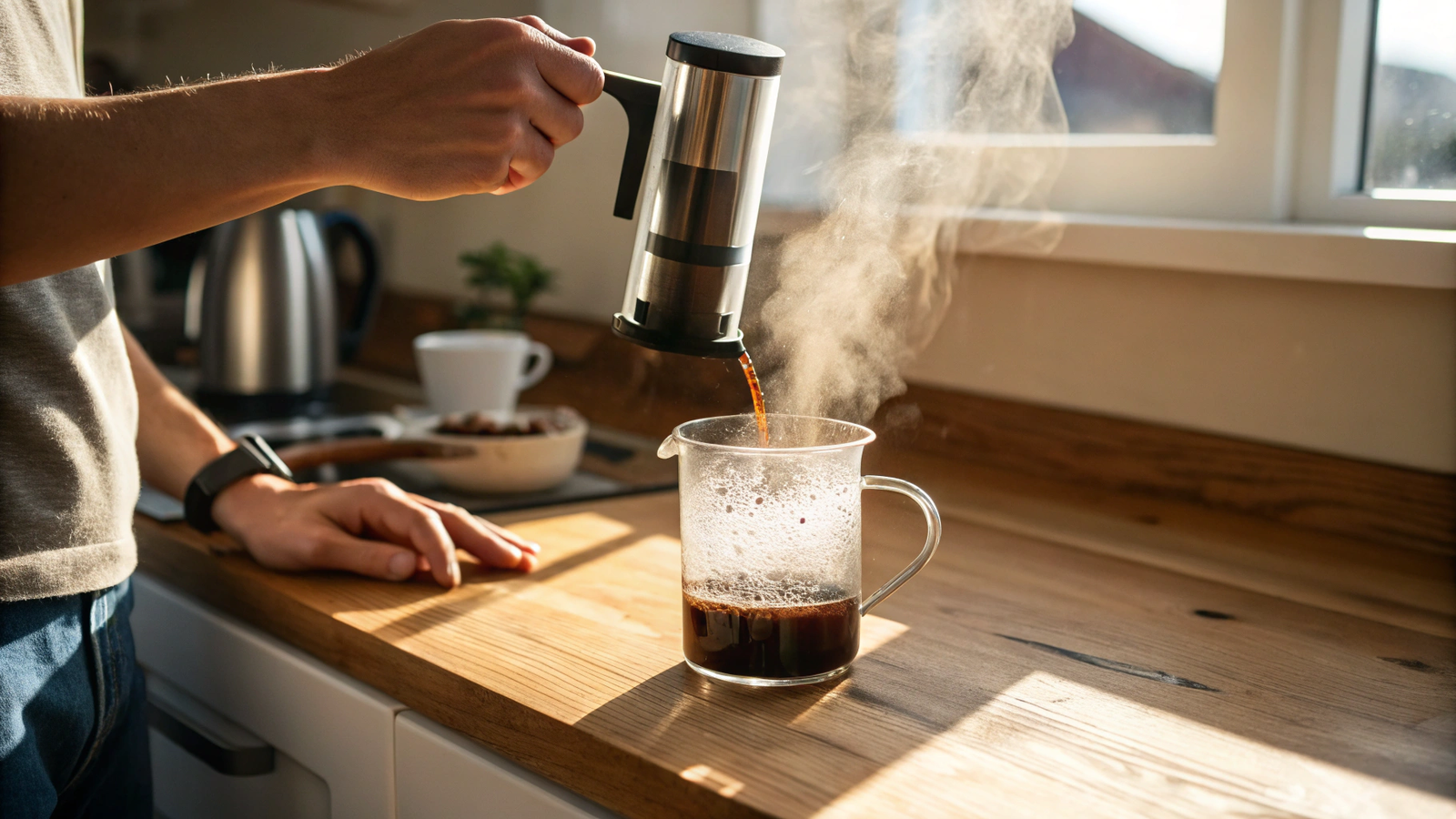
The Aeropress is beloved by home baristas worldwide for its simplicity, speed, and ability to produce smooth, rich, low-acid coffee. While there’s no single “perfect” method—since taste is personal—this reliable, easy-to-follow routine delivers consistent, delicious results every time, balancing strength, clarity, and body without bitterness.
Why Should You Choose an Aeropress Over Other Methods?
You love coffee. But your kitchen counter is already full. A French press? Too messy. A pour-over? Too slow. An espresso machine? Too expensive. I’ve been there. I’ve tried almost every brewing method over the past 15 years. And honestly? The Aeropress keeps surprising me. It’s small. It’s cheap. And it makes a seriously good cup.
The Aeropress gives you the best of both worlds: the body of a French press and the clarity of a pour-over. It uses air pressure to push water through the coffee grounds. This takes about 60 to 90 seconds. The result is a smooth, low-acid, and highly concentrated coffee. You can drink it black or dilute it into an Americano. No other single device does all that.
Another way to look at this is through the lens of control. With an Aeropress, you control the water temperature, the grind size, the steep time, and the pressure. That sounds technical. But it’s actually very forgiving. Even a beginner can make a great cup. And an expert can tweak every variable. So, what makes it truly better than other methods? Let's break it down.
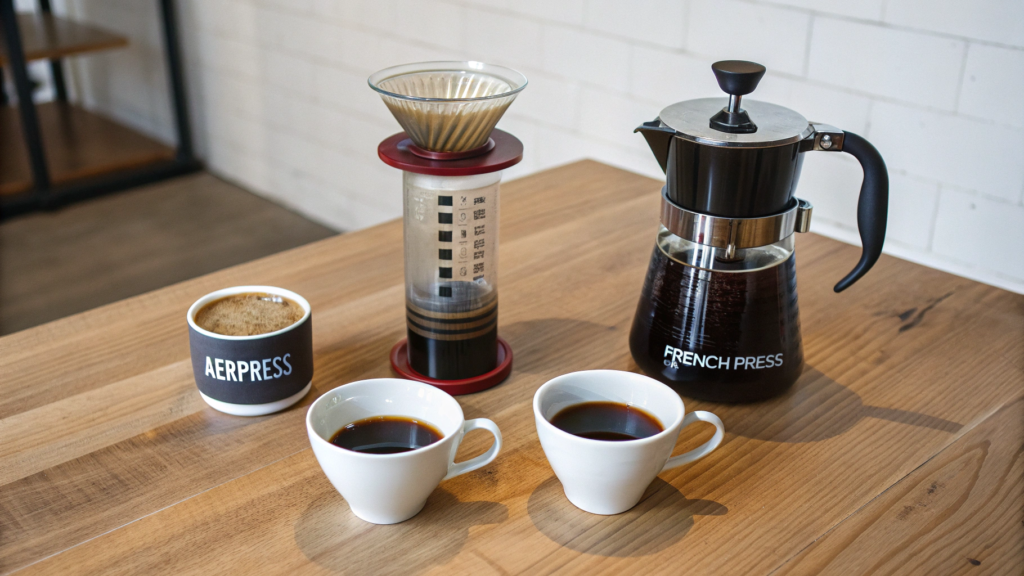
Is Aeropress coffee better than French press?
Yes, for most people. The French press uses a metal mesh filter. That lets fine coffee particles (called "fines") and natural oils pass through. Some people like that oily, heavy body. But others find it muddy or bitter. The Aeropress uses a paper filter (or a metal one if you prefer). The paper filter traps the fines and most of the oils. The result is a cleaner cup. You taste the bean’s true flavor, not the sediment. Also, clean-up is way easier. With a French press, you rinse out wet grounds. With an Aeropress, you just pop out a dry puck. Honestly? I haven’t used my French press in two years.
How does it compare to a pour-over?
Pour-over (like a V60 or Chemex) gives you amazing clarity. But it’s tricky. The pour speed, the water temperature, and the grind size all have to be perfect. Get one wrong, and your coffee tastes sour or bitter. The Aeropress is more forgiving. You can use a slightly uneven grind. You can pour water fast. You can even forget it for two minutes. It still tastes good. Plus, the Aeropress is portable. You can take it camping or to the office. Try doing that with a glass V60. One more thing: time. A pour-over takes 3 to 4 minutes. An Aeropress takes 1 to 2 minutes. When you’re late for work, that matters.
What Grind Size and Water Temperature Work Best?
You bought an Aeropress. You watched a video. But your coffee still tastes… off. Too sour? That’s under-extracted. Too bitter? That’s over-extracted. The problem is usually the grind size or the water temperature. Let me save you from wasting more beans. I’ll give you the simple setup that works for 90% of people.
Use a medium-fine grind. Think of table salt. Not as fine as espresso. Not as coarse as French press. And use water between 85°C and 96°C (185°F to 205°F). If you don’t have a thermometer, boil the water and wait 30 seconds. For light roasts, use hotter water. For dark roasts, use cooler water. This stops bitterness.
So, what does this mean for your morning routine? It means you don’t need an expensive grinder or a fancy kettle. You just need consistency. Let’s get into the details. Because the right grind and temperature will fix 80% of your bad cups.
How to find the right grind without a fancy grinder?
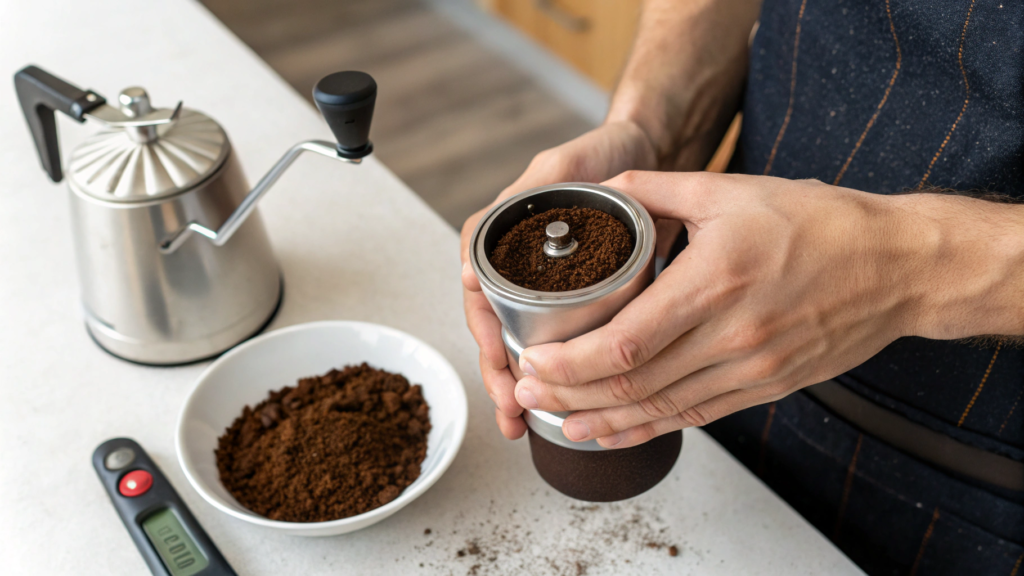
You don’t need a $500 grinder. A decent $50 burr grinder works fine. Or use a blade grinder. Just pulse it in short bursts. Then shake it. Then pulse again. Aim for the texture of sand or table salt. Here’s a real test: take a pinch of your ground coffee and rub it between your fingers. Does it feel like flour? That’s too fine. Does it feel like sea salt? That’s too coarse. You want something in between. Also, look at the coffee after you brew. If the used grounds look like mud, your grind was too fine. If they look like small, sharp pieces, you’re good. One of our coffee quality control guides explains this with photos. Check it out.
What water temperature works for most beans?
I’ll make this easy. Boil your water. Take it off the heat. Wait 30 to 45 seconds. That’s it. That gives you about 90°C to 95°C (195°F to 205°F). For dark roasts? Wait 60 seconds. For light roasts? Wait only 15 seconds. Why does this matter? Because water that’s too hot pulls out bitter compounds. Water that’s too cold leaves the sugars and acids behind. You get sour coffee. A simple trick: use a digital kitchen thermometer the first few times. After a week, you’ll learn the timing by feel. I still use a thermometer for new beans. It takes 5 seconds. It’s worth it.
What Is the Standard Aeropress Recipe for Beginners?
You have your Aeropress. You have your ground coffee. Now what? The internet has a million recipes. Inverted method. Standard method. Long steep. Short steep. It’s confusing. I felt the same way. So, I tested 12 different recipes over a month. And I found one that works every single time. No fancy moves. No mess.
Use the standard (non-inverted) method with these numbers: 15 grams of coffee (about one level Aeropress scoop), 250 grams of water (just below the top of the chamber), water at 90°C, steep for 60 seconds, then press slowly for 30 seconds. That’s it. You get a balanced, smooth cup. Drink it black or add hot water for an Americano.
Another way to look at this is as a starting point. From here, you can adjust. Want a stronger cup? Use 18 grams of coffee. Want a milder cup? Use 12 grams. Want more body? Press faster. Want more clarity? Press slower. But don’t change everything at once. Change one thing at a time. Then taste. Let me walk you through the steps.
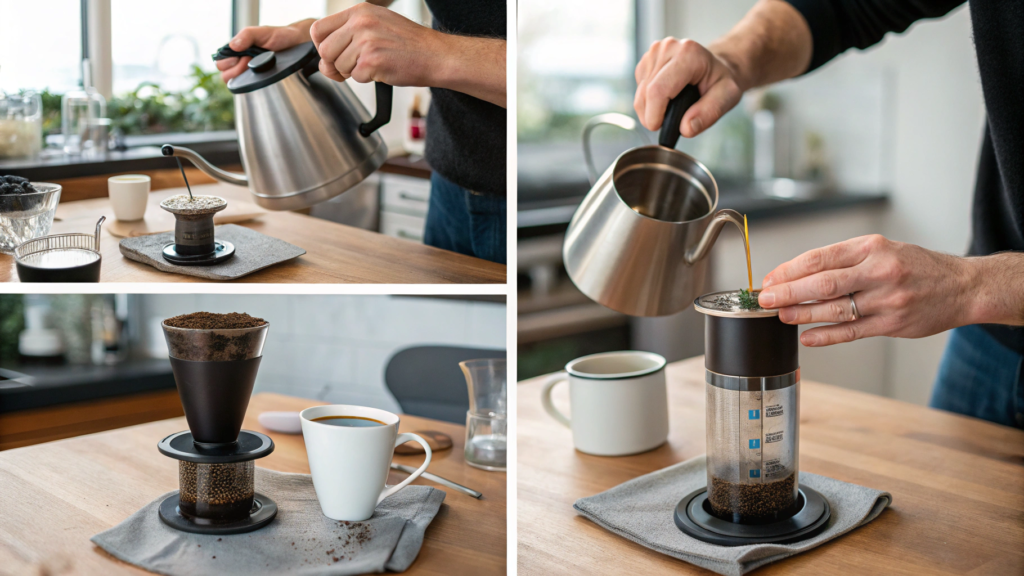
How to do the standard method step by step?
First, put a paper filter into the cap. Rinse it with hot water. This removes the paper taste. Second, add your 15 grams of medium-fine coffee. Third, pour 50 grams of hot water (about 90°C) over the grounds. Stir gently for 10 seconds. This is the "bloom." It lets gas escape. Fourth, pour the remaining 200 grams of water. Fill to the top. Fifth, insert the plunger at a slight angle. Pull up slightly to create a seal. This stops dripping. Sixth, wait 60 seconds. Seventh, press down firmly but slowly. It should take 20 to 30 seconds. Stop when you hear a hiss. That’s air. Don’t press through the hiss – it adds bitterness. Eighth, enjoy. Total time: under 2 minutes. I’ve made this recipe for over 100 guests. Nobody has complained.
What’s the inverted method and should you try it?
The inverted method means you put the plunger in first, turn the whole Aeropress upside down, add coffee and water, then flip it onto your cup. Why do people do this? It stops any dripping before you press. Some say it gives a stronger, more even extraction. I tried it for two weeks. Honestly? The difference is tiny. And the risk is big. I’ve seen people flip it wrong. Hot coffee goes everywhere. Burn risk is real. So, my advice? Start with the standard method. Master it. Then try inverted if you’re curious. But don’t believe the hype that it’s "way better." It’s not. It’s just different. And for a beginner, the standard method is safer and easier.
How Do You Clean and Store Your Aeropress?
You made your coffee. It was great. Now you have a used Aeropress on your counter. What next? Some people just rinse it. Some people take it apart completely. I’ve seen moldy Aeropresses. Trust me. You don’t want that. A quick, proper cleaning takes 30 seconds. And it makes your coffee taste better.
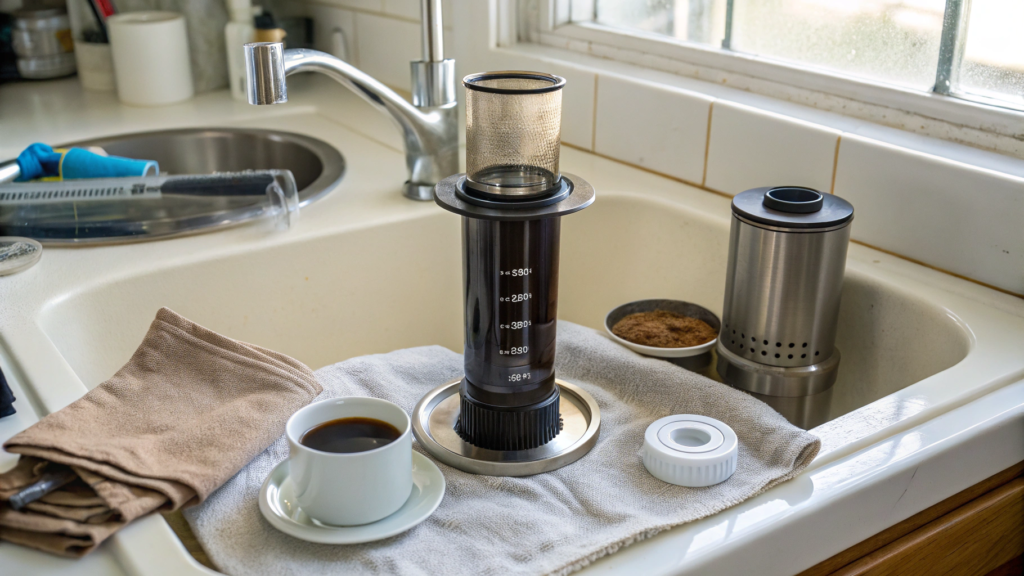
Pop out the coffee puck by pressing the plunger all the way through. Rinse the rubber seal and the chamber with warm water. No soap needed for daily cleaning. Once a week, take the plunger off and wash all parts with mild soap. Let them air dry completely. Store the Aeropress with the plunger pushed all the way through. This keeps the rubber seal from deforming.
So, what does this mean for the taste of your coffee? Old coffee oils go rancid. Rancid oils taste like stale nuts or cardboard. You won’t notice it at first. But over time, your coffee will slowly taste worse. And you’ll blame the beans. But the problem is your dirty equipment. Let’s avoid that.
How often should you replace the rubber seal?
The rubber seal lasts about 1 to 2 years with daily use. You’ll know it’s time to replace it when the plunger feels too loose. Or when water leaks around the sides during pressing. Another sign? The seal looks cracked or feels hard. A new seal costs about $5 to $7. Keep a spare one in your drawer. I replace mine every 18 months. It’s cheap insurance. You can find replacement parts on Amazon or directly from the Aeropress website. Don’t wait until it fails. Because when it does, you’ll have hot water and grounds all over your counter. I learned that the hard way.
Can you reuse paper filters?
Technically, yes. Practically? I don’t recommend it. A paper filter costs about 1 cent. After one use, it’s clogged with fine particles. Reusing it slows down the press. It can also blow out, sending grounds into your cup. Plus, old filters hold bacteria. If you want to save money and reduce waste, buy a metal filter. It costs $10 to $15. It lasts for years. It lets more oils through, so the coffee tastes richer. Clean it by rinsing it after each use. Once a week, soak it in hot water with a drop of soap. I use a metal filter 90% of the time. I only use paper filters when I want a super clean, tea-like cup. Both are fine. Just don’t reuse paper filters more than once.
Conclusion
So, let’s bring it all together. The Aeropress is one of the best coffee tools you can own. It’s cheap. It’s fast. And it makes a seriously good cup. You don’t need to be a coffee expert. You just need the right grind, the right water temperature, and a simple recipe. Start with the standard method. Use medium-fine grind. Heat your water to about 90°C. Steep for 60 seconds. Press for 30 seconds. Then clean it right away.
That’s the best way. Not the only way. But the best way to start. And once you master that? You can experiment. Try different beans. Try the inverted method. Try a metal filter. The beauty of the Aeropress is that it grows with you.
Now, about the coffee itself. The beans matter. A lot. You can have perfect technique, but if your beans are old or low-quality, your cup will still be bad. That’s why we focus on fresh, high-quality Arabica green beans from our own farms in Yunnan. We also work with Shanghai Fumao to ship them quickly worldwide. And if you’re a business buyer looking for wholesale beans? We’ve got you covered.
For personal brewing? Try our sample packs. For business? Contact our export manager, Cathy Cai, at cathy@beanofcoffee.com. Tell her your roast level preference and your grind size. She’ll help you pick the right beans for your Aeropress. Let’s get you brewing the best cup of your life.