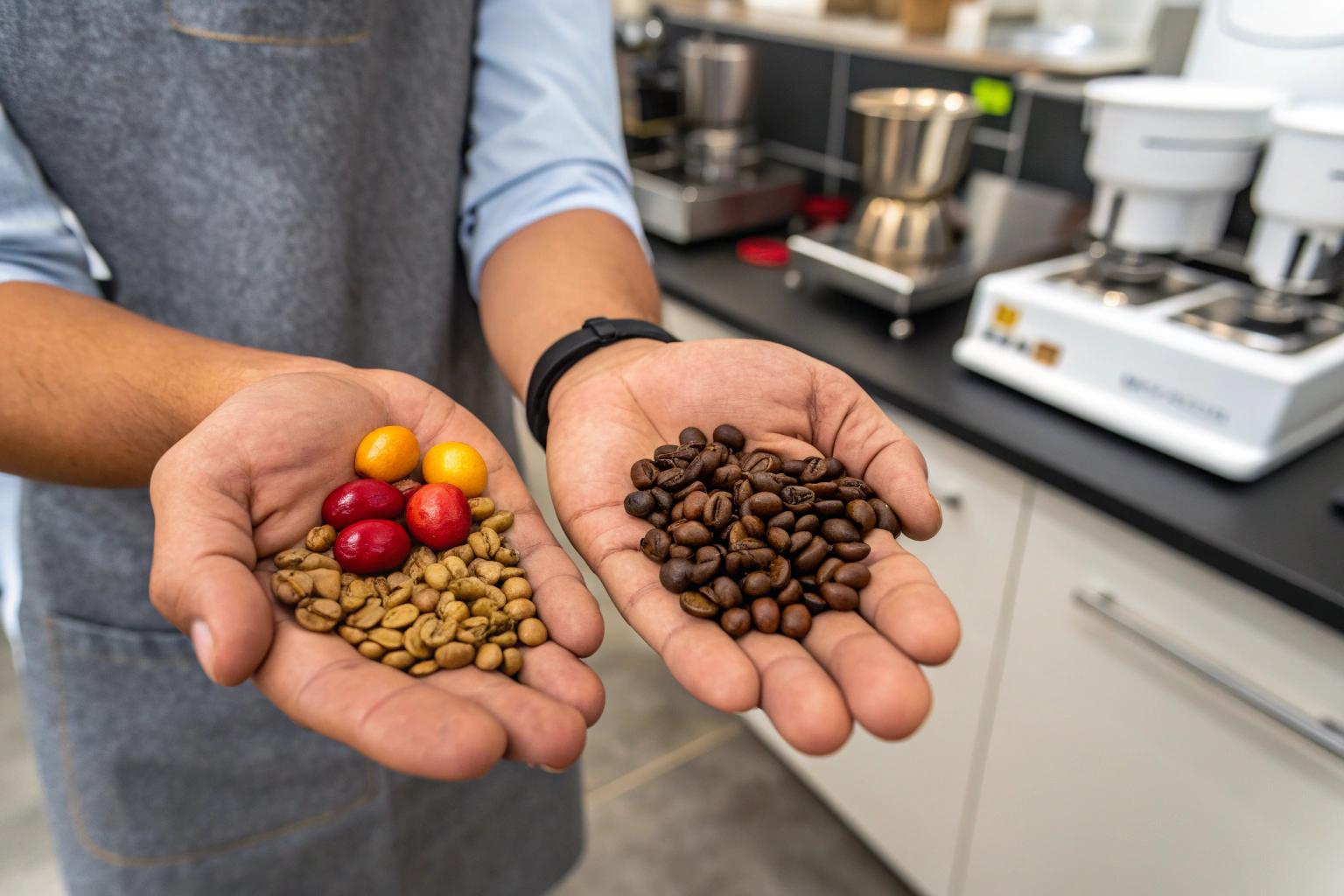
You're constantly making choices to define your brand. One of the most fundamental is the coffee you choose to serve. You see bags labeled "Single Origin Ethiopia" next to bags labeled "House Espresso Blend," and you're faced with a strategic choice. What's the real difference? You might worry that choosing a blend is a "compromise" on quality, or that a single origin is too "niche" or inconsistent for your main offerings. This uncertainty makes it hard to build a coherent and profitable coffee program.
Honestly, the core difference is one of philosophy: a Single Origin coffee is designed to showcase the unique, distinct, and often wild flavor profile of one specific farm or region, celebrating its unique terroir. A Blend, on the other hand, is a carefully crafted recipe of multiple coffees designed to create a specific, consistent, and balanced flavor profile that is often more well-rounded and repeatable than any of its individual components. It's the difference between a spectacular solo artist and a perfectly harmonized orchestra.
From my perspective on our farms in Yunnan, I see this every day. We have specific lots that have such a unique, beautiful character that we would only ever sell them as a single origin. We also have other lots that work beautifully as a consistent, chocolatey base for a blend. Neither is "better"—they simply have different jobs. Let's break down their roles so you can choose the right tool for your brand.
What Is the Purpose of a Single Origin Coffee?
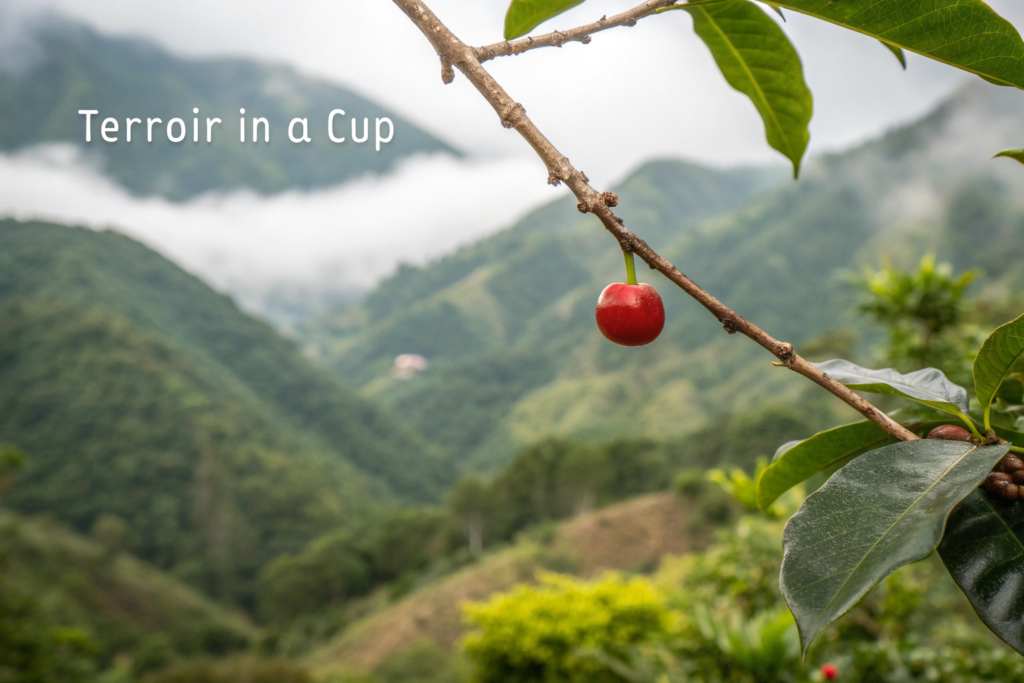
Think of a single origin coffee as a story. It's a story about a specific place, a specific group of farmers, and a specific season. Its entire purpose is to transport the drinker to that place.
Isn't all coffee from a single origin? Not in the way the specialty industry defines it. A "Single Origin" coffee is intentionally kept separate because it has a remarkable and distinct flavor profile that is representative of its specific origin—be it a single farm, a cooperative, or a small, defined region. The goal is not balance; the goal is to showcase a unique character, for better or for worse.
This is the rockstar of the coffee world. It might be a naturally processed Ethiopian coffee that tastes overwhelmingly of blueberries, or a high-altitude washed coffee from our farms at Shanghai Fumao that has a bright, crisp apple acidity and a black tea finish. These are flavors that are exciting and memorable because they are so specific.
What are the pros of offering single origins?
- Unique Flavors & Storytelling: Single origins are your "wow" factor. They give you a chance to tell a compelling story about a specific farm, a unique processing method, or an emerging region. This is a powerful marketing tool that excites customers and educates their palates.
- Transparency & Traceability: By definition, a single origin offers a high level of traceability. You can tell your customers exactly where their coffee came from, which builds trust and aligns with the values of modern, conscious consumers.
- Higher Perceived Value: Because of their uniqueness and often limited availability, single origins can typically command a higher price point, both by the cup and for retail bags.
What are the cons?
- Inconsistency: The flavor of a single origin can change from harvest to harvest due to weather and other agricultural variables. The specific lot you loved this year might taste different next year.
- Potentially Divisive Flavors: That "wild, funky, blueberry" note that a coffee connoisseur loves might be off-putting to a customer looking for a classic "coffee" taste. They are not always crowd-pleasers.
- Limited Availability: A great micro-lot might only consist of a few bags. Once it's gone, it's gone for the year.
What Is the Purpose of a Coffee Blend?
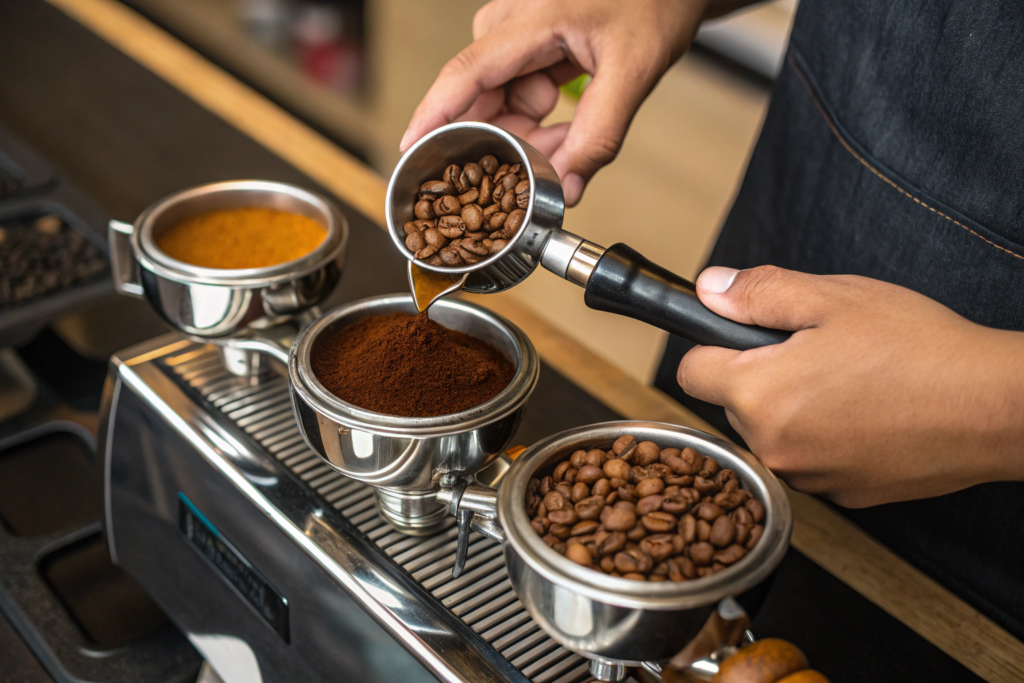
If a single origin is a solo artist, a blend is a supergroup. It's the deliberate act of combining coffees from different origins to create a new, unique, and intentional flavor profile that is greater than the sum of its parts.
Aren't blends just a way to hide cheap, bad coffee? This is the biggest misconception in the coffee world. While some low-grade commercial blends do this, a specialty coffee blend is a work of art. It's about creating a signature flavor that is balanced, consistent year-round, and specifically designed for a particular purpose, most often as a reliable and delicious espresso.
The goal of a great blend is to take the best qualities of several different coffees and use them to create a harmonious whole. You might use a Brazilian coffee for its heavy, chocolatey body, add a coffee from Colombia for its sweet caramel notes, and then sprinkle in a bit of our Yunnan Arabica to add a touch of bright, fruity complexity. The final product is something that no single origin could achieve on its own.
What are the pros of using a blend?
- Consistency: This is the number one benefit. By adjusting the ratios of the components, a skilled roaster can maintain the same target flavor profile year-round, even as the individual green coffees change slightly from season to season. This consistency is the foundation of a successful cafe's house offering.
- Balance & Crowd-Pleasing Flavor: Blends are often designed to be perfectly balanced—not too acidic, not too bitter, with a pleasant sweetness and body. This makes them more approachable and appealing to a wider range of customers.
- Designed for a Purpose: You can create a blend specifically for espresso that produces a thick, beautiful crema and cuts through milk perfectly. You can design another blend specifically for cold brew that is smooth, low-acid, and chocolatey. It's about creating the perfect tool for the job.
What are the cons?
- Less "Exciting" Story: The story of a blend is about the roaster's craft, which is a great story, but it can be less romantic than the story of a single, small farm in a distant mountain range.
- Lack of Transparency (Potentially): Some companies use vague terms like "A blend of Latin American and African coffees" without disclosing the components. However, a good specialty roaster will be transparent about the origins in their blend.
- Perceived as Lower Quality (Unfairly): Due to the history of cheap commercial blends, some consumers unfairly see all blends as being of lower quality than single origins, which is simply not true.
How Do They Fit into Your Coffee Program?
The most successful coffee brands don't choose one or the other. They use both, but for different strategic purposes. Understanding their respective roles is key to building a dynamic and profitable coffee menu.
So, I shouldn't just pick one? Exactly. The best strategy is to use a blend as your reliable, consistent "workhorse" and single origins as your exciting, rotating "show ponies." This gives you the best of both worlds: consistency for your core customers and excitement for the adventurous ones.
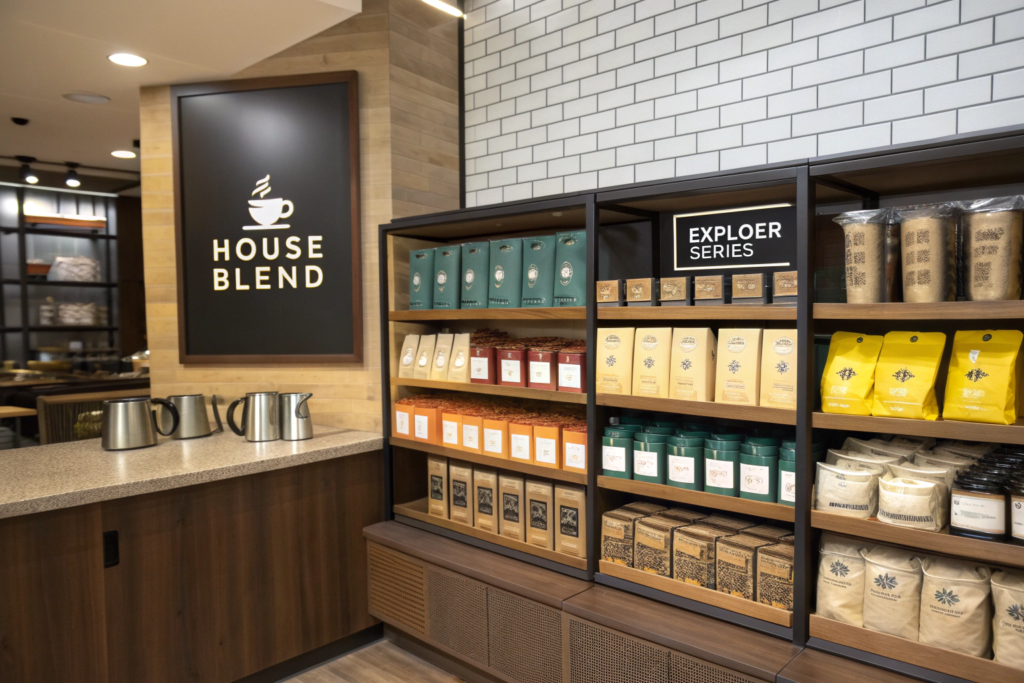
Your house espresso and your main drip coffee should almost always be a blend. This is what the majority of your customers will drink every day, and it needs to be reliably delicious and consistent. Your single-origin offerings are for your pour-over bar, your special "guest espresso," and your retail shelf. They are your conversation starters and your margin builders.
What is the role of the "Workhorse" Blend?
- Consistency: Your House Blend is your brand's handshake. It should taste the same on Tuesday as it did on Monday.
- Versatility: It should be delicious on its own as a drip coffee but also balanced enough to work well in milk-based drinks.
- Profitability: By using a blend, you can often achieve a fantastic flavor profile at a more stable and manageable cost. We at Shanghai Fumao often supply the consistent, high-quality base components for these workhorse blends.
What is the role of the "Show Pony" Single Origin?
- Excitement & Education: This is your chance to introduce customers to new flavors and stories. "This month, we're featuring an amazing coffee from the Yunnan region of China..."
- Upselling Opportunity: Offer your single origin as a pour-over or a special espresso shot at a premium price.
- Builds Your Brand's "Coffee Cred": Having a rotating selection of interesting single origins signals to customers that you are serious, knowledgeable, and passionate about coffee.
How Do You Choose Which Is Right for a Product?
When you're developing a new product, whether it's a canned cold brew or a new menu item, the "blend vs. single origin" question should be one of your first. The answer depends entirely on the product's goal.
How do I decide for a new product? You must ask yourself: is the primary goal for this product consistency and mass appeal, or is it uniqueness and a limited-time story? The answer will point you directly to either a blend or a single origin.
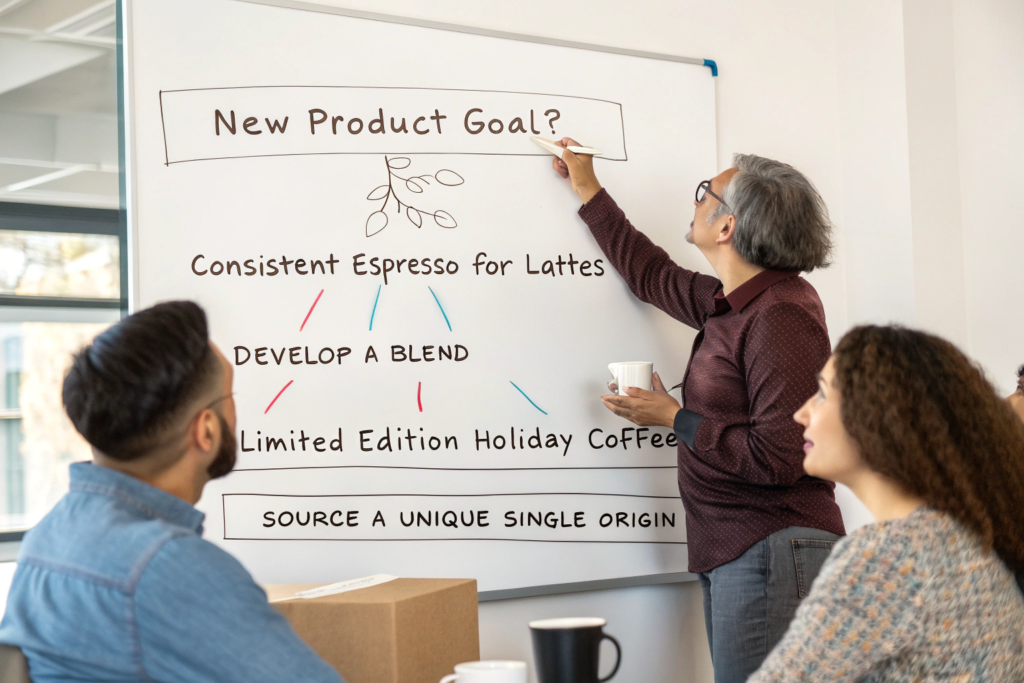
How to launch a bottled coffee for sale at the grocery store?
- Goal: High-volume, consistent product that tastes the same in every bottle, every time. It needs to be smooth, chocolatey, and appeal to a broad audience.
- Choice: Blend. Absolutely. You need to be able to guarantee that the cold brew a customer buys in July tastes identical to the one they bought in May. You would work with your roaster to create a blend specifically designed to be smooth and delicious when brewed cold.
How to make a special "Holiday Coffee" for December?
- Goal: A unique, premium product with a great story that you can sell as a limited-edition retail bag and feature as a special pour-over.
- Choice: Single Origin. This is the perfect job for a single origin. You could find a beautiful coffee from a specific farm in Costa Rica with notes of cinnamon and orange peel, or a rich, complex coffee from Sumatra. You can build a whole marketing campaign around its unique story and "get it before it's gone" scarcity.
Conclusion
The debate between blends and single origins is not a matter of good versus bad. It's a matter of purpose. Single origins are the brilliant soloists, offering a dazzling, unique performance that tells the story of a specific time and place. Blends are the masterfully conducted orchestras, delivering a consistent, balanced, and harmonious performance every single night. The most sophisticated coffee brands don't choose between them; they hire them both and use their unique talents to create a rich, dynamic, and unforgettable coffee program.
Whether you are looking for a unique single origin to be the star of your show or a reliable, high-quality component to build your signature blend, it all starts with a great partner at the source. We are proud to offer both exceptional micro-lots and consistent larger lots from our farms in Yunnan. Contact our coffee specialist at cathy@beanofcoffee.com to discuss your needs and find the perfect coffee for the job.