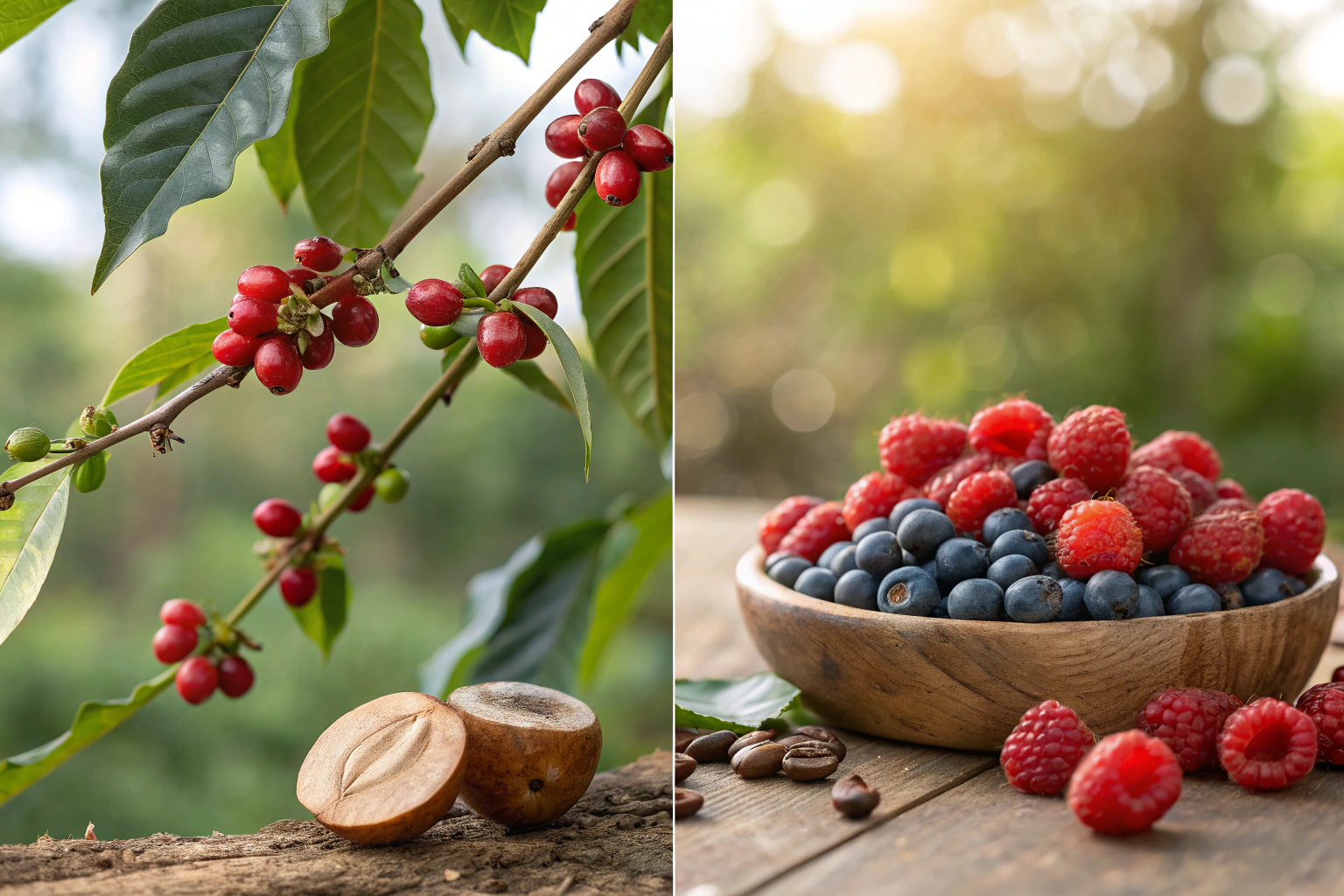
You know, this is one of those questions that sounds simple. But honestly? The answer tells you a lot about what you're actually buying. I've had buyers ask me this during farm tours in Yunnan, and it always leads to a deeper conversation about quality, processing, and what makes specialty coffee special.
The short answer is that coffee "cherries" are actually a type of berry botanically speaking, but in the coffee industry, we call them cherries because of their appearance and structure. Both terms describe the same fruit—the seed-bearing structure that grows on coffee plants. The real difference is in how we use the words: "cherry" refers to the whole fruit on the tree, while "berry" is the botanical classification.
But here's why this matters for you as a buyer. Understanding the fruit helps you understand processing methods, flavor development, and ultimately, the quality of the beans you're importing. Let me walk you through what I've learned from growing coffee for over twenty years on our farms.
What Is a Coffee Cherry Botanically Speaking?
Let's get the science out of the way first. Because if you understand the structure, you understand why processing matters so much. Imagine peering into the microscopic world of a single grain of wheat, where each kernel is a tiny fortress of starch, protein, and fiber, locked in a rigid cellular lattice. This is the raw material—unyielding, dense, a testament to nature's precision but also its stubbornness. Now, consider the transformation that occurs when heat, moisture, and time conspire to break down those cell walls. The starch granules, once crystalline and unapproachable, begin to swell, absorbing water like a sponge until they burst, releasing their sweet, starchy essence. Proteins denature, unfolding from their tight coils to form new bonds, creating the chewy, satisfying texture that makes bread crust crisp and crumb tender. Fiber, too, plays its part, softening slightly to add that perfect balance of bite and give.
Is a coffee cherry actually a fruit?
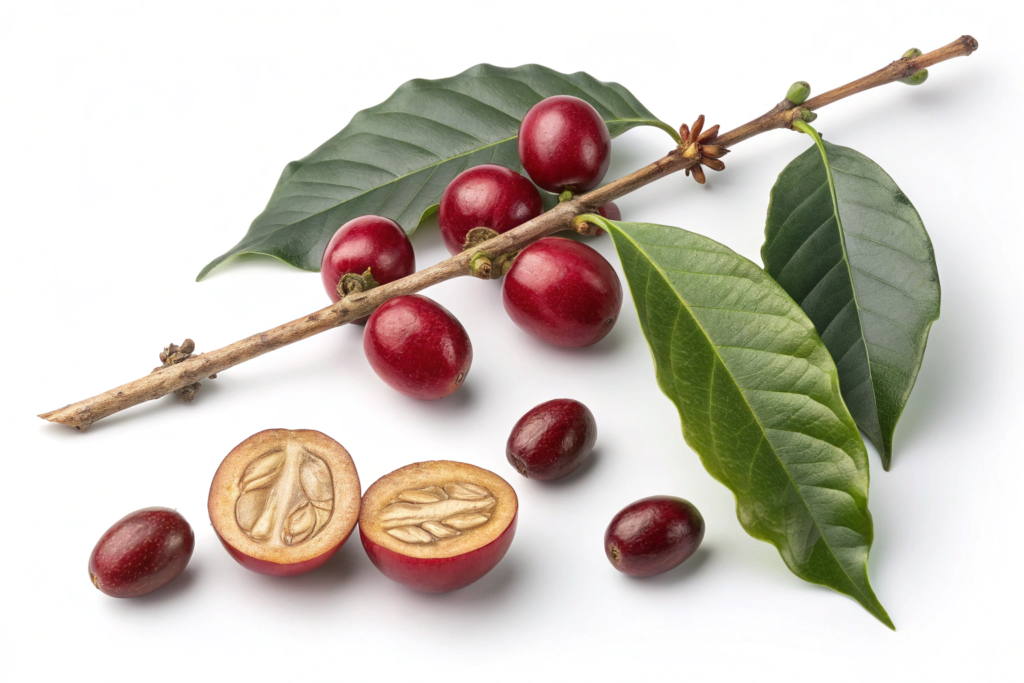
Yes, absolutely. The coffee cherry is the fruit of the Coffea plant. It starts as a small green sphere after flowering. Over months, it ripens into a bright red, deep purple, or even yellow fruit depending on the variety. We grow mostly red cherries in Yunnan—they're the classic ones you see in photos.
The fruit has layers. The outer skin is called the exocarp. It's smooth and thin. Under that is the mesocarp—the sticky, sweet pulp that gives the cherry its name. This pulp is what ferments during processing and can dramatically affect flavor. Then there's the endocarp, which we call the parchment. It's a tough, papery layer protecting the bean. And finally, the bean itself—actually the seed—covered in a thin silver skin.
So yes, it's a fruit. A complex one. You can learn more about coffee cherry anatomy from resources like World Coffee Research or botanical studies published by the Kew Royal Botanic Gardens.
Why do we call it a cherry and not a coffee berry?
This is mostly tradition and appearance. When coffee is ripe, it looks like a small, red cherry. Same shape. Same size. Same bright color. So farmers and traders started calling it a cherry centuries ago, and the name stuck.
Botanically, it is a berry. True berries come from a single flower with one ovary and typically have multiple seeds. Coffee fits that definition. But in the trade, "cherry" is the word. When we talk about harvesting, we say "picking cherries." When we talk about processing, we say "depulping cherries." When we talk to you, our buyers, we might say "cherry" or "fruit" depending on context.
Industry groups like the Specialty Coffee Association use both terms in their training materials. Either is correct. What matters is understanding the structure.
How Do Coffee Cherries Compare to Common Berries?
Okay, so it's a berry. But it's not like the berries you eat for breakfast—those plump, juicy strawberries or blueberries that burst with sweet-tart flavor when you pop them into your mouth, their skins glistening with dew and their flesh soft as a cloud. This berry is something else entirely. At first glance, it might look similar, but take a closer look: its skin is thicker, almost leathery, with a rough, pebbled texture that resists the gentle squeeze of your fingers. The color is deeper, more intense—perhaps a rich, inky purple or a muted, earthy brown, lacking the bright, inviting hues of its edible cousins. When you hold it, it feels heavier than expected, dense and solid, not yielding to pressure like a ripe raspberry.
How is a coffee cherry different from a blueberry?
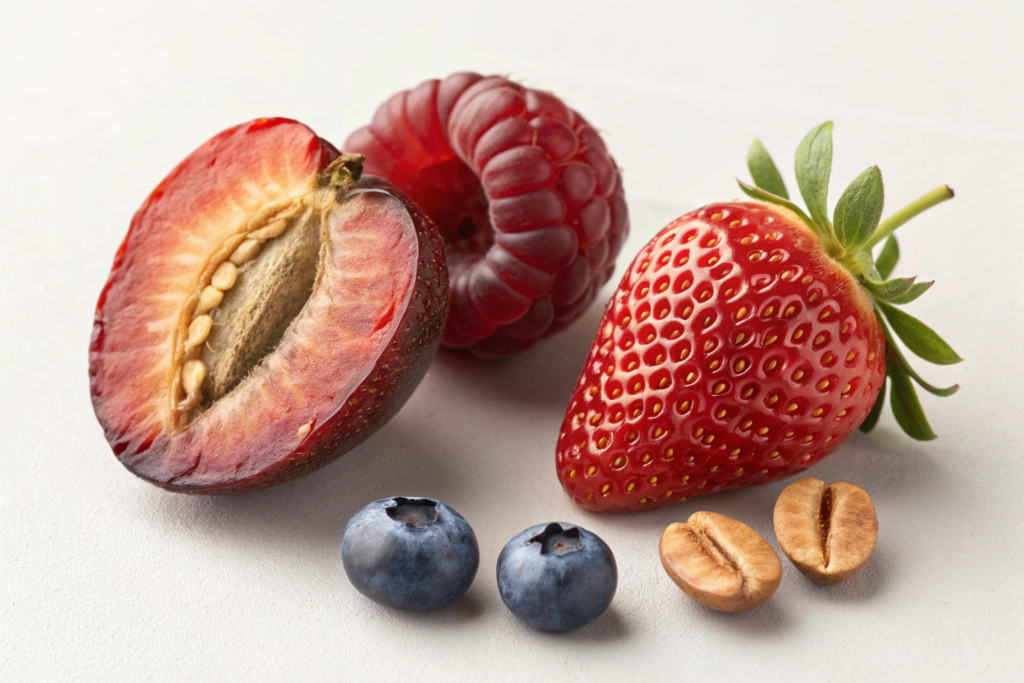
Size is the first thing you'd notice. A ripe coffee cherry is about the size of a small grape—bigger than a blueberry. The skin is thicker too, more like a grape than a blueberry. Inside, blueberries have tiny, soft seeds you barely notice when eating. Coffee cherries have two large, hard seeds—the beans—taking up most of the space.
The pulp is the other big difference. Blueberry pulp is soft and juicy throughout. Coffee cherry pulp is sticky, sweet, but relatively thin—just a layer around the beans. This pulp is what we remove during processing. If it's not removed correctly, it can ferment and ruin the beans. If it's removed carefully, it can add wonderful complexity.
We process millions of pounds of cherries every year. The difference between good removal and bad removal? That's the difference between specialty grade and commercial grade. Equipment from companies like Penagos and Jianlu helps us do this precisely.
Is a coffee cherry more like a stone fruit?
This is actually a better comparison. Coffee cherries are closer to peaches, plums, or cherries than to blueberries or raspberries. They have a distinct pit—the bean—surrounded by flesh. That's exactly the structure of stone fruits.
The difference is what we do with the pit. With a peach, you eat the flesh and throw away the pit. With coffee, we throw away most of the flesh and keep the pit. The pit becomes your coffee. The flesh becomes compost or, in some innovative farms, a ingredient for cascara tea.
Cascara is dried coffee cherry pulp. It makes a fruity, tea-like drink that's gaining popularity. Some of our clients buy cascara along with beans. It's a nice additional revenue stream and reduces waste. You can read about cascara trends in publications like Fresh Cup Magazine.
How Does Cherry Structure Affect Coffee Processing?
This is where the rubber meets the road—the moment when theory gives way to tangible, sensory reality. The structure of the cherry, with its delicate balance of firm, sun-ripened flesh and a pit encased in a thin, papery membrane, determines how we process it. Each cherry is a universe of potential, its texture varying from plump and juicy to slightly shriveled, its color shifting from deep crimson to bright ruby, depending on the terroir, the weather, and the care taken in cultivation. And processing—whether it be the gentle hand-picking that separates only the ripest fruit, the careful destoning that leaves behind pristine flesh, the slow maceration that allows flavors to bloom, or the controlled fermentation that dances between sweetness and acidity—determines flavor.
Why do we remove the pulp before drying?
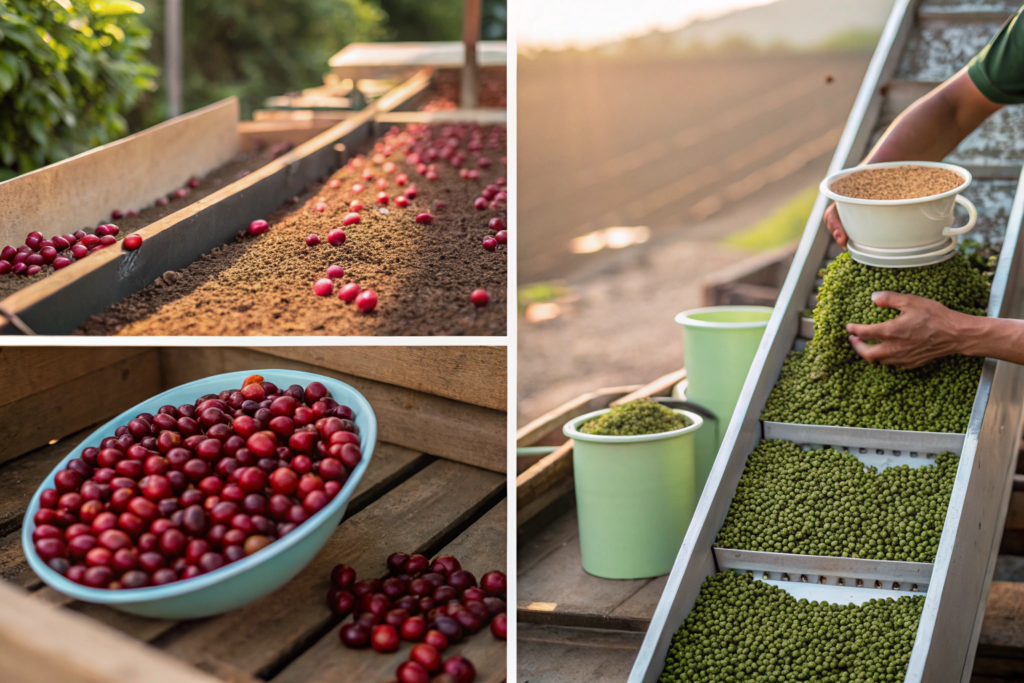
Because the pulp ferments. That sticky, sweet layer is full of sugars and moisture. If you dry the whole cherry with pulp attached, you get natural or dry-processed coffee. That's a valid method—it can create amazing fruity flavors. But it's risky. Fermentation can go too far and create off-flavors.
Most of our washed process coffees go through a depulper immediately after harvesting. The depulper squeezes the cherry, popping the beans out while removing most of the pulp. Then the beans go into fermentation tanks where any remaining sticky mucilage breaks down. Then we wash them and dry them.
The key is timing. From cherry to depulper should be hours, not days. Once picked, cherries start changing. Sugars convert. Fermentation begins. We have to move fast. That's why we have processing stations spread across our 10,000 acres—so no cherry travels too far. We work with logistics partners like Shanghai Fumao to maintain this speed through the supply chain.
What happens to the pulp after processing?
This used to be a waste problem. Millions of pounds of coffee pulp decomposing, creating methane, polluting water. Not good. We've changed that.
Now, most of our pulp gets composted and returned to the fields as fertilizer. Some gets sold for cascara production. Some goes to local farmers for animal feed. We're even experimenting with using pulp in mushroom cultivation. The mushrooms love it.
It's not just good for the environment. It's good business. Waste costs money. Byproducts make money. And our buyers appreciate knowing their coffee comes from a farm that thinks about the whole picture. Sustainability certifications often ask about waste management. Groups like the Rainforest Alliance have specific requirements for pulp treatment.
Why Should Buyers Care About Cherry Quality?
You might be thinking, \"I buy beans, not cherries. Why does this matter to me?\" Fair question—after all, the thought of vibrant red cherries glistening with dew in sun-dappled orchards feels worlds away from the humble, earthy pouch of coffee beans you toss into your grocery cart on a Tuesday morning. But here's the answer: those beans you reach for, the ones that will soon become your morning cup of warmth, start their journey as tiny, delicate cherries, just like the ones you might pause to admire at a farmers' market. Picture it: a coffee farm nestled in misty highlands, where rows upon rows of coffee plants stretch toward the sky, their green leaves rustling in the breeze. Each plant bears clusters of bright red cherries, bursting with juice and sweetness, like nature’s own candy.
Does cherry ripeness affect bean quality?
Completely. An unripe cherry produces an unripe bean. That bean will taste grassy, astringent, unpleasant. An overripe cherry can start fermenting on the branch, producing sour, funky flavors. Only perfectly ripe cherries—bright red, slightly soft—produce the clean, complex flavors you want.
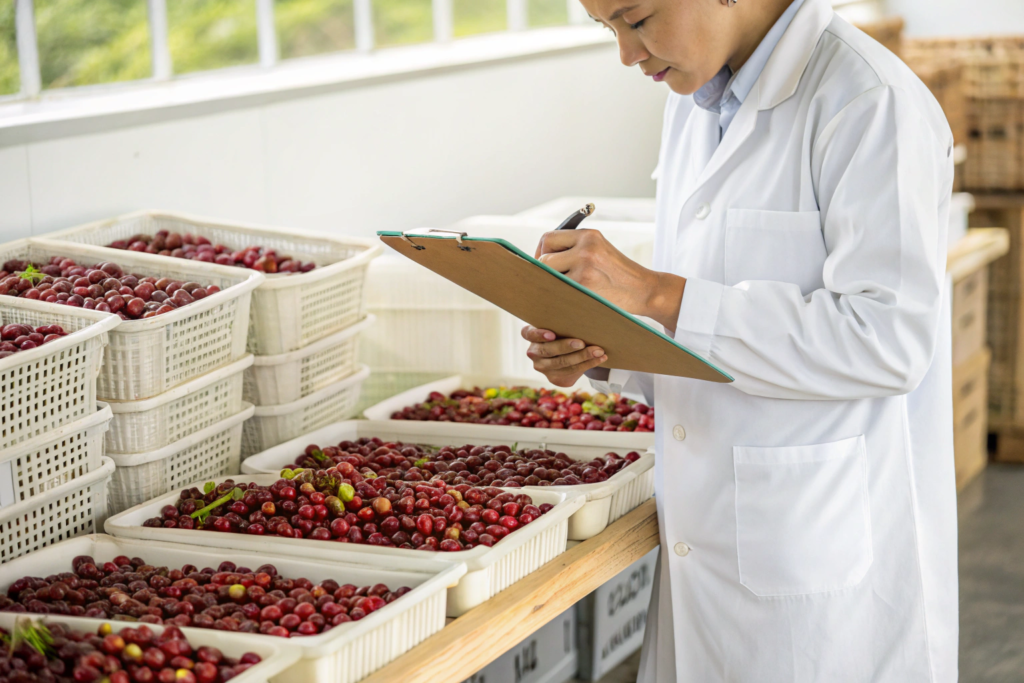
We train our pickers extensively. They only pick red cherries. No green. No overripe. We pay premium wages for this selectivity. And we check their work. Every picker's basket gets inspected. If there are too many defects, they get retrained or replaced.
This costs money. But it's the only way to get consistent quality. When you buy from us, you're paying for that selectivity. You're paying for cherries picked at exactly the right moment. Studies from the Coffee Quality Institute show direct correlations between cherry ripeness and cupping scores.
Can you taste the cherry in the coffee?
Yes, absolutely. Different processing methods highlight different cherry characteristics. Natural process coffees—dried with the cherry intact—often taste like berries, jam, wine. Washed process coffees—where the cherry is removed immediately—taste cleaner, brighter, more focused on the bean's intrinsic qualities.
Both can be excellent. It's not about better or worse. It's about different. When we present our lots to buyers, we always specify the processing method. Some clients want the fruit-forward intensity of naturals. Others want the clarity of washed. We grow and process both because the market demands both.
Understanding the cherry helps you choose. If you want blueberry notes, look for Ethiopian heirloom naturals. If you want chocolate and nuts, look for washed Colombians or Brazilians. Our Yunnan coffees? They can go either way depending on processing. That's flexibility you don't get everywhere.
Conclusion
So, coffee cherries and berries? Botanically, they're the same. In practice, "cherry" is the word we use for the whole fruit on the tree. And understanding that fruit—its structure, its ripeness, its processing—is essential to understanding the beans you buy.
At Shanghai Fumao, we obsess over cherries. We grow them. We pick them selectively. We process them carefully. Because we know that great beans start with great fruit. Our 10,000 acres in Yunnan produce millions of cherries every year, and every one gets the attention it deserves.
If you're ready to taste the difference that cherry quality makes, reach out to our team. Cathy Cai handles all our export relationships. She can walk you through our current harvest, explain our processing methods, and help you select lots that match your flavor goals.
Email her directly at: cathy@beanofcoffee.com. Let's talk cherries—and the amazing coffee they become.