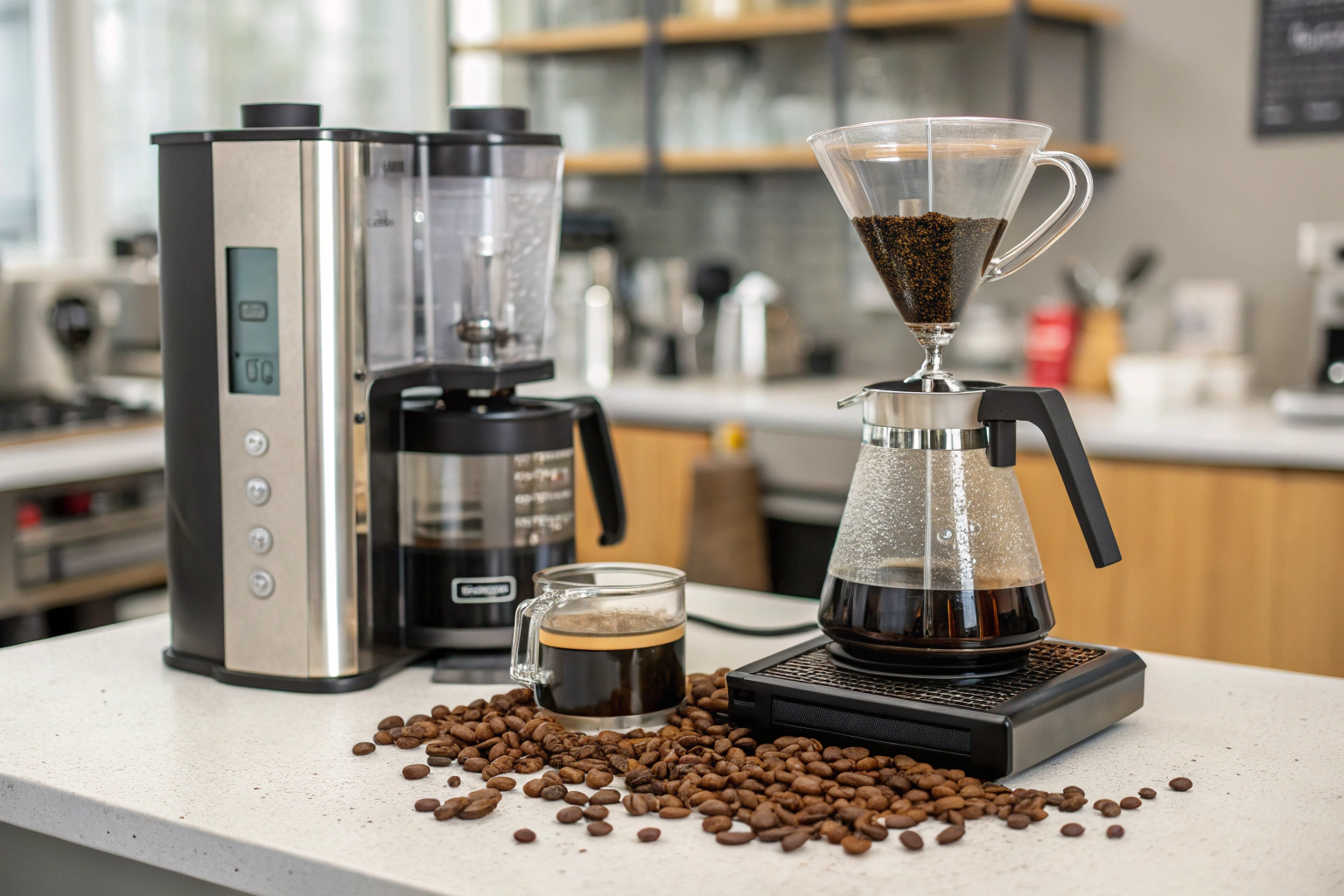
Let's be honest. When you're in the coffee business, especially wholesale, you hear this question all the time from clients. I've been asked it more times than I can count during trade shows and Zoom calls. Your clients—the distributors, the big brand owners, the roasters—they're not just buying beans. They're buying a final experience. And the brewing method changes that experience. So, when a buyer from the U.S. or Europe asks me, "What's the real difference?" I know they're thinking about their end customer. They're trying to decide which brewing style fits their brand or their retail shelf. And honestly, the answer isn't just about taste. It's about consistency, control, and even the story you can tell.
The difference between drip and French press comes down to two key things: the brewing process and the final cup's body. A drip machine uses a paper filter and gravity, which gives you a clean, crisp cup with lighter body. A French press uses a metal mesh filter and immersion, which lets oils and fine particles pass through, giving you a full-bodied, richer cup. So, if you want a clear, tea-like coffee, drip is your method. If you want a heavy, bold mouthfeel, you go with the French press.
Now, I know this sounds simple. But for someone like Ron—a company owner worried about logistics, tariffs, and quality control—this choice has big implications. You're not just picking a machine for your office. You're deciding what story your coffee will tell. You're deciding which profile will make your customers come back. And you're deciding if the brewing method matches the quality of the beans you're importing from places like our farms in Yunnan. So, let's dig deeper. Let's look at this from a buyer's perspective.
Why Does the Brewing Method Matter for Wholesale Buyers?
You might think, "It's just coffee." But for someone like Ron, who's buying containers of beans from China, the brewing method is connected to his bottom line. Why? Because it affects what his own customers—the cafes, the hotels, the retailers—will buy from him. He needs to know if his beans are better suited for a drip pot in a diner or for a French press in a boutique coffee shop. I remember talking to a distributor in Australia. He was worried about a shipment of our Catimor beans. He thought they were too "light" for his market. But then we explained that with the right roast profile, those beans shine in a drip brew. He changed his marketing. And guess what? He sold out.
For wholesale buyers, the brewing method directly impacts inventory planning, marketing, and customer satisfaction. A drip-focused customer will likely prefer a consistent, clean flavor profile, which is perfect for high-volume, automated sales. A French press-focused customer values the ritual, the body, and the complexity. They are often willing to pay a premium for beans that highlight these qualities. Knowing your market's preferred brew method helps you choose the right green beans and roast levels, reducing waste and returns.
So, how does this play out in the real world? Let's break it down. It's not just about the final drink. It's about the entire business model.
What's the Impact on Roast Profile and Bean Selection?
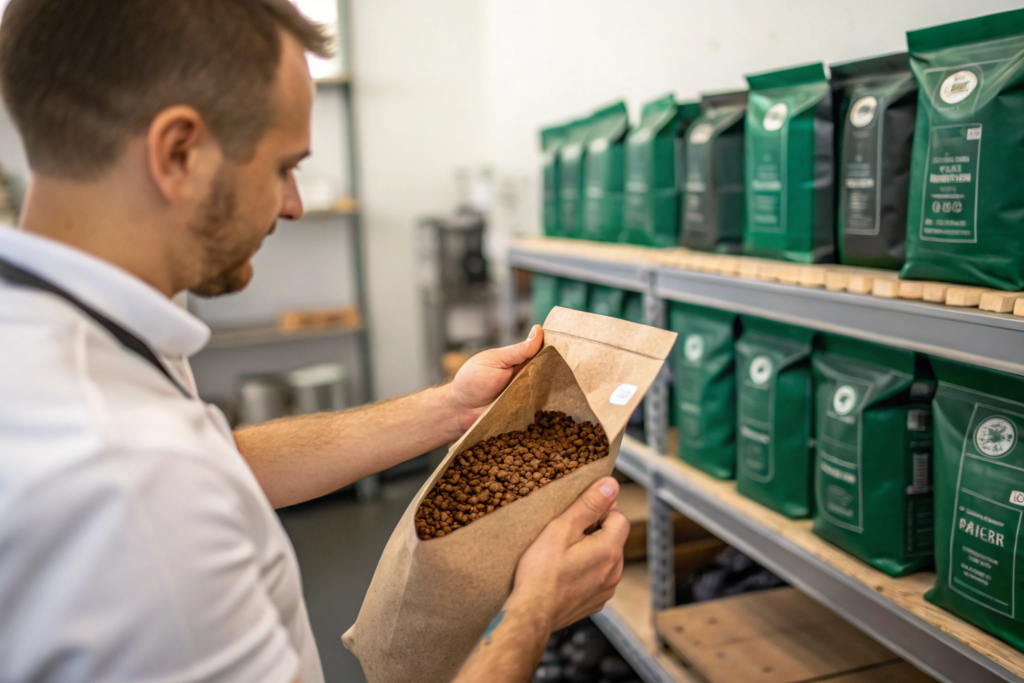
When a buyer chooses a brewing method, it dictates the roast they need. For drip, especially in a commercial setting, you often want a medium to medium-dark roast. This creates a balanced cup that's easy to drink and doesn't overwhelm. For a French press, you have more flexibility. A lighter roast can reveal the fruitiness and acidity, which gets amplified by the immersion method. A dark roast becomes incredibly bold and rich.
This is where our farm's diversity helps. For a client focused on drip, I might recommend our Arabica beans. They have that clean, bright profile that paper filters love. But for a client whose customers are French press enthusiasts, I'd steer them toward our Catimor. It has a fuller body and can handle the oils and fines that the mesh filter lets through. It's about matching the bean's potential to the method's demands.
How Do Equipment and Consistency Affect Business Decisions?
Another way to look at this is through the lens of equipment. A drip machine is an investment in consistency. Once you dial in the grind size, water temperature, and ratio, you can replicate that cup every time. This is gold for a hotel chain or a food service operation. They need every cup to taste the same. French press, on the other hand, is an investment in experience. It's manual. It requires a bit of skill. The cup can change slightly from one brew to the next. This is perfect for a specialty cafe that wants to showcase the nuances of a single-origin bean.
So, what does this mean for a buyer? It means you're not just buying beans. You're buying a solution to a problem. Are your customers trying to solve for consistency? Then you need a reliable supply of beans that perform well in a drip machine. Are they trying to solve for experience? Then you need beans with a story and a profile that stands up to the French press. And this is why, at BeanofCoffee, we focus on stability. Whether you choose our beans for drip or French press, you need that quality control to be rock solid. You need to trust that your shipment will taste exactly like the sample we sent. That's where our 10,000 acres in Baoshan come into play. We control the whole process from plant to port.
Can You Taste the Difference Between Drip and French Press?
Honestly, the answer is a loud yes. I've done blind tastings with buyers from North America and Europe. Every single time, they can tell. It's not just about strength. It's about texture. It's about the feeling in your mouth. I remember one time, a CEO from a trading company in Germany was visiting our plantation. We brewed the exact same lot of Robusta using both methods. He took a sip from the drip and said, "Good, clean, strong." Then he tried the French press version. His eyes went wide. "Now that," he said, "has a soul." That moment stuck with me. It showed me that the brewing method can elevate the same bean to a different level.
Yes, the difference is immediately noticeable. Drip coffee tastes cleaner, with a crisper acidity and a lighter mouthfeel. French press coffee tastes heavier, with a more pronounced body, muted acidity, and a richer, often muddier texture due to the presence of coffee oils and sediment.
What is the Role of the Filter?
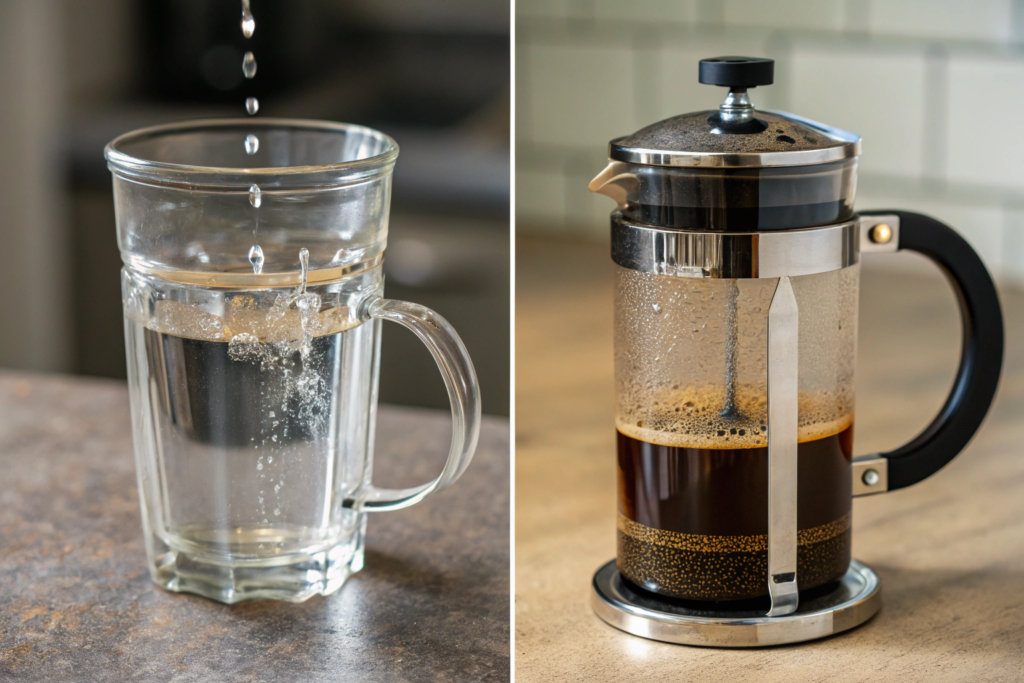
This is the most obvious difference. A drip machine uses a paper filter. This filter is a physical barrier. It traps not just the coffee grounds, but also the natural oils and microscopic solids. The result? A cup that looks like tea—clear and translucent. You lose the oils, but you gain clarity. The flavors of the bean, especially the fruity and floral notes, become more pronounced because there's no oil to mask them.
A French press uses a metal mesh filter. The holes in this mesh are much larger than the pores in a paper filter. This means the coffee oils, along with a small amount of fine sediment, pass right through into your cup. That's why the coffee looks "muddy." It's why it has that heavy, almost syrupy mouthfeel. Those oils add a lot of texture and weight to the flavor. It's a trade-off: clarity versus body.
How Does Extraction Differ?
The way the water interacts with the coffee is also completely different. A drip machine uses a percolation method. Water flows through the coffee bed, pulled by gravity. The water is constantly fresh, and the extraction happens as the water passes. It's a dynamic process. The first part of the brew is more acidic, and the last part is more bitter. When done well, it all balances out.
A French press uses an immersion method. All the coffee grounds are submerged in water for a set time. The water becomes saturated with coffee. The extraction is more uniform, but it's also more aggressive. Because the coffee stays in contact with the water for the entire brew time, it extracts more of the compounds that give it body and a heavier mouthfeel. This is why French press coffee can sometimes taste "muddier" or even slightly over-extracted if you're not careful. It's a more powerful method. And for the right bean, that power is exactly what you want.
How Do Logistics and Costs Differ for Wholesale?
For a buyer like Ron, this is the real conversation. The taste is important, but it doesn't matter if the price is wrong or the container gets stuck at the port. The choice between drip and French press, from a wholesale perspective, isn't just about the beans. It's about the entire supply chain. We have to think about packaging, shelf life, and even how the product will be shipped. This is where our experience exporting to North America, Europe, and Australia comes in handy. We've learned to anticipate these needs.
From a wholesale perspective, the choice influences packaging, shipping, and inventory management. Beans marketed for French press often require whole-bean packaging to preserve oils, which can increase packaging costs. Beans for drip are often pre-ground, which requires more complex processing but can simplify the end-user's experience. Both require rigorous quality control to ensure stability during long shipping times.
What Are the Packaging and Shipping Considerations?
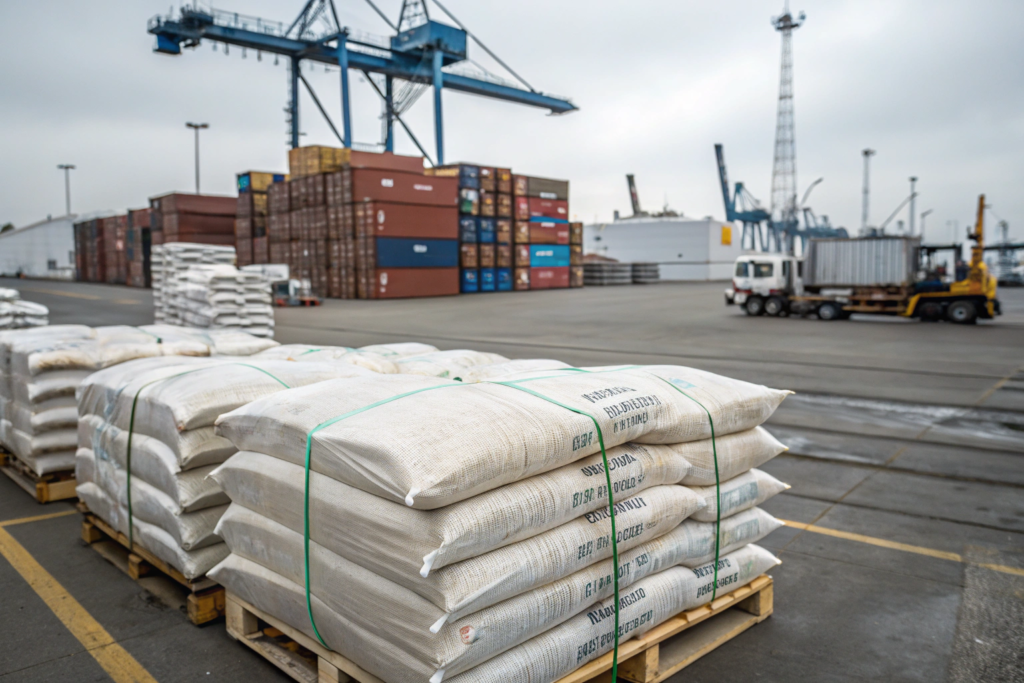
When a buyer decides to target the French press market, they are usually selling whole beans. Why? Because the oils that make a French press so special are volatile. Once you grind the beans, those oils start to oxidize and go stale. So, for a French press-focused product, we typically recommend our clients buy green beans or whole roasted beans. This adds a step for their customers (grinding), but it guarantees a better experience. From a shipping standpoint, whole beans are stable. We pack them in our standard grain-pro bags, and they travel well in a container from China to the US.
For drip coffee, the buyer has a choice. They can sell whole beans, or they can offer pre-ground. Pre-ground is a huge convenience factor. But it adds complexity for us, the exporter. We have to ensure the grind size is consistent for the type of drip machine our client's customers use. We have to package it in a way that preserves freshness—often in one-way valve bags. This adds a few cents to the per-unit cost. But, it can also increase the perceived value. It's a trade-off between cost and convenience.
How Does Quality Control Impact These Two Paths?
This is where our work with Shanghai Fumao has been crucial. Quality control isn't just about tasting the coffee. It's about ensuring the product arrives in perfect condition. For French press beans, we focus on moisture content and bean integrity. Any damage during shipping can accelerate staleness. For drip (especially pre-ground), we focus on particle size analysis and oxygen levels in the packaging. One mistake, and a shipment of pre-ground coffee can be a total loss.
We have a system in place. Every shipment, whether it's for a French press connoisseur or a large drip coffee chain, goes through the same rigorous checks. We test for moisture, screen for defects, and cup every batch. And because we work with Shanghai Fumao for export logistics, we know the documentation is perfect. No delays. No surprises. For a buyer like Ron, who is concerned about timeliness and security, this is everything. It's not just about getting a good price. It's about getting a reliable price on a reliable product.
What Should You Choose for Your Business?
Alright, so you've seen the differences. You know about the taste, the process, and the logistics. Now comes the hard part. What do you actually pick for your business? This isn't a simple answer. It depends on who your customers are and what your business goals are. I've had clients come to me convinced they needed one thing, only to realize the other was a much better fit for their market. It's about listening to your customers and understanding the local culture.
The choice depends entirely on your target market and business model. If your customers value convenience, consistency, and a clean cup, focus on drip. If they value ritual, body, and a premium experience, focus on French press. For many wholesale buyers, the smartest strategy is to offer both, using different bean origins or roast profiles to differentiate the product lines.

Is Your Market About Speed or Experience?
Think about your typical customer. If you're selling to office break rooms, hotels, or fast-casual restaurants, drip is the king. They need speed. They need to serve dozens or hundreds of cups an hour. They need every cup to taste the same. A consistent, medium-roast Arabica is a safe and profitable bet. The logistics are straightforward. You can even sell them pre-ground to make their lives easier. It's a volume game.
If you're selling to specialty cafes, high-end grocery stores, or boutique roasters, French press is often the better choice. These customers are selling an experience. They want to tell a story. They want to show off the unique characteristics of a single-origin bean. The ritual of using a French press fits that story perfectly. Our Catimor, with its unique profile from the Yunnan highlands, is a fantastic choice here. You're selling quality, not just quantity.
Can You Start with One and Add the Other?
Yes, and this is the path I recommend for many new buyers. Start with what you know. If your background is in food service, start with drip. Build your customer base. Get your logistics smooth with a partner like Shanghai Fumao. Then, when you're comfortable, add a French press line. Use it to target a higher-end market. You can even use the same beans but roast them differently. It's a way to grow your business without overcomplicating your inventory.
We've done this with a client in Canada. He started with one container of our Robusta for a hotel chain's drip coffee. A year later, he added a line of our premium Arabica, marketed specifically for French press. He now has two stable revenue streams from the same supply chain. It's smart business. It diversifies his risk. And it all comes from the same 10,000 acres we own and control.
Conclusion
So, the difference between drip and French press is more than just a brewing technique. It's a fork in the road that shapes your entire business. From the type of bean you choose to how you package it, from your roast profile to your marketing story, every decision connects back to this one question. For a buyer concerned about price, timeliness, and security, understanding this difference is crucial. It allows you to select the right product for your market, manage your inventory effectively, and ensure your end customers are happy.
At Shanghai Fumao, we've seen this play out time and time again. Whether you're a distributor in Europe, a brand owner in North America, or a trading company in Australia, we're here to help you navigate these choices. We have the scale—over 10,000 acres of our own plantations—and the experience to provide you with stable, high-quality beans that match your brewing needs. We offer reliable logistics and consistent quality, so you can focus on what you do best: growing your business.
If you're ready to source premium Arabica, robust Catimor, or high-quality Robusta for your drip or French press line, let's talk. Contact our team lead, Cathy Cai, directly at cathy@beanofcoffee.com. She'll help you find the perfect solution for your business. Let's build a partnership that's as rich and rewarding as a perfectly brewed cup.