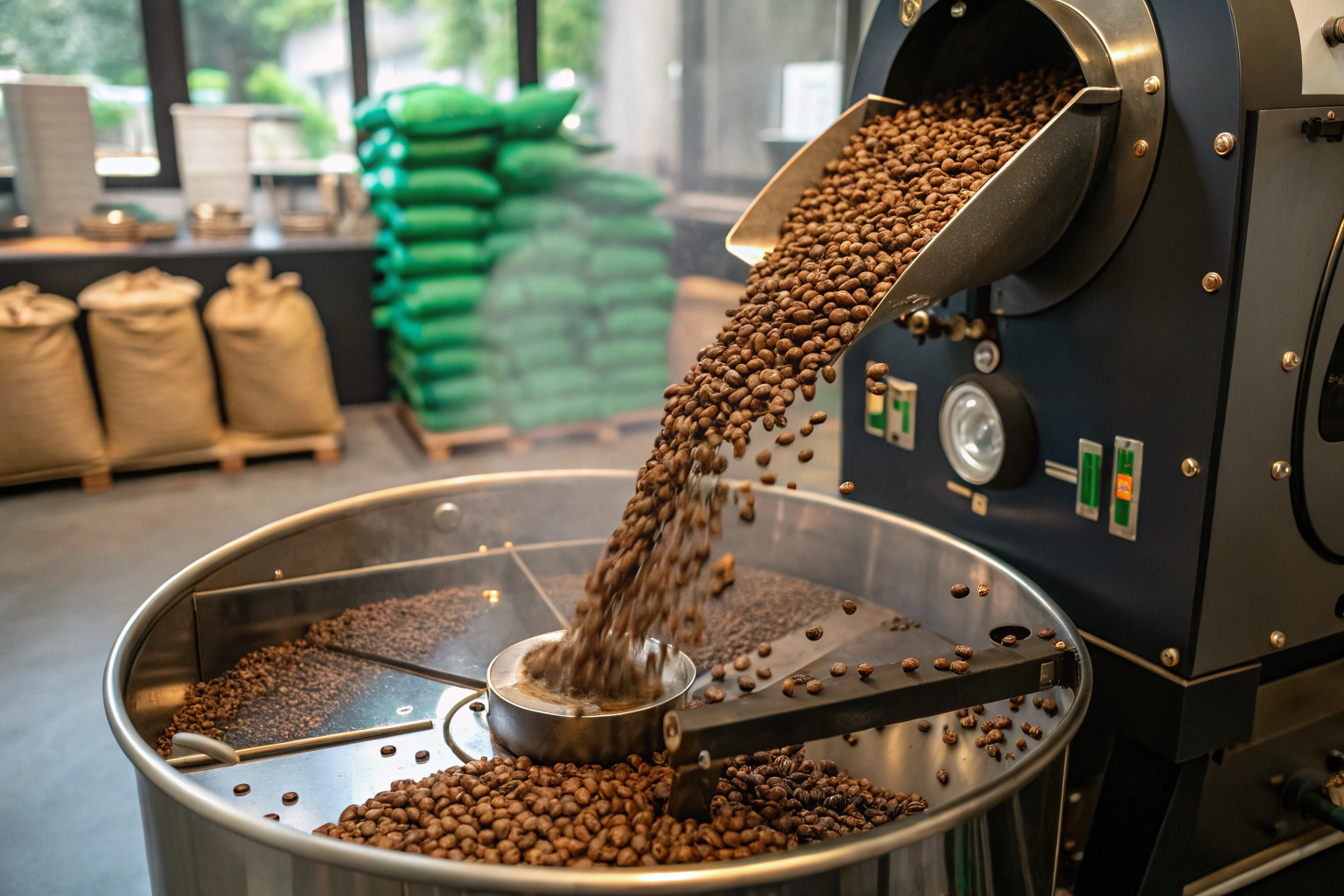
You're choosing a roaster for your business, or perhaps evaluating a new coffee from a supplier. The flavor profile is described as "bright and clean" or "deep and developed." Often, those fundamental taste differences aren't just about the bean or the roast level—they're about the very method of applying heat. For a buyer like Ron, who needs predictable quality for a brand, or a cafe owner building a house profile, understanding this core mechanical difference is key to specifying the right product from your supplier and achieving consistency.
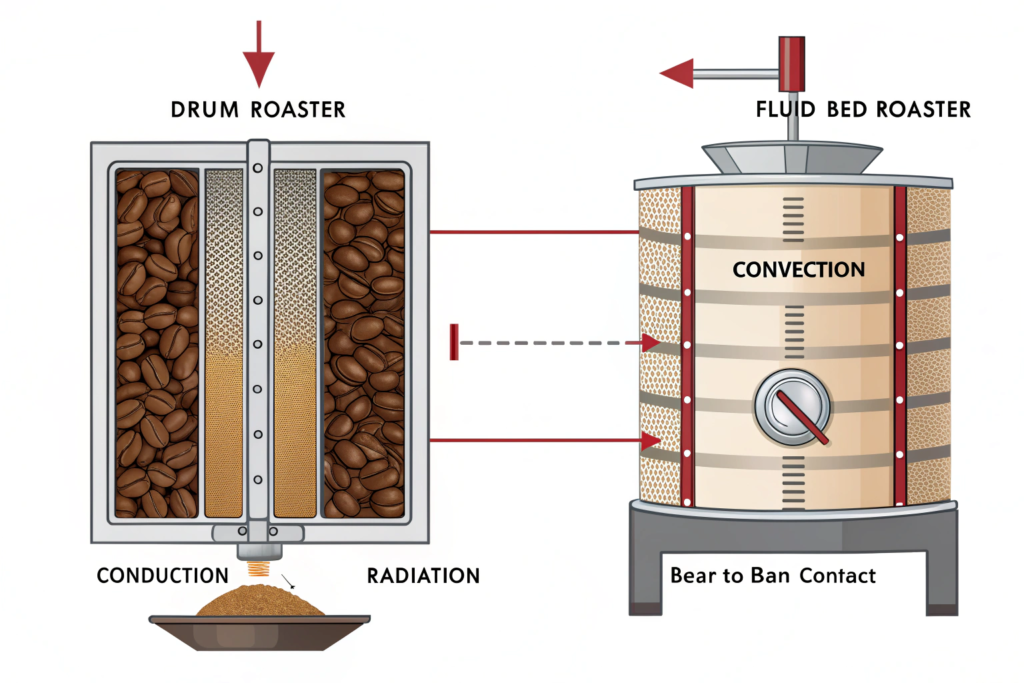
The difference between drum roasting and hot air (fluid bed) roasting is a difference in heat transfer physics. Drum roasting uses conductive and radiant heat as beans tumble in a rotating metal drum, akin to an oven. Hot air roasting uses convective heat as beans are suspended and agitated by a powerful stream of hot air, like a powerful hair dryer. This fundamental distinction leads to different development paths for the bean, resulting in distinct cup profiles, operational trade-offs, and suitability for different business models. At BeanofCoffee, we work with roasters using both methods and tailor our green bean recommendations accordingly, because the same Yunnan Catimor will taste different in each machine.
So, if you're making decisions that affect your final product's taste, cost, and workflow, you need to understand the engine under the hood. Let's break down the roast.
How Does Heat Transfer Define the Two Methods?
Heat must travel from the energy source into the core of the coffee bean. How it gets there—the heat transfer method—shapes every aspect of the roast.
Drum Roasting: Conduction & Radiation Dominant
In a drum roaster, beans are loaded into a horizontal, rotating metal drum. Heat is applied to the outside of the drum (via gas burners or electric elements). The beans are heated through:
- Conduction: Direct contact with the hot metal surface of the drum.
- Conduction (Bean-to-Bean): Contact between beans as they tumble.
- Radiation: Infrared energy radiating from the hot drum walls.
Hot air is also present, but it's a secondary player. The process is indirect and gradual. Think of it like roasting vegetables in a hot, turning pan in an oven—the surface touching the pan gets seared first.
Hot Air / Fluid Bed Roasting: Convection Dominant
In a fluid bed roaster (the most common type, popularized by brands like Sivetz), beans are placed in a roasting chamber where a powerful fan forces hot air upwards through a perforated plate. The beans become suspended, swirling in a "fluidized bed" of hot air. Heat transfer is almost entirely through:
- Convection: The continuous, direct contact of each bean with the stream of hot air.
This is a direct, enveloping heat. Think of it like a convection oven on high, or deep-frying—the hot medium (air or oil) surrounds the food completely and instantly.
This physics lesson matters because it determines how the bean develops from the outside in versus more uniformly.
What is the "thermal momentum" difference?
Drum roasters have high thermal mass—the heavy metal drum holds a lot of heat. This creates momentum. Once hot, it's stable but slow to change direction. If you reduce the gas, the drum stays hot and continues to conduct heat, allowing for a gentle, extended development phase after first crack. Fluid bed roasters have very low thermal mass (mostly just the air). They are extremely responsive. Change the air temperature, and the bean's environment changes almost instantly. This allows for precise control but requires constant, active management to avoid stalling the roast.
How does this affect the roast curve?
A drum roast curve typically shows a gradual temperature rise, a defined turning point, and a rounded development phase. A fluid bed roast curve can be more linear, with the bean temperature responding almost instantly to air temperature changes. The fluid bed roaster excels at fast, light roasts where you want to "crash" the roast quickly after development. The drum roaster excels at slower, darker roasts where you want to carry development further with gentle, residual heat.
What Are the Resulting Flavor and Body Characteristics?
This is where the rubber meets the road for your cup. The heat transfer method directly influences which flavors are highlighted and the resulting mouthfeel.
Drum Roasted Coffee:
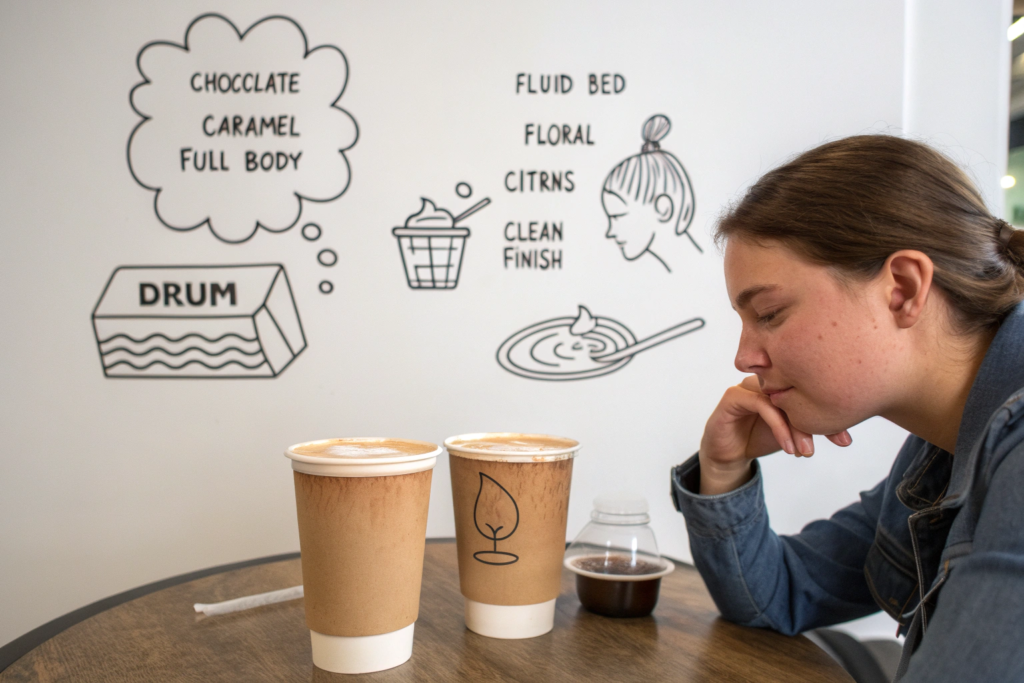
- Flavor Profile: Tends to produce more developed, caramelized, and deeper notes. Think chocolate, nuts, caramel, toast, and spices. The longer, more conductive heat promotes Maillard reactions and sugar browning. Body is often perceived as fuller, heavier, and more syrupy.
- Acidity: Can mellow acidity, making it rounder and more integrated. Very bright, fruity acids can be subdued.
- Complexity: The layered, sometimes less uniform heating can (in skilled hands) create greater perceived complexity and depth.
This profile is classic for espresso blends, dark roasts, and any application where a rich, substantial body is desired. Many of our clients using drum roasters seek our Yunnan beans for their inherent chocolatey base, which this method amplifies.
Hot Air / Fluid Bed Roasted Coffee:
- Flavor Profile: Tends to highlight the bean's inherent, origin-specific characteristics. It produces cleaner, brighter cups with more pronounced floral, fruity, and tea-like notes. The rapid, all-over convection "lifts" volatile aromatics effectively.
- Acidity: Preserves and can accentuate a brighter, crisper acidity.
- Body: Often described as lighter, cleaner, and more tea-like. The roast can lack the heavy body associated with drum roasting.
This profile is ideal for showcasing high-quality, delicate single-origin coffees (like a high-altitude Yunnan Arabica), for filter coffee, and for markets that prefer a lighter, more "transparent" cup. It's less ideal for creating a traditional, creamy espresso body.
Can you achieve a dark roast on a fluid bed roaster?
Yes, but it's challenging and often misses the point. You can roast darker by extending time or increasing temperature, but you risk baking the beans or creating a sharp, ashy flavor because the rapid, direct heat can scorch the surface before the interior fully develops the sugars associated with a good dark roast. Drum roasting is generally superior for medium-dark to dark profiles, where the gentler, conductive heat allows for internal sugar development without excessive surface charring.
Which method produces more uniform beans?
Hot air roasting typically produces extremely uniform color and development because every bean is constantly surrounded by the same hot air. Drum roasting can lead to slightly less uniformity, as beans on the outer edge of the tumbling mass may get more conductive heat than those in the center. This can be mitigated by good drum design and bean agitation, but it's an inherent characteristic. For a buyer, this means fluid bed roasted coffee can have a more consistent appearance.
What are the Operational and Business Considerations?
Choosing a roaster type isn't just about taste; it's about your business reality—throughput, cost, skill, and product mix.
Drum Roaster Pros & Cons:
- Pros: Versatile across all roast levels, especially for darker profiles. Excellent for developing body and classic flavors. Larger batch sizes are common (commercial drums can be 60kg+). The industry standard, so skilled operators are easier to find.
- Cons: Higher energy consumption. Longer cycle times (including cooling). More moving parts (motor, drum) requiring maintenance. Produces more chaff and smoke, often needing afterburners or robust ventilation. Cleaning is more labor-intensive.
Hot Air / Fluid Bed Roaster Pros & Cons:
- Pros: Faster roast times (often 8-12 minutes vs. 12-18 for drum). Extremely energy efficient. Cleaner operation—chaff is often blown out and collected automatically, and smoke production is lower. Easier to clean and maintain (fewer moving parts). Excellent for light to medium roasts.
- Cons: Limited batch size (typically smaller than commercial drums). Can struggle with very dark roasts. The fast, linear process offers less "forgiveness" and requires precise control; small errors are amplified. The flavor profile may not suit all markets (e.g., traditional espresso drinkers expecting heavy body).
For a high-volume supplier needing consistent dark roast for espresso, a drum roaster is likely the tool. For a specialty roaster focusing on single-origin filter coffee with a lean operation, a fluid bed roaster can be brilliant.
What about hybrid roasting (e.g., perforated drum with forced air)?
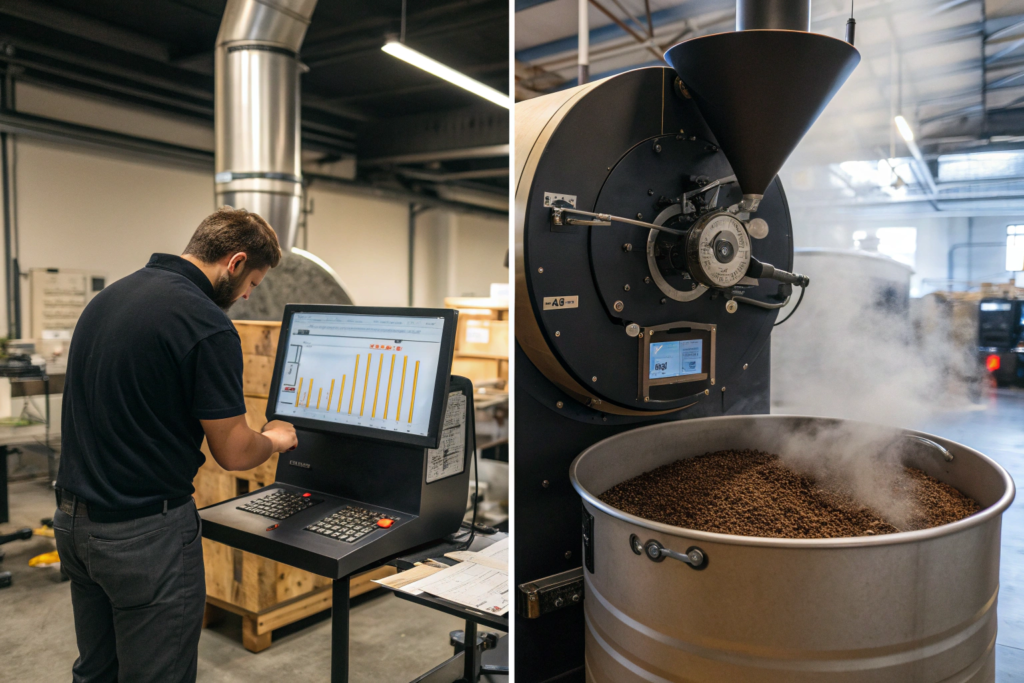
Modern technology is blending the lines. Many high-end drum roasters now incorporate powerful forced convection (air flow) within the drum. This aims to combine the conductive development benefits of a drum with the efficiency, uniformity, and flavor clarity of convective heat. These are sometimes called "hybrid" or "convective drum" roasters. They represent the current high end of the market, offering maximum control to the roaster to sculpt a profile. For a business making a serious investment, this is a compelling third path.
How does the choice affect green bean sourcing?
Your roaster type should inform your sourcing. If you use a fluid bed roaster to highlight origin character, you should invest in higher-grade, more distinctive single-origin beans (like our microlot Arabicas). The machine will reveal every nuance. If you use a drum roaster for espresso blends, you might prioritize consistency, body, and base notes, making our high-yield, reliable Catimor or a well-structured Arabica/Robusta blend a perfect cost-effective match. At BeanofCoffee, we can advise on which of our beans perform best under each roasting method.
How to Choose the Right Method for Your Business?
This is a strategic decision. It defines your product, your operational costs, and your brand identity.
Ask Yourself:
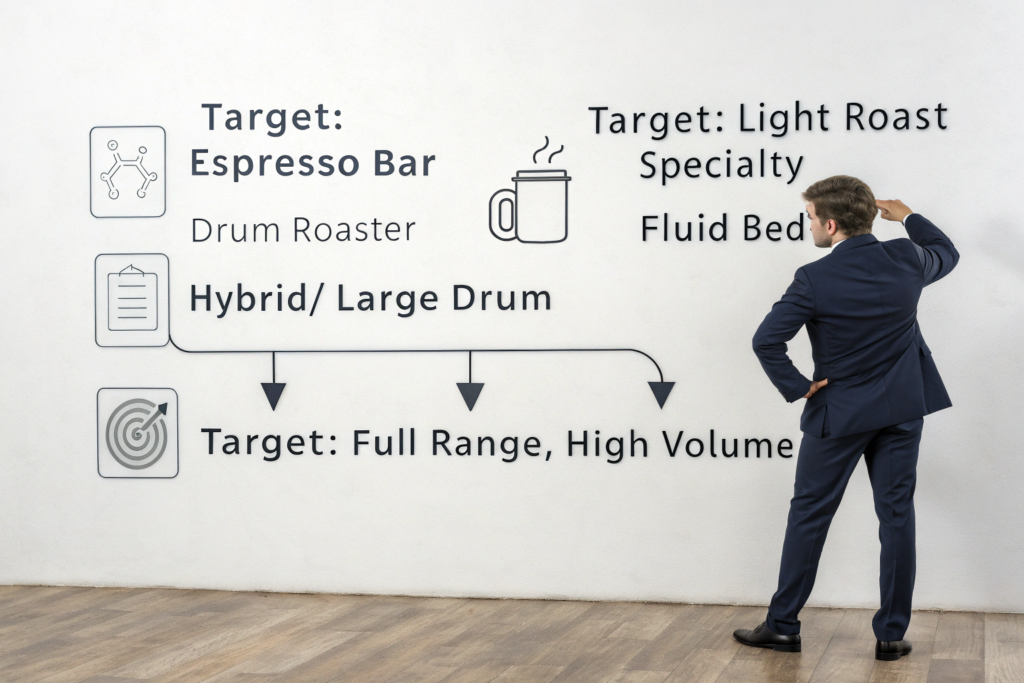
- What is my target market and primary product?
- Espresso-centric cafe / Commercial blends: Drum roaster is the safe, traditional choice.
- Specialty filter / Single-origin focus: Fluid bed roaster is a strong contender.
- Diverse portfolio (light to dark): A high-quality drum roaster or a hybrid is most versatile.
- What is my volume and growth plan?
- High volume, few SKUs: Large drum roaster.
- Small batch, many SKUs: Multiple smaller fluid bed roasters allow for quick changeovers and lower risk per batch.
- What is my operational environment and budget?
- Limited ventilation / strict emissions codes: Fluid bed is cleaner.
- High energy costs: Fluid bed is more efficient.
- Upfront capital: Commercial fluid bed roasters can be expensive for their batch size; drum roasters offer more capacity per dollar.
Ultimately, the best practice is to roast samples of your key green coffee on both types of machines before deciding. Taste is the final judge. We encourage our partners to do this with our samples—the same bean will tell you which machine partnership is right for you.
Should a new small business start with a fluid bed roaster?
For a micro-roastery starting with a focus on direct-to-consumer single-origins, a small fluid bed roaster can be an excellent, low-barrier entry point. It's simpler to operate (once you learn its fast rhythm), cleaner, and cheaper to install. It allows you to produce a distinctive, bright product that stands out. You can always add a drum roaster later for espresso blends as you grow.
How does this choice impact training and staffing?
Drum roasting skill is more widely understood, with a larger community of knowledge. Fluid bed roasting has its own learning curve, focused on managing air temperature and flow rate with precision. Finding an experienced fluid bed roaster might be harder, but training a diligent person from scratch can be very effective due to the machine's responsive, data-driven nature.
Conclusion
The difference between drum and hot air roasting is a foundational choice that echoes through the flavor in the cup, the efficiency of your operation, and the identity of your brand. Drum roasting offers deep, developed, classic profiles with versatile capacity. Hot air roasting offers bright, clean, origin-transparent cups with operational agility.
There is no universally "better" method—only the right tool for the job you want to do. The most successful roasters understand the physics of their machine and source their green coffee accordingly to harness its unique strengths.
Choose your roast, then choose your bean. Let BeanofCoffee be your partner in either path. We supply consistent, high-quality green beans from Yunnan that are proven performers in both drum and fluid bed roasters. Contact Cathy Cai to discuss your roasting method and request tailored samples: cathy@beanofcoffee.com. Roast with confidence.