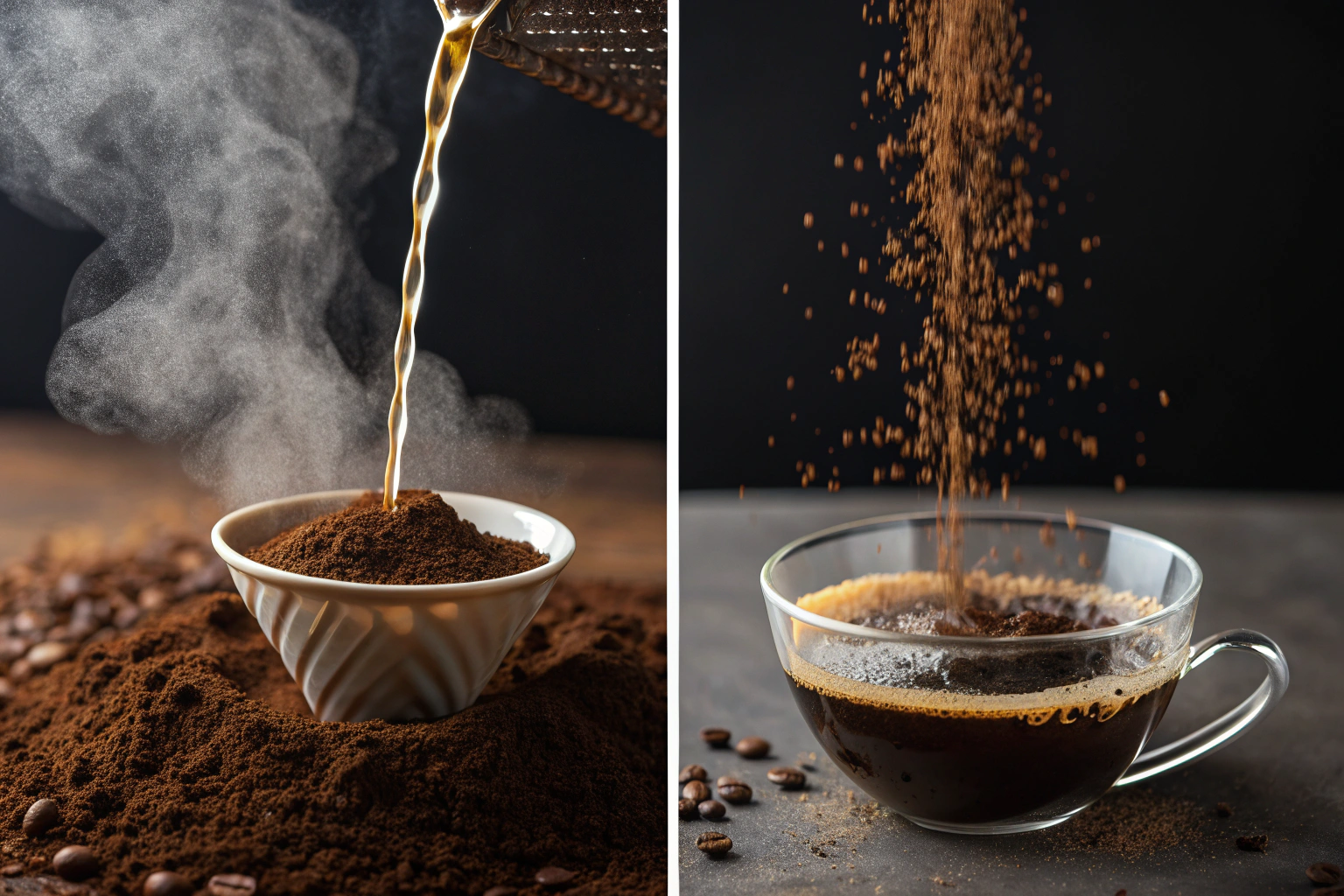
You see it every day. A customer walks in and orders a "drip coffee." The next one orders a "latte," which starts with espresso. They are both "coffee," but they are worlds apart in taste, texture, and preparation. You might struggle to explain why they are so different in a simple way. You know one is "stronger" and one is "smoother," but the real reasons can feel technical and hard to articulate. This is a pain point because a clear understanding allows you to guide your customers better, train your staff more effectively, and make smarter decisions about which beans to use for which application.
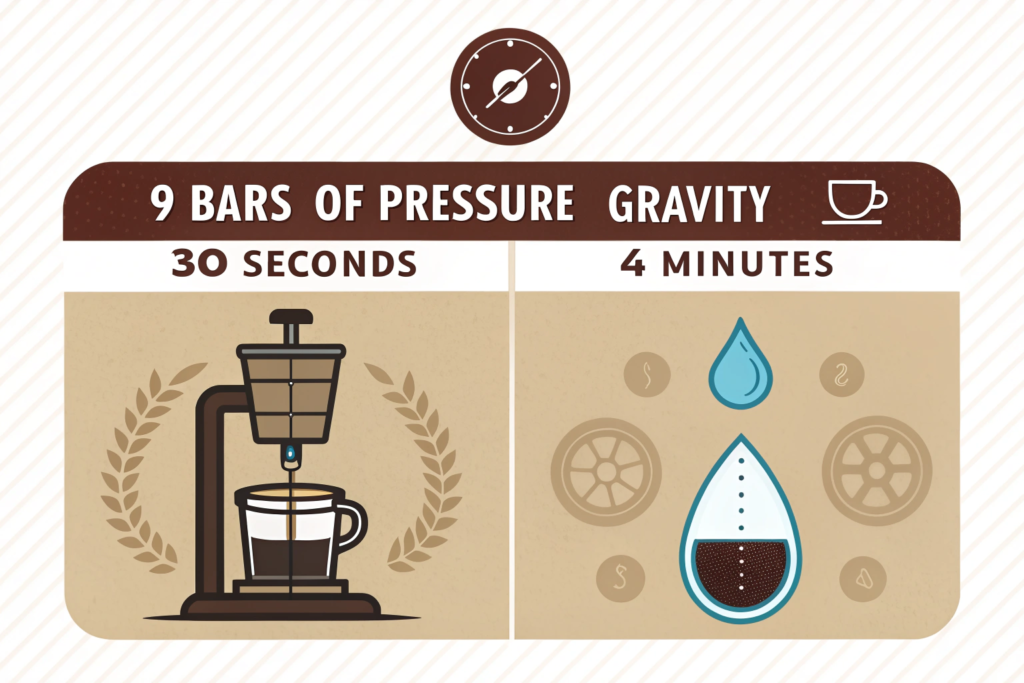
Honestly, the fundamental difference between espresso and drip coffee lies in the brewing method: espresso is a small, concentrated coffee made by forcing hot, high-pressure water through finely-ground beans for a very short time (about 30 seconds). Drip coffee is a larger, less concentrated brew made by letting hot water slowly drip through coarsely-ground beans using only gravity for a much longer time (several minutes). It's a battle of pressure and speed versus gravity and time.
From my perspective as a grower, this is fascinating. The same bean from our farms in Yunnan can tell two completely different stories. Under the intense pressure of an espresso machine, its deep, chocolatey notes and heavy body might come forward. In a gentle pour-over, its delicate, tea-like acidity and floral aromas might be revealed. The bean is the actor; the brewing method is the director, deciding which parts of the character to highlight. Let's break down these two iconic methods.
What Is the Core Mechanical Difference: Pressure vs. Gravity?
At its heart, all coffee brewing is about using water to extract flavor from coffee grounds. The "how" is what defines the final drink.
Isn't espresso just "stronger" coffee? That's a common way to put it, but it's more nuanced. The defining characteristic of espresso is the use of immense pressure—typically 9 bars, or nine times the atmospheric pressure at sea level. This intense pressure allows for an incredibly fast and violent extraction. Drip coffee, on the other hand, uses no external pressure at all. It relies solely on the gentle pull of gravity to let water seep through the coffee grounds.
This single variable—pressure—dictates everything else: the grind size, the brewing time, and the final character of the drink.
How does pressure change the game for espresso?
The high pressure forces water to extract oils and solids from the coffee that are not soluble with gravity alone. This is what creates espresso's signature thick, syrupy body and the iconic layer of reddish-brown foam on top, the crema. You simply cannot create crema without pressure.
How does gravity define drip coffee?
Because gravity is a much weaker force, drip coffee requires more time and a coarser grind to achieve a balanced extraction. The water needs several minutes of contact time to gently dissolve the desired flavor compounds. This gentle, slow process results in a cleaner, more transparent cup with a lighter body, as many of the heavy oils remain trapped in the coffee grounds and the paper filter.
How Do Grind Size and Time Create Different Flavor Profiles?
Because of the radical difference in brewing force, espresso and drip coffee require completely different grind sizes and brewing times to taste good. Using the wrong grind for the method is the fastest way to make terrible coffee.
Why can't I use the same grind for both? Because it would lead to a disastrous extraction. If you used fine espresso grounds in a drip brewer, the water would get clogged and over-extract, creating a bitter, muddy mess. If you used coarse drip grounds in an espresso machine, the high-pressure water would blast right through it in seconds, creating a sour, watery, under-extracted shot. The grind size is calibrated to the brewing time.
Why does espresso need a fine grind and short time?
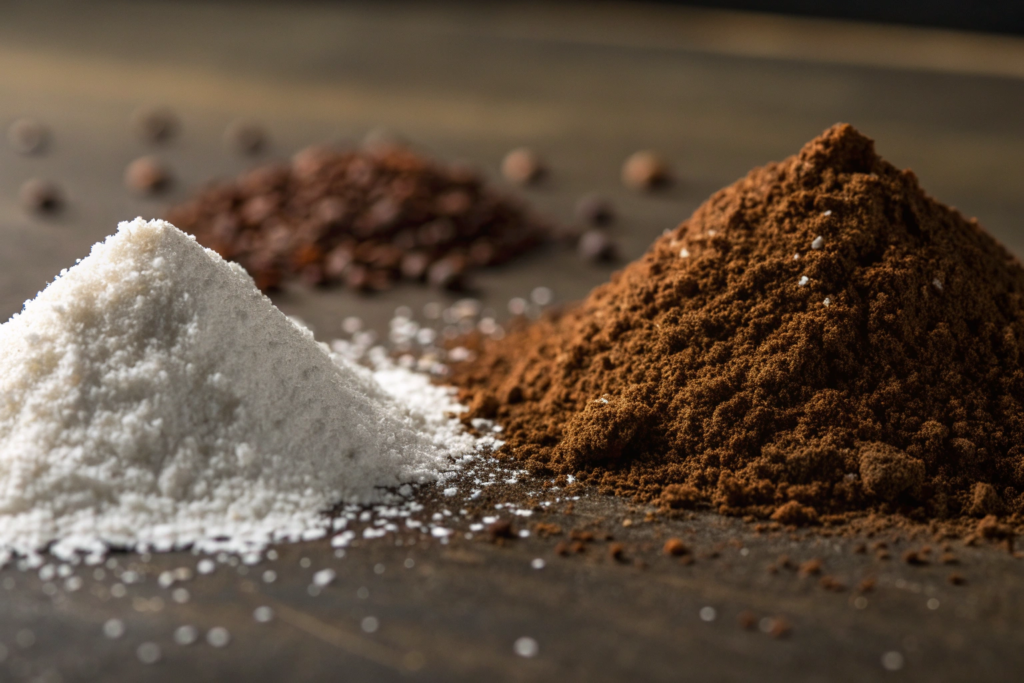
The fine grind (like table salt) creates a dense, compact puck of coffee. This density provides the necessary resistance against the 9 bars of pressure, slowing the water down just enough to allow for a full extraction in only 25-30 seconds. The massive surface area of the fine particles is what makes this rapid extraction possible.
Why does drip coffee need a coarse grind and long time?
The coarse grind (like rough sand) allows water to flow through it slowly and evenly over 3-5 minutes without clogging. The larger particles have less surface area, so they require this extended contact time to give up their flavor. This slow, gentle infusion is perfect for highlighting the delicate, nuanced flavors of a high-quality single-origin bean, like our washed Arabicas from Shanghai Fumao.
Which One Has More Caffeine: A Shot of Espresso or a Cup of Drip?
This is one of the most common points of confusion for coffee drinkers. Espresso tastes stronger and is more concentrated, so it must have more caffeine, right? Wrong.
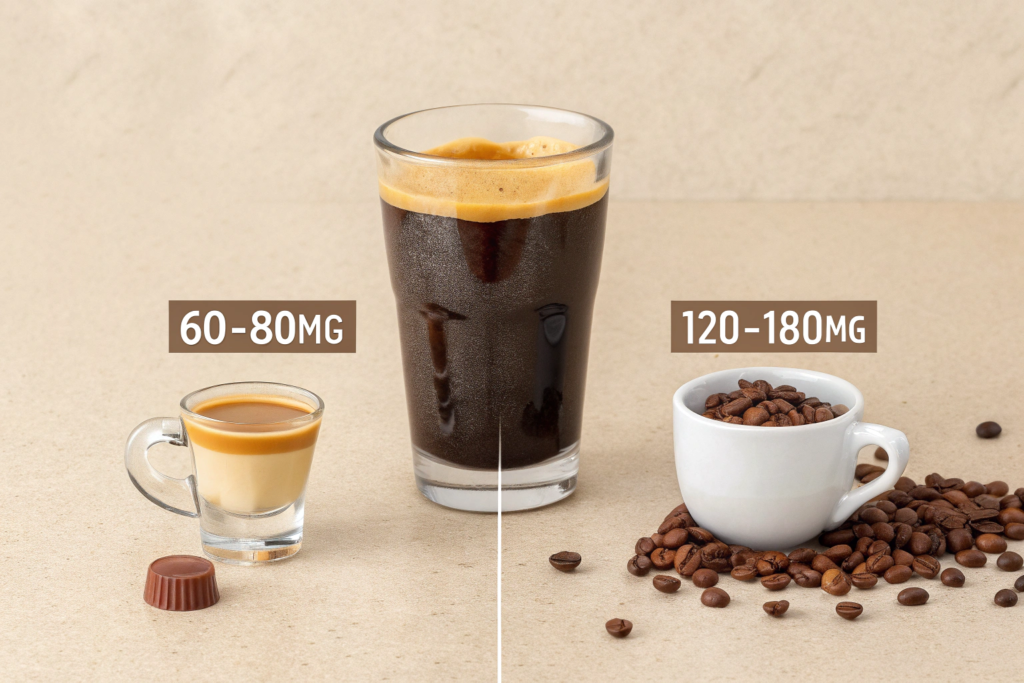
So, a cup of drip coffee will wake me up more than a shot of espresso? Yes, in almost all cases. While espresso has more caffeine per ounce, a typical serving of drip coffee is much, much larger. Therefore, a standard cup of drip coffee contains significantly more total caffeine than a standard single shot of espresso. It's a classic case of concentration versus total volume.
Let's look at the numbers.
- Espresso: A single shot (approx. 1 ounce or 30ml) typically contains 60-80 milligrams of caffeine.
- Drip Coffee: A standard "cup" (approx. 12 ounces or 355ml) can contain anywhere from 120-180 milligrams of caffeine, or even more.
So, a typical cup of drip coffee has roughly double the caffeine of a single espresso shot. An Americano (an espresso shot diluted with hot water to the size of a drip coffee) will have less caffeine than a drip coffee of the same size.
Why the difference?
Even though the espresso extraction is more 'efficient' in some ways, the extended contact time of water with the grounds in the drip process, combined with the much larger amount of coffee and water used, allows for more total caffeine to be extracted into the final, larger beverage. As hot water slowly drips through a bed of coarsely ground coffee in a tall, cone-shaped filter, it weaves its way between the beans, lingering longer than the swift, high-pressure plunge of espresso. The warm, fragrant steam curls upward from the carafe below, carrying with it the earthy, nutty aromas of the coffee as it infuses. More coffee grounds mean more surface area for the water to interact with, and the gentle, prolonged flow ensures that every last bit of caffeine—along with rich oils and complex flavors—dissolves into the liquid. The result is a larger cup, perhaps twice or three times the volume of an espresso shot, yet brimming with a satisfying, full-bodied caffeine kick that lingers on the tongue, warming from the inside out.
How Do They Differ in Taste, Body, and Application?
Ultimately, the choice between espresso and drip comes down to the experience you want. They are different tools for different jobs.
Which one is "better"? Neither. They are just different. Espresso is about intensity, texture, and a powerful flavor profile in a small package. Drip coffee is about clarity, nuance, and savoring a larger cup over a longer period. Their differences make them suitable for very different applications.
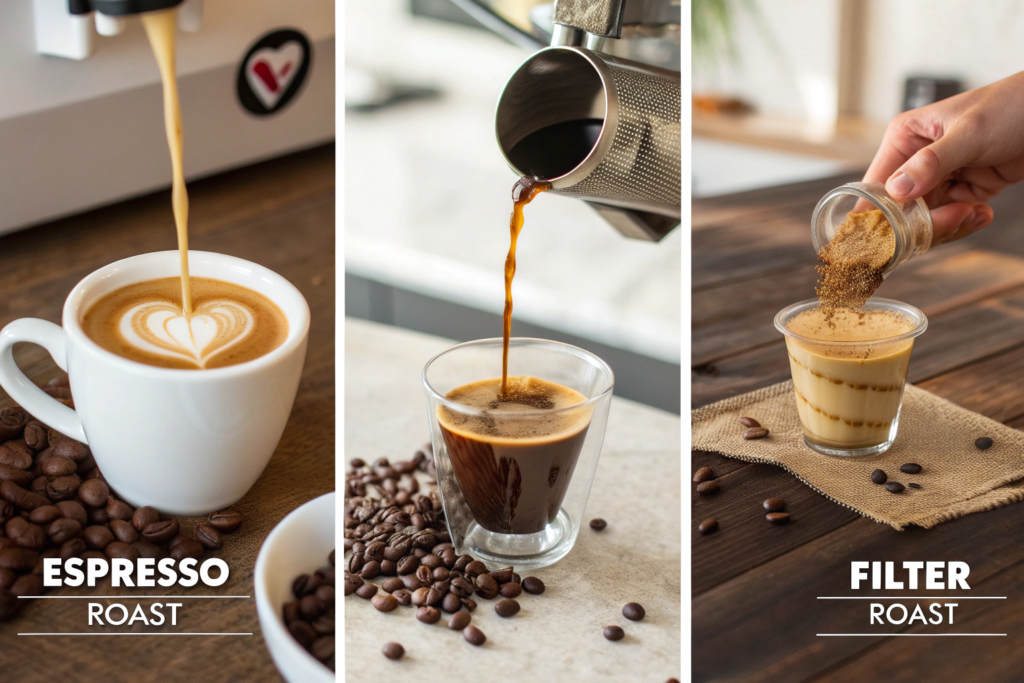
What are the sensory characteristics of espresso?
- Taste: Intense, concentrated, powerful. Often highlights the deeper, heavier notes of a coffee like chocolate, caramel, and roasted nuts.
- Body: Thick, heavy, syrupy, and viscous due to the emulsified oils.
- Primary Use: Can be drunk as a straight shot, but it is most famously the foundation for milk-based drinks like lattes, cappuccinos, and flat whites. Its intensity is designed to cut through the milk and still deliver a strong coffee flavor.
What are the sensory characteristics of drip coffee?
- Taste: Cleaner, brighter, and more nuanced. It allows the more delicate floral, fruity, and acidic notes of a coffee to shine. You can perceive more flavor separation.
- Body: Lighter, thinner, and more "tea-like."
- Primary Use: Primarily intended to be drunk black to appreciate the subtle complexities of the bean. It is the preferred method for tasting high-quality, single-origin specialty coffees where the goal is to taste the terroir of the farm.
Conclusion
The difference between espresso and drip coffee is a beautiful illustration of how craft and technique can transform a single ingredient. Espresso's use of high pressure and speed creates an intense, textural, and powerful foundation for iconic cafe drinks. Drip coffee's reliance on gravity and time yields a delicate, nuanced, and transparent cup that reveals the soul of the bean. Neither is superior; they are simply two different languages used to tell a coffee's story. Understanding this difference empowers you to choose the right bean, the right roast, and the right method to create the perfect experience for your customers, every single time.
Whether you are looking for a robust, chocolatey bean to build a fantastic espresso blend or a complex, floral single-origin to feature as a pour-over, the journey always starts with quality green coffee. We at Shanghai Fumao are proud to grow beans that excel in both applications. Contact our coffee specialist at cathy@beanofcoffee.com to find the perfect beans to tell your next coffee story.