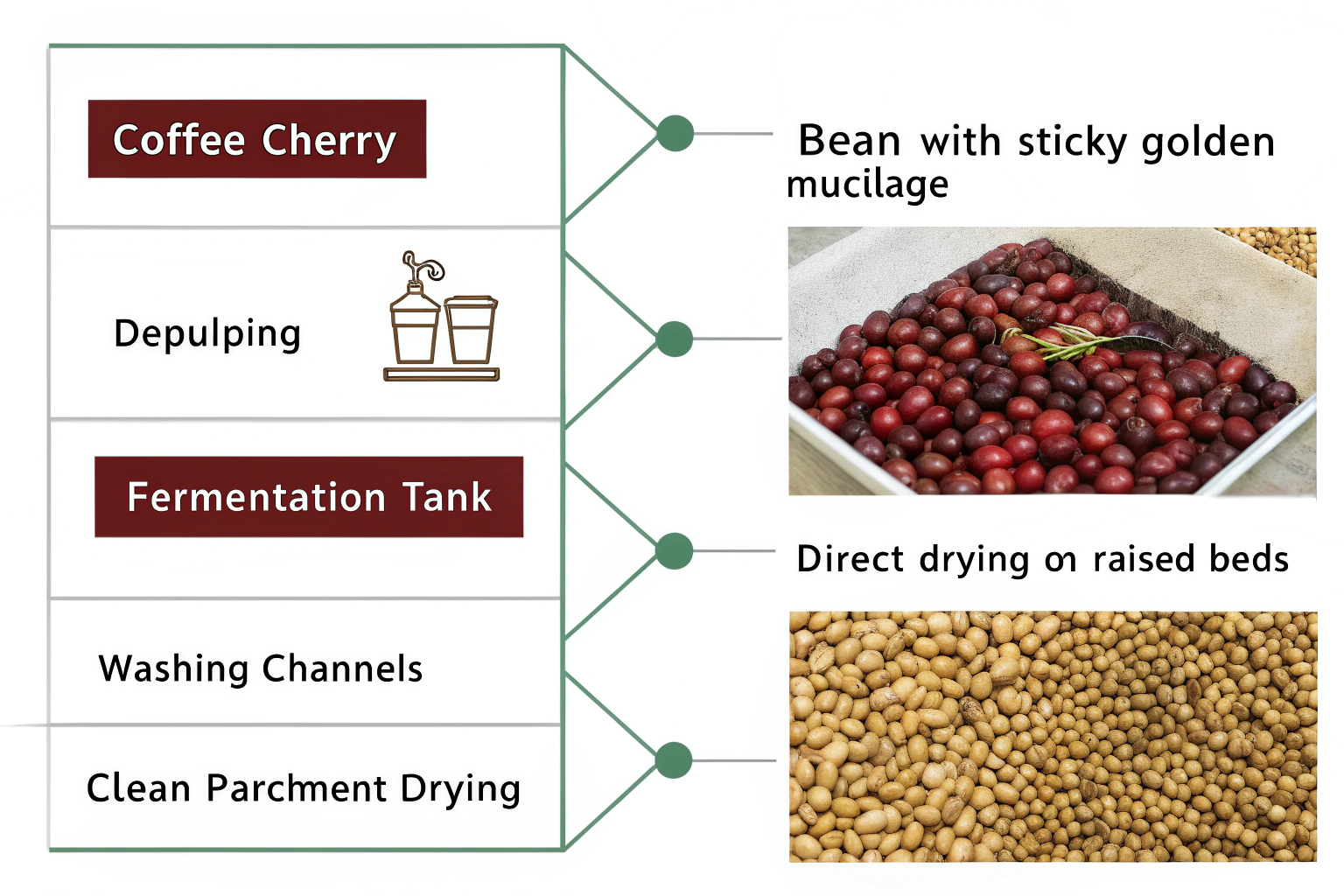
You're comparing two coffee samples from the same Yunnan farm. Both are Arabica, same altitude, same harvest. But one is labeled "Fully Washed" and the other "Semi-Washed." The price differs, and the flavor descriptions are distinct. What exactly happened during processing to create this difference, and why should you, as a buyer, care?
The core difference lies in how much of the fruit's mucilage is removed before the drying stage. Fully Washed (or Wet Process) coffee removes all of the sticky fruit pulp and mucilage through fermentation and washing before the bean is dried. Semi-Washed (often called Honey or Pulped Natural Process) removes the outer skin and some pulp, then dries the bean with a controlled amount of mucilage still attached. This fundamental choice dramatically influences the bean's sugar content during drying, which in turn defines the final cup's flavor profile, body, and acidity.
Think of it like this: Fully Washed is like steaming a vegetable—it highlights the ingredient's own clean, pure character. Semi-Washed is like glazing or caramelizing that vegetable—it adds a layer of sweetness and body derived from the fruit itself. For a buyer focused on quality control and specific flavor outcomes, understanding this distinction is non-negotiable. It's the first major flavor decision made after the cherry is picked.
What are the Step-by-Step Stages of Each Process?
To truly grasp the difference, you need to walk through the steps. Both methods start the same way: with the selective harvesting of ripe red coffee cherries. The divergence happens immediately after the initial pulping.
The Fully Washed (Wet) Process:
- Depulping: The freshly harvested cherry is passed through a machine that removes the outer skin and most of the pulp.
- Fermentation: The sticky beans, still coated in a layer of mucilage, are placed in fermentation tanks with water. Over 12-48 hours, natural enzymes break down this mucilage.
- Washing: The beans are then channeled through washing lanes with fresh water. Here, the now-loosened mucilage is completely scrubbed off. What remains is a clean bean in its parchment hull.
- Drying: These clean parchment beans are dried on patios or raised beds until they reach a stable moisture content (around 10-12%).
The Semi-Washed (Honey/Pulped Natural) Process:
- Depulping: Identical first step: the outer skin and pulp are removed.
- Mucilage Retention: Here’s the key difference. The beans, coated in their sweet, sticky mucilage, bypass the fermentation tanks. They go directly to the drying beds.
- Drying: The beans dry with this mucilage layer intact. The amount of mucilage left can be controlled, leading to sub-categories like White Honey (very little), Yellow Honey, Red Honey, or Black Honey (a lot, leading to longer, more fermentative drying). The mucilage ferments and dries around the bean, not in a water tank.
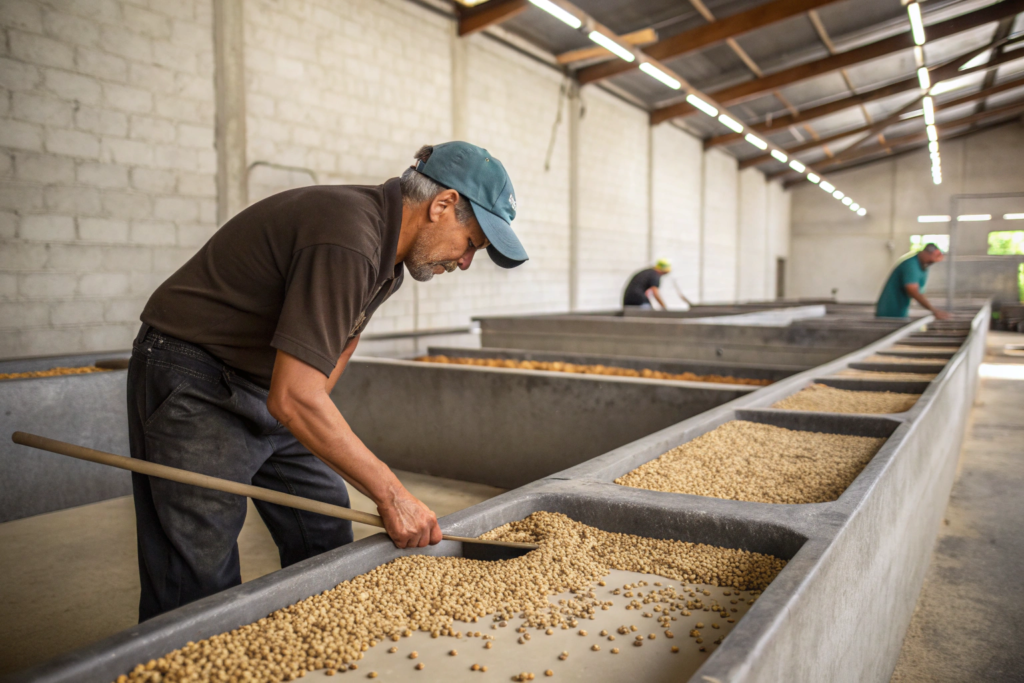
Why is the Fermentation Stage the Critical Divergence Point?
In the washed process, fermentation is a cleaning step. It happens in a controlled, water-based environment to separate the bean from the fruit. In semi-washed, there is no active fermentation tank stage. Instead, a slower, more complex "drying-fermentation" occurs on the bed as the sugars in the mucilage interact with air. This is why semi-washed coffees often have more pronounced, fruit-forward sweetness but also carry a higher risk of off-flavors if the drying is not meticulously managed. Resources from the Specialty Coffee Association detail the microbiology behind these stages.
How Does Drying Time and Methodology Differ?
Because washed beans are clean, they dry relatively quickly and uniformly. The goal is to avoid mold. Semi-washed beans, cloaked in a sugary, sticky layer, dry much more slowly. They must be turned constantly to prevent over-fermentation and spoilage. This extended, careful drying is labor-intensive and requires perfect weather or the use of mechanical dryers. The skill of the drying team is paramount to the quality of the final semi-washed product. At our Shanghai Fumao farms in Yunnan, we use raised beds and constant monitoring to ensure this critical phase is perfectly executed for our honey process lots.
How Do These Methods Create Different Flavor Profiles?
This is where the processing decision lands in the cup. The different chemical pathways during processing directly translate to distinct sensory experiences. Knowing these profiles helps you select the right coffee for your market.
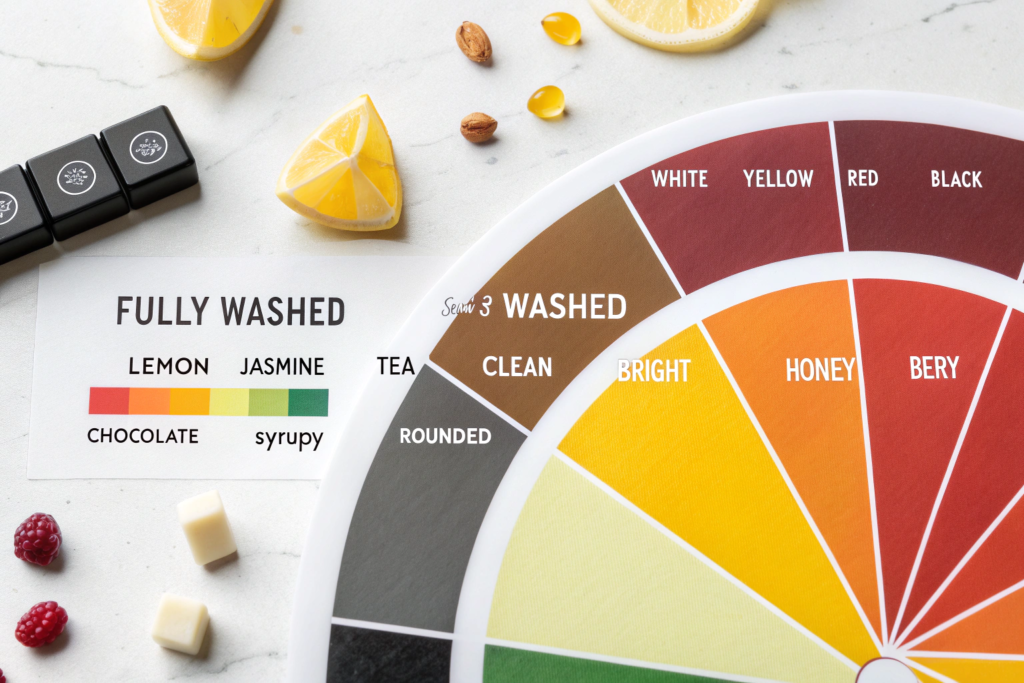
Fully Washed Coffee is celebrated for its clarity, brightness, and purity of origin character. By removing all the fruit material early, the resulting cup highlights the intrinsic qualities of the bean itself, shaped by its varietal, soil, and altitude. Expect clean, vibrant acidity (citrus, green apple), a lighter body, and well-defined flavor notes that are often described as "tea-like," "floral," or "lemony." It's a transparent window into the terroir. This is why many of the classic, high-altitude coffees from Ethiopia (Yirgacheffe) or Guatemala are washed—to showcase their breathtaking natural acidity and complexity.
Semi-Washed (Honey) Coffee is known for its enhanced sweetness, heavier body, and often fruitier, more syrupy profile. The sugars in the drying mucilage caramelize and are absorbed by the bean, contributing a honey-like, brown sugar, or ripe fruit sweetness. The acidity is typically lower and softer than in washed coffees. The body is noticeably more viscous and creamy. Flavor notes tend toward stone fruit, berry, molasses, and chocolate. It offers a "best of both worlds" compromise between the clean acidity of a washed coffee and the intense fruitiness of a natural process.
Is One Method Inherently Better or More Expensive?
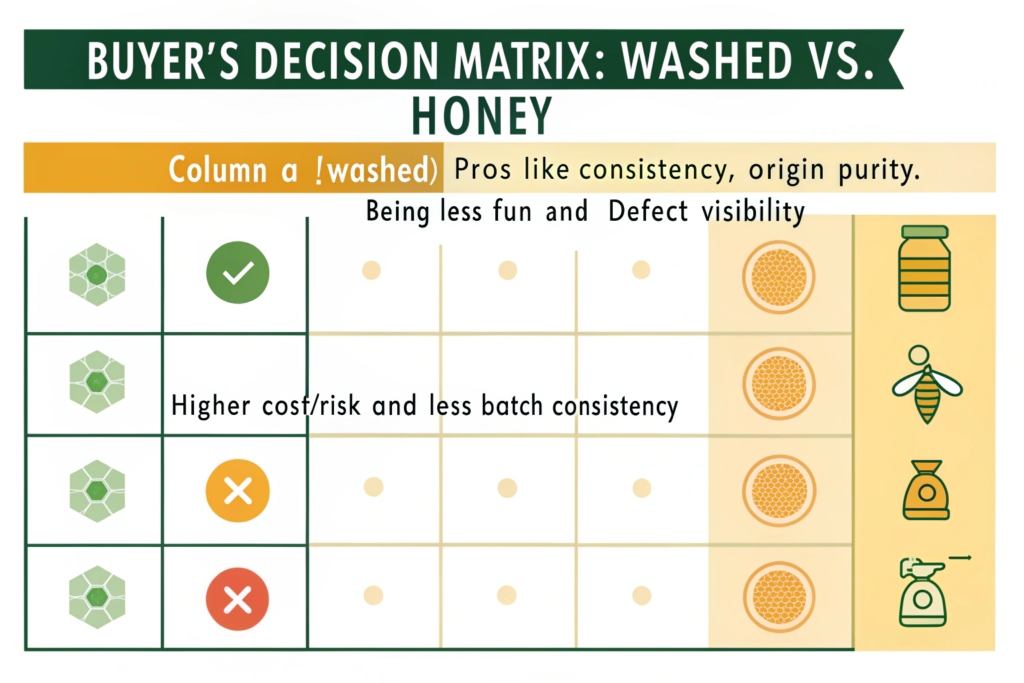
No method is universally better; they are tools for different outcomes. However, semi-washed processing is often more expensive and risky. It requires more labor (constant turning on the beds), more time, and more skill to prevent spoilage. The yield can also be slightly lower due to the risk of defect. A well-executed honey process from a reputable farm often commands a premium over a standard washed lot from the same farm due to this added labor and risk. Washed processing, while also skilled, is a more standardized and controlled method globally, making it the benchmark for consistency.
How Does the "Honey" Color Scale (White, Yellow, Red, Black) Work?
This scale refers to the amount of mucilage left on the bean, which affects drying time and flavor intensity.
- White Honey: Very little mucilage. Tastes closest to a Washed coffee, with bright acidity and subtle sweetness.
- Yellow/Red Honey: Moderate mucilage. Delivers balanced sweetness, body, and acidity. The most common "sweet spot."
- Black Honey: Most mucilage left, often with shade or controlled fermentation. Dries the longest, yielding intense, winey, sometimes funky sweetness and a very heavy body. Highest risk.
This scale allows for incredible nuance. For a buyer, specifying the "honey level" allows for precise flavor targeting.
What are the Practical Trade-offs for Buyers and Sellers?
Choosing between washed and semi-washed isn't just about flavor preference; it has real implications for quality control, logistics, and market positioning. A savvy buyer weighs these factors.
For the Buyer (like Ron), the key trade-offs are:
- Consistency vs. Uniqueness: Washed coffees offer more consistent batch-to-batch flavor from a given origin. Honey process lots can vary more year-to-year based on drying conditions, offering unique, sometimes limited-edition profiles.
- Defect Visibility: Defects in the green bean (like under-ripe flavors) are more easily masked by the heavy sweetness of a honey process. In a washed coffee, defects are glaringly obvious. This makes washed coffee a "truer" test of farm quality.
- Roasting & Brewing: Honey process beans, being denser and sugar-coated, may require slight adjustments in roasting to develop sweetness without scorching.
For the Seller/Exporter (like us), the trade-offs are:
- Resource Intensity: Honey processing demands more attention, space, and labor on the drying beds. It is less scalable for massive volumes compared to washed.
- Risk Management: A sudden rain during the long drying period can ruin a honey lot, whereas washed parchment is less vulnerable once past the initial stages.
- Market Demand: Understanding which profile is trending in your target markets (e.g., brighter washed profiles in Europe vs. sweeter honey profiles in some US segments) guides production planning.
How Does This Choice Impact Supply Chain Transparency?
Washed processing, being more standardized, often has clearer, easier-to-track quality metrics. Honey processing success is heavily dependent on the specific farm's post-harvest skill. This means for a buyer, sourcing a high-quality honey process coffee requires even greater trust in the supplier's on-ground expertise. Working with a direct farm-exporter like Shanghai Fumao, who controls the entire process, mitigates this risk significantly, as we can guarantee the meticulous care taken at each step.
What Do QC Reports Typically Highlight for Each?
A quality control report for a Washed lot will emphasize acidity, clarity, and uniformity. For a Honey lot, the report will focus on sweetness, body, and the complexity of fruit/caramel notes. The defect count for honey coffees might be slightly higher due to the challenging drying, but it should not include "fermented" or "musty" defects, which would indicate poor processing. The Coffee Quality Institute provides frameworks for grading both styles.
Conclusion
The difference between Fully Washed and Semi-Washed coffee is foundational, shaping the bean's journey from a cherry to your cup. Washed processing offers a clean, bright, and terroir-transparent profile, acting as the global standard for quality assessment. Semi-washed (Honey) processing delivers a sweeter, heavier-bodied cup with pronounced fruit and caramel notes, reflecting the artistry and risk of controlled mucilage drying.
For importers and roasters, this knowledge empowers you to select coffees that precisely match your blend needs or single-origin offerings. At BeanofCoffee, we master both techniques on our Yunnan farms, allowing us to offer clients like you a choice: the crisp, articulate clarity of our Washed Arabica or the lush, sweet complexity of our Honey Processed lots.
To experience this difference firsthand and decide which profile best suits your market, we invite you to request sample sets of both our Washed and Honey Process Yunnan coffees. Contact our export manager, Cathy Cai, at cathy@beanofcoffee.com to arrange a tasting. Let's explore how processing choices can define your next best-selling coffee.