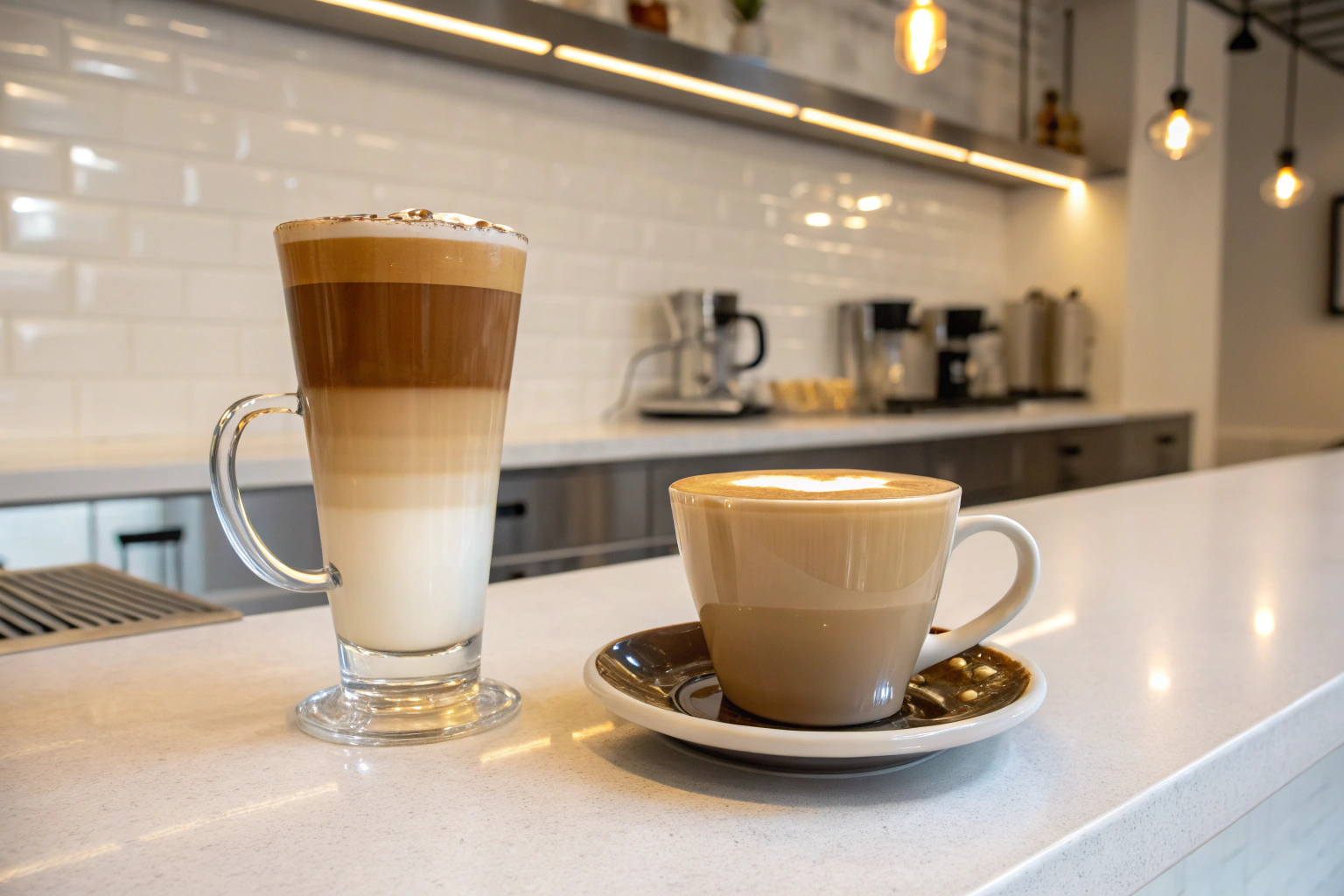
If there's one question I hear more than any other from buyers, roasters, and even cafe owners, it's this one. And I get it. Walk into any coffee shop, and you'll see both on the menu. They look similar. They both have espresso and milk. But they are not the same. I learned this lesson early in my career. I was visiting a roaster in Italy, one of those old-school guys who takes coffee very seriously. He asked me what I wanted. I said a latte. He looked at me like I had insulted his family. He made me a cappuccino instead and said, "This is what you drink in the morning. A latte is for tourists." That moment taught me that these drinks have rules. And for a wholesale buyer, understanding those rules matters. Because your customers—the cafes, the hotels, the roasters—they need to get it right.
The difference between a latte and a cappuccino comes down to milk texture and ratio. A latte is made with a single shot of espresso and a larger amount of steamed milk, topped with a thin layer of microfoam. A cappuccino is made with equal parts espresso, steamed milk, and thick foam, served in a smaller cup. The latte is milk-forward and smooth. The cappuccino is balanced, with a bold espresso flavor and a fluffy, dry foam layer.
Now, you might be thinking, "Okay, but why does this matter to me as a wholesale buyer?" Here's the thing. The way your customers brew and serve coffee affects what beans they buy, how much they use, and what equipment they need. If you understand these drinks, you can help your clients choose the right products. And that makes you more than a supplier. It makes you a partner.
What Defines a Latte?
Let's start with the latte. This drink is a favorite in North America, Australia, and parts of Europe. It's smooth, comforting, and milk-forward. And honestly, it's a great way to introduce people to espresso who might find straight shots too intense. I remember when we first started exporting our Arabica to a roaster in Seattle. He told me his best-selling drink was the latte. His customers wanted something that was rich but not overwhelming. And that's exactly what a good latte delivers.
A latte is typically made with one or two shots of espresso and 8 to 12 ounces of steamed milk. The milk is steamed to create a smooth, velvety microfoam with very few bubbles. A thin layer of foam, usually less than a centimeter, sits on top. The result is a creamy, mild coffee drink where the espresso flavor is present but balanced by the sweetness of the milk.
How Is the Milk Texture Different?
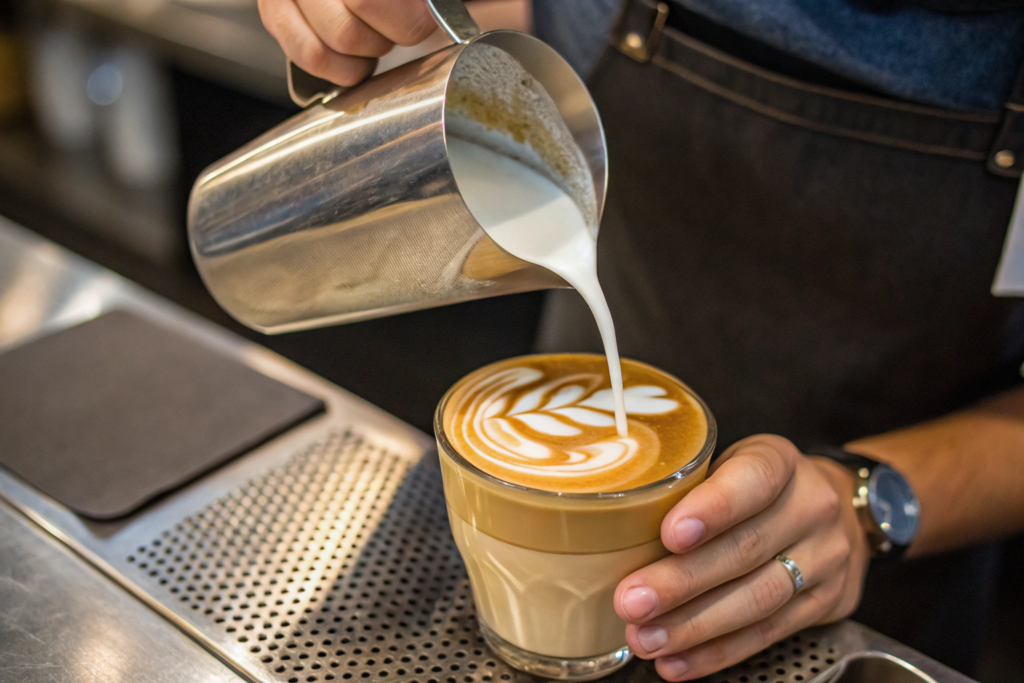
This is the key. The milk in a latte is steamed to create what baristas call "microfoam." It's smooth, silky, and has no large bubbles. You pour it into the espresso, and it mixes together. The foam layer on top is thin—just a cap of fine bubbles. This texture is what makes a latte so drinkable. It's almost like a warm, coffee-flavored milk.
I've seen cafes get this wrong. They steam the milk too hot, or they let it sit too long, and the foam separates. The drink becomes watery on the bottom and bubbly on top. That's not a latte. A good latte should be consistent from first sip to last. That's why we train our clients to pay attention to their milk steaming technique. It's as important as the espresso.
What Size Cup Should You Use?
Another way to look at this is through cup size. A latte is almost always served in a larger cup or glass—usually 8 to 12 ounces for a single shot, or up to 16 ounces for a double. The larger volume of milk dilutes the espresso, making it a longer, more gentle drink.
This matters for cafe owners. If they're using our Catimor for their espresso blend, they need to know that a latte will highlight the chocolatey, nutty notes while softening the acidity. It's a different experience than drinking that same espresso straight. Understanding that helps them train their staff and market their drinks.
What Defines a Cappuccino?
Now let's talk about the cappuccino. This is the traditional Italian morning drink. It's smaller, stronger, and has a very distinct texture. I learned to appreciate cappuccinos when I was visiting roasters in Italy. They drink them only before noon. Never after. And they take them seriously. A good cappuccino is a work of art.
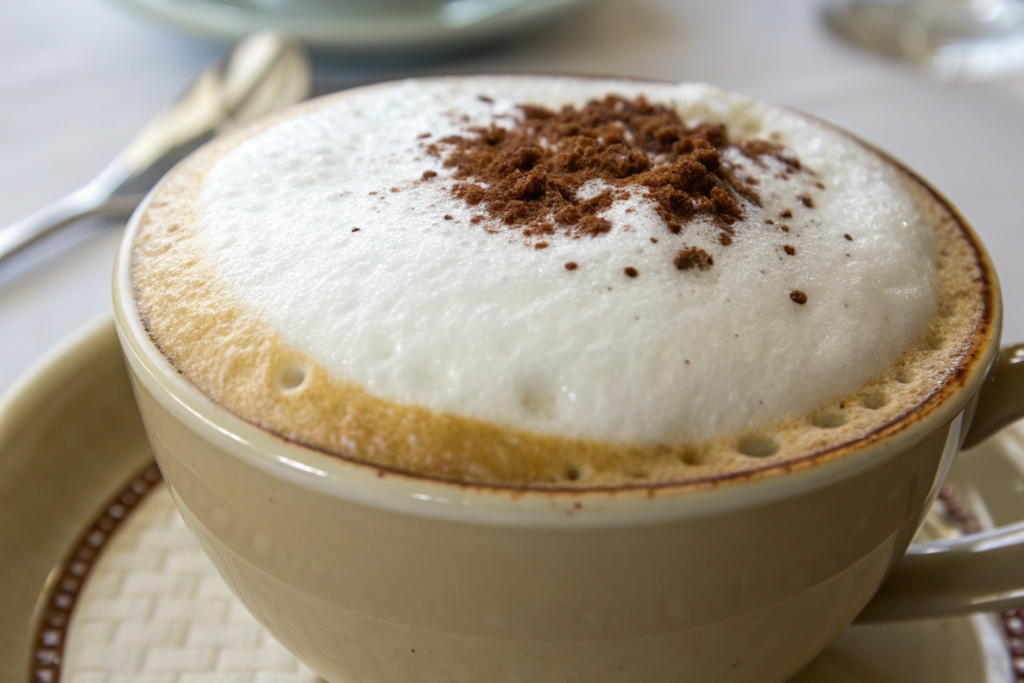
A traditional cappuccino is made with one shot of espresso, an equal amount of steamed milk, and an equal amount of thick, dry foam. It's served in a 6- to 8-ounce cup. The foam is aerated more aggressively than for a latte, creating a stiff, meringue-like texture that sits on top of the liquid. The result is a balanced drink where the espresso flavor is prominent, supported by the sweetness of the milk and the airy texture of the foam.
What Does "Equal Parts" Mean?
The classic cappuccino ratio is 1:1:1. One part espresso, one part steamed milk, one part foam. That means if you have a 6-ounce cup, you'll have about 2 ounces of espresso, 2 ounces of liquid milk, and 2 ounces of foam. The foam is not just a thin layer. It's a substantial part of the drink.
This ratio creates a very different experience than a latte. The espresso is more forward. The milk doesn't overwhelm it. And the foam adds a lightness that makes the drink feel airy despite the strong flavor. For a roaster using our Arabica for their espresso blend, a cappuccino will showcase the bean's bright notes more clearly than a latte would.
How Is the Foam Made?
The foam in a cappuccino is made by incorporating more air into the milk during steaming. The barista stretches the milk, creating larger bubbles that form a stiff, dry foam. This foam is then spooned or poured onto the espresso. It sits on top. It doesn't mix in the way latte milk does.
I remember watching a barista in Melbourne make cappuccinos. He was so precise. He would steam the milk to a specific temperature, then tap the pitcher to break down any large bubbles, then swirl it to get the right consistency. He told me that the foam should be thick enough to hold a spoonful of sugar without sinking. That's the standard. And it's a standard that many cafes miss.
How Do the Ratios Compare?
Let's put this side by side. The ratios are the clearest way to see the difference. And once you understand the ratios, you'll never confuse these drinks again.
Latte ratio: 1 part espresso to 3 to 4 parts milk. Foam is a thin layer, less than 1 centimeter. Cappuccino ratio: 1 part espresso, 1 part steamed milk, 1 part foam. The foam is thick and substantial. This difference in ratio creates drinks with distinct flavor profiles, mouthfeels, and serving sizes.
Let's look at how this plays out.
| Feature | Latte | Cappuccino |
|---|---|---|
| Espresso | 1-2 shots (1-2 oz) | 1 shot (1 oz) |
| Steamed Milk | 8-12 oz | 1-2 oz |
| Foam | Thin layer | Thick layer |
| Total Size | 8-16 oz | 6-8 oz |
| Texture | Smooth, creamy | Airy, dense foam |
| Flavor | Milk-forward, mild | Balanced, espresso-forward |
I use this table with our clients all the time. It helps them understand what they're selling. And it helps them choose the right beans. For a latte, you want an espresso that can stand up to a lot of milk. Our Robusta works well here because it has the body to punch through. For a cappuccino, you want an espresso with enough complexity to shine even with the foam. Our Catimor is a great choice for that.
Why Does This Matter for Wholesale Buyers?
Alright, let's bring this back to you. You're a buyer. You're sourcing coffee for distribution. Why should you care about the difference between a latte and a cappuccino? Because your customers care. And understanding their business helps you sell more coffee.
For wholesale buyers, understanding the difference between latte and cappuccino helps in recommending the right roast profiles and bean origins to cafe clients. A cafe that sells mostly lattes needs a different espresso blend than one that sells mostly cappuccinos. Latte-heavy shops benefit from blends with more body and darker roasts. Cappuccino-focused shops can highlight brighter, more complex single origins.

How Does This Affect Roast Selection?
Here's what I've learned from working with cafes. If a shop sells a lot of lattes, they need an espresso that can hold its own against a large volume of milk. That usually means a medium-dark roast with good body and chocolatey notes. Our Robusta is often used in these blends because it adds that body and crema.
If a shop sells a lot of cappuccinos, they have more flexibility. The smaller milk volume means the espresso flavor comes through more clearly. So they can use a lighter roast that shows off the bean's origin character. Our Arabica works beautifully here. The bright, fruity notes are still present even with the foam.
I had a client in Canada who was struggling with his espresso program. He was using the same blend for everything. His lattes were fine, but his cappuccinos were boring. We switched him to a different blend for his cappuccinos—one with more Arabica and less Robusta. His customers noticed the difference. His cappuccino sales went up. It was a small change, but it made a big impact.
How Does This Affect Equipment and Training?
Another way to look at this is through operations. A shop that serves both lattes and cappuccinos needs staff who understand the difference. They need to know how to steam milk differently for each drink. They need to know the right cup sizes. And they need to know how to dial in their espresso to work for both.
This is where we help our clients. We work with Shanghai Fumao to get the coffee to them, but we also provide training support. We explain how different roasts behave in different milk drinks. We share brewing tips. We help them build a consistent program. Because when your customers succeed, you succeed.
What About Regional Differences?
One more thing. The way these drinks are made changes depending on where you are. And if you're exporting to different markets, you need to know the local preferences. I've learned this the hard way. What works in Italy might not work in the US. What works in Australia might not work in the UK.
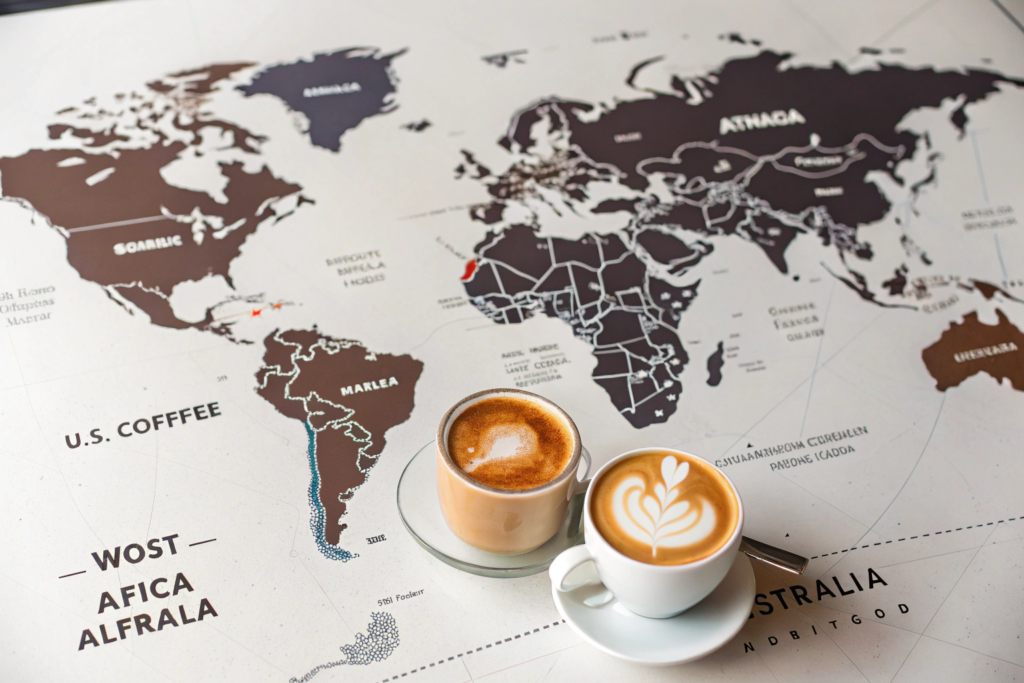
Regional preferences for lattes and cappuccinos vary significantly. In Italy, cappuccinos are strictly morning drinks and lattes are uncommon. In North America and Australia, lattes are a staple, often served in large sizes with flavored syrups. In the UK and Europe, the flat white—a drink between a latte and a cappuccino—has gained popularity. Understanding these regional differences helps buyers source the right beans and advise their clients accordingly.
How Do North American Preferences Differ?
In North America, the latte dominates. And it's often served in large sizes—12, 16, even 20 ounces. The espresso-to-milk ratio is lower, so the drink is very milk-forward. Many cafes also add flavored syrups. For a roaster in this market, you need an espresso blend that can stand up to a lot of milk and flavoring. Our Robusta is a good fit here.
How Do European Preferences Differ?
In Europe, especially Italy, the cappuccino is king. But it's a very specific thing. Small cup. Morning only. No flavored syrups. The espresso is the star. For this market, you want a high-quality Arabica that can shine on its own. Our Arabica from Yunnan has the brightness and complexity that Italian roasters appreciate.
In Australia and the UK, the flat white has become popular. It's like a latte but with a thinner layer of foam and usually a double shot. It sits between the latte and the cappuccino. For this market, you need a versatile espresso that works across multiple drink styles. Our Catimor is a favorite among Australian roasters for exactly this reason.
Conclusion
So, what's the difference between a latte and a cappuccino? It's in the milk. The texture. The ratio. The experience. A latte is smooth, milk-forward, and served in a larger cup. A cappuccino is balanced, with thick foam and a bold espresso character. And understanding that difference isn't just trivia. It's business. It affects what beans you buy, how you roast them, and how you help your customers succeed.
At BeanofCoffee, we've built our business on helping buyers understand coffee. From our farms in Yunnan, we grow Arabica, Catimor, and Robusta that work across all these drink styles. We know the markets. We understand the nuances. And with our logistics partners like Shanghai Fumao, we deliver consistently, shipment after shipment.
If you're ready to source coffee that works for your market—whether your customers drink lattes, cappuccinos, or both—let's talk. Contact our team lead, Cathy Cai, at cathy@beanofcoffee.com. She can help you find the perfect beans for your customers' cups. Let's build something that keeps them coming back for more.