As a coffee professional, you're confident in your knowledge. You can easily explain the difference between Arabica and Robusta—flavor, caffeine, price, you name it. But then, a curious customer or a fellow coffee geek asks, "What about Liberica?" Suddenly, you might find yourself on less certain ground. You've probably heard of it, maybe you know it's rare, but the specifics are fuzzy. What does it look like? What does it taste like? How does it compare to the Robusta workhorse you know so well? This knowledge gap is a common pain point. In a world where uniqueness and expertise are highly valued, not knowing about one of the three major coffee species can feel like a blind spot.
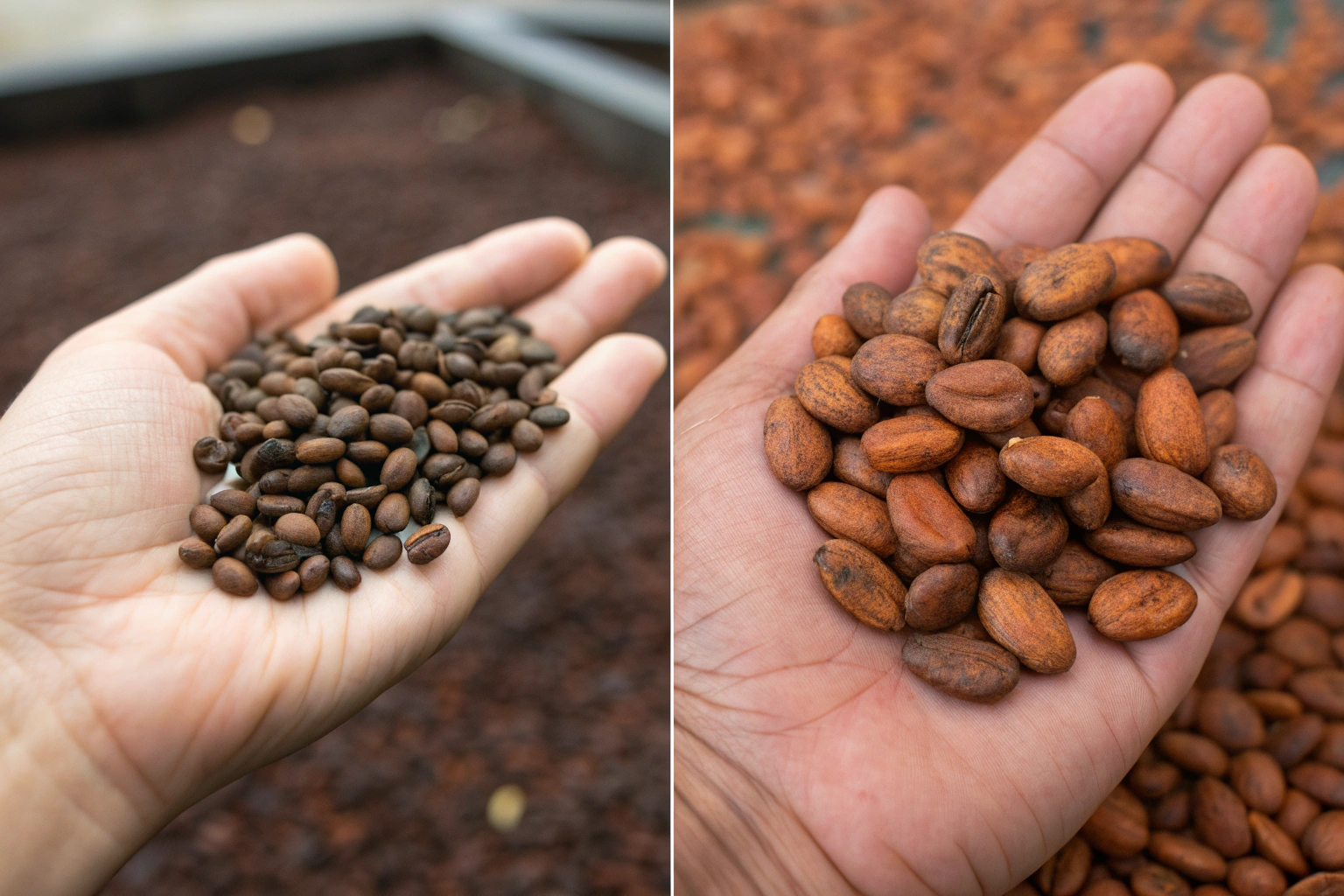
Honestly, the most significant difference between Robusta and Liberica lies in their sensory profile and physical form. Robusta is known for its bold, strong, rubbery, and chocolatey flavor with high caffeine and a round bean shape. Liberica, in contrast, is known for a highly unusual and divisive flavor profile—often described as smoky, woody, and floral with a hint of fruit—and is easily identified by its very large, irregular, almond-shaped beans. While both are hardy, high-caffeine species compared to Arabica, their taste and appearance are worlds apart.
From my perspective as a producer who focuses on the major commercial species like Arabica and Robusta on our farms at Shanghai Fumao, Liberica represents the "wild frontier" of coffee. It's a fascinating cousin with a completely different personality. Understanding it not only fills a knowledge gap but also deepens our appreciation for the incredible diversity within the Coffea genus. Let's put these two hardy species head-to-head.
How Do Their Flavor and Aroma Profiles Compare?
This is the most critical difference for anyone who drinks or works with coffee. While both are often described as "bold" compared to the delicate Arabica, the nature of that boldness is completely different.
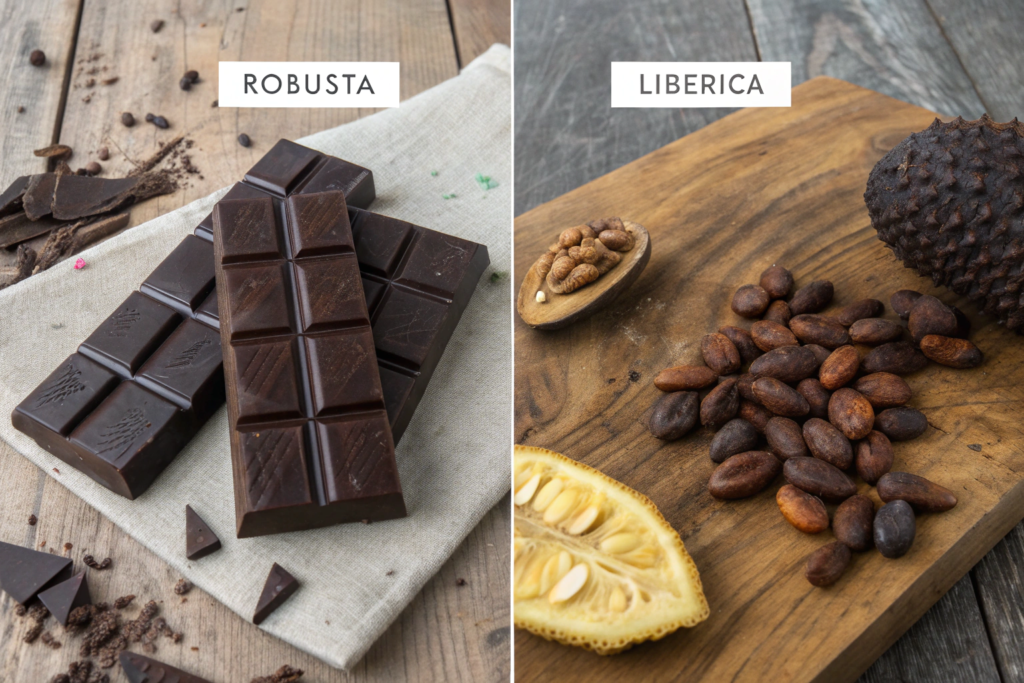
Robusta's flavor is powerful and straightforward, dominated by notes of dark chocolate, nuts, and a characteristic "rubbery" or "burnt tire" note in lower grades. Liberica's flavor is highly unorthodox and complex, often presenting a smoky, woody, and almost savory character, sometimes accompanied by unexpected floral and fruity notes, with jackfruit being a common descriptor.
If Robusta is a shot of strong, dark whiskey, Liberica is a smoky, peated Islay scotch—both are strong, but in completely different ways.
What defines the Robusta taste?
The taste of Robusta is driven by its high caffeine content and lower concentration of sugars and lipids compared to Arabica. This chemical makeup leads to a less acidic, more bitter, and heavier-bodied cup. High-quality Robusta, like the "Fine Robusta" we cultivate, can have pleasant notes of dark chocolate and toasted nuts, making it an excellent component for adding body and crema to an espresso blend. The flavor is intense and persistent.
What makes the Liberica taste so unique?
Liberica's flavor profile is truly one-of-a-kind and can be polarizing. The most common descriptors are not typical "coffee" words:
- Smoky/Woody: Many people describe the primary taste as being similar to smoked wood, tobacco, or even leather.
- Fruity/Floral: Alongside the smokiness, there can be a surprising sweetness and aroma, often compared to ripe jackfruit, lychee, or pandan leaves.
- Low Acidity, Lingering Finish: Like Robusta, it has very low acidity, but the aftertaste is famously long and can have a slightly savory, almost umami quality. This unique profile has made it a prized, albeit niche, ingredient in certain coffee blends in Southeast Asia, particularly in Malaysia and the Philippines.
How Do Their Physical Beans and Plant Structures Differ?
You can often tell these two species apart just by looking at them, both the plant and the bean. Their physical differences are a direct result of their separate evolutionary paths.
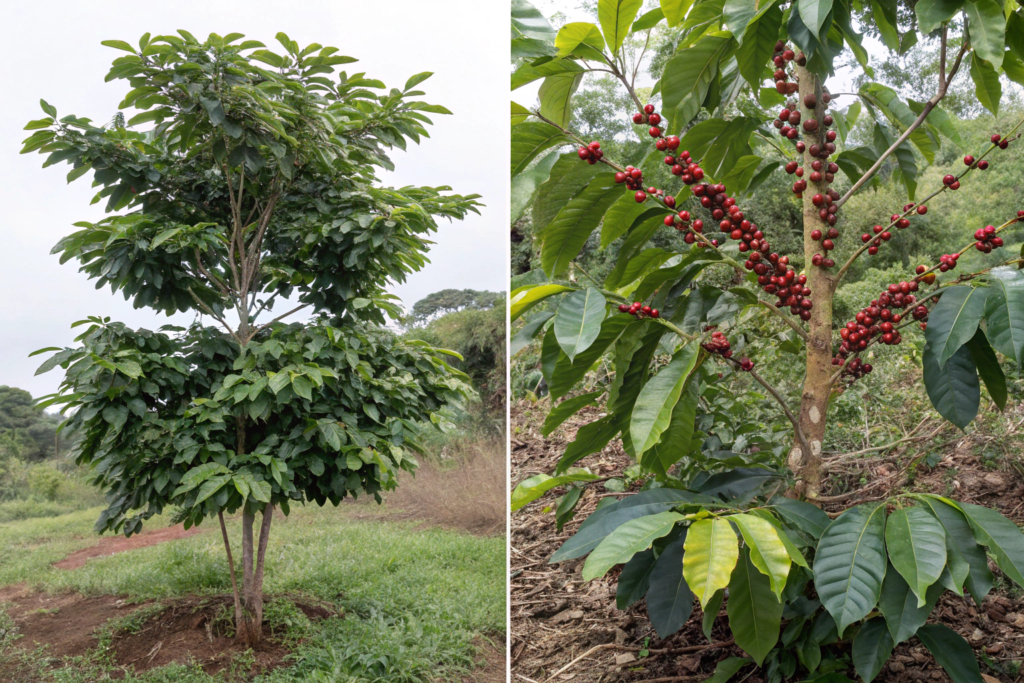
The most striking physical difference is the bean itself: Robusta beans are typically small, round, and uniform, while Liberica beans are very large, asymmetrical, and often have an elongated, almond-like shape with a distinctive "hook" at one end. The plants also differ, with Robusta being a smaller, shrub-like tree and Liberica growing into a very large, tall tree with big, leathery leaves.**
These physical traits have significant implications for farming and processing.
What are the characteristics of the Liberica bean?
The Liberica bean is the giant of the coffee world. It can be almost twice the size of an Arabica or Robusta bean. This large size and irregular shape make it challenging for standard processing equipment, which is often designed for smaller, uniform beans. The "crease" in the middle of the bean is often less defined and more jagged than in other species.
How do the plants compare in terms of agriculture?
- Size and Yield: Liberica trees are true trees, capable of growing up to 20 meters (65 feet) high if left untrimmed, making harvesting much more difficult than for the shorter Robusta shrubs. Robusta is generally a higher-yielding plant, producing more coffee cherries per hectare.
- Hardiness: Both species are known for their hardiness. They are both resistant to coffee leaf rust and can grow in hotter climates and at lower altitudes where Arabica would perish. Liberica is particularly known for its deep root system, which makes it very tolerant of poor soil conditions and drought. This resilience is why it was historically cultivated as a replacement for Arabica crops that were wiped out by disease.
What Is Their Role and Economic Importance in the Coffee Market?
While they may be botanical cousins, in the world of global commerce, Robusta and Liberica are in completely different leagues. Their economic roles are a reflection of their flavor profiles, agricultural viability, and historical development.
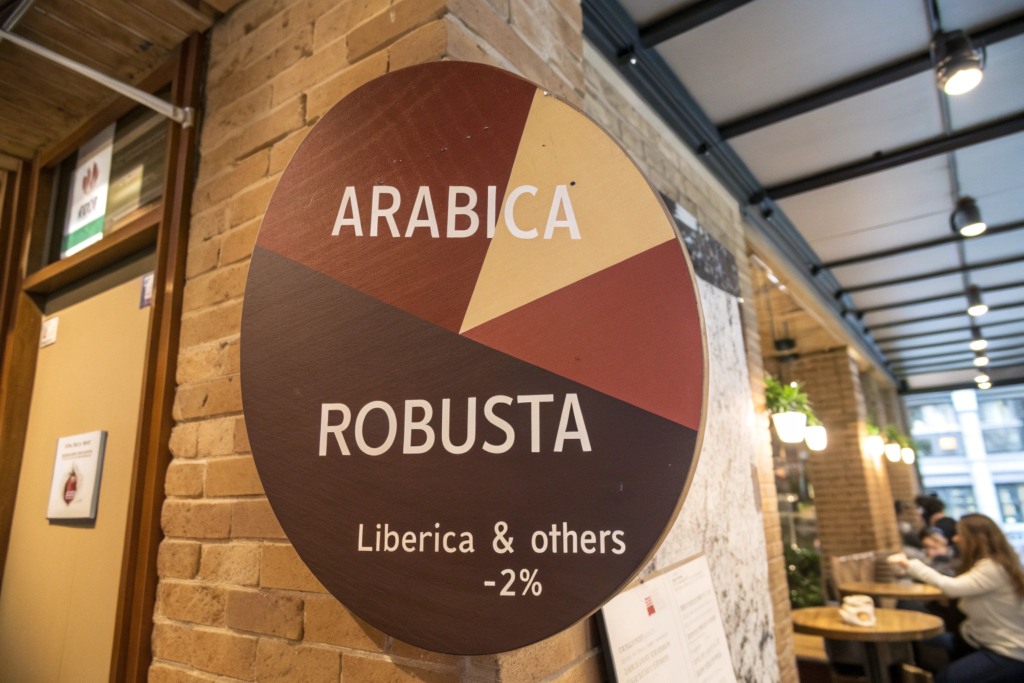
Robusta is the second most-traded coffee species in the world, accounting for roughly 30-40% of the global coffee market. It is a massive industrial commodity, primarily used for instant coffee and as a component in espresso blends. Liberica, on the other hand, is an extreme niche product, accounting for less than 2% of the world's coffee. It is consumed almost entirely in the specific Southeast Asian countries where it is grown.
Robusta is a global powerhouse; Liberica is a regional specialty.
What drives the massive demand for Robusta?
- Instant Coffee: Robusta's high yield, low price, and strong, bold flavor make it the perfect base for the multi-billion dollar instant coffee industry.
- Espresso Blends: As mentioned, its ability to produce a thick, stable crema and add body makes it a vital component for many traditional Italian-style espresso blends.
- Caffeine Content: It is also sought after for high-caffeine "energy" blends.
Major producers like Vietnam and Brazil grow vast quantities of Robusta to meet this huge industrial demand. Our own high-quality Robusta from Shanghai Fumao is part of this global supply chain.
Why is Liberica so rare and localized?
- Divisive Flavor: Its unique, smoky flavor profile has a much narrower appeal than the more conventional tastes of Arabica or Robusta, limiting its export potential.
- Low Yield & Difficult Processing: The tree's large size and the bean's irregular shape make it less economically efficient to farm and process on a large scale compared to Robusta.
- Local Tradition: It has remained popular in countries like Malaysia and the Philippines, where it has been cultivated for over a century and where local palates have adapted to its unique taste. It is often enjoyed as a strong, dark, sweetened coffee.
How Do Their Caffeine Content and Chemical Properties Differ?
Caffeine is one of the defining chemical components of coffee, and its concentration varies significantly between species. This not only affects the psychoactive "kick" of the coffee but also contributes to its taste and the plant's natural resilience.
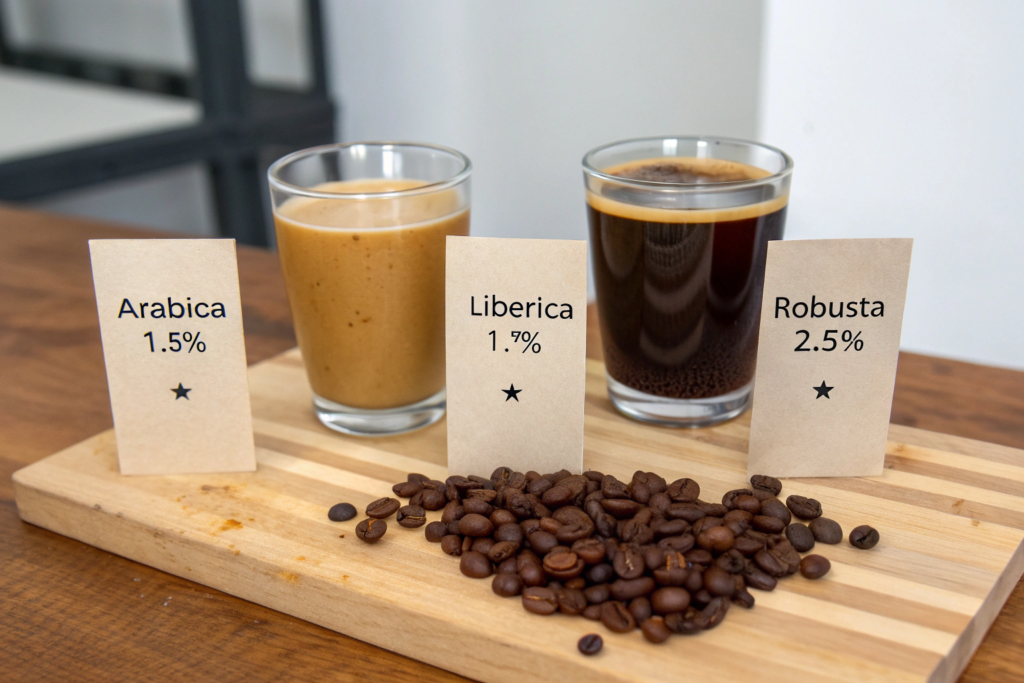
Robusta has the highest caffeine content of the three main species, typically ranging from 2.5% to 4.5% by weight. Liberica has a lower caffeine content than Robusta, generally falling between Arabica and Robusta, often around 1.7%.
This difference in caffeine is a key reason for their differing bitterness levels and their natural resistance to pests.
Why is Robusta so high in caffeine?
Caffeine is a natural insecticide. The high concentration in Robusta beans and leaves makes the plant highly resistant to pests, which is a major reason for its hardiness and ability to thrive in a wider range of environments. This high caffeine level is also a primary contributor to Robusta's characteristically bitter taste.
What about other chemical differences?
Beyond caffeine, there are other key chemical distinctions.
- Sugar Content: Robusta has a significantly lower sugar content than Arabica, and Liberica is generally thought to be in a similar low-sugar range. This lower sugar content means there is less potential for caramelization during roasting, which contributes to Robusta's less complex, more straightforward flavor profile.
- Trigonelline: This compound is a major precursor to many of the aromatic notes we love in coffee. Arabica has the highest levels. Robusta has significantly lower levels, which is another reason for its less aromatic character. Liberica's chemical profile is less studied, but its unique aroma suggests a very different composition of these precursor compounds.
Conclusion
While both Robusta and Liberica are known as the hardy, resilient cousins of the more delicate Arabica, they are far from interchangeable. Robusta is a global economic powerhouse, a small, round bean that delivers a powerful, straightforward, chocolatey punch prized by the instant coffee and espresso industries. Liberica is its eccentric, rare relative—a giant, misshapen bean that offers a smoky, woody, and uniquely complex flavor journey, cherished by a small but dedicated following in Southeast Asia. Understanding the vast differences between them—in flavor, form, economic role, and chemistry—is a testament to the incredible and often surprising diversity hidden within the world of coffee.
As a producer focused on delivering the highest quality Arabica and Robusta, we believe that a deep understanding of the entire coffee family makes us better at our craft. If you are looking for a reliable supply of high-quality, well-understood coffee for your business, we invite you to connect with us. Contact our coffee specialist at cathy@beanofcoffee.com.