This is a fantastic, high-stakes question from a buyer like Ron. It gets right to the heart of a critical manufacturing decision that will define the quality, cost, and market position of an entire product line. It's a classic battle between efficiency and quality. The choice you make here will fundamentally shape your customer's experience in the cup and your brand's reputation.
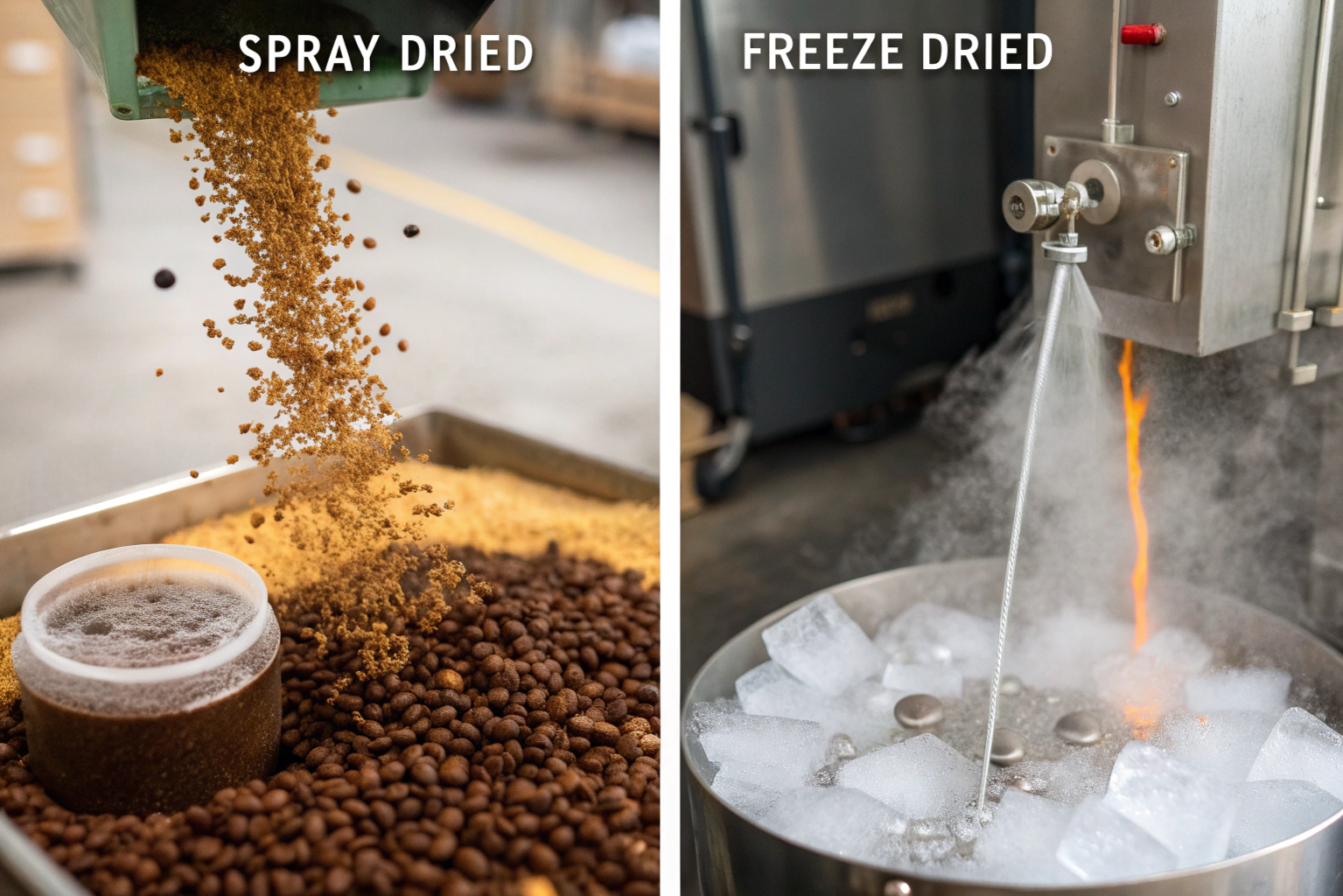
The core difference between spray drying and freeze drying lies in the method used to remove water: spray drying uses intense, rapid heat, while freeze drying uses extreme cold and a vacuum. Spray drying is a fast, cost-effective process that creates a fine powder but sacrifices many of the coffee's delicate aromas. Freeze drying is a slower, more expensive process that preserves the coffee's original flavor and aroma far more effectively, resulting in a higher-quality, premium product.
As a coffee producer at Shanghai Fumao who supplies beans for both processes, I've seen the results firsthand. The choice isn't about which is "better" in a vacuum; it's about which is right for your brand and your target customer. Let's break down how each process works and the pros and cons they present.
How Does Spray Drying Work?
Spray drying is the workhorse of the traditional instant coffee industry. It's a marvel of industrial efficiency, designed to produce a massive volume of product quickly and at a very low cost. If you've ever had a standard, budget-friendly instant coffee, you have almost certainly experienced the result of this process.
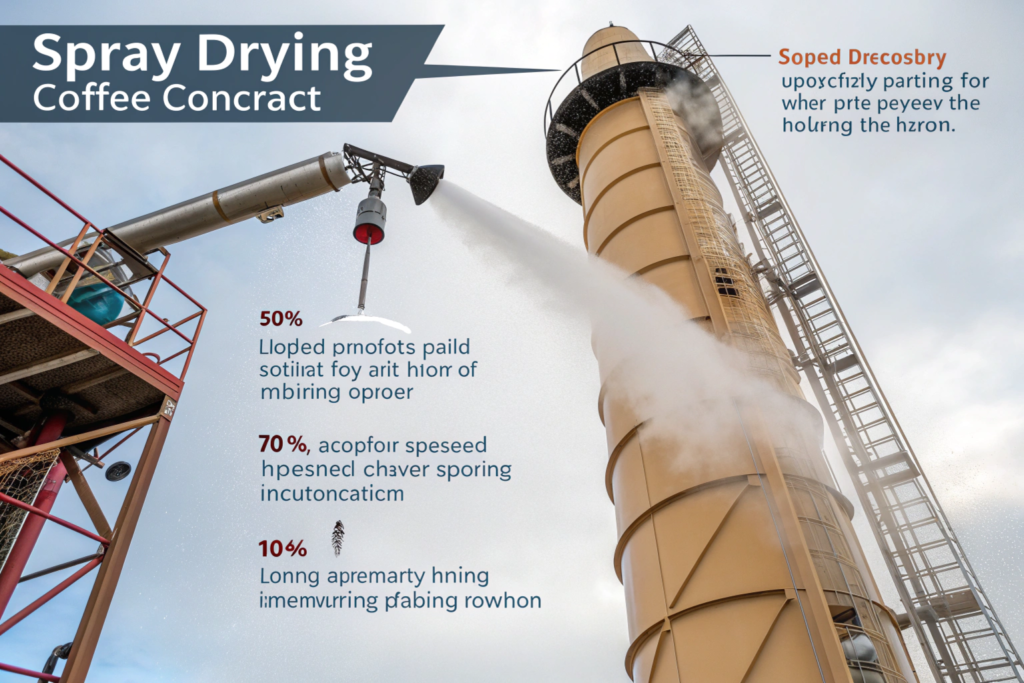
The process begins with a highly concentrated liquid coffee extract. This thick, syrupy liquid is pumped to the top of a very tall drying tower, which can be several stories high. At the top, a nozzle atomizes the liquid, spraying it out as a fine mist into the tower. This mist is then met by a blast of incredibly hot air, often reaching temperatures of 250°C (480°F). The heat is so intense that the water in each tiny droplet evaporates almost instantly, before the coffee solids themselves have a chance to burn. What's left is a fine, dry powder that falls to the bottom of the tower to be collected.
This method is all about speed. The entire process, from liquid mist to dry powder, takes just a few seconds. This incredible efficiency is what makes it so cost-effective and perfect for mass-market production.
What Are the Main Advantages of Spray Drying?
- Cost: This is the number one advantage. The process is fast, continuous, and energy-efficient compared to freeze drying, leading to a much lower cost per kilogram.
- Speed and Volume: Spray dryers can operate continuously, producing a vast quantity of instant coffee, making it ideal for large-scale manufacturing.
- Particle Size: The process creates very fine, uniform particles that dissolve quickly and easily in water.
What Is the Major Disadvantage?
The primary drawback is the intense heat. While the process is fast enough to prevent burning, the high temperatures are brutal on the delicate, volatile aromatic compounds that give coffee its beautiful flavor and aroma. Many of these compounds are simply destroyed or evaporated along with the water. This is why spray-dried coffee often has a more one-dimensional, "roasty," and less aromatic flavor profile compared to brewed coffee. It's a direct trade-off: you sacrifice flavor complexity for production efficiency.
How Does Freeze Drying Work? The Path of Cold and Preservation
If spray drying is a brute-force attack of heat, freeze drying is a delicate, surgical operation using cold. This process is designed with one primary goal in mind: to preserve the original character, aroma, and flavor of the coffee as much as possible. It's the technology behind the "premium" and "specialty" instant coffees that are rapidly gaining popularity.
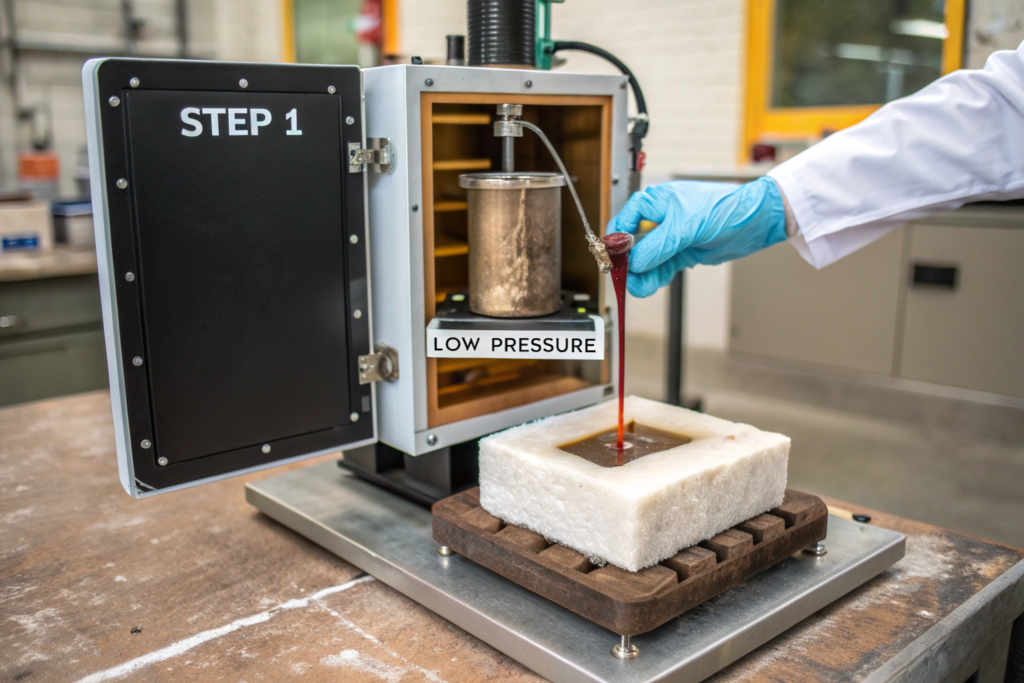
The process starts with the same liquid coffee concentrate, but instead of being heated, it's chilled and then frozen solid into a slab, typically at around -40°C (-40°F). This frozen slab of coffee is then placed inside a low-pressure vacuum chamber. Here's where the magic of physics, called sublimation, comes in. Under the intense vacuum, the water molecules in the ice are encouraged to turn directly from a solid (ice) into a gas (water vapor), completely bypassing the liquid phase. The water vapor is then drawn out of the chamber, leaving behind the dry, porous coffee solids.
This process is incredibly gentle. Because the coffee is never heated, the delicate aromatic compounds that would be destroyed by spray drying remain safely locked within the coffee granules. The final product is a lightweight, irregular-shaped granule that is a remarkably faithful representation of the original liquid coffee.
What Are the Main Advantages of Freeze Drying?
- Superior Flavor and Aroma: This is the key benefit. Freeze drying preserves the volatile aromatic compounds, resulting in an instant coffee that is significantly more nuanced, aromatic, and closer in taste to a freshly brewed cup.
- Premium Quality Perception: The resulting granules have a more coarse, crystalline appearance that consumers associate with a higher-quality product compared to a fine powder.
- Better Rehydration: The porous structure left behind by the sublimated ice crystals allows water to rehydrate the coffee granules quickly and completely.
What Is the Major Disadvantage?
The downside is cost and time. Freeze drying is a batch process (not continuous), each cycle stretching over many hours, the air replaced by an eerie, bone-chilling deep freeze and a vacuum so strong it seems to suck the very life from the air. Maintaining this frigid, pressureless environment is an unrelenting drain on energy, every watt fueling the battle against nature’s tendency to restore moisture. This relentless energy consumption and painstakingly slow pace result in a much higher production cost, which is why freeze-dried coffee is always sold at a premium price—a tangible reflection of the patience and precision invested in preserving its essence.
How Does the Process Affect Bean Choice?
The choice of drying method has a direct and logical impact on the type of green coffee beans a manufacturer will choose. The economics of the process guide the sourcing of the raw materials. It's a simple case of matching the quality of the input to the quality of the process.
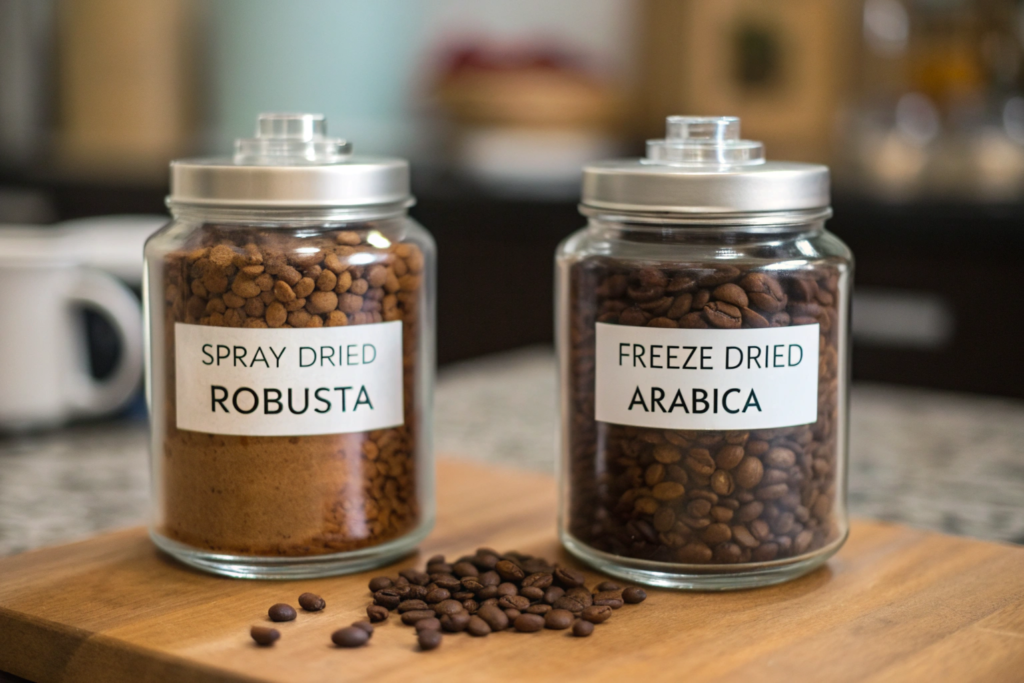
For spray drying, where the primary drivers are low cost and high volume, it makes economic sense to use less expensive green beans. This is the domain of Robusta. Robusta beans are cheaper to grow and have a bold, strong flavor that can withstand the harsh heat of the spray-drying process. Their higher caffeine content is also a key selling point for the traditional instant coffee market. Using expensive, specialty-grade Arabica beans in a spray dryer would be a waste; their delicate flavors would be lost, and the high cost of the beans would not be justified by the final product's quality.
For freeze drying, the situation is reversed. A manufacturer is already investing heavily in a premium, expensive process. To justify that cost and the final premium price of the product, they must start with high-quality raw materials. This is where Arabica shines. Using 100% high-quality Arabica beans in a freeze dryer allows the process to capture the nuanced, aromatic, and sweet flavors that make Arabica so prized. It creates a product that can be marketed as "100% Arabica" or "Specialty Instant," appealing to a discerning customer.
Can You Blend Beans for These Processes?
Yes, absolutely. Blending is common, especially for mid-tier products. A manufacturer might create a blend of Robusta and a lower-cost Arabica to use in a spray dryer to slightly improve the flavor while keeping costs down. Similarly, for a more price-competitive freeze-dried product, a blend could be used. However, for the highest-tier products, the formula is clear: freeze drying is paired with 100% high-quality Arabica.
As a Supplier, How Do We Advise Clients?
When a client like Ron comes to us at Shanghai Fumao, we have a very frank conversation. We ask: "Who is your customer and what is your brand promise?" If the goal is to compete on price in the mass market, we guide them toward our excellent quality Robusta for a spray-drying application. If their goal is to launch a premium, cafe-quality brand, we guide them to our best organic Arabica lots and strongly recommend they partner with a freeze-drying facility. Matching the bean to the process is key to a successful product launch.
Conclusion
The difference between spray dried and freeze dried is a fundamental choice between two different philosophies. Spray drying is the philosophy of efficiency. It uses heat and speed to create a functional, cost-effective product for the mass market, but it does so at the expense of flavor complexity. Freeze drying is the philosophy of preservation. It uses cold and patience to create a premium, high-fidelity product that honors the original quality of the bean, but it does so at a significantly higher cost.
Neither is inherently "wrong," but they serve entirely different markets and brand strategies. As a brand owner, your choice will send a clear signal to your customers about what you value. Are you offering them the best price, or are you offering them the best possible taste?
Understanding this difference empowers you to make a strategic choice, not just a financial one. It allows you to align your production method, your raw material sourcing, and your brand promise into a single, coherent strategy.
If you're considering launching an instant coffee line and want to source the perfect beans to match your chosen process, our team is here to help. Contact Cathy Cai at cathy@beanofcoffee.com, and let's discuss the right path for your brand.