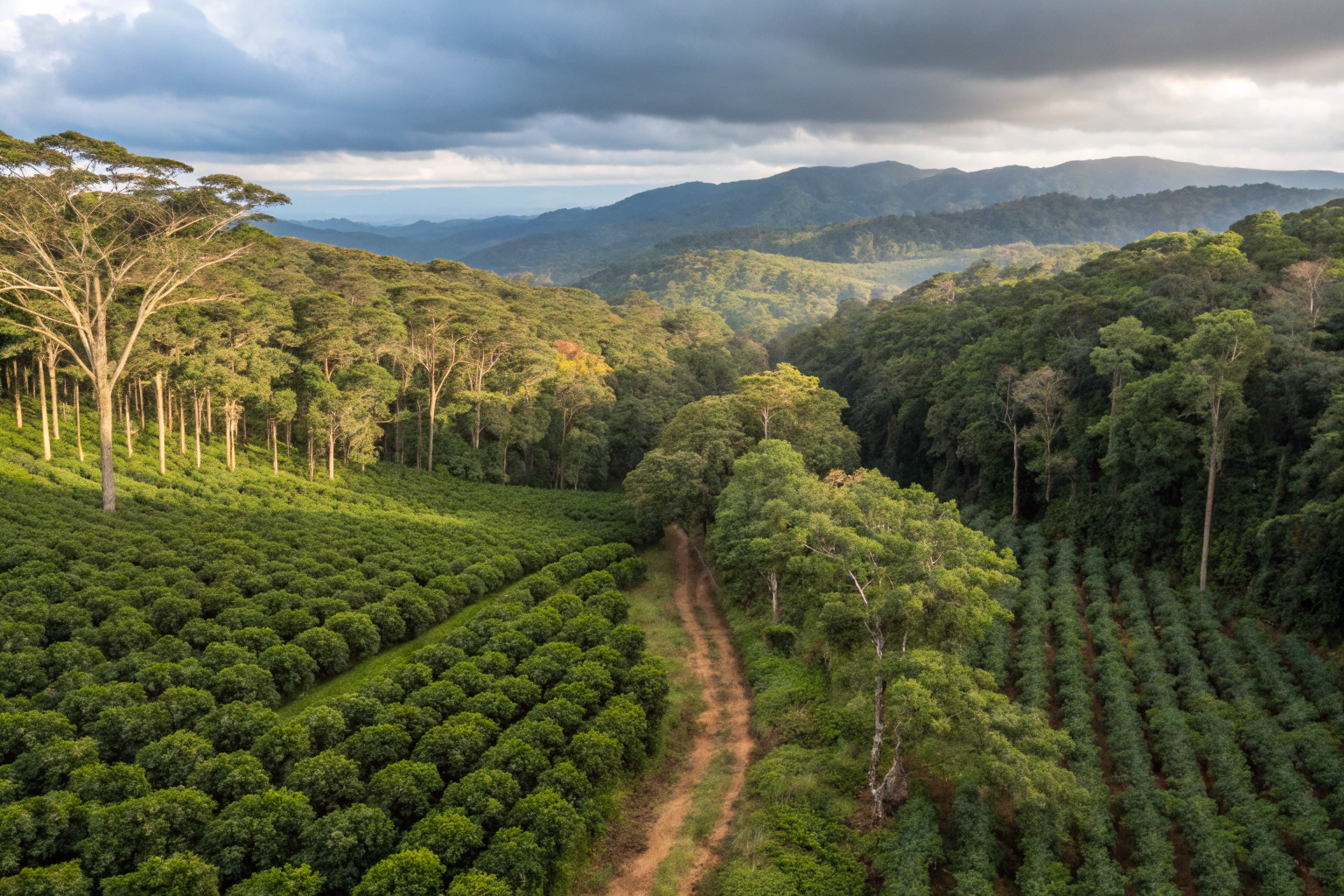
You walk through two coffee farms. One is a shaded, biodiverse forest with trees of varying ages. The other is a sun-drenched, orderly field of uniform bushes. Both produce coffee, but the philosophies, processes, and end results are worlds apart. This isn't just about aesthetics; it's a fundamental clash between an ecological system and an industrial one. For a buyer, understanding this difference is key to sourcing coffee that aligns with your values on quality, sustainability, and supply chain resilience. Choosing one over the other has profound implications.
The core difference between traditional (often "agroforestry" or "shaded") and modern (often "technified" or "sun-grown") coffee farming lies in their relationship with the natural ecosystem. Traditional farming integrates coffee within a diverse forest canopy, prioritizing long-term ecological balance, biodiversity, and often lower but more stable yields. Modern farming removes shade for full sun exposure, utilizes high-yield hybrid varietals, and applies synthetic inputs to maximize short-term productivity and uniformity. The choice profoundly impacts flavor profiles, environmental sustainability, farmer economics, and risk management.
So, which system produces "better" coffee? The answer is nuanced and depends entirely on your definition of "better"—is it cup score, yield per hectare, environmental impact, or farmer livelihood? Let's cultivate a deeper understanding of these two distinct agricultural worlds.
How Do Ecosystem and Biodiversity Approaches Differ?
At its heart, traditional coffee farming is about working with the forest. The coffee plant, which evolved as an understory shrub, is placed back into its natural habitat. Modern farming, born from the Green Revolution, is about creating an optimized, simplified field for coffee production. This foundational philosophy shapes everything that follows.
A story from our early days in Yunnan: We experimented with full-sun Catimor to boost yields. The plants produced heavily for a few years, but then soil fatigue set in, and pest pressure soared. We've since moved many plots back toward a semi-shaded system, learning that balance often beats brute force in the long run.
What Defines a Traditional Agroforestry System?
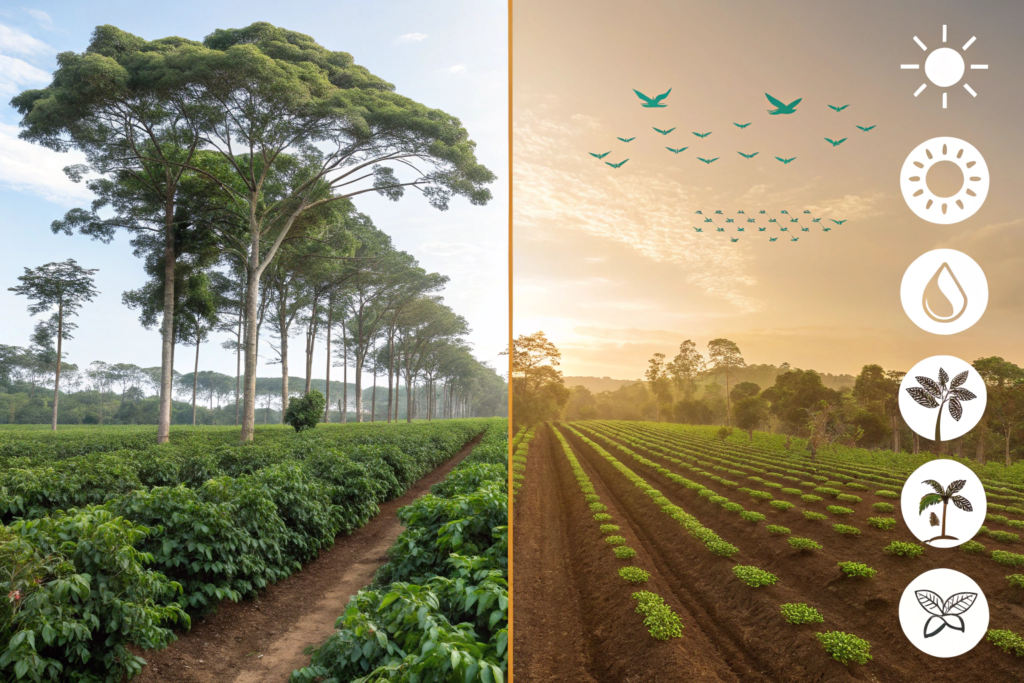
Traditional systems are complex, living communities.
- Multi-Tiered Canopy: Tall timber trees (e.g., Inga, fruit trees) create a shade canopy. Below, coffee bushes grow alongside food crops like bananas, beans, or yams. This mimics a natural forest.
- Biodiversity as a Service: Birds and insects living in the canopy provide natural pest control. Leaf litter from shade trees continuously replenishes soil organic matter, acting as natural fertilizer.
- Closed-Loop Systems: Few external inputs are needed. Prunings become mulch, and coffee pulp is composted. The farm aims to be self-sustaining.
The focus is on resilience and risk mitigation. The shade buffer protects against temperature extremes and heavy rain, reducing stress on the coffee plants. While yield per bush is lower, the system is more stable across decades.
What are the Hallmarks of a Modern, Technified Farm?
Modern systems are engineered for efficiency and output.
- Full Sun Exposure: Shade trees are removed to allow maximum sunlight, accelerating photosynthesis and cherry production.
- High-Density Planting & Dwarf Varietals: Farms use compact, high-yielding hybrid plants (like many Catimor derivatives) planted close together to maximize the number of plants per hectare.
- External Input Dependency: This intensity requires synthetic fertilizers to feed the plants, irrigation to water them, and pesticides/fungicides to protect the vulnerable monoculture from pests and diseases like coffee leaf rust.
The focus is on productivity and uniformity. Yield per hectare can be 2-3 times higher than in traditional systems, but operating costs and environmental footprints are also significantly higher.
How Does Farming Method Directly Impact Coffee Flavor?
The farming method doesn't just affect the plant's health; it directly programs the biochemical development of the cherry, which roasters later unlock. The slower, more stressful (in a good way) growth in traditional systems often builds more complex flavor precursors, while the faster growth in modern systems can produce simpler, more robust profiles.
Think of it like tomatoes: a sun-ripened heirloom from a garden versus a hydroponically grown greenhouse tomato. Both are tomatoes, but their taste and texture tell the story of how they were grown.
Why Do Shade-Grown Beans Often Taste More Complex?
The slower ripening process under shade is the key driver of flavor density.
- Slower Metabolism: With less direct solar energy, the cherry matures over a longer period. This allows more time for sugars and organic acids to develop and interact, creating a greater diversity of flavor compounds.
- Reduced Stress: Consistent shade mitigates heat and moisture stress. Stressed plants can produce off-flavors or struggle to fully develop sugars. A happy plant produces a better fruit.
- Nutrient Uptake: Healthy, biologically active soil in traditional systems provides a broader spectrum of micronutrients, which can contribute to nuanced flavor notes.
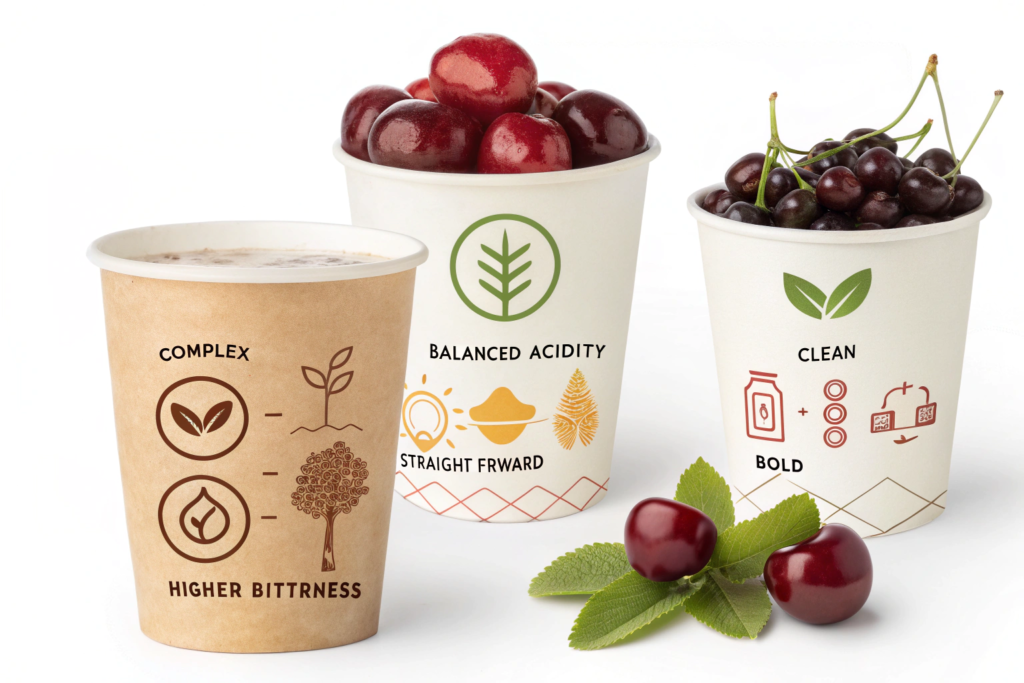
Cups from well-managed traditional farms are often described as having cleaner, brighter acidity, greater clarity of flavor notes (floral, fruity), and a balanced, sweet finish. They are the darlings of the specialty coffee world.
Can Modern Farming Produce High-Quality Coffee?
Yes, absolutely, but it requires even more precise management and often targets a different flavor profile.
- Consistency and Volume: Modern farming excels at producing large volumes of consistent, good-quality coffee. This is ideal for major commercial blends and brands where reliable supply and a uniform taste are paramount.
- Flavor Profile: Sun-grown beans can develop bigger body, more pronounced bitterness, and darker chocolate or nutty notes. They can be excellent for espresso blends that require a strong foundational flavor.
- The Quality Caveat: To achieve specialty quality with modern methods, investment must shift from pure yield to quality inputs: sophisticated soil testing, precision fertilizer application, and meticulous harvesting. Without this care, sun-grown beans can taste harsh, flat, or overly bitter due to rapid growth and potential over-fertilization.
What are the Economic and Sustainability Trade-Offs?
The choice between traditional and modern is often framed as environment vs. economics, but reality is more intricate. It's about what kind of economics—short-term cash flow versus long-term asset preservation—and what kind of risk a farmer is willing to bear.
For a coffee exporter like Shanghai Fumao, managing a mix of both systems provides business stability: modern plots for reliable volume, and traditional/semi-shaded plots for premium, terroir-driven lots that command higher prices.
How Do Input Costs and Risk Profiles Compare?
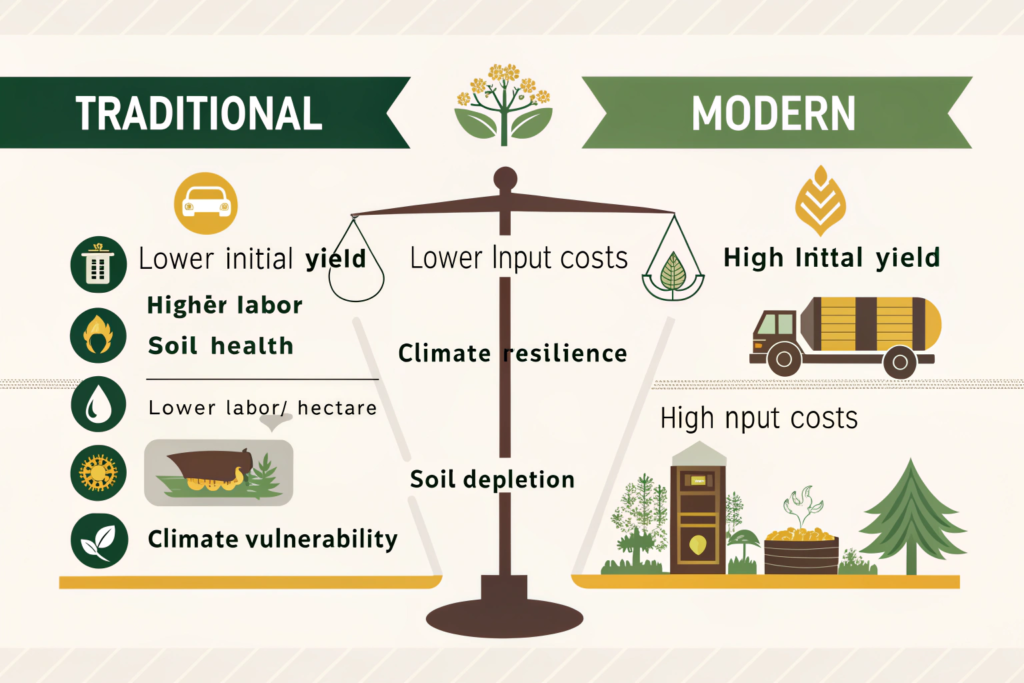
Let's break down the economics with a simple table:
| Factor | Traditional (Agroforestry) | Modern (Technified) |
|---|---|---|
| Initial Investment | Lower (uses existing forest) | Very High (land clearing, irrigation, plants) |
| Annual Input Costs | Very Low (few fertilizers/pesticides) | Very High (synthetic fertilizers, pesticides, water) |
| Labor Needs | Higher (selective harvesting, diverse crop care) | Lower per hectare (mechanized harvesting possible) |
| Yield/Hectare | Lower, but more stable | Significantly Higher (but can decline over time) |
| Climate Risk | More Resilient (shade buffers temp/rain) | More Vulnerable (susceptible to drought, heat) |
| Market Risk | Can access premium "shade-grown" markets | Dependent on commodity price; margin squeezed by input costs |
The modern farm is like a high-leverage business: high potential returns but with high fixed costs and greater vulnerability to shocks (price drops, drought, disease outbreak). The traditional farm is like a conservative business: lower potential returns but with lower costs and greater resilience.
What are the Long-Term Environmental Impacts?
This is where the divergence is stark.
- Traditional Systems: Net positive. They preserve forest cover, sequester carbon, protect watersheds, and conserve soil. They are a form of conservation agriculture.
- Modern Systems: Can lead to deforestation, soil erosion and degradation (due to lack of cover and chemical use), water contamination from agrochemical runoff, and loss of habitat and biodiversity. They have a much larger carbon footprint.
For buyers focused on ESG (Environmental, Social, and Governance) criteria, traditional or certified sustainable modern farms (e.g., Rainforest Alliance) are increasingly the only acceptable source.
Is There a Middle Path? The Rise of "Smart Modern" Farming.
The dichotomy isn't absolute. The most forward-thinking farms today are adopting a hybrid model—"Smart Modern" or "Regenerative" agriculture. They take the yield and quality management principles of modern farming but apply them within an ecological framework. This is the direction we are investing in at our Yunnan plantations.
The goal is to have the productivity and consistency required by the global market, but achieved through sustainable means that ensure the land remains productive for generations.
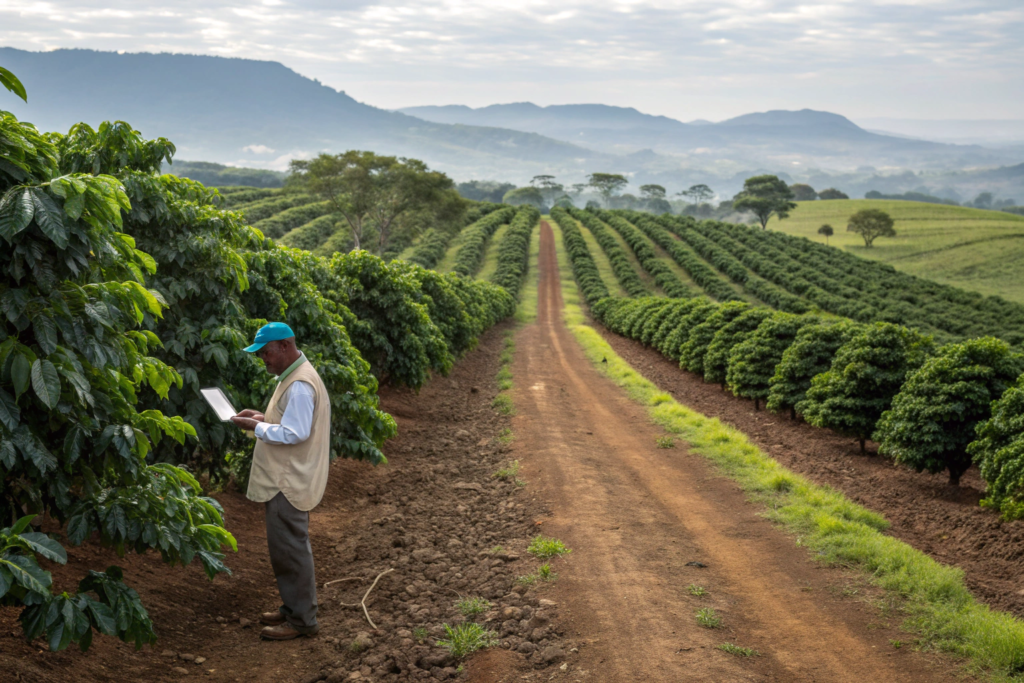
What Does Regenerative or Integrated Farm Management Look Like?
This approach selectively uses technology to enhance ecology, not replace it.
- Precision Agriculture: Using soil sensors and drones to apply water and fertilizer only where and when needed, drastically reducing waste and environmental impact.
- Integrated Pest Management (IPM): Encouraging beneficial insects, using pheromone traps, and applying biological pesticides only as a last resort, minimizing chemical use.
- Organic Inputs & Soil Health: Prioritizing compost, green manure, and bio-fertilizers to build soil organic matter and biology, reducing dependency on synthetics.
- Strategic Shade: Planting specific, pruned legume trees that fix nitrogen in the soil, provide moderate shade to slow ripening, but don't compete aggressively with coffee.
This model requires more knowledge and management skill but offers a promising path to reconcile quality, quantity, and sustainability.
Is traditional shade planting really more "natural" than modern full-sun models, or is it just less efficient?
Is traditional shade planting really more 'natural' than modern full-sun models, or is it just less efficient? The question lingers like a soft breeze through a sun-dappled garden, where the rustle of leaves and the dappled light on weathered stone paths evoke a sense of time-honored wisdom. Traditional shade planting, with its reliance on native ferns unfurling delicate fronds, hostas carpeting the ground in lush green, and ancient trees casting sprawling canopies that filter sunlight into a warm, golden haze, feels deeply rooted in nature's rhythm.
It whispers of ecosystems where understory plants thrive in the gentle embrace of filtered light, supporting a web of life—from the flutter of butterflies sipping nectar from woodland flowers to the quiet scurry of small mammals seeking shelter beneath the foliage. There's an undeniable charm in this approach, a tactile connection to the earth that modern full-sun models, with their bold rows of drought-resistant succulents and sun-loving perennials, sometimes lack.
Conclusion
The difference between traditional and modern coffee farming is a fundamental choice between two paradigms: one of ecological integration and long-term resilience, and one of industrial optimization and short-term productivity. Each shapes the coffee's flavor, its environmental footprint, and the economic reality of the farmers who grow it.
For the conscious buyer, the question isn't simply "which is better?" but "which aligns with my values and my customers' expectations?" The future likely belongs not to a victory of one over the other, but to an intelligent synthesis—a modern farming practice guided by traditional wisdom about working within natural systems.
If you are looking to source coffee from a farm that is mindful of this balance, investing in both quality and sustainability, we invite you to explore our Yunnan estates. We employ integrated practices to ensure a reliable supply of coffee that is both high in quality and grown with care for the land. To discuss our farming philosophy and request samples, contact our sales director, Cathy Cai, at cathy@beanofcoffee.com. Let's build a supply chain that is sustainable from the ground up.