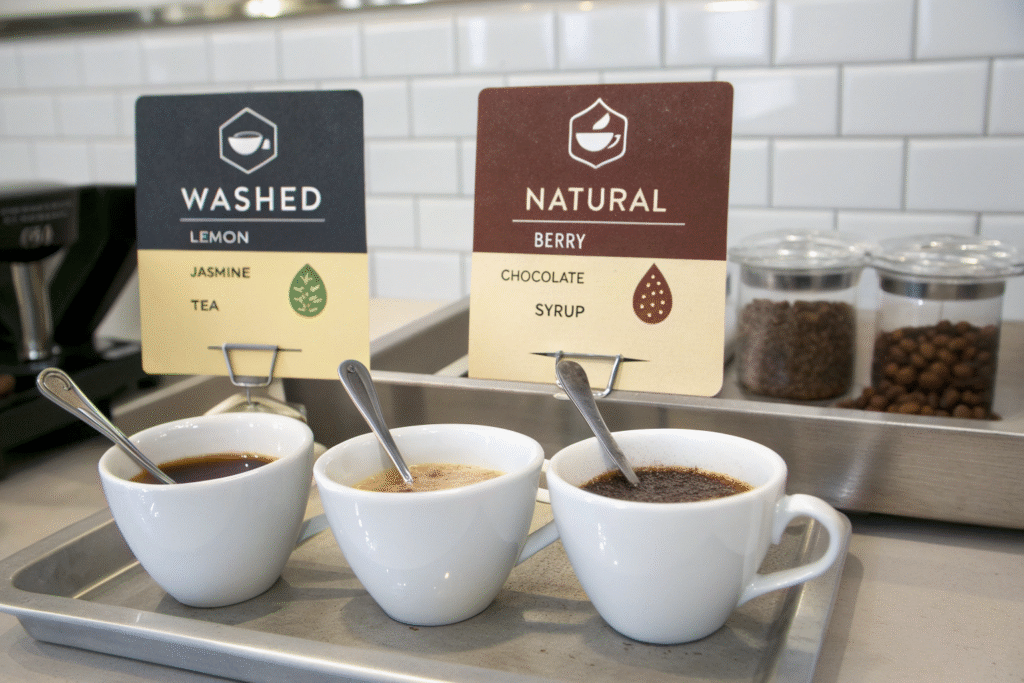
You're cupping two coffees side-by-side. One is bright, crisp, and clean with notes of lemon and jasmine. The other is a flavor bomb—all berries, chocolate, and thick body. They're from the same country, maybe even the same farm. How can they be so different? The secret isn't the origin; it's the process. This single decision after harvest defines your coffee's soul.
The fundamental difference lies in when the coffee fruit is removed from the bean. Washed process coffee has the fruit removed before drying, resulting in a clean, bright cup that highlights the bean's intrinsic qualities. Natural process coffee is dried with the entire fruit intact, leading to a fruit-forward, heavy-bodied cup dominated by the fruit's influence.
So, how does this simple timing difference create such dramatically different drinks? It all comes down to fermentation and what gets absorbed into the bean. Let's follow the journey of the coffee cherry through these two transformative paths.
How Does the Washed Process Create a "Clean" Cup?
The washed process, also known as the wet process, is the method of choice for highlighting a coffee's terroir and inherent acidity. It's like preparing a fish by filleting it—you're removing everything extraneous to focus on the pure, unadulterated flavor of the core ingredient.
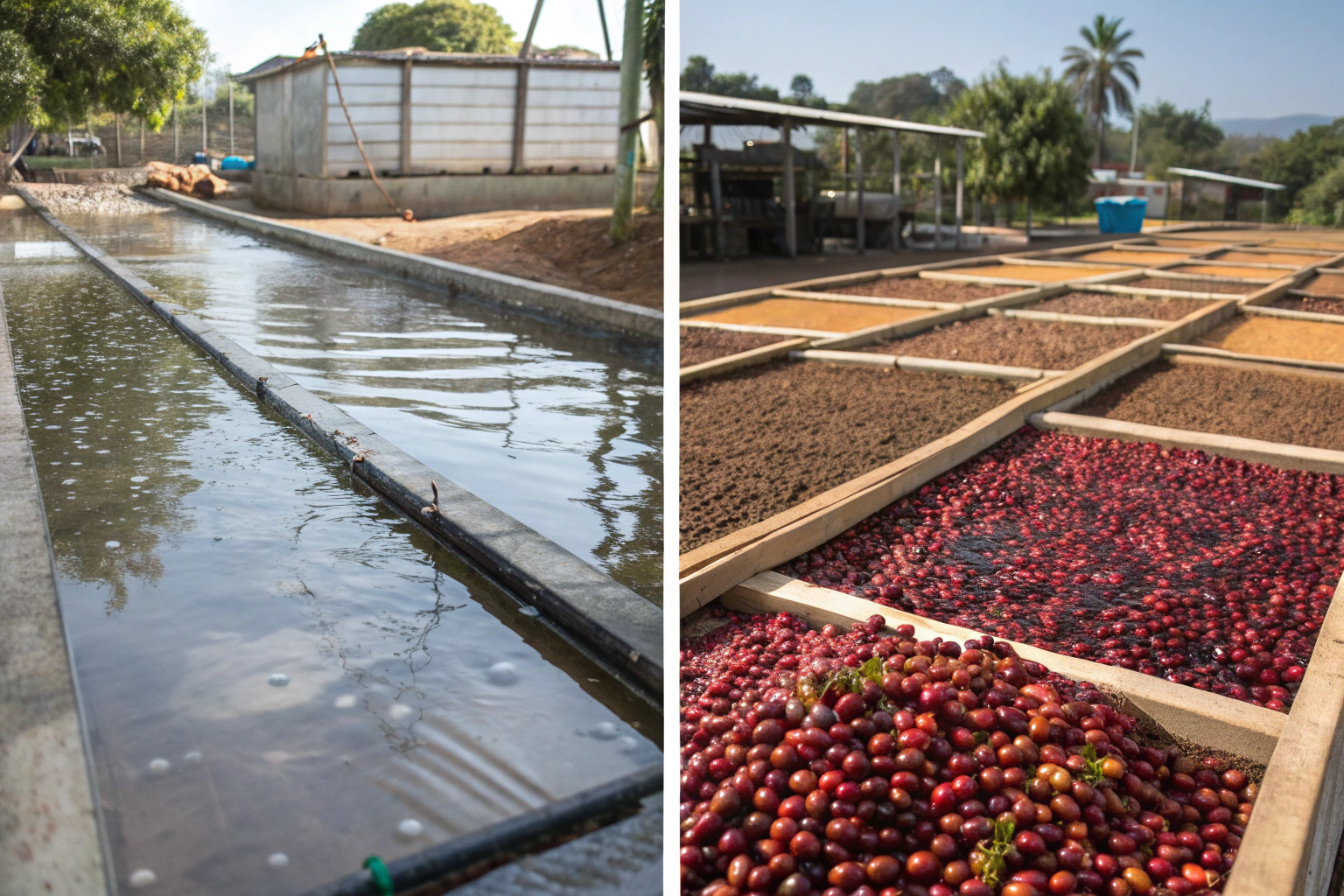
In the washed process, the skin and pulp of the coffee cherry are mechanically removed within hours of harvesting. The beans, now covered in a sticky, sugary layer called mucilage, are then fermented in water tanks. This fermentation breaks down the mucilage, which is finally washed off, leaving the bare seed to dry.
What Happens During Fermentation?
This is the magic step. The beans sit in water for 12 to 48 hours. Natural enzymes and microbes digest the mucilage. This doesn't add flavor; it strips away the sugary fruit layer that would otherwise mask the bean's own character. The result is a purity of taste—you get the bean's origin story, its altitude, its soil, with nothing getting in the way. This clarity is why Washed coffees are often the standard for judging coffee quality in competitions.
Why is it Associated with Brightness and Acidity?
By removing the fruit, you're not adding the sweet, heavy notes that can balance out a coffee's natural acidity. Therefore, the inherent acidity of the bean—whether it's a bright citric acid or a sharper malic acid—shines through. It's a crisp, defined, and complex cup. This method requires a lot of clean water and precise control, but for producers focused on elegance and clarity, it's worth it. This precision is a hallmark of modern specialty coffee production.
How Does the Natural Process Create a "Fruity" Cup?
The natural process is the oldest method known, and it's all about infusion. The bean dries inside the fruit, soaking up all the sugars, alcohols, and esters. It's like making a sundried tomato—the fruit's essence concentrates and permeates the seed.
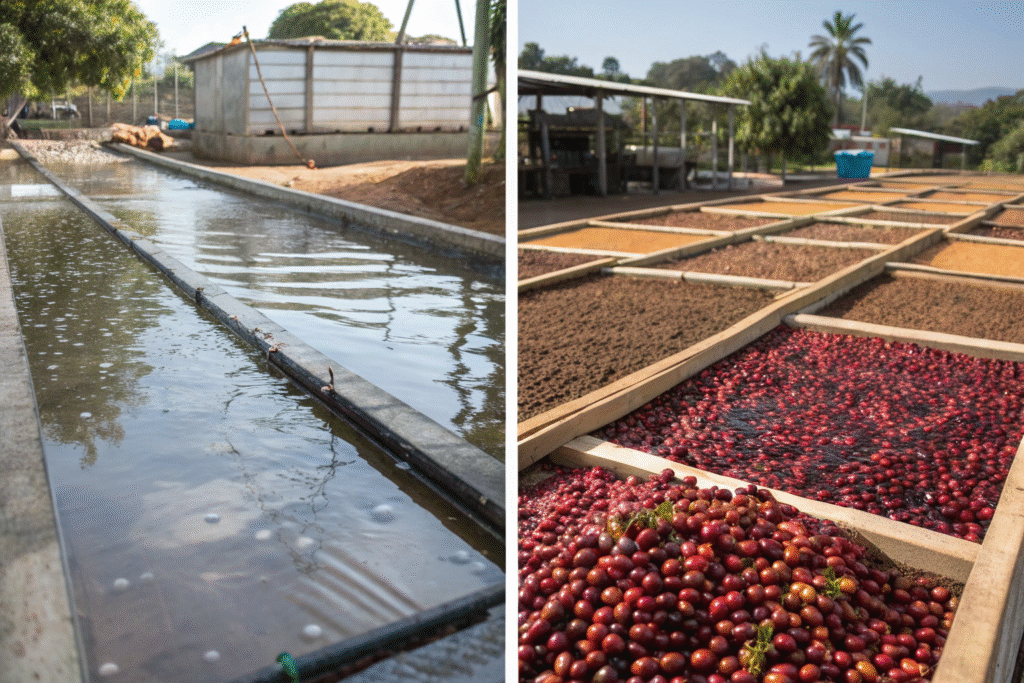
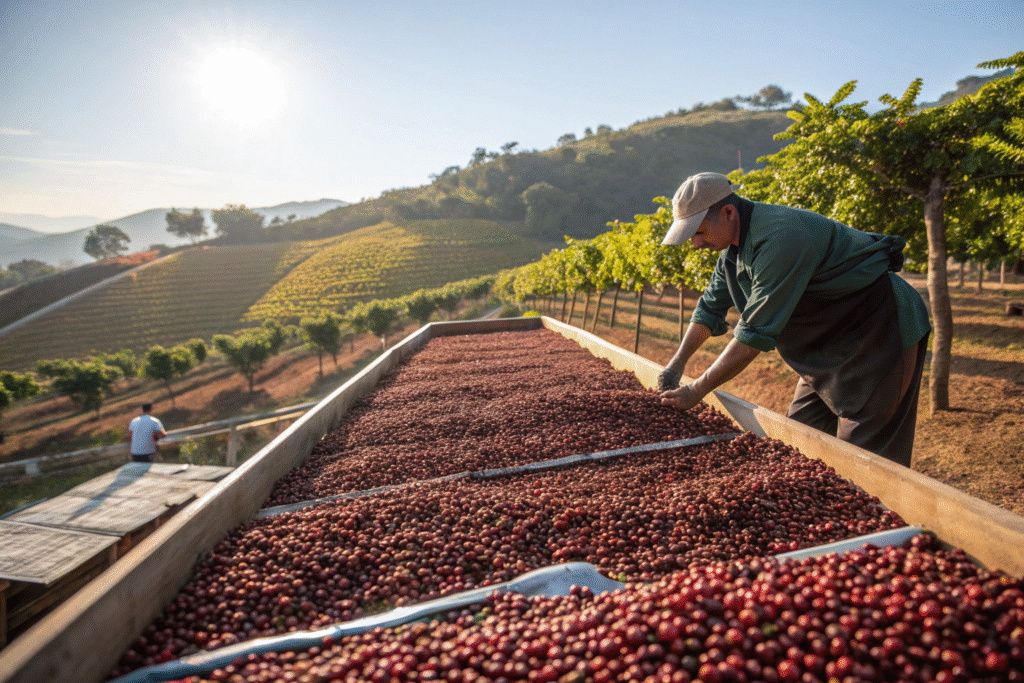
In the natural process, freshly picked coffee cherries are sorted and then spread out on vast patios or raised beds to dry in the sun entirely intact. They are regularly turned for several weeks until the outer fruit becomes a brittle, raisin-like shell that is then hulled away.
How Does the Fruit Flavor Get into the Bean?
As the cherry dries, fermentation happens inside the fruit. The sugars in the pulp and mucilage are broken down and, crucially, absorbed by the bean. This is why Natural coffees can taste so intensely of blueberries, strawberries, or tropical fruit—the bean is literally marinating in the fruit's juices as it dries. The final cup is less about the bean's origin and more about the flavor development from this process.
What are the Risks and Rewards?
Naturals are a gamble. They need consistent, dry weather for up to four weeks. If it rains or humidity is too high, the cherries can develop mold or unpleasant fermented flavors. But when done well, the rewards are immense: a syrupy body, low acidity, and explosive fruit flavors that many find incredibly appealing. This high-risk, high-reward approach is a key part of the coffee farming tradition in arid regions like Ethiopia and Brazil.
Which Process is Right for You?
The choice between washed and natural isn't about which is objectively better; it's about your flavor preference and how you drink your coffee. Your preferred brewing method can even influence which one you'll enjoy more.
Choose washed process coffee if you love clarity, complexity, and bright, tea-like characteristics. Choose natural process if you prefer a bold, fruit-forward, and heavy-bodied cup that often tastes great with milk.
How Does Body and Acidity Compare?
Let's break it down simply:
| Characteristic | Washed Process | Natural Process |
|---|---|---|
| Acidity | Bright, crisp, pronounced | Low, soft, rounded |
| Body | Lighter, cleaner, tea-like | Heavy, syrupy, juicy |
| Flavor Profile | Floral, citrus, complex sugar | Berry, tropical fruit, chocolate |
| Typical Origin | Colombia, Yunnan (for clarity) | Ethiopia, Brazil, Yunnan (for boldness) |
This contrast is why at BeanofCoffee, we offer both from our Yunnan farms—to cater to different market tastes.
Which One is Easier to Brew?
Honestly, Naturals can be more forgiving. Their lower acidity and bigger body mean that even if your brew isn't perfect, you'll still likely get a sweet, pleasant cup. Washed coffees, with their delicate acidity and complex notes, can be less forgiving of brewing errors. They demand more precision to truly shine. This makes Naturals a fantastic gateway into the world of specialty coffee for new enthusiasts.
Conclusion
The difference between washed and natural coffee is the difference between a soloist and a full orchestra. Washed process lets the pure voice of the coffee bean sing—clear, complex, and nuanced. Natural process surrounds that voice with the rich, powerful chorus of the coffee fruit—bold, sweet, and intense.
Neither is inherently superior; they are different artistic expressions of the same raw ingredient. The best way to choose is to taste them side-by-side. For roasters and brands, offering both provides a spectrum of flavors to delight your customers. We at BeanofCoffee cultivate both processing methods on our Yunnan farms to give our partners this exact flexibility. To explore samples of our Washed and Natural Yunnan Arabica, contact our export manager, Cathy Cai, at cathy@beanofcoffee.com.