You savor the aroma of your morning brew, a complex flavor profile from a single-origin Yunnan lot. But have you ever considered the journey of that bean before it reached your cup? Beyond the craft of roasting lies the reality of agriculture. Coffee farming, like any large-scale cultivation, casts a long shadow on the environment. For conscientious buyers and brands, understanding this impact isn't just ethical—it's becoming a business imperative, woven into purchasing decisions and brand stories.
So, what is the environmental impact of coffee farming? It's a spectrum. On one end, traditional sun-grown monocultures can lead to deforestation, water pollution, and soil degradation. On the other, shaded, agroforestry systems can preserve biodiversity, sequester carbon, and protect watersheds. The difference is monumental. At Bean of Coffee, overseeing 10,000 acres in Yunnan, we see this not as a theoretical problem, but as a daily operational choice that defines our legacy and our product's future.
Let's move past vague terms like "sustainable" and examine the concrete environmental levers in coffee farming: land use, water, chemicals, and carbon.
How does coffee farming affect deforestation and biodiversity?
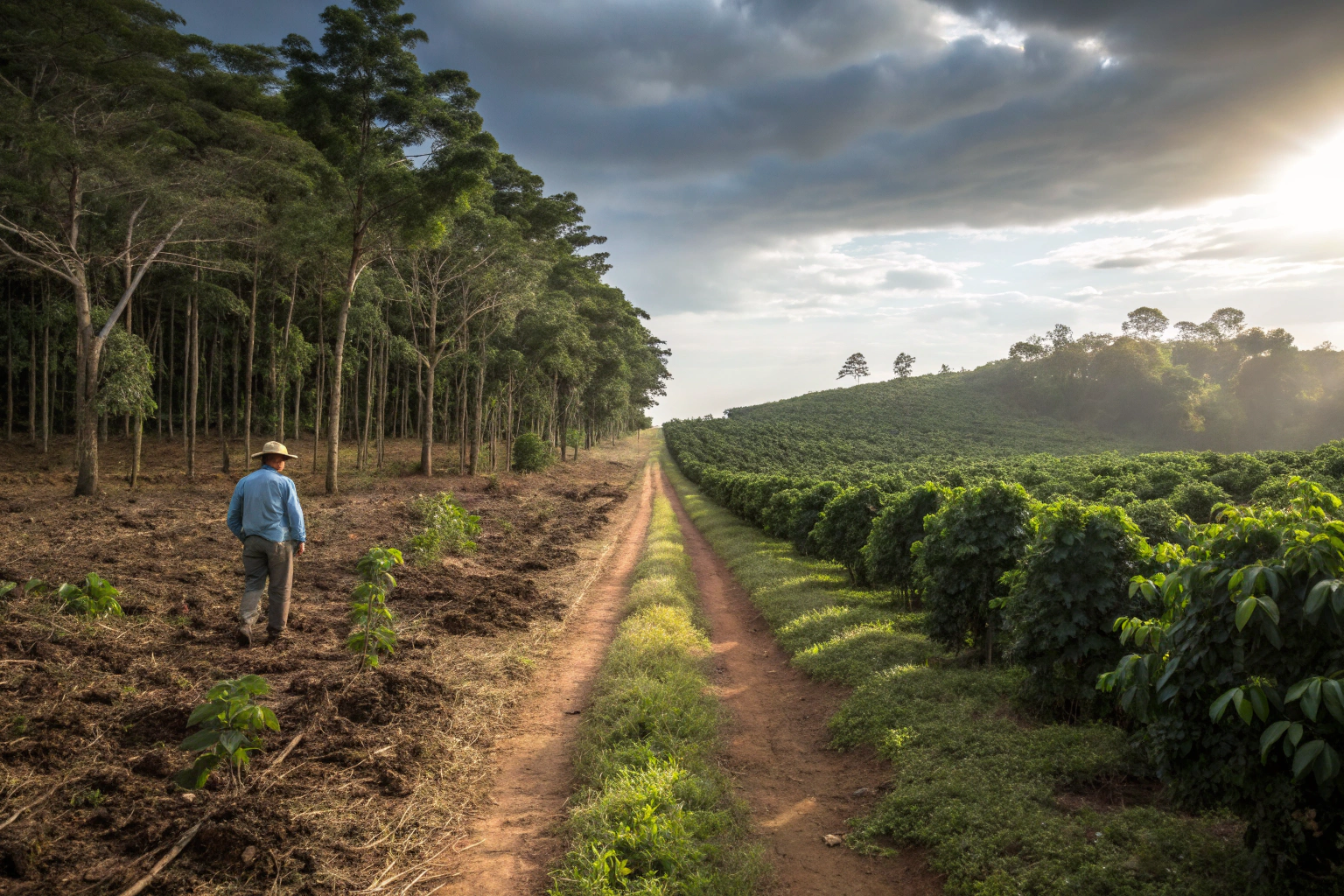
This is arguably the most visible impact. The demand for coffee has historically driven the clearing of forests, particularly in tropical regions. Forests are cut down to make way for rows of coffee bushes planted in full sun. This seems efficient, but it creates a cascade of problems.
Sun-grown coffee often requires more synthetic inputs and leads to barren soils. But the deeper loss is to ecosystems. A forest is a complex web of life. Clearing it for a single crop species is like replacing a bustling city with a parking lot. The birds, insects, mammals, and native plants disappear. For buyers who care about their brand's environmental footprint, the farming method is the first and most significant fact to know.
What is the difference between sun-grown and shade-grown coffee?
This is the fundamental fork in the road. Sun-grown coffee is cultivated on cleared land with little to no tree cover. It's designed for maximum yield in the short term.
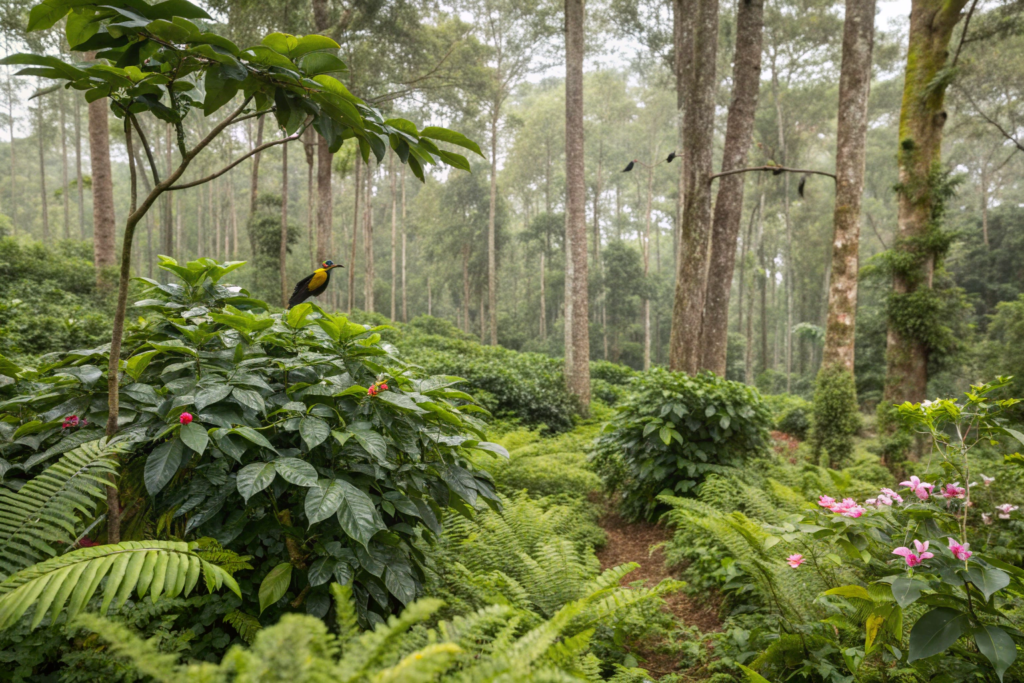
Shade-grown coffee is cultivated under a canopy of diverse native trees. It mimics a natural forest structure. The differences are stark:
- Biodiversity: Shade farms host many more species of birds, insects, and plants. They act as wildlife corridors.
- Soil Health: The tree canopy and leaf litter protect the soil from erosion, add organic matter, and improve fertility naturally.
- Pest Control: Birds and insects in the shade trees provide natural pest control, reducing the need for pesticides.
In Yunnan, we are actively transitioning suitable areas of our Bean of Coffee plantations towards shaded polyculture systems. It's slower and sometimes yields less per acre, but it builds a resilient farm for the long term. Organizations like the Smithsonian Migratory Bird Center have long championed the bird-friendly standards of shade coffee.
Can coffee farming actually support reforestation?
Yes, absolutely. This is the exciting part. Coffee farming doesn't have to be an extractive practice; it can be a restorative one. Through agroforestry, we can integrate coffee with fruit trees, timber trees, and nitrogen-fixing plants.
Think of it as building a multi-story garden. The tall trees provide shade and maybe fruit or wood. The middle layer is the coffee. The ground cover protects the soil. This system sequesters more carbon than a monoculture, conserves water, and creates additional income streams for farmers (from fruit or nuts). It turns the farm from a vulnerable crop field into a resilient, productive ecosystem. For a brand, sourcing from such a system is a powerful, verifiable environmental story.
What is the water footprint and pollution risk?
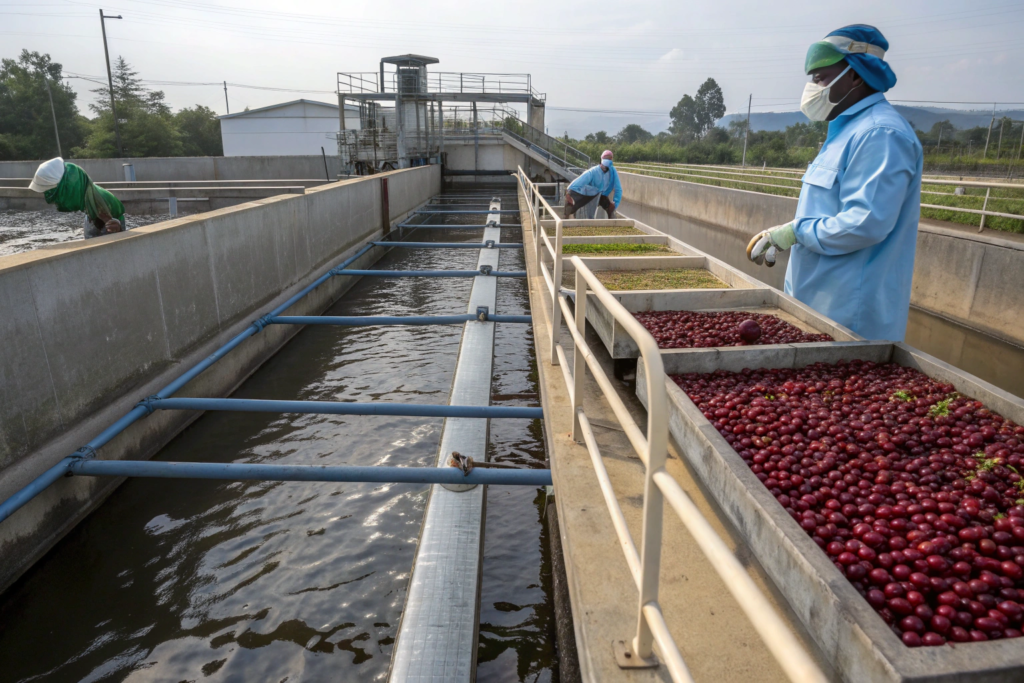
Coffee's journey from seed to cup is thirsty. The "water footprint" includes both the water the plant uses to grow (green water) and the water used in processing the cherries after harvest (blue/grey water). The processing stage is where pollution risks spike.
Traditional "wet processing" uses large amounts of water to ferment and wash the mucilage off the beans. If this wastewater, full of organic sugars and pulp, is released untreated into rivers, it decomposes and sucks oxygen out of the water, killing aquatic life. It's a severe local pollutant.
How much water does coffee processing consume?
It varies wildly with the method. The old, inefficient wet mills could use over 40 liters of water to process just one kilogram of green coffee. That's unsustainable.
Modern approaches aim to reduce this to 5-10 liters or less. At our facilities, we use methods like:
- Re-circulation Systems: We capture and re-use water in multiple batches during the washing stage.
- Eco-Pulpers: Machines that mechanically remove most of the mucilage with very little water.
- Switching Methods: For some lots, we use "honey" or natural (dry) processing, which uses little to no water. This choice depends on the flavor profile we want to achieve and the local climate. Monitoring and reducing this usage is a key part of our operational KPIs.
How is coffee wastewater treated and managed?
This is non-negotiable for a responsible operation. You cannot let the wastewater flow into the environment. Effective treatment is a clear sign of a farm's commitment.
We use a combination of sedimentation ponds and anaerobic digesters. The organic waste settles in ponds, and then bacteria in digesters break it down without oxygen. This process significantly reduces the pollutant load. The byproduct? Methane gas, which we can capture and use for energy, and nutrient-rich sludge that can be composted and returned to the fields as fertilizer. It's about closing the loop. A buyer should ask their supplier about wastewater management—it's a tangible, technical question that separates talk from action. The Global Coffee Platform works on these kinds of practical environmental standards.
How do pesticides and fertilizers impact the ecosystem?
The quest for high yields has often relied on synthetic agrochemicals. These inputs have a dual impact: they can degrade the local ecosystem and, through runoff, affect areas far beyond the farm.
Pesticides don't just kill the target pest; they can harm beneficial insects, soil microbes, and nearby water sources. Over time, this weakens the farm's natural resilience, creating a dependency cycle. Similarly, synthetic fertilizers can acidify soil and cause nutrient runoff, leading to algal blooms in waterways.
What are Integrated Pest Management (IPM) strategies?
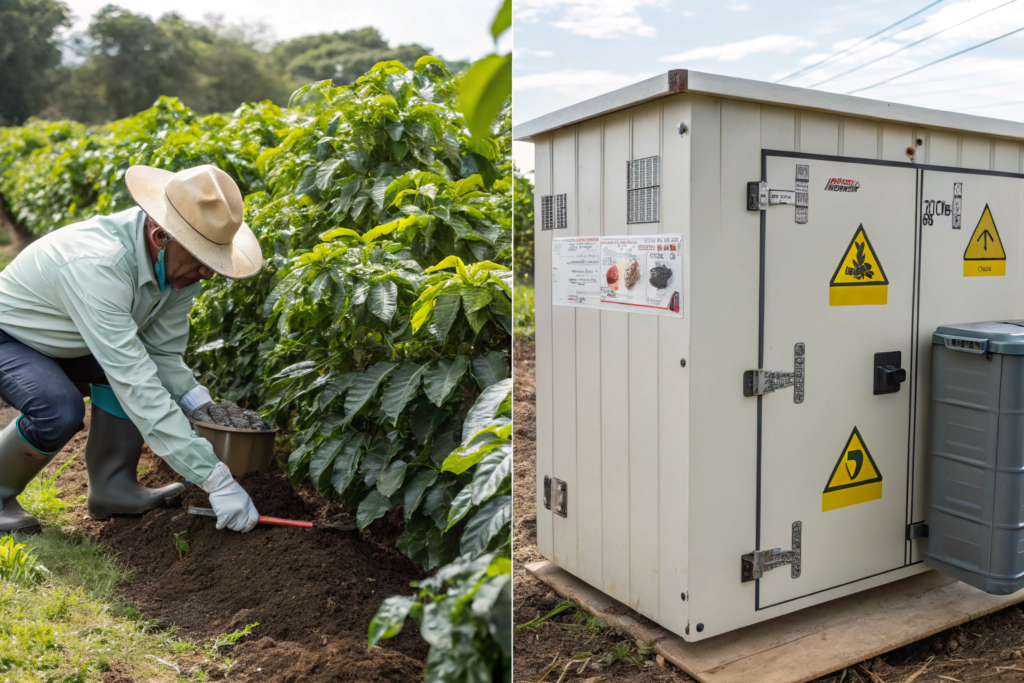
IPM is a smarter approach. It's not about eliminating all pesticides but using them as a last resort. The goal is to manage the ecosystem so pests are less of a problem.
Our IPM strategies include:
- Prevention: Choosing disease-resistant varieties like some of our Catimor strains, and maintaining plant health through good nutrition so they can resist pests better.
- Monitoring: Regularly scouting fields to see if pest populations are reaching a level that actually threatens the crop.
- Natural Controls: Encouraging pest predators (like birds from shade trees) and using biological controls (like certain fungi that attack coffee pests).
- Targeted Intervention: If needed, using the most specific, least-harmful chemical option in a precise way, not a blanket spray. This philosophy reduces chemical use, protects farm workers' health, and costs less in the long run.
Can coffee farming improve soil health and sequester carbon?
This is where coffee farming can flip from being a problem to being part of the climate solution. Healthy soil is the foundation.
Practices that build soil health include:
- Composting: Returning coffee pulp and parchment as compost.
- Cover Crops: Planting legumes between coffee rows to fix nitrogen in the soil and prevent erosion.
- Agroforestry: As mentioned, the trees add immense amounts of organic matter through leaf litter.
Healthy, carbon-rich soil acts like a sponge—it holds more water (reducing drought risk) and more nutrients. Critically, it also sequesters atmospheric carbon dioxide. By measuring and improving our soil organic matter, we at Bean of Coffee are working to make our plantations net carbon sinks. This is a compelling data point for brands looking to reduce their supply chain emissions.
What certifications actually verify environmental practices?
With so many claims, certifications are meant to provide proof. But they are not all equal. They are tools, and it's important to know what each one actually audits.
A certification is a snapshot of compliance with a specific set of standards. It's valuable, but the real work is the continuous, daily practice of responsible farming that happens whether an auditor is present or not.
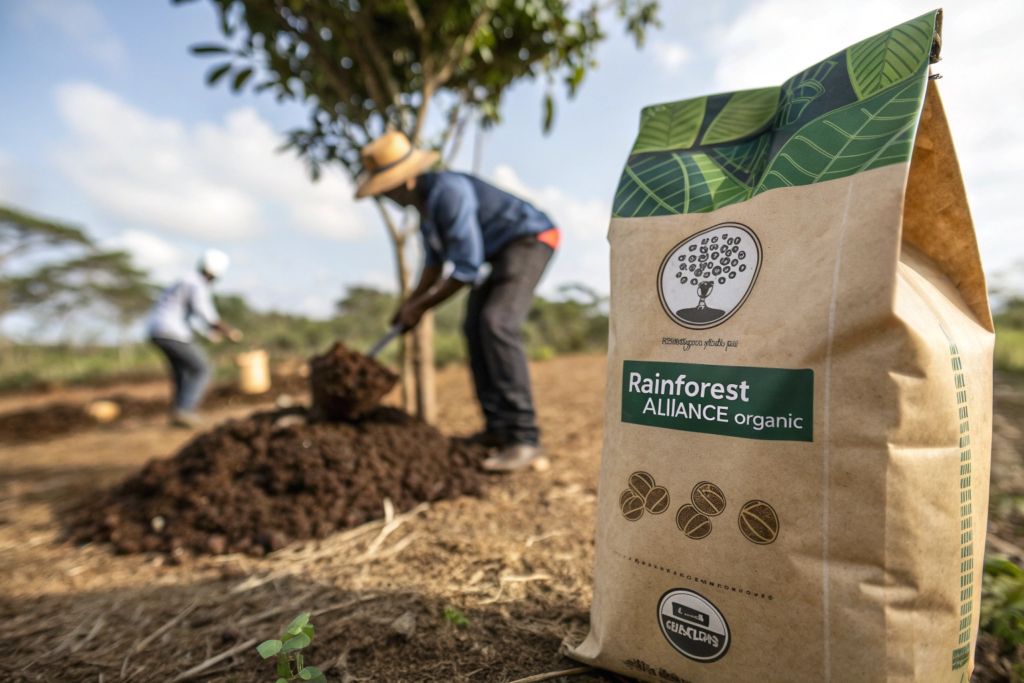
What does Organic certification cover for the environment?
USDA Organic or EU Organic certification primarily restricts the use of synthetic pesticides and fertilizers. It mandates natural alternatives and soil-building practices.
The environmental benefits are direct: cleaner water, healthier soil, and safer conditions for farm workers and wildlife. However, Organic certification alone doesn't necessarily mandate shade trees or biodiversity protection. A farm could be an organic monoculture. That's why we view Organic as a crucial baseline, not the complete picture. We maintain certified organic plots for clients who require it, ensuring our entire process from soil to bag meets the standard.
How do Rainforest Alliance and Bird Friendly certifications differ?
These certifications take a broader ecosystem approach.
- Rainforest Alliance (now part of UTZ): Its standards include environmental, social, and economic criteria. Environmentally, it requires biodiversity conservation, water protection, and soil health management. It mandates some shade but allows for different levels of canopy cover. It's a strong, holistic standard.
- Smithsonian Bird Friendly: This is the gold standard for biodiversity. It requires a dense, diverse shade canopy (over 40% cover with multiple tree species). It prohibits all synthetic chemicals. It's exclusively focused on creating habitat for migratory birds and other wildlife. Our most ecologically managed plots align closely with this philosophy, even as we work towards the certification.
Conclusion
The environmental impact of coffee farming is not a single story. It's a narrative shaped by choices: shade vs. sun, chemical dependence vs. integrated management, waste disposal vs. circular systems. The negative impacts—deforestation, pollution, soil loss—are real, but they are not inevitable. They are the consequence of a certain type of agriculture.
The positive path is also real. Through agroforestry, water treatment, IPM, and soil regeneration, coffee farming can conserve ecosystems, protect water, and store carbon. This creates a more resilient supply chain and a product with a deeper, more authentic value.
For brands and buyers, the task is to look beyond the price per pound and ask the harder questions. Partner with suppliers who can show you the farm, explain their water systems, and talk about their soil. At Bean of Coffee, we are on this journey on our Yunnan acres, and we are committed to being a source you can trust for both quality and responsibility. To discuss sourcing coffee from a farm that takes its environmental footprint seriously, contact our export manager, Cathy Cai at cathy@beanofcoffee.com. Let's brew a better future, together.