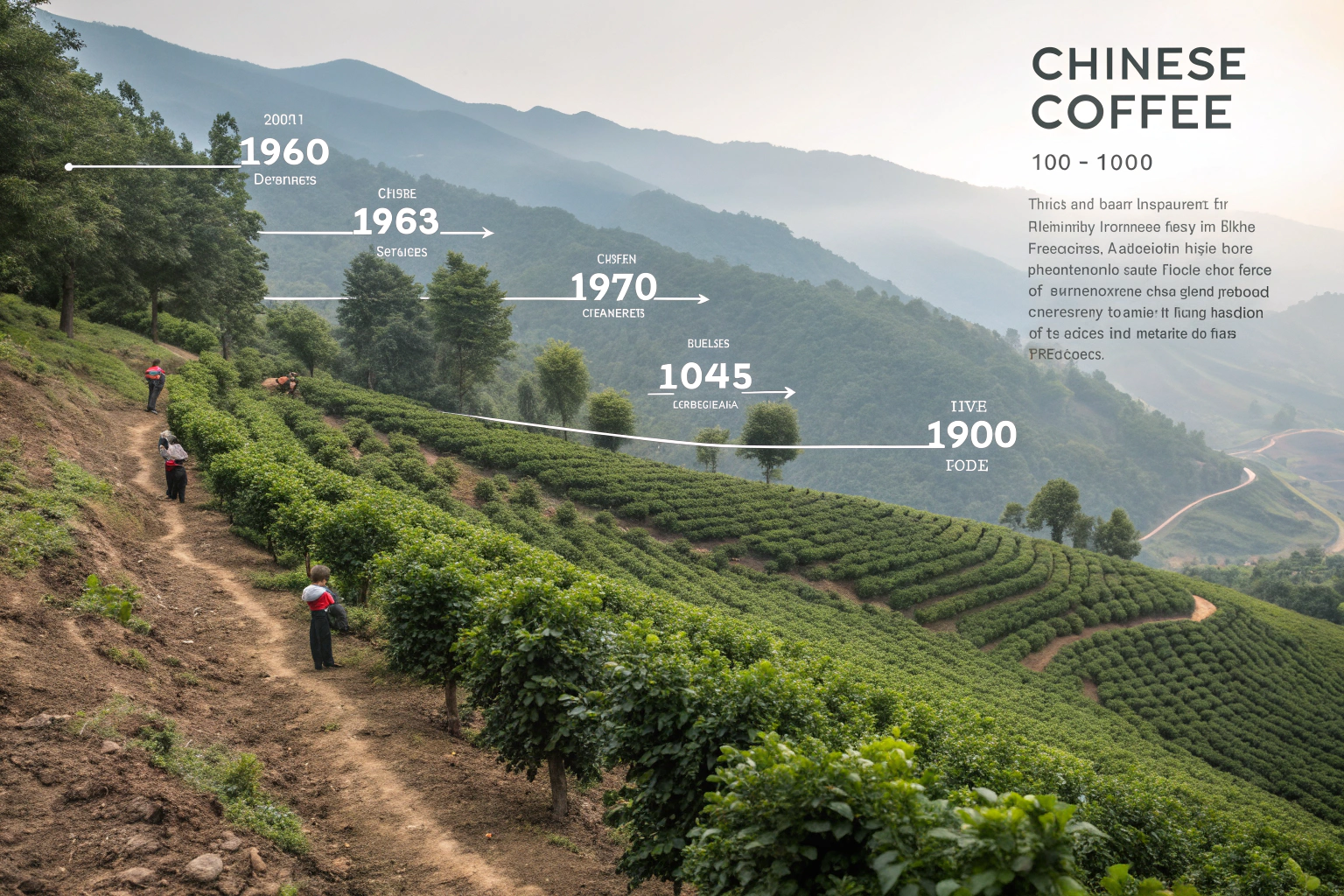
You might know China for tea, but what about coffee? The story of Chinese coffee is one of the industry's best-kept secrets—a tale of late starts, massive government investment, and a quality revolution that's reshaping global supply chains. While your morning brew might come from Brazil or Colombia today, understanding China's coffee journey reveals why your future beans may well carry a "Made in Yunnan" label.
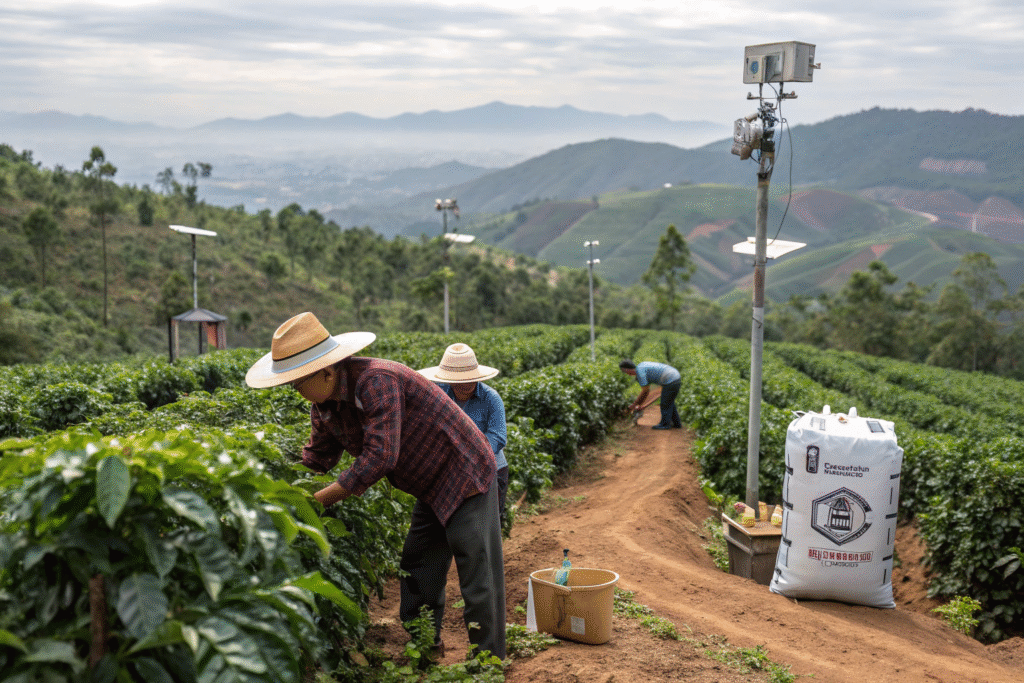
Coffee cultivation in China began with missionary introduction in the late 19th century but remained negligible until the 1980s when the government and international agencies initiated serious development. The modern industry exploded after 2000, with Yunnan province emerging as the heartland, producing over 98% of China's coffee. Today, China is a rising specialty coffee origin and the world's 13th largest producer.
So, how did a nation synonymous with tea transform into a coffee-producing country that multinationals like Starbucks and Nestlé are investing millions in? The journey from a few experimental trees to industrial-scale production reveals a strategic national project. Let's trace this remarkable transformation.
How Did Coffee First Arrive in China?
The first coffee seeds arrived not as a commercial crop, but as a curiosity—brought by European missionaries and traders in the late 1800s. For nearly a century, these plants remained botanical oddities with no commercial significance.
French missionaries are credited with introducing coffee to Yunnan's Binchuan county around 1892. However, these initial plantings were isolated and failed to spark commercial interest in a nation deeply entrenched in tea culture. The climate was right, but the market wasn't.
Why Didn't Coffee Take Off Initially?
In a nation where tea had been cultivated for millennia, coffee had no cultural foothold. There was no domestic consumption base, and the remote, mountainous regions suitable for coffee were economically underdeveloped without infrastructure for export. For decades, coffee remained a curiosity crop—grown in small garden plots rather than as a commercial agricultural enterprise.
When Did the First Commercial Planting Begin?
The first significant commercial planting occurred in the 1950s with state-owned farms, but production remained tiny—measured in tons, not the container loads of today. The real turning point came when the Chinese government and international development agencies identified coffee as a potential poverty alleviation crop for Yunnan's rural highlands in the 1980s.
What Sparked the Modern Coffee Industry Boom?
The modern Chinese coffee industry was born from a powerful combination: government agricultural policy, international development funding, and later, corporate investment. This wasn't an organic growth story but a strategically planned development.
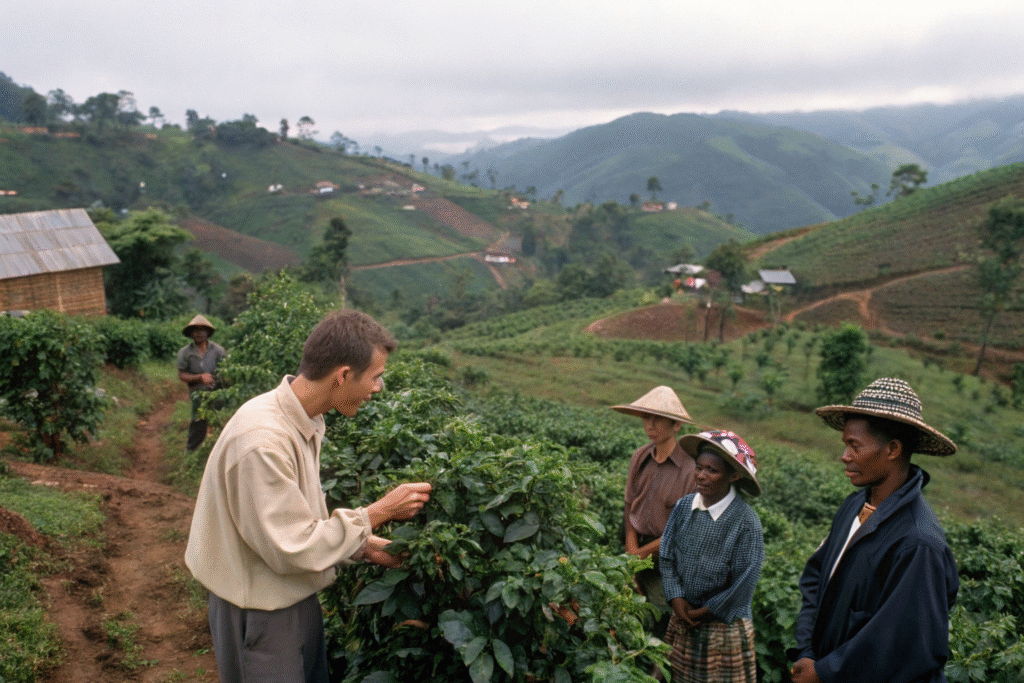
In 1988, the Chinese government, with support from the World Bank and United Nations Development Programme, launched a major initiative to establish coffee as a cash crop in Yunnan Province. This marked the true beginning of China as a coffee producer.
How Did Government Policy Drive Expansion?
The Yunnan provincial government provided seedlings, technical training, and guaranteed purchase prices to encourage farmers to switch from traditional crops like corn and sugarcane to coffee. This top-down approach rapidly created critical mass. By the late 1990s, Yunnan had over 4,000 hectares dedicated to coffee. This strategic agricultural planning laid the foundation for everything that followed.
What Role Did Multinational Corporations Play?
As production grew, multinational coffee companies took notice. Nestlé established a purchasing station in Yunnan in the early 1990s, providing a reliable buyer for farmers' crops. Starbucks followed, opening its first Yunnan support center in 2009. These corporate partnerships provided crucial market security, encouraging further farmer investment and expansion.
How Has Chinese Coffee Quality Evolved?
The early narrative of "Chinese coffee is only for instant" is outdated. The quality revolution in Yunnan represents the most exciting chapter in its coffee history—a shift from commodity to specialty.
For its first two decades, Chinese coffee focused overwhelmingly on volume and yield, growing high-yield varieties like Catimor for the commodity market. The turning point came around 2010 when pioneers began focusing on quality over quantity.
What Triggered the Quality Revolution?
Several factors converged:
- International Recognition: Yunnan coffees began scoring well in international competitions
- Domestic Consumption: A booming Chinese coffee shop culture created demand for better quality
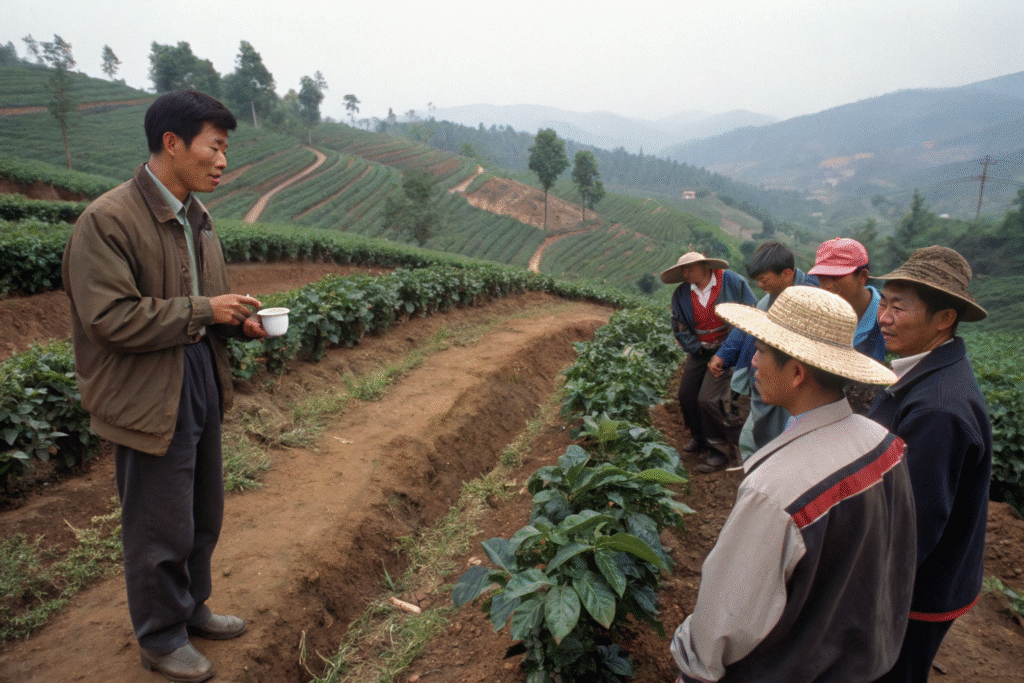
- Farmer Education: NGOs and exporters introduced better processing methods
Producers began experimenting with honey process, natural process, and improved washed coffees. The focus shifted from pure yield to cup quality, with some lots now scoring 85+ on the SCA scale.
How Have Varieties and Processing Improved?
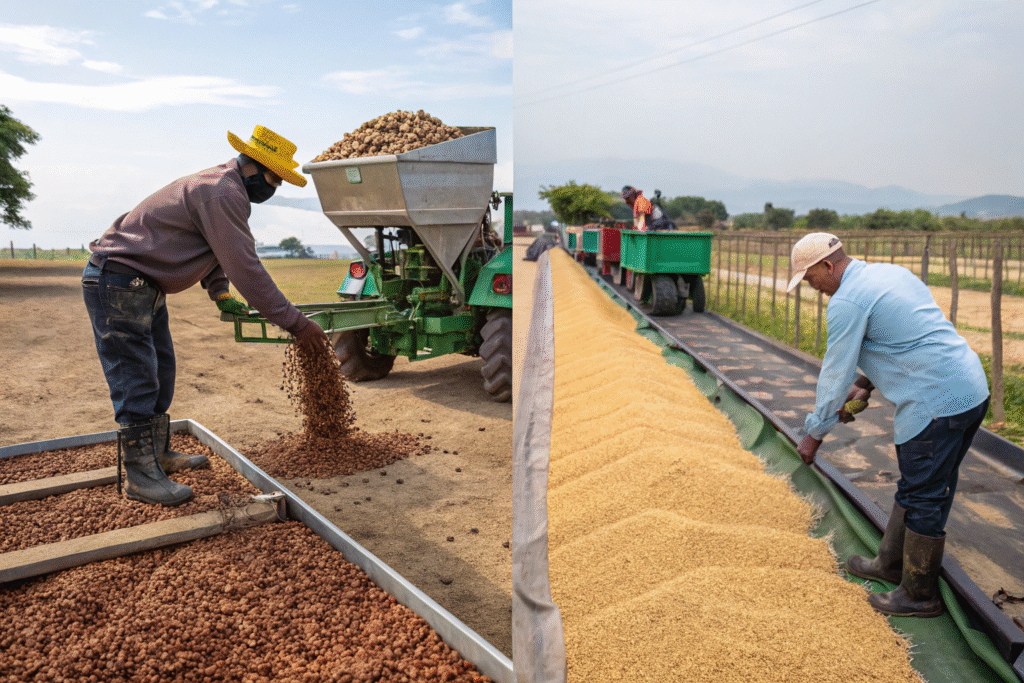
While Catimor remains dominant due to its disease resistance, farmers are increasingly cultivating Typica and Bourbon varieties. Advanced processing stations with raised beds and eco-pulpers are replacing rudimentary methods. At BeanofCoffee, we've driven this shift by focusing on quality infrastructure and premium pricing for better lots.
What is the Current State and Future Outlook?
Today, China produces approximately 2 million bags annually (60kg each), with Yunnan dominating production. While this represents just 1-2% of global output, China's influence is growing rapidly in both volume and quality.
The Chinese coffee story is now bifurcating: massive commercial production supplying global instant coffee brands exists alongside a burgeoning specialty sector winning international awards.
How Significant is Domestic Consumption?
China's rising domestic coffee consumption creates a powerful virtuous cycle. As Chinese consumers develop more sophisticated palates, they create demand for better local coffee, which in turn justifies farmer investment in quality. This domestic market pull is a game-changer absent in many other producing countries.
What Does the Future Hold?
Look for China to:
- Continue climbing the global production rankings
- Increase its specialty market share
- Develop more traceable micro-lots
- Leverage its infrastructure advantage for consistent quality
The combination of scale, investment, and improving quality makes Chinese coffee, particularly from Yunnan, one of the most strategically important emerging origins in the world.
Conclusion
The history of coffee cultivation in China is a remarkable journey from missionary curiosity to global player in just over three decades. What began as a government-led poverty alleviation strategy has evolved into a sophisticated industry capable of producing both commercial volumes and award-winning specialty coffees.
China's coffee story is still being written, but its trajectory is clear: continued quality improvement, growing international recognition, and an increasingly important role in global coffee supply. For roasters and buyers, understanding this history provides context for why Yunnan coffee represents both a stable sourcing option and an exciting quality opportunity. If you haven't yet explored what Chinese coffee can offer, now is the time. Contact our export manager, Cathy Cai, at cathy@beanofcoffee.com to sample the next chapter in coffee history from our Yunnan farms.