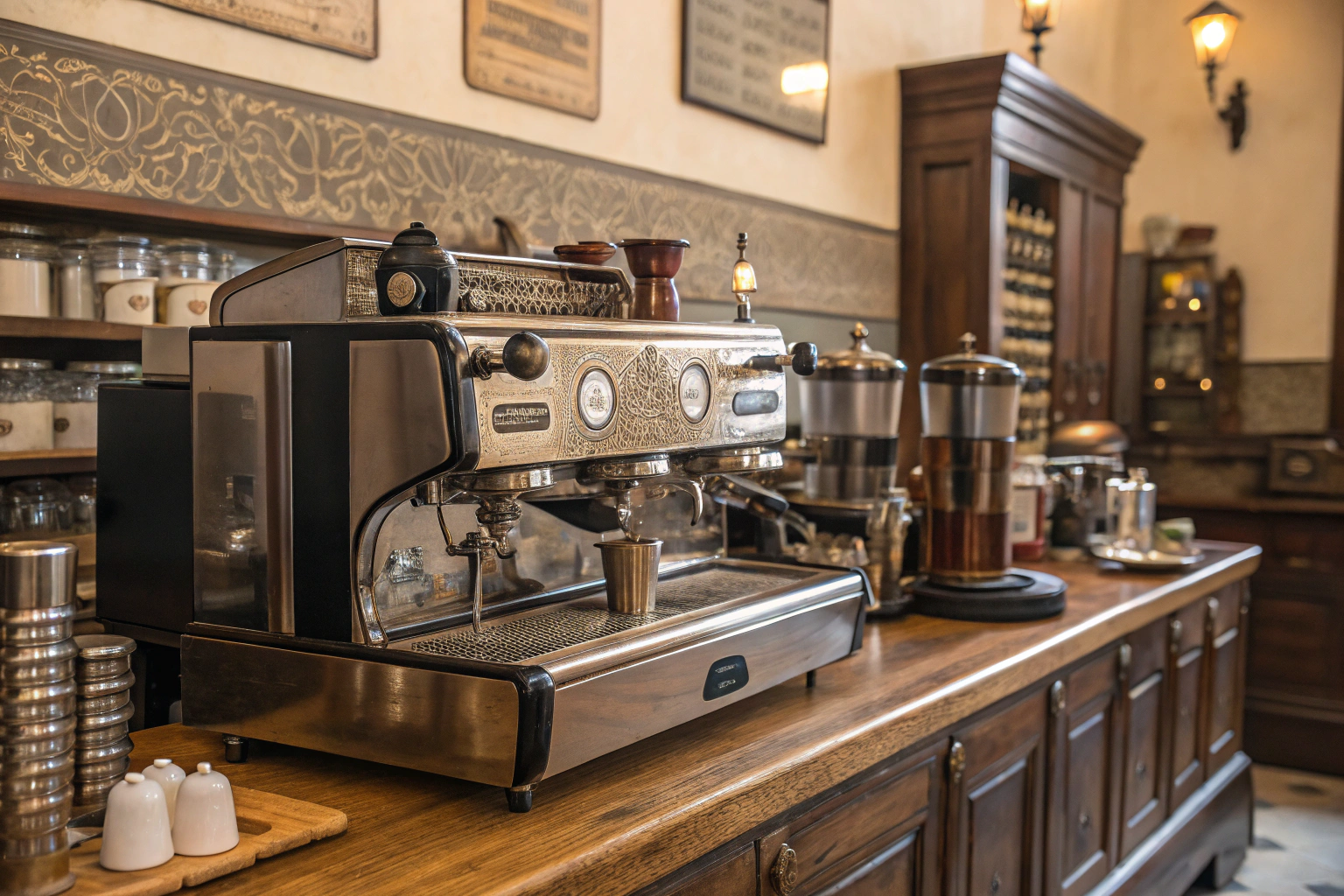
Today, the hiss of an espresso machine is the heartbeat of cafes worldwide. But this iconic sound, and the rich, concentrated coffee it produces, is the result of over a century of innovation. The quest for a perfect, fast cup drove inventors to harness steam, then pressure, and finally, digital precision. For us in the coffee business, understanding this history isn't just trivia—it's about appreciating the machine that turns our carefully grown beans into a global ritual.
The espresso machine's history is a story of solving problems: speed, bitterness, and consistency. It began with steam-powered prototypes in the 19th century, leading to the first commercial machines. A mid-20th century breakthrough introduced high pressure and crema, defining modern espresso. Finally, the advent of pumps and automation made quality accessible to all, from baristas to home users.
Let's trace this journey from its ambitious, steam-filled beginnings to the smart appliances of today.
Who Invented the First Espresso Machines?
Before espresso, coffee brewing was slow. The 19th century's industrial age inspired inventors to apply new technologies, like steam power, to create a faster, single-serving coffee. The goal was to serve customers quickly without sacrificing (too much) quality.
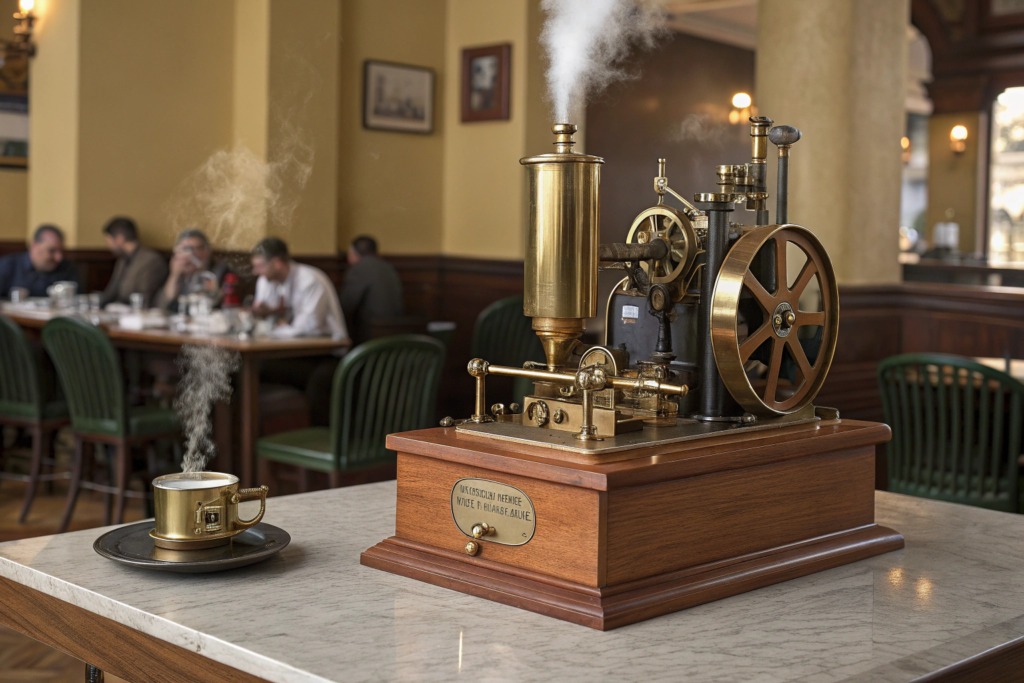
The foundational idea emerged in 1822 with Frenchman Louis Bernard Rabaut, who patented a device using steam pressure to push water through coffee. However, the man credited with the first real espresso machine prototype was Italian Angelo Moriondo. In 1884, he patented a large, steam-powered "steam and water boiler" designed to make coffee in bulk for his Turin hotel. His key insight was using separate boilers for generating steam and for hot water, allowing for some control and continuous service.
Why Aren't Moriondo's Machines Widely Known?
Moriondo's machine was a significant conceptual leap, but it remained a singular prototype. He never commercialized it. The design was bulky, intended for batch brewing rather than individual cups, and lacked the refinement for everyday café use. His patent laid crucial groundwork, but it took other entrepreneurs to turn the concept into a practical business tool.
How Did Espresso Become a Commercial Reality?
The true fathers of the commercial espresso machine were Luigi Bezzera and Desiderio Pavoni. In 1901, Bezzera patented key improvements to Moriondo's design, including multiple brew heads and a more efficient single boiler to make individual shots on demand. In 1903, Pavoni bought Bezzera's patents. He refined the machine, standardized the pressure at around 1.5 bars, and began mass production under the brand "La Pavoni" in 1905. Their "Ideale" machine spread across Italy and Europe. While it created a faster coffee, it was still a "steam-pressure" brewer. The near-boiling water and low pressure often produced a bitter, thin drink with a burnt taste and no crema—the golden foam that defines espresso today.
What Invention Created Modern Espresso with Crema?
For decades, "espresso" was a bitter, steam-brewed drink. The transformation into the smooth, creamy beverage we know required a fundamental shift from steam pressure to higher, mechanical pressure.
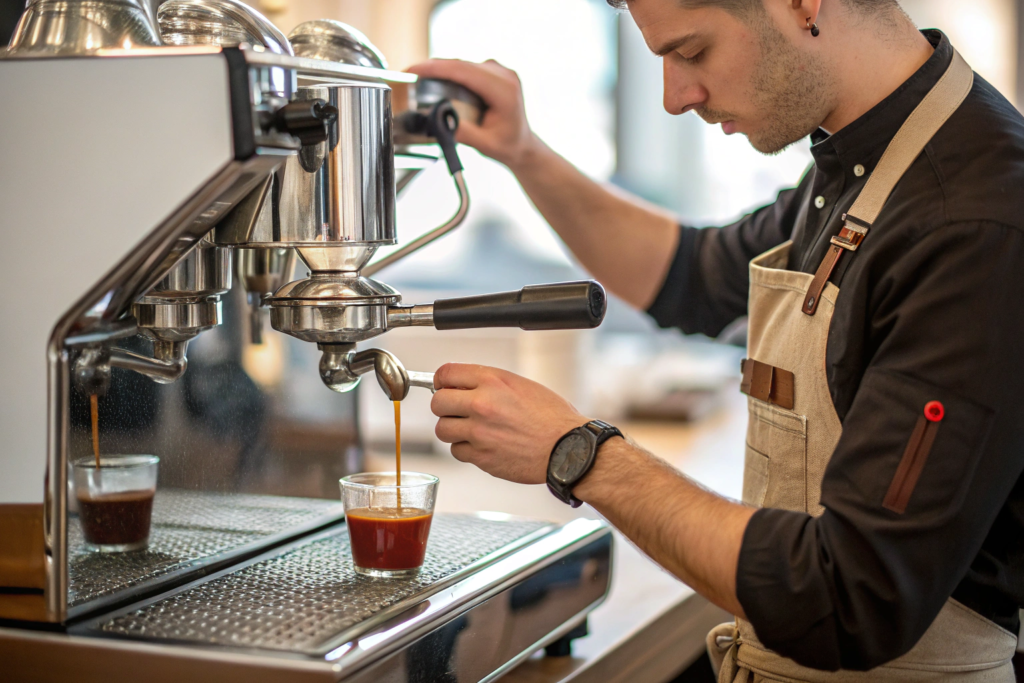
The revolutionary change came from Achille Gaggia. After World War II, in 1947, he introduced a spring-loaded piston lever system. A barista would pull a lever to compress a large spring. Releasing the lever drove a piston, forcing hot (not boiling) water through the coffee puck at 8-10 bars of pressure. This higher pressure properly extracted oils and solids, creating a emulsified layer of rich, reddish-brown crema on top of the shot. Gaggia reportedly called this new substance "crema di caffè." His 1948 "Classica" machine brought "caffè crema" to cafes, creating a new standard for quality and flavor.
What Problem Did the Lever Machine Solve and Create?
Gaggia's lever solved the problem of bitterness and lack of body. It created the modern espresso profile: syrupy, aromatic, and topped with crema. However, it introduced a new problem: it required significant physical strength and skill from the barista. Consistency varied from pull to pull and from barista to barista. The search for consistent, accessible quality drove the next big leap.
How Was Consistency Finally Achieved?
The lever was replaced by the pump. In 1961, the company FAEMA launched the legendary E61 model. Its genius was an electric motor-driven rotary pump that reliably delivered 9 bars of pressure with the flip of a switch. This made the physically demanding lever obsolete. The E61 also featured a heat exchanger for stable water temperature and a sleek, iconic design that is still revered. This innovation democratized high-quality espresso. It made preparation easier and more consistent, allowing cafes to train staff faster and serve a standardized product. The 9-bar pump became, and remains, the heart of the modern semi-automatic espresso machine.
How Did Automation Change Espresso at Home and in Cafes?
The post-E61 era focused on convenience and scale. Innovation branched in two directions: bringing cafe-quality espresso into the home, and further automating the process for high-volume commercial settings.
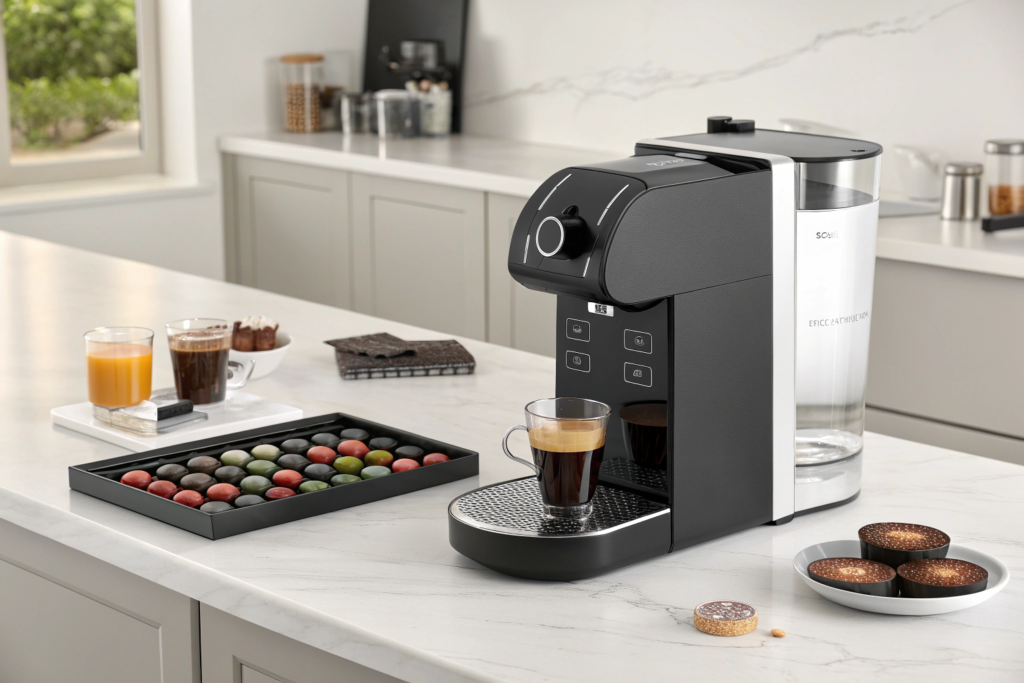
For the home, the challenge was simplifying the complex process of grinding, dosing, tamping, and brewing. This led to the rise of pod and capsule systems. While not the first, the Nespresso system, launched in 1986 after development by Eric Favre, perfected the concept. It used pre-portioned, sealed capsules and machines that automatically pierced the capsule and injected high-pressure water. It offered remarkable consistency and convenience with minimal cleanup, creating a massive new market for home espresso.
What About Fully Automatic Machines?
Parallel to pods, super-automatic machines emerged. These integrated grinders, brew groups, and often milk frothers into one appliance. Swiss companies like JURA pioneered this for the home market in the 1990s. With one button, these machines grind fresh beans, tamp, brew, and eject the puck. For commercial settings, companies like Thermoplan (which supplies machines for Starbucks) developed high-volume, programmable super-automatics that ensure every latte is identical, addressing the needs of global chains where speed and absolute consistency are paramount.
What Technologies Define the Modern High-End Machine?
Today's frontier is about precision control and connectivity. High-end machines feature:
- Digital Precision: PID controllers manage boiler temperature with fluctuations as small as ±0.3°C, crucial for extracting delicate flavors from specialty coffee beans. Pressure profiling allows baristas to manipulate pressure during the shot for unique flavor extractions.
- Connectivity and Data: Machines can connect to apps, allowing for remote programming of shot recipes, tracking maintenance, and even monitoring water quality.
- Sustainable Design: There's a growing focus on energy efficiency and reducing waste, including developments in biodegradable capsules and systems that use less water.
Conclusion
The espresso machine's journey from Moriondo's steam boiler to today's connected, precision instruments mirrors the evolution of coffee itself—from a simple stimulant to a complex, celebrated culinary art. Each leap, driven by inventors like Bezzera, Gaggia, and the engineers at FAEMA, solved a critical flaw and opened new possibilities for flavor and accessibility.
For us at Shanghai Fumao, this history is inspiring. It reminds us that our work—cultivating the finest Catimor, Arabica, and Robusta beans in Yunnan—is the first step in a chain of craftsmanship that culminates in that perfect shot. We grow our beans with the same care that a barista tends their machine.
If you are a roaster or buyer looking for premium beans that shine in modern espresso extraction, let's talk. Contact our sales lead, Cathy Cai, at cathy@beanofcoffee.com to discover how our Chinese specialty coffee can elevate your offerings.