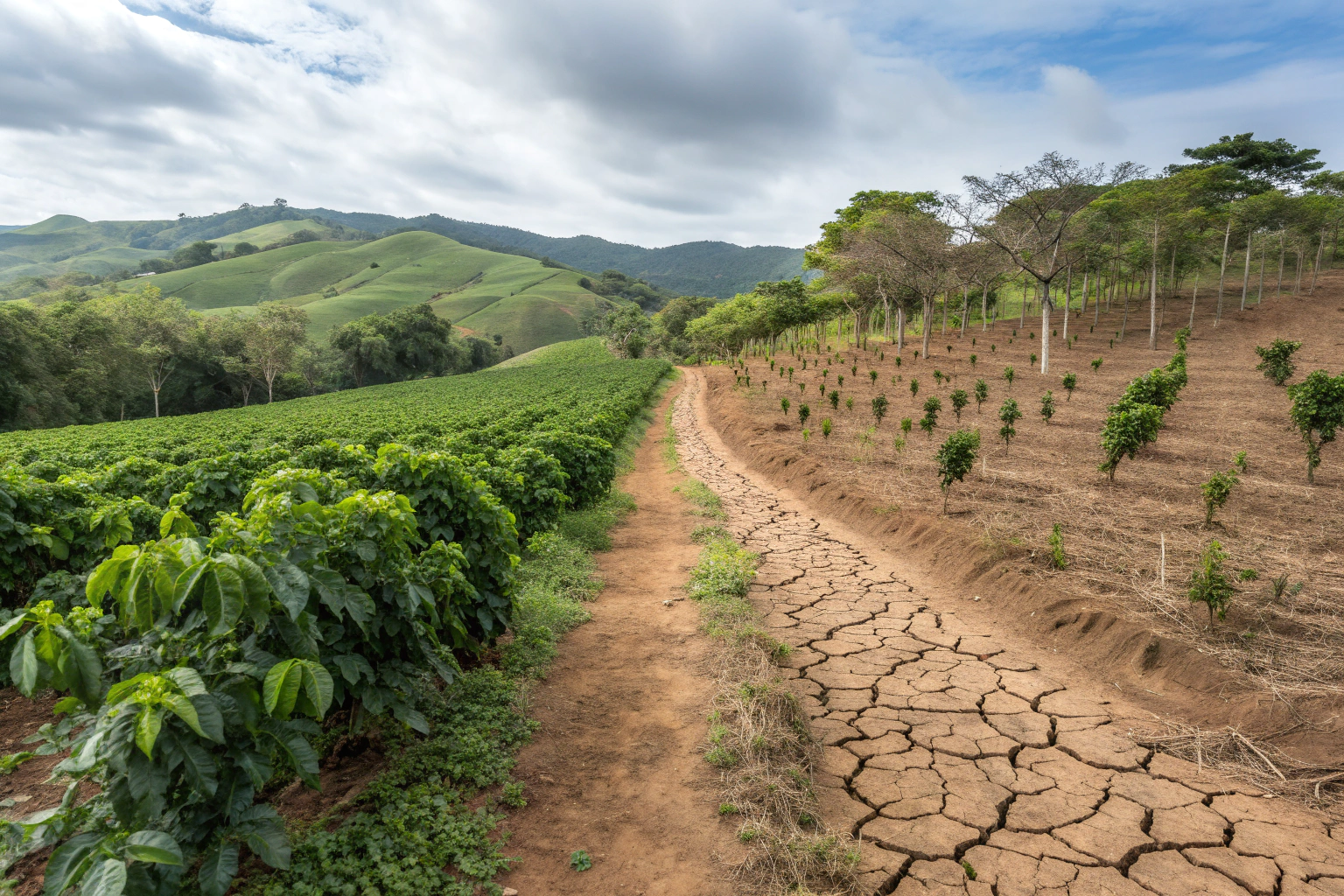
You're visiting a coffee farm that's been in the same family for generations. The farmer points to hillsides where his grandfather grew thriving coffee—areas that are now too hot and dry for coffee cultivation. He shows you leaves damaged by a pest that never used to survive at this altitude. This isn't a hypothetical future scenario; it's happening now on coffee farms worldwide, and the implications will reach every coffee business and consumer.
Climate change is fundamentally reshaping global coffee production through rising temperatures, erratic rainfall, and increased pest and disease pressure. The impact includes reduced yields and quality, shifting growing regions, increased production costs, and threatened farmer livelihoods. Arabica coffee is particularly vulnerable, with studies suggesting suitable growing areas could decline by 50% by 2050.
So, how exactly are these climate changes transforming the practical reality of coffee farming, and what does this mean for the future of your coffee supply? The effects are already visible in coffee regions from Brazil to Ethiopia to our own farms in Yunnan. Let's examine the specific mechanisms at work.
How is Temperature Change Redrawing the Coffee Map?
Coffee is a Goldilocks crop—it needs conditions that are "just right." Even small temperature increases push regions outside the narrow climate window where coffee thrives.
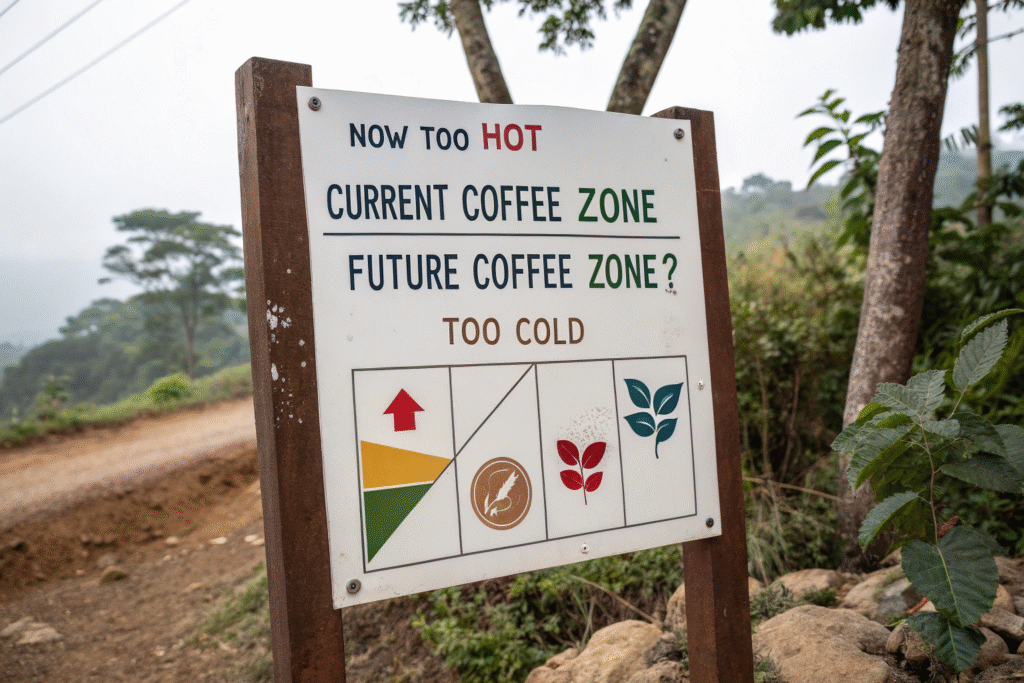
Rising temperatures affect coffee in multiple ways: accelerating berry development, reducing quality, and literally forcing coffee production to higher elevations. The traditional coffee belt is shifting uphill, with profound economic and environmental consequences.
Why is Arabica Coffee So Temperature-Sensitive?
Arabica coffee evolved as an understory plant in Ethiopia's cool highland forests. It thrives in stable temperatures between 18°C-22°C (64°F-72°F). When temperatures consistently exceed 24°C (75°F):
- Berry development accelerates, reducing flavor development time
- Photosynthesis becomes less efficient, weakening plants
- Flower abortion increases, reducing yields
- Quality declines as acidity and complexity diminish
This temperature sensitivity explains why premium coffee regions are found at specific altitudes in the tropics. At BeanofCoffee, we're already observing these changes in our Yunnan growing areas.
What Does the "Uphill Migration" Mean for Production?
As low-elevation areas become unsuitable, coffee farming is moving to higher elevations. This creates several problems:
- Limited land: There's simply less area available at higher altitudes
- Deforestation: Converting highland forests to farms releases carbon
- Ecosystem impact: Highland areas often contain fragile ecosystems
- Infrastructure costs: Building roads and processing at higher elevations is expensive
This geographic squeeze threatens both coffee production and environmental conservation.
How Are Changing Rainfall Patterns Disrupting Farming?
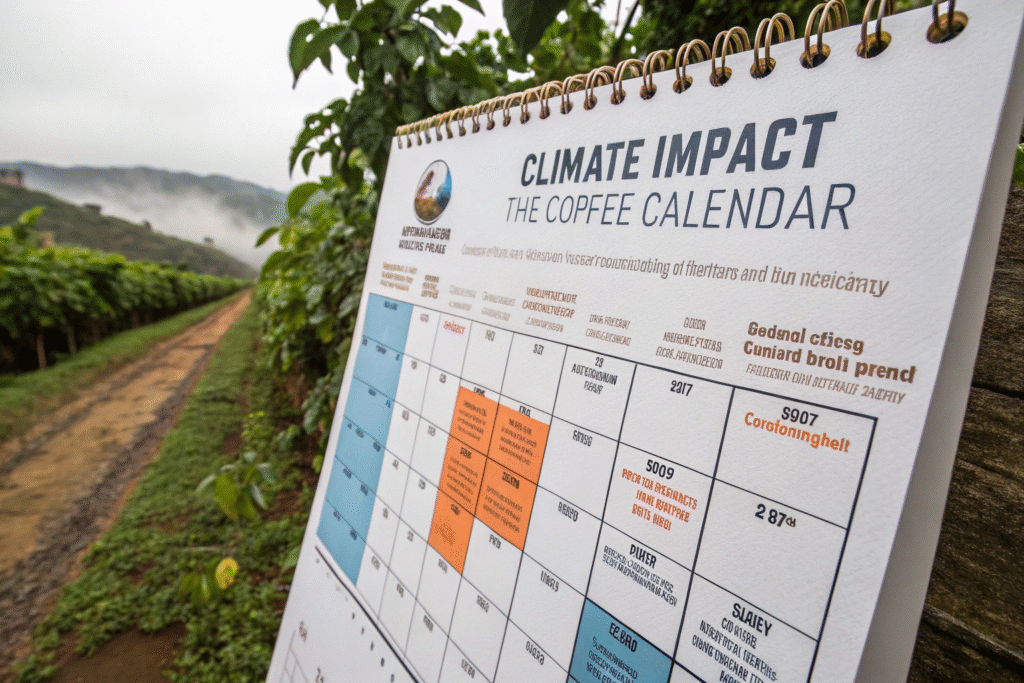
Coffee doesn't just need the right temperature—it needs predictable rainfall at specific times in its growth cycle. Climate change is making rainfall both insufficient and unpredictable.
The problems include prolonged droughts during critical growth periods and intense rainfall during harvest, both of which damage coffee quality and yields. The timing matters as much as the total rainfall.
Why Does Drought During Flowering Matter So Much?
Coffee needs adequate moisture precisely when flowers are forming. Drought during this period causes:
- Poor flower formation, directly reducing potential yield
- Increased flower abortion, further cutting production
- Stress-induced early flowering that produces uneven ripening
When rains finally come after drought, they often trigger simultaneous flowering, leading to a compressed harvest that's difficult to manage and often results in overripe and underripe cherries mixed together.
How Does Erratic Rainfall Affect Quality?
Heavy rain during harvest and processing causes multiple problems:
- Cherries split from rapid water uptake, inviting fungal infection
- Wet conditions prevent proper drying, risking mold development
- Processing water becomes scarce during droughts, reducing quality control
- Soil erosion during heavy rains damages root systems
These rainfall timing issues are becoming more frequent and severe in traditional coffee regions.
How is Climate Change Accelerating Pests and Diseases?
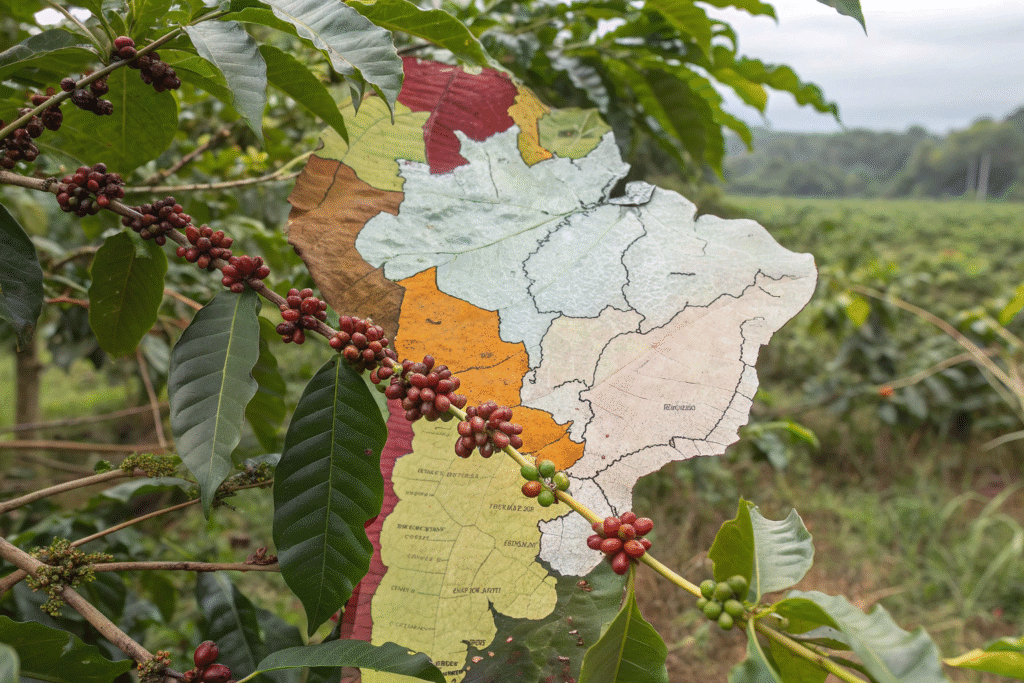
Warmer temperatures are enabling pests and diseases to spread to new regions and become more destructive in traditional coffee areas.
The Coffee Berry Borer, Leaf Rust, and other pathogens are thriving in conditions that previously limited their spread. The economic impact is already devastating in many regions.
Why is Coffee Leaf Rust Spreading?
Coffee Leaf Rust (Hemileia vastatrix) is a fungal disease that destroys leaves, weakening plants and reducing yields. Climate change favors rust through:
- Higher minimum temperatures allowing rust to survive at higher elevations
- Increased humidity from erratic rainfall creating ideal infection conditions
- Weakened plants from heat and drought stress becoming more susceptible
The 2012-2013 rust epidemic in Central America caused over $1 billion in damage and dramatically illustrated this climate-disease connection.
How are Pest Ranges Expanding?
The Coffee Berry Borer—already coffee's most damaging pest—is spreading to higher elevations as temperatures rise. Each 1°C increase in minimum temperature allows the borer to advance approximately 150 meters upslope. This pest range expansion is occurring faster than farmers can adapt, particularly smallholders with limited resources.
What Adaptation Strategies Are Farmers Using?
Despite the challenges, coffee farmers aren't passive victims. They're implementing various adaptation strategies, though these often come with significant costs and trade-offs.
Adaptation measures include shifting to different crops, implementing shade systems, developing new coffee varieties, and changing farm management practices.
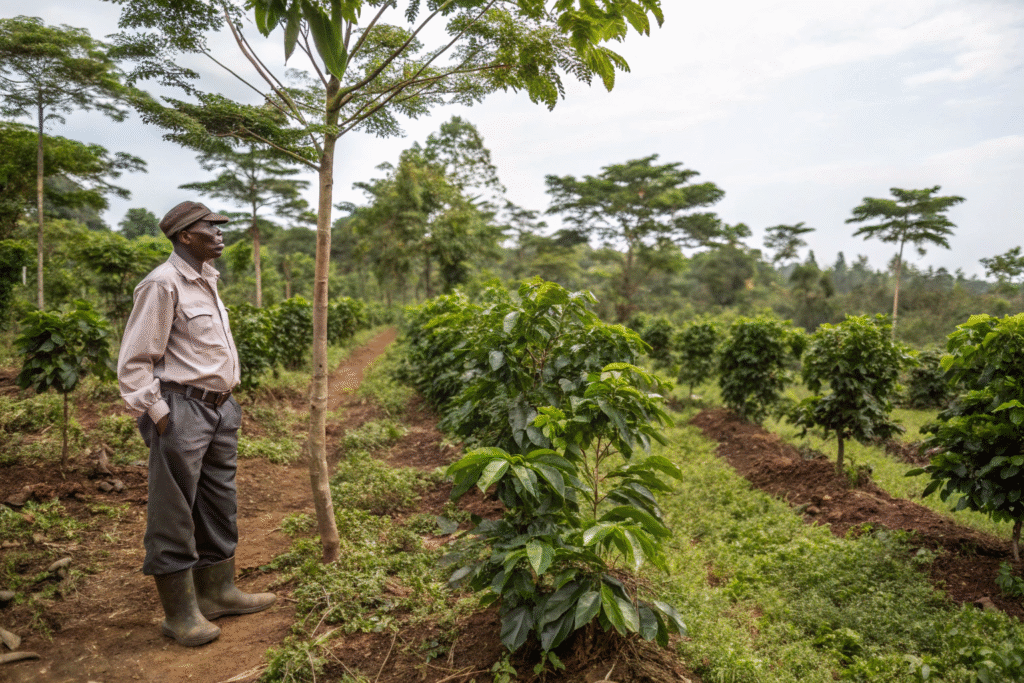
Can Shade Systems Help Mitigate Temperature Increases?
Well-designed shade systems can reduce temperatures by 2-4°C, creating crucial microclimates. However, shade requires careful management:
- Tree selection must balance shade with light requirements
- Pruning regimes must be adjusted seasonally
- Disease monitoring is needed as shade can increase humidity
- Income diversification from timber or fruit trees can offset coffee losses
This agroforestry approach represents one of the most promising adaptation strategies when properly implemented.
Are New Coffee Varieties the Solution?
Breeding programs are developing varieties with better heat tolerance, drought resistance, and disease resistance. However, challenges remain:
- Quality trade-offs sometimes occur with disease-resistant varieties
- Adoption rates are slow as farmers fear changing known varieties
- Genetic diversity concerns arise with widespread monoculture of few varieties
The development of F1 hybrids that combine robustness with quality represents the cutting edge of this approach.
What Does This Mean for Coffee Businesses and Consumers?
The impacts of climate change on coffee production will inevitably affect availability, pricing, and quality throughout the supply chain.
Businesses that understand these changes can adapt their sourcing strategies, while consumers may need to adjust expectations about coffee availability and cost.
How Will Supply Chain Dynamics Change?
- Price volatility will increase as climate shocks affect major producers
- Sourcing diversification will become essential for supply security
- Quality standards may need adjustment as traditional profiles change
- Transparency will become even more valuable for risk management
Companies that build climate-resilient supply chains through diversified sourcing and farmer support will have a competitive advantage.
What Role Can Consumers Play?
Informed consumers can support solutions by:
- Choosing certified or transparently sourced coffee
- Understanding price increases that reflect true production costs
- Supporting companies that invest in climate adaptation
- Reducing waste in coffee consumption
This conscious consumption helps create market incentives for sustainable practices.
Conclusion
Climate change is no longer a future threat to coffee production—it's a present reality that's already reducing yields, compromising quality, and threatening farmer livelihoods. The combination of rising temperatures, erratic rainfall, and expanding pests represents an existential challenge to coffee as we know it.
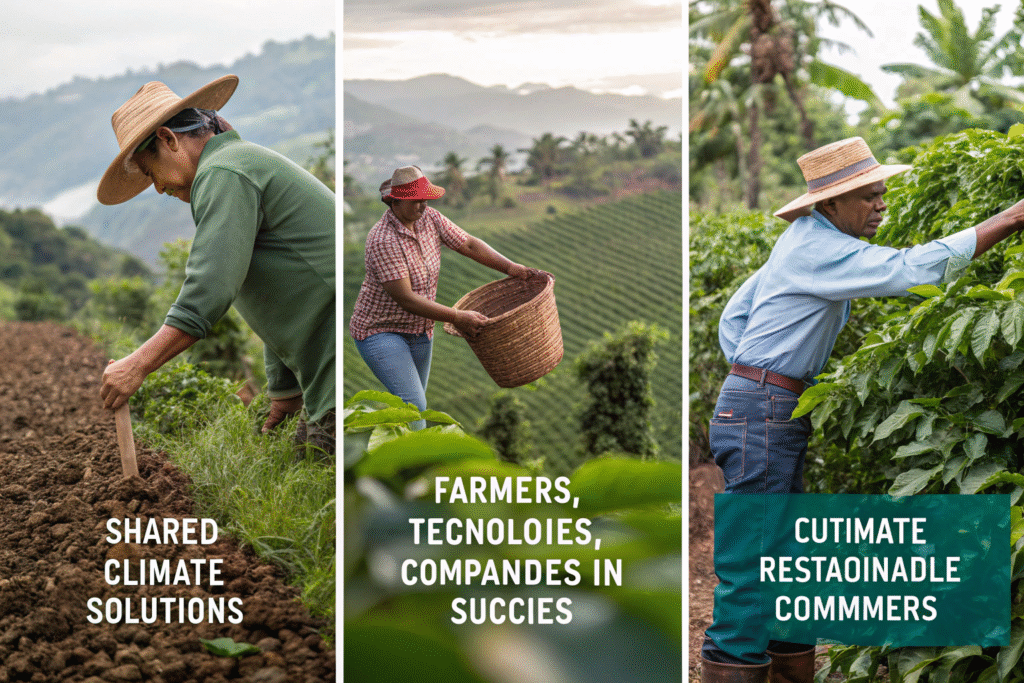
The future of coffee depends on coordinated action: farmers implementing adaptive practices, researchers developing resilient varieties, companies building transparent supply chains, and consumers making informed choices. The time to act is now, while adaptation is still possible. If you're concerned about securing a sustainable coffee supply in a changing climate, we invite you to learn about our climate adaptation initiatives at BeanofCoffee. Contact our export manager, Cathy Cai, at cathy@beanofcoffee.com to discuss how we're working to ensure coffee's future in Yunnan and beyond.