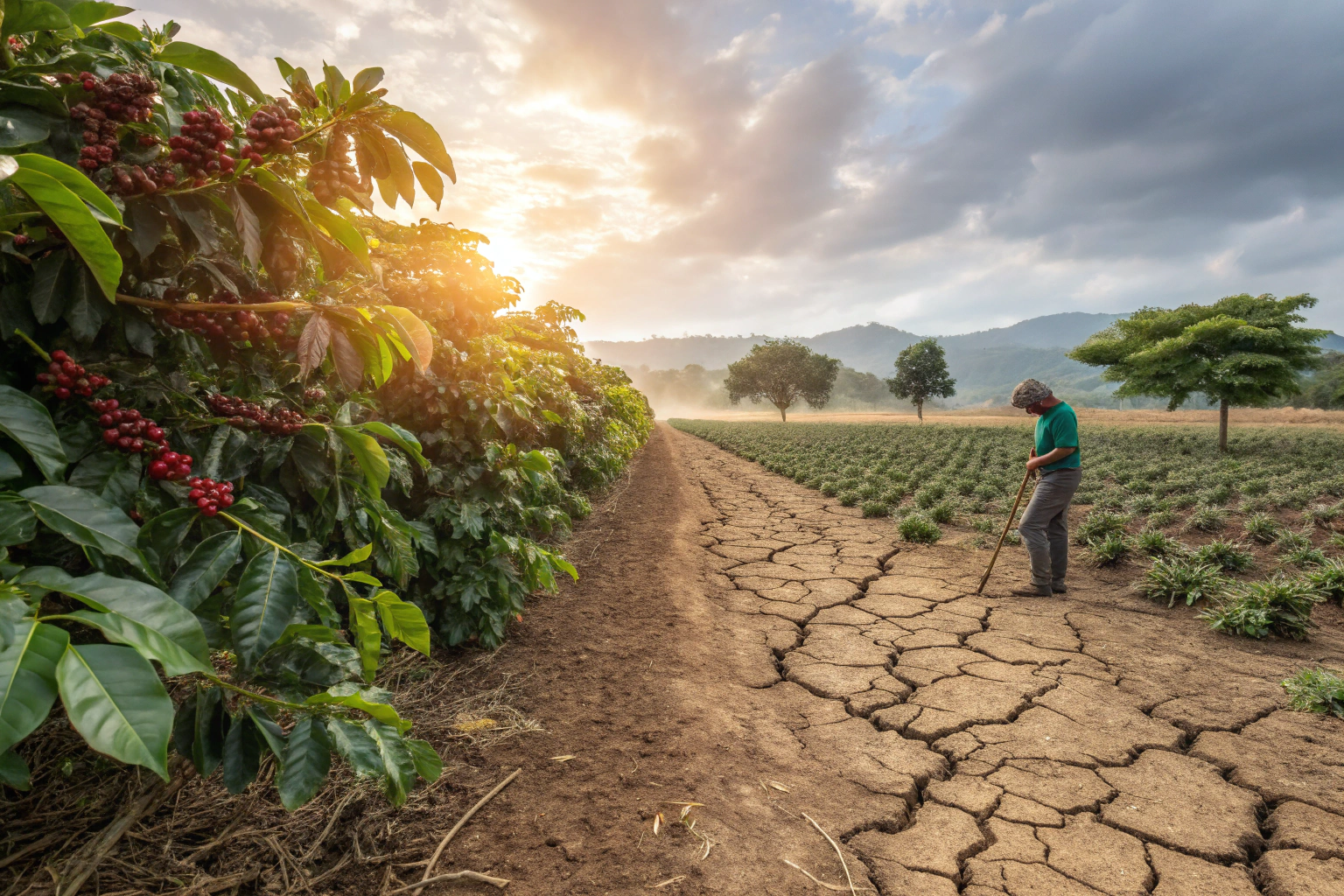
I've been growing coffee in Yunnan for over twenty years. And honestly? The changes I've seen just in that time keep me up at night. Seasons shifting. Weather patterns I used to count on, now unpredictable. It's not just here—it's everywhere coffee grows.
The short answer is that global warming is fundamentally reshaping the world's coffee belts—the tropical regions where coffee grows—through increased temperatures, erratic rainfall, and spreading pests. The top five coffee-producing countries now experience an average of 57 additional days of harmful heat each year due to climate change. This reduces yields, degrades quality, and could shrink suitable coffee farmland by up to 50% by 2050 without adaptation. Arabica is especially vulnerable.
But here's what I want you to understand. This isn't some distant problem. It's affecting your supply chain right now. Those price spikes you've seen? They're connected. Let me walk you through what's actually happening on the ground—and what it means for your business.
How Is Rising Heat Damaging Coffee Production?
Heat is the most direct impact, a relentless and unforgiving force that sears through the delicate ecosystems where coffee thrives, leaving in its wake a trail of withered leaves, stunted growth, and bitter disappointment for farmers. And the numbers are startling—soaring temperatures that once were mere whispers of climate change now roar with alarming clarity, painting a grim picture of a future where the world’s beloved brew may become a luxury of the past.
Coffee plants, those resilient yet finicky green giants, have long danced to the rhythm of specific climatic conditions: cool highlands, steady rainfall, and gentle sunlight filtering through misty canopies. But as global temperatures climb, this delicate balance is shattered. Days that once hovered around 20-25°C (68-77°F) in coffee-growing regions like Colombia’s Andes or Ethiopia’s Sidamo now regularly spike into the mid-30s°C (95°F), turning lush slopes into parched landscapes. The air hangs thick and heavy, stifling any hope of respite, while the soil, once rich and moist, dries out faster than a forgotten sponge, leaving roots to wither in their quest for water.
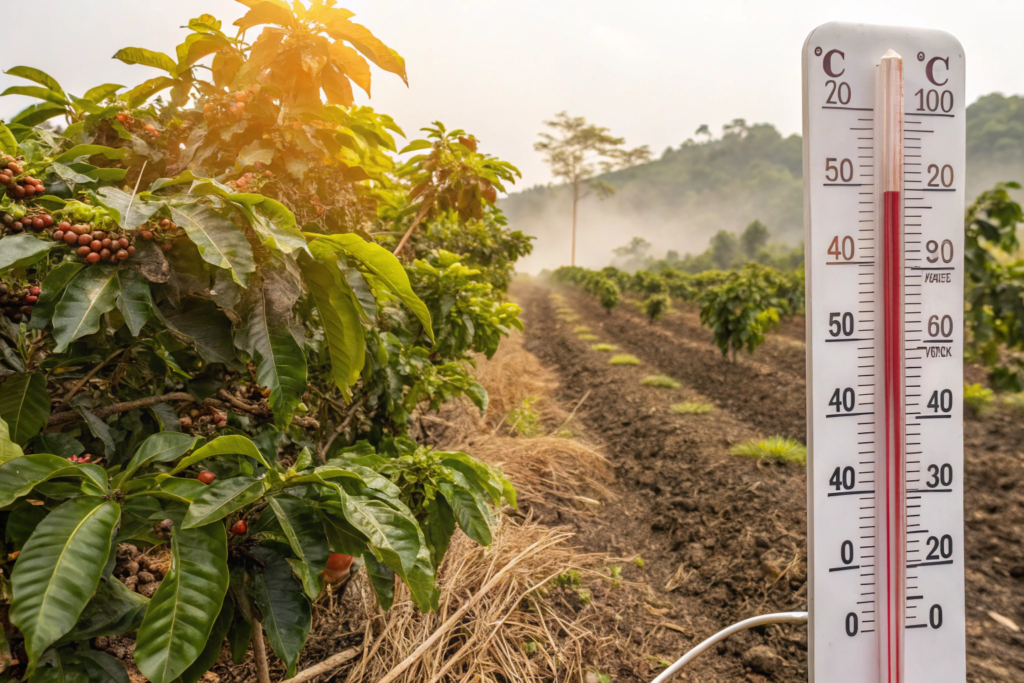
What temperature threshold harms coffee plants?
Research shows that temperatures above 30°C (86°F) are extremely harmful for Arabica coffee plants and suboptimal for Robusta. Coffee evolved in cool forest understories. It's not built for intense heat.
When temperatures cross this threshold, plants redirect energy from growth and bean development to survival. Photosynthesis slows. Flowering reduces. Cherries develop unevenly or abort entirely.
The data is sobering. Between 2021 and 2025, the top five coffee-producing countries—Brazil, Vietnam, Colombia, Ethiopia, and Indonesia, which supply 75% of the world's coffee—experienced on average 57 additional days of harmful heat each year because of climate change. That's nearly two extra months of heat stress annually.
Brazil, the world's largest producer, saw 70 extra days of coffee-harming heat. In Minas Gerais, its main coffee state, the number was 67 extra days. These aren't small changes.
How does this affect bean development?
Heat stress during critical growth phases reduces both quantity and quality. High temperatures accelerate bean maturation, but not in a good way. Beans develop too fast, filling incompletely. They end up smaller, denser, and with different chemical compositions.
For Arabica, which accounts for 60-70% of global supply, the effects are worse. Even temperatures in the 25-30°C range—previously considered acceptable—are now recognized as suboptimal for Arabica growth. The flavor compounds that make specialty coffee special simply don't develop properly under heat stress.
We're seeing this in Yunnan too. Our higher-altitude plots still perform well. But areas that used to be prime growing locations? They're becoming marginal. The Specialty Coffee Association has published extensive research on how temperature affects flavor development.
How Is Erratic Rainfall Affecting Coffee?
Heat isn't working alone. It's part of a cascade of changes, a domino effect rippling through the planet's delicate balance. Rainfall patterns are shifting dramatically too—no longer the predictable rhythm of seasons, but a wild, erratic dance. Some regions, once lush with steady drizzle, now face parched earth and skies that stretch endlessly without a cloud, their air thick with the dry, brittle scent of wilting grass.
Elsewhere, monsoons rage with unprecedented fury, drenching landscapes in relentless downpours that turn streets into rivers and fields into sodden quagmires, the sky a bruised purple as thunder booms like distant war drums. The air itself feels different—charged with an unfamiliar tension, as if the atmosphere is holding its breath before releasing a storm of chaos.
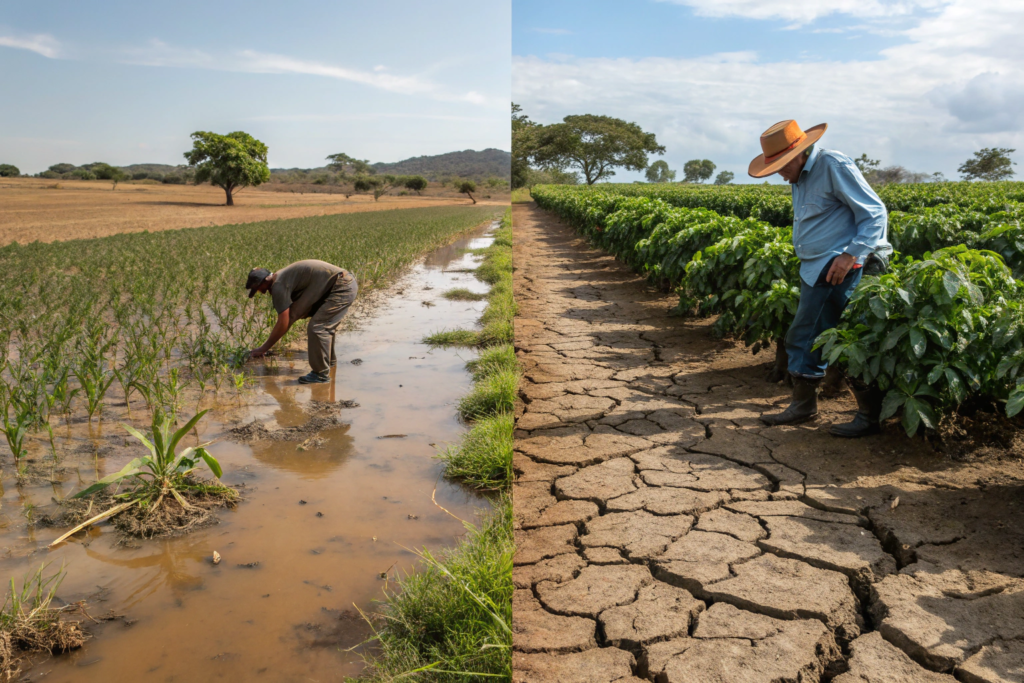
What happens when droughts strike?
Coffee needs consistent rainfall—ideally 59-79 inches annually, well-distributed throughout the year. Climate change is disrupting that.
Brazil experienced severe drought in 2023 that directly contributed to coffee price spikes. When water is scarce, plants can't develop cherries properly. Yields drop. Quality suffers.
Drought stress also makes plants more vulnerable to pests and diseases. They're already fighting just to survive. They have fewer resources left for defense. We saw this in Yunnan during a dry spell in 2019—production dropped 15% across our lower-elevation plots.
How does too much rain at the wrong time hurt?
Excessive or poorly timed rainfall causes different problems. Too much rain during flowering washes away pollen, reducing fertilization. Fewer flowers mean fewer cherries.
Too much rain during harvest makes drying difficult. Wet cherries can ferment prematurely. Mold risks increase. The careful drying curves we've developed over decades become impossible to maintain.
Warmer air holds more moisture, which means when it does rain, it's often heavier. The unpredictability is almost worse than the totals. Farmers used to know when rains would come. Now? It's a guessing game.
We work with logistics partners like Shanghai Fumao to adjust shipping schedules based on harvest timing, which itself shifts with weather. Flexibility is becoming essential.
What About Pests and Diseases?
Warmer temperatures weave a silent, creeping tapestry of change, allowing pests to slither into realms they once deemed uninhabitable. Where once the air hummed with a crisp, invigorating chill that kept coffee berry borers and leaf rust at bay, now a milder, almost cloying warmth lingers, turning higher elevations from sanctuaries into vulnerable frontlines.
The safe zones—those mist-kissed peaks where cool breezes carried the scent of damp earth and fresh greenery—have lost their protective cloak. Coffee berry borers, tiny yet relentless invaders, now burrow into coffee cherries with newfound ease, their larvae wriggling through flesh that was once too cold for their survival.
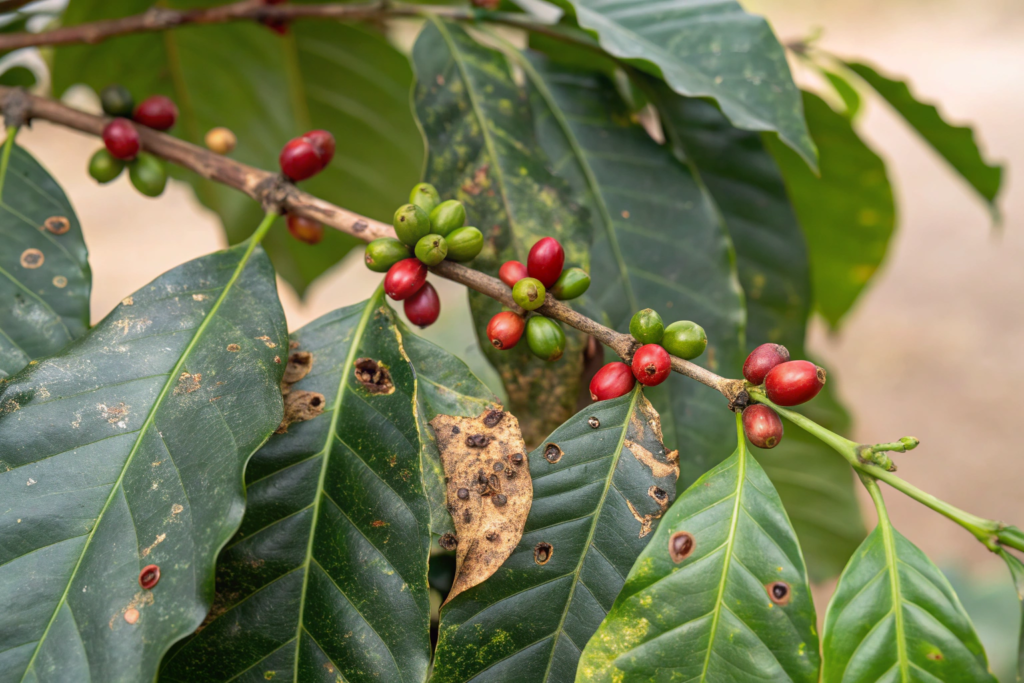
How is the coffee berry borer spreading?
The coffee berry borer—one of the crop's most destructive pests—is spreading to higher altitudes as temperatures warm. These tiny beetles bore into cherries, destroying beans from inside. Once they're established, control is extremely difficult.
The borer damages both yield and quality. Damaged beans can't be sold as specialty. They have to be sorted out, which increases costs and reduces saleable volume.
We've increased our monitoring significantly. Traps, regular scouting, and rapid response protocols. Prevention is the only real strategy—once they're in, they're in.
Why is coffee leaf rust becoming more severe?
Coffee leaf rust, a fungal disease, thrives in warmer, wetter conditions. It defoliates plants, sometimes killing them entirely. Major outbreaks have devastated Central American production in recent years.
Rust spreads faster in warm, humid conditions. The spores travel on wind and rain. Once a plant is infected, it loses leaves. Without leaves, it can't photosynthesize. It can't develop cherries. Recovery takes years.
We plant rust-resistant varieties where possible. But resistance isn't immunity. And some resistant varieties have different flavor profiles—not always what buyers want. Resources from the Coffee Quality Institute track pest and disease spread patterns and management strategies.
How Much Coffee Land Could Be Lost?
The long-term projections are deeply concerning, casting a shadow over the sun-dappled hills that have nurtured coffee for generations. Once vibrant with the rich, earthy aroma of ripening cherries and the hum of bees flitting between rows of emerald-green plants, these lands now whisper warnings of a future where the soil, once so bountiful, may no longer cradle the delicate roots of coffee bushes.
The air, once thick with the sweet, intoxicating scent of freshly brewed beans, now carries a faint tang of anxiety as farmers watch their heritage crops struggle against shifting climates—unpredictable rains that flood fragile slopes, scorching droughts that parch the earth, and pests that thrive in warmer temperatures, leaving leaves yellowed and berries shriveled.
What do the models predict?
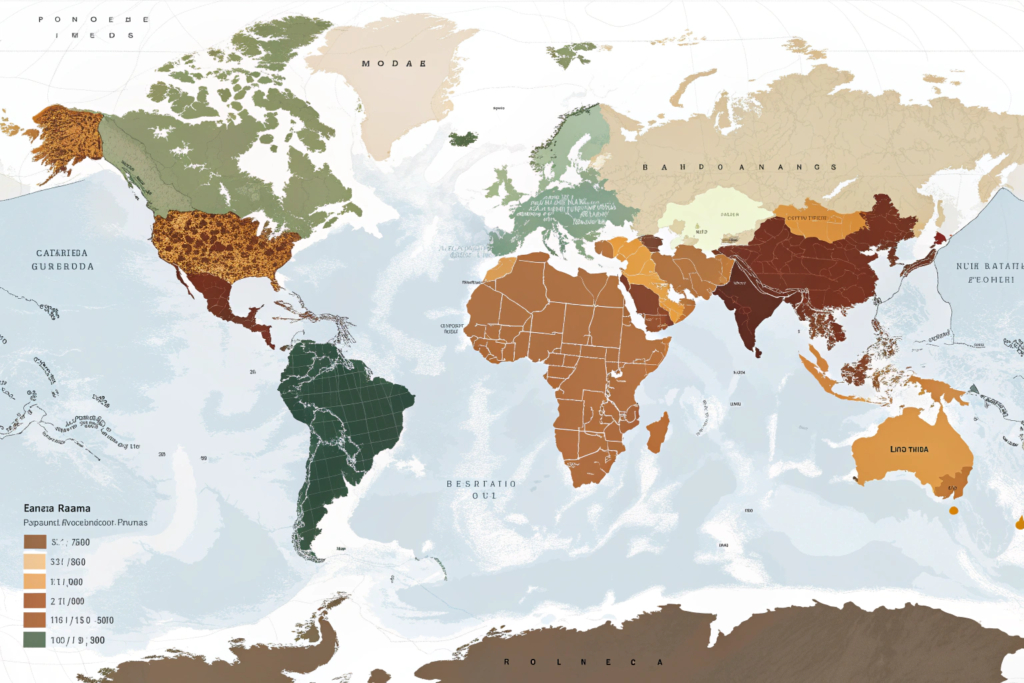
Without adequate adaptation, land suitable for coffee farming could decrease by up to 50% by 2050. That's not a distant possibility—that's within many of our careers.
The reason is simple. As temperatures rise, the areas with suitable climates shrink and shift toward higher altitudes and latitudes. Low-lying coffee regions become too hot. Farmers either adapt or abandon coffee.
For Arabica, which requires cooler temperatures, the threat is most severe. Some models suggest that by 2050, the areas suitable for Arabica could be reduced by 50-60%. Even with adaptation, production will look very different.
Will coffee simply move to new areas?
Some migration is already happening. Farmers are planting at higher elevations where temperatures remain suitable. In Colombia, coffee has shifted upward by hundreds of meters over recent decades.
But this isn't simple. Higher altitudes often have steeper slopes, thinner soils, and more environmental constraints. And there's competition. Land at those elevations may be forested—clearing it for coffee causes deforestation, which itself contributes to climate change.
New areas may become suitable too—places too cool for coffee historically. Southern Brazil, parts of Argentina, even some regions in the northern United States could theoretically grow coffee in a warmer world. But building coffee industries from scratch takes decades. Infrastructure, expertise, supply chains—none of it exists there yet. Organizations like World Coffee Research are studying these migration patterns.
What Can Farmers Do to Adapt?
Adaptation is not just a possibility—it is a living, breathing reality unfolding before our eyes, a quiet revolution taking root in the soil of change. It is happening, all around us, in the way cities hum with new rhythms as old structures are repurposed, in the way communities band together to weather storms they never anticipated, in the way individuals carve paths through uncertainty with grit and grace. But this transformation does not come easily; it demands investment—of time, of resources, of courage—and a deep well of knowledge, both practical and intuitive.
It requires learning the language of the new, understanding the nuances of shifting tides, and trusting that growth lies not in resistance, but in evolution. Like a seed pushing through concrete, adaptation thrives when nurtured with intention, when we pour into it the wisdom of experience and the curiosity to explore uncharted territories. It is a journey marked by small, steady steps, each one a testament to the resilience of life itself, a reminder that even in the face of the unknown, we have the power to rewrite our stories, to turn challenges into opportunities, and to build something stronger, more vibrant, and uniquely ours.
How does shade help?
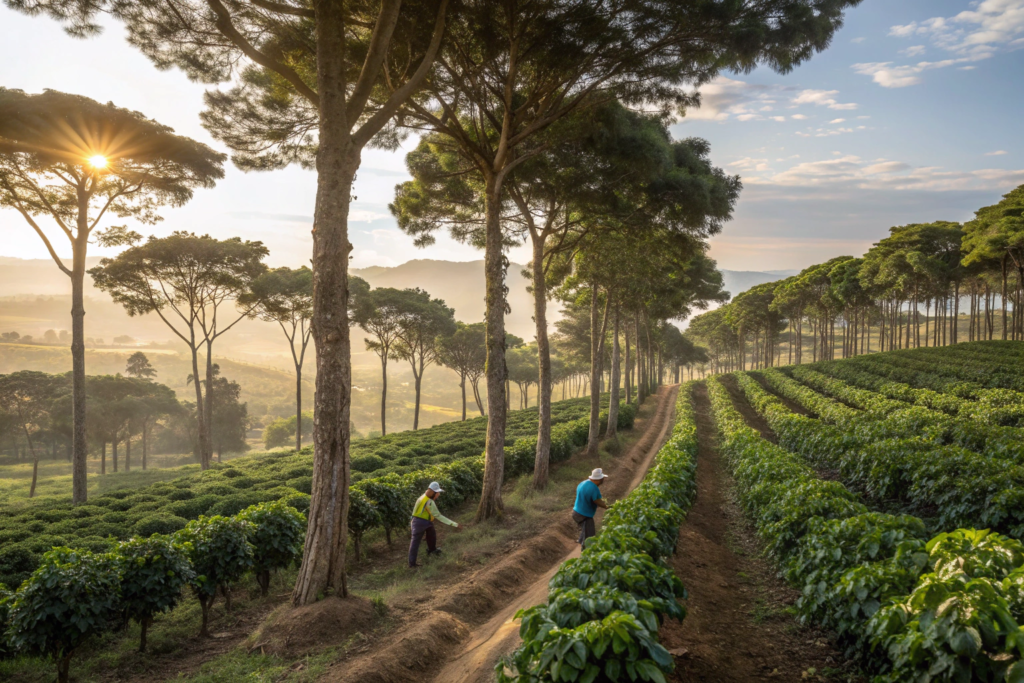
Planting taller trees alongside coffee—agroforestry—is one of the most effective adaptation strategies. Shade trees reduce temperatures at ground level by several degrees. They protect coffee from extreme heat and temperature swings.
Shade also creates leaf litter that enriches soil and locks in moisture. It provides habitat for birds that eat pests. It diversifies farm income—many shade trees produce fruit, timber, or other products.
The trade-off is yield. Full-sun farms produce more coffee per hectare—that's why modern farming moved away from shade. But as climate stress increases, the protection shade provides may outweigh the yield reduction. The Rainforest Alliance promotes shade-grown certification for this reason.
What about more resilient varieties?
Breeding programs are developing coffee varieties that tolerate more heat, drought, and disease. Some Robusta varieties perform better under stress—which matters as Robusta's heat tolerance becomes more valuable.
We're experimenting with new varieties in Yunnan too. Working with Shanghai Fumao on trials, we're identifying which genetic lines perform best under our changing conditions. It takes years—coffee isn't annual, you can't replant every season—but progress is happening.
Other adaptations include irrigation systems for drought protection, mulching to retain soil moisture, and precision agriculture to optimize inputs under stress.
Conclusion
Global warming is transforming coffee belts worldwide. More heat days. Erratic rainfall. Spreading pests. Shrinking suitable land. The top five producers have already lost nearly two months of optimal growing conditions annually. Without adaptation, suitable coffee land could halve by 2050.
At Shanghai Fumao, we're not ignoring this. Our 10,000 acres in Yunnan are part of the coffee belt too. We're investing in shade systems, trialing resilient varieties, and working with researchers to understand what comes next. We're also transparent with our buyers about how climate affects each harvest.
The challenges are real. But so is the commitment to solving them. Coffee has survived for centuries because farmers adapt. We'll adapt too.
If you're concerned about climate impacts on your supply chain—and you should be—reach out. Cathy Cai coordinates our export relationships and can share how we're addressing these challenges, lot by lot. Email her at: cathy@beanofcoffee.com. Let's talk about securing your coffee future.