You walk through your coffee farm. The trees look green, but the harvest is shrinking. The branches are long and tangled, with cherries only at the very tips. It’s a common, frustrating scene. The instinct is to let the tree grow, thinking more branches mean more coffee. But in coffee farming, less is often more. Pruning isn't just a chore; it's a critical, strategic decision that directly dictates your farm's productivity, financial health, and sustainability for years to come. Get it wrong, and you slowly strangle your own yield.
Pruning has a dual-phase impact on coffee yield: it causes a deliberate short-term reduction in the following year's harvest to drive a significant, sustainable long-term increase in yield and bean quality. By removing unproductive wood, it redirects the tree's energy to create stronger, fruit-bearing branches, improves light penetration and air flow, and extends the productive life of the plant.
Think of it as a strategic investment. You are forgoing some income next season to build a stronger, more productive asset. On our Yunnan plantations, we learned this the hard way early on. Letting trees grow wild led to a boom-and-bust cycle—a big harvest one year, followed by two years of exhaustion and disease. Systematic pruning broke that cycle. Let's break down exactly how this tool works.
How does pruning directly influence coffee plant physiology?
The coffee plant is a perennial that will naturally grow tall and become a tree. But for commercial yield, we want it to be a manageable, energy-efficient fruit factory. Pruning is how we direct that energy.
Pruning directly influences physiology by altering the plant's hormonal balance (reducing apical dominance), forcing the growth of new, productive lateral branches (suckers), and fundamentally changing where water, nutrients, and carbohydrates are allocated within the plant.
What is the "source-to-sink" relationship after a cut?
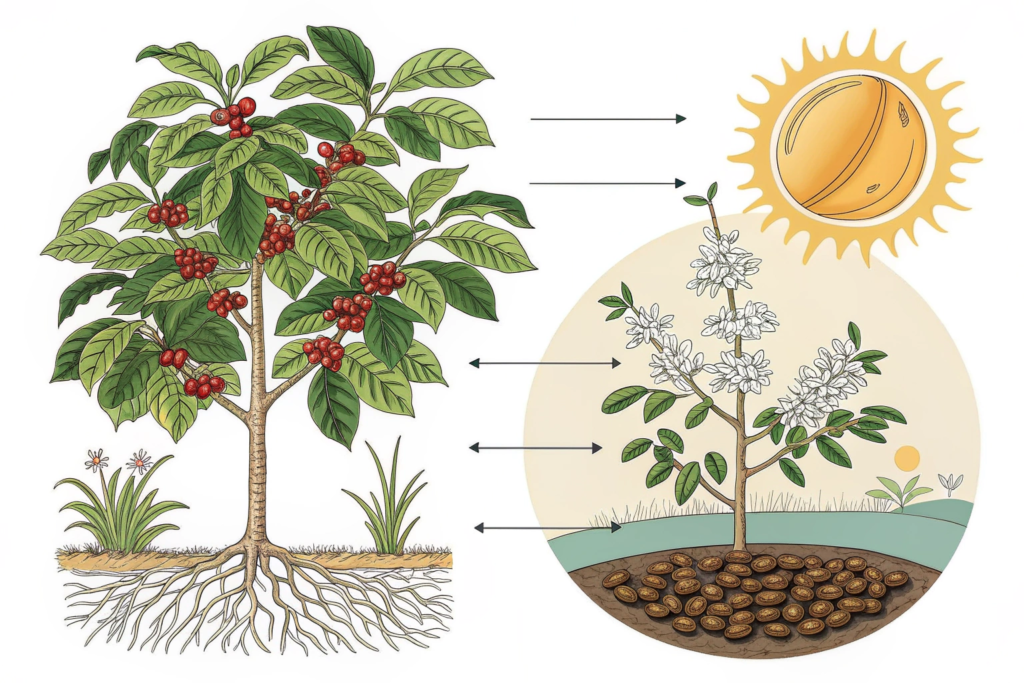
In plant terms, "sources" are areas that produce energy (leaves via photosynthesis). "Sinks" are areas that consume energy (growing tips, roots, developing fruit). An overgrown tree has too many "sinks" competing for energy—long branches, old wood, and leaves deep in the shade that don't photosynthesize well.
When you make a pruning cut, you remove unproductive sinks (old, non-fruiting branches). Suddenly, the tree has a surplus of energy and nutrients from the remaining "sources" (healthy leaves). This surplus is redirected to the remaining, chosen "sinks": the new buds and suckers that will become the next season's fruit-bearing wood. You are forcing the tree to invest in its best-performing assets. Without pruning, energy is wasted maintaining wood that will never produce a good cherry.
How does light penetration affect flowering and fruit set?
Coffee cherries need sunlight to develop sugars and size properly. A dense, unpruned canopy creates deep shade inside the tree. Branches in the shade:
- Produce fewer flower buds. Flowering is triggered by hormonal changes influenced by light.
- Experience higher fruit drop. The plant will abort cherries it cannot support.
- Produce smaller, lower-density beans. Less photosynthesis means less sugar stored in the seed.
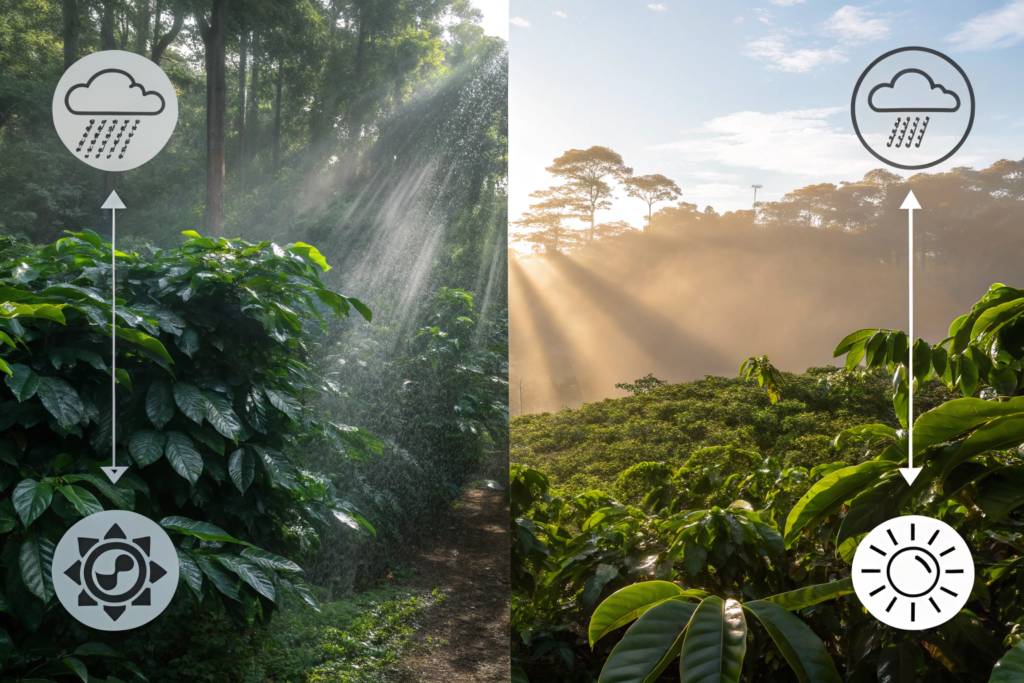
Pruning opens the canopy, allowing dappled sunlight to reach the inner and lower branches. This turns more of the tree into productive "source" area. It’s not about blasting the tree with full sun (which can scorch it), but about creating an even, productive light environment. More light penetration = more potential flowering sites = a higher yield potential per tree.
What are the main pruning methods and their specific yield outcomes?
There is no single "pruning." Different methods serve different goals: annual maintenance, total renewal, or complete replacement. Choosing the wrong method can set your yield back for years.
The main methods are: 1) Stumping (severe cut-back for renewal), 2) Agobiado or Capping (topping to control height), and 3) Selective Thinning (annual removal of specific branches). Each has a distinct impact curve on yield: Stumping causes a 1-2 year total yield loss for a 3-5+ year gain; Selective Thinning causes a minor one-season dip for consistent annual gains.
When should you use severe stumping versus light selective pruning?
- Severe Stumping (or "Rejuvenation Pruning"): Cutting the main stem(s) down to 30-50cm from the ground. This is a complete reset. Use it when: trees are old (12+ years), severely diseased, overgrown beyond management, or yields have declined irreversibly. Yield Impact: Zero harvest for the next 1-2 seasons as the plant regrows its structure. However, it leads to a strong, multi-year surge in yield (often surpassing old peaks) for the following 3-5 years as the entirely new structure is highly productive. It extends the plantation's economic life by decades.
- Selective Thinning (or "Maintenance Pruning"): The annual or biennial removal of specific branches: old, horizontal, diseased, or inward-growing wood, and excess suckers. Use it every year on healthy, producing trees. Yield Impact: A small, immediate reduction (perhaps 5-15%) as you remove some bearing wood. However, it prevents a major future collapse in yield by maintaining plant health and vigor. It's the key to consistent annual yields.
How does the "Agobiado" (topping) method manage harvest cycles?
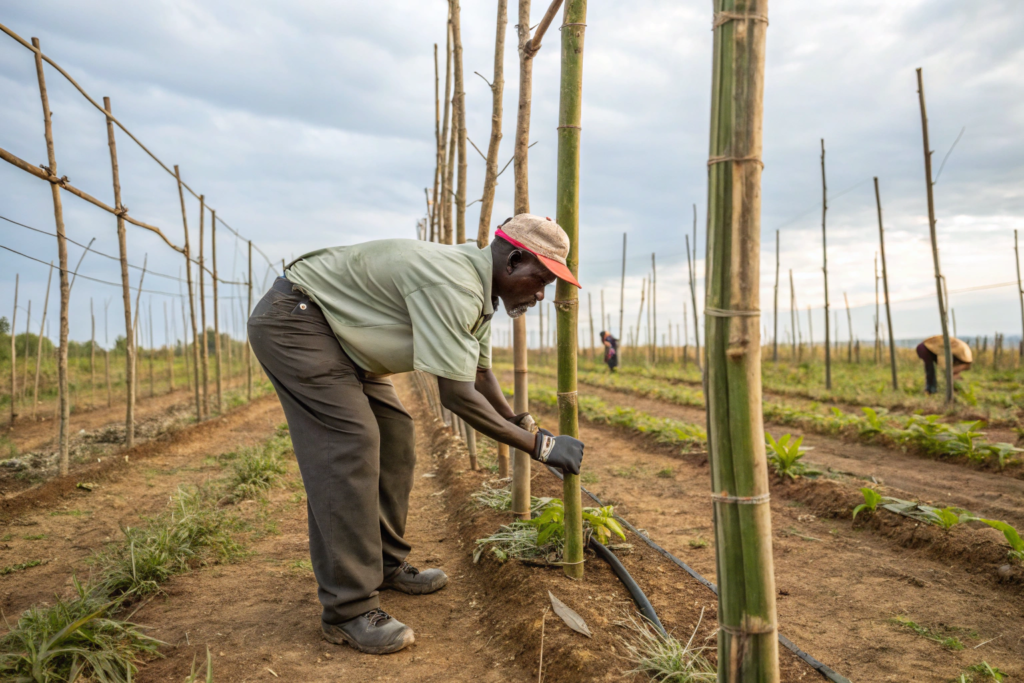
Common in Latin America and adapted by us in Yunnan, Agobiado involves bending and tying a primary vertical stem horizontally, then topping it. This breaks apical dominance and stimulates multiple vertical suckers to grow along the bent stem. The yield impact is cyclical:
- Year 1: The bent stem produces a heavy harvest.
- Year 2: The new vertical suckers (grown the previous year) become the primary producers.
- Year 3: The original bent stem is cut off after its second harvest, and a new sucker is bent to replace it.
This creates a managed, two-year production cycle on different parts of the same plant, allowing for easier harvesting and more predictable yield planning. It's a method for intensifying yield per hectare over time through meticulous management.
How does pruning interact with fertilizer and pest management?
Pruning doesn't happen in a vacuum. It changes the tree's needs and its vulnerability. Your fertilization and pest control plans must adapt immediately, or you can waste money or even cause harm.
Pruning reduces the plant's immediate nutrient demand but increases its demand for specific nutrients (like Nitrogen) during the regrowth flush. It also significantly alters the microclimate, reducing humidity and hiding spots for pests like Coffee Berry Borer (CBB) and fungal diseases like Coffee Leaf Rust.
Should you fertilize before or after a major pruning?
After. Always after. Fertilizing a heavily pruned tree before it has regrown a significant leaf area is inefficient and can pollute groundwater, as the reduced root system cannot uptake the nutrients.
- Timing: Apply fertilizer 4-8 weeks after a severe prune, just as the new suckers are actively growing. This fuels the critical regrowth phase.
- Formula Shift: Post-pruning, the tree needs a higher ratio of Nitrogen (N) to support vigorous vegetative growth of new stems and leaves. A formula like 20-10-10 might be used initially, shifting back to a more balanced (e.g., 17-17-17) or Potassium (K)-heavy formula as the bearing wood develops.
For annual selective pruning, maintain your regular fertilization schedule, as the overall leaf area and demand change less drastically.
How does an open canopy reduce fungal and insect pressure?
This is a huge, often overlooked benefit. A dense, unpruned canopy is a haven for pests and disease.
- Fungal Diseases (e.g., Coffee Leaf Rust): Thrive in stagnant, humid air. An open canopy allows wind to pass through, lowering humidity and drying leaves faster after rain or dew, disrupting the fungus's life cycle.
- Coffee Berry Borer (CBB): The female beetle prefers shaded, protected areas to bore into cherries. An open, sunnier environment is less favorable to them. Furthermore, pruning makes scouting and spraying infinitely more effective. You can actually see the branches and apply treatments where needed. At Shanghai Fumao, our pruning schedule is integrated with our IPM calendar. The reduction in pesticide use alone justifies the labor cost of pruning.
What are the long-term economic impacts of a pruning program?
Pruning is labor-intensive and has an upfront cost. You must justify it not as an expense, but as a capital investment in the farm's future productivity. The economics are compelling when viewed over a 5-10 year horizon.
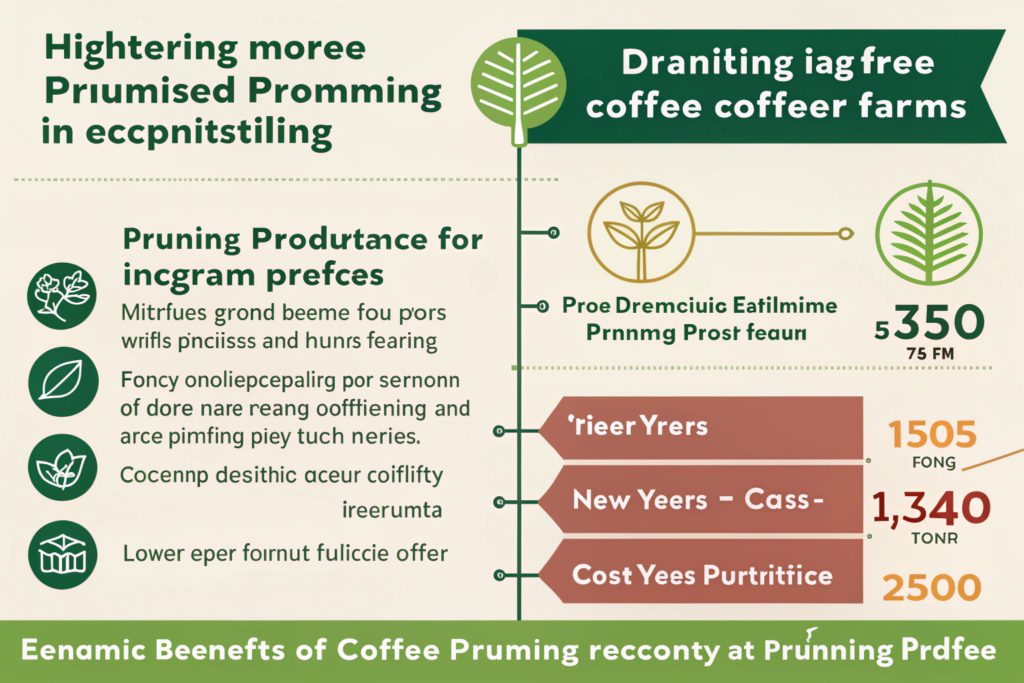
A disciplined pruning program leads to higher, more consistent yields per hectare, extended productive lifespan of trees (from 15 to 30+ years), reduced volatility in annual income, and lower long-term costs for pest control and fertilizer per unit of coffee produced.
How do you calculate the Return on Investment (ROI) for pruning labor?
You must think in multi-year cycles. Let's model a 10-year block for a 1-hectare plot:
- Scenario A (No Pruning): Yield starts at 1,500 kg/ha but declines 5% annually due to overgrowth and disease, needing replanting in year 15.
- Scenario B (Systematic Pruning): Involves a stumping in Year 1 (0 yield), then a building yield that stabilizes at 2,200 kg/ha from Years 4-10, with trees productive past Year 20.
While Year 1-3 income is lower in Scenario B, the cumulative yield and net present value by Year 10 will almost always be significantly higher. The ROI calculation must include:- Cost of pruning labor.
- Value of lost yield in the "reset" years.
- Increased revenue from higher, stable future yields.
- Costs Avoided: Reduced pesticide/fungicide sprays, deferred capital cost of replanting (new seedlings, 3+ years of zero yield).
For large estates like ours, this math is non-negotiable. It's the foundation of sustainable business.
Does pruning affect bean density and quality, impacting price?
Absolutely, and this is where the real value is captured. A well-pruned tree with good light exposure and balanced energy allocation produces:
- More uniform cherry maturation. This leads to a higher percentage of ripe cherries at harvest.
- Higher bean density. Beans are harder, store more sugars, and roast more evenly. Dense beans command a price premium in the specialty market.
- Fewer defects. Reduced disease pressure means fewer damaged beans (e.g., from berry borer or sour rot).
Thus, pruning doesn't just increase yield by weight; it increases yield by value. You are producing more kilograms of higher-priced coffee. This double benefit is what makes a meticulous pruning program the single most important farm practice for quality-focused producers.
Conclusion
The impact of pruning on coffee yield is profound and multifaceted. It is a deliberate short-term sacrifice for long-term vitality, transforming the plant's architecture, health, and economic output. Beyond mere yield quantity, it is the foundational practice for achieving consistent, high-quality harvests that command better prices, ensuring the financial and environmental sustainability of a coffee farm.
Ignoring pruning leads to a slow, inevitable decline. Embracing it as a core strategic practice builds a resilient, productive asset that can thrive for generations. It is the difference between farming for the next season and farming for the next decade.
For buyers and roasters, understanding that your supply chain partners invest in such practices is a sign of quality and stability. At BeanofCoffee, our pruning programs across our Yunnan estates are a key reason we can guarantee consistent volume and quality year after year. If you are looking for a supply partner committed to long-term agricultural health and sustainable yields, contact our Export Manager, Cathy Cai: cathy@beanofcoffee.com. Let's talk about the foundation of your coffee, from the roots up.