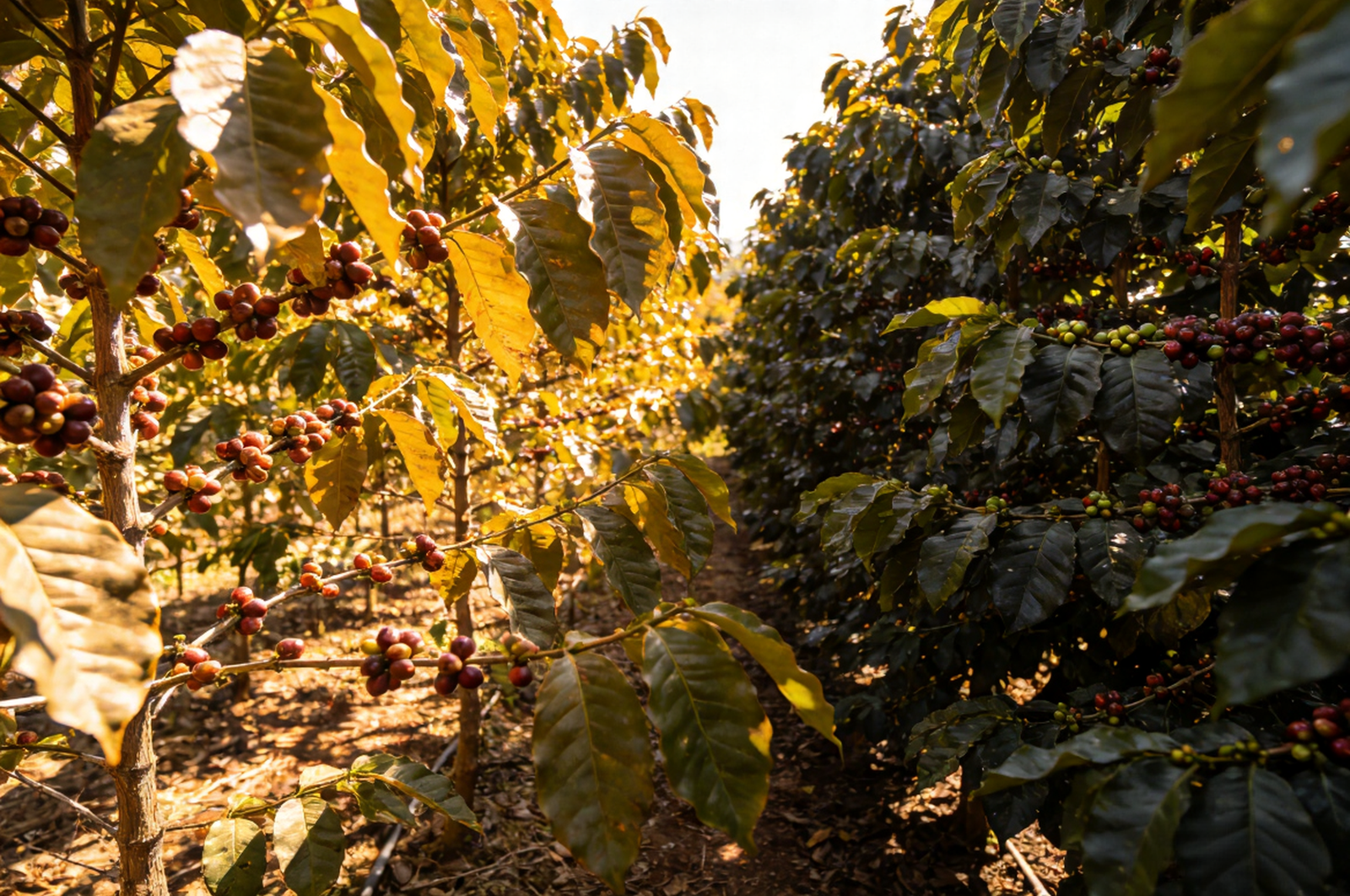
You're cupping two coffees from the same farm, same variety, even the same harvest. One is vibrant, complex, with a lingering sweetness. The other is simpler, sharper. The difference? One grew under the shade of taller trees; the other in full sun. For a buyer focused on quality, price, and consistency, this isn't just an agronomic detail—it's a direct predictor of bean density, flavor potential, and ultimately, the value you're getting. But does shade just make better flavor, or does it physically change the bean itself? More specifically, how does it impact the bean size you're paying for?
The impact is profound and physiological. Shading doesn't just change the environment; it changes the bean's very development. In general, shade-grown coffee beans develop more slowly and are often denser, but they can be slightly smaller in physical dimensions (screen size) compared to sun-grown beans from the same variety. However, this "smaller" bean often packs more concentrated sugars and flavors, leading to a higher quality cup and a better price per cup for you. It's a classic trade-off: quantity vs. quality, sun vs. shade. At BeanofCoffee, we manage both sun and shaded plots across our Yunnan plantation specifically to offer different profiles to our partners. Understanding this impact helps you choose the right bean for your target market.
So, if you're evaluating a coffee's specification sheet and see a screen size like "16-18," knowing its shading history tells you part of the story behind that number. Let's dig into the science of how shade shapes the seed.
How Does Shade Slow Growth and Affect Bean Development?
Think of a coffee cherry like a fruit. The pace at which it ripens changes its internal structure. Full sun forces a rapid, intense photosynthesis sprint. The plant produces cherries quickly, often with more water content and less time to develop complex carbohydrates. Shade, however, creates a marathon environment. Less direct sunlight means a slower rate of photosynthesis.
This slower pace has direct consequences:
- Longer Maturation: The cherry takes weeks longer to ripen. This extended period allows for more gradual accumulation of sugars and organic acids within the bean (the seed).
- Reduced Stress: The plant is not fighting heat and water evaporation as intensely. It can allocate energy more efficiently to seed development rather than cooling and survival.
- Lower Yield per Tree: Often, a shaded tree will produce fewer cherries than a sun-dense one. The plant's energy is focused on perfecting fewer seeds.
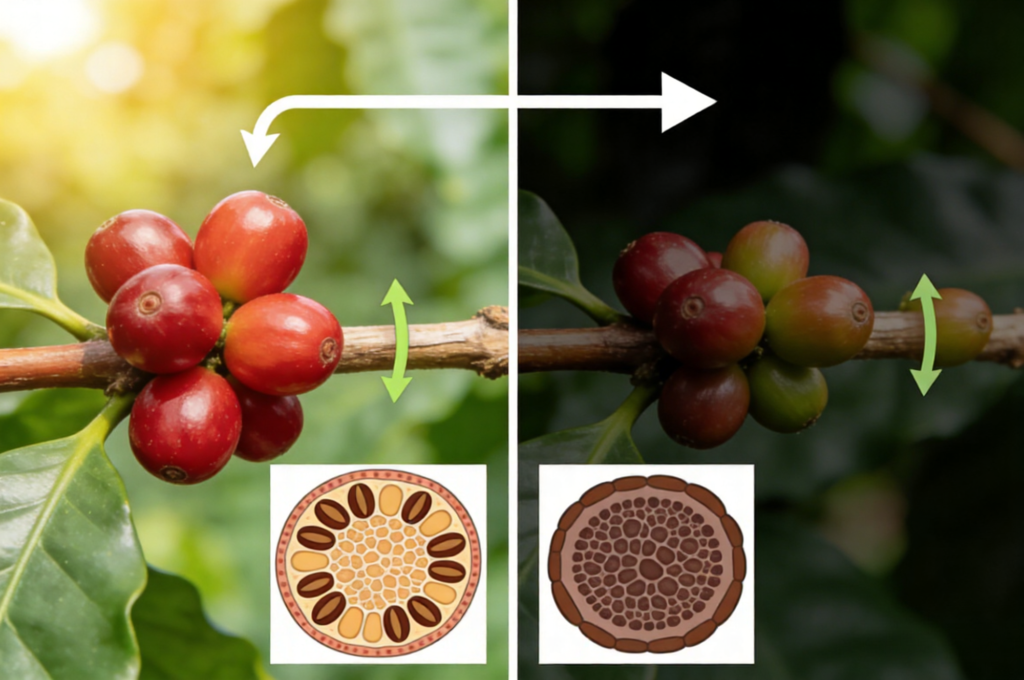
For the bean inside the cherry, this means a more concentrated, dense structure. The cells are packed tighter with developed sugars (sucrose), which later transform into the complex acids and aromatic compounds during roasting. So, while the bean might not swell to the maximum physical size, it becomes a denser, heavier, more flavor-potent object. This is why shade-grown beans often have a higher density (measured in grams per liter), a key quality metric we track for our export lots.
What is the specific physiological mechanism?
The key is carbohydrate partitioning. Under lower light (shade), the coffee plant produces less total photosynthetic product (sugars). However, a higher proportion of these sugars is diverted to the developing seeds (beans) to ensure their survival, rather than to vegetative growth (leaves and stems). This results in seeds with a higher concentration of stored carbohydrates. Furthermore, the slower growth allows for more complete lignification (hardening) of the bean's cellular structure, increasing its density and hardness. This is why a shaded bean often "snaps" cleaner and louder than a sun-grown one.
How does this affect the roasting process?
Denser, harder beans require more energy input during roasting. They are more thermally resistant. A roaster must apply heat more carefully to ensure the interior of the bean is developed without scorching the exterior. This often means a slightly longer roasting time or higher charge temperature. The reward is that these dense beans can develop more complex flavor profiles and have a wider "sweet spot" in the roast. They are more forgiving of minor roast variations, which is a benefit for consistency in your cafe or product line.
Does Shade Actually Reduce Physical Screen Size?
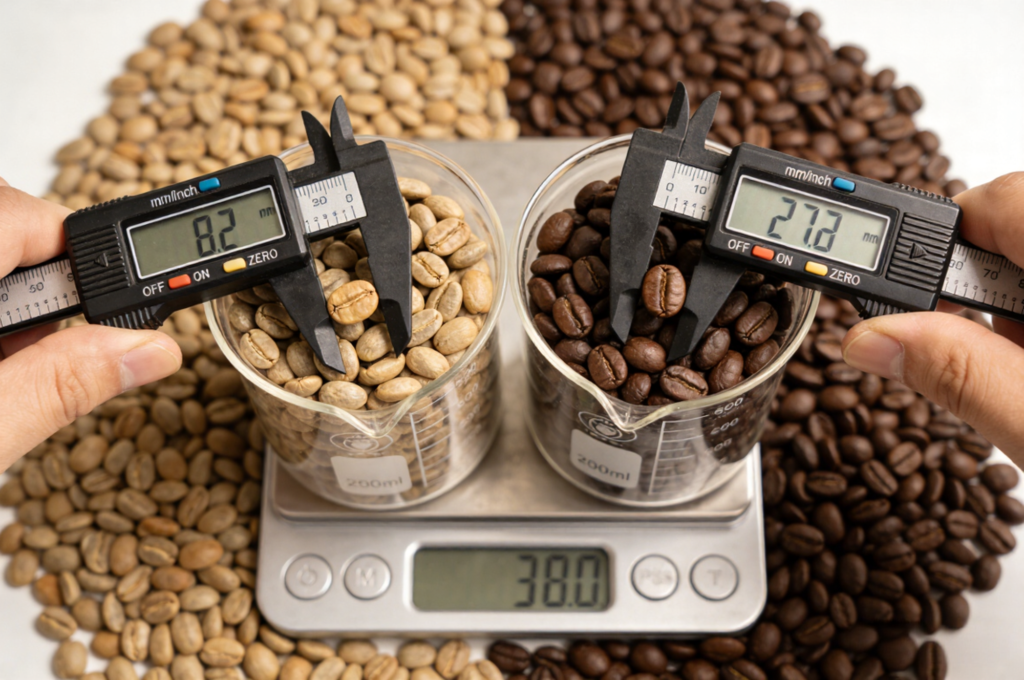
This is the heart of the buyer's practical question. The short answer is: Often, yes, but not universally, and it's not the whole story. When you run shade-grown and sun-grown beans from the same farm and variety through a sizing screen, the sun-grown beans will frequently have a higher percentage of larger beans (e.g., Screen 18+). The shaded beans may cluster in the 15-17 range.
Why? The rapid growth in full sun can cause the cherry and the bean inside to expand to a larger physical volume. It's like inflating a balloon quickly—it gets bigger, but the wall is thinner. In the bean's case, the cell structure is less dense. The shaded bean grows slower, building a thicker, denser "wall," but this doesn't always translate to a larger outer dimension. However, this is a general trend. Factors like coffee variety (e.g., Typica vs. Catimor), altitude, and nutrition can override it. A well-fertilized shaded tree can still produce large beans.
For you, the buyer, this means you cannot use screen size alone as a proxy for quality. A lot of Screen 17 shaded beans may be vastly superior in cup quality to a lot of Screen 19 sun-grown beans. You are paying for the flavor potential inside the bean, not just its physical size. This is why our quality control at BeanofCoffee includes both objective sizing and mandatory cupping scores. We might offer a "Shaded Estate" lot at a premium, even with a slightly smaller screen size, because its cup score and density are higher.
How should a buyer interpret screen size for shaded vs. sun-grown lots?
You need to adjust your expectations. When a supplier presents a shaded lot, ask for its density (in g/L) and cupping score alongside the screen size. A shaded lot at Screen 16/17 with a density of 720 g/L and an 85-point score is likely a better value than a sun-grown lot at Screen 18 with a density of 680 g/L and an 82-point score. The shaded beans will yield more soluble solids and flavor per gram. In your roasting, you may also find a better yield (weight loss) from denser beans. It's a more efficient raw material.
Can shade and pruning be managed to optimize both size and quality?
Yes, this is advanced farm management. Through dynamic shading—using tall, leguminous trees that can be pruned to allow dappled light at key growth stages—and precise nutrition, skilled agronomists can aim for the "sweet spot." The goal is to provide enough shade to slow growth and develop density, but enough controlled light penetration to encourage adequate bean filling and size. On our Yunnan plantations, we experiment with different shade tree species and canopy management to achieve the optimal profile for different market segments: a larger bean size for commercial blends where appearance matters, and a super-dense bean for our specialty microlots.
What Are the Secondary Benefits of Shading That Indirectly Impact Quality?
The impact of shade goes beyond the bean's immediate physiology. It creates a healthier, more stable ecosystem that contributes to the final product in ways that matter to a buyer concerned with safety, reliability, and stability.
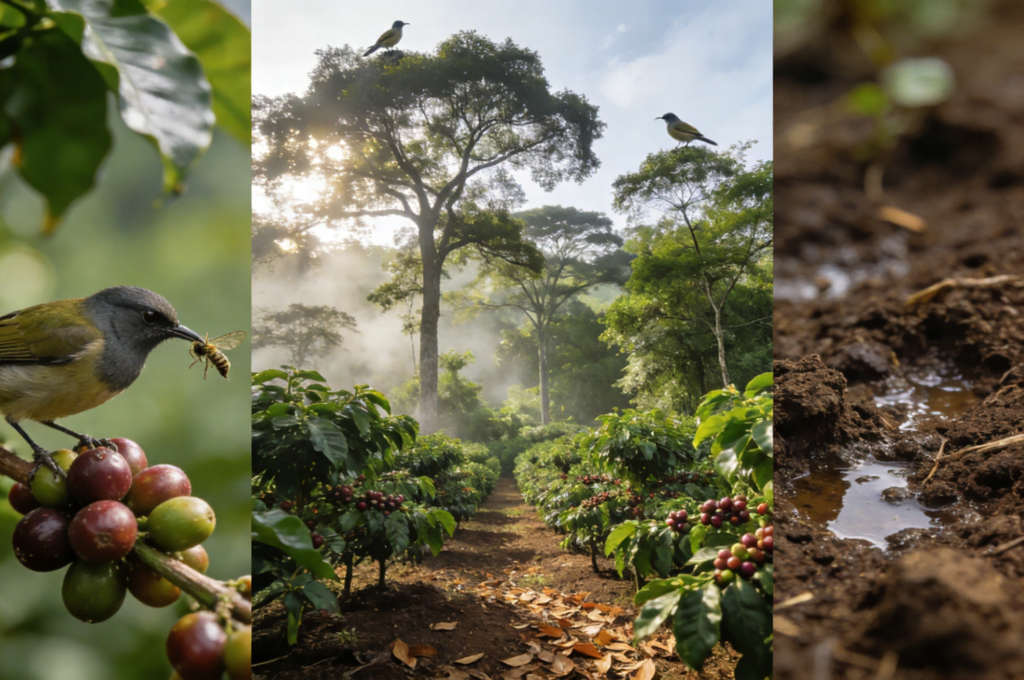
- Natural Pest & Disease Control: Shade trees host birds and insects that prey on coffee pests like the Coffee Berry Borer. This reduces the need for pesticides, leading to cleaner beans and fewer chemical residue risks for your import controls.
- Soil Health and Moisture Retention: Shade trees drop leaves, creating organic mulch. This improves soil structure, retains moisture, and reduces erosion. Healthier soil means healthier trees and more consistent nutrient uptake into the bean.
- Buffering Against Climate Stress: In an era of unpredictable weather, shade acts as a buffer. It reduces soil temperature, minimizes water evaporation, and protects blossoms from late frosts or intense heat waves. This makes the coffee crop—and your supply—more climate-resilient. For a buyer, this translates to less risk of a quality or quantity shock from a bad season.
- Carbon Sequestration: This is a growing market demand. Shaded coffee farms are powerful carbon sinks. Sourcing from them supports a lower carbon footprint for your brand, aligning with trends for sustainable and carbon-neutral sourcing.
These factors don't change the bean's size on a screen, but they profoundly impact the consistency, safety, and story of the coffee you buy. They reduce systemic risk in your supply chain.
How does shading impact the uniformity of ripening?
This is a critical quality factor. Dense shade can sometimes lead to less uniform ripening because light penetration is uneven. However, well-managed shade with appropriate tree spacing creates dappled light, which can actually promote more uniform ripening than full sun. In full sun, cherries on the outer part of the tree can roast and over-ripen while inner cherries remain green. The moderated microclimate under shade evens out these extremes. More uniform ripening means a sweeter, cleaner cup with fewer under-ripe or over-ripe flavor defects. This directly reduces the "quility" risk you face as a buyer.
Does shade farming align with certification programs?
Absolutely. Shade management is a core requirement or a heavily weighted criterion for the most respected certifications:
- Bird Friendly (Smithsonian): Requires dense, diverse shade canopy.
- Organic: Often relies on shade for natural pest management.
- Rainforest Alliance/UTZ: Encourages shade cover for biodiversity.
Sourcing shaded coffee often provides a straightforward path to obtaining these certifications, which can increase the market value and appeal of your final product.
How Can Buyers Source and Verify Shade-Grown Coffee?
Given the potential premium for quality, how do you ensure you're getting what you pay for? "Shade-grown" can be an empty term without verification. You need to move from claim to evidence.
Strategies for Verification:
- Request Specific Data: Ask the supplier for photos or videos of the farm showing the shade canopy. Request maps of the farm plots. Inquire about the species of shade trees used (native species are a good sign).
- Look for Certifications: Certifications like Bird Friendly are the gold standard verification for shade. Organic certification also suggests likely shade use.
- Analyze the Bean Itself: While not definitive, some physical cues can hint at shade growth. As discussed, higher density (test with a density grader or even a flotation test), harder bean structure, and a potentially smaller but very uniform screen size can be indicators when combined with origin story.
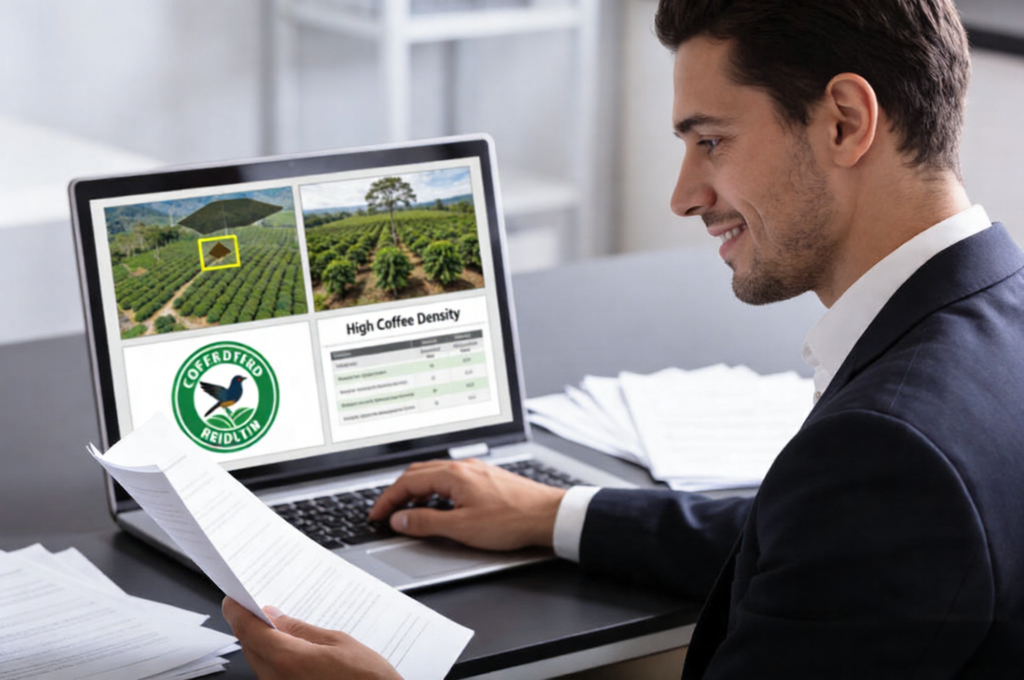
- Partner with Direct Suppliers: The most reliable method is to work with a vertically integrated supplier like Shanghai Fumao who owns and manages the farmland. We can provide GPS coordinates, farm management plans, and even satellite imagery showing canopy cover for our shaded lots. We can separate shaded and sun-grown harvests at the mill, offering you a pure product.
For a buyer, the goal is to tie the quality advantage (density, cup score) you can measure to the agronomic story (shade) you can verify.
What questions should you ask your supplier about shading?
To get beyond the label, ask:
- "What percentage of canopy cover does this lot come from?"
- "What are the primary species of shade trees used?"
- "Is this lot kept separate from sun-grown lots after harvest?"
- "Can you provide the average bean density and moisture content for this shaded lot?"
- "Do you have any third-party verification (certification, audit) for your shade practices?"
Their ability to answer these questions in detail separates marketing from reality.
Is there a price premium for verified shade-grown coffee?
Yes, and it's justified. The lower yield per hectare, the longer maturation time, and the additional farm management required mean the cost of production is higher. As a buyer, you should expect to pay a 10-25% premium for a verified, high-quality shaded lot over a comparable commercial sun-grown coffee. However, this premium can be recouped through the superior cup quality, which allows you to command a higher price in your own market, and through the brand value of a verifiable sustainable and quality-focused story.
Conclusion
The impact of shading on coffee bean size is a nuanced story of trade-offs. While it may modestly reduce physical screen size, it fundamentally increases bean density, flavor concentration, and overall quality. More importantly, it fosters a resilient, sustainable farming system that reduces risk and aligns with modern market demands.
For the discerning buyer, understanding this impact is key to making informed sourcing decisions. It's not about choosing the largest bean, but about choosing the bean with the greatest intrinsic value—where shade often plays a defining role.
Ready to source coffee where quality is grown into the bean, not just measured by its size? BeanofCoffee offers traceable, shaded and sun-grown lots from our Yunnan estate, complete with density and cupping data. Contact Cathy Cai to explore our shaded coffee portfolio and request samples: cathy@beanofcoffee.com. Taste the difference density makes.