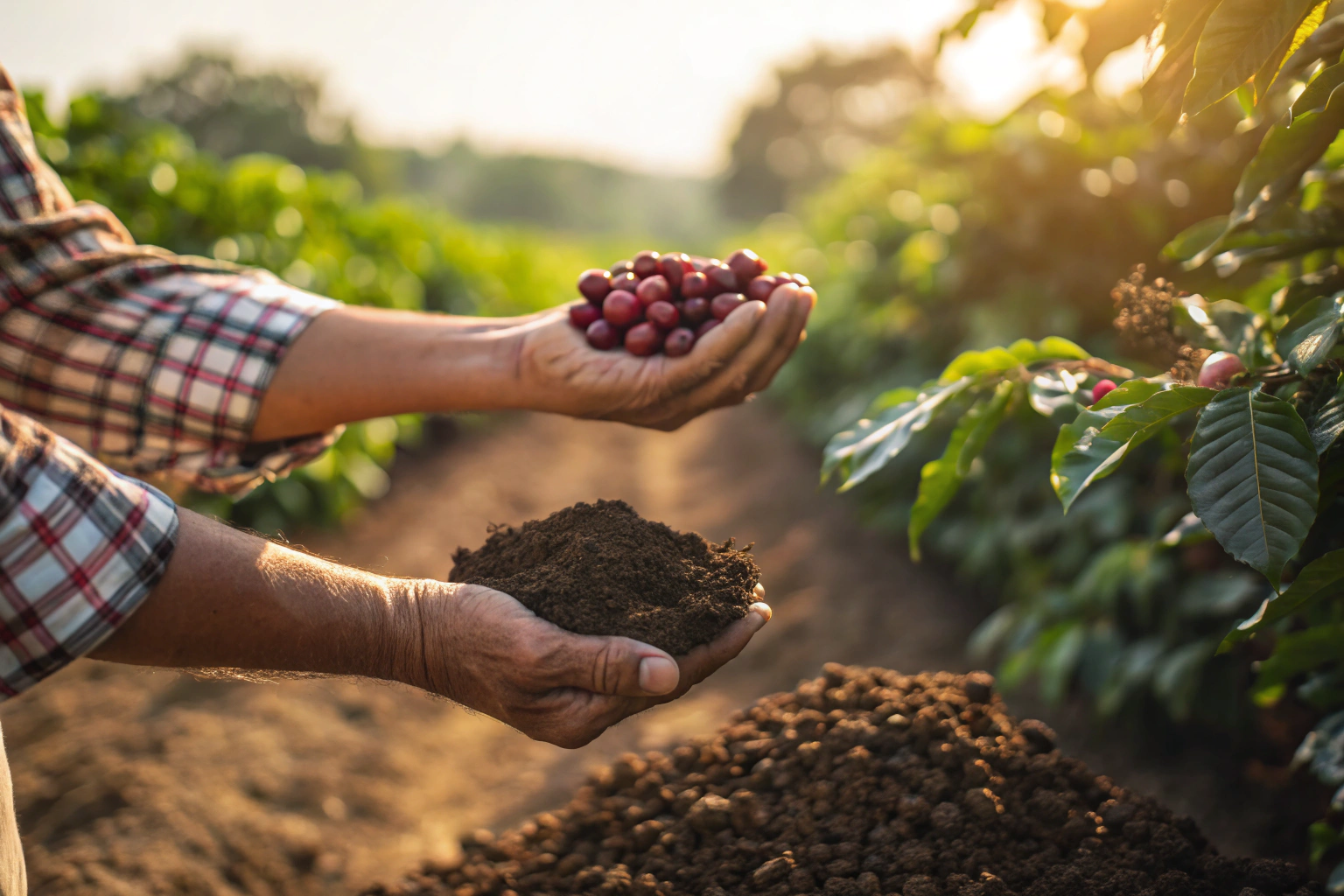
Ask any coffee enthusiast about flavor, and they'll talk about roast profiles or origin. But there's a deeper, more fundamental factor at play beneath the surface—literally. The soil in which coffee grows is the unseen foundation of every flavor note you experience, from bright citrus to deep chocolate. For professional buyers, understanding this link is key to selecting beans that consistently deliver a desired profile.
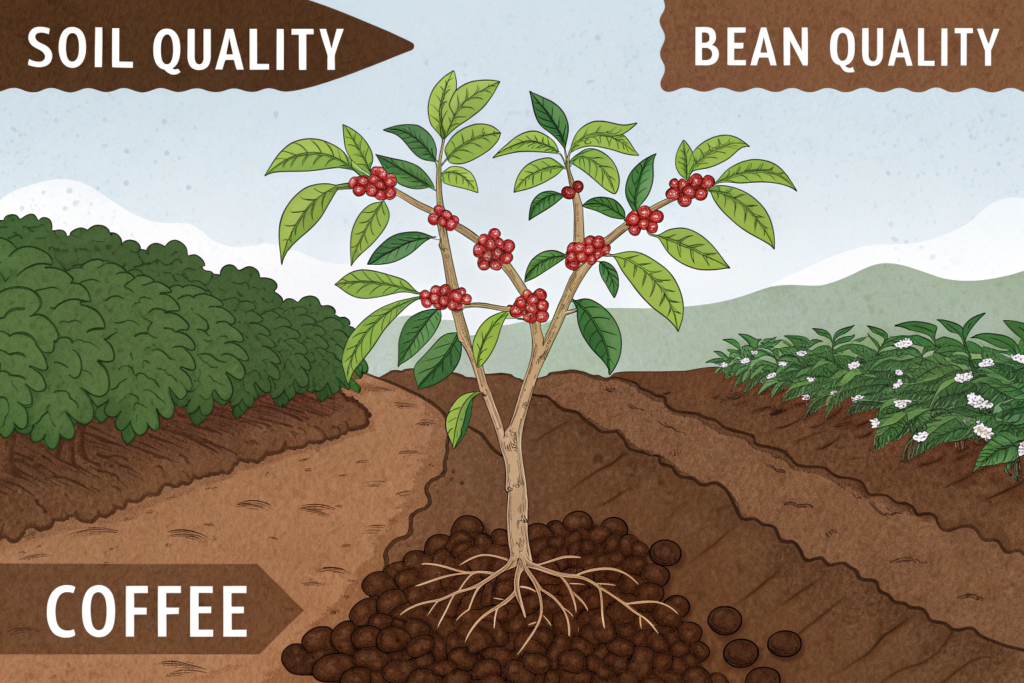
The impact of soil quality on coffee flavor is direct and profound. Soil acts as the coffee plant's pantry, supplying the water, nutrients, and physical support that ultimately shape the bean's chemical composition. Key soil factors like mineral content, drainage, and acidity directly influence crucial flavor attributes such as acidity, sweetness, body, and aromatic complexity. At our plantations in Yunnan's Baoshan region, we see this daily: subtle changes in soil across our vast acreage lead to distinct flavor profiles even within the same Catimor or Arabica varietal.
Think of it as the "terroir" of coffee—a concept as critical as it is in wine. By grasping how soil works, you move beyond simply buying "coffee" to strategically sourcing a specific taste experience for your market.
Why Does Soil Composition Define Coffee Bean Quality?
You can't build a great cup on weak beans, and you can't grow great beans in weak soil. The composition of soil—what it's made of—determines everything a coffee plant can access to build flavor compounds in its seeds (the beans). It's the starting point for quality.
Rich, living soil does more than just anchor roots. It's a complex ecosystem that provides a balanced diet of nutrients. The presence of key minerals like nitrogen, potassium, and phosphorus is essential for healthy plant growth and bean development. But the magic is in the balance and bioavailability—how easily the plant can absorb these nutrients. A soil rich in organic matter, for instance, acts like a slow-release fertilizer and improves water retention, leading to more stable and complex bean development.
Which Soil Nutrients Are Most Critical for Flavor Development?
While all nutrients are important, three play starring roles in flavor. Nitrogen is crucial for protein and chlorophyll formation, which translates to overall plant vigor and bean density. Dense beans often mean a better, more concentrated flavor potential. Potassium regulates the plant's water use and sugar transport—directly impacting the bean's sweetness and reducing susceptibility to stress. Phosphorus supports root development and energy transfer, influencing the plant's ability to absorb other nutrients. A deficiency in any of these can lead to underdeveloped beans with flat or off-flavors. Research from the Specialty Coffee Association highlights the direct correlation between balanced nutrition and superior cup quality. Furthermore, trace minerals like zinc and magnesium, often found in volcanic soils, can contribute unique sensory notes.
How Does Soil Drainage Influence Acidity and Sweetness?
This is a physical trait with a chemical result. Well-drained soil, like the sandy loam we manage in parts of our Yunnan estates, prevents waterlogging. Why does this matter? Optimal drainage creates mild, manageable stress for the plant, encouraging it to focus energy on fruit and seed production rather than excessive foliage. This process can enhance the concentration of sugars and acids in the cherry. Conversely, poor drainage suffocates roots, stunts growth, and can lead to earthy or musty defect flavors in the cup. Good drainage is thus a non-negotiable foundation for achieving the clean, vibrant acidity and pronounced sweetness that define high-quality specialty coffees, much like those prized in other renowned regions.
How Do Different Soil Types Affect Your Coffee's Taste?
Just as grapes express the character of their soil, coffee beans are a direct reflection of their earth. The dominant soil type in a region creates a recognizable flavor fingerprint.
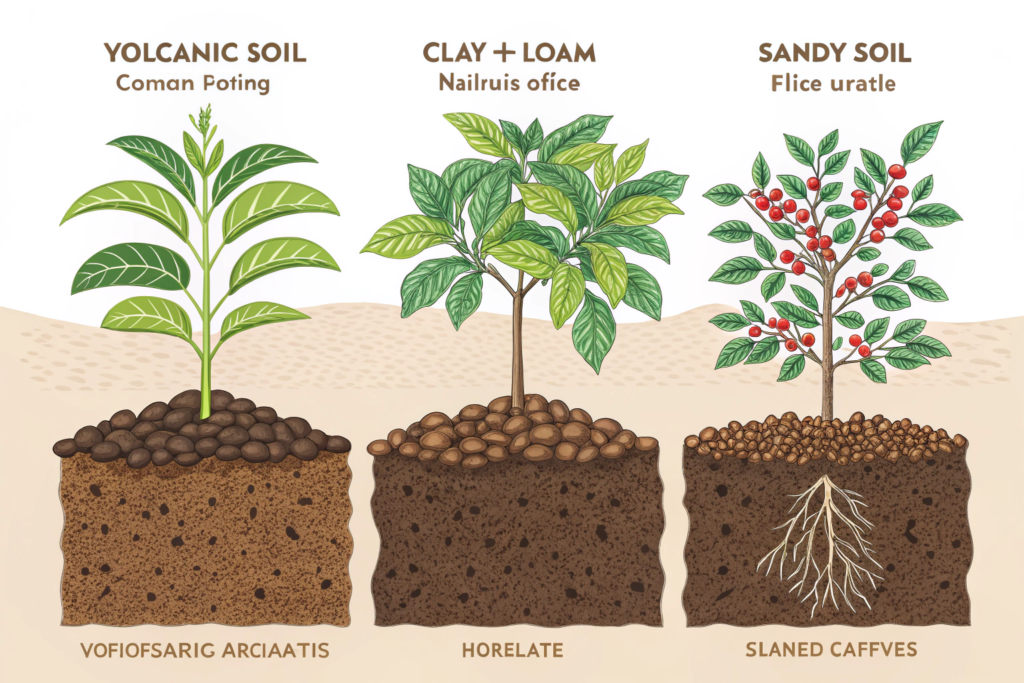
Common coffee-growing soils include volcanic soil, clay loam, and sandy soil. Each interacts with the coffee plant differently. Volcanic soil, rich in minerals and with excellent structure, often produces coffees with sparkling acidity and complex, nuanced flavors. Clay loam, with higher nutrient and water retention, can yield coffees with a heavier body and deeper chocolate or nutty notes. Sandy soil, with fast drainage, might lead to a lighter body but brighter, fruit-forward acidity.
What Flavor Profile Does Volcanic Soil Typically Create?
Volcanic soil is the holy grail for many coffee growers. It's typically mineral-rich, porous, and fertile. The porosity ensures great drainage and aeration, while the steady release of minerals provides a consistent nutrient supply. Coffees from volcanic regions, like parts of Yunnan with ancient volcanic history, often share a family resemblance: they tend to have a clean, bright acidity (think malic or citric acid), a complex aromatic profile with floral or fruity notes, and a distinct clarity of flavor. The beans from our plots with these soil characteristics are often selected for our highest-grade offerings because of this predictable excellence.
Can Clay-Rich Soils Produce Good Quality Coffee?
Absolutely, but it requires careful management. Clay soils are nutrient-dense and hold water well, which can be an advantage in drier regions. The potential challenge is poor drainage and compaction. If managed correctly—through practices like deep tilling, adding organic matter to improve structure, and careful irrigation—clay soils can produce exceptional coffee. The flavor profile often leans towards lower acidity, a heavier and creamier body, and dominant notes of dark chocolate, nuts, or spices. The key is transforming the clay's potential drawbacks into controlled benefits, a practice central to sustainable farm management.
What Are the Best Soil Management Practices for Flavor?
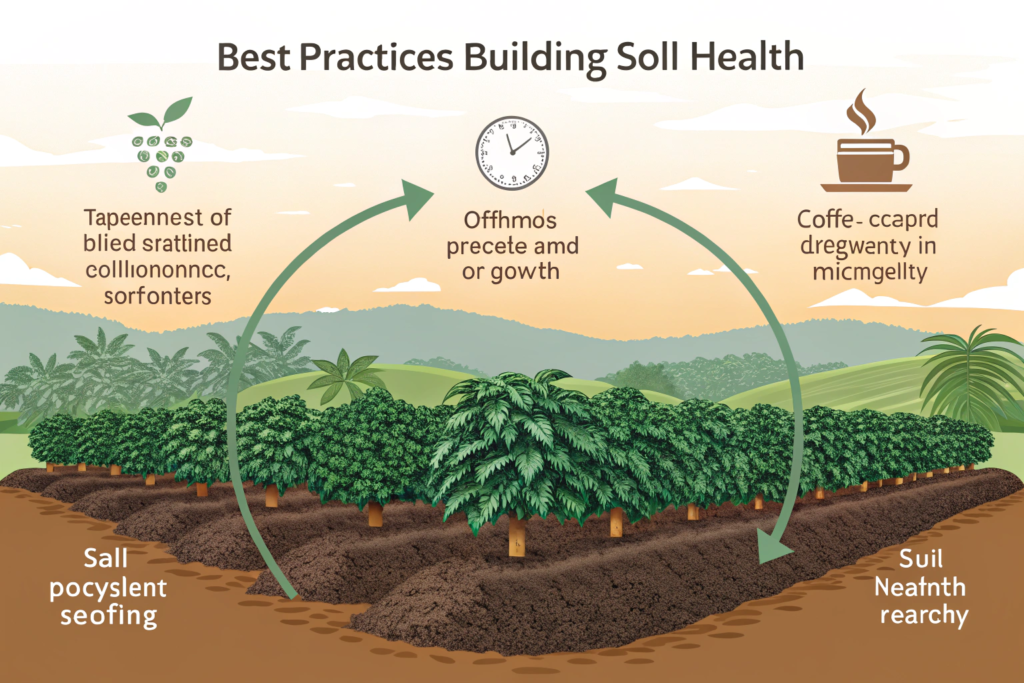
Soil isn't a static resource; it's a living system that we cultivate. At Shanghai Fumao, we don't just grow coffee; we grow soil. Proactive management is what turns decent soil into a flavor engine.
The best practices focus on building long-term soil health rather than short-term extraction. This means constantly feeding the soil ecosystem to ensure it can, in turn, feed the coffee plant optimally throughout its lifecycle. It's a cycle of care that directly translates to the stability and quality of your supply.
Is Organic Fertilizer Better Than Chemical for Flavor?
This is a nuanced debate. Chemical fertilizers provide a quick, targeted nutrient boost but can degrade soil structure and microbial life over time if used exclusively. Organic fertilizers (compost, manure, bio-fertilizers) work slower but improve soil texture, water retention, and foster a thriving ecosystem of beneficial microbes and earthworms. This living soil biome helps plants access nutrients more efficiently and can lead to more complex flavor development. Our approach is blended: we use organic matter as the foundational soil builder, supplemented with precise mineral fertilizers based on regular soil tests to address specific needs. This precision agriculture approach, guided by science, ensures the plant gets exactly what it needs for optimal flavor without harming the soil's long-term health.
How Does Cover Cropping and Shade Affect Soil and Taste?
These are two powerful, natural tools. Cover cropping—planting legumes or grasses between coffee rows—prevents erosion, adds organic matter when tilled in, and fixes nitrogen from the air into the soil. This naturally enriches the "coffee pantry." Shade trees, a traditional practice, do more than protect coffee cherries from sunburn. Their fallen leaves create a natural mulch layer, regulating soil temperature, retaining moisture, and slowly decomposing into rich humus. The result is a slower, more even cherry maturation, which many agronomists link to increased sugar accumulation and flavor complexity in the bean. This creates a more resilient and flavorful product, aligning with modern expectations for sustainable sourcing.
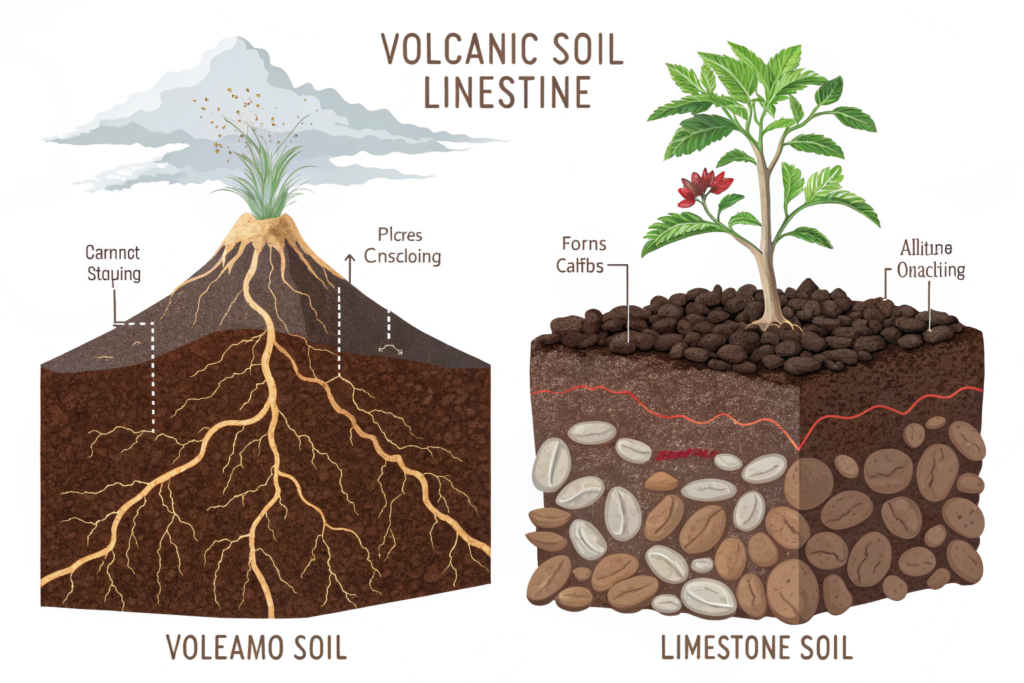
Can You Taste the Difference: Volcanic vs. Limestone Soil?
For the discerning buyer, the answer is often a resounding yes. These two mineral-rich soils create distinctly different taste experiences, offering a clear choice for your product line.
Volcanic soil, as discussed, is about energy and complexity. Limestone soil, found in some famous coffee regions, offers a different profile. It's typically alkaline and rich in calcium. The coffee tends to have a bright but softer acidity (sometimes perceived as a malic or tart apple note), a distinct mineral crispness or "clean" finish, and often prominent floral or tea-like characteristics. The body can be elegant rather than heavy.
What Makes Limestone Soil Unique for Coffee Cultivation?
Limestone's key feature is its high calcium carbonate content and excellent internal drainage. The calcium can influence the plant's metabolism and the bean's mineral content. The drainage creates a similar beneficial stress as in volcanic soil, concentrating flavors. However, the alkaline nature affects nutrient availability differently, which likely contributes to the unique flavor signature. Coffees from such terroir are often described as having exceptional clarity and elegance, a profile we work to emulate in our mineral-rich plots.
How Can Roasters and Buyers Use Soil Knowledge?
This knowledge is a powerful sourcing tool. If you're building a blend that needs bright, fruity high notes, you might seek beans from volcanic regions. If you want a single-origin with a crisp, tea-like clarity, a limestone soil coffee could be perfect. By discussing soil profiles with your supplier, you move the conversation beyond basic origin to a more precise flavor forecasting. At Shanghai Fumao, we document the soil characteristics of our different plantation blocks. This allows us to guide buyers like you to the beans that match your specific flavor target, ensuring consistency and meeting your quality control needs from the ground up.
Conclusion
Ultimately, soil quality is the silent partner in every great cup of coffee. It's the fundamental variable that shapes acidity, body, sweetness, and aroma long before roasting and brewing begin. For importers and roasters, understanding this connection is not academic—it's a strategic tool for selecting beans, ensuring consistency, and telling a compelling origin story. By partnering with growers who prioritize soil health, you invest in a supply chain that is as resilient and flavorful as the coffee it produces.
If you are looking to source coffee with a clear and cultivated flavor identity, grounded in meticulous soil and farm management, we should talk. Contact our sales lead, Cathy Cai, to discuss how our Yunnan beans, grown across diverse soils in our 10,000-acre estates, can meet your specific flavor profile needs. Reach Cathy at cathy@beanofcoffee.com.