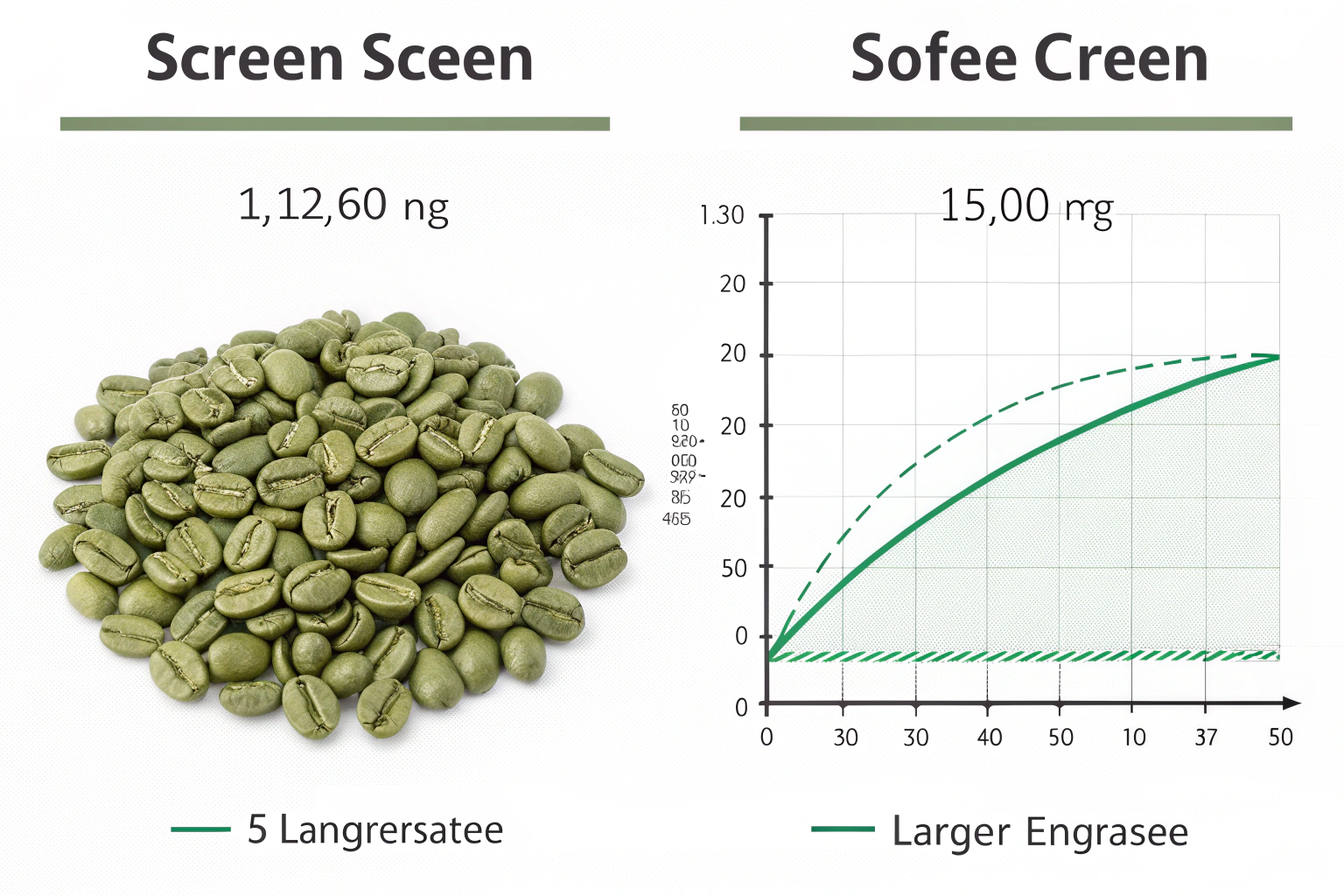
You're about to roast a new lot of green coffee. The specs say "Screen Size: 17-18." You've also got another bag labeled "15-16." Is this just a bean beauty contest, or does it actually matter for the roast profile you're about to write? The answer is critical: screen size is a fundamental physical variable that directly impacts heat transfer, roast development, and ultimately, the consistency and quality in your cup. Ignoring it is like trying to bake a perfect cake without knowing if you're using whole walnuts or walnut pieces—the timing and result will be wildly different.
In roasting, screen size refers to the diameter of the green coffee bean, standardized by the number of 64ths of an inch. A screen size 17 bean is 17/64" in diameter. The importance lies in bean density and thermal mass. Larger, denser beans (higher screen size) require more energy and often a longer roast to fully develop their internal structure. Smaller, less dense beans (lower screen size) absorb heat faster and can roast quicker, risking tipping or baking if not managed carefully. For consistent results, screen size informs your charge temperature, rate of rise (RoR), and development time.
Let's move past the basic definition and explore how this single metric influences every decision on your roast curve, from the first drop to the final cooling tray.
How Does Screen Size Dictate Heat Application and Development Time?
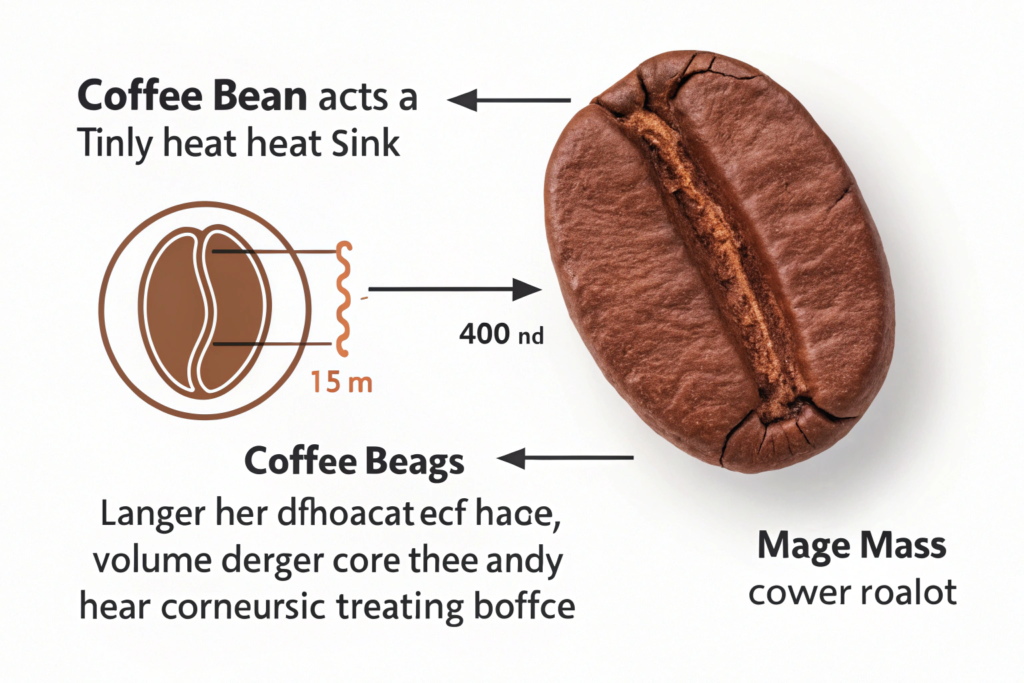
Think of a coffee bean as a tiny heat sink. A larger bean has more mass and a lower surface-area-to-volume ratio. This means it takes longer for heat to penetrate from the outside to the center (the core). A smaller bean has less mass and a higher surface-area-to-volume ratio, so heat penetrates rapidly. This fundamental physics dictates your entire roast strategy.
If you roast a mixed batch of varying screen sizes with one generic profile, you will get an uneven roast. The small beans will be over-developed (potentially charred) before the large beans have fully shed their moisture and developed their sugars. The result is a cup with both bitter, ashy notes from the small beans and grassy, sour notes from the under-developed large beans. Screen size sorting at origin is the first step to achieving roast uniformity, which is the bedrock of flavor clarity and balance.
Should I adjust my charge temperature based on screen size?
Yes. For larger, denser beans (e.g., high-altitude SHB beans from Yunnan, screen 17+), you often need a higher charge temperature. This provides enough energy "in the bank" to push heat through the dense bean structure without stalling the roast. For smaller, less dense beans, a moderate to lower charge temperature is safer. A high charge on small beans can cause an excessive Rate of Rise (RoR), leading to scorching or tipping (dark marks on the bean tips) before the interior is roasted. Starting with the right energy level sets the stage for an even development.
How does screen size affect the timing of "first crack"?
First crack is a audible sign that internal moisture is turning to steam and escaping. In a batch of uniform, large beans, first crack will be more synchronized and pronounced. In a mixed batch, you'll hear a drawn-out, sporadic crack as smaller beans crack early and larger ones later. For uniform beans, your development time (the period between the start of first crack and the end of the roast) is more predictable. You can confidently extend development for more body and chocolatey notes on large beans without fear of incinerating half the batch. This control is why specialty roasters prize sorted beans.
What Is the Relationship Between Screen Size, Density, and Cup Quality?
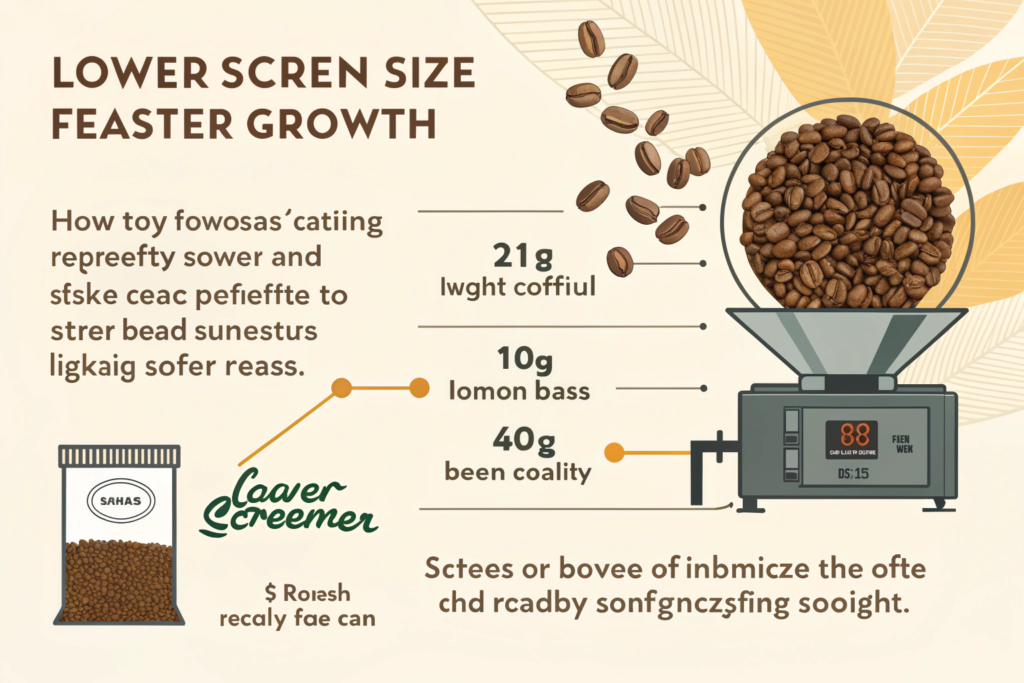
Screen size is a strong proxy for density, and density is a key indicator of potential quality. Generally, beans grown at higher altitudes mature more slowly, developing a harder, denser cellular structure and more complex sugars. These beans often have a larger screen size. However, it's not an absolute rule—varietal and processing also play huge roles. A dense, large bean has the potential for a more complex, acidic, and structured cup, but only if the roast unlocks that potential.
Conversely, a lower screen size can indicate faster growth, potentially at lower altitudes, often resulting in a softer bean. These beans may produce a cup with less acidity and complexity but potentially more body or straightforward, sweet notes. The roaster's job is to match the profile to the bean's physical reality to maximize its inherent quality, whether it's a screen 19 Yunnan Arabica or a screen 15 Robusta component for a blend.
Is a larger screen size always better?
Not necessarily. While it often correlates with higher altitude and density (positive traits), a roaster must consider the intended flavor profile. For a bright, tea-like single-origin, a large screen size is desirable. For a component in a dark espresso blend where you want a heavy, caramelized body, a slightly smaller, more porous bean might absorb the roast better and contribute the desired mouthfeel. The "best" screen size is the one that aligns with your target roast degree and final cup character. At Shanghai Fumao, we provide screen size distribution charts for our lots, so roasters can make informed choices based on their style.
How should I handle a batch with a wide screen size range?
A wide range (e.g., Screen 15-18) presents a challenge. You have a few options:
- Profile for the Average: Use a moderate, slower roast to try to even things out, but accept some compromise in uniformity.
- Sort Mechanically: Use a density/color sorter or even a simple screen tray to separate the batch into more uniform groups before roasting. This is the professional approach but requires extra labor.
- Blend Post-Roast: Roast different screen sizes separately with optimized profiles for each, then blend after roasting. This is labor-intensive but yields the highest quality and consistency.
For commercial roasters seeking absolute precision, working with a supplier like Shanghai Fumao who provides pre-sorted, uniform lots is often the most efficient path to quality.
What Are the Practical Steps for Adjusting a Roast Profile Based on Screen Size?
You have a bag of beans with a known screen size. Now what? Adjusting your profile isn't guesswork; it's a systematic process of observing bean behavior and tasting the results. Start with a baseline profile for a similar density/origin, then modify key parameters.
The core adjustments revolve around managing momentum. Large, dense beans need sustained momentum to develop. Small, less dense beans need controlled momentum to avoid racing through stages. Document every change and cup the results meticulously. This builds your own roasting library, turning screen size from a number on a spec sheet into a practical guide for heat management.
How do I adjust gas and airflow for different screen sizes?
For Large/Dense Beans (Screen 17+):
- Gas: You may need a higher initial gas setting to establish strong momentum, possibly tapering more gently.
- Airflow: Use higher airflow earlier to carry away moisture during the drying phase without scorching, and to ensure a clean, developed flavor. Think "more energy, more airflow."
For Small/Less Dense Beans (Screen 15-16):
- Gas: Use a lower initial gas setting to prevent a violent RoR spike. You might apply heat more gradually.
- Airflow: Be cautious with high airflow early, as it can make the roast too aggressive. You might increase airflow more strategically after the drying phase to control development. Think "gentle energy, managed airflow."
What should I look for in the colorometer or visual cues?
Bean color development will differ. In a uniform batch of large beans, the color change will be more even across the sample. For small beans, watch closely for quick yellowing and fast progression to first crack—they are telling you to slow down. Use a colorometer like an Agtron to track development objectively. You might find that to achieve the same Agtron number (e.g., a medium roast of #65), your large beans need a longer total time and a higher end temperature than your small beans. The number guides you to flavor, but the screen size tells you how to get there.
Conclusion
Screen size is far more than a grading metric for green coffee sellers. It is a vital piece of data that directly informs the roaster's craft, impacting heat transfer, development time, and ultimately, flavor expression in the cup. By understanding and respecting the physical differences between bean sizes, roasters can move from applying generic recipes to executing precise thermal profiles that maximize the potential of every lot.
Embracing screen size leads to greater roast consistency, reduced waste from under or over-development, and the ability to confidently highlight the unique characteristics of each coffee you source. It is a fundamental parameter for any roasting operation serious about quality and reproducibility.
Ready to source green coffee with precise, documented screen sizes that simplify your roast profiling? At Shanghai Fumao, we provide detailed physical analysis for our Yunnan Arabica, Catimor, and Robusta, ensuring you receive uniform lots tailored to your roasting needs. Contact our export manager, Cathy Cai, to request spec sheets and samples. Let's bring precision to your roastery. Reach Cathy at: cathy@beanofcoffee.com.