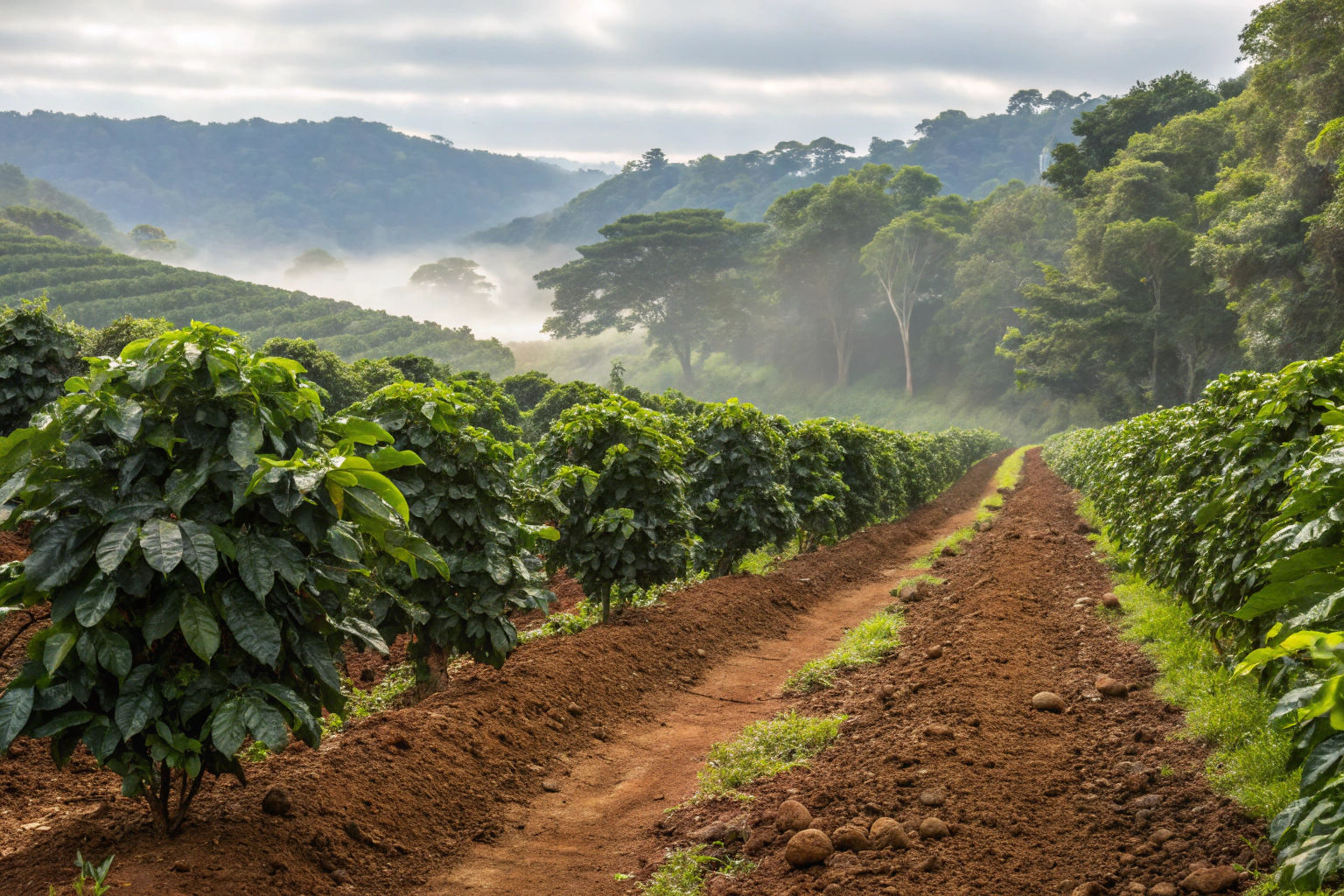
You've cupped coffees from the same farm, same varietal, but from different plots. They taste distinctly different. Why? Beyond altitude and processing, there's a hidden factor beneath your feet: soil pH. This often-overlooked variable acts like a master control switch, determining which nutrients your coffee plants can access, directly shaping the bean's chemical makeup and, ultimately, the flavor in your cup. Ignoring soil pH is like tuning an orchestra but forgetting to check the instruments themselves.
Soil pH—a measure of acidity or alkalinity on a scale of 0-14—profoundly influences coffee taste by controlling nutrient availability. Slightly acidic soils (pH 5.5-6.5) optimize the uptake of crucial elements like nitrogen (for growth/vigor), phosphorus (for energy/sweetness), and potassium (for bean density/health). Outside this range, nutrient lock-up or toxicity occurs, leading to underdeveloped beans that taste flat, sour, or unbalanced. For buyers, understanding this link means recognizing that great coffee starts with healthy soil, and sourcing from farms that actively manage soil health, like our operations in Yunnan, is key to consistent, high-quality flavor.
Think of the coffee plant as a chef. The soil is its pantry. Soil pH controls which pantry doors are locked or open. At the wrong pH, the "chef" can't get the ingredients (nutrients) it needs to create complex flavors. Let's dig into how this invisible chemistry translates to the very tangible experience of taste.
How Does Soil pH Control Nutrient Availability?
The relationship isn't linear; it's a series of chemical gates. Each essential nutrient has a specific pH window where it is soluble and can be absorbed by plant roots. Soil that is too acidic (low pH) or too alkaline (high pH) locks these nutrients into insoluble forms, making them inaccessible no matter how much fertilizer is added. The coffee plant starves in a seemingly full pantry.
A practical observation from our Yunnan farms: We have plots with naturally lower pH (more acidic). Without correction, the trees there showed stunted growth, and the cupping results consistently had a sharp, under-ripe sourness. Why? Because phosphorus—critical for energy transfer and sugar development—was largely locked up. The beans couldn't develop their full sweetness.
Which Key Nutrients are Affected and How?
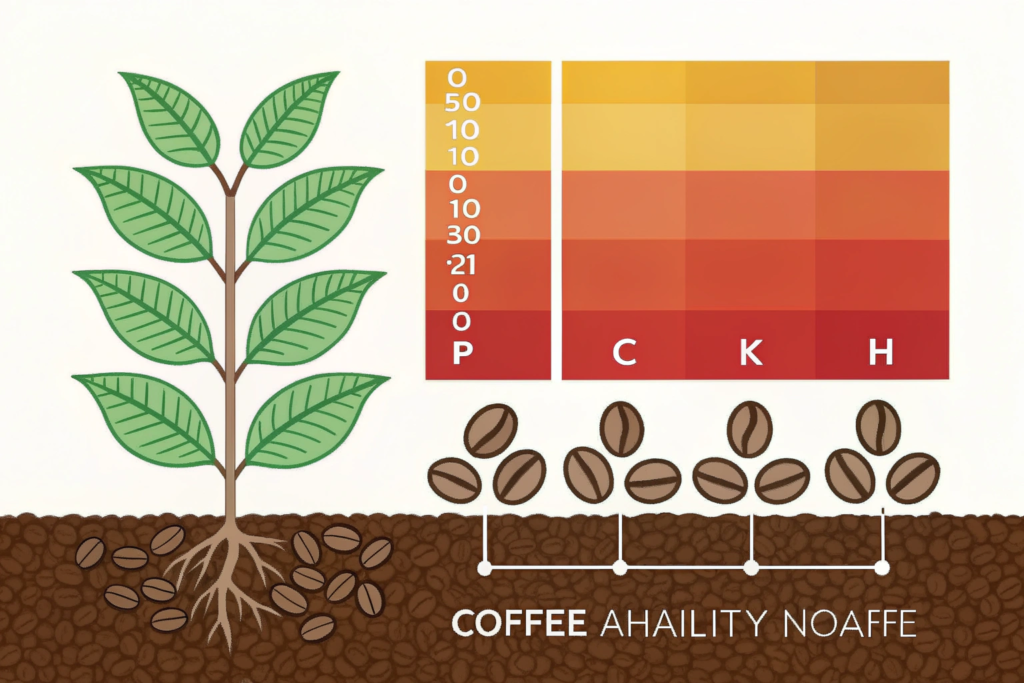
The impact is most critical for three primary nutrients:
- Nitrogen (N): Availability peaks in slightly acidic to neutral soils (pH 6.0-7.5). Nitrogen is the engine of vegetative growth and protein synthesis. In deficient beans, you often get a weak, vegetative, or "green" flavor.
- Phosphorus (P): Its optimal window is narrow, around pH 6.0-7.0. Phosphorus is vital for energy transfer (ATP), root development, and most importantly, for flowering, fruiting, and sugar accumulation in the cherry. Low phosphorus means less sugar, leading to a flat, lifeless cup lacking sweetness.
- Potassium (K): Readily available across a wider acidic range (pH 5.5-7.0). Potassium regulates water flow, enzyme activation, and is crucial for developing bean density and overall health. It directly influences mouthfeel and resistance to disease.
At very low pH (<5.0), toxic levels of aluminum and manganese can also become soluble, poisoning the plant roots and causing severe stunting and off-flavors.
What is the "Sweet Spot" for Coffee Soil pH?
Extensive agronomic research and our own field experience point to a pH range of 5.5 to 6.5 as ideal for Coffea arabica. Within this "Goldilocks zone," the doors for N, P, K, calcium, and magnesium are all sufficiently open. The plant can access a balanced diet. At pH 6.0, you often see peak availability for the most nutrients simultaneously. This balance allows the plant to channel energy not just into survival, but into producing complex sugars and aromatic precursors within the cherry. This biochemical foundation is what great roasting later transforms into flavor complexity.
What Taste Defects Arise from Improper Soil pH?
The taste defects from pH imbalance are not subtle "variations"; they are fundamental flaws stemming from metabolic dysfunction in the plant. They manifest as a lack of development or the presence of harsh, unwanted notes. For a buyer, recognizing these defects can help trace a quality problem back to its root cause—sometimes literally.
It's like trying to bake a cake without sugar or flour. You'll get something, but it won't be cake. A bean grown in nutrient-starved soil will lack the basic building blocks for proper flavor development during roasting, no matter how skilled the roaster is.
How Does Low (Acidic) pH Affect the Cup?
Soils with a pH significantly below 5.5 present a double problem: nutrient lock-up and metal toxicity.
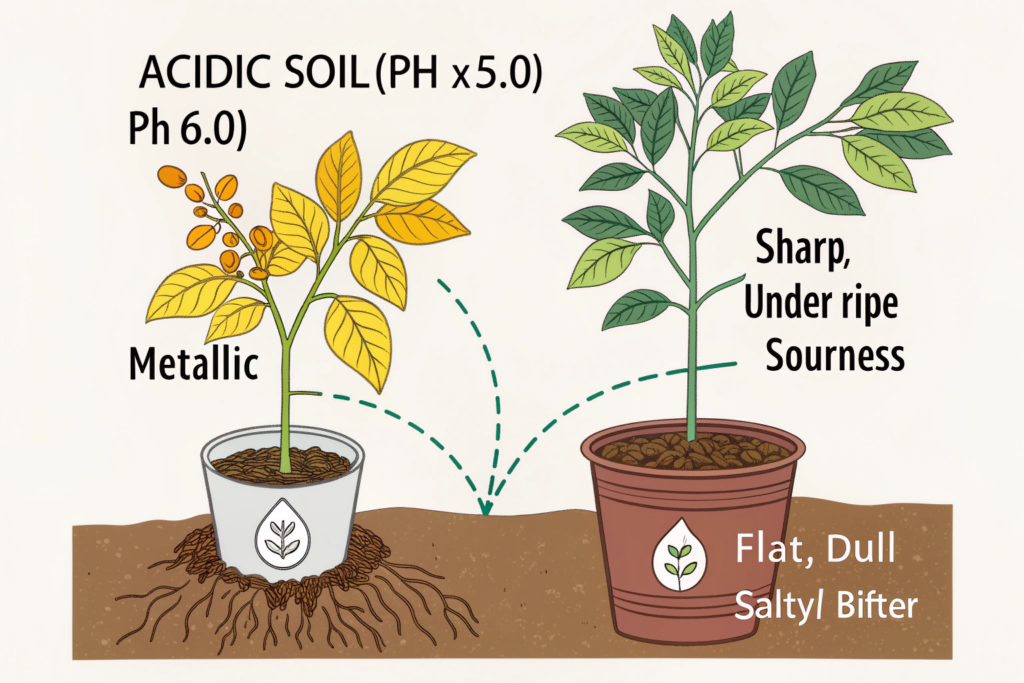
- Primary Taste Impact: A pronounced, sharp, under-ripe sourness that lacks sweetness to balance it. It can taste green, grassy, or like unripe fruit.
- Mechanism: Phosphorus and molybdenum are severely limited, crippling sugar and protein metabolism. Concurrently, soluble aluminum damages root hairs, reducing overall nutrient and water uptake. The bean develops incompletely.
- Additional Notes: In severe cases, a metallic or astringent aftertaste can occur, linked to manganese toxicity. The body of the coffee often feels thin and watery because the plant couldn't build robust cellular structure.
How Does High (Alkaline) pH Affect the Cup?
Soils with a pH above 6.5, moving towards alkaline conditions, lock up different nutrients.
- Primary Taste Impact: A flat, dull, and one-dimensional profile. The coffee often lacks acidity and brightness, tasting muted or "chalky."
- Mechanism: Iron, manganese, copper, zinc, and boron become inaccessible. Iron chlorosis (yellowing leaves) is a visible sign. These micronutrients are essential co-factors for enzymes driving flavor compound development. Their absence halts complexity.
- Additional Notes: You might also detect a salty or harsh bitterness. This can be due to an imbalance of cations (like excessive sodium or calcium) in alkaline soils, which the plant passively absorbs, disrupting its internal ion balance. The mouthfeel can be drying.
How Do Coffee Farms Manage and Correct Soil pH?
Soil pH isn't a fixed fate; it's a manageable condition. Professional farms don't just test the soil once—they monitor and amend it as part of their annual crop management program. This active stewardship is a clear marker of a quality-focused producer and a sign to buyers that the farm is invested in long-term consistency and flavor excellence.
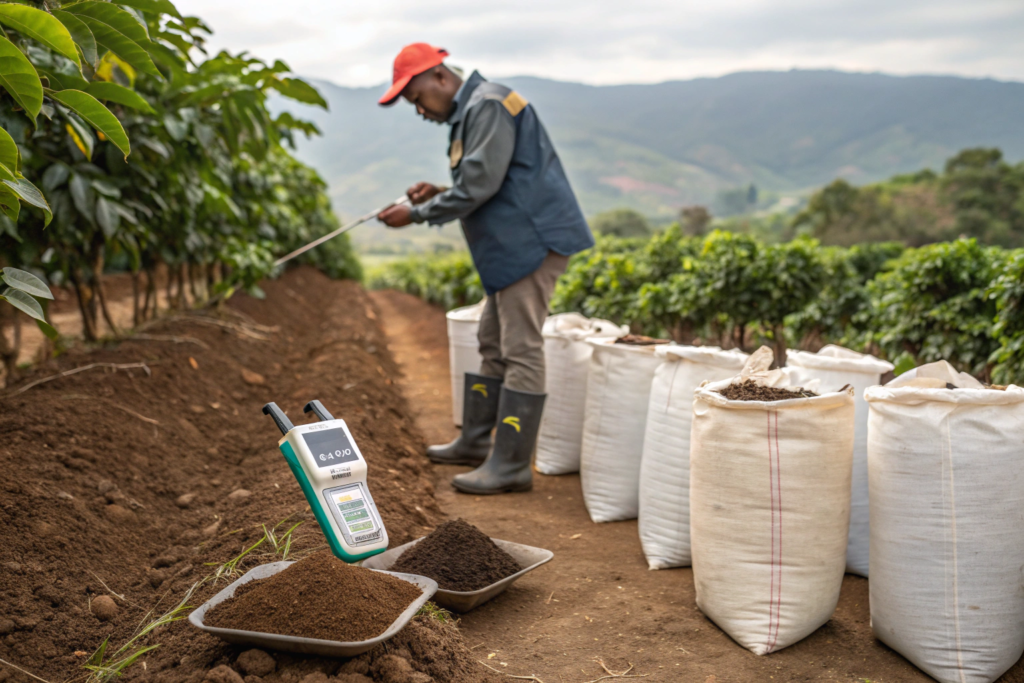
At Shanghai Fumao, we conduct grid soil testing across our 10,000 acres. We don't apply a blanket treatment; we map the pH variations and amend specific blocks. This precision agriculture ensures each plot operates in the optimal range. It's an upfront cost that pays back in cup quality and yield stability.
What are Common Soil Amendments Used?
The choice of amendment depends on the direction of the needed change:
- To Raise pH (Reduce Acidity): The most common remedy is applying agricultural lime (calcium carbonate) or dolomitic lime (which also adds magnesium). The lime neutralizes hydrogen ions in the soil, gradually raising the pH. It's typically incorporated before planting or applied to the surface in established fields and worked in lightly.
- To Lower pH (Increase Acidity): This is less common but sometimes needed. Amendments include elemental sulfur, aluminum sulfate, or sulfuric acid-based products. As sulfur oxidizes, it produces sulfuric acid, lowering the pH. This process is slower and requires careful calculation.
The key is gradual change. Drastic pH swings can harm soil biology. Amendments are applied based on soil test recommendations and then retested in 6-12 months to monitor progress.
Why is Regular Soil Testing Critical for Consistency?
Annual or biennial soil testing is the only way to manage pH proactively. A test reveals not just pH, but also base saturation levels and specific nutrient deficiencies. It moves management from guesswork to science.
- Process: Soil samples are taken from multiple points in a field, mixed, and sent to a lab.
- Result: A detailed report prescribes the exact type and amount of amendment needed per hectare.
For a buyer, asking a supplier about their soil management practices is a powerful question. A credible answer—referring to testing schedules and amendment programs—signals a deep commitment to quality at the foundational level. It’s a strong indicator of the supplier’s reliability and the coffee's potential.
How Can Buyers Assess the Impact of Soil Health?
As a buyer, you're not walking the fields with a pH meter. But you can use sensory evaluation and supplier inquiries as proxies to assess the likely health of the soil that grew your coffee. Certain cup profiles and farm practices tell a story about what's happening underground.
Think of it as forensic tasting. A coffee that is perfectly balanced, with a vibrant yet integrated acidity, a clear sweetness, and a complex flavor spectrum, rarely comes from neglected soil. It comes from afarm that pays attention to these fundamental details.

What Cup Qualities Suggest Good Soil Management?
Coffees from well-managed, pH-balanced soils tend to share positive attributes that indicate good nutrient uptake and plant health:
- Vibrant, Not Sharp, Acidity: The acidity is pleasant—like citrus or malic acid—and is well-integrated with other flavors, not dominating or sour.
- Pronounced, Clean Sweetness: A clear sense of sugar development (brown sugar, caramel, fruit sweetness) that balances the acidity.
- Complexity and Clarity: Multiple distinct flavor notes are perceivable (e.g., stone fruit, chocolate, floral) without muddiness.
- Full, Round Body: Indicates good potassium uptake and healthy bean density.
These qualities suggest the plant had all the "ingredients" it needed. When you consistently get these traits from a particular farm or exporter, like our lots from Yunnan, it's a strong testament to their agricultural practices.
What Questions Should You Ask Your Supplier?
Move the conversation beyond the cup score. Ask about the foundation:
- "Do you conduct regular soil analysis on your farms? How often?"
- "What is the typical pH range of your coffee-growing soil, and how do you manage it?"
- "Do you use soil amendments? If so, what type (e.g., lime, organic compost)?"
- "How do you manage soil organic matter content?" (Organic matter acts as a pH buffer and nutrient reservoir).
A supplier that can answer these questions knowledgeably, perhaps even providing summary data, is one that views coffee as an agricultural product requiring scientific care. This aligns with the values of Shanghai Fumao and signals a lower risk of the taste defects associated with poor soil health. It’s a marker of a professional, long-term partner.
Conclusion
The influence of soil pH on coffee taste is fundamental and profound. It acts as the gatekeeper for the nutrients that build flavor compounds within the bean. An imbalance locks away these essentials, leading to characteristic defects like sharp sourness or flat dullness. Conversely, actively managed soil within the ideal 5.5-6.5 pH range provides the foundation for balanced, complex, and sweet coffees. For coffee buyers, this knowledge underscores the importance of sourcing from producers who invest in soil health—it's the first and most critical step in the quality chain, long before processing or roasting.
In the end, great coffee is grown, not just made. The story of flavor begins in the soil.
If you seek coffee with a stable, superior flavor profile rooted in scientifically managed soil, we invite you to explore our offerings. Our commitment at Shanghai Fumao includes active soil stewardship across our Yunnan plantations to ensure optimal growing conditions. For samples of coffee grown with this foundational care, contact our sales director, Cathy Cai, at cathy@beanofcoffee.com. Taste the difference that starts from the ground up.